Film Set from the 50s – Well Not Quite

Hull Museum 6 Hull Museum 8 Hull Museum 6 Hull Museum 7

Wherever I go I seem to assess places and scenery as to whether it would fit into a film location – and it is all the more appealing when there appears something or somewhere that seems to fit the bill perfectly.

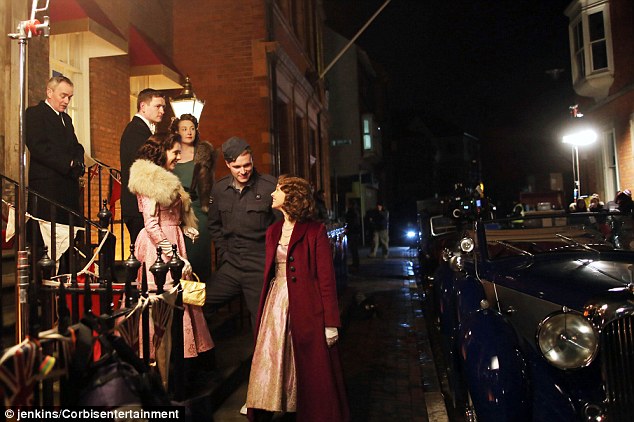
On a trip this January day to the famous City of Hull with my family, among other things we decided to go to the Hull Museum right down in the Old City of Hull – and the old City is very attractive architecturally and maybe should – or maybe has – been used in film location filming. The only example I can think of was a film, in recent years about the Queen who reputedly, as Princess Elizabeth along with her sister Princess Margaret slipped out of the Palace to enjoy the VE Day Celebrations – and the old City of Hull replicated central London in those days – as this story was re told on film.

It was titled The Queen’s Big Night Out  but I don’t think that the film got much publicity  – it’s release was only three of years ago in 2015.

The Queens Big Night Out Above:

Royal show: Sarah Gadon (Queen Elizabeth II) (R) and Bel Powley ( Princes Margaret) (L) spotted filming scenes from Girls Night Out in Hull

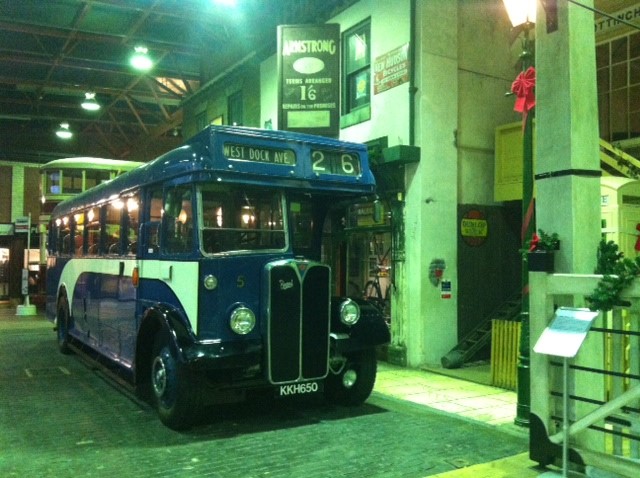
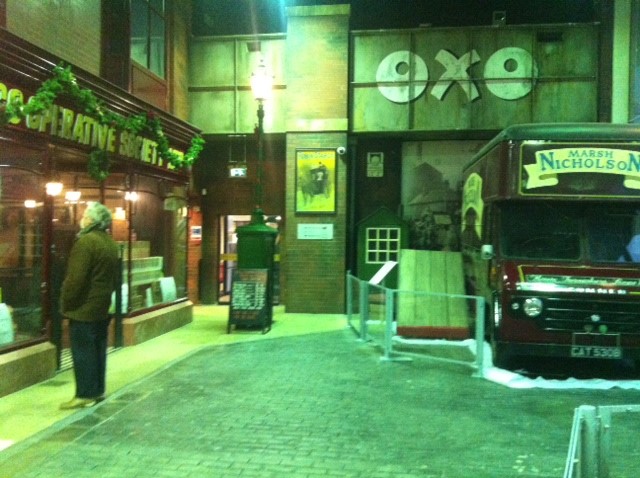
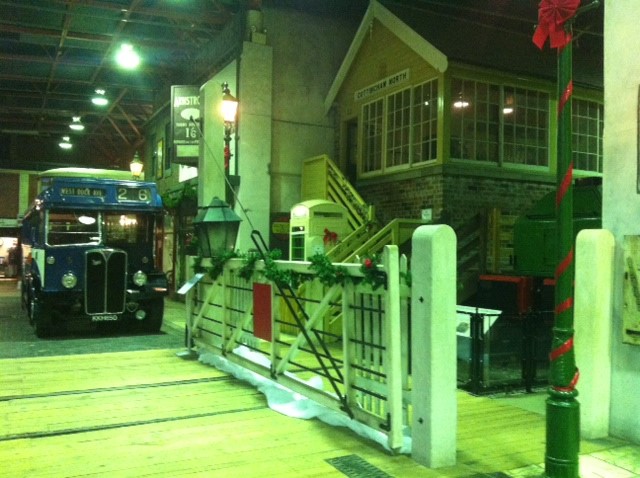
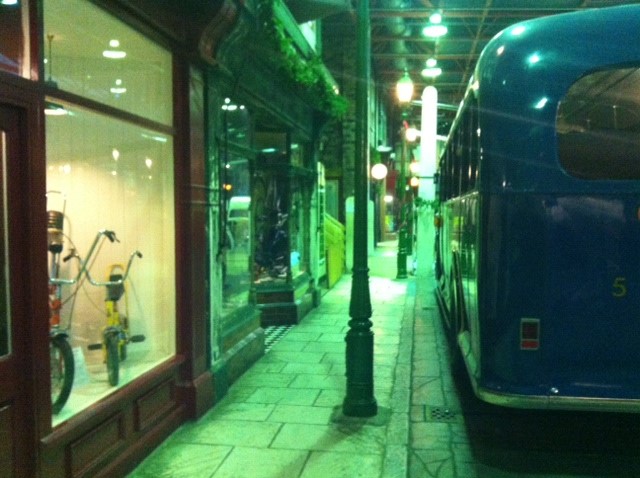
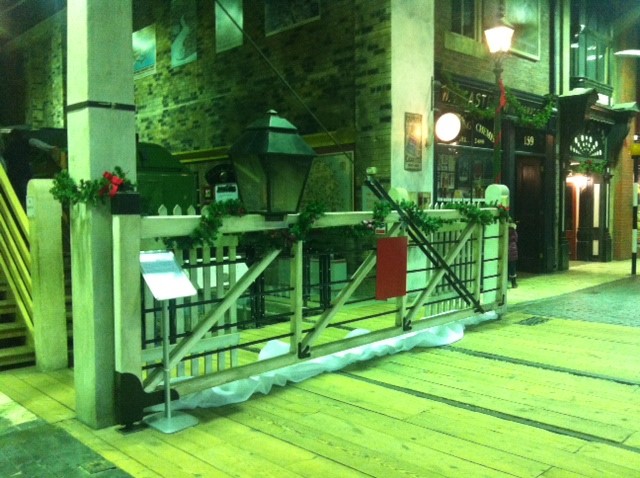
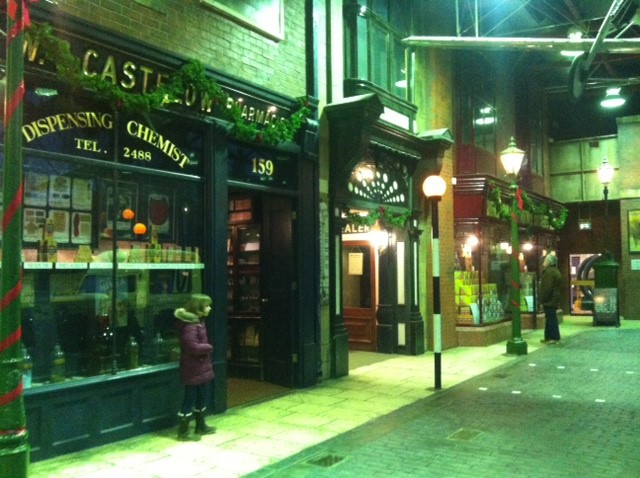
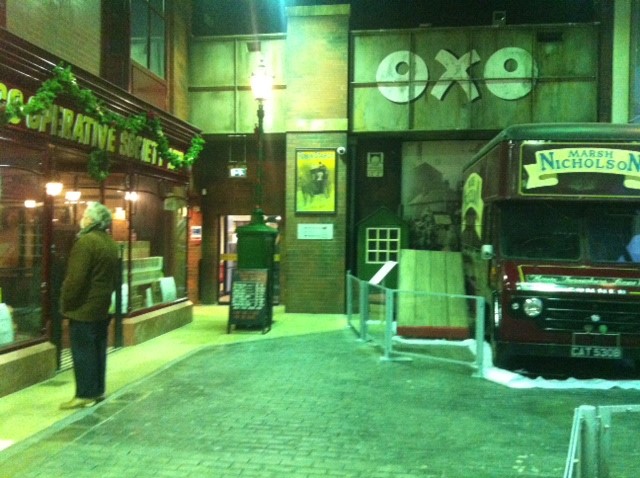
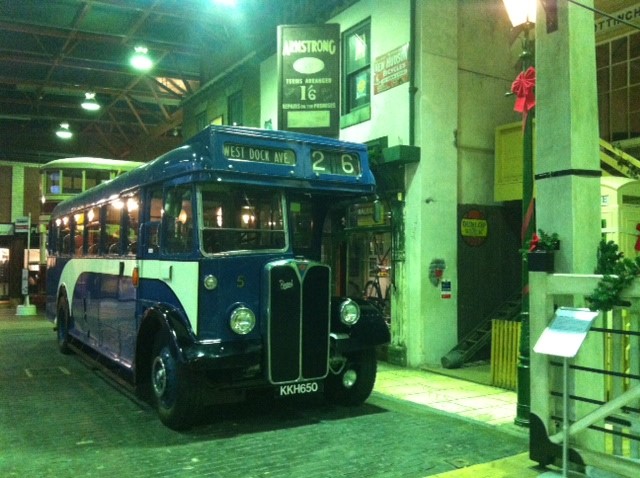
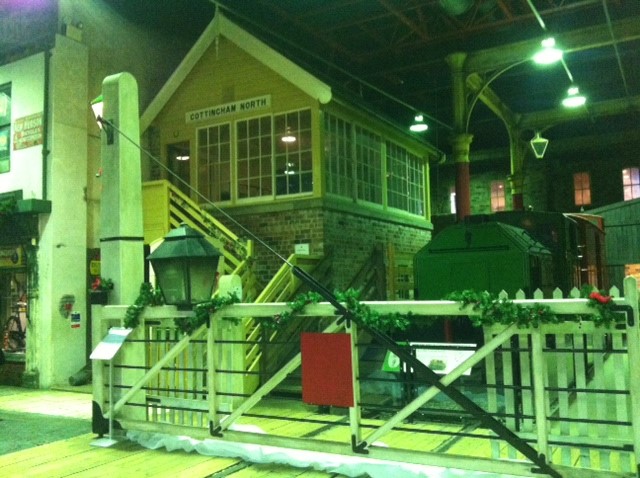
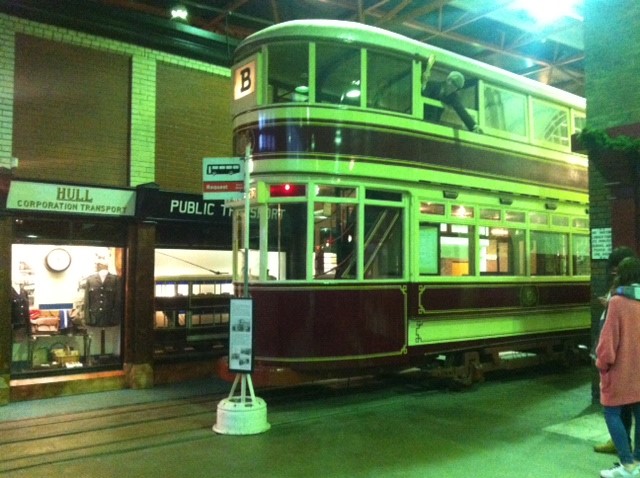
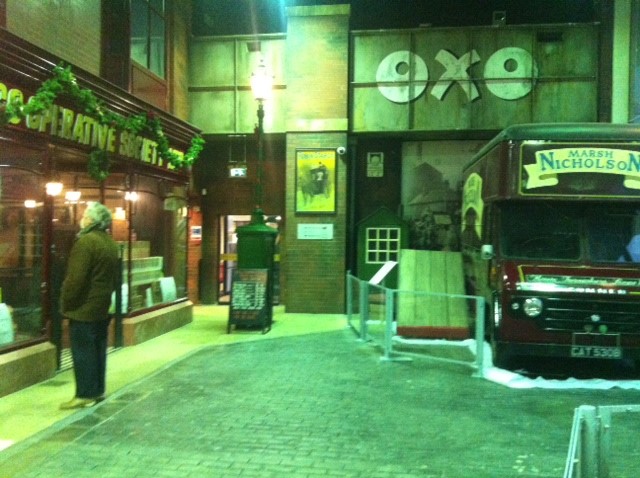
 Anyway Hull Museum, first let me say, is very well worth a visit – and once inside along with so much, there is quite a long Street set up just as it would be in the 50s.   The Pictures below speak far better than I can – but to me,  depict street scenes straight from a film of the era.

Hull Museum Hull Museum 2 Hull Museum 3 Hull Museum 4 These pictures will show what I mean about film sets Hull Museum 5 Hull Museum 6 Hull Museum 8 The Bus above just looks so stylish – maybe not so good to drive though Hull Museum 9 Hull Museum 10 More Wonderful Scenes – above from the Hull Museum The Queens Big Night Out 2 Another Scene from The Queens Big Night Out – in part of the Old City of Hull.

posted by Movieman in Uncategorized and have Comments (7)

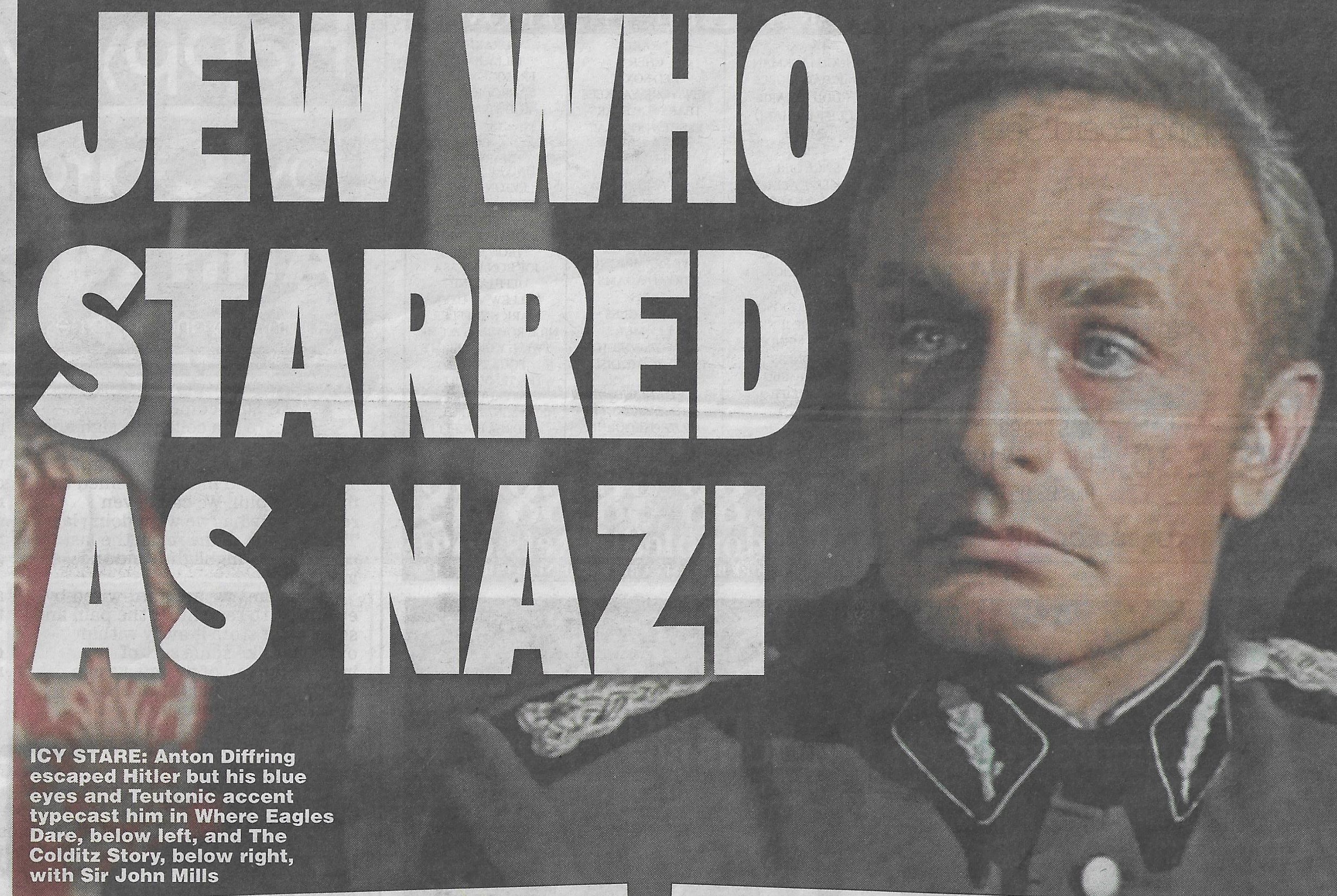
Anton Diffring –

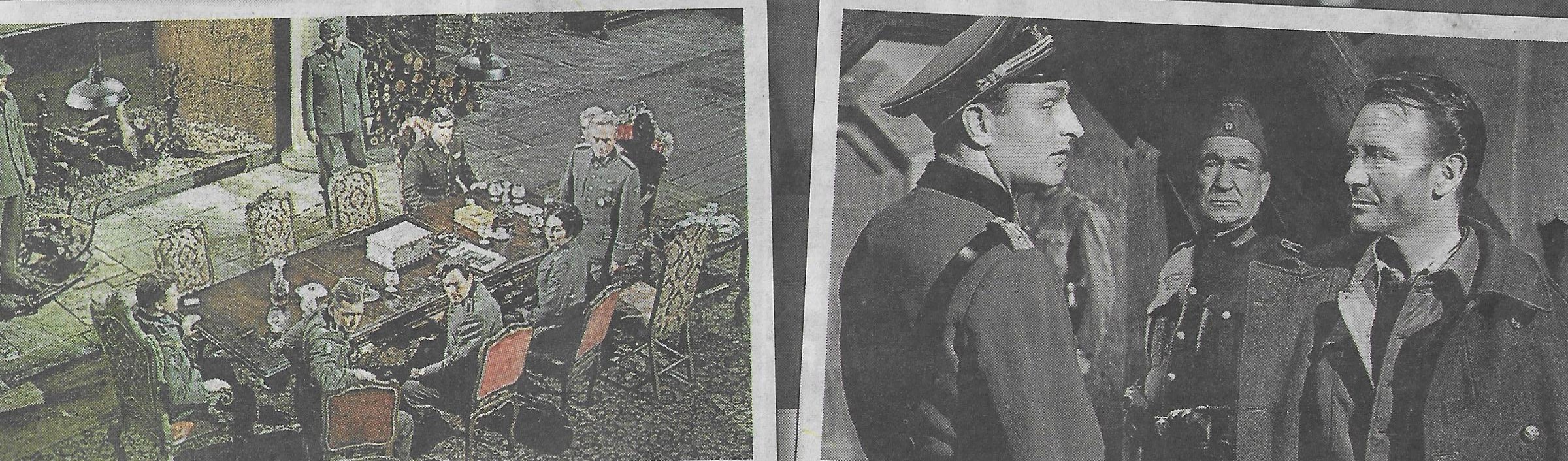
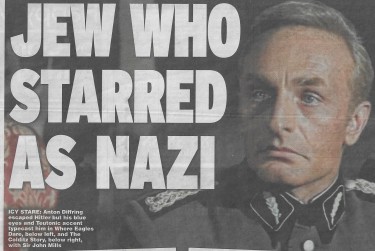
This is an actor who was around through the late forties fifties and well into the 80s – mainly portraying German Officers in some memorable War Films – such as Where Eagles Dare – and before that Albert RN and The Colditz Story.

Derren Nesbitt played cold-blooded SS officer, Major von Hapen, in  Where Eagles Dare (1968) and so effective was he in the role that his co-star Anton Diffring, famously remarked: “You’re more German than I am!”
Anton Diffring


Anton Diffring Scenes


In fact he had fled Germany before the War and sought refuge in Canada. He was of Jewish parentage and was gay – neither of which would have endeared him to the Nazi Regime in pre War Germany – so it is cruelly ironic that it seems he was to make his living – and  a very good living – out of playing  Nazi Officers  or such roles over so many years.  Wherever there was casting for a War film, you can bet on it that Anton Diffring would be one of the first to be cast – and at the time, he would have no doubt as to the role he would be playing.

Having trained as an actor in Berlin and Vienna, Anton Diffring left his homeland in the late 1930s and went first to the US and then to Canada, where he was interned.

He came to Britain after the War in the late 1940s to try his luck but it took him a while to become established.

His first credit in a British film came in 1950, in State Secret.
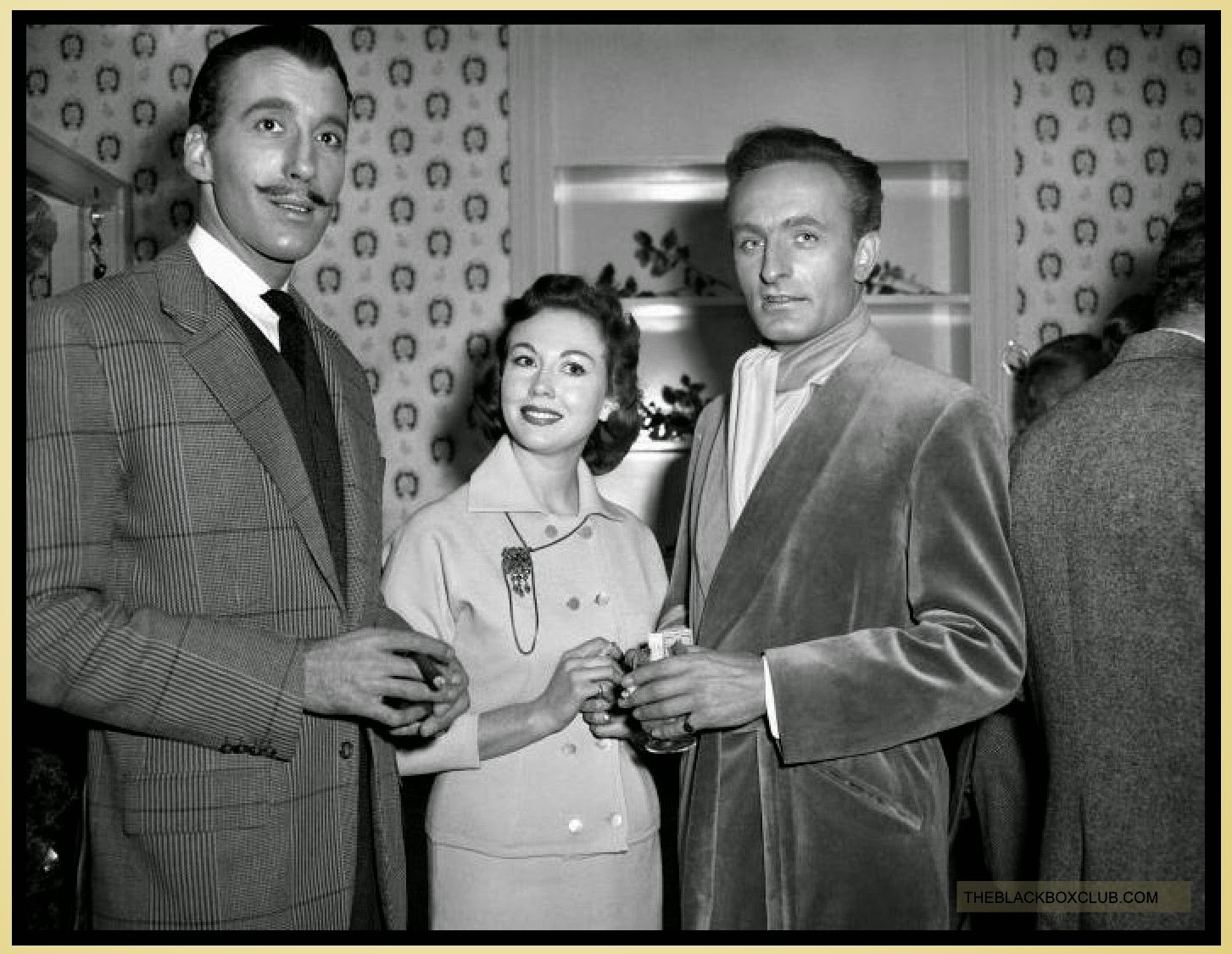
Anton Diffringand friends

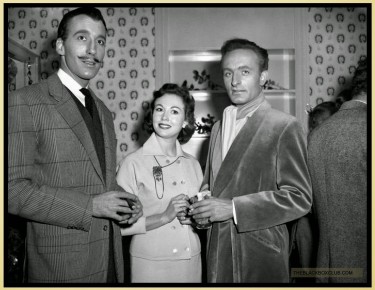
Above – in a non German Officer Role Anton Diffring starred in Hammer’s Production of The Man Who Clould Cheat Death in 1959 – pictured here on what looks to be a social occasion – with Hazel Court and Christopher Lee – who were with him in this film.

He actually had star billing in this one – apparently Peter Cushing was unavailable for the Hammer Production.

Anton Diffring,  died on 20th May, 1989. Depending on which source you believe, he was either born Anton de Vient or Alfred Pollack, in Koblenz.

He was never one hundred percent happy playing  the roles he was offered, but practical enough to take the money and security that these parts gave him. He continued to make the most of his blonde hair, blue eyes and chiselled features on both sides of the Atlantic, appearing in such classics as Albert RN (1953), The Colditz Story (1955), The Heroes of Telemark (1965), The Blue Max (1966), Where Eagles Dare (1968), Operation Daybreak (1975 – as SS officer Reinhard Heydrich) and Escape to Victory (1981).
We also remember him for the Horror roles – as well as the one above – he played Dr Schuler in Circus of Horrors (1960) and Pavel in The Beast Must Die (1974).

Unusually though, he played in one of the comedy stories created in The Galton and Simpson Playhouse series where he played opposite none other that Arthur Lowe – in the episode below :-

Car Along the Pass
Henry Duckworth is living proof that the English take their holidays very seriously indeed.
Starring Arthur Lowe, Mona Washbourne and Anton Diffring
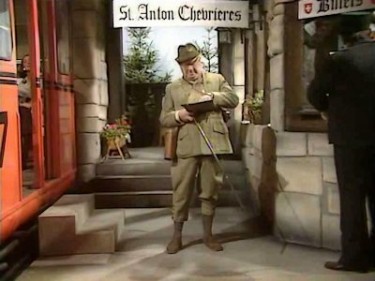
Car along the Pass 1977 Arthur Lowe

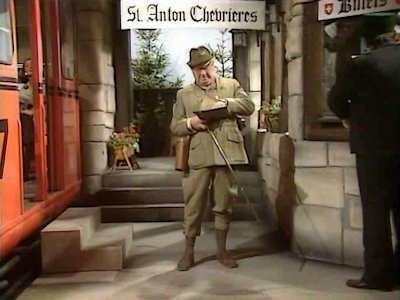
Henry Duckworth would never have imagined that he would be trapped in a cable car with a German couple when he set off on his Alpine holiday ABOVE

Car Along The Pass, is the first of seven stories in the Galton and Simpson Playhouse series.  Henry and Ethel Duckworth (Arthur Lowe and Mona Washbourne) take a cable-car trip in the Swiss Alps.  Henry hasn’t enjoyed his holiday at all and things don’t improve when the cable-car stops when it’s only half way across.  The passengers are told that repairs will take a few hours, so naturally Henry (since he’s an Englishman) decides to take charge.
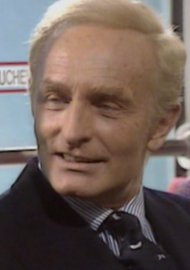
Car along the Pass 1977 Anton Diffring

Henry Duckworth has some similarities with Arthur Lowe’s most famous comedy character (Captain Mainwaring from Dad’s Army) – both are rather pompous and very proud of their country of birth, but whereas Captain Mainwaring is also a basically decent man   Duckworth is more of  a blinkered bore, without many redeeming qualities. Not sure of the part that Anton Diffring played here – looks to be one of the German tourists trapped in the Cable Car. This was shown on Television on 17 th February 1977.
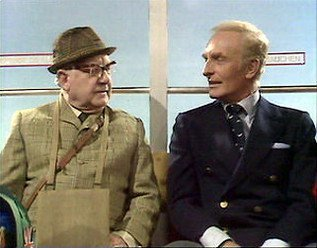
Car along the Pass 1977 Arthur Lowe and Anton Diffring

ABOVE – These two famous actors play out a scene on the Cable Car – Ironic that these two actors played their most famous parts on opposite sides to one another.

Anton Diffring also worked in several international films, including François Truffaut’s Fahrenheit 451 (1966).

He died in his home at Châteauneuf-Grasse in southern France, in 1989 and, while no official statement as to his cause of death was ever released – fellow German actor Arthur Brauss suggested, in a 2002  interview, that he died from an AIDS related condition.

However, in her biography of the actor, author Susan Edwards states that he died of cancer.
posted by Movieman in Uncategorized and have Comments (7)

USA – Prepares for Colour Television in 1954

Quite a while before we introduced a Colour Television programme in 1967 in Britain, the USA were preparing for such an event 12 years before this. It was always said – and I could well be corrected on this – that their TV Colour in the early days was not that good.  Ours, years later, was in fact very good.

US Colour Television 1954

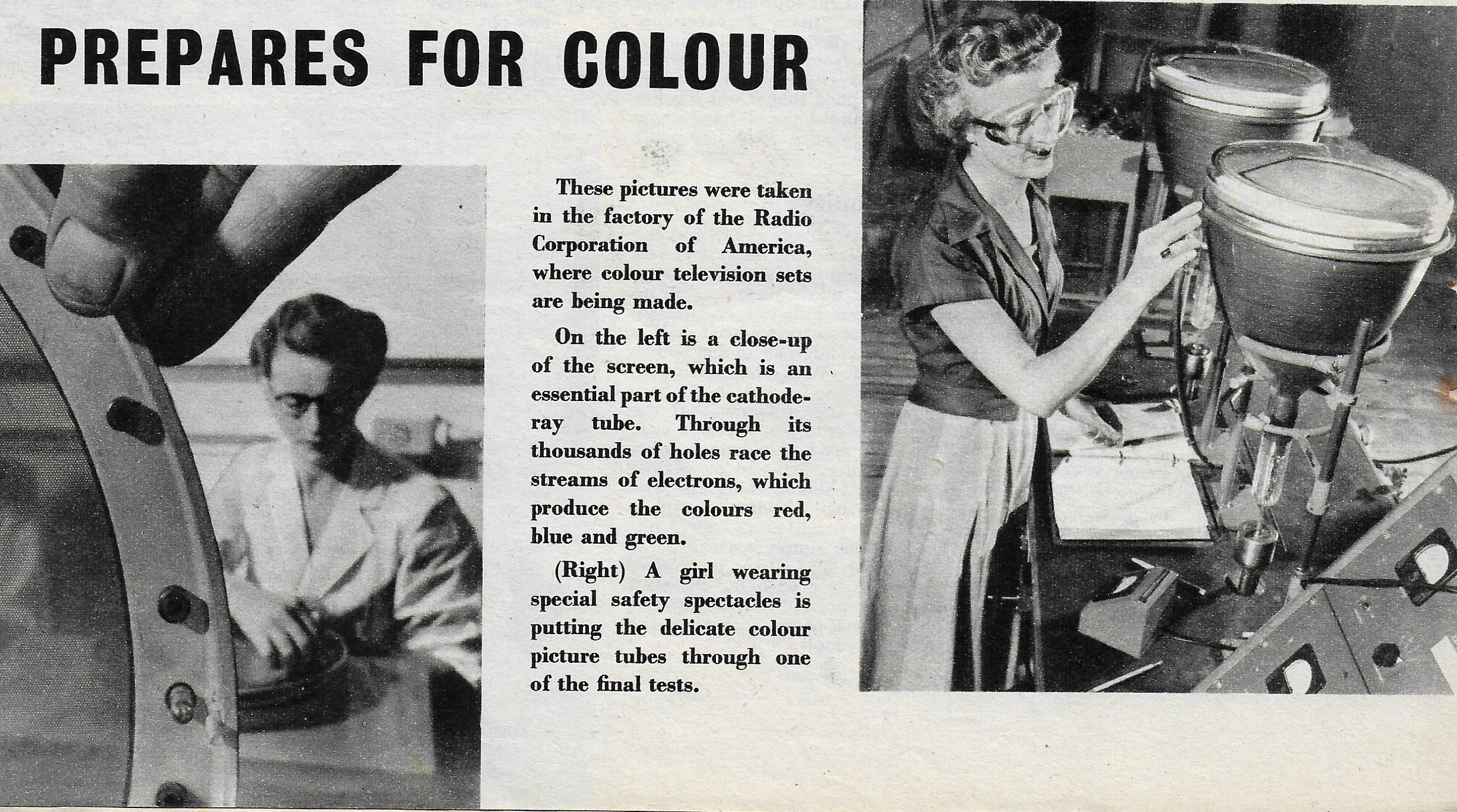
Anyway regardless of the merits or otherwise this short snippet from the TV Mirror magazine on 12th January 1954 is interesting.

The above pictures were taken in a factory of the Radio Corporation of America ( RCA ) where Colour Television Sets were being made.

On the Left is a close-up of the screen,  which is an essential part of the Cathode Ray Tube. Through its Thousands of holes race the streams of electrons, which produce the colours Red, Blue and Green.

The picture on the Right shows a girl wearing special safety glasses and she is putting the delicate colour picture tubes through one of the final tests.

I do remember in England a tinted screen going on sale – which was placed over the existing 12″ or 14″ screens of the day, to give the picture a tinge of colour. It didn’t seem to catch on though.

Fifties TV Tinted Screen

ABOVE: This was a plastic screen to make a B&W TV look colour.  This comment from the USA – It was awful, didn’t work very well. Green grass and blue skies.

It had a Blue Tint at the top and a green one at the Bottom of the screen with the middle a sort of non descript beige.  In theory-  on an outside shot it would look ok with the sky blue and the grass at the bottom green. I suppose on the very occasional shot it would look good.

Also we had the magnifying glass / screen – again placed over the existing Television screen – which made the picture larger. This was effective if you were sitting facing the screen straight on – however if you were to one side it tended to distort the picture.

My Grandmother had one of these fitted. I remember. They were quite easily removed.

posted by Movieman in Uncategorized and have Comments (9)

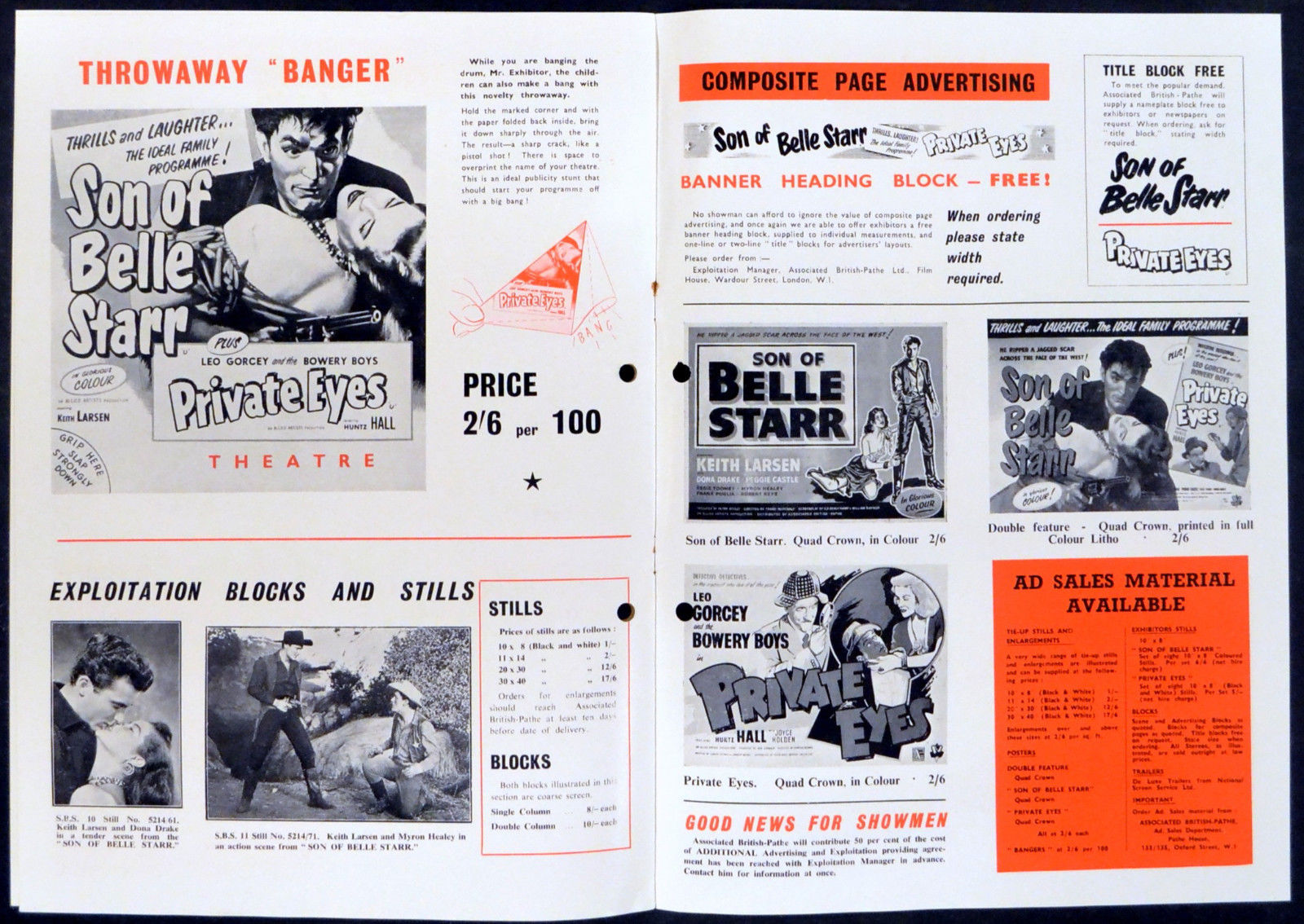
Son of Belle Starr 1953

Not that well known a Western but it was on TCM  a week or two ago – and I have to say it was quite entertaining.

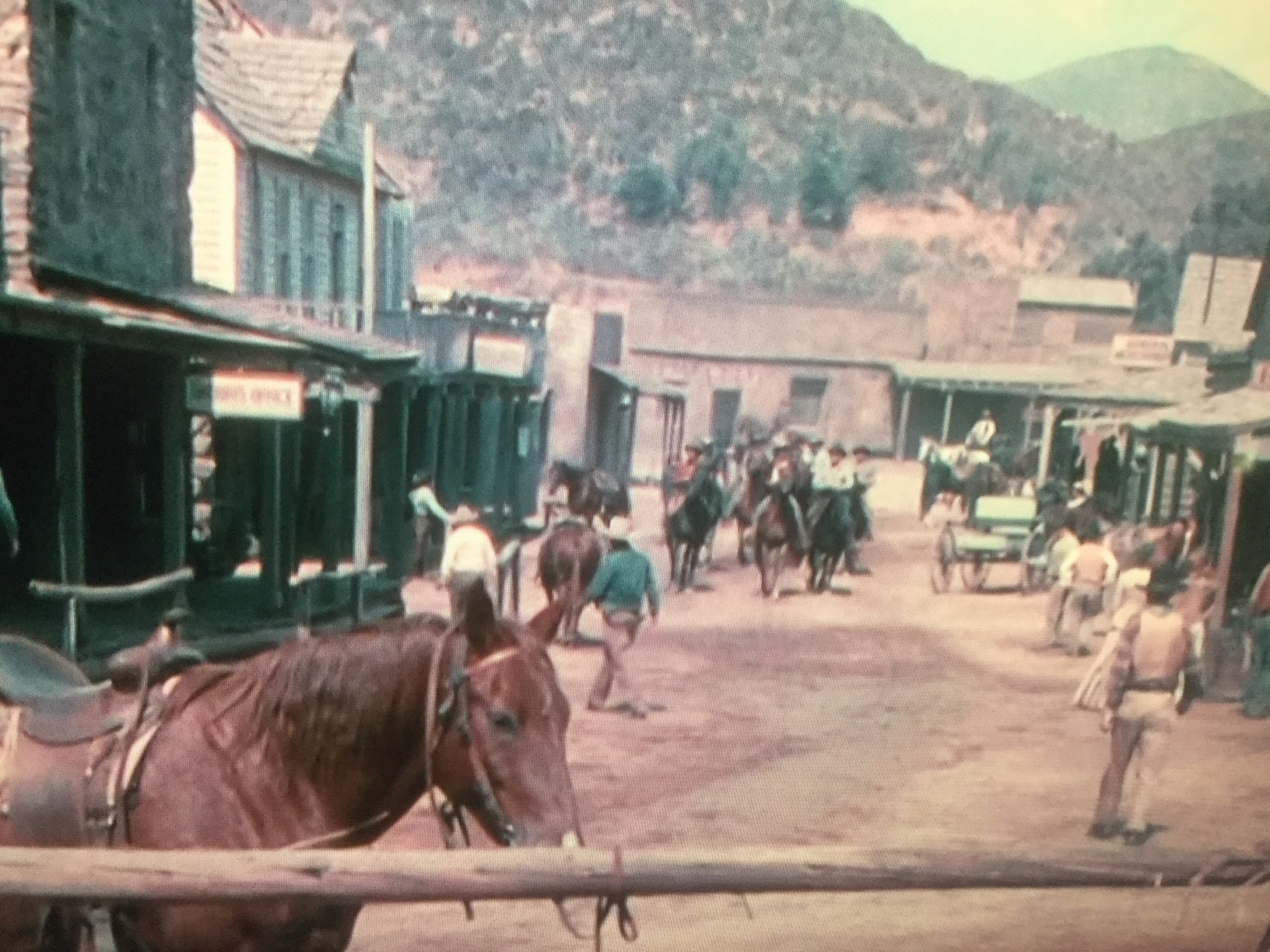
Son of Belle Starr 1953 A   Son of Belle Starr 1953 B. Filmed In Cinecolor – and the above two scenes really show the Cinecolor to good effect. Never a widely used Colour process but I rather like it – with it’s muted colour, almost a tinted picture – be very effective.

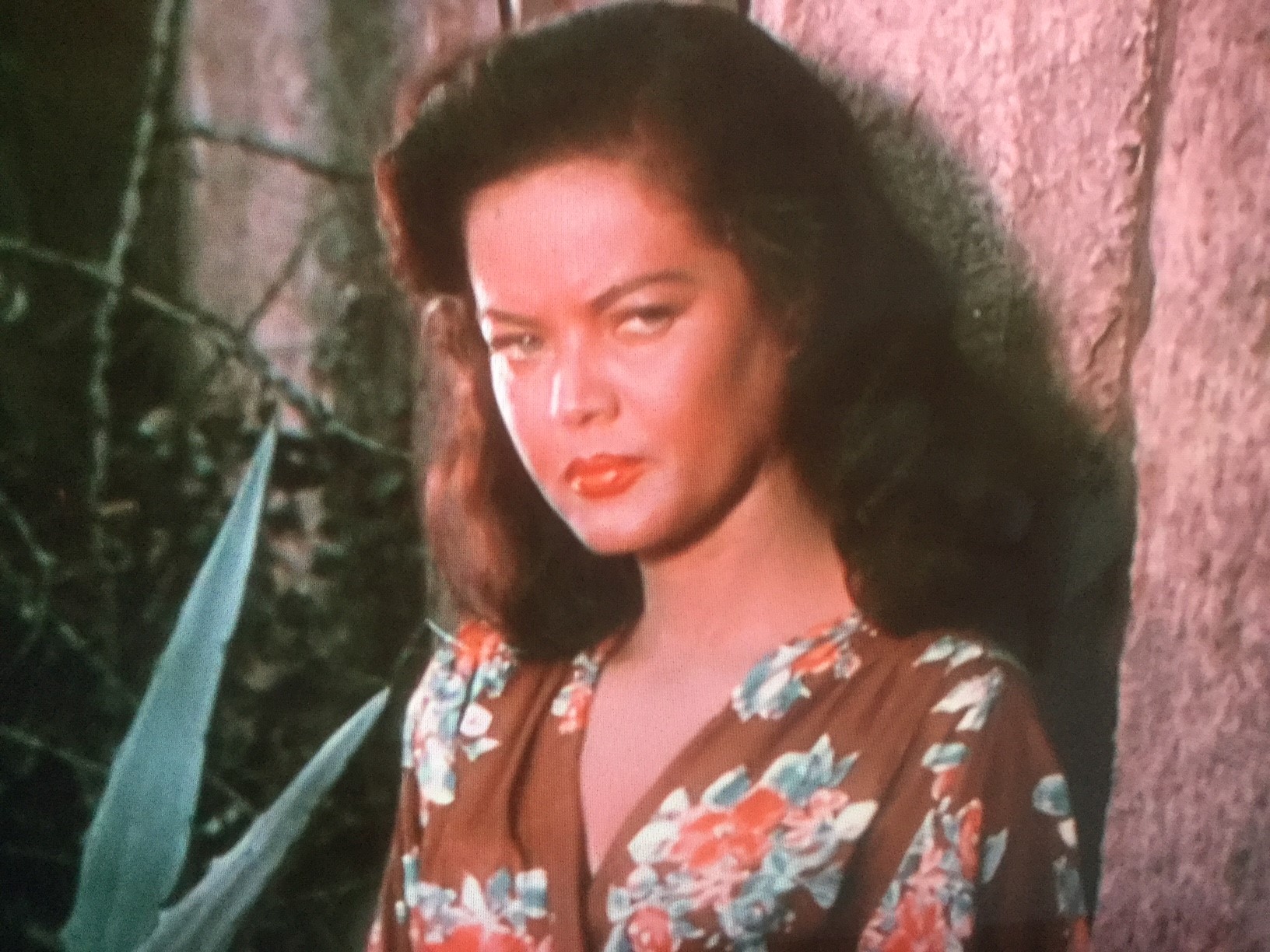
BELOW – Dona Drake as Dolores in a  still from the film : Son of Belle Starr 1953   From  Monogram Son of Belle Starr 1953 C

Above: Peggie Castle and Keith Larsen in a scene

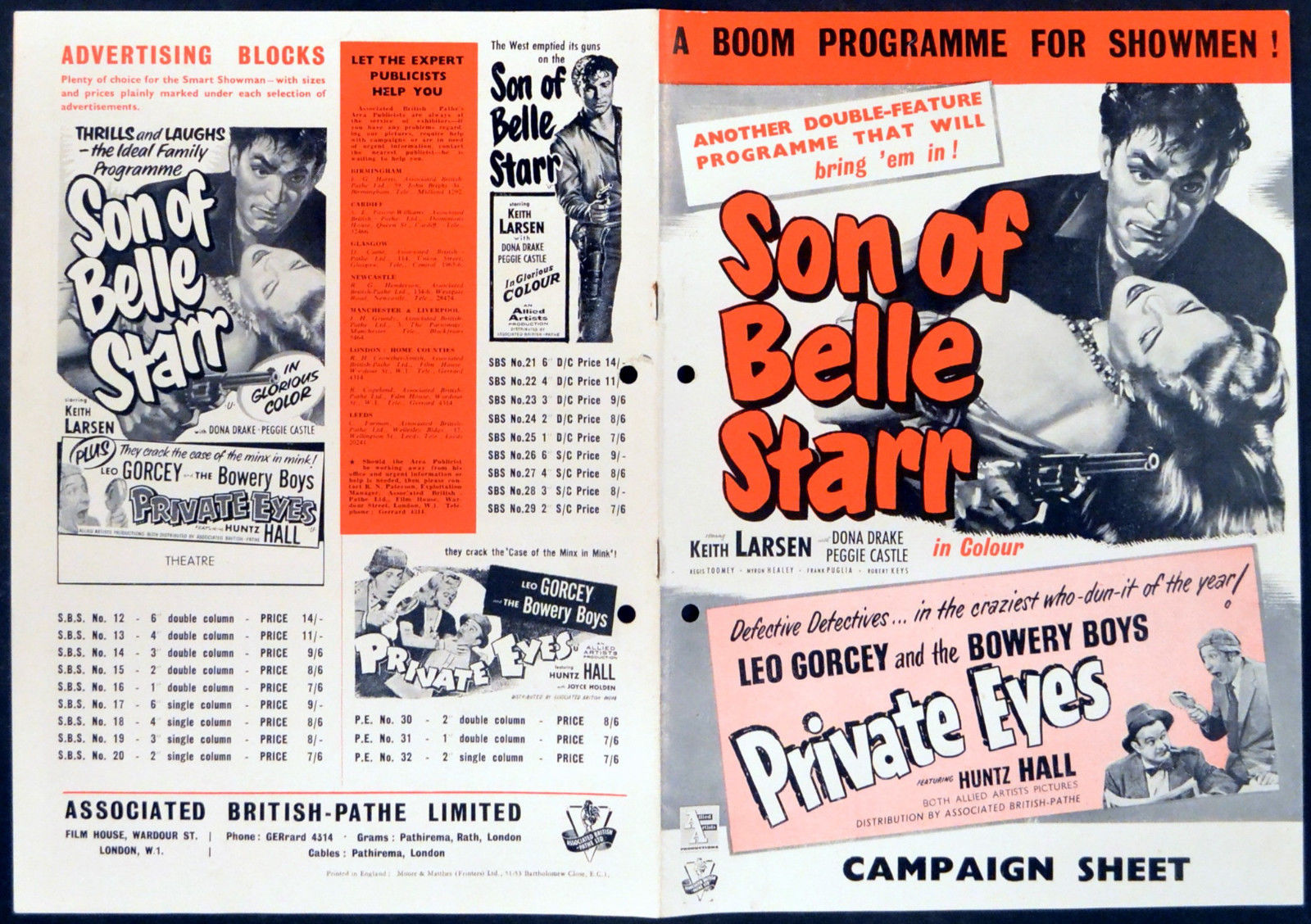
Below – From the Press Book Promotion of the time

Son of Belle Starr 1953         Son of Belle Starr 1953 4  

 I was not at all familiar with many of the cast or the leading actors


posted by Movieman in Uncategorized and have Comments (8)

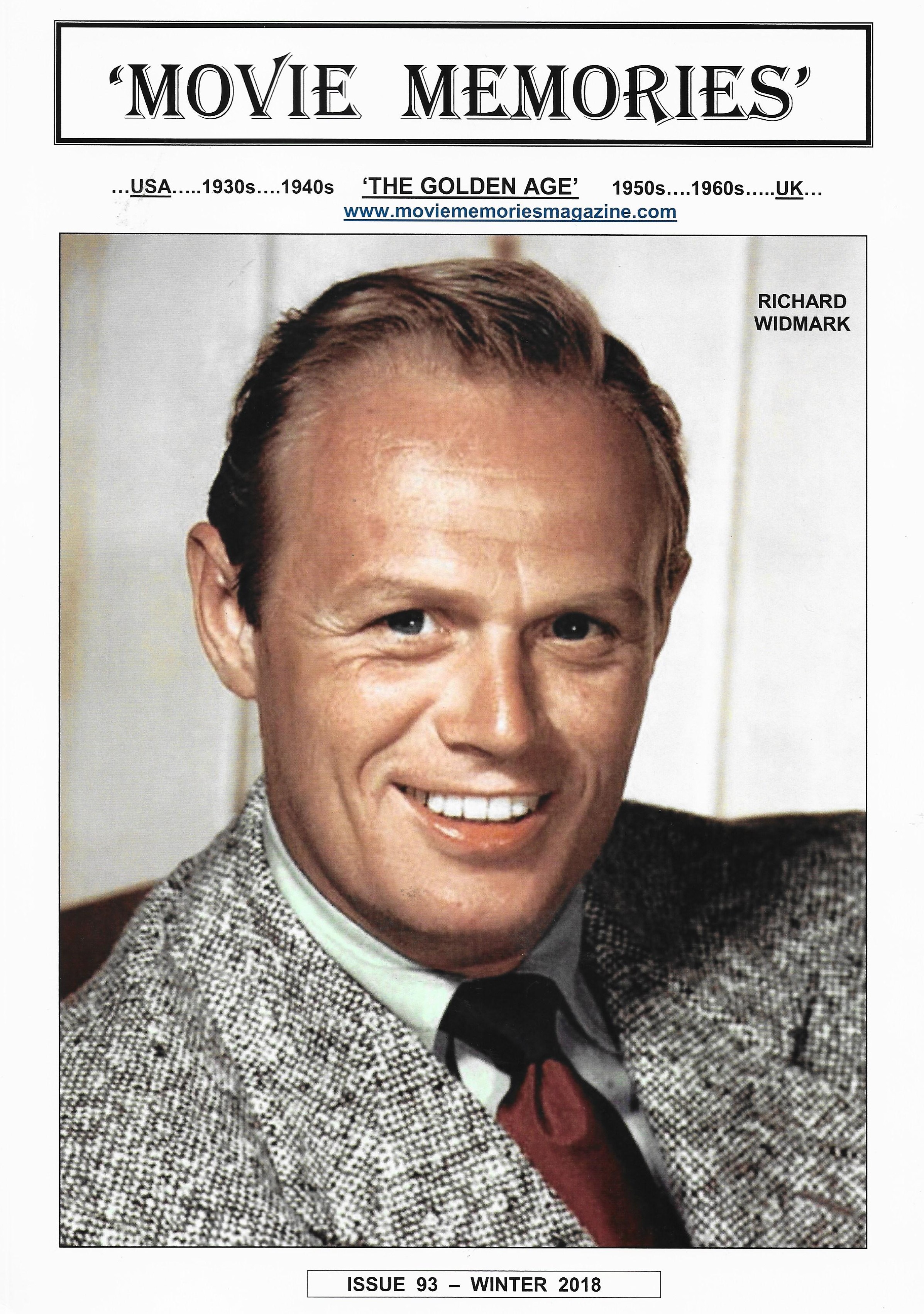
Movie Memories Magazine – Winter 2018 Just Published !!

The  Post arrived yesterday morning with the  large white Envelope  containing the very latest edition – Winter 2018 – of the wonderful Movie Memories Magazine produced by Chris Roberts.

Movie Memories - Winter 2018

This is indeed a great start to the day and I know there will be lots to read – articles, pictures and letters from filmgoers the world over.

Chris always attend the Renown Film occasions and is well known to the stars of that era who seem to  appear every year – in fact he interviews quite a few of them. He shares with many of us a love of the films in the era – we all have slightly different views on the films and the stars I would guess but that is only to be expected – and we all have our own favourite films and actors of course. That era produced film stars who – on the whole – knew how to project themselves and to behave as film stars,  who were admired and in the public eye probably to a greater extent than now,  would do – and they maintained that mystique that is appealing.

If you wish to receive a copy then please contact Chris Roberts at crob.mvm@ntlworld.com

or via the web site www.moviememories magazine.com

OR just leave a message on this site – and I will pass it on to Chris.

Either way I can really recommend this magazine

Renown Film Festival - March 2019

The above Poster appears in this edition of the magazine – promoting the Renown Film Festival – this year in St. Albans at the Alban arena.

Last Year’s event was earlier on 11 th February 2018,  and during the cold ‘Beast from the East’ snap we had –  I was ill over that period and did not attend. However this one is later and is in St.Albans – one of my favourite cities in this country – and one where I have spent a lot of time as a youngster – so it will be a real pleasure to attend this one all being well.


posted by Movieman in Uncategorized and have Comments (9)

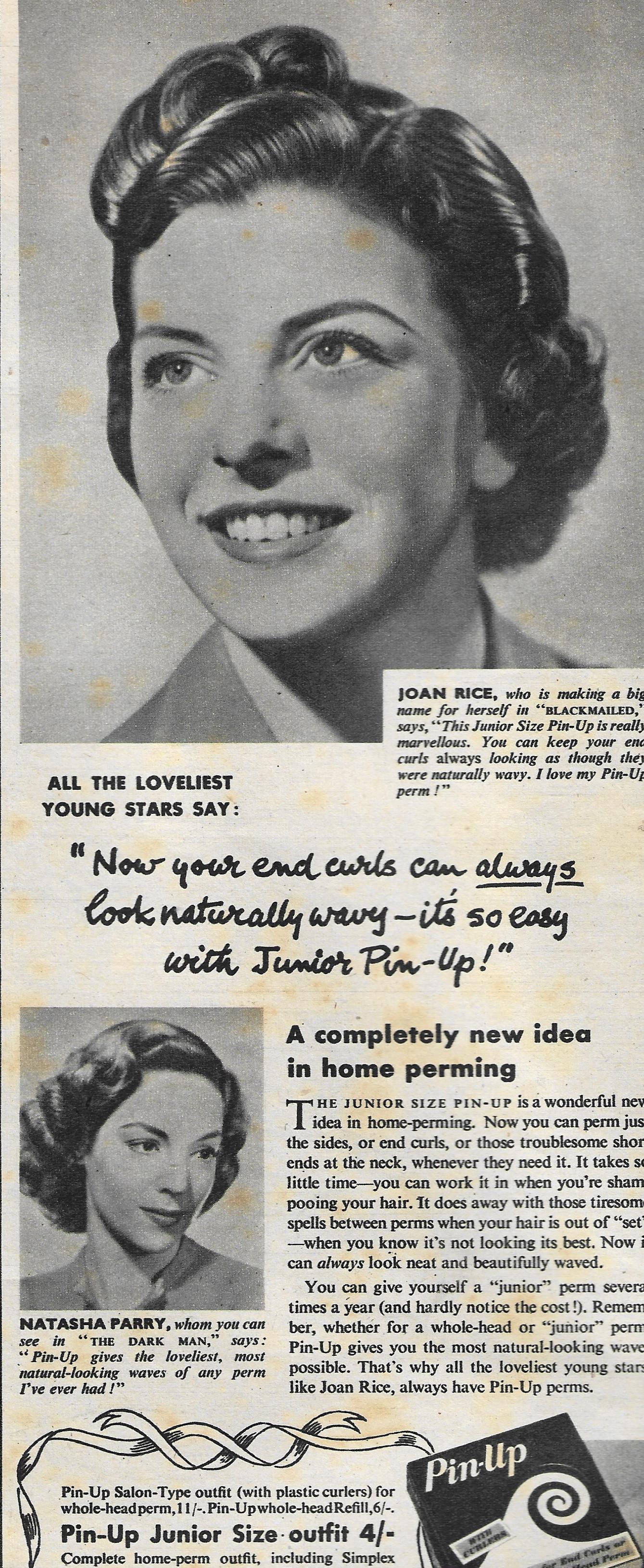
Joan Rice and Natasha Parry – March 1951

These two very lovely film actresses combined in this Advertisement that appeared in the Illustrated Magazine dated March 24 th 1951. I don’t know whether or not they knew one another,  but they were both of a similar age and similar looks really.

Joan Rice and Natasha Parry March 1951

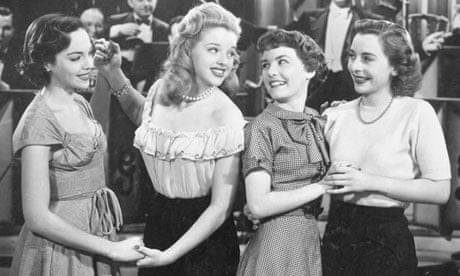
It was only in the last couple of weeks or so that I became acquainted with Natasha Parry after seeing her in Dance Hall on the Talking Pictures film channel – and I have to say I was impressed with her.

Dance Hall 1950 Film

Above: Left to Right: The Lovely Natasha Parry, Diana Dors, Petula Clark and Jane Hylton in Dance Hall

At the time of this advertisement Joan Rice would have just got news that she had won the coveted role of Maid Marion opposite Richard Todd in The Story of Robin Hood and His Merrie Men – to be made at Denham starting in a month’s time from the date of this magazine.

Both careers were on the ‘up’ at this time.

Joan Rice did very well indeed in Robin Hood which went on to have Worldwide acclaim in 1952 before going off to Fiji for His Majesty O Keefe with Burt Lancaster.

After that she just seemed to fade away and we have speculated much on this.   I felt that when she returned from Fiji, something happened in her private life to alter things which affected her career.    Thinking more about it though, I wonder if the months she had away in Fiji meant that in film terms she was ‘out of sight and out of mind’ of the Film Producers and her moment was gone. We will never know.

Natasha Parry was the step-daughter of film Producer Gordon  Parry – and married Theatre Director Peter Brook. She died in 2015.

However relating to this advertisement,  soon after this in 1952, she spent a full year not working at all as she contracted TB. Fortunately she recovered well.

Natasha Parry died on 22 July 2015 (Some sources say 23 July 2015) while on holiday in La Baule, Brittany, France, at the age of 84 after a stroke.  She was survived by her husband and their children, Irina and Simon.

However one snippet of news I have found is interesting. It says “The daughter of a Russian who fled the revolution and is said to be related to Pushkin, her first father was a gambler and newspaper man, her stepfather a film director.”

posted by Movieman in Uncategorized and have Comments (17)

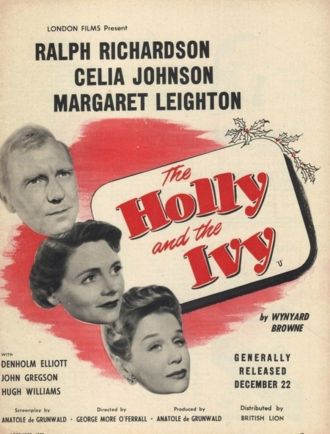
Don’t miss this on Talking Pictures on Christmas Eve – The Holly and the Ivy 1952

This will be , for me, the highlight film of this Christmas – The Holly and the Ivy – 1952. On Talking Pictures Christmas Eve at just after 9 pm.

It is a film I have known for many years and have featured it on this Blog previously but make no apologies for doing so again.  I just love this film – and this type of film. Very British – where we have a family gathering at Christmas – nothing much happens but somehow we are drawn in to the  lives of the family we meet – and find ourselves absorbed in their lives – as they unfold before us. Fascinating.

Christmas Film: The Holly and the Ivy (1952)

The Holly and the Ivy 1952


Starring Ralph Richardson, Celia Johnson, Denholm Elliott, Margaret Leighton, Hugh Williams, Margaret Halstan and Maureen Delaney, the film takes place as a family returns home on Christmas Eve and in the midst of the bright holiday, none of them are very happy and are hiding their troubles.

Rev. Martin Gregory’s (Richardson) wife recently died and his daughter Jenny (Johnson) cares for him at the parsonage. Jenny sends letters to her brother Michael (Elliott), sister Margaret (Leighton), cousin Richard (Williams) and aunts Lydia and Bridget (Halstan, Delaney), inviting them to their home for the holiday.

Jenny is the only child of the reverend who lives at home, and she feels she can’t leave him. But on Christmas Eve she learns that her fiancé David (John Gregson) is being transferred to South America for his job. David tells Jenny that he told his job he would be bringing a wife, but she doesn’t feel she can marry and leave her father. She wishes her younger sister Margaret would leave the city, where she works as a fashion writer, and live at home. But Jenny isn’t even sure Margaret will come home for Christmas.

 As each family member arrives home, they bring their problems. Michael is in the Army and lies his way to get leave so he can go home. Aunt Lydia is a grand, wistful, and dreamy woman who has been a widow for 30 years, but talks of her deceased husband constantly. In stark contrast, Aunt Bridget is crabby and constantly criticizing everyone. Bridget never married, because she spent her life caring for her mother.

Margaret arrives late on Christmas Eve and is deeply troubled by loss she experienced during and after World War II. She masks her pain by drinking and only confides in Jenny. Margaret doesn’t feel that she can divulge her sins to her father because he is a holy man. Michael and Margaret feel that they will be judged by their father and will receive a religious lesson if they discuss their indiscretions with him.

The Holly and the Ivy 1952 2

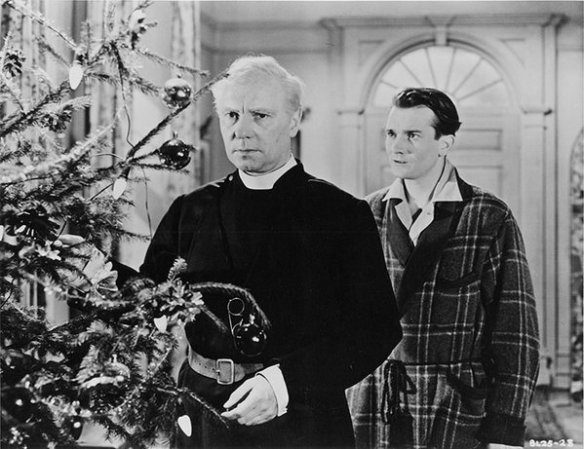
Ralph Richardson as Rev. Gregory and Denholm Elliott as Michael (Mick) Gregory

When the Reverend realizes his children never brought their pain to him and why, he feels he has failed as a religious figure—he isn’t there to criticise but to help.

Set on the snowy English countryside, “The Holly and the Ivy” (1952) has a cozy, warm feel.

Although the holiday surroundings are inviting and happy, no one seems to like Christmas much. Jenny decorates the house “because it’s what we always do.” David says decorating is a waste of time. Michael and David agree that Christmas is depressing. Margaret wonders why she even returned home.

The Holly and the Ivy 1952 3

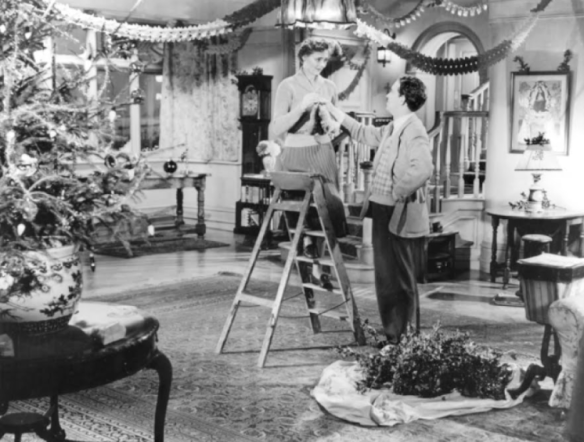
Jenny (Celia Johnson) and David (John Gregson) decorate the vicarage.

Even the Reverend says he hates Christmas, because it focuses more on drinking and commercialism and “No one remembers the birth of Christ.” He also hates giving his Christmas sermon, because he knows everyone is fidgeting and “wanting to get home to baste their turkeys.”

The Holly and the Ivy 1952 4

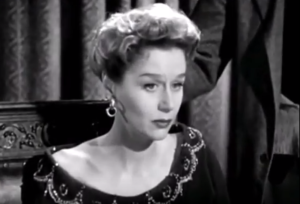
Margaret Leighton as Margaret in The Holly and the Ivy (1952)

Celia Johnson’s character of Jenny is the calm and responsible daughter who is concerned for the family. Margaret Leighton’s character of Margaret is hard, bitter and emotional.

Margaret Leighton does a good job of exhibiting the pain within her – from her life’s sad life experiences that we eventually hear about.

Denholm Elliott’s Michael doesn’t seem to take life too seriously.

While the film is largely a drama, the aunts played by Margaret Halstan and Maureen Delaney ( reprising their West End Theatre roles.) supply the comic relief.

“The Holly and the Ivy” originated as a play by Wynyard Browne, which premiered on London’s West End at the Duchess Theater in 1950.

It is easy to see that this film was adapted from the stage by the extent of dialogue, long scenes and drama – it comes to the screen very well indeed – and I love it.

posted by Movieman in Uncategorized and have Comments (10)

Patricia Medina – Back in England to film

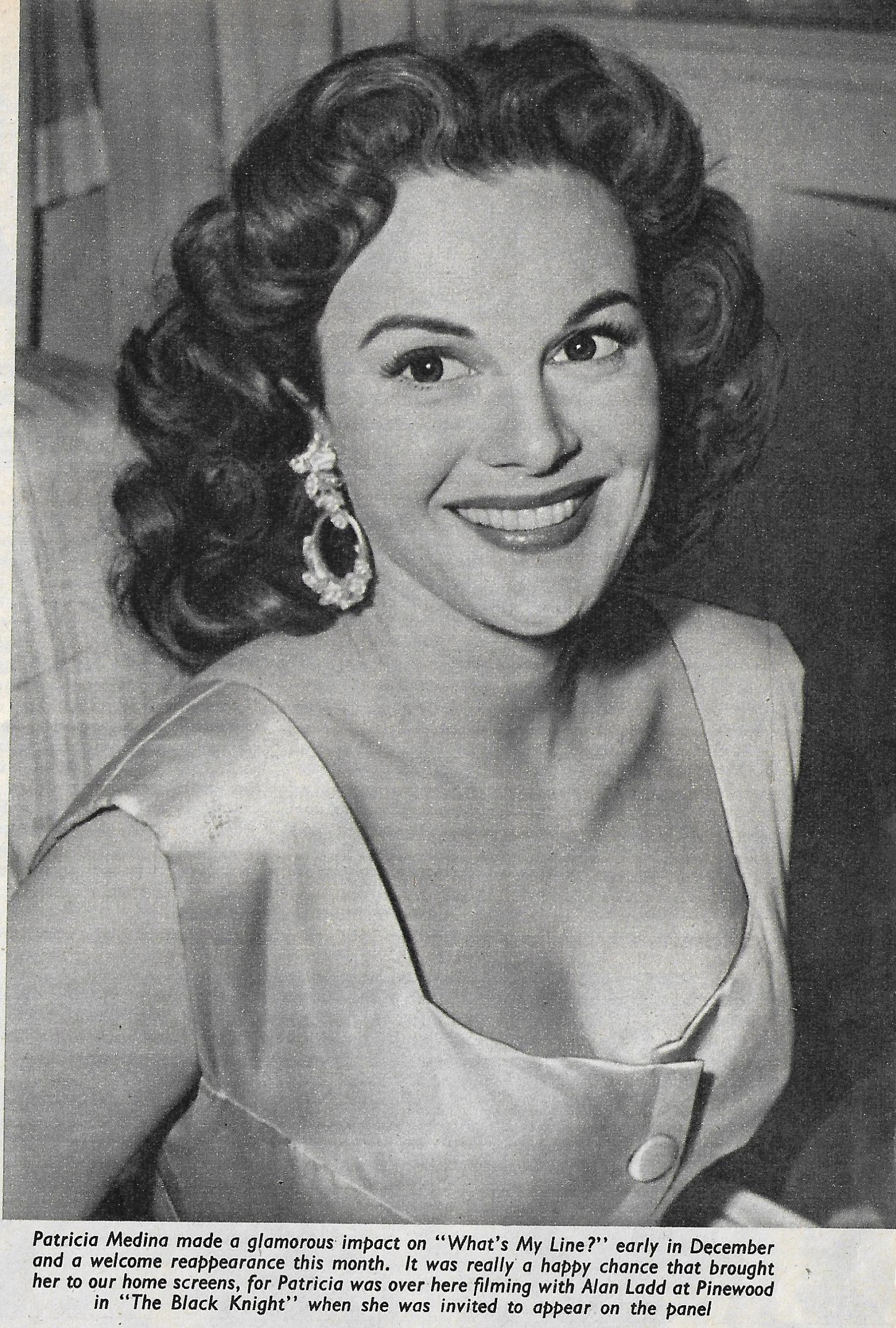
Patricia Medina pictured when she had arrived back in England – probably towards the end of 1953 to filmThe Black Knight with Alan Ladd at Pinewood Studios.

Patricia Medina

This  picture  was taken after she had appeared as a panellist   on   Whats  My  Line in early December 1953

She had appeared opposite Alan Ladd a couple of years before this one – in Botany Bay 1952 – another of my favourite films.

She made four films in 1953 alone, followed in 1954 by Phantom of the Rue Morgue and an adventure film  The Black Knight, made in England and in which she co-starred with Alan Ladd .

Patricia Medina had married, in 1941, Richard Greene, the strikingly handsome Irish star who was later to star in The Adventures of Robin Hood on British television.     After divorcing him in 1951, she lived alone in Hollywood, terminating her MGM contract and moving to Columbia.

On visits to London she regularly appeared on BBC television as a panellist on What’s My Line? (1951-63) with personalities including Gilbert Harding and Barbara Kelly.

Shortly after her marriage to Joseph Cotten in 1960, the couple embarked on the first of several theatre tours of the United States. Her only significant film thereafter was The Killing of Sister George (1968), in which she played a prostitute.

Joseph Cotton referred to Patricia Medina as having the most beautiful face in Hollywood – and seeing that he had worked with some of the classically beautiful women of the era, that is some compliment. He was right I’m sure.

After Joseph Cotten’s career was terminated in 1981 by ill health, Patricia Medina devoted herself to caring for him until his death in 1994 . In 1998 she published her autobiography.

I must look it up and buy it.

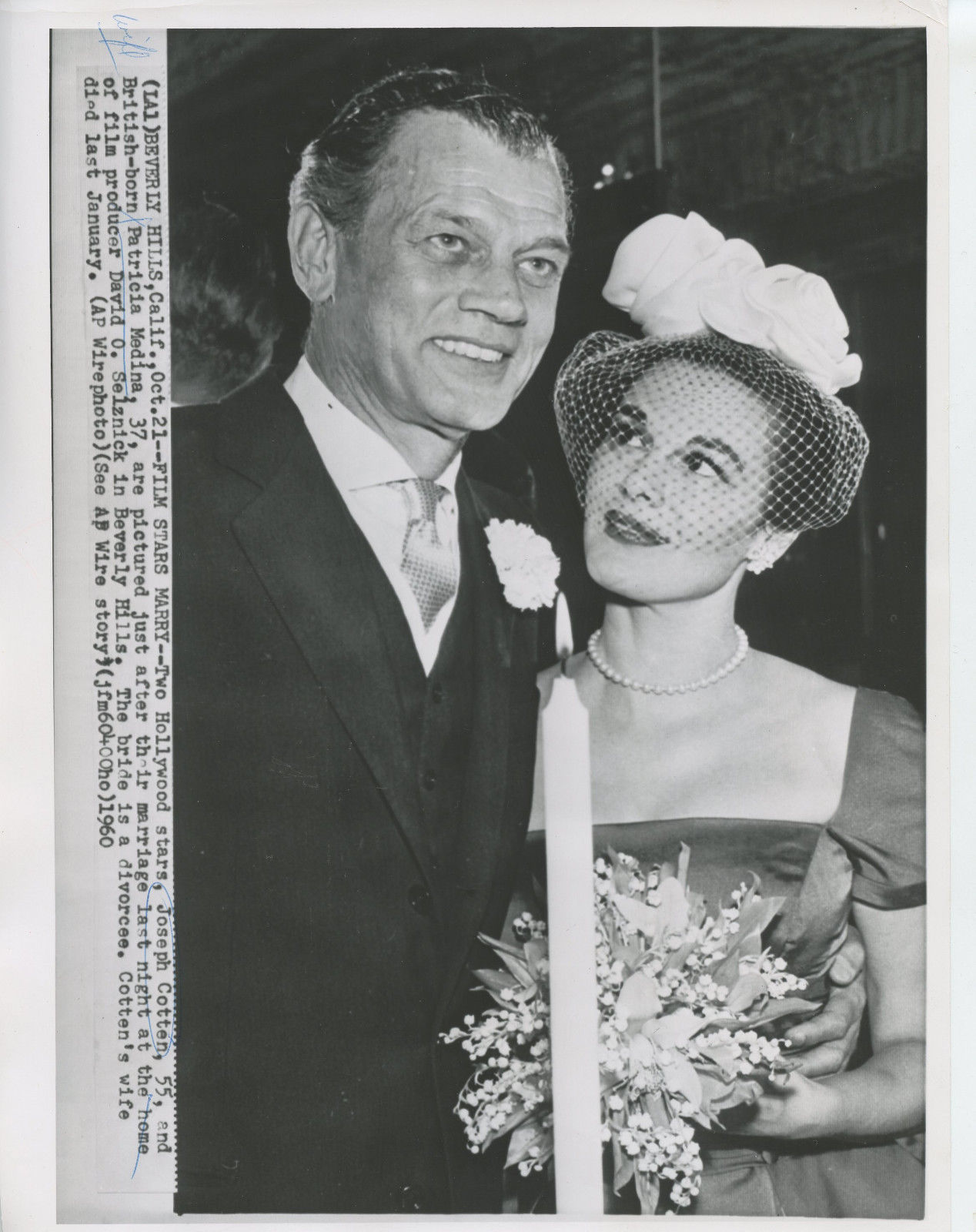
Patricia Medina and Joseph Cotten on their weddding day

Patricia Medina and Joseph Cotton on their Wedding Day – Above

They were  married at the Home of David O. Selznick and Jennifer Jones  in Beverley Hills, Hollywood on 20 October 1960.

posted by Movieman in Uncategorized and have Comments (10)

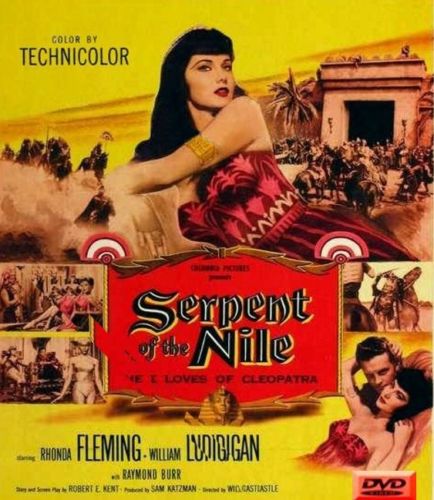
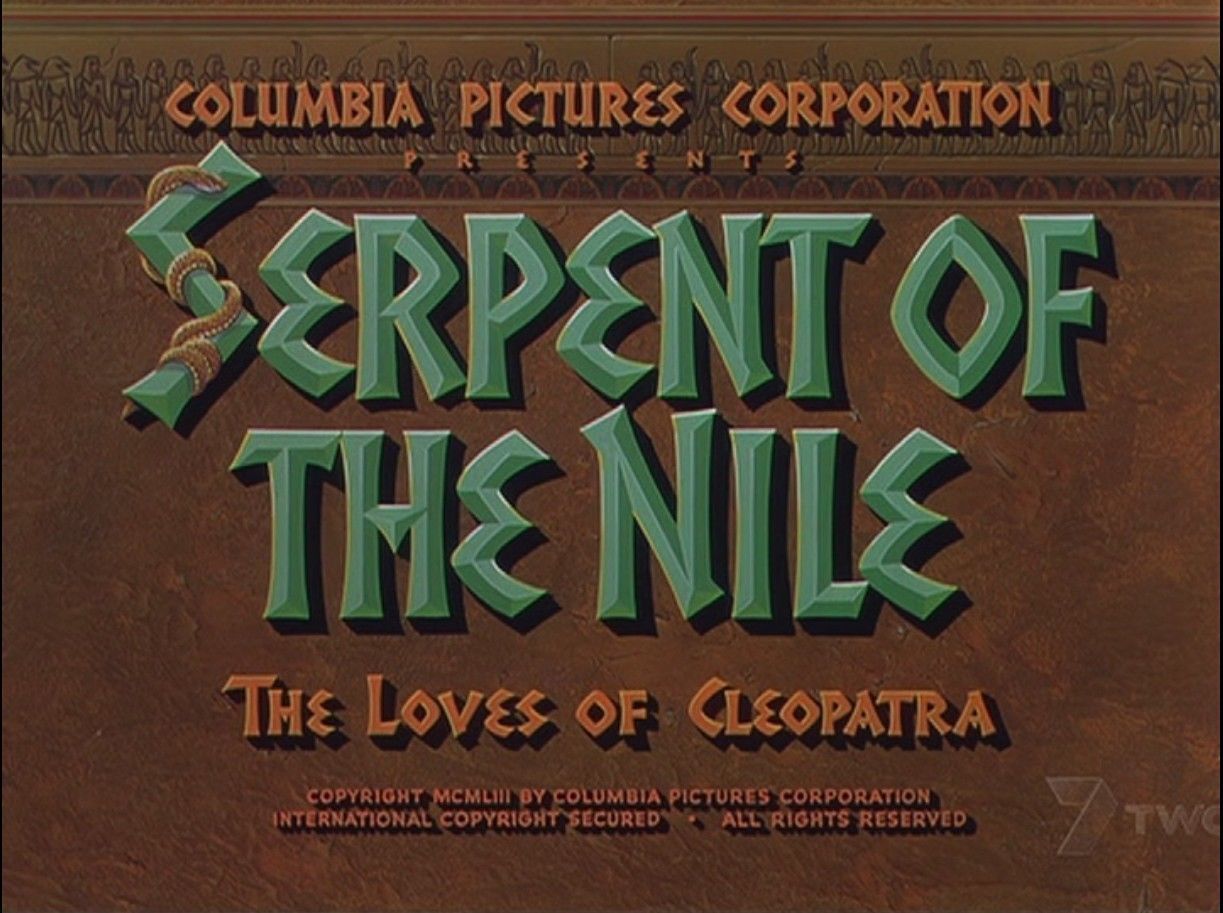
Serpent of the Nile 1953

Serpent of the Nile is another version of Cleopatra. The Queen of Egypt is played by Rhonda Fleming, and with Raymond Burr as Antony.

Filmed in Technicolor

This film enjoyed something of a renaissance in 1963 – ten years after it was made – at the time of the release of Cleopatra – Elizabeth Taylor and Richard Burton famous version. This film was shown quite a lot on Television at that time obviously designed to take advantage of the immense publicity that the  film Cleopatra had given us.

Serpent of the Nile 1953 Director: William Castle Writer: Robert E. Kent (story and screenplay)   Stars: Rhonda Fleming, William Lundigan, Raymond Burr, Jean Byron, Michael Ansara, Michael Fox, Julie Newmar Serpent of the Nile 1953 2 This  is a low budget film but works quite well  –  Raymond Burr, who really hadn’t made his name at this stage, but he manages to impress as a drunken, weak-willed Antony, while Rhonda Fleming as Cleopatra is stunning and manages to toss in a goblet-throwing temper tantrum here and there.

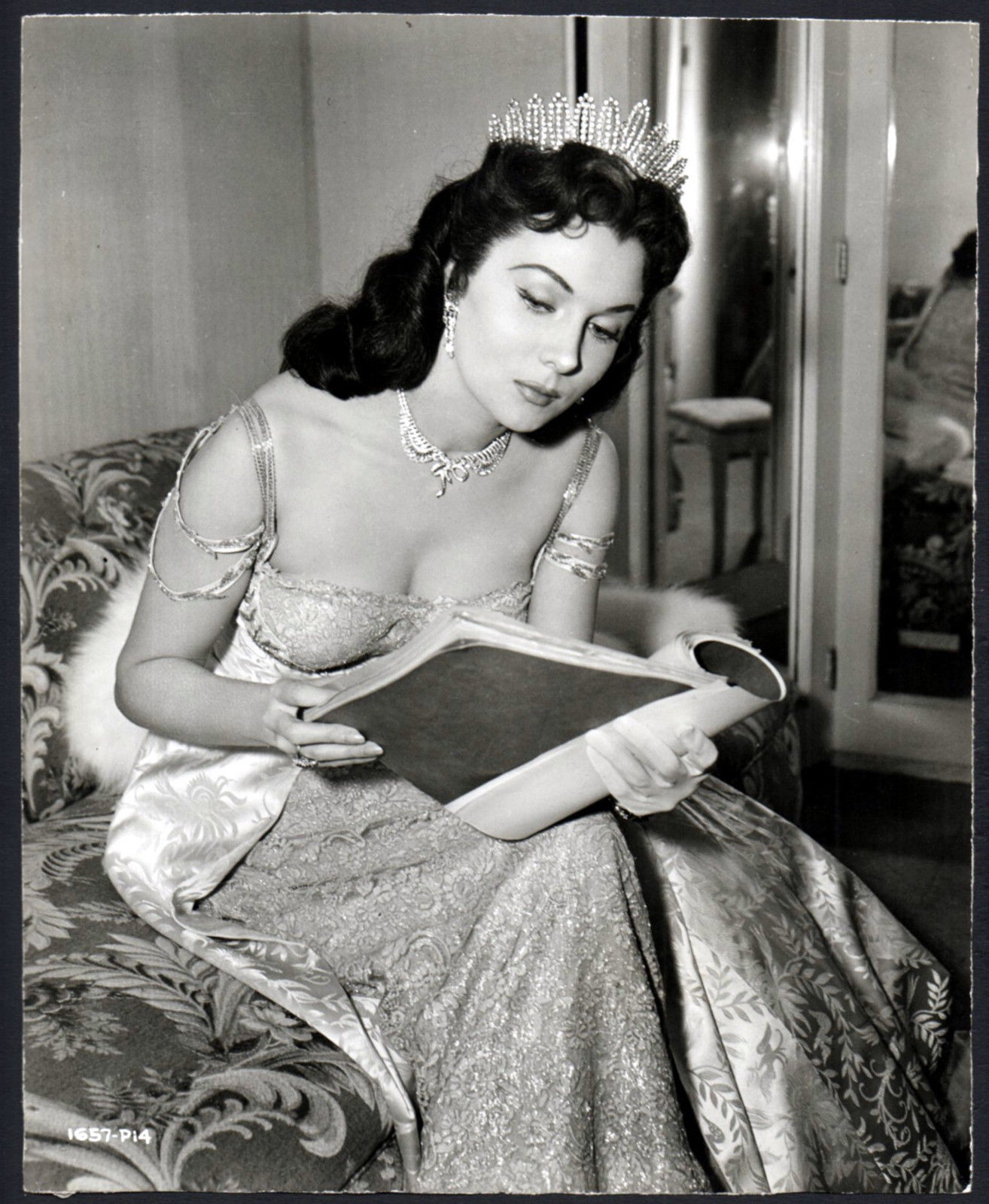
Rhonda Fleming

Above: Rhonda Fleming reads the script

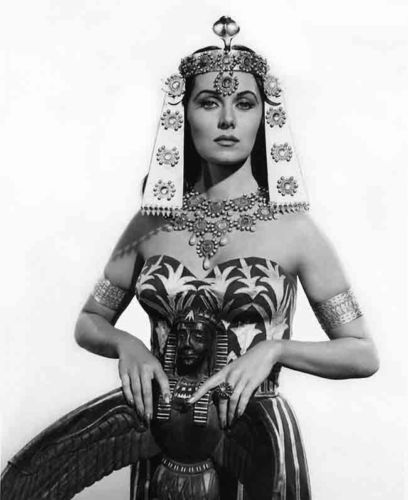
Rhonda Fleming 2

Above: Rhonda Fleming in her role

Rhonda Fleming plays Cleopatra as a scheming type with totally unrealistic expectations for her lovers who are entertained them with whip-wielding women dressed as Roman soldiers.

William Lundigan plays her  love interest, Antony’s associate who apparently had an affair with her years before as one of Caesar’s guards. Nobody looks particularly Egyptian, and Raymond Burr sounds more like Perry Mason than a Roman General. It’s never really made clear why he went to Egypt in the first place, except that he “likes to have Cleopatra around” while Octavian takes over where the real action is – back in Rome.

Michael Ansara is around as Cleopatra’s somewhat bumbling heavy There are some good action scenes however – one scene has Egyptians wrestling a real Bear – and another good action scene involving some daringly placed cameras under the hooves of charging horses and chariots. In among all that there are some  cheap sets and  matte paintings. And there are a lot of costumes for a cheap film.

Credit to a good script and lead performances and to William Castle for keeping it moving and colourful–something he always did.

posted by Movieman in Uncategorized and have Comments (11)

Ellis Powell – Mrs Dale on Radio

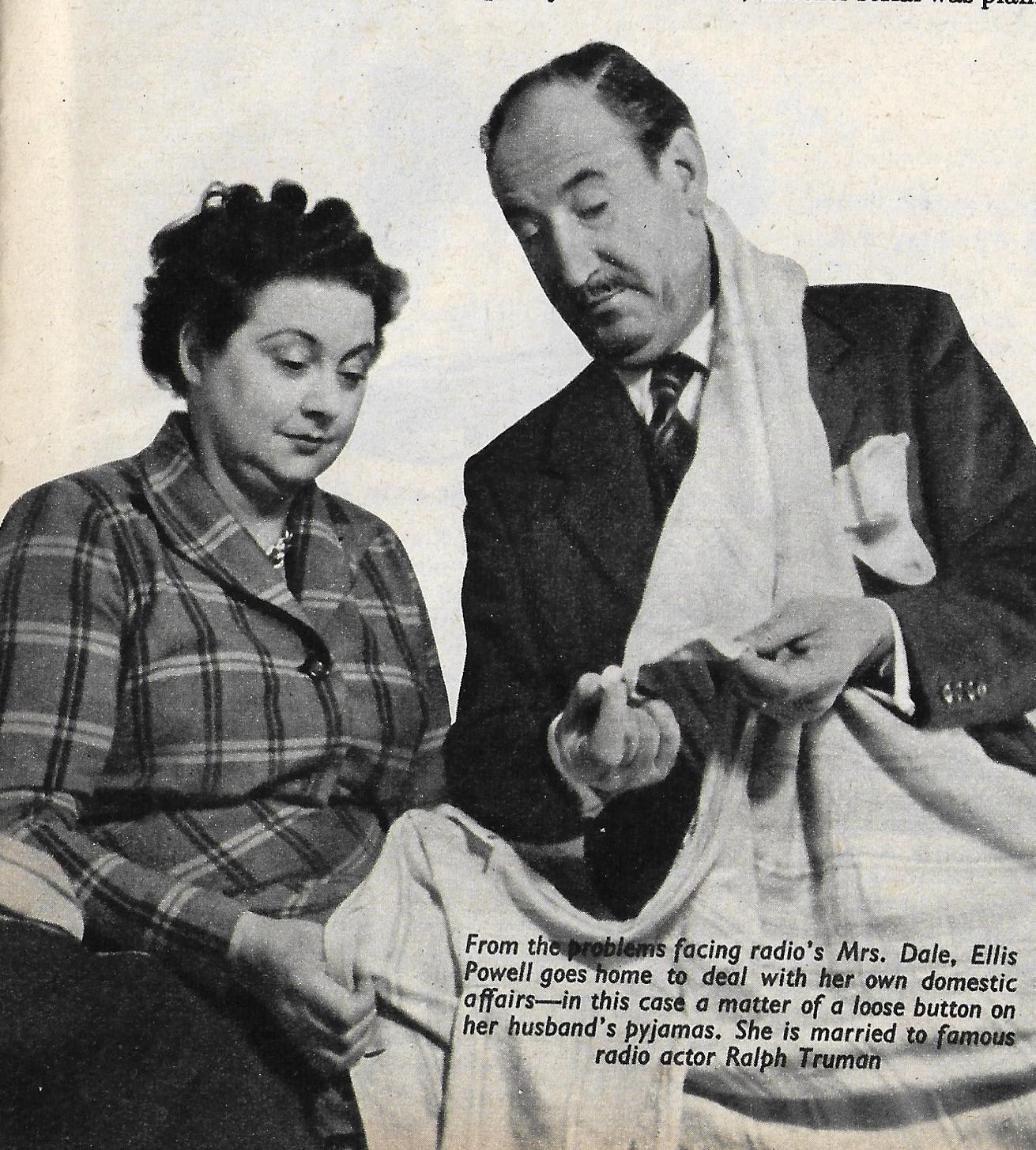
Ellis Powell played Mrs Dale in Mrs Dale’s Diary on BBC Radio in England from 1948 until 1963 when the role was taken over by Jessie Matthew.   Ellis Powell was married to well known film actor Ralph Truman who had many roles although one memorable one for me was as George Merry in Walt Disney’s Treasure Island made at Denham Film Studios and released in 1950.

Byron Haskin, the film’s director, said that he had realised when casting the film, that Robert Newton was just going to ‘let rip’ in the role of Long John Silver – which he did very successfully – so as a sort of balance, he cast Ralph Truman and with instructions for  him to go well over the top in his portrayal of George Merry – and so successfully did he do that, that Byron Haskin said that in the scenes they played together it almost made Robert Newton actually look as though he was underplaying his part. Ellis Powell and Ralph Truman

There is very little information about Ellis Powell available anywhere although she had the main role in the very earliest of Soaps on Radio – of course – Mrs Dales Diary.  She had been a Radio Drama actress from before the War – in fact right through the War until in 1948 she landed this part. She was part of the BBC Radio drama team that was shipped out of London during the War and based in Evesham where she appeared in many radio plays, although some of them were produced in Manchester. Ralph Truman also was a very well known BBC Radio drama actor with up to 5,000 broadcasts to his name. They may have met through BBC radio I would guess.

Mrs Dale 3 Above – a posed still for Mrs. Dale’s DiaryEllis Powell and Grace Allardyce in a scene Ellis Powell


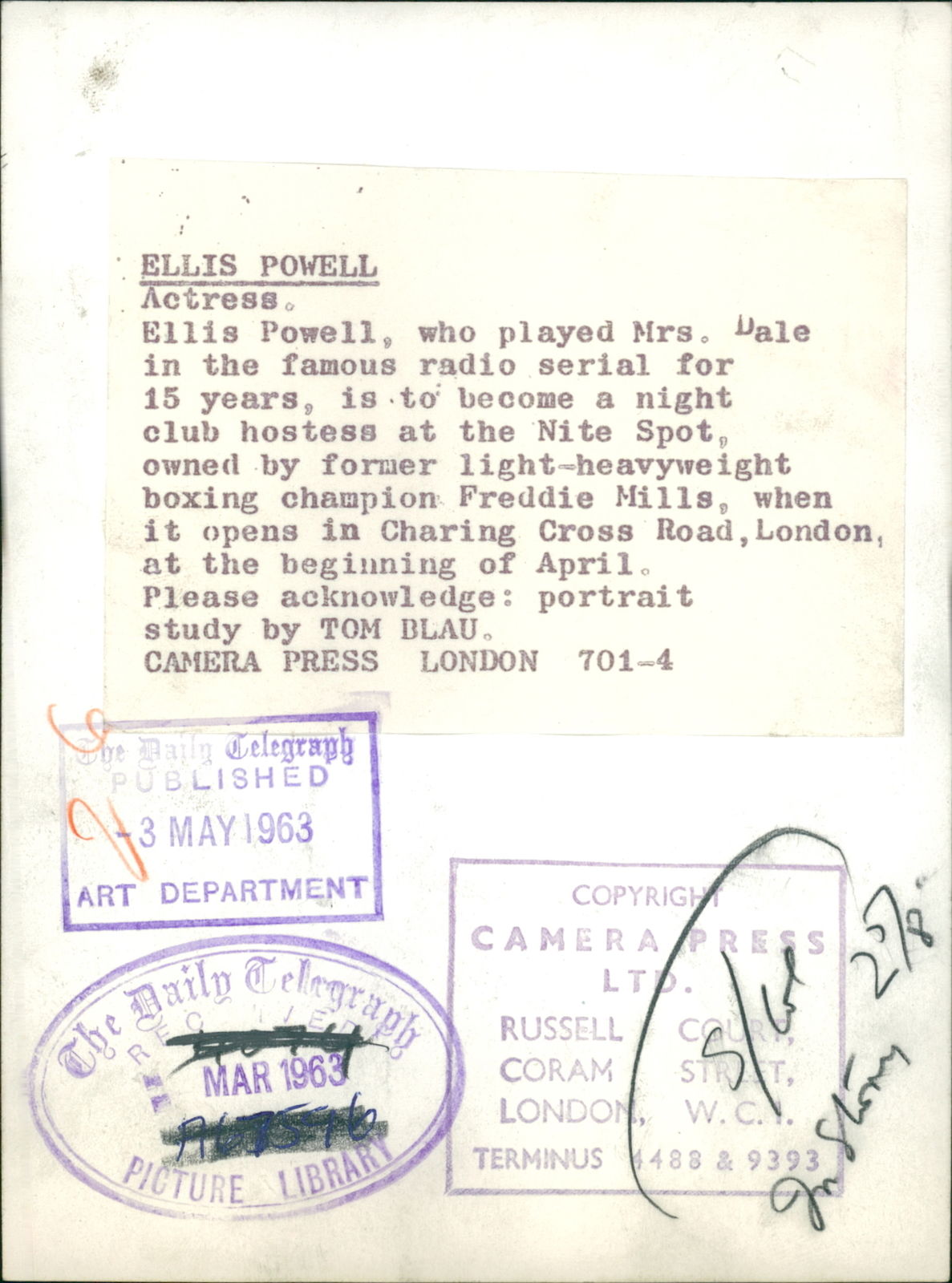
Something that is not known generally is that shortly after she left the role as Mrs. Dale. she agreed to become a  Night Spot Club Hostess at the  Nitespot in Charing Cross, London owned by former Light-Heavyweight Boxing Champion Freddie Mills which was due to open at the end of April 1963.  Freddie Mills had been part owner of a Restaurant and was having this converted to the so-called Nite-Spot. It seems that Ellis Powell lost her job as Mrs. Dale in February of 1963.  She was then offered this job from late April 1963 and she died on 2 May 1963. Just over two years later Freddie Mills was found shot dead in his car – it was reported as suicide although there has been some dispute over this.

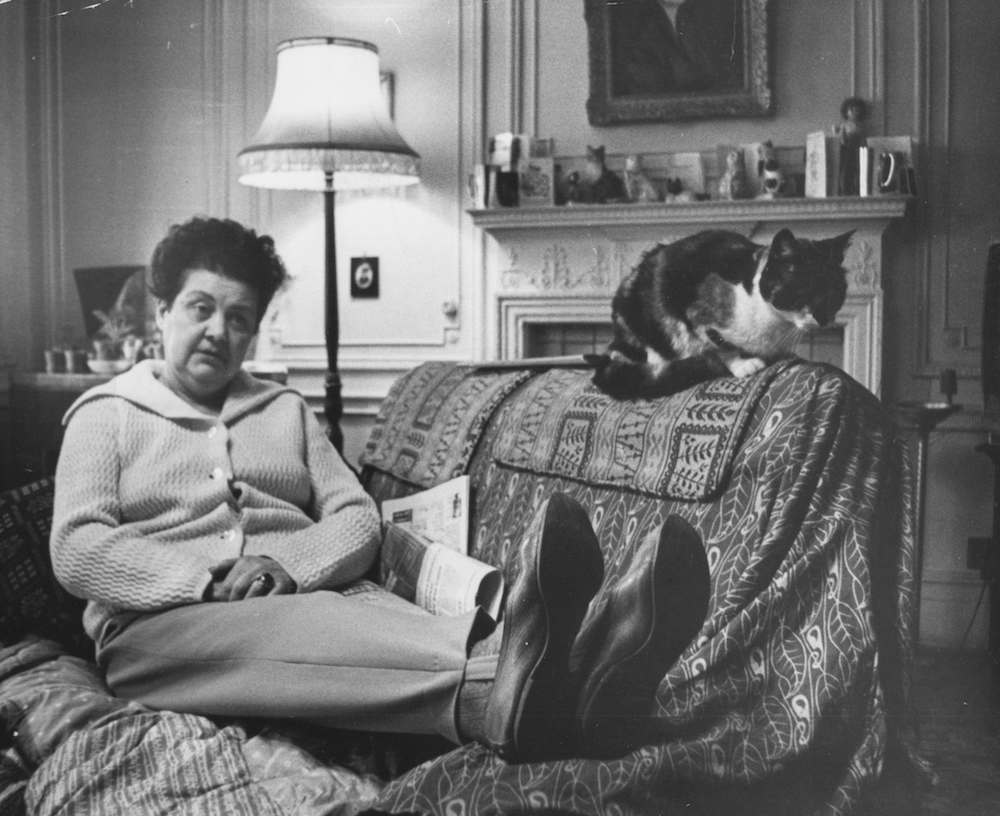
Ellis Powell at Home 1963 Above: Actress Ellis Powell sitting with her feet up and her pet cat next to her, pictured following her dismissal from the radio series ‘Mrs Dale’s Diary’, at her home in London, February 20th 1963 – this is the day after she walked out of Broadcasting House (BBC)  for the last time after being cruelly sacked from her long running part as Mrs Dale.

Ellis Powell was reported to have been ‘sacked’ from Mrs Dale’s Diary  – and from her long running role as Mrs. Dale – she walked out of Broadcasting House on 19 th February 1963 for the last time – very bitter. She had earned £ 30 per week for her role,  although her voice was well known to millions of listeners the country over – but her face was not- so she found fame of a sort but not a fortune – in fact very little. She had been fired partly it is alleged because of her drinking habits but also because – in typical BBC fashion – they wanted to give the programme a face-lift. ‘ The BBC have chucked me out like and old sock’ she said. Her fans believed that she never recovered from the shock and distress of her dismissal. In the last weeks of her life she is reported to have worked as a Demonstrator at the Ideal Home Exhibition and as a Cleaner at a Hotel – although this is at odds with what I have found out that she had lined up this job at Freddie Mills’ NiteSpot.  Maybe she was just taking any job that came in her desperation. There are also references to the vague similarity of the True Life story of Ellis Powell to the plot of The Killing of Sister George – but to me that is stretching things a bit far unless there is something that links the two which  is not  generally known – although on the other hand from the outline of the story of the film below does have a parallel – that is clear.

I have come across this mini article below :- Marcus’s play was inspired by a controversial incident in 1963 when the BBC sacked a beloved radio star and was replaced by Jessie Matthews. The radio soap Mrs Dale’s Diary had been running since 5 January 1948 when the BBC decided to replace the lead actors and move the setting to a new town, with new supporting characters. The actress who had played Mrs Dale for 15 years, Ellis Powell, never recovered from this blow and died three months later, at the age of 57, through the shock and distress of her summary dismissal by the BBC.

Also I have seen another reference to her ‘at one time married to the actor Ralph Truman’ but as far as I can see she remained married to him until her death.

In fact in an interview for a 1954 magazine, she says that she was like Mrs Dale I some ways – they both lover, gardening, They both loved children and they both loved cats although she said that she had three cats Joe, Tortese and Baby Bella , whereas Mrs Dale had one called Captain. Ellis Powell also said that Mrs Dale had a son called Bob and she had a son Clive who was a similar age both in their earl 20s in 1954.

She had married Ralph Truman on 8th March 1928 so presumably had her son Clive around 1930 ish – that is a very little reported fact.

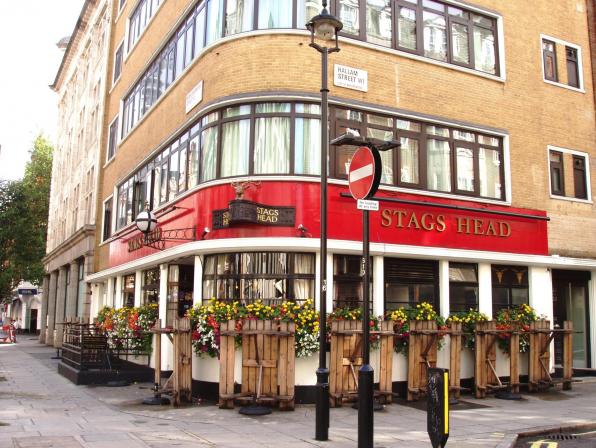
Stags Head London W1W 6XWApparently Ellis Powell  did use this local –  the Stags Head – close to Broadcasting House.

Also just come across these stark facts which gives Ralph Truman’s  and Ellis Powell’s  full name :-

Ralph du Vergier Truman, 1900 – 1977

Ralph married Ellis Agnes Estelle Truman (born Powell).

Ellis was born in 1905, in London, England.

posted by Movieman in Uncategorized and have Comments (15)