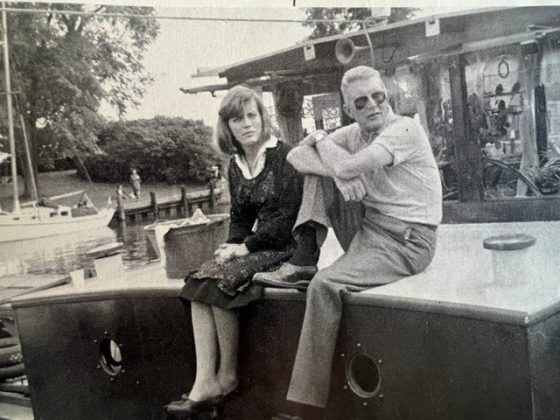
Stephen Boyd and Dolores Hart “Romance on the Run”- Movie Mirror September, 1960
We often hear that Dolores Hart was the girl who kissed Elvis – and speculation often comes back to any romance that might have been there – but in fact there was no romance at all. It was most likely because she was in love with another actor – Stephen Boyd.
Dolores Hart and Stephen Boyd were good friends after making “Lisa” together in 1961. They had previously worked together on an excellent World War 1 TV romance called “To the Sound of Trumpets”, which aired on February 9, 1960 on television for Playhouse 90. In Dolores’ autobiography The Ear of the Heart she describes working with Boyd on “To the Sound of Trumpets” :
Stephen Boyd and Dolores Hart
Dolores Hart said:Stephen was an amazingly gentle man for his brawn and size. He wasn’t tall but had substantial bulk- which I was gratefully aware of when he had to carry me. Most of my scenes were with Stephen, and we were frequently together for publicity interviews and photo layouts. But we also seemed to seek out each other’s company in private time. When I was working, I usually didn’t date, but on LISA, I saw Stephen for supper almost every night.
At first, Stephen found it difficult to open up, but gradually he became willing to speak about his private life. When I was agonizing over Mom’s fall off the wagon, he told me I shouldn’t waste my time shaking my fist at her. He admitted that he had also had a problem with alcohol and bluntly said that I couldn’t help my mother, that only she could help herself. He had stopped drinking only when he wanted to.
I found him deeply spiritual. We had many discussions about religion, in a general way, but occasionally we spoke of Catholicism. Stephen was adamant that although he was genuinely interested in the broad spectrum of religion, he was not attracted to any specific church. He would come to change that stand.
Our dinners grew to two and a half hours of soul-searching and reaching out, which Stephen acknowledged as a gift of understanding. Most men are dominant and directive. They’re threatened by a woman’s inner sense of authority. Stephen could expose his vulnerability. He let me show my authority. It didn’t make him feel less masculine. They are threatened by a woman’s inner sense of authority. Stephen could expose his vulnerability. He let me show my authority. It didn’t make him feel less masculine. I was grateful for his trust and began to feel that our relationship has a potential future.
By the time we got to London, I knew my feelings for Stephen had gone as far as they could go on a friendship level. I felt I had an obligation to indicate I was ready to move to a more personal one. Up to this point, there hadn’t even been a kiss. Not that I had never kissed Stephen, but it had never been that kind of a kiss.
Dolores Hart and Stephen Boyd at “Lisa” movie premiere
One evening, returning from one of our walks in Saint James’ Park, we stopped at the front door as we had so many evenings, and I suddenly said, “Stephen, would you like to come in?” He looked at me and said, “Yes.” He leaned forward to kiss me, but the kiss was placed on my forehead. “Yes,” he repeated, “but you’re marked. Don’t you know that?” I was confused. I felt hurt. Had I exposed my vulnerability, my trust, only to be rejected? I wondered what he had meant by saying I was ‘marked’, but I didn’t ask for an explanation then. I never did. Our dinners and talks continued, but we never mentioned that evening. When the film was over, our lives moved apart. But I heard his voice–“You’re marked”- often.
Dolores would go on to become a nun at the Abbey of Regina Laudis in Bethlehem, Connecticut in 1963.
I walked in the woods and sat in the sunny green fields watching lazy clouds overhead and wondering whether I would be able to come to grips with my life….I pondered a strange new awakening in my heart that cried for explanation…Yet I couldn’t get Stephen’s words out of my head: “You’re marked.” He had spoken softly but with such sureness….I was allowed to take two called that just happened to come in during my period of free time. Neither was monitored. One was from Elvis..the other call was from Stephen Boyd, who tried to sound supportive but, I could tell, was not thrilled with my move. He promised to visit as soon as it was permitted.
Stephen did indeed come to visit Dolores at the Abbey in early 1966, after he attend the premiere of The Oscar in New York City.
It was not a comfortable reunion. It was obvious that Stephen had a difficult time dealing with the grille. He later admitted it was like seeing me in prison. He told me he had become interested in Scientology. Remembering his distaste for organized religions, I cautioned him to think twice before getting too involved. He left the parlor quite abruptly, but instead of going to his apartment in the guesthouse, he drove right back to New York. He did not visit again, but we continued to correspond…(In 1970) he announced his plans to become an active member of the organization (Church of Scientology) and said that his life and mine could never find a crossing point, which saddened me. Stephen died of a heart attack in 1977.
Above- Dolores liked to draw cartoon caricatures…here she is on the set of The Inspector trying her hand atdrawing Stephen.
After Stephen Boyd and Hart had starred in the TV Program “To The Sound of Trumpets” 1960, their press agents got them together for two separate magazine layouts to push their career visibility. This took place a year and a half before they filmed “Lisa” together. Below are pictures from these two photo shoots. One was labelled “Boyd Meets Girl” from Movie Life Magazine June 1960, and the other was called “Romance on the Run” from Movie Mirror Magazine in September of 1960.
This film was shown on Talking Pictures this morning 21 July 2026
Anthony Asquith is the Director who does a really good job with this British wartime film with a thrilling climax.
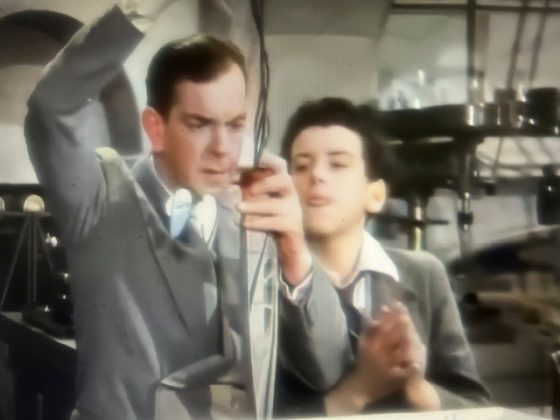
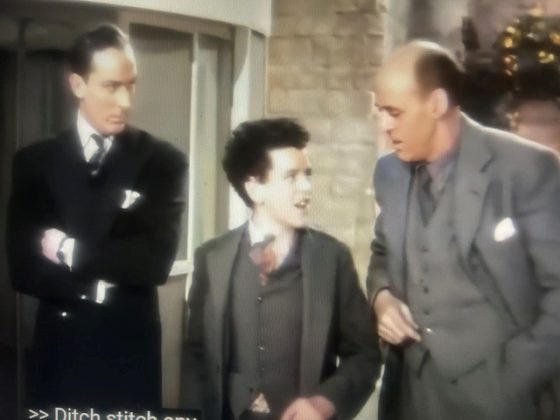
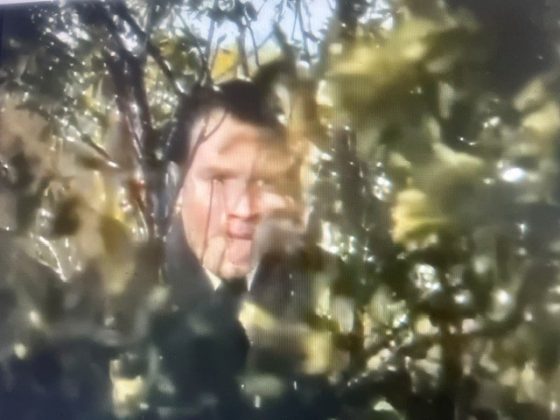
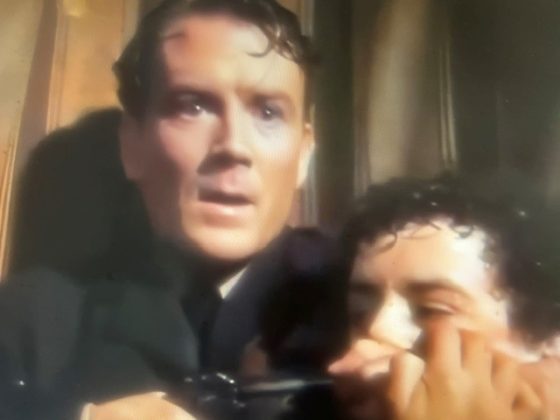
These stills were taken from a Colorised Version that I came across
In the cast is Leslie Banks playing a scientist whose plans are so important to the British government that the Germans are working night and day to intercept them . Who could forget Leslie Banks in another Wartime classic ‘Went the Day Well?’ which came a little after this one– fact it was released the following year 1942
Leslie Banks’ daughter (Carla Lehmann) provides the romantic interest with Michael Wilding although she also shows interest in wounded soldier (John Mills).
John Mills’ character is convalescing at the family home after an injury.
Carla Lehmann is playing nurse, so of course, she spends time with Mills, which annoys Michael Wilding. This subplot becomes increasingly important, because John Mills is working for the Germans.
Meanwhile Leslie Banks’ wife (Jeanne de Casalis) has rented a room in the family’s nearby cottage to a mysterious stranger (Alastair Sim).
We learn that Alistair Sim is working for the Germans – or is he ?
The twist, is that Sim is actually a British spy sent to the area to fool the German organisation and counteract what Mills is doing.
In a very clever scene we do find out that he is actually a British agent – then the fun starts !!
Another character is evacuee (George Cole, in his first screen role at the age of 16) who has been sent here during the blitz. Cole is good as a know-it-all boy who tells Banks how to conduct his experiments, and who ends up helping Banks and Patch when Mills takes them hostage.
I must say now that I am not at all a fan of George Cole – I don’t know why but I am not
The last scene in which John Mills’ character is apprehended by Alistair Sim is amazingly well-played and full of unsettling images and tension SEE BELOW
I must say that I do like the colorised version – it makes the film well worth viewing
This man dominated the film popularity charts for longer than almost anyone else in Britain from the 30 s through into the mid forties. His films played to packed houses wherever the films were shown – and later when they came on Television they again attracted big audiences.
I remember Phyllis Calvert who appeared with him in one of his films saying that off-screen he seemed a quiet, almost dull man BUT when the cameras began to role, he became alive – she admired his style and recalls a complicated scene where George sings in front on a large audience and this took a number of ‘takes’ because one of the actors failed to come in with his line at the right time – but she says that George did the scene – singing the song – again and again and his timing was always perfect
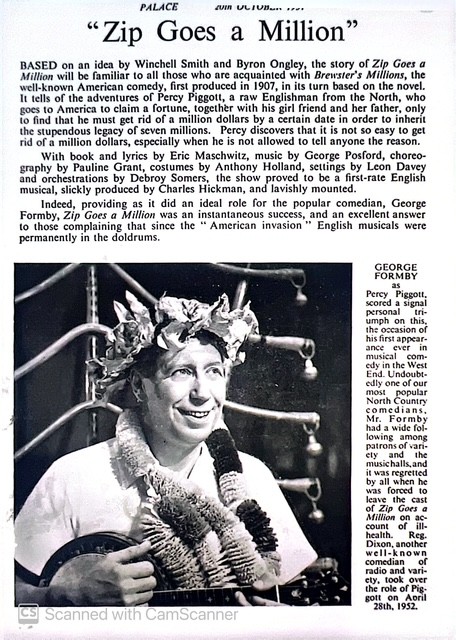
After his last film ‘George in Civvy Street’ in 1946 he went back to ‘live’ theatre and in the early fifties he had a smash hit in London’s West End with ‘Zip Goes a Million’at the Palace Theatre
What a happy face George has got.
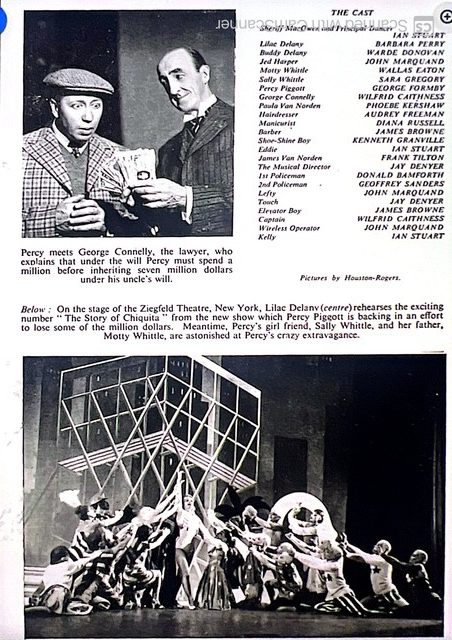
I remember the duet he did with Sarah Gregory ‘ Ordinary People’ – quite an appealing song
After World War II, public tastes changed and George Formby stepped away from films and recording, instead touring the Commonwealth and continuing to entertain audiences worldwide.
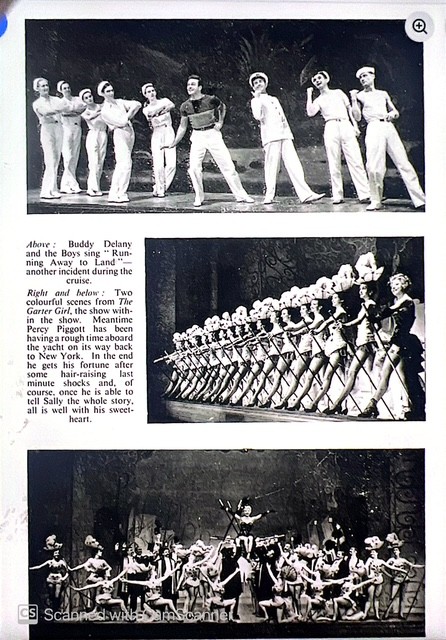
In 1951, George took on the lead role of Percy Piggott in the West End musical Zip Goes A Million, based on Brewster’s Millions. Despite his worries that London audiences wouldn’t warm to his style, the show became a huge success, opening at the Palace Theatre and earning widespread praise for its humour, music and spectacle.
Although ill health forced George to leave the production after six months, the show went on to achieve an impressive 544 performances, cementing its place in British theatre history.
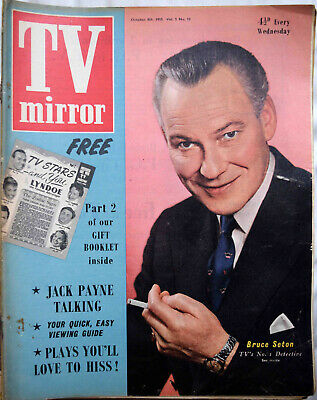
In the mid fiftes Bruce Seton starred as Fabian in a Television series ‘Fabian of Scotland Yard’ and the exciting opening sequence had Inspector Fabian seated in the rear seat of a Humber Hawk with a microphone to his mount saying in a terse voice ‘ This is Fabian – Of Scotland Yard’
Shot on film (rather than transmitted live from the studio as was the norm at the time) with Bruce Seton, stiff upper lip clamped on a pipe, as the dedicated Fabian
ABOVE – Bruce Seton as Fabian of Scotland Yard
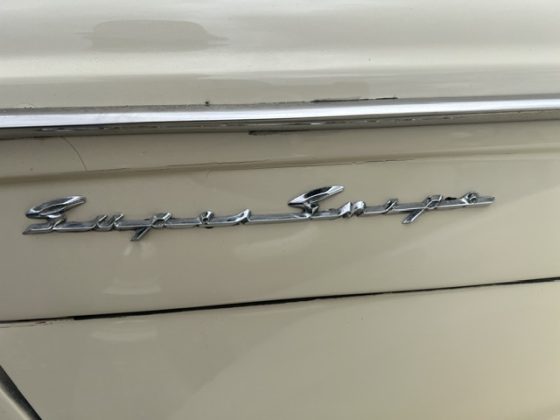
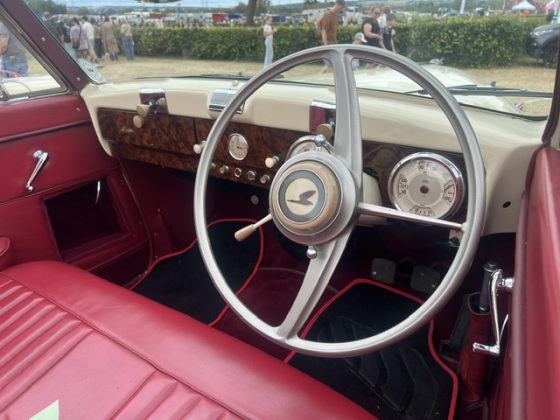
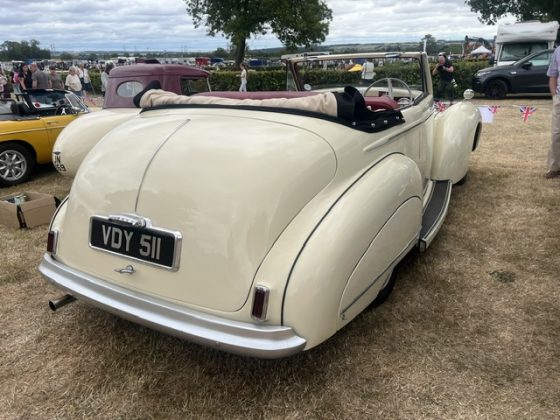
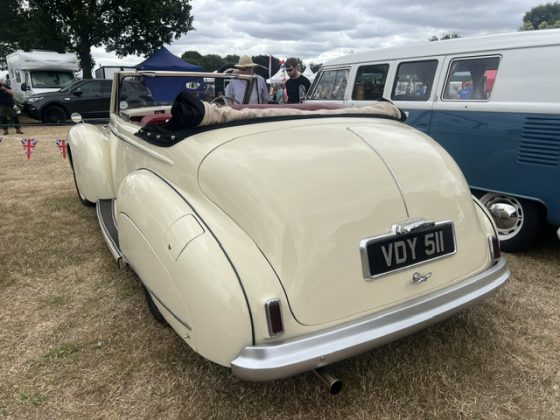
Now I mention the car being the Humber Hawk and I was reminded of this whilst at a local Agricultural Show today, seeing, among the Vintage Cars arena, a Humber Super Snipe – but a convertible – a car I have never seen before.
1 9 5 4 – 1 9 5 6 (UK) 39 x 30 minute episodes
This legendary British police show from the 1950s – fictionalised cases of Scotland Yard’s real-life Detective Inspector Fabian.
Originally transmitted in the popular Saturday night slot, Fabian of the Yard was later moved to Wednesday – I do recall it in the mid week slot
The show was sold to America, where it was screened as Inspector Fabian of Scotland Yard or – in reference to the hero’s black Humber Hawk – Patrol Car.
A few episodes were edited together to make feature-length productions released in cinemas: Fabian Of The Yard (1954) and Handcuffs, London (1955).
Bruce Seton died, aged 60, in September 1969 at his home in London after a period of ill health.
I liked Bruce Seton – and liked him as Fabian – and I always think that he should have had a much more high profile career than he did