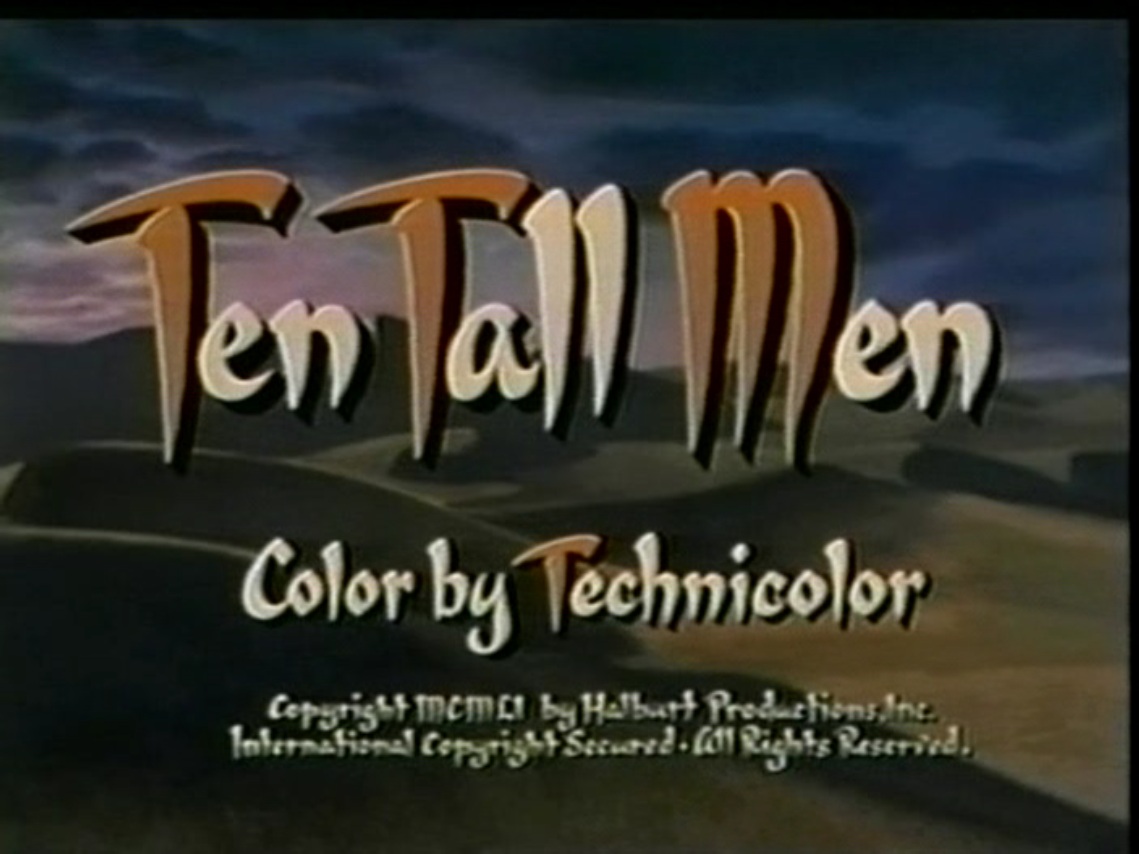
Director Willis Goldbeck’s 1951 Technicolor adventure Ten Tall Men. We just loved the Technicolor films
Here we have Burt Lancaster enjoying himself as the US sergeant, Mike Kincaid, who leads his magnificent nine friends against the marauding Riffs, commanded by the villainous Kayeed Hussein (Gerald Mohr). Kincaid kidnaps Mahla (Jody Lawrance) when he learns Hussein is planning to marry her to unite opposing tribes, and of course and Mahla is falling in love with Kincaid.
It also stars Gilbert Roland as Corporal Luis Delgado, Kieron Moore as Corporal Pierre Molier, and George Tobias as Londos.
I hadn’t known that Kieron Moore was out in Hollywood in the very early fifties but here he is. He also made another one ‘David and Bathsheba’ one of the Biblical epics of the time. Later in the fifties, he went back to Hollywood for ‘Darby O’Gill and the Little People’ – one of my favourites
He was married to the very beautiful Barbara White – I remember her in ‘Quiet Weekend’ 1946
Back to the film itself – this carefree, colourful adventure is a splendid, thoroughly entertaining showcase for the young, athletic Burt Lancaster.
.Production is by the Harold Hetch- James Hill-Burt Lancaster partnership from Norma Production that financed a lot of films , most of them starred by Burt Lancaster .
Burt Lancaster was still in his all-action period with films such as “The Flame and the Arrow”, “The Crimson Pirate” , “His Majesty O’Keefe” , “The Kentuckian”
This would be just 12 days after the Queen’s Coronation – a memorable occasion – a marvelous and spectacular BBC Television broadcast. Wonderful and so well remembered by us all
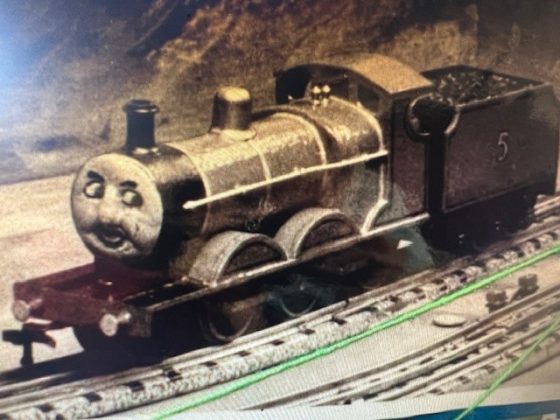
Thomas the Tank Engine and Friends is by now one of the world’s most iconic and beloved children’s TV shows. Originally adapted from the Reverend Wilbert Awdry and his son Christopher Awdry’s Railway Series stories, the TV series began airing in 1984 and has continued in some form or another through to the 2020s. While this is certainly the most famous adaptation of the Awdrys’ train tales, it was not the first, having been preceded by a live BBC broadcast in 1953. Unfortunately, the technical difficulties associated with this adaptation would prevent a full series from being commissioned for the intervening thirty years.
In mid-1953, the BBC approached The Railway Series editor Eric Marriott and inquired about the possibility of adapting at least two stories to television. Marriott and Rev. Awdry approved the proposal on the condition that the adaptation be as faithful as possible, in particular to the authentic technical details. Thus, the broadcast was to be done using specially-modified 00 Gauge Hornby models of the actual engines pictured in the books, with a track layout and painted backdrops designed to ensure maximum faithfulness to the original illustrations. The script, however, was ‘freely adapted’ in order to fit the allotted ten-minute time slot. It was to be broadcast live from Lime Grove Studios on Sunday, June 14th, 1953.
For this initial attempt, the BBC had chosen to adapt “The Sad Story of Henry”, a suitably dramatic tale of the engine being bricked up in a tunnel after he refuses to leave it for fear of rain spoiling his new paint. The live adaptation (now renamed to “The Three Railway Engines”, presumably for viewers unfamiliar with the books) had to be put together within a month, with the custom model train setup not arriving in the studio until the final rehearsals. Not ideal for what was already a notably complex production for the time, also including superimposed rain and other effects overlaid by music and narration by Julia Lang.
On the day of the broadcast, the model movement was still said to be a bit jerky, but all started off well until one of the engines derailed, the train set operator having missed switching the points before the engine arrived at them. To the great surprise of viewers, including Marriott and Rev. Awdry, a human hand picked up the errant engine and put it back on the rails instead. It was noted that narrator Lang ‘struggled to improvise’ around the incident, but unfortunately, her actual words are not recorded.
The broadcast went on without further incident, but the derailment and its unexpected resolution attracted notice from several national newspapers. Rev. Awdry is recorded as being disappointed with many aspects of the adaptation, including the script changes (which added characters that were not in the original story), the jerky model movement and above all, the ‘elementary mistake’ of the incorrectly set points.
BBC Controller (head) of Programmes Cecil McGivern evidently agreed with the criticisms, issuing a furious memo in which he called the whole effort ‘pathetic’.[1]
Awdry demanded guarantees that a similar blunder would not happen in the second broadcast, scheduled for June 28th. Instead, presumably thanks to the official scorn, it was put on hold and later cancelled. Although numerous attempts were made to revive the Railway Series for television, all were unsuccessful until the current series began production three decades later.
Margaret Rutherfordwas once, for a short time, MGM’s highest paid actor
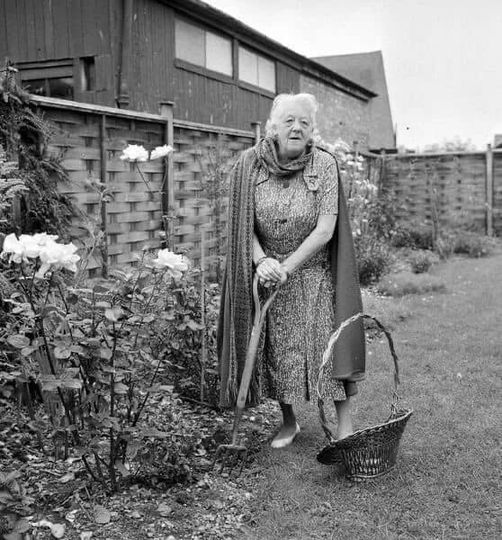
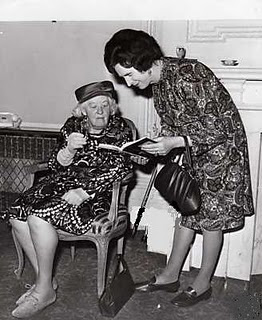
Margaret Rutherfordhere at home at Chalfont St Giles
In her cottage, Margaret Rutherford often transformed her parlour into a rehearsal space, insisting on wearing her own wardrobe to lend authenticity to Miss Marple’s gentle eccentricity
It was here that she she welcomed friends and fellow actors especially her devoted husband Stringer Davis through those same gates, into the garden she loved
George Harrison once declared her his favourite actress, a testament to the star power she had
Margaret Rutherford was the only child of William Rutherford Benn and his wife, the former Florence Nicholson.
Her father suffered from mental illness and had a nervous breakdown on his honeymoon, afterward being confined to an asylum. He was eventually released on holiday and on 4 March 1883 he murdered his father, Reverend Julius Benn, a Congregational church minister, by bludgeoning him to death with a chamberpot. Shortly afterward, William tried to kill himself as well, by slashing his throat with a pocketknife.
William Benn was confined to the Broadmoor Aslyum for the Criminally Insane and was released several years later, reportedly cured. He changed his surname to Rutherford (no wonder!) and returned to his wife. The parents then moved to India with the infant Margaret, but the drama continued unabated – her mother committed suicide by hanging herself from a tree, three year old Margaret was sent back to Britain to live with an aunt, professional governess Bessie Nicholson, in Wimbledon and her father’s continued mental illness resulted in his being confined once more to Broadmoor in 1904; he died in 1921.
Margaret eventually managed to secure a place at RADA, the Royal Academy of Dramatic Arts, although she didn’t make her stage debut at the Old Vic until 1925 at the age of thirty-three.
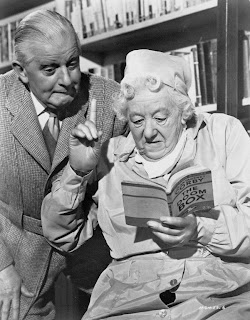
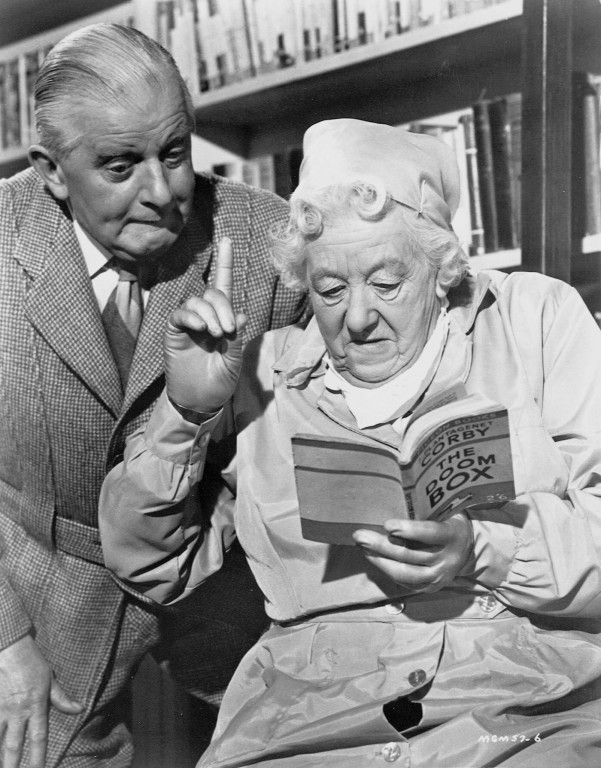
She married the l actor Stringer Davis in 1945 – described in one article I have read as openly homosexual but that is something I had not heard before –and they appeared in many productions together (right). They were happily together until Rutherford’s death in 1972. Stringer Davis absolutely adored Margaret, one friend noting: ‘For him she was not only a great talent but, above all, a beauty.’ Dubbed by bitchy colleagues as ‘String-along’, he rarely left her side. He was private secretary and general dogsbody, lugging bags, teapots, hot water bottles, teddy bears and nursing Margaret through her ‘bad spells’.
As if their lives didn’t contain enough drama, in the 1950s, Rutherford and Davis adopted the writer Gordon Langley Hall, then in his twenties. Hall later had gender reassignment surgery and became Dawn Langley Simmons, under which name she wrote a biography of Rutherford in 1983.
Hall was born at Sissinghurst, the estate of the writer Vita Sackville-West, in Heathfield, Sussex, England, and was the illegitimate child of Jack Copper, Sackville-West’s chauffeur (a grandfather was Rudyard Kipling’s gardener) and Marjorie Hall Ticehurst.,
Margaret Rutherford and her daughter, DawnABOVE
But back to Margaret herself – She made her first appearance in London’s West End theatres in 1933 but her talent was not recognised by the critics until her performance as Miss Prism in the play ‘The Importance of Being Earnest’ (1939). In summer 1941, Noel Coward’s “Blithe Spirit” opened on the London stage, with Coward himself directing. Rutherford played Madame Arcati, the fake psychic in a role in which Coward had earlier envisaged for her and which he then especially shaped.
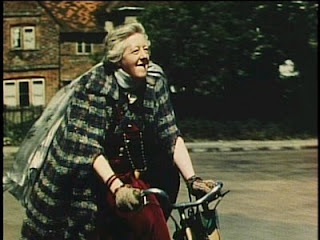
It would be Margaret Rutherford’s turn as Madame Arcati in David Lean’s ‘Blithe Spirit’ (1945) that would actually establish her screen success. This would become one of her most memorable performances, with her bicycling about the Kentish countryside, cape fluttering behind her.
Some of Margaret’s finest screen work was done when she was in her fifties. She was superb as Nurse Carey in Miranda (1948) and completely believable in the role of Professor Hatton Jones in Passport to Pimlico (1949). More success followed as she starred along Alistair Sim in ‘The Happiest Days of Your Life’ (1950). Then came along the role that she was so destined for, that of Miss Letitia Prism in Anthony Asquiths ‘The Importance of Being Earnest’ (1952). Incredibly, despite a whole string of very capable and distinguished performances – she had still not won a single film honour. More comic characters followed including Prudence Croquet in ‘An Alligator Named Daisy’ (1955).
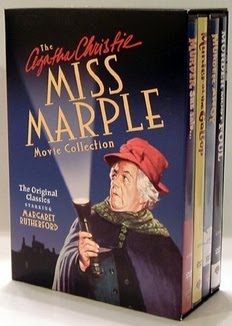
Margaret Rutherford then played Mrs. Fazackalee in Basil Deardens ‘The Smallest Show on Earth’ (1957) with such notables as Virginia McKenna, Peter Sellers and Leslie Phillips. For much of the 60’s she become synonymous with Miss Jane Marple, making four Marple based films with a comedy bent that must have won Christie’s approval, as in 1962 Agatha Christie dedicated her novel The Mirror Crack’d: “To Margaret Rutherford in admiration.” Margaret was awarded an OBE for services to stage and screen in 1961 and wonan Academy Award for Best Supporting Actress and a Golden Globe for The VIPs (1963), as the absent-minded Duchess of Brighton, opposite Elizabeth Taylor and Richard Burton.
She also played Mistress Quickly in Orson Welles’ Chimes at Midnight in 1966 and was raised to Dame Commander (DBE) in 1967.
Margaret suffered from Alzheimer’s disease at the end of her life. Sir John Gielgud wrote: “Her last appearance at the Haymarket Theatre with Sir Ralph Richardson in The Rivals, an engagement which she was finally obliged to give up after a few weeks, was a most poignant struggle against her obviously failing powers.” She died in 1972. Britain’s top actors flocked to the funeral, where 90-year old Dame Sybil Thorndike praised her friend’s enormous talent and recalled that she “never said anything horrid about anyone.”
Now this heading must seem as though it has no connection at all to a Film Site such as this – but to me it does.
Craven Arms was the last home of Elspeth Gill who was the daughter of Alex Bryce a Film Director used in this country by Walt Disney for those films so familiar to us. Alex Bryce was a Second Unit Film Director whio specialised in the outdoor action scenes.
Alex Bryce who was involved with Directing or photographing or Producing Films before, during and after the War.
Alex Bryce (1905-1960) was a Scottish screenwriter, cinematographer and film director.
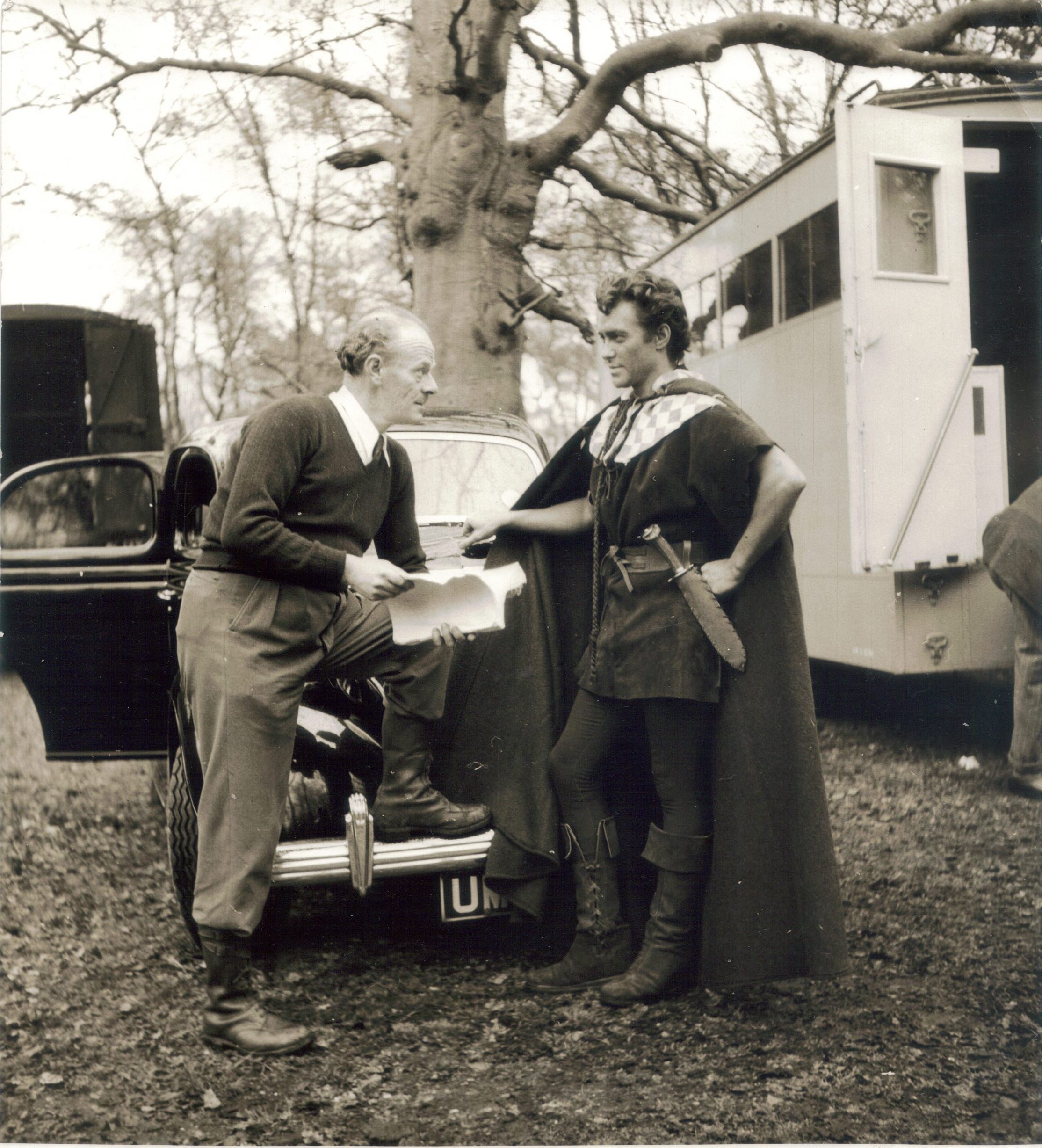
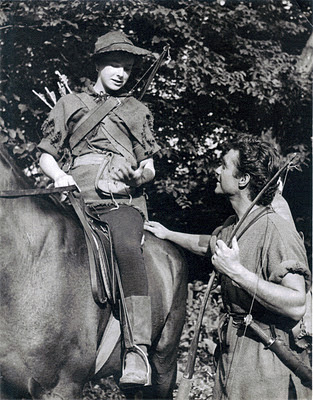
In the picture above we can see Alex Bryce and Richard Todd (Robin Hood) on location at Burnham Beeches in Buckinghamshire for The Story of Robin Hood and His Merrie Men for Walt Disney. Filmed in England at Denham Film Studios
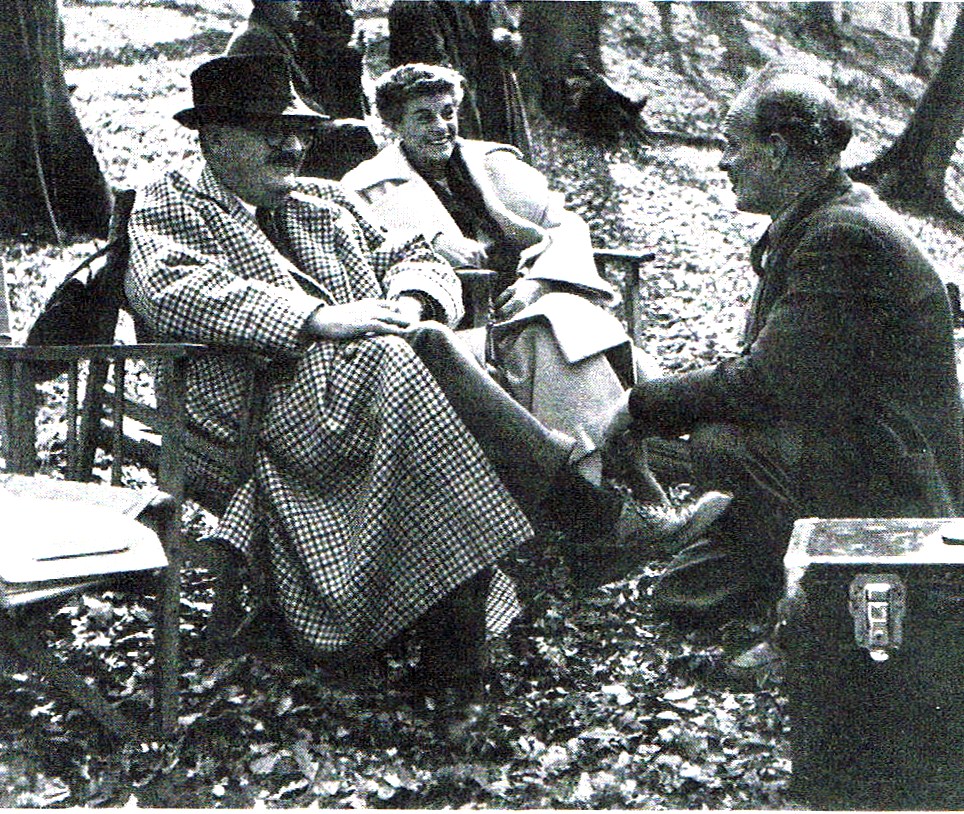
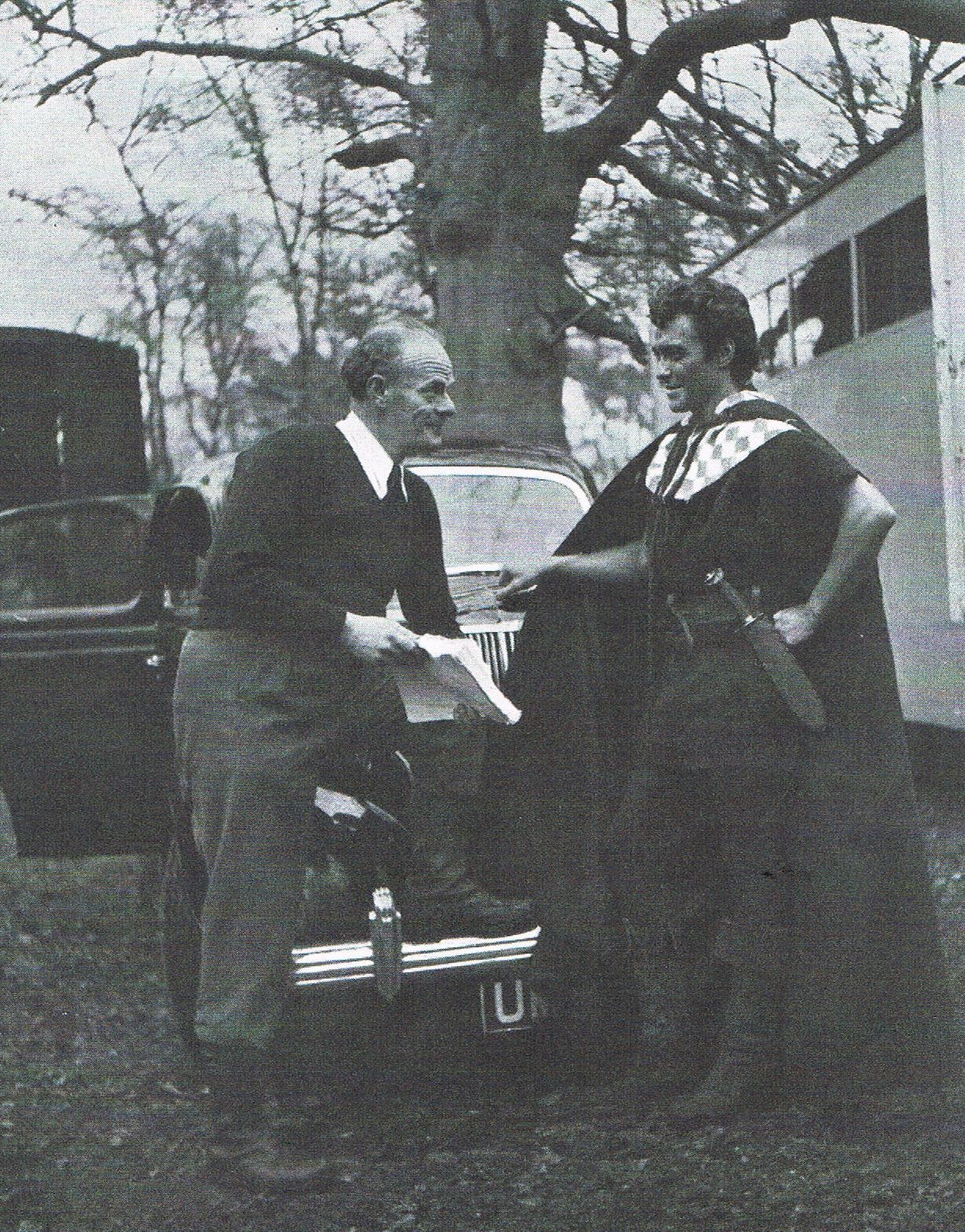
In the picture above we can see Alex Bryce on location at Burnham Beeches in Buckinghamshire chatting to Perce Pearce ( Producer) and Carmen Dillon ( Art Director)
I spoke with Alex Bryce’s Daughter, Elspeth Gill, in the summer of 2011, mainly about her actually being on the set of The Story of Robin Hood throughout the making of the film. One thing that struck me was that she seemed to be so very fond of her father and spoke about him and told me that he suffered a stroke only a few years later while he was on the continent filming The Cockleshell Heroes in 1955. She herself had been an extra on Rob Roy and danced with Richard Todd in one scene. She also said that it was her father who had persuaded Walt Disney to employ Ken Annakin as the film director for Robin Hood so he was the one that set Ken on his way as an International Film Director.
One other thing also – I sent her the picture above – which had the caption ‘Mr and Mrs Perce Pearce’ and she immediately said ‘ That’s not Perce Pearce’s wife – it is Carmen Dillon. She was right of course.
One of the few people I thought were still around who had actually been there throughout the filming of The Story of Robin Hood and His Merrie Men – seems I was wrong as she sadly died in 2012 but what wonderful memories she had
During the filming of Walt Disney’s Story of Robin Hood and his Merrie Men, Alex Bryce was in charge of the ‘Second Unit’, which specialised in all the outdoor, woodland and action shotsand fight scenes.
The Director of the film was Ken Annakin who worked very closely with Alex and you can tell from Ken’s Autobiography that the two of them got on very well , and worked closely together, dovetailing the studio footage with the Outside action scenes – they did it very effectively too,
Alex Bryce had worked in The Film Industry throughout the Thirties often as a photographer and occasionally as a writer, and Assistant Director.
Following Robin Hood in which he was Assistant Director, he again fulfilled this role on another British made Walt Disney film The Sword and the Rose, Rob Roy The Highland Rogue and then on The Dark Avenger with Errol Flynn.
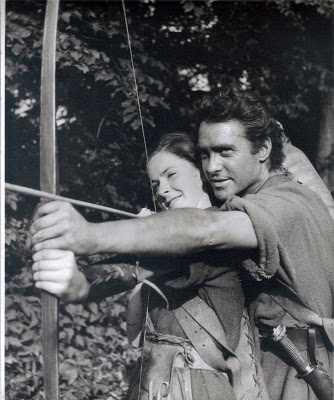
Back to Elspeth Gill – Alex Bryce’s Daughter – She did send me some fascinating pictures of her chatting with Richard Todd on the set of Robin Hood at Denham and maybe Burnham
Beeches as below :-
Above Richard Todd chats with Elspeth – Actually she looks to be in costume too, so maybe she played one of the Merrie Men in the horse riding sequences.
Above Richard Todd gives Elspeth a demonstration of Archery – he would know after this film.
I must say that I am very proud of these pictures that Elspeth sent me – very kind of her. She was the most knowledgeable person on this film that I had ever heard from.
This is not a film I know OR remember but I was struck to find that this was in Colour – and was actually quite good.
Looking it up, I see that Peter Finch describes this as, in his opinion, the best film he ever made. He says that he had a big part and was on screen in almost every scene. This came soon afetr his memorable portrayal of The Sheriff of Nottingham in ‘The Story of Robin Hood and His Merrie Men’ – a role that got him to the attention of many senior figures in the film industry.
The film was made by ‘Group 3’ – I remember them for the film they made before this ‘The Blue Peter’. set in Aberdovey in Wales at an outward bound school. I love that film
The story sees Peter Finch as Charlie, who having as as a boy fell in love with a Portland Vase during a trip to a museum, takes up his calling in life as an antiques dealer. However, we find Charlie in adulthood struggling to make the business work, he mopes around grumbling about the poverty line; grumbling that heaps further strain on his marriage and ability to run a steady home.
It may have seemed that an answer to all his problems may have landed in his lap with a chance meeting with Nicky (Adrienne Corri)
On a visit to her cottage, Charlie spies the Vase, but if he thought that Nicky was just a pretty face, and ripe for a picking, well he’s in for a little more than he bargained for.
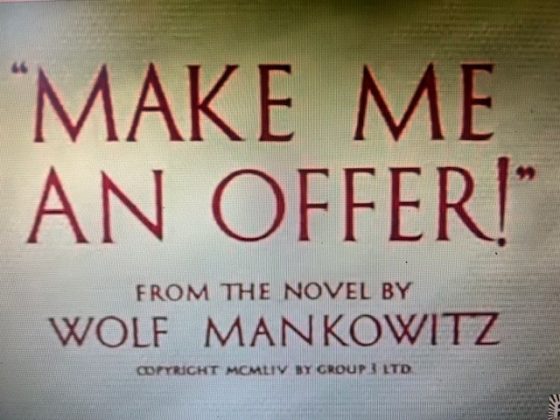
Directed by Cyril Frankel (director of School For Scoundrels after Robert Hamer was fired for his drinking problems), Make Me An Offer is adapted from the novel written by Wolf Mankowitz (who inputs additional dialogue to the screenplay from W.P. Lipscomb).
The cast includes Peter Finch and Adrienne Corri along with Ernest Thesiger, Wilfrid Lawson, Alfie Bass, Rosalie Crutchley & Finlay Currie. Richard O’Sullivan appears as Charlie the boy.
Filmed in Eastman Colour, the film has a charm that takes us back to a charming part of England . Set as it is in the antiques business, money is naturally an overriding factor, but although Charlie {Finch } yearns to provide his wife Bella (Crutchley) with a fur coat he has long since promised her, monetary gain is not the issue here.
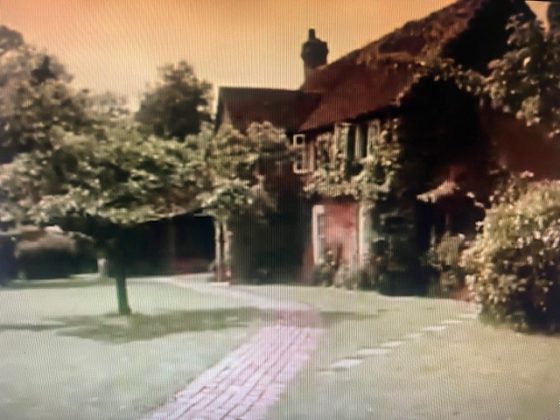
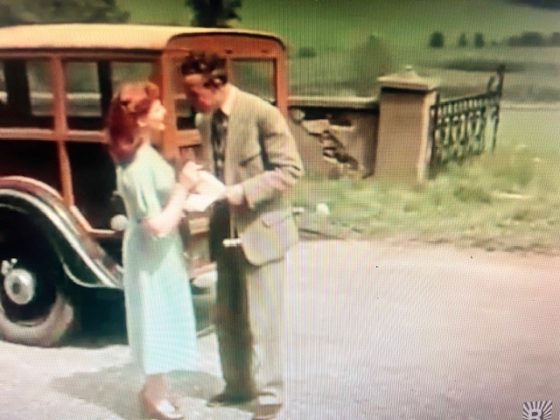
ABOVE – Adrienne Corri’s home
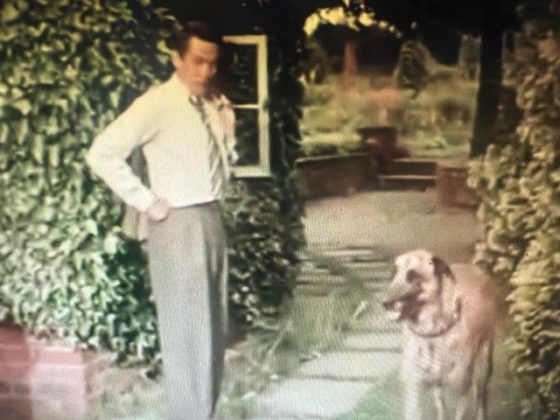
ABOVE – Peter Finch finds this lovely dog very friendly
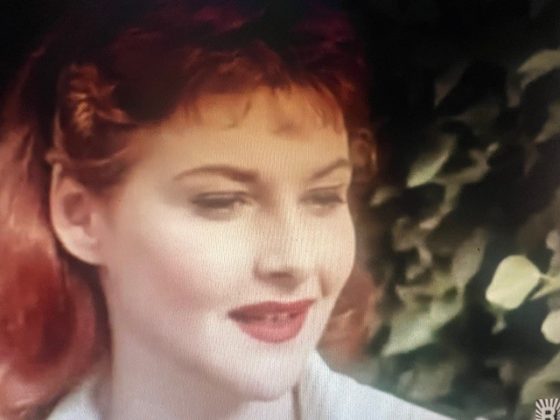
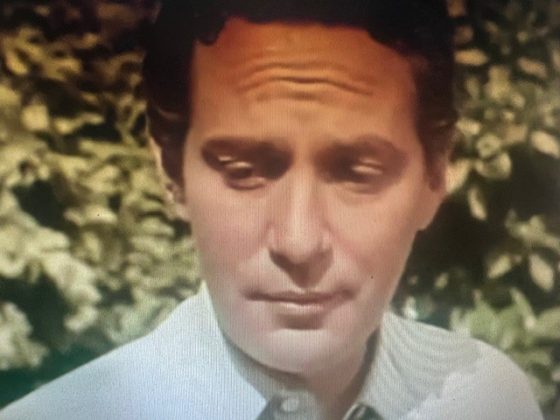
ABOVE – Peter Finch meets a friendly Adrienne Corri
ABOVE – Peter Finch meets a friendly Adrienne Corri