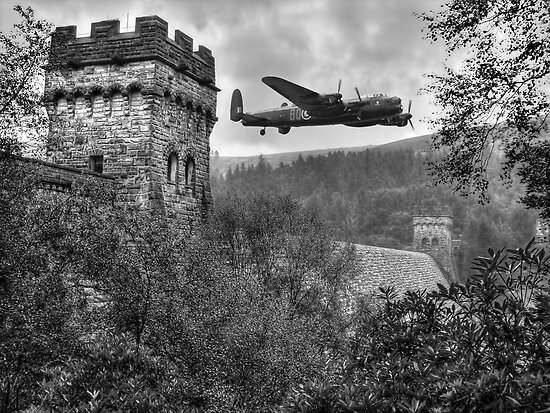
Any young kid growing up in England in the Fifties will remember The Range Rider – with Jack Mahoney as The Range Rider
and Dick Jones as Dick West – his sidekick in about 76 half hour episodes.
Sad to report that Dick Jones has recently died.
Any young kid growing up in England in the Fifties will remember The Range Rider – with Jack Mahoney as The Range Rider
and Dick Jones as Dick West – his sidekick in about 76 half hour episodes.
Sad to report that Dick Jones has recently died.

I know this cinema well as my daughter and family used to live in Lobethal in the Adelaide Hills area of South Australia and we have seen films there quite a number of times. This has been featured before on this Blog – it is a lovely place – a throw back to cinemas of the fifties and yet showing modern up to date films on a large screen. In the programme they include advertisements from local companies quite slickly done as well.
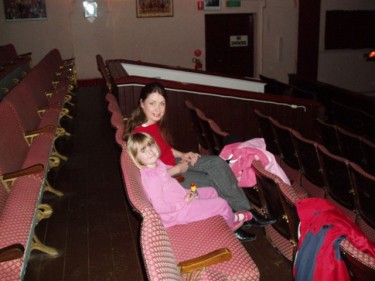
I am sad to have to print this notice below which appears on the Lobethal web site. It seems to old style projectors may not now be of use for the newer films that are now released in a digital format.

01 Mar 2014 – 31 Dec 2014
Unfortunately there will be no movies shown at the Lobethal Cinema until further notice. Movies are now only being released in digital format and the cinema does not currently have the equipment needed to be able to show them.
Good News … a ‘Save the Cinema’ group has formed and will be going public with their plans very soon. We will provide more information as it becomes available. Yeah!!!
Don’t these TWO look so alike !!!
 Above: Jurgen Klinsmann – Footballer and USA World Cup Manager. Jürgen Klinsmann was born 30 July 1964 in Goppingen, Stuttgart, Germany. How strikingly alike these TWO look – I have noticed this for a number of years – every time I saw Klinsmann I was always aware of how much he looked like Lex Barker who played Tarzan in five films of the early fifties.
Interestingly Lex Barker, later in his career, found that he was unable to get the parts he wanted in Hollywood and so moved to Germany in 1957 where he stayed until late in the sixties – and this turned out to be his most successful time film-wise. ![Lex Barker - Bravo Magazine [Germany] (29 August 1964)](http://img2.bdbphotos.com/images/orig/e/n/enm34m4yro61ne3o.jpg?djet1p5k)
Open
In 1949, when Walt Disney made Treasure Island, his first all live-action feature, in England at Denham Film Studios, he was not yet the instantly recognisable celebrity that he would become but his name was certainly well enough known, and so he found himself in the middle of a crowd of autograph hunters in the centre of London as the picture below :-

The photo Below above was taken in England in the summer of 1951, during the filming of The Story of Robin Hood and His Merrie Men. Walt and Lillian’s visit to England that summer was the second of the extended trips to Europe they made with their daughters, Diane and Sharon. (The first such trip was in 1949, for the filming of Treasure Island.) That’s Robin himself, Richard Todd, at Walt’s right, and Maid Marian, Joan Rice, at his left.

The above picture was taken at Burnham Beeches where scenes were being filmed.
In an interview, Richard Todd spoke of Walt Disney as something of a “social climber.” For whatever reason Richard Todd was extremely well connected in British society of the day, to interesting and high-ranking people who Walt would have otherwise had difficulty meeting. One of them was Henry Tiarks, a merchant banker who was married to a West End actress and whose daughter ultimately became the Duchess of Bedford.
Diane Disney Miller remembers that the Disney family were invited to the Tiarks home for lunch. “As I recall,” she says, “Dad was invited solo first, and went horseback riding with Tiarks around his grounds.” (Walt was of course an accomplished horseman, after his years as a polo player.) “Dad was amused when Tiarks indicated a neighbouring estate as belonging to ‘the fellow who lost us the American Colonies.’ Mother and Dad did enjoy their friendship.”

Walt Disney was a very keen miniature railway enthusiast and had his own railway at his home in USA. One day whilst visiting London on business and as he had completed his work asking his chauffeur if he knew of any miniature railways in London, the chauffeur brought Walt Disney to Ridgeway Park in Chingford. That day the park was holding the Chingford Day celebration. Walt Disney drove trains around the track and allowed the press to take some photographs and generally had a good time.
When the public heard that Walt Disney was visiting the railway every body rushed over to see him, just as the Mayor of Chingford was about to open the celebration which he did almost on his own.
Note – The caption above gives the date as 1954 and on this same picture elsewhere I have seen 1952 – IN FACT I am fairly sure that this was taken during Walt Disney’s visit to England in the summer of 1951 to film The Story of Robin Hood and His Merrie Men at Denham Film Studios.
Actor Francis Matthews has died aged 86 
Francis Joseph Matthews was born in York on September 2, 1927, and was the son of Rowntrees’ factory shop steward Henry Ernest Matthews and Kathleen, nee Empson.
He attended St George’s School in York and later St Michael’s Jesuit College in Leeds, before starting his theatrical career in the Leeds Rep.
In 1956, while shooting Bhowani Junction with Ava Gardner, he reportedly took the actress – then married to Frank Sinatra – to his parents’ suburban home.
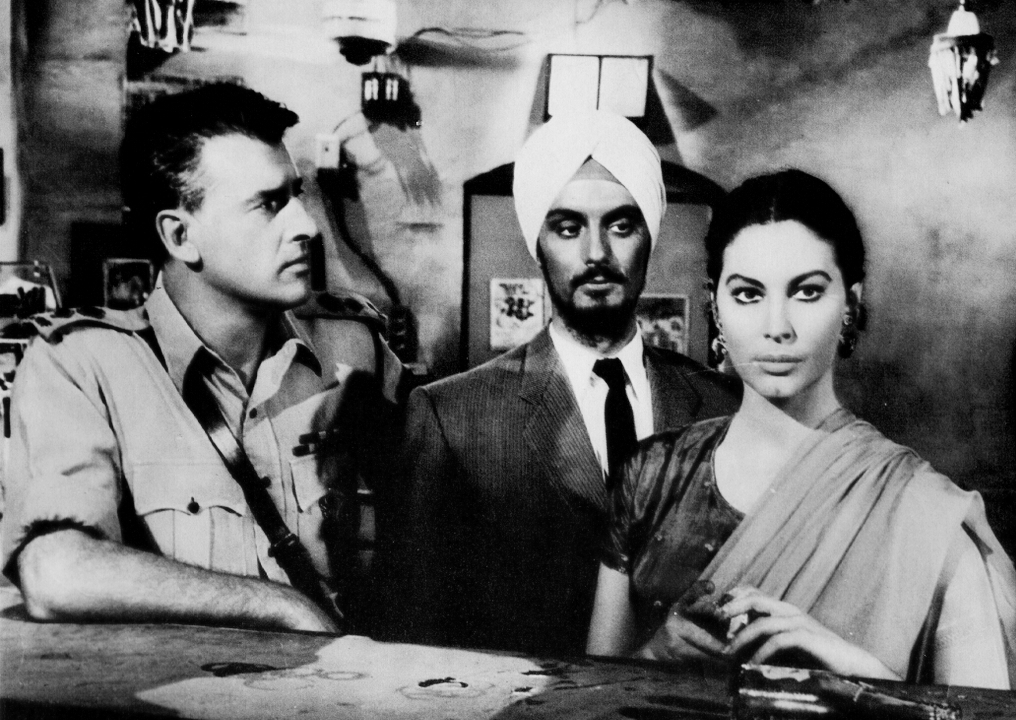
Above – In Bhowani Junction with Stewart Granger and Ava Gardner
Said to be bored with studio orders to be seen out and about as pre-publicity for her films Ava Gardner rebelled and took up Matthews’ offer of tea with his Mum and Dad.
The actor’s sister later reported coming home from work to find the best china deployed and the world’s biggest film star sitting in the front room.
In 1962, Matthews met his wife actress Angela Browne when filming a BBC series in the Hebrides, and the couple married the following year.

Angela Browne above in The Avengers.
In 1969, the BBC gave him the role which many still associate with him: playboy detective Paul Temple, alongside Ros Drinkwater as his wife Steve and George Sewell as their down-at-heel sidekick.
Sixty one-hour episodes were made in colour before the series ended in 1971, by which time he was a household name.
Angela Browne died after a short illness in 2001, but Francis Matthews continued to work with guest appearances in The Royal, Taggart and Jonathan Creek among others, until illness forced him to retire.
His last major performances included playing Herr Schultz in Cabaret in the West End aged 81.
Although he moved from York at a young age, Mr Matthews often spoke fondly of the city and regularly returned for many years to visit relatives.
He told The Yorkshire Evening Press in 1971 that he hoped to retire to York. Three years later when he appeared in Sign of the Times at York Theatre Royal, he told the newspaper: “It’s the first time at this theatre for me and the realisation of a boyhood ambition. I always wanted to work here and wrote letter after letter begging to be allowed to play here, but I never managed it. I still have aunts and uncles up here and after we’ve got this opening over, I hope I can visit them.”
Fifteen years later, while starring in The Old Country at the Grand Opera House, he told the Evening Press that York was still in his soul, and recalled briefly attending dance classes opposite the Opera House as a young boy.
He is survived by his sons Paul, Dominic and Damien, five grandchildren, his brother, the actor Paul Shelley, and his sister Maura. His brother Anthony had pre-deceased him.
His brother Paul Shelley took his 8 mm film camera onto the set of Dracula, Prince of Darkness starring of course Christopher Lee AND Francis Matthews and the fascinating footage he got is as below :
https://www.youtube.com/watch?feature=player_embedded&v=QEn9uDCr5UA
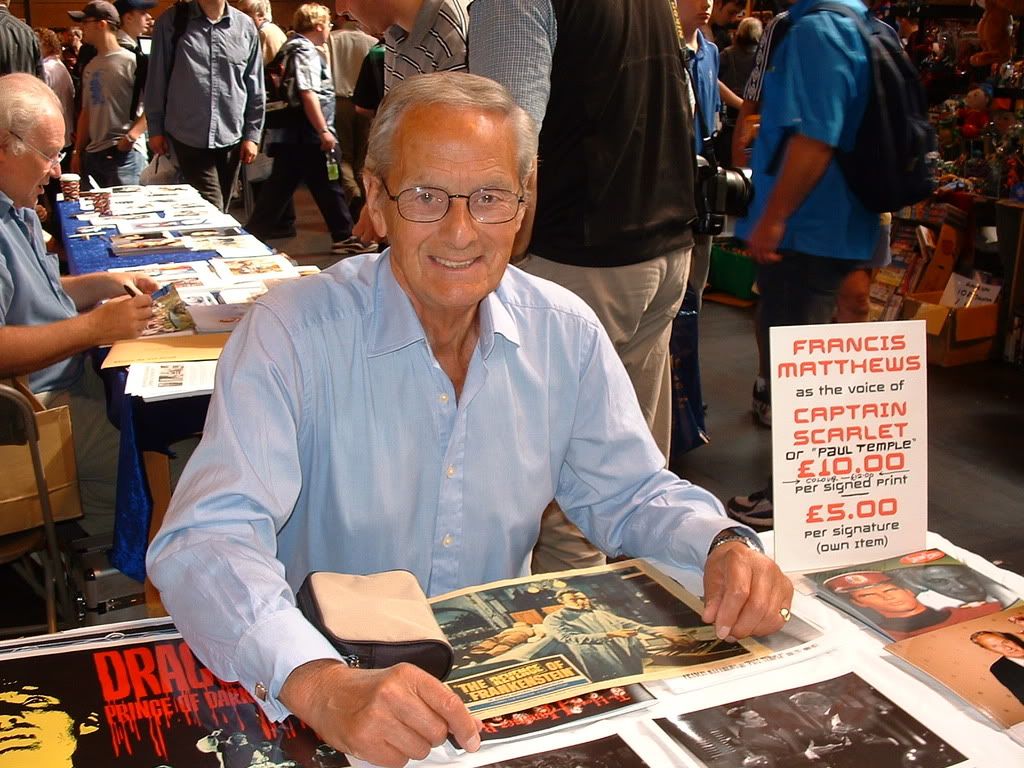
Francis Matthews – Above in 2004
I remember Francis Matthews for quite a number of roles BUT the one that stands out to me was in the brilliant TV serial Brat Farrar from Josephine Tey’s book. What a great story that is !!


.jpg)

This film was the third most popular film at the British box office in 1951. It earned $5,047,000 in the US and Canada and $4,908,000 elsewhere. After production and other associate costs were deducted, the movie made a profit of $4,049,000, making it easily MGM’s most successful film of 1950.
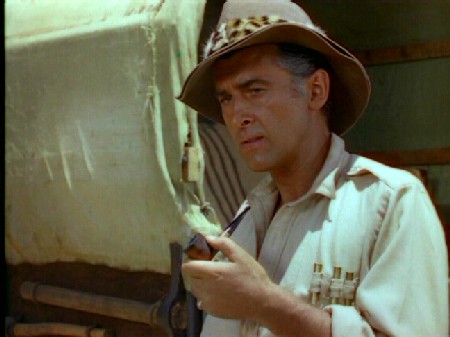
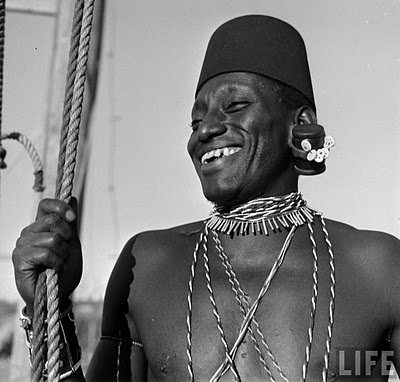
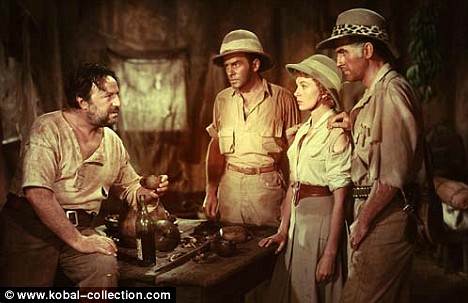
“KING SOLOMON’S MINES” (1950) Scenes from the Film below:-
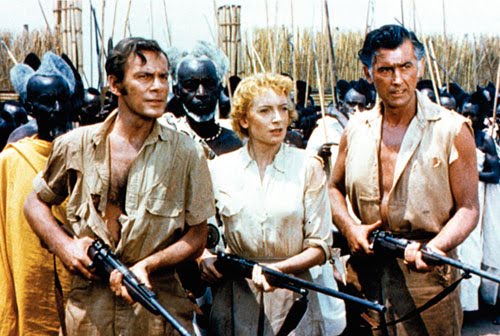
Below are images from “KING SOLOMON’S MINES”, the 1950 adaptation of H. Rider Haggard’s novel. The film starred Stewart Granger, Deborah Kerr and Richard Carlson:
“KING SOLOMON’S MINES” (1950)







|
|
Details of the tragic final hours of Hollywood’s film star are revealed almost 52 years after she died of a sleeping pill overdose at the age of 36 on Saturday, August 4, 1962.
“There was a premeditated plan to murder her on the part of Robert Kennedy, Ralph Greenson and Peter Lawford,” allege the authors.
The star of The Seven Year Itch and Some Like It Hot had been having a secret affair with JFK, and then his brother Bobby the book claims.
Then he had a doctor give Monroe a lethal injection and with his brother-in-law, British actor Peter Lawford, orchestrated a massive cover-up that led the coroner to declare her death a suicide.
That is the astonishing claim of a new book, The Murder Of Marilyn Monroe: Case Closed by Jay Margolis and Richard Buskin.
“Marilyn has got to be silenced,” Robert Kennedy told Monroe’s psychiatrist Dr Ralph Greenson (with whom she was also having a sordid affair), disclosed Lawford in a secretly taped confession.
“Bobby was determined to shut her up, regardless of the consequences.”
But Monroe was spinning out of control, battling depression and anxiety as she struggled with the failure of three marriages, ageing in Hollywood where she feared typecasting as a “sex kitten”, and studios that were wearying of her diva antics.
Monroe lamented to her psychiatrist that the Kennedys were “passing her around like a football” and threatened to hold a press conference revealing her affairs.
According to the book, Robert Kennedy and Lawford arrived at the actress’s Spanish-style home in Los Angeles early in the afternoon on that Saturday, hoping to calm her down.
“Marilyn announced that she was in love with Bobby and that he had promised to marry her,” said Lawford.
Monroe refused to be tossed aside, vowing to expose the Kennedy brothers.
“Marilyn presently lost it, screaming obscenities and flailing wildly away at Bobby with her fists,” recalled Lawford.
“In her fury she picked up a small kitchen knife and lunged at him.
“I was with them at this time so I tried to grab Marilyn’s arm.
I believe we’ll still be arguing over this 100 years after Marilyn’s death but the reality is, the case is closed
Jay Margolis, author
By the next day the Secret Service had seized and sealed the telephone company records for Monroe’s home.
Despite evidence of injections on Monroe’s knees, armpit and chest, the coroner’s report stated “No needle mark.”
Mysteriously, all of Monroe’s autopsy tissue samples vanished from the coroner’s office.
Her incriminating diary, which coroner’s officers found in her home on the Monday, disappeared the next day, never to be seen again.
“The evidence is conclusive,” says Margolis.
“Marilyn Monroe was murdered by Dr Greenson on the orders of Bobby Kennedy.
She was not only killed but slandered in death by making it appear she had committed suicide.
“But so many people refuse to believe that it was murder or suicide and want to think it was an accidental overdose, which isn’t medically possible.
“I believe we’ll still be arguing over this 100 years after Marilyn’s death but the reality is, the case is closed.
“Marilyn Monroe was murdered.”
Also starring Robert Taylor, Dana Wynter and Edmund O’Brien
It seems vital to post something here on the 70th Anniversary of the D Day Landings – and this film at times captures the invasion pretty well I would have thought. SEE THE ORIGINAL FILM TRAILER BELOW.
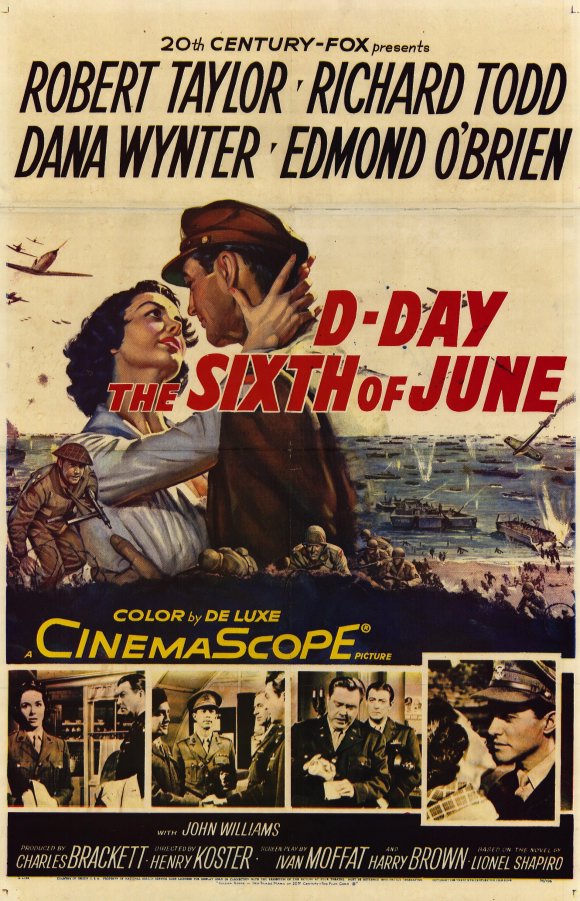
Richard Todd should also be mentioned today as he was the first paratrooper out from the planes involved in the taking of Pegasus Bridge. He did say in a radio interview that, as the first man out, he was able to get down on the ground and prepared before any of the enemy were alerted to what was happening. He also added that as he looked up a few minutes later many planes with gliders were under fire and a lot of them were being shot down.

As we know Pegasus Bridge was secured by the Allies. Years later Richard Todd played Major John Howard who led the assault on Pegasus Bridge – in the film The Longest Day.
View in the Link Below the exciting Trailer to D-Day The Sixth of June :-
SEE THE ORIGINAL FILM TRAILER BELOW:-
https://www.youtube.com/watch?v=-SNJR4eJ36o&feature=player_detailpage
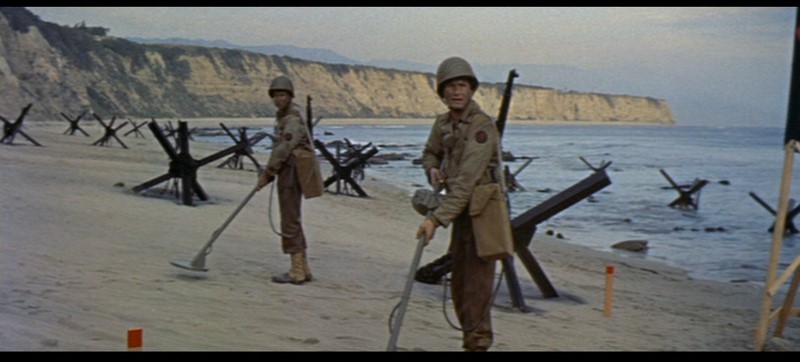
Below Robert Taylor chats to a fan about this film :-

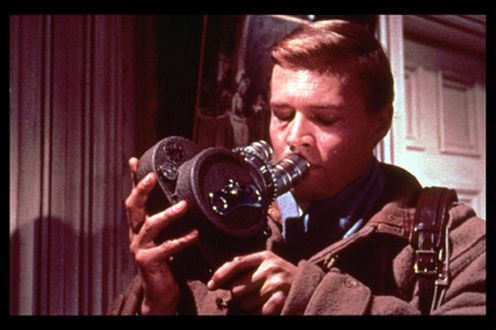
What a film this is -probably one of the most sinister and scary ever with Karl Boehm cast in the leading role as the repressed film cameraman who murders each of his victims in a truly horrific manner.
It has just been announced that Karl Boehm has died at the age of 86 – and I have to say after a long career in acting this is the film that he is best known for – certainly in England.

Anna Massey had a very good leading role in this film and she sadly passed away only a year or two ago.
In her autobiography in 2006, Telling Some Tales, she told of a difficult early life and her failed marriage (1959–1962) to actor Jeremy Brett. The couple had one son. However after the early part of her life – mainly unhappy – on August 1988 at a dinner party she met metallurgist Uri Andres. The couple were married from November 1988 until her death in 2011 – and so she found the happiness she longed for quite late in life.
The Dam Busters was on TV this Spring Bank Holiday here in England – and I just could not resist putting this fabulous picture of the Lancaster Bomber flying over a dam – it is an iconic image from a story we have come to know so well after the success of the 1955 British film.