Archive for the 'Uncategorized' Category

Hopalong Cassidy – Memorabilia

I recently visited Herberton just inland of Cairns in Queensland Australia – and there is a wonderful tourist attraction –  a village back in the time of the old mining settlement of the town and among the many many attractions such as houses shops, school etc was a display of items of memorabilia of which  this one caught my eye, from the 50s or maybe slightly earlier. 

 photo.JPG

 A Hopalong Cassidy radio set  – so this actually may date back to the 40s. It was certainly an early marketing of the famous western star and the promotion of this radio by using his name. Quite clever stuff at the time no doubt.

I have since found out this information below :-

The Arvin Model 441-T or “Hopalong Cassidy” radio, originally priced at $16.95, was manufactured in 1950 using two styles of embossed, paper-backed, aluminum foil fronts. One “Hoppy” front shows his horse Topper rearing with both forelegs in the air, as shown in Figure 1. The other style, shown in Figure 2, has Topper with one foot on the ground and the other in the air. The Topper with two legs in the air version was the earliest design and was ordered by Arvin on February 22, 1950.

posted by Movieman in Uncategorized and have Comments (7)

The Silver Whip 1953

Good cast in this Western – Dale Robertson, Robert Wagner and  Rory Calhoun.

The story involves

THE SILVER WHIP.  20th Century-Fox, 1953.  Dale Robertson, Rory Calhoun, Robert Wagner, Kathleen Crowley, James Millican, Lola Albright.  Based on the novel First Blood (1953) by Jack Schaefer.  Director: Harmon Jones.

Rory Calhoun was not a Great Actor by any stretch of imagination, but within his range quite competent and even memorable on occasion. He appeared with Marilyn Monroe and Robert Mitchum in The River of No Return

Later on he did cameos in  B-movies like Angel, Hell Comes to Frogtown, Motel Hell, and Roller Blade Warriors, all of which are better than they sound. They’re worth a look, as is:

The Silver Whip, an occasionally interesting western with Calhoun as a rough but proper Sheriff, Dale Robertson  as his less legal-minded but heroic buddy, and Robert Wagner as the identity-seeking youth torn between the two role models.

The Silver Whip (1953).


sanstitre60mw7

Directed by Harmon Jones Screen Play by Jesse L. Lasky, Jr. From a novel by Jack Schaeffer Director of Photography: Lloyd Ahern Musical Director: Lionel Newman

CAST: Dale Robertson (Race Crim), Rory Calhoun (Tom Davisson), Robert Wagner (Jess Harker), Kathleen Crowley (Kathy Riley), James Millican (Luke Bowen), Lola Albright (Waco), J.M. Kerrigan (Riley), John Kellogg (Slater), Ian MacDonald (Hank), Burt Mustin (Uncle Ben), John Ducette, Chuck Connors.


This is a  strong story built around a few key action scenes, given plenty of punch by editor-turned-director Harmon Jones.

Race Crim (Robertson) is a stagecoach guard who recommends young driver Jess Harker (Robert Wagner) for his first major run. It goes horribly wrong when Slater (John Kellogg) and his gang shoot up the stage. Sheriff Tom Davisson (Calhoun) and Harker go after the gang, trying to get to them before Race, who’s out for revenge, does. This creates an interesting three-way conflict with both justice (Calhoun and Wagner) and vengeance (Robertson) going after Slater. I won’t go any further than that — this is a good film.

sanstitre5rth cropped

Dale Robertson and Rory Calhoun are terrific but the film belongs to Dale Robertson, whose change from Calhoun’s best friend and Wagner’s mentor to a bitter, obsessed rival gives The Silver Whip a lot of its strength in the last few reels. Robert Wagner seems so young — he was still three years away from The True Story Of Jesse James (1956) – I well remember him in Prince Valiant in Cinemascope – made about a year later.

The Silver Whip  is out now on DVD.


posted by Movieman in Uncategorized and have Comments (2)

The Flame and the Arrow 1950

“The Flame and the Arrow” takes the story of Robin Hood and transfers it from England to Italy. The scene is set in twelfth-century Lombardy, at a time when that area was subject to the rule of the Holy Roman Emperor Frederick Barbarossa. The villain of the piece is Count Ulrich the Hawk, the cruel German overlord of Lombardy. The Robin Hood figure is Dardo Bartoli, a hunter and skilled archer who leads a group of rebels against Ulrich after being outlawed, with the mute Piccolo the equivalent of Little John. There is also another villain, the Marchese Alessandro di Granazia, and a Maid Marian figure in Anne of Hesse, a beautiful German aristocrat who takes the side of the Italian rebels and falls in love with Dardo.
The film which obviously inspired this one was the Errol Flynn version of “The Adventures of Robin Hood”, made twelve years earlier. Burt Lancaster, who had previously been a gymnast and a circus acrobat, was an obvious choice to play Dardo, the sort of swashbuckling role which Flynn had made his own in the late thirties and forties. (Lancaster was to go on to play similar roles in other films such as “The Crimson Pirate”). Here, he gets plenty of opportunity to display his athletic talents, doing all his own stunts, many of which (such as the scene where he swings from the chandelier) were clearly inspired by “Robin Hood”.


I absolutely love this matte shot at the opening of The Flame and the Arrow – above.  Bottom half of the picture is live action and the top of the frame a wonderful colour painting – expertly joined together as one when on screen. Brilliant technique this and one that did so much for films.

Below link to The Trailer to The Flame and the Arrow

https://www.youtube.com/watch?v=l8mwYTfuNPs&feature=player_detailpage

Unlike Robin Hood, who is normally portrayed as a Saxon nobleman leading his people against their Norman oppressors, Dardo has a personal reason for resenting the German rulers of Lombardy. His wife Francesca has left him in order to become Count Ulrich’s mistress, and much of the plot concerns Dardo’s attempts to rescue his son Rudy, whom Ulrich has kidnapped.

posted by Movieman in Uncategorized and have Comments (7)

Ava Gardner

Just arrived in England to film Pandora and the Flying Dutchman.

Pandora and the Flying Dutchman

In 1930, in the Seaport of Esperanza, on the Mediterranean coast of Spain, the fishermen find the bodies of a couple trapped in the net of their fishing vessel. The historian Geoffrey Fielding (Harold Warrender) recalls the beautiful, selfish and spoiled American singer Pandora Reynolds (Ava Gardner), who used to break the heart of her lovers. When Pandora is proposed by the British racing car pilot Stephen Cameron (Nigel Patrick), she demands that he drives his car off the cliffs to prove his love to her. Stephen does what Pandora has asked him and they schedule their wedding on September 3rd.
However when Pandora sees a yacht anchored in the bay, she impulsively swims to the vessel and meets the Dutch Hendrik van der Zee (James Mason) alone without any crew on board. Pandora immediately feels attracted by the mysterious Hendrik and introduces him to her friends. When Jeffrey finds a manuscript from the Seventeenth Century of the Flying Dutchman, he asks Hendrik to help him in the translation. Jeffrey learns that Hendrik apparently is the Flying Dutchman – a captain that stabbed to death his innocent wife believing that she was unfaithful to him. He is sentenced to death and his soul is cursed by God, doomed to sail alone for the eternity, unless he finds a woman that loves him so much that should be capable to die for him. Jeffrey is afraid that Pandora might be this woman and presses her to marry Stephen as soon as possible.


“Pandora and the Flying Dutchman” is an adorable timeless romance based on the legend of the Flying Dutchman.

The beauty of Ava Gardner shines through in the role of a woman that does not love any man until she finds the doomed captain Hendrik van der Zee, falles in love with him and becomes capable of an ultimate act of love.    James Mason gives an extraordinary performance – a very dramatic one at that.        The costumes of Ava Gardner are really beautiful. The cinematography is wonderful by Jack Cardiff who went on to direct films but was one of the great cinematographers of the golden age of films.

Pandora and the Flying Dutchman

Pandora and the Flying Dutchman (1951) directed by Albert Lewin, starring Ava Gardner, James Mason

Albert Lewin, the man behind Pandora and the Flying Dutchman, was one of the most unusual directors to come out of mid-century filmmaking. He only directed six films, all of which he wrote and produced himself. In defiance of mainstream tastes, his films were erudite, highbrow, and fiercely intellectual. Lewin was also an art collector, with a taste for the surreal (his friends included Man Ray and Max Ernst) and his films frequently reflected this fascination. Pandora and the Flying Dutchman was his fourth film and many consider it the culmination of Lewin’s obsessions: a proudly romantic, visually fascinating attempt to bring his love for myths and art to cinematic life.


posted by Movieman in Uncategorized and have Comments (5)

Hubert Gregg – Man of many talents.

Hubert Gregg –

Hubert Gregg (1914-2004) was an actor, songwriter, author, director and radio presenter – among other talents – as if that isn’t enough. His career spanned 70 years in theatre, film and radio.

The picture above  shows Hubert Gregg in his role as the evil Prince John in Walt Disney’s live-action movie, the Story of Robin Hood and his Merrie Men (1952). In my opinion, his performance as the ‘sneering’ brother of King Richard the Lionheart is very underrated and is up there with the likes of Claude Rains and Guy Rolfe.

This is a excerpt from his autobiography Maybe It’s Because… :

‘It was during a tour of Agatha Christie’s The Hollow that I got a telephone call to say that I had been asked to test for the part of Prince John in the coming Walt Disney production The Story of Robin Hood. I was told that Ken Annakin was directing. He had directed me in a pot-boiler called Vote for Huggett and we got along well together.

I made my first film at Denham Studios – I hadn’t set foot there since In Which We Serve – and the final choice seemed to be between Kenneth More, Geoffrey Keen and myself. I won by a short beard.

The Disney Robin Hood was a new screen experience and one I wouldn’t have missed for seven whodunits in a row, director or play. Peter Finch was cast as the Sheriff of Nottingham and we shared a crack of dawn car to the studio each day. It was a colour movie with absolutely no expense spared. The costumes were beautiful, if unnecessarily weighty in their adherence to medieval reality. One cloak was heavily embroidered and lined with real fur: it cost more than a thousand pounds (a good deal of money in pre-inflationary days) and took all my strength to wear. In one scene I had to ride into the town square, leap off my horse and enter the treasury building in high dudgeon.

To add to the reality our saddles were fitted with medieval pommels at the back that had to be negotiated carefully when dismounting. In the first take, I lifted my leg as gracefully as I could the necessary six inches higher than usual and leaped beautifully off my steed. As my feet touched the ground the weight of my cloak carried me completely out of frame to the left.

One day on the set, a week or two after shooting had begun; I heard a quiet voice coming from a chair on my left.”How are you, Mr. Gregg? My name is Disney.” I looked surprised at this modest newcomer to the studio – he had arrived from Hollywood the day before. “I’d like to thank you….” he was saying, adding flattering things about my performance, which however he referred to as ‘a portrayal’. The choice of word was typically American and the modesty typically Disney.

I enjoyed every moment of the filming but had to put my foot down over a suggestion from the publicity department. They wanted to send me by car, in costume and make-up, to Alexandra Palace where I would appear on television singing Maybe it’s Because I’m a Londoner!’

posted by Movieman in Uncategorized and have Comments (4)

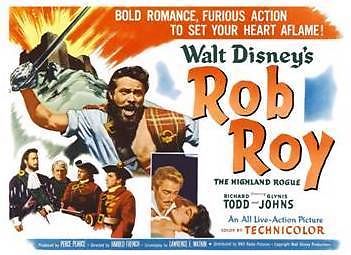
The Sword and the Rose 1953 – Walt Disney

Richard Todd and Walt Disney, July 1952

Richard Todd, the fine British actor  was Walt Disney’s first adult live-action star and his good friend. Todd’s second movie for Walt (after The Story of Robin Hood and His Merrie Men) was The Sword and the Rose, which was filmed in England in 1952 and released in the U.S. in July 1953. I recently acquired this publicity photo for Sword and the Rose which shows Walt with Todd, and with Glynis Johns, Todd’s co-star, around the start of the shooting of that film at the Pinewood Studios. The occasion was the filming of costume tests.

The photo is undated, but it most likely was taken early in July 1952. Walt and Lillian Disney, their daughters, Sharon and Diane  and Lillian’s niece, Marjorie Sewell Bowers, sailed from New York on the Queen Elizabeth on Tuesday, July 1, 1952. They arrived at Southampton on Sunday, July 6, and proceeded to the Dorchester Hotel in London. The Hollywood Reporter for July 17, 1952, in a dispatch from London dated Friday, July 11, reported:

Walt Disney arrived in town this week and got right down to work on his new British picture, “The Sword and the Rose.” Already he has visited Pinewood studios and had conferences with producer Perce Pearce and writer Lawrence Watkin, inspected art director Carmen Dillon’s set designs and given artists’ and make-up tests the once-over. After expressing his complete satisfaction with the pre-production planning and progress to date, he took a quick look at the sound stage where the first set is being built in readiness for interior shooting to start Aug. 5. This set, on which the opening scenes will be filmed, depicts part of the grounds and battlements of Windsor Castle in 1515 during the early years of Henry VIII’s reign. Location shooting will be done by a second unit at Wilton Park, Beaconsfield, about 20 miles out of London, and will start next Monday.

The Disneys and Marjorie Bowers left Europe on Monday, August 25, 1952, sailing from Naples, Italy, aboard the Independence, and arrived in New York on Wednesday, September 3. I don’t know if they flew or took the train to Los Angeles, but, in any case, Walt was back in his Burbank office the following Tuesday, September 9, the day after Labour Day.

Muriel Marjorie Sewell Bowers, daughter of Lillian Disney’s sister Hazel Sewell and the stepdaughter of Walt’s longtime employee Bill Cottrell, married Marvin Davis, one of Disneyland’s key designers, in 1955. He died in 1998. Marjorie Davis died in December 1999, at the age of 83.

The Picture below shows Walt Disney arriving here in 1949 for the making of Treasure Island

1949 – Accompanied by his wife and daughters – Diane, 16 and Sharon, 13 – Hollywood film producer Walt Disney arrives at Southampton aboard the Cunard- White Star liner ‘Queen Elizabeth’. Disney has come to Britain to film ‘Treasure Island’.

The Sword and the Rose was the third film made with the locked revenue from Disney films released in the U.K. during the war. Many of the people responsible for making the film also worked on the previous British Disney film, The Story of Robin Hood and His Merrie Men, including director Ken Annakin, producer Perce Pearce, and star Richard Todd, who played Robin Hood. Glynis Johns was cast as Mary Tudor.
posted by Movieman in Uncategorized and have Comments (6)

After The Ball – 1957 Laurence Harvey and Pat Kirkwood

I don’t seem to remember this film at all but After the Ball is a 1957 British biographical film directed by Compton Bennett.   It portrayed the life of the stage performer Vesta Tilley.

It stars Pat  Kirkwood, Laurence Harvey.   ‘After the Ball’  was  filmed on a quite a low budget and was made by British Lion Films.

The most interesting scenes are Tilley’s interactions with various British and American theatrical figures. In New York City, she works for impresarios Tony Pastor and Oscar Hammerstein: the latter is not the lyricist, but his  grandfather.

It is the story of Vesta Tilley

This film charts the life and loves of a music-hall singer.    Vesta Tilley (Pat Kirkwood) is the daughter of a music-hall Chairman who watches shows from the wings with great enthusiasm.   One day her father finds her dressed as a boy and singing to an audience consisting of dolls. Her act, he believes, is good enough to be performed in front of a live audience. As time goes on, word of her spreads.

She was viewed as the first male impersonator, her fame leads her into marriage to a nobleman.

Above – Leonard Sachs and Laurence Harvey in a scene from the film


Above: Pat Kirkwood in a scene from After The Ball. 

I did notice also the Hubert Gregg had written the screenplay for this film starring his wife. He was such a talented person. I can’t think of anyone else who was so good at so many aspects of theatre and film. He was just phenomenal !!!

Laurence Harvey.

This film was made just before his greatest role as Joe Lampton in Room at the Top.

His career was cut short by illness and he died at the young age of 45. His only child – his daughter who was only a small toddler when he died – lived to an even younger age and died aged 35. She is buried with her father in the cemetery at Santa Barbara, California.


posted by Movieman in Uncategorized and have Comments (4)

World 3 D Film Expo – Hollywood USA in September.

 Below just a sample of the 3D Films that will be shown at THE  EGYPTIAN THEATRE, Hollywood USA,  from September 6, 2013.

HONDO 1953 

HONDO - 1953, Batjac Prod., 83 min.
HONDO  1953, Batjac Prod., 83 min. Tribute to John Wayne & Batjac Productions CAST:  John Wayne, Geraldine Page, Ward Bond, James Arness. DIRECTOR:  John Farrow.
—————————————————————————————————————–
HOUSE OF WAX 

                     HOUSE OF WAX – 1953, Warner Bros., 90 min.


60th Anniversary Screening HOUSE OF WAX – 1953, Warner Bros., 90 min. CAST: VINCENT PRICE, PHYLLIS KIRK, FRANK LOVEJOY DIRECTED BY: ANDRE DE TOTH COLOR:
———————————————————————————————————

THE MAZE  –  as featured before on this Blog.

THE MAZE — 1953, Allied Artists (Paramount), 80 min.
THE MAZE — 1953, Allied Artists (Paramount), 80 min. CAST: RICHARD CARLSON, VERONICA HURST DIRECTED BY: WILLIAM CAMERON MENZIES COLOR: b/w VIEW TRAILER FORMAT:
————————————————————————————————————————–

BWANA DEVIL

BWANA DEVIL - 1952, U.A., 79 min.
BWANA DEVIL — 1952, U.A., 79 min. CAST: ROBERT STACK, BARBARA BRITTON, NIGEL BRUCE DIRECTED BY: ARCH OBOLER COLOR: color VIEW TRAILER FORMAT:  Dual 35mm

Welcome to 2013 World 3-D Film Expo

“Excitement That Can Almost Touch You!” … “Bwana Devil – A Lion in Your Lap – A Lover In Your Arms!” … “The Hand is at Your Throat — The Kiss is at Your Lips – House Of Wax!”

It’s been 60 years since 3-D literally leapt off American movie screens with films like CREATURE FROM THE BLACK LAGOON, KISS ME KATE, DIAL M FOR MURDER and IT CAME FROM OUTER SPACE.  Now, over half a century later, 3-D is back in the mainstream with a vengeance … and so is the World 3-D Film Expo!

3-D today may be technically different than the dual-35mm projector system of the early days – but whether you’re watching James Cameron’s AVATAR or Andre de Toth’s spine-tingling HOUSE OF WAX, there’s that same sense of childlike wonder and pure gonzo fun at watching images float/bounce/stab off the screen straight at you.  There’s no denying it:  3-D is Cool.

It is  kicking off with a special 60th Anniversary screening of the John Wayne western HONDO from 1953.

Also screening  classics like KISS ME KATE, HOUSE OF WAX, REVENGE OF THE CREATURE and IT CAME FROM OUTER SPACE, all in their original dual-interlocked projector format with a silver screen and polarized glassesalongside gems like the World 3-D Premieres of the Korean War drama DRAGONFLY SQUADRON (one of the last unseen 3-D features from the classic Fifties era) and the long-lost short “COLLEGE CAPERS” (restored from the only surviving print in existence.)   And let’s be honest:  3-D was never meant for a Chekov play, it was always best at pure genre filmmaking – and whether your taste is Gothic Horror (THE MAD MAGICIAN, THE MAZE), Film Noir (I THE JURY, INFERNO), Musicals (THE FRENCH LINE, THOSE REDHEADS FROM SEATTLE) or “What on Earth is That??!” (the indescribably deranged ROBOT MONSTER and GORILLA AT LARGE) — it’s here at the 3-D Expo.

Sadly, several of the 3-D features and shorts screened at the previous Expos are no longer available – yet another reason that Expo III is a once-in-a-lifetime event, because for many of the movies showing here, you literally will not see them projected this way again.  For the hardcore film-buffs, another reason not to miss the Expo is that we’ll be showing all of the features and shorts in their correct aspect ratio (many in widescreen); for the most part, these 3-D films have not been seen in their director-intended widescreen versions since their original theatrical play-dates nearly 60 years ago!

Hondo   3D screening


425010_408252855876758_1329021140_n

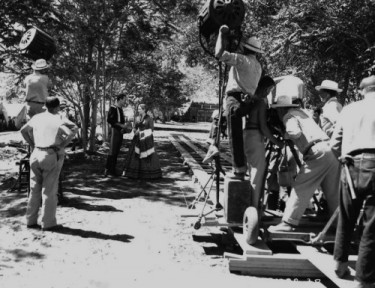
The third World 3-D Film Expo kicks off September 6, 2013 at the Egyptian Theatre, with a rare 3-D screening of Hondo (1954).  Above, that’s John Wayne on the ladder watching as a shot it being set up (that gigantic thing on the lift is the Warner Bros. All Media Camera).

Other 3-D Westerns being shown during the expo: Douglas Sirk’s Taza, Son Of Cochise and Budd Boetticher’s Wings Of The Hawk (both 1953). Julie Adams will be on hand for Wings Of The Hawk.

Who knows how many more 35mm 3-D presentations we can count on?

GRAUMANS EGYPTIAN THEATRE – Hollywood USA

The Egyptian Theatre was built by showman Sid Grauman and real estate developer Charles E. Toberman. The Egyptian Theatre cost $800,000 to build and took eighteen months to construct.

The Egyptian Theatre was the venue for the first-ever Hollywood premiere, Robin Hood,  starring Douglas Fairbanks, on Wednesday, October 18, 1922.

Grauman’s Egyptian Theatre exterior, 1922


Above:  The courtyard circa 2007

In 1996, the city of Los Angeles sold the theatre to the American Cinematheque for a nominal one dollar with the proviso that the landmark building be restored to its original grandeur and re-opened as a movie theatre. The Cinematheque committed to raising the funds to pay for the restoration and to using the renovated theatre as home for its programs of public film exhibition.

The Egyptian Theatre was re-opened to the public on December 4, 1998, after a $12.8 million renovation. The original theatre seated 1760  patrons in a single auditorium. In the restored Egyptian the building has been reconfigured to add a second screening theatre. The main theatre now accommodates 616 patrons. The smaller, 77-seat theatre is named for Hollywood  Steven Spielberg.


posted by Movieman in Uncategorized and have Comments (3)

The Ship That Died of Shame

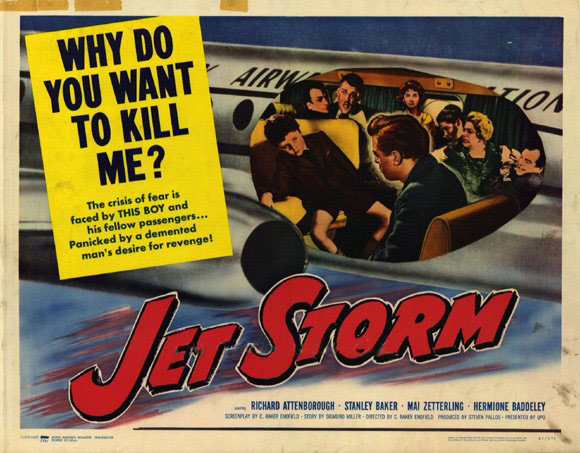
Really good film this one.I never saw it on the big screen sadly but a number of years ago on TV. It is a good story – as you know it would be from the pen of Nicholas Monsarrat – and well filmed with a cast of top British Actors.  Richard Attenborough plays the heartless – and merciless – character who along with his pal from wartime days gets into smuggling – and worse.

George Baker is the good man here, his friend, who in the end just can’t take what is happening.

People these days when thinking of George Baker would come up  Inspector Wexford or another TV role but I think of him first in the swashbuckling ‘The Moonraker’ and then in this one – The Ship That Died of Shame

 The cast includes such actors as Virginia McKenna, Bernard Lee, and Roland Culver

The Storyline is concerned with the ship of the title  1087 which is a British Royal Navy motor gun boat that has faithfully seen its crew through the worst that World War II can throw at them and it has been a proud and heroic ship.   After the end of the war, George Hoskins (Richard Attenborough) convinces former skipper Bill Randall (George Baker) and Birdie (Bill Owen) to buy their beloved boat and use it for some harmless, minor smuggling of black market items like wine.

 They find themselves transporting ever more sinister cargoes – mainly because of the greed of Richard Attenborough –  counterfeit currency and weapons. Their beloved faithful craft had been utterly reliable and never let them down in wartime, but as if troubled by the work it is now doing,  it begins to break down , as if ashamed of its current use. The crew revolt when they are used in the escape of a child murderer.  At the close of the film George Baker realises that the ship just has had enough and realises she is dying of shame.


 Above – Bernard Lee ‘smells a rat’


This film is based on a Nicholas Monsarrat short story. It is brilliantly crafted and plots the downfall of two men – and the ship that served them faithfully through WWII. The logic of the tale is that the ship itself is so ashamed of the terrible things it is made to do that it “dies” despite the hard-headed sailor’s belief that this is impossible.

Earlier in 1955 (April, in fact), another of Ealing’s fascinating final films – the genre hybrid The Ship That Died of Shame – hit British screens. The ship in question is actually a Royal Navy motor gun boat. These were small, fast vessels, equipped with a mix of guns and big enough to carry a crew of up to 30 men. The Ship That Died of Shame follows the life of one boat, MGB1087, starting from the peak of its wartime glory, through to its postwar inactivity and its rebirth in a new role: a pattern that parallels the lives of its crew.

In a performance that compares well with his crazed delinquent, Pinky, in Brighton Rock (1947), Richard Attenborough gets his teeth into the role of 1087’s spivvish ‘number one’, George Hoskins. A star first mate, whose quick thinking and opportunistic instincts served him well in military life, Hoskins persuades his old skipper, Bill Randall (George Baker), to rescue their derelict former boat. They intend to fill a gap in the black market, pitched by Hoskins as a necessary and almost benevolent activity in a ration-weary Britain.

It’s here that The Ship That Died of Shame parts company with other British war movies, taking a sudden nosedive into murkier waters. The producer/director team of Michael Relph and Basil Dearden navigate into thriller territory as rival gangs, a nervous crew, the port authority and other parties with a stake in postwar dignity – including the boat herself – react to Hoskins and Randall’s new enterprise.

Mixing genres – war, crime, the supernatural – is a risky strategy, but it pays off here. The Ship That Died of Shame opposes the war film’s proud sense of propriety with the deviant cynicism of the crime film. In contrast with the optimism of many of Ealing’s postwar films – with their crowds pulling together; their defence of small communities against outsized corporations; the dreamlike vision of a new Britain forged in history but emboldened by progressive ambition – The Ship That Died of Shame reveals a darker side to the golden years of postwar reconstruction.

 Who’d have thought that the studio that gave us the giddy celebrations of George Formby, Passport to Pimlico (1949) and The Titfield Thunderbolt (1953) could sober us up with this tale of the sour taste of victory?

posted by Movieman in Uncategorized and have Comments (3)

The Blue Lagoon – Jean Simmons

Well I think this film just gets into the FIFTIES although it was actually  released here in England in 1949.  I have memories of the film – not so much about the film itself which I only saw on TV years later BUT my Mother and Dad bought me a jig-saw puzzle of a scene from the film – a scene in which  the two young people on the island are leaning  against an upturned boat on the beach. What an exotic scene that is.

Only recently have I managed to acquire all FOUR in the set, of the puzzles from the film – including the one mentioned.

 Jean Simmons in a beautiful colour shot from the film.

 Jig Saw Puzzle – Emmeline warns Michael above – which was No.4 in the series of four.

Original Film Still above

Another Original  Still from the film – above

Film Still from overseas – above – This picture would definitely be taken in Fiji !!!

Film Poster – above.

There will be more on this film in the future !!

posted by Movieman in Uncategorized and have Comment (1)