Lunch with Richard Todd

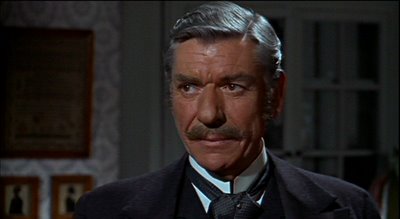
Richard Todd and Phyllis Barrier

I have recently purchased a book – The Animated Man – A Life of Walt Disney.

Written by Michael Barrier.

In his research he and his wife had travelled to England and met up with actor Richard Todd who became  a personal friend of Walt Disneyand this is the article he wrote about that meeting :-

Meeting Richard Todd – by Michael Barrier :-

Richard Todd, the star of three of Walt Disney’s first live-action films, died in England on December 3, 200 at the age of 90.  For Walt Disney he appeared in The Story of Robin Hood and His Merrie Men (1952), The Sword and the Rose (1953) and Rob Roy the Highland Rogue (1954). He appeared in many other films, too, and was nominated for a best-actor Oscar for his role in The Hasty Heart (1949). He was a true war hero, as one of the first British paratroopers to land in Normandy. He was, in short, a dashing and glamorous figure, and, as my wife and I learned on June 22, 2004—just a few weeks after Todd took part in ceremonies commemorating the fiftieth anniversary of D-Day—a delightful luncheon companion.

Todd as Robin HoodWe were in England during an extended research trip to Europe, for The Animated Man: A Life of Walt Disney. I had been in touch with Todd by mail and email for some months, and we had agreed to meet for lunch at Grantham, in Lincolnshire, about an hour’s train trip north of London, near Little Humby, the village where Todd was living then. We’d had no confirmation from Todd of our plans in the days just before our scheduled meeting, and so Phyllis and I felt some apprehension when we got off the train at Grantham.

We needn’t have worried. Waiting on the platform for us was a very dapper elderly man, using a cane but immediately recognizable as Richard Todd. As Phyllis said—she had become a fan as we watched a dozen or so Richard Todd movies in preparation for the trip—he still had those twinkling blue eyes. His handsome necktie, he told us later, bore the insignia of his Royal Air Force unit.

Todd drove us in his Mercedes to the Angel and Royal, an 800-year-old Grantham hotel where King Richard III once held court in what was now the main dining room. It was closed for lunch, unfortunately, and so we would have lunch in the bar. As we waited for our table to be made ready, Richard suggested rather gingerly that perhaps we might have something to drink before lunch. When I proposed Bloody Marys, he readily assented.

We talked about Walt Disney and the Disney films over the excellent lunch that followed, Richard Todd expanding on what he had already written about his Disney experiences in the two volumes of his autobiography, Caught in the Act and In Camera (neither of which was ever published in the U.S., although copies are available through used-book dealers). You’ll find quotations from our interview in The Animated Man, along with a photo of Todd with Walt at Coney Island, which he sent me later.

As I listened to Todd at lunch, and a few weeks later on tape, the years fell away; his voice was still that of the strikingly handsome young actor who was easily the most successful Robin Hood on the screen, excepting only Errol Flynn (the publicity photo at left above is of Todd in that role). At 85 he was still very much a movie star, in other words, and in the best sense: not as an ego but as a presence. I’m grateful that I got to spend a couple of hours with him.

After lunch, Phyllis and I took photos of ourselves with Richard Todd; that’s her with him in the photo above. And then he drove us back to the Grantham station, for our return trip to Kings Cross station. A lovely day.


posted by Movieman in Uncategorized and have Comments (3)

3 D week in San Francisco

The Castro Theatre was hosting a 3-D Film Series recently including the 1953 Vincent Price vehicle House of Wax. Even better, the Castro Theatre was screening these 3-D films in 35mm “Dual-interlock,” an arduous process, especially from a theatre management perspective. Basically, the “dual-interlock” projection system uses two projectors to simultaneously run two versions of the film, one filmed for the left eye and one for the right; further, this screening method requires an actual “silver” screen, special polarized glasses (not the typical red/blue, or anaglyphic ones), and an intermission to allow the projectionist to change the reels on both projectors at the same time. The end  result is apparently first rate


Even the opening credits were exciting. Crisp vivid picture with not even the slightest colour degradation creating an often startling 3-D effect.


Above – Scenes from ‘House Of Wax’

posted by Movieman in Uncategorized and have No Comments

Another look at Treasure Island 1950 – Walt Disney

Treasure Island

I have never seen this picture before which is taken from above  the set of the Hispaniola on the sound stage at Denham Film Studios.

The photo above was taken during the shooting of Treasure Island, at Denham Film Studios in England which was Walt Disney’s first all-live-action feature, made in England in 1949 – released in 1950. The director, Byron Haskin, and his assistant, Mark Evans, are seated at the right, in front of the wheel. On the crane at left are Freddie Young, the legendary cinematographer and camera operator Skeets Kelly.

I have used the picture below before – but is a similar scene from a lower angle – and is actually two pictures joined together as you can see

but  nevertheless it gives a good view of what is going on :-


Robert Newton was the actor chosen to play that key role  of Long John Silver. His performance wasn’t just the definitive portrayal of Long John Silver, it became cemented in the public’s mind as what a pirate should be.


A great character in the hands of a great performer.

Robert Newton brings enormous charisma to the role, and because of it, the audience is always left guessing (just as Jim is) to the character’s true nature. He’s a bad man to be sure, but is there also kindness in him?  Somehow you just cannot help but like him.

posted by Movieman in Uncategorized and have No Comments

Classic Western ‘Double Bill’

Rancho Notorious and Johnny Guitar on at the Castro Theatre San Francisco

Just come across the wonderful Double Bill which is showing in San Francisco later this month a Western Double Bill  of 50s Westerns : Fritz Lang’s Rancho Notorious (1952) and Johnny Guitar (1954).

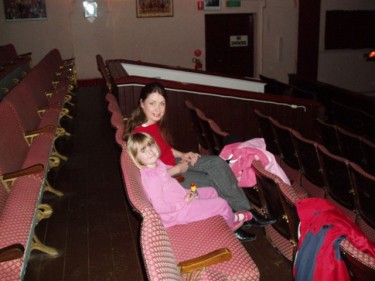
Below: Two pictures of the interior of this Theatre. Looks very stylish.

Rancho Notorious is a 35mm print. I hadn’t seen this film until about 5 years ago although I remember it well in terms of the promotion when it came out but I  didn’t realise until it was on Television in England that it was made in Colour. Good film though I now realise.

Screen shot 2014-04-02 at 10.48.37 PM

Visitors to San Francisco look out for an iconic landmark – the Castro Theatre. Built in 1922, the Castro Theatre is arguably the grandest place in San Francisco to see a film – not just the old classics – the Castro Theatre shows the full range of film formats, from classic black-and-whites, to  3D favourites.
Just buy a ticket at the window, venture into the grand screening room, and sink into your plush velvet chair. Take in the music wafting from the organ, manned by a live organist before each show – the lights dim, the screen begins to glow, and you become part of film history.
posted by Movieman in Uncategorized and have No Comments

Seven Brides For Seven Brothers


“Seven Brides for Seven Brothers” (1954), directed by Stanley Donen, is based on the short story “The Sobbin’ Women” by Stephen Vincent Benét and stars Howard Keel and Jane Powell. Set in Oregon in 1850, backwoodsman Adam Pontipee (Howard Keel), while in town to buy new supplies, decides to get himself a wife. He meets Millie (Jane Powell), who works in a bar, and likes her right away because she looks tough and knows how to cook. He proposes to her and she accepts, having fallen for him on the spot. They return to his cabin in the mountains as a married couple and there Millie is surprised to learn that Adam lives with his six younger brothers. His brothers are all extremely ill-mannered and soon Millie teaches them how to behave and how to court a girl. At a barn-raising the six brothers each fall in love with a girl and the girls fall for them too but instead of courting the girls, one night the brothers kidnap them from their homes. At first the girls and Millie are outraged by the kidnapping, but in the end the girls are happy to be with the brothers and of course all’s well that ends well.


Director Donen delivers a sparkling and entertaining musical, despite the fact that he had to deal with major budget cuts during filming (which clearly shows in the movie’s painted mountain backdrops). Apparently MGM had little faith in “Seven Brides” and cut Donen’s budget in order to put more money into the musical “Brigadoon”, which was in production at the same time. Ironically “Seven Brides” became the bigger hit. Howard Keel and Jane Powell, the two leads in this film, were both perfectly cast and form a truly nice couple. I especially love Jane Powell, who is excellent as the tough and feisty Millie. Many of the brothers and their brides were no actors but professional dancers, with the exception of Russ Tamblyn (Gideon) who was a gymnast, and Jeff Richards (Benjamin), who was a professional baseball player. Some of the dancing in this musical is simply superb, the highlight of course being the barn-raising dance sequence. This scene is a true classic and really shows great acrobatic dancing.  Of course this film also has some great songs such as “Bless your beautiful hide”, “Wonderful, wonderful day”, “When you’re in love”, “Lonesome Polecat”, “Sobbin’ Women” and “Spring, spring, spring”.

posted by Movieman in Uncategorized and have No Comments

The Beast of Hollow Mountain 1956


affiche-la-montagne-mysterieuse-the-beast-of-hollow-mountain-1956-7

Directed by Edward Nassour and Ismael Rodríguez
Produced: Edward Nassour and William Nassour
Screenplay by Robert Hill and Jack DeWitt
From a story by H. O’Brien
Music by Raúl Lavista
Cinematography: Jorge Stahl
Special Effects: Louis DeWitt, Jack Rabin and Henry Sharp

CAST: Guy Madison (Jimmy Ryan), Patricia Medina (Sarita), Carlos Rivas (Felipe Sanchez), Eduardo Noriega (Enrique Rios).

__________

The Beast Of Hollow Mountain (1956) finds Guy Madison stars as an American rancher in Mexico who is very concerned that his  cattle are going missing — and eventually comes face to face with a dinosaur. (It takes place at the turn of the century.)

There is a lot to recommend The Beast Of Hollow Mountain. It’s got cowboys and a dinosaur.  It was filmed in Mexico and based on a story by Willis O’Brien, who spent years trying to raise the money to make the film himself –  unsuccessfully as it turned out. It’s got Patricia Medina from Botany Bay 1951 in it. Once it finally gets to the dinosaur, it really delivers the goods — although  the special effects are not that good..

The Valley Of Gwangi(1969) is a better-mounted version of O’Brien’s story, with excellent stop motion stuff from Ray Harryhausen. However, it doesn’t offer as much  fun. Beast Of Hollow Mountain comes from a real sweet spot in Guy Madison’s career. He’d just done The Command (1954) and 5 Against The House (1955), and he’d follow this oddball sci-fi Western with two of his finest films — Reprisal! (1956) and The Hard Man (1957), both directed by George Sherman for Columbia.


posted by Movieman in Uncategorized and have No Comments

Anne of the Indies 1951

6

1

A very pretty Jean Peters starred in this colourful adventure film from 1951

In 1946, a short story by Herbert Ravenel Sass titled “Queen Anne of The Indies”, appeared in the Saturday Evening Post and generated much excitement amongst the New York publishers and Hollywood studios.   “Anne of the Indies” was made and released in 1951.

2

3


4

In early 1950, at Fox’s instance, a new script was prepared by Romanian born screenwriter/playwright Arthur Caesar incorporating unused footage shot for “The Black Swan” (1942) starring Tyrone Power. The studio assigned George Jessel to produce while tests were done with Patricia Neal and Valentina Cortese for the title role.


5

From East Canton in Ohio, Elizabeth Jean Peters grew up on a small farm, majored in literature and won a screen test with 20th Century-Fox as prize for winning the Miss Ohio State Pageant title in the fall of 1945. Owing to a contract with Fox, Jean moved to Los Angeles and later acquired a small part in “I Wonder Who’s Kissing Her Now” (1947). However, it would be her role as Catana Perez (replacing Linda Darnell) in director Henry King’s “Captain from Castile” (1947) that will bring her star treatment and public attention though the film grossed net loss because the studio spent more for it than the market could afford

After a brief slump in her popularity, the 5’ 5”  Jean had pursued the studio and convinced them to cast her as “Anne of the Indies”. It was a down to earth, unglamorous role– exactly what she preferred since sometime earlier the studio had put her on her first suspension owing to her refusal to don sexy roles. However, being the current romantic interest of the legendary billionaire Howard Hughes, beautiful Peters with brown hair and green eyes must have found it easy to step over that suspension. Even though she had a celebrated romance with Hughes in 1947, their marriage will take place only in 1957 after living with him off and on for a decade.

7

Jacques Tourneur was given the director’s hat for the project in January 1951. Essentially a small-budget director he had a reputation to direct movies on various genres since he always accepted all the scripts offered to him.

37mHaving finished directing “The Flame and the Arrow” (1950) starring Burt Lancaster and Virginia Mayo, Tourneur was in the right mood for yet another swashbuckler. With a secured contract with Fox and devoid of interference from producer George Jessel, the film went into production at the 20th Century-Fox Studios in Los Angeles.


9

As the film begins, we are shown the names of two English ships, Royal Charles and Sea Lady are being stricken off a register of ships for having been destroyed or sunk by the notorious Captain Providence. We then cut to: the deep ocean off Antigua where the English vessel Gemini is preparing to repel the attack of Anne’s flagship Sheba Queen. As the two ships draw nearer and the canons started firing, Anne suddenly appears on the deck of her ship while her men valiantly fought the English, their swords flashing in fierce combat. Even Anne joined her men in the fight. Before long, the English Captain had surrendered.
10

Inside her cabin, Anne threw the enemy’s flag on top of the wooden desk and was pleased to learn from Dr. Jameson that he had attended to all the wounded. At this time he wanted to tend to Anne’s wound which he was sure would leave a scar on her beauty. Anne was not unfamiliar to scars most of which she had received from the English. But she is not a wench to brood over her scars, has chosen not to show her pain, even now, at her moment of glory though the fact remained that she had lost her sailing master in this assault.

She invited the doctor, her confident, to the deck where her crew were making the prisoners walk the plank – a sight, she was certain, would put some iron in the alcoholic doctor’s soul. The Captain of Gemini was grumbling that he had struck his flag hoping to receive some water. He protested to Anne about the merciless treatment meted out to the prisoners by her men. Anne retorted that she had learned such mercy from the English. Did they show mercy to her brother? They had hanged him in chains in the wharf of Port Royal with all the English just spitting on his face – she snapped at him.

11

The hatred towards the English that had grown in her heart for the death of her brother, was one of the many scars Anne accumulated in her life that made her reject her femininity. The Captain was given the opportunity to express his last words. All he had to say was that, her brother was a pirate and he deserves the end that he got as Anne will deserve hers. But Anne knew that she had chosen to live with that. “By the veins of your nose you have drunk your king often in wine, now drink him in salt water” With that reply, she ordered the Captain to walk the plank.

12

It was then she noticed the handsome man in irons being led to the plank, the upper part of his body exposed. They have found him imprisoned in the English vessel which meant he is not a friend of the English. Questioning him, she learned that he is a Frenchman named Pierre François. When she introduced herself to him, it was a revelation to him. Caught in the propaganda that surrounded Captain Providence, Pierre had never expected the buccaneer Captain to be a woman. Furthermore, he had least expected it when her palm cracked on his face for having disrespectfully addressed her as “mademoiselle” rather than in her proper title of “Captain” which displayed the forcefulness of the identity she had chosen.

13

It was revealed that Pierre was the owner/master of the Bordeaux registered Irish privateer, Molly O’Brien, captured by the English. He is being sent to England to stand trial for having captured too many English ships. Anne had allowed her men the pleasure to make their prisoners walk the plank except for Pierre. Being sea-smart, Anne knew that Pierre, a sea artist, would make a suitable replacement for the navigator she had lost and that was what she did to the displeasure of her Scottish first mate Red Dougal, who had been delegated by Blackbeard to protect her. As for Pierre, who is fond of life, it was not a hard choice to make when his choice was between joining the buccaneers or walk the plank.

When the booty from the Gemini was shared with her crew, Pierre was permitted to choose something for himself. While Pierre decided a woman’s dress, Anne laid her claim on a sword with a long blade, the virility of which reflected on her authority. However, Pierre’s choice had kindled her curiosity to make her enquire if he has a wench somewhere. Pierre would only reply that he is a Frenchman. Anyhow, she let him know that the sword was selected for Captain Teach, Blackbeard, a great sea-rover of a soul whom she is certain she would find in Nassau where they plan to get the supplies. The Sheba Queen headed for Nassau.

14


15

The Black Anchor Tavern in Nassau looked a beehive of boisterous merriment. Apparently, the tavern was taken over by Blackbeard and his men and their women for partying and their idea of fun appeared to be to laugh, shout, fight, bear-wrestle, break things, get drunk, etc in the dreadful manner possible. The enormous figure of Blackbeard sat at the head of a wooden table with a woman on his lap, drinking heavily and having a great time.

16

It was during the bear-wrestling that Anne and her entourage walked in. At the sight of Blackbeard, Pierre had tried to excuse himself to go off for some business in Nassau, but reluctantly stayed when Anne assured him of her protection. So excited was Blackbeard to see her there, that he said she’s like a Northeaster after a calm.

17

Although Blackbeard had doubts about Pierre which was also intensified later by Dougal, his main interest was focused on Anne and the sword she presented him. When all of his men shied away from being a willing partner to the impulsive Blackbeard to help try the new sword, Anne was ready to let him try to carve her. A fierce but friendly duel of swords broke out between Anne and Blackbeard in which Anne displayed some playful but competent skills of swordsmanship but it was pretty obvious that he could have won over Anne easily. However, when Blackbeard was momentarily distracted, Anne grabbed the chance to win; a trickery which Blackbeard merely laughed off in a fatherly manner. Then again, Anne’s glory was short-lived when she learned from Dougal that Pierre had slipped out of the Tavern while the duel was on. The confidence she had placed in him has been displaced.

18

Later, confronted by Anne in her cabin, Pierre didn’t provide her with a proper explanation about his absence, to satisfy her doubt about his loyalty. He had neither gone to see a wench, nor is he a spy because he knows nothing of her plans. All Nassau knows that she’s in the port. Suspicious that he is hiding a secret, she ordered Dougal to put him in irons. Subsequently, he was tied up on the deck and mercilessly flogged until Dr. Jameson convinced her to stop.

19

Dr. Jameson was evidently dismayed for having been ordered by Anne to search Pierre’s cabin where he had found half of a map tucked inside his mattress. Though Anne cannot read, she can read from patterns. Assisted by Dr. Jameson, she finally figures out that the map is a link to Captain Henry Morgan’s treasure. When Morgan (ca. 1635-1688) captured Panama City, he had taken a king’s ransom which has not been accounted for.

20

Having matched the piece of map with her main map, she questioned Pierre, now lying on the wooden floor of her cabin, drained from “the taste of the cat”. Pierre had no qualms in telling her that he had bought it five years ago from an inn-keeper on the Bordeaux waterfront who found it in the body of a lodger of his. Once Anne assured him to make him equal partner with her, Pierre opened up further and related to her that his men in Porto Bello had told him of a Portuguese in Nassau trusted by Henry Morgan, In fact Pierre had been taken prisoner by the English while he was heading to Nassau to meet the Portuguese. At Nassau, Pierre had learned from the Portuguese man that a man called Pedro Mendoza living in Port Royal in Jamaica possessed the other half of the map.

21

It was then Dr. Jameson remarked to her that since she now knows what Pierre knows, she could very well kill him and go after the treasure on her own. But Anne would have none of that, for she had given Pierre her word. And that counts.

22

Port Royal was the lion’s den – the Headquarters of England’s Caribbean Squadron. That’s where they will go once they careen the hulk of Sheba Queen encrusted with hardened barnacles, to restore the ship to its proper speed. Dr. Jameson confirmed that the parchment and the ink of the map looked authentic to him.

23

As Blackbeard had taught her, Anne had carefully docked her ship in a secret cove, known only to Blackbeard and Anne, ideally positioned to cannon and command the passage through the reef while her ship lay inoperable.

24

Later, while she was walking along the beach with Pierre, she was surprised to learn that he was born in Paris. Anne advocated that he can take her there as a partner after they have lifted the treasure. But overriding this subject was her curiosity to know for whom he had chosen that yellow dress.

25

He had obviously noted the anxiety in her question and told her that it is for no one in particular – perhaps for a woman he hoped someday to meet. Having caught with her guard down, she quickly pulled herself up to her rank, but her sudden change in manner essentially gave away the tell-tale sign of affection for him that was growing in her heart.

26

The following day, Pierre walked into his make-shift cabin and found Anne trying on the yellow corseted dress he had chosen from the booty. This is the moment for which that dress was made for. She looked like a breath of spring. Even though her face looked unaffected from his sudden intrusion, the thoughtful Frenchman knew that he had awakened the feminine side of this ruthless pirate queen.

27

Well, she can’t underestimate his ability to get through to her heart and to melt away her defences. But he would use his power responsibly. Pierre helped her tie the back ribbons of the dress, an act which acted as the precursor to a conversation that stirred the woman inside her, exposed her inner feelings she was silently weaving around Pierre. She dared him to tell her “how a Frenchman, a gentleman, made love?” knowing that it would draw him to her. Soon, they merged into a passionate kiss.

28

It seems all good things in life are not meant to last. The expression of their “burning” desire turned out to be short-lived and frustrating as Dougal suddenly walked in and caught them in the act.

29

On hearing the news about an approaching ship, Anne’s spyglass confirmed the arrival of Blackbeard’s flagship “(Queen Anne’s) Revenge”. How happy she appeared in welcoming Blackbeard with Jamaican rum. She listened to him saying that he had looked for her in Tortuga and had realised that she’s docked here to careen.

30

Without losing much time, Blackbeard accused that Pierre is a traitor. He is Lieutenant Pierre François La Rochelle of the French Navy. He had seen Pierre at Martinique when the French hanged his colleague Sam Austine from a yardarm. Confronted once again by Anne, Pierre explained that everything which Blackbeard told was true. He merely neglected to mention about the commission because the memory of that chapter was painful to him. He was cashiered from the navy in disgrace. He had witnessed the hanging only because the entire officers were ordered to be present. Anne is in command here, and he is not on Blackbeard’s deck. She can be assured that he will serve her loyally.

31

Disregarding her support for Pierre, Blackbeard’s sword struck out at Pierre. Abruptly, Anne’s sword lashed out at Blackbeard with dynamic forcefulness. During the angered spat of words that followed, Anne slapped his face- in front of his men. She ordered him and his men off the island. The line has been crossed. Blackbeard never forgets an insult. Now there will be war between them.

32

As Blackbeard and his men left the island, Anne ordered Dr. Jameson to care for Pierre lying unconscious on the ground. Before she moved off from Pierre, she couldn’t resist planting a kiss on his forehead.

The Sheba Queen was safely anchored off the coast of Jamaica. Given that Anne was denied from going to the island in his place to obtain the other half of map from Petro Mendoza, she arranged with Dougal to take Pierre on a row boat to leave him ashore at the Portland Point and wait for him on the beach. She gave Pierre some English Guineas to pay the man and advised him to offer Mendoza a share of the treasure if he insists for more.

33

At Port Royal, Pierre went straight to “The Governor’s Tavern” where the English Aristocrats were engaged in smoking, drinking, playing table games or other things such men usually do in such places. Pierre was recognised as “Captain La Rochelle” by the Maitre d’ and promised to arrange the people whom Pierre wanted to meet urgently.

34

In a dark room upstairs, he met a pretty woman we soon discover to be his wife Molly La Rochelle. He confirmed to her that their plan has succeeded and that the legendary Captain Providence is a woman. They seal their reunion with a kiss before he was called downstairs to meet up with the English Naval officers who have engaged him to entrap the pirates.

35

The English were rejoiced at the news that the Sheba Queen was anchored off Portland Point and will remain there till daybreak. And, of course, they appreciate that Captain Providence suspects nothing though they were rather surprised to learn that the notorious pirate is a female. With this information in hand, the English attack Anne of the Indies …..

36

As Darryl Zanuck once said, “Success in movies boil down to three things: story, story, story.” The final climax of the film was subject of deliberations since Zanuck was not satisfied by the motive provided for Anne. The result was that Dunne suggested shooting the climax in different ways. However, after the shooting was completed, having found that the present ending was unsatisfactory to the audience, the ending was again modified with further retakes. According to Tourneur’s contract which stipulated that the production was to be completed within fifteen weeks, the production of “Anne of the Indies” must have been wound up before May, 1951 since by then Tourneur was supposed to be in Argentina for the production of “Way of a Gaucho”.

38

Adventure movies call for a directorial and an acting style which is well known to adventure directors such as Raoul Welsh, Howard Hawks, John Huston, Richard Fleischer, Henry Hathaway, Michael Curtiz, and Jacques Tourneur. Shot in Technicolor by Cinematographer Harry Jackson and ably edited by Robert Fritch, director Jacques Tourneur’s film features restraint and admirable performances of his stars in well made up sets, lighting and studio locations.

39

The film truthfully portrays Anne as a ruthless pirate who has denied her femininity and doesn’t know what it means to be a woman, or to be loved. In order to illustrate Anne’s crisis of identity, Tourneur used a scene in the beginning of the film to establish Anne’s strong heart and the softness of her bosom when Dr. Jameson tends to her wound. Despite Jean Peters’ cute and pretty looks which occasionally subdue her efforts to make Anne look dangerous and ruthless, her performance with an athletic agility is flawless though, couple of times, her cheerful countenance has appeared rather teasing.

40

Louis Jourdan’s performance in the role of Frenchie merited critical acclaim. Ever since Zanuck had that terrible polo ball accident in late December 1941, he had switched his interest in sport to croquet which he used to arrange on the lawn of his house in Palm Springs. Frequented by a cross-section of Hollywood society, international celebrities, etc, his lawns became the croquet capital of California. Jourdan who was a contract star of Fox and best of the regulars to Zanuck’s house, was found to be perfect fit for the role of Pierre.

41

Louis Jourdan’s movies conjure up an image of him as a suave, dashing, romantic charmer. In spite of this, the Marseilles born Jourdan (aka Louis Gendre) had also managed to appear in villainous roles. Beginning his acting career in the French film “Le Corsaire” (1932), Jourdan became a star after producer David O. Selznick cast him in Alfred Hitchcock’s court room drama “The Paradine Case” (1947) for which Franz Waxman was the music director. But his finest performance before he acted in “Anne of the Indies” was in Max Ophuls’ “Letter from an Unknown Woman”.

42

British actor Herbert Marshall (1890-1966) with considerable stage experience acts as the alcoholic Dr. Jameson who helplessly hovers around watching Anne trapped in her crisis of identity. The mannerism of the wise and philosophical Dr. Jameson in the scenes where Anne displays her determination to acquire the respect she deserves; when she is in conflict with her human emotions; is well portrayed by Marshall.

43

In the role of the boisterous Blackbeard, the heavyset, stage character actor Thomas Gomez (Sabino Tomas Gomez – 1905-1971) made use of the opportunity to drink, laugh, turn tables, and swash his sword to realistically portray the larger-than-life of the renowned pirate.

44

Gomez was a member of the Alfred Lunt and Lynn Fontanne theatre group before he ventured into movies. An aficionado of gourmet dining and a close friend of Jean Peters, he had co-starred with her in “Captain from Castile

45

Tall and hefty, England born actor James Robertson Justice (James Norval Harald Robertson Justice – 1907-1975) with whiskers and booming voice had completed a series of films, viz. “The Black Rose” and “The Magnet” (1950), “Blackmailed”, “Pool of London”, “Captain Horatio Hornblower” and “David and Bathsheba” (1951) prior to his role as Red Dougal.

46

The mannerism of Dougal when Anne chose Pierre as her sea artist when she knew nothing of him; his confidential talks with Blackbeard and Dr. Jameson; his ever watchful eyes on Anne; the suppressed outrage on his face when he caught Anne and Pierre kissing – have all been perfectly portrayed by Justice.

47

Hailing from a show biz family, the 5’ 2” (157cm) Debra Paget (Debralee Griffin) obtained an acting contract from 20th Century-Fox at the age of 14, debuting in “Cry of the City” (1948). Having earned proficiency in speaking from Helena Sorrell, the dramatic coach of 20th Century-Fox, and fairly active in movies at that time, she co-starred with Louis Jourdan and Jeff Chandler in director Delmer Daves’ “Birds of Paradise” which also hit the screens in 1951.

48

Although Paget’s role in “Anne of the Indies” is confined to few dark scenes, her effervescent beauty lights up the darker scenes which are rampant in many of Tourneur’s films. Appearing pale and innocent, Paget has nothing much to do except look distressed and wear a few moments of brave face when she antagonizes Anne over Molly’s rights over her husband.

49

Other members of cast are Francis Pierlot (Herkimer), Sean McClory (Hackett), Holmes Herbert (British sea captain), Byron Nelson (Bear handler), Douglas Bennett (Bear wrestler), Mario Siletti (Auctioneer), etc.

50

Notwithstanding the lesser budget, the film features sets and props with truthful authenticity, there are Naval cannons, antique swords, males’ earrings and some of the guns used by the pirates and the English are even Flintlock pistols.

51

The artistic and talented art directors Lyle Wheeler (1905-1990) and Albert Hogsett have faithfully created the set pieces, though standard and familiar, with the expertise of set decorators Thomas Little and Claude Carpenter.

52

Lynn had started his career at M.G.M when David Selznick hired him to work under production designer William Cameron Menzies on “Gone with the Wind” following which he ran the art department of Twentieth Century-Fox from 1944 to 1960. Lynn won five Academy Awards for Best Art Direction after having been nominated twenty-nine times, four of which in 1951.

53

While the makeup is by Ben (Benjamin Emmet) Nye, the film’s wardrobe is directed by American Costume designer Charles Le Maire (1897-1985) who ran the Wardrobe department of 20th Century-Fox from the early 1940s. For this film he had collaborated with Costumes designer Edward Stevenson (1906-1968) who himself started in Hollywood from 1922 and became the chief designer at RKO from 1936-49.

54

Although most of the costumes are standard pirate and navy gear which kept up the atmosphere, the feminine costumes for Jean Peters and Debra Paget and for some extras are very minimal. Apart from the yellow dress Anne wears inside the make-shift cabin, the other one is a white nightgown shown in very dim lighting as she gazed at the glittering sea.

55

German composer Franz Waxman (Franz Wachsmann – 1906-1967) with orchestration by Edward Powell have provided a rousing score that blend well with the romantic nature of the story. Other than montage, music is one of the two most “invisible” contributing arts to cinema and Waxman is renowned for his very close understanding of when music should appear in the narrative.

56

Arriving in America in 1934, Waxman provided his first original score for “Bride of Frankenstein” (1935) after which he worked for two years with Universal Studios, before moving to M.G.M and later onto Warner Bros until he won the Academy Award for “Sunset Boulevard” (1950) and “A Place in the Sun” (1951).

57

Years and years later, this routine swashbuckler evoked some deliberations in seminars and conferences because of the identity crisis of the lead character. There were also some writings including an essay titled “Femininity and the masquerade: Anne of the Indies”.

58

Considering the lack of depth in the psychological density of the main characters and also in the thinly plotted story, I would think this movie was just another job for Tourneur.

59

I would also like to think that Tourneur made this film without any alternative agenda other than to make a simple pirate tale – some 81 minutes of entertainment which has all the virtues of the genre: sea-battles, swashbuckling, adventure and drama with a twist showcasing the protagonist as a female dressed in male attire to suit the environment of the buccaneers of the story; and also, to differentiate this film from a series of swashbuckler films featuring male leads various studios were chucking out during 1940s and 50s.

60

Anne of the Indies cannot be compared to a lively, colourful period film featuring a protagonist with the lighter-than-air agility of Douglas Fairbanks or an extrovert, acrobatic hero portrayed by Burt Lancaster. Nevertheless, this old-fashioned harmless family movie has an underlining story of Anne going through her identity crises, searching for love which is quite unfamiliar to her.

61

Anne’s love is her weakness and to us it has made her human, even though she is riddled with faults. By making Anne endearing to us, lovely Jean Peters leaves a memory of a breed of heroines long gone from our screens. Until next time, Ciao, Jo.

62

63

(This review is dedicated to the memory of lovely Jean Peters)

posted by Movieman in Uncategorized and have No Comments

Tarzan and the Lost Safari – 1957 Made in England

This film from 1957 was on the Sky Film Channel yesterday February 15th 2014, and I watched some of it and was impressed by the colour and the scale of the production but straight away I noticed the supporting actors – Robert Beatty, Wilfred Hyde White, George Coulouris and Peter Arne –  Yolande Donlan and Betta St John – all British actors although Yolande was from the US but had settled here and so I think had Betta St John who had married an English actor.  On checking I see that the film was made on location in Africa with the studio work done at Elstree in England. There was a lot of studio work and a lot of it is on large sets of  ‘outdoor’ jungle locations – which I have to say were very impressive.

This was a Cinemascope picture which no doubt would show off the beautiful African locations – a unit must have gone out there with Gordon Scott in order to get the wide vista shots but  not many others in the cast went I should think.

Above  – Yolande  Donlan

posted by Movieman in Uncategorized and have Comment (1)

James Robertson Justice – fantasist / storyteller or what ??

With his unmistakable booming voice and vast red beard, James Robertson Justice was one of the pillars of the British cinema in the Fifties and Sixties.

The star of seven Doctor In The House comedies – as surgeon Sir Lancelot Spratt – as well as playing Lord Scrumptious in Chitty Chitty Bang Bang, this 6ft 2in, 19-stone actor was larger than life in every sense.

However  a new biography reveals, he was also a deeply contradictory and troubled man – a selfish fantasist, an unrepentant socialist who nevertheless drove a Rolls-Royce and was a friend of the Royal Family, a man with a great appetite for food and drink  and yet a man who let his mother die from malnutrition, and a relentless womaniser.

For example, Justice always said that he was born underneath a whisky distillery on the Isle of Skye in Scotland – when he was actually born in Lee, South London, and was brought up in Bromley, Kent.

Indeed, he wasn’t even christened James Robertson Justice – only adding the middle name in his late 30s in order to sustain the myth of his being Scottish.

He also liked to boast that he had a science degree from London University and a doctorate in philosophy-from Bonn University, in Germany, when, in fact, he had neither.

Despite such relentless fabrications, however, there was enough in his life to fill several biographies.

Repeatedly during his 30-year career, which included 87 films, this ebullient ginger-haired actor invented endless stories about every part of his life, loving to create mysteries, which his friends claimed was an attempt to conceal the insecurities that lay behind his bluff, rumbustious exterior.

He worked for a time as a reporter for the Reuters news agency, was a teacher in Canada, played professional ice-hockey, drove racing cars, was a member of the German police force when the Nazis came to power, and was a founder member of the late Sir Peter Scott’s Wildfowl Trust – achievements all made before becoming an actor.

A new biography reveals that Justice was a deeply contradictory and troubled man and a selfish fantasist

As his friend, the Duke of Edinburgh, says of him: “James was a large man with a personality to match. He lived every bit of his life to the full and richly deserves the title “eccentric”.”

The two men first met in the Forties and shared a love of hunting with falcons in Scotland – a passion that Justice later helped to pass on to Prince Charles.

So let us try, 33 years after his death at the age of 68 in 1975, to unravel the truth about this contradictory man.

One thing is clear above all others about the blustering, often rude, Justice – he never cared to be thought of as a film star.

“I am not a star!” he would insist, often at the top of his voice. “I am in this profession to make money.”

As Richard Gordon, author of Doctor In The House, puts it: “He preferred to think of himself as a straightforward Scotsman who wore kilts, fished the lochs, flew falcons and knew those people over at Balmoral. Every performance was himself.”

To understand the real James Robertson Justice, we need to return to his South London birthplace in June 1907, where he was the only child of a geologist who, ironically, despised everything about the Scots, even though he’d been born in Aberdeen.

His father, also called James, saw little of his son, as he was travelling the world.

By the time he returned to England in 1922, young James was already a boarder at Marlborough school in Wiltshire.

Not that Justice ever talked about his childhood. As his biographer, James Hogg, puts it: “Perhaps the absence of his father for long periods was too deep a wound to revisit.”

But this was not the only part of his life that he liked to draw a veil over.

After Marlborough, Justice studied science at University College, London, but left after a year in mysterious circumstances and became a geology student at Bonn, where he acquired an appetite for languages, but left equally suddenly to return to England in the summer of 1927.

Still only 21, it wasn’t long before he secured a job at Reuters news agency in London, where another reporter was the young Ian Fleming, creator of James Bond.

His friend, the Duke of Edinburgh, said that Justice was ‘a large man with a personality to match’ and ‘lived every bit of his life to the full’

But Justice was useless at the job. One colleague called him “quite unsuitable” – not least for his habit of turning up for a night shift in dressing gown and pyjamas.

After a matter of months, he then set off for Canada, where he sold insurance, taught English at a boys’ school, became a lumberjack and mined for gold.

Feeling homesick, Justice worked his passage back to England by washing dishes on a Dutch freighter – or so he later maintained – and by 1931 he was playing for the London Lions ice-hockey team – another career that lasted barely a year.

Undeterred, he tried his hand at motor racing, entering a race at Brooklands in Surrey.

But, characteristically, he disappeared again – to become a policeman for the League of Nations in the Saar area of Germany.

Mystery surrounds this brief period in his life. One suggestion was that he was forced to leave after firing into a hostile crowd and killing someone with the ricochet.

Then there was his subsequent war service with the Royal Naval Volunteer Reserve, which also came to an abrupt halt for no clear reason in 1943, although there were rumours of a knee injury from a German shell.

We next discover Justice, having married, living part of the year in Wigtown, Scotland, shooting geese and driving a Rolls-Royce.

It was at about this time that his acting career began and all the unanswered questions about his early life were quietly swept into the background.

Typically, Justice took up acting by accident after a visit to the Players’ Club in London on one of his regular visits south.

The Players’ regularly restaged Victorian music hall nights under the chairmanship of the late Leonard Sachs, who was later to reprise the role on BBC television’s The Good Old Days.

Justice managed to stand in for Sachs on one occasion, and on the strength of that performance was recommended for a part in a film, For Those In Peril, in the summer of 1944.

He was 37, and, within four years, Justice was playing a leading role – that of the headmaster in the film Vice Versa, written and directed by the then 26-year-old Peter Ustinov, who cast him partly because he’d been “a collaborator of my father’s at Reuters”.

After that, Justice was given a contract by the Rank Organisation. By then, he’d added Robertson to his name.
Ken Annakin recalled working with James Robertson Justice during the making of ‘The Story of Robin Hood’ . Justice he said could, with careful direction always be relied upon to ‘add verisimilitude’ (as he used to say) to any larger than life character. For three weeks he and Richard Todd rehearsed the famous quarter-staff fight scene on a wooden bridge built over the studio tank at Denham Studios. They rehearsed with Rupert Evans the most expert sword master and ‘period’ fight arranger in England at the time.
After a lot of lively exchanges of blows, Richard Todd was knocked into the water as scripted and Justice jumped in after him. Without a break they continued to parry and thrust, as choreographed, until Richard trod on a nail which penetrated his thin deer skin boot.

“Shit!” he yelled, and losing his balance, swiped James a mighty blow across the head.
Justice cried out “Foul, not fair!” and disappeared under the water only to reappear, spluttering “varlet!” still in character. “Have you no respect for the pate of a philosopher! If you’ve damaged the old brain box, Edinburgh University is going to lose its most distinguished Rector!”
It was true, Justice had just received a phone call in his dressing room, offering him the honour-something unheard of in the acting profession.

Shortly afterwards, he was introduced to Prince Philip.

The two men became members of the infamous Thursday Club which met for lunch in Soho in the late Forties.

Other members included David Niven and Peter Ustinov.

But it was through the club that Justice met one of the first of his many female conquests, even though his wife (former nurse Dilys Hayden, whom he’d married in Chelsea in 1941), had given birth to their son, James.

He would take great delight in parading around his young mistress’s flat wearing only a sporran while playing the bagpipes.

Justice took up acting by accident after a visit to the Players’ Club in London on one of his regular visits south

His success as Dr Maclaren in the 1949 Ealing Comedy Whisky Galore, cemented his reputation and enabled him to buy a mill house in Hampshire.

But, sadly, it was to become the scene of tragedy just a few months later, when his four-year- old son was drowned there.

His wife blamed him for not fencing off the stream that ran beside the house, but, typically, Justice would only tell his friends: “I don’t talk about it.”

By now, his career was taking off and the role of the demanding surgeon Sir Lancelot Spratt in Doctor In The House turned him into an international star.

The film sold 17 million tickets in Britain in 1954, making it the most popular film of the year.

It also helped to spawn the Carry On series, which was launched four years later.

Justice’s fee allowed him to buy a bungalow in the village of Spinningdale in Scotland, which was to be his home for the next two decades – and where he indulged his passion for collecting hawks, moths and orchids.

However the actor’s selfish streak remained.  After his father’s death in 1953, Justice’s mother, Edith, had gone to live in Hampshire, but her only son was conspicuous by his absence.

Indeed, despite his own vast intake of food and fine wine, she was to die of malnutrition just a few years later – a “very sad and undeserved end”, in the words of one local who knew her well.

Justice relished his reputation for eccentricity, taking pleasure in waking guests at his Scottish home by playing Mozart’s horn concertos on a length of garden hose which he kept especially for the purpose.

His appetite for young women hadn’t dimmed either, and, in the mid-Fifties, he pursued the painter Molly Parkin, then a young art teacher but later to become one of the most renowned fashion journalists of the Sixties.

He was almost 50, and still, legally, a married man.

Justice wanted to marry Parkin and have children – in particular, another son – but she refused, and the relationship withered.

Accepting the inevitable, he and his wife officially separated in 1958.

Justice continued to have a procession of affairs with his leading ladies – including one with the married actress Irina von Meyendorff, who’d appeared opposite him in The Ambassadress.

By 1967, the couple were living together, and the following year, during his eventual divorce from the long-suffering Dilys, she was cited in court papers.

But Justice refused to marry her, even though he called her his “great love”.

Not long after completing Chitty Chitty Bang Bang in 1968, however, Justice suffered a severe stroke, and the following year, his career was over.

As his new biographer puts it: “The boisterous, larger-than-life figure of just a few years before was gone, he was a shadow of his former self.”

He was to suffer a further series of strokes, which served only to make him even angrier. Frustrated at his incapacity, he would take his anger out on Irina.

Yet, ironically, it was his former wife who brought his final humiliation – suing him for his failure to pay the £50-a-week maintenance he’d promised. She forced him into bankruptcy and into selling his beloved home in Scotland.

Now destitute, it was his friend, Toby Bromley, heir to the Russell & Bromley shoe fortune, who saved him – offering Justice a cottage on his Hampshire estate, where the two men went on to make two wildlife documentaries about their love of falcons and trout fishing.

But by then, according to fellow actor Leslie Phillips, “his mind had very little control over his body” and Justice was suffering “bouts of depression and loneliness”. This once irrepressible figure was reduced to sitting immobile in his chair, furious at his inability to make an impact on life.

Then, in a final twist to the drama of his life, on June 29, 1975, and knowing that he was dying, James Robertson Justice married Prussian-born Irina who had suffered his selfishness for so many years.  Just three days later, Justice, a crippled, penniless ghost of his former self who was nevertheless remembered by so many with such pleasure, was dead.

It was a miserable end.

posted by Movieman in Uncategorized and have Comment (1)

Denham Deluxe

DenhamDeluxe1970s

The above are all pictures of Denham Film Studios – The top set are aerial views from 1946

Then we have a scene from the famous film with Wendy Hiller and Roger Livesey – I know Where I’m Going

which has a matted in top put on the studio to make it higher in the film to depict a large company office block.

As regards the Denham deLuxe below I really don’t know much about this. It is much more recent from 2008 and seems to seek planning approval to change the existing buildings into dwellings and build even more. Would be a lovely site to live at I think. Certainly for film fans such as me.

Denham DeLuxe

The DeLuxe (formerly Rank) Film Processing Laboratory is a Grade II listed building designed in 1936 by Walter Gropius and Max Fry that will become redundant when Deluxe move their facilities to purpose-built digital facilities at Pinewood. The design proposed a new residential development on the site.

The masterplan generates 62 houses and 136 apartments whilst the existing building is converted to contain 48 apartments. This project, as with the Oaklands College building conversions has allowed us to develop ways of making valuable listed modern buildings gain new life through subtle interventions that provide accessibility and energy efficiency – a ‘look no hands’ approach that retains architectural integrity of the original yet reveals a new layer within.

The scheme gained listed building and planning consents in April 2008.


posted by Movieman in Uncategorized and have Comment (1)