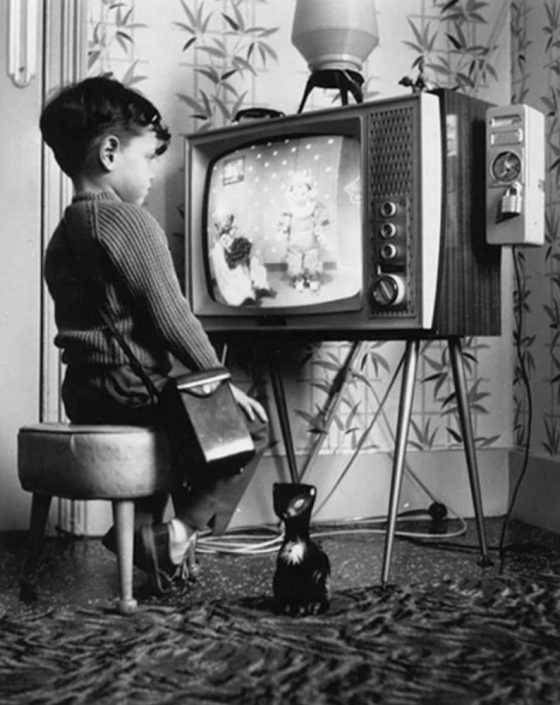
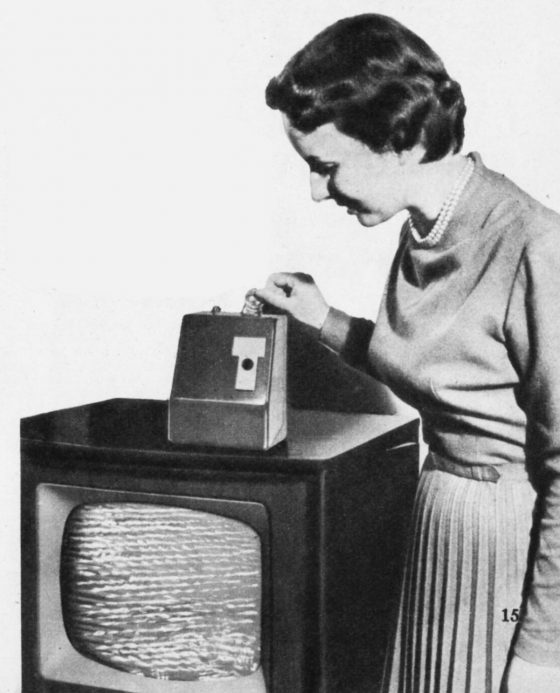
I certainly don’t remember this at all – in fact this is the first time I have seen such a TV setwith a coin operated addition.
Is this for real ?
I am wondering if this was an idea from the USA although the television is showing ‘Andy Pandy’ so maybe not
I have since discovered that this type of TV set was used by people who rented their sets as we did for many years in the early days of Colour.
To me and to many I suppose, the launch of Colour Television does not seem that long ago – in fact on occasions in conversation with younger people I will say ‘that was the first place that I saw a Colour Television’.
I don’t think that they grasp that there was actually a time that we only had ‘Black and White’
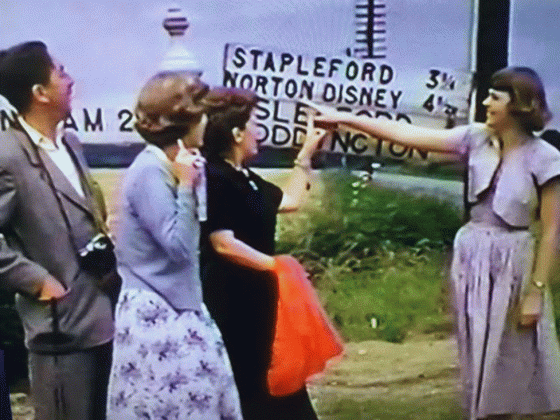
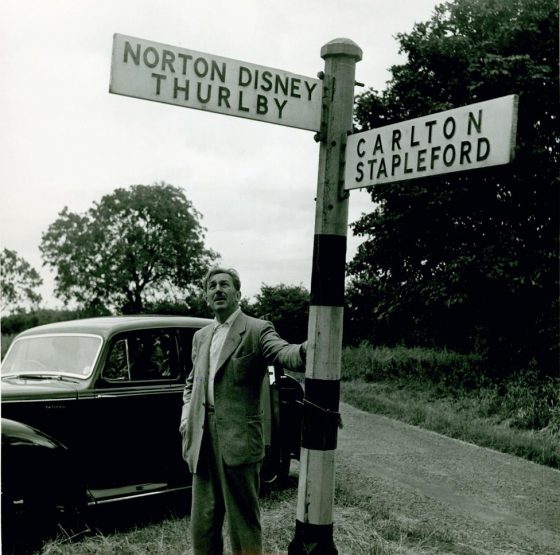
I have previously posted an article here about Walt Disney who along with his wife and daughters visited Norton Disney in Lincolnshire way back in 1949 while he was over here overseeing his film ‘Treasure Island’ being made at Denham. He was looking to find evidence of his family roots to the village.
Walt Disney and his family visit Norton Disney in Lincolnshire
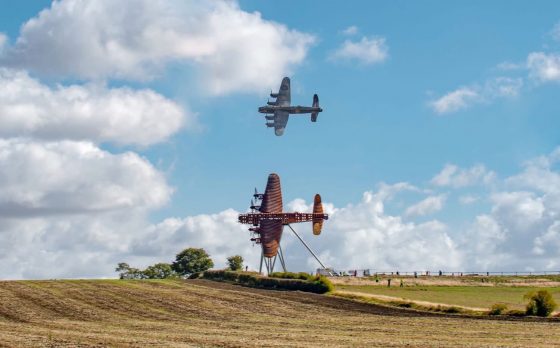
Fast forward to 2025 and very recently Lincolnshire now has a Lancaster Bomber statue at Norton Disney depicting Lincolnshire’s unique connection to the plane and to the Dambuster 617 Squadron which was Lincolnshire based.
Walt Disney of course had used Richard Todd in the title role in ‘The Story of Robin Hood and His Merrie Men’ released in early 1952 and three years later he had played Wing Commander Guy Gibson in ‘The Dam Busters’ – he also live much of his later life in Lincolnshire just a few miles South of Norton Disney.
So it is Richard Todd that connects Walt Disney to the new Lancaster Bomber memorial
ABOVE – What a picture as the only existing Lancaster still flying passes by above the new memorial
This does seem an unlikely pairing but it seems that having met when they both did a Charity Event performance in 1955 called ‘NIGHT OF 100 STARS’, they liked each other and got on extremely well
She told a lovely story about having dinner with Tyrone Power andf then ,being taken home in his Jaguar She felt obliged to offer dinner back,but said to Tyrone,it will only be bacon and eggS to which he replied ‘ I would love bacon and eggs’ and he ‘looked forward to it‘
Joan forgot but ater a few days she received a telephone call from his manager / agent -saying that Tyrone kept asking when are we coming for bacon and eggs.
Joan was then in a panic thinking that she couldn’t give a movie star bacon and egg so her friend showed her how to make Caesar salad to go with it. The meal was a success.
They all enjoyed the meal and danced the night away to Songs for Swinging Lovers
This BELOW is a photograph from the event NIGHT OF 100 STARS, Tyrone Power did a song and dance number and Joan was one of the showgirls (below) dancing with him (others included Anna Massey, Jean Kent, and Brenda Bruce).
Tyrone Power did see Joan a few times, and they had a sort of romance until he was summoned back to Hollywood.
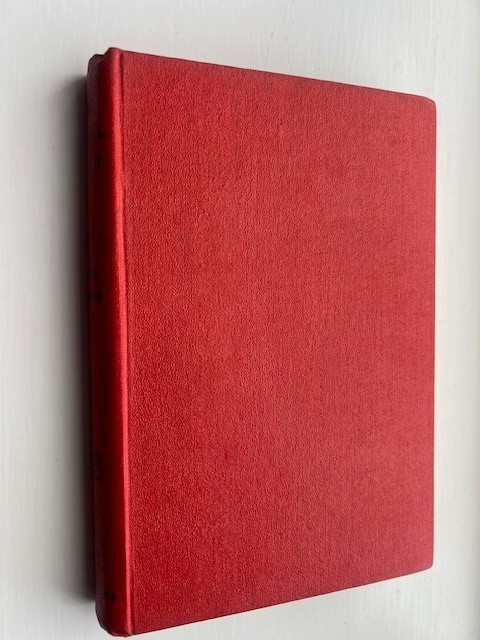
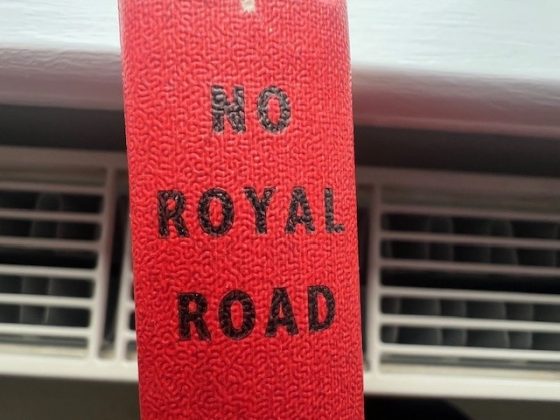
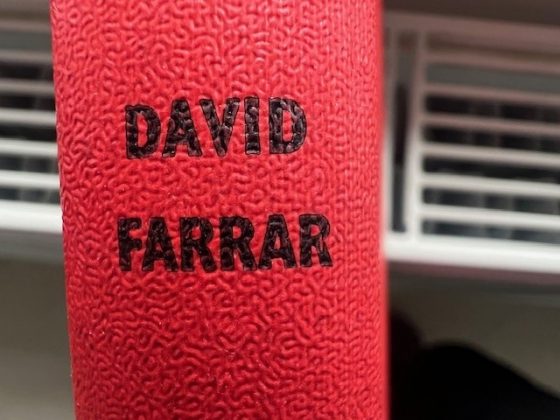
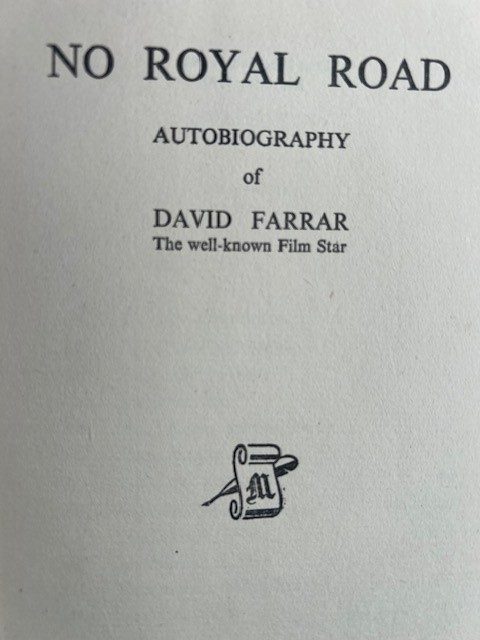
No this isn’t one of his films but in fact his Autobiography – at least as far as it went as this was published in 1947 so in fact, his life – and his film life – would have much more to be written about.
I have read one comment quite a while ago, from someone who had read ‘No Royal Road’ and he had found that the thing that struck him was that David Farrar seemed to have a very high opinion of himself.
This book is notoriously hard to find but I was lucky although I had searched regularly for it– not that I am a big fan of his but he was in memorable films of my youth.
I recall the story of a school trip by the Old Monrovians to Denham Film Studios where the film ‘Mr Perrin and Mr Traill’ was being made which also starred Marius Goring and Greta Gynt. Apparently all the actors particularly Edward Chapman were very helpful and friendly with the boys but David Farrar was not.
He appeared looking dis-interested, had a picture taken, and then just strode off and that’s the last the schoolboys saw of him.
He does come over as superior and supercilious and unfriendly.
‘Mr Perrin and Mr Traill’ is one of my favourite films
David Farrarwas certainly happily married for a lot of years and it does sound as though his wife was very influential in his Theatre work and in the films he played in.
He did regret turning down the main ‘villain’ role in that big production of ‘Ivanhoe’ made in England and released in 1952 – a lavish MGM Technicolor production. The part went to George Sanders after his refusal – and David later said that he wished he had done it – it was the most interesting role in the film in his opinion.
David Farrarmoved to Hollywood probably later than he should have done – he appeared in films there with limited success.
One of his later films ‘300 Spartans’ is well remembered to this day
When he retired from films, and after his wife died he went to live near his daughter in South Africa. He didn’t keep in contact with any of his colleagues in the film industry – and appeared to have few friends
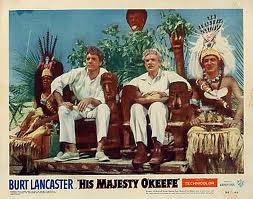
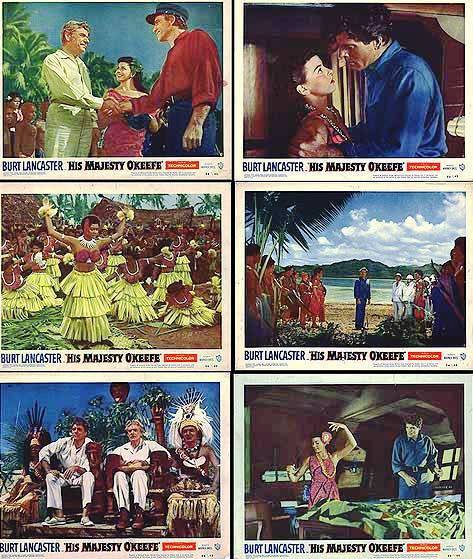
No sooner had she finished with ‘The Story of Robin Hood and His Merrie Men’ Joan Rice was signed for a leading role in this South Sea Adventure filmed in Fiji starring opposite Burt Lancaster.
Byron Haskin – who Walt Disney had hired previously to direct ‘Treasure Island’ at Denham Film Studios in England in 1949 – directed this one and as always, he made a very good job of it. In Technicolor and Widescreen this looked so impressive at the cinema when I saw it along with my brother at The Odeon, St. Albans.
Joan Rice acted well in this and was well treated by Byron Haskin who had no complaints about her – and she was respected and certainly not the subject of bullying s she was on ‘ The Story of Robin Hood and His Merrie Men
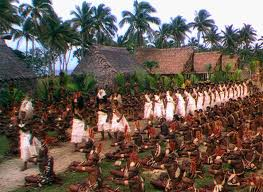
Memories of this film released in 1954 and one I saw at the Odeon in St. Albans are still crystal clear because in those days in the early days of TV which as we all know was in Black and White and on such a small screen, we had seen nothing of the South Sea Islands and here we were transported to Fiji in Technicolor on the giant Cinemascope screen.
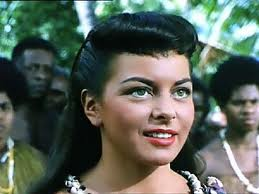
We saw a swashbuckling Burt Lancaster – previously having seen him in The Flame and the Arrow – and the very beautiful Joan Rice.
The lovely star of this film – Joan Rice.
On a recent cruise holiday, my wife and I had called at Suva in Fiji and during the bus tour our guide asked if anyone had heard of or seen His Majesty O Keefe and I was able to say – Yes I have seen it about 50 times – and he said that the scene in Hong Kong with Burt Lancaster and Joan Rice had actually been filmed in the heart of Suva. He also showed us where some of the action shots were done. It seemed a film that they were quite proud of – and why not. It is a very good and enjoyable film. It wasn’t the first because Jean Simmons had been out to Fiji a year or more before to film The Blue Lagoon. I quite often think about those young actresses going out to Fiji in those days – even now it is a long way but then it must have taken ages – but what an adventure for them !!
Burt Lancaster plays a sea captain / adventurer IN 1870 who plies his trade in the South Seas and in Fiji sees an opportunity of making a lot of money from Copra. He does however fall in love with Joan Rice – who wouldn’t ? – and turns into a hero helping rescue the islanders from unscrupulous people.
Andre Morrell is very good – as he always was – he was something of a stalwart of this era although never in the starring role but pretty dependable. He would have gone out to Fiji also for the filming which was all done on the islands rather than back on studio sets.
Also cast were Abraham Sofaer and Benson Fong in quite good roles.
This is one of my own favourite films – it is exotic, colourful with a good story and a lovely leading lady in Joan Rice. I was never a big fan of Burt Lancaster though but he did well enough in this and he had the name to ensure some success for Warner Brothers with the film which cost around $1.55 million dollars to make in the early fifties – so it would be quite big budget.
After her return Joan Rice’s career just seemed to fade away even after The Story of Robin Hood and His Majesty O Keefe both major films with worldwide distribution and both financially very successful. I can never understand this because in both films she was good and very watchable. Something went wrong but what ?
An above average British film– a film that deserves to be better known
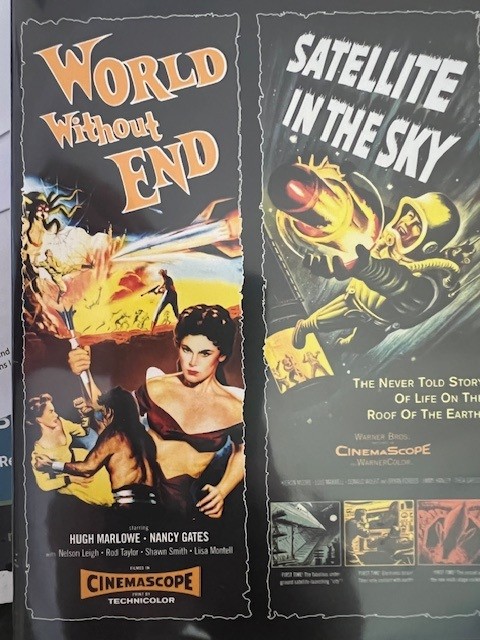
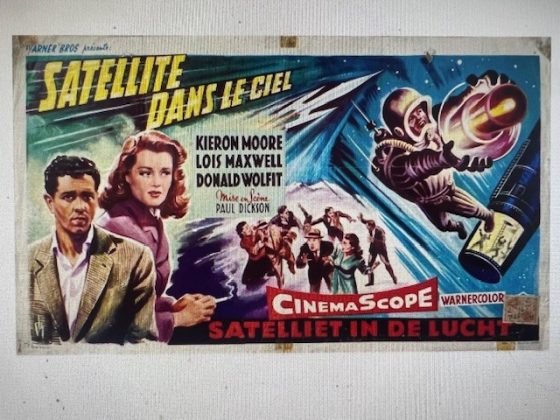
This well-made British science fiction story concerns the crew of a test rocket on which a lady reporter (Lois Maxwell) stows away. Kieron Moore plays the pilot of the rocket sent into orbit in connection with the test of a new “Tritonium bomb”. Donald Wolfit plays the bomb’s inventor.
After releasing he bomb, it’s internal propulsion system fails and it becomes attached to the hull of the spacecraft. All attempts to dislodge it are unsuccessful, so the bomb’s inventor takes drastic action to deal with the situation.
Director Paul Dickson presents an exciting and intelligent story. The special effects are both competent and exciting — which is no surprise in view of the fact that their creator, Wally Veevars, later worked on “2001”
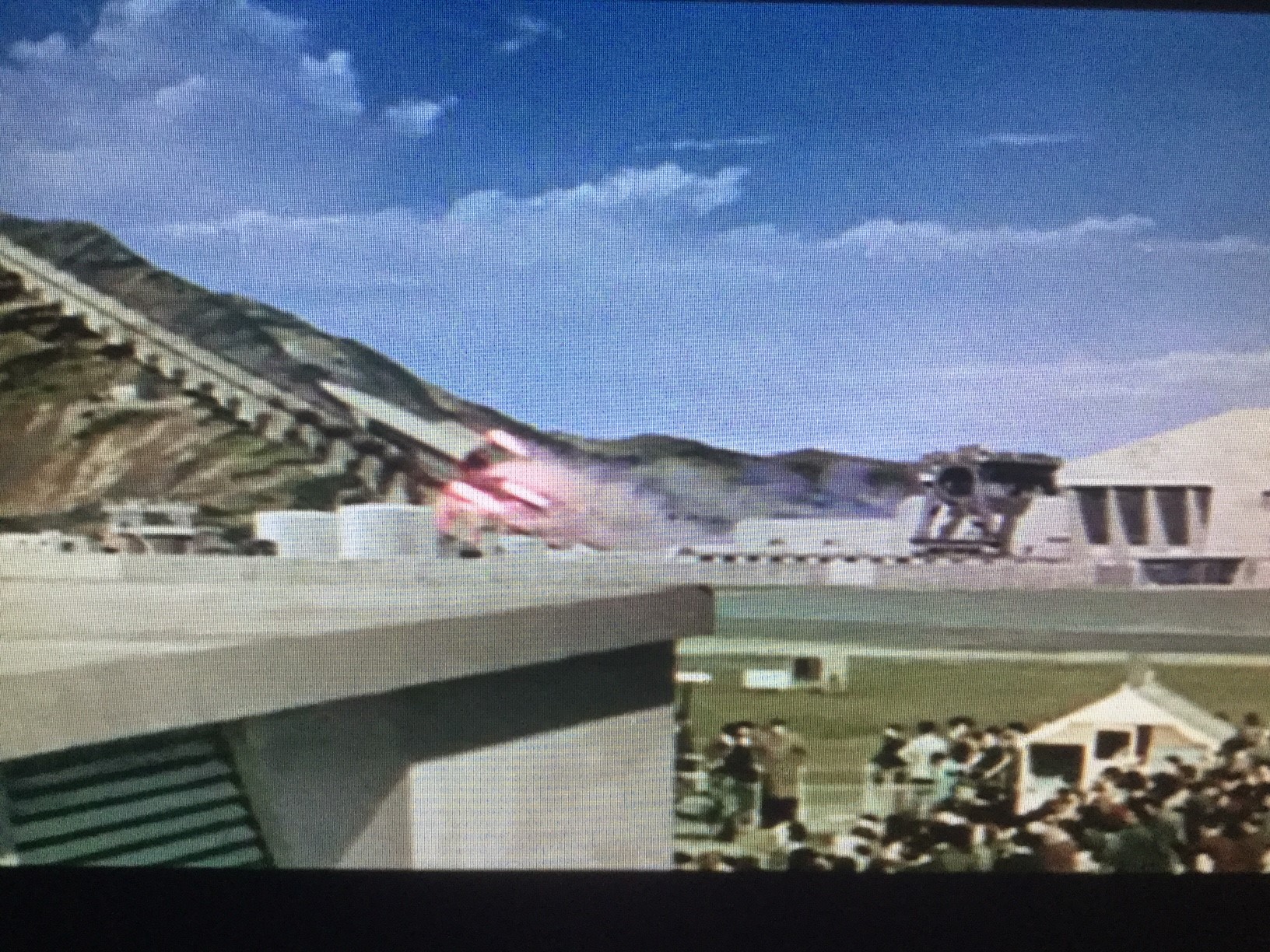
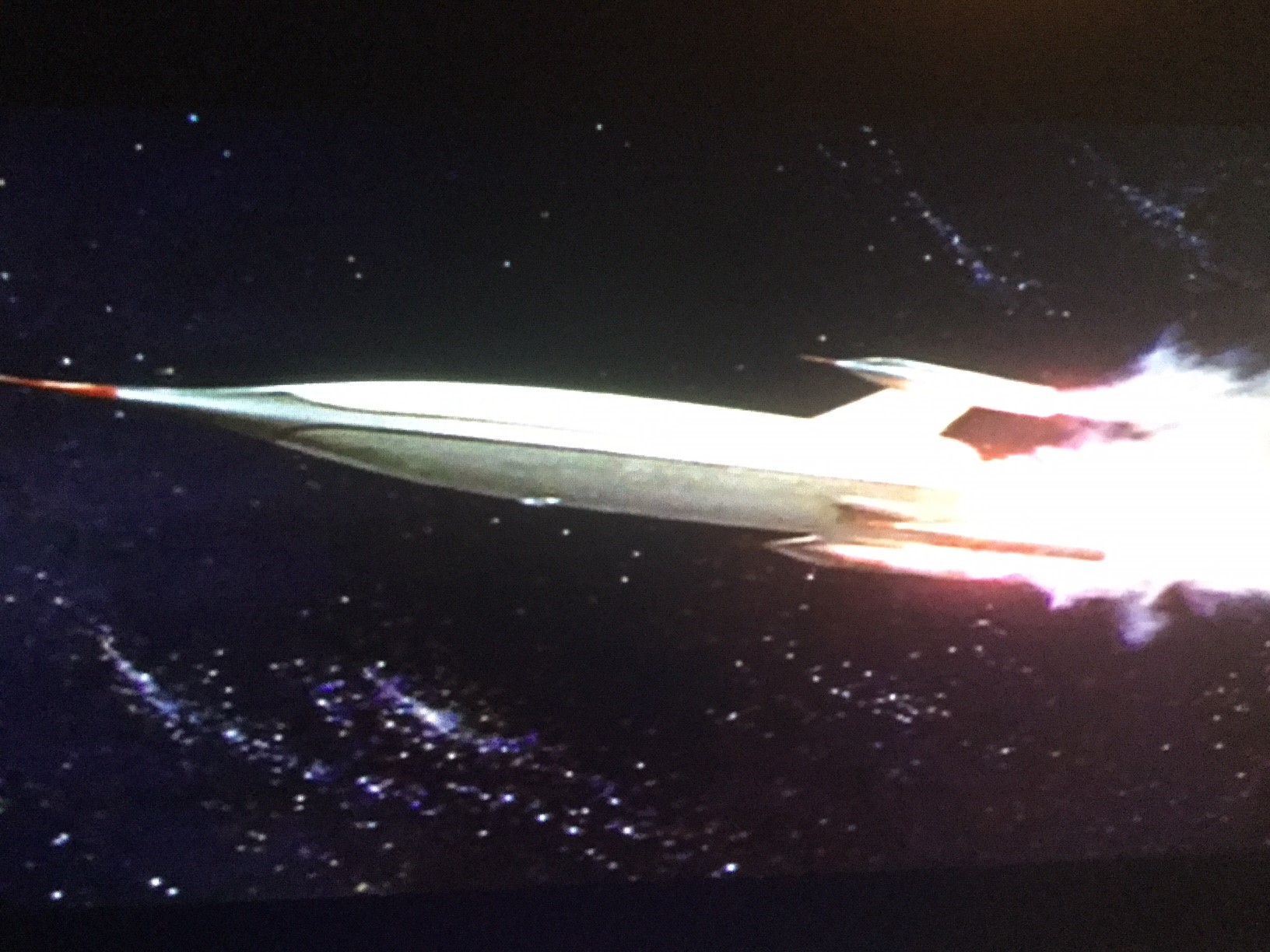
The special effects include the space scenes, an underground space complex, and a rocket which is launched from a horizontal track, similar to “When Worlds Collide”. Well-designed sets and props (especially the ship’s interior and the spacesuits) enhance this wonderful British entry.
Satellite in the Sky – Start of the Take-off
Satellite in the Sky – The Spaceship speeding up the Ramp
Satellite in the Sky – We have lift-off
Satellite in the Sky – The Spaceship cruising along in space
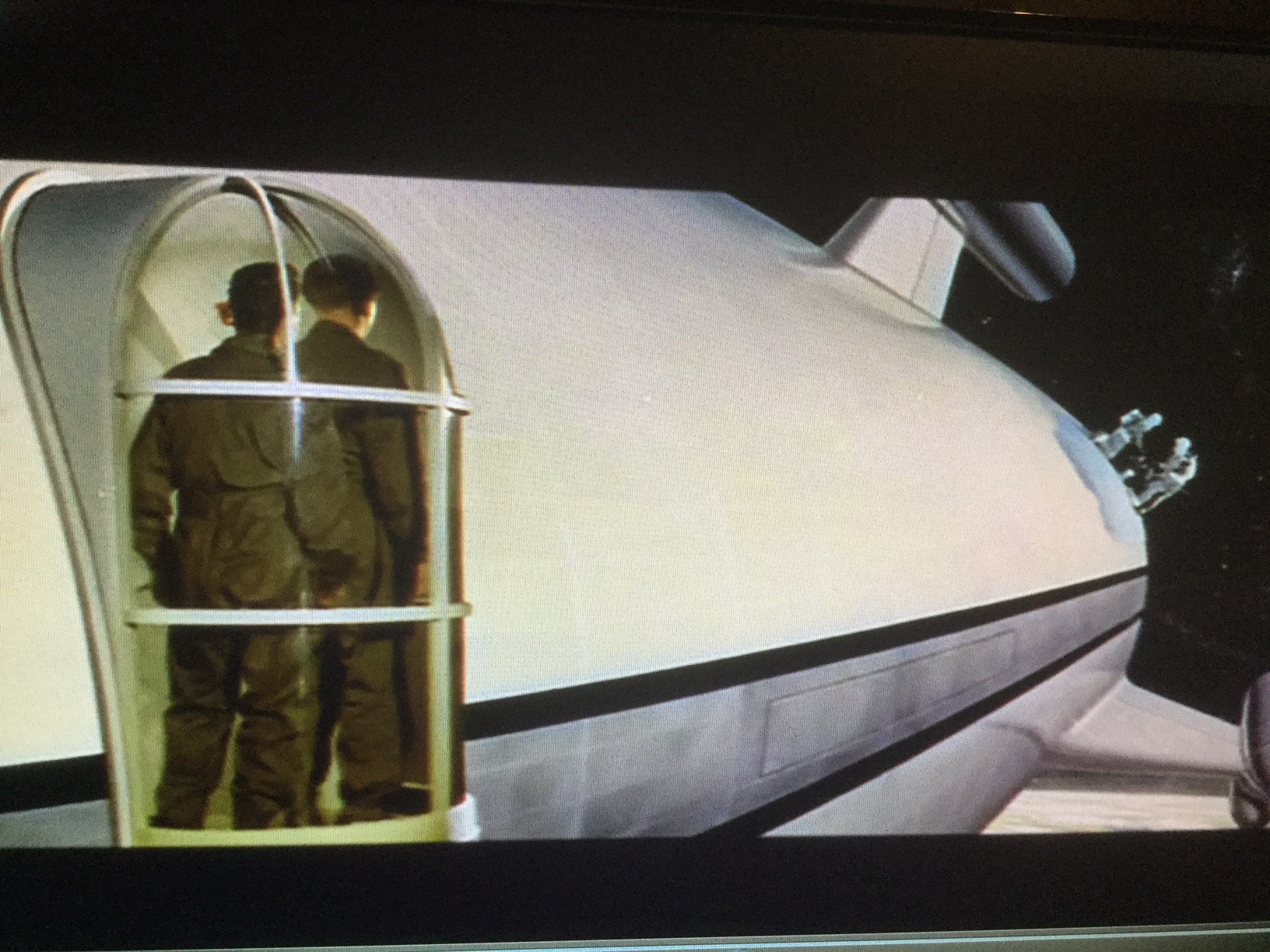
One scene in Satellite in the Sky on the big wide screen that remains with me to this day is a brief shot when Keiron Moore looks out of the space craft from a side viewing area, and we are looking back with him towards the earth and other planets – and that was extremely well done although you could see that it was fake – it didn’t seem to matter anyway as the film was so enjoyable. Now I see it again – as above – still pretty good, I would say.
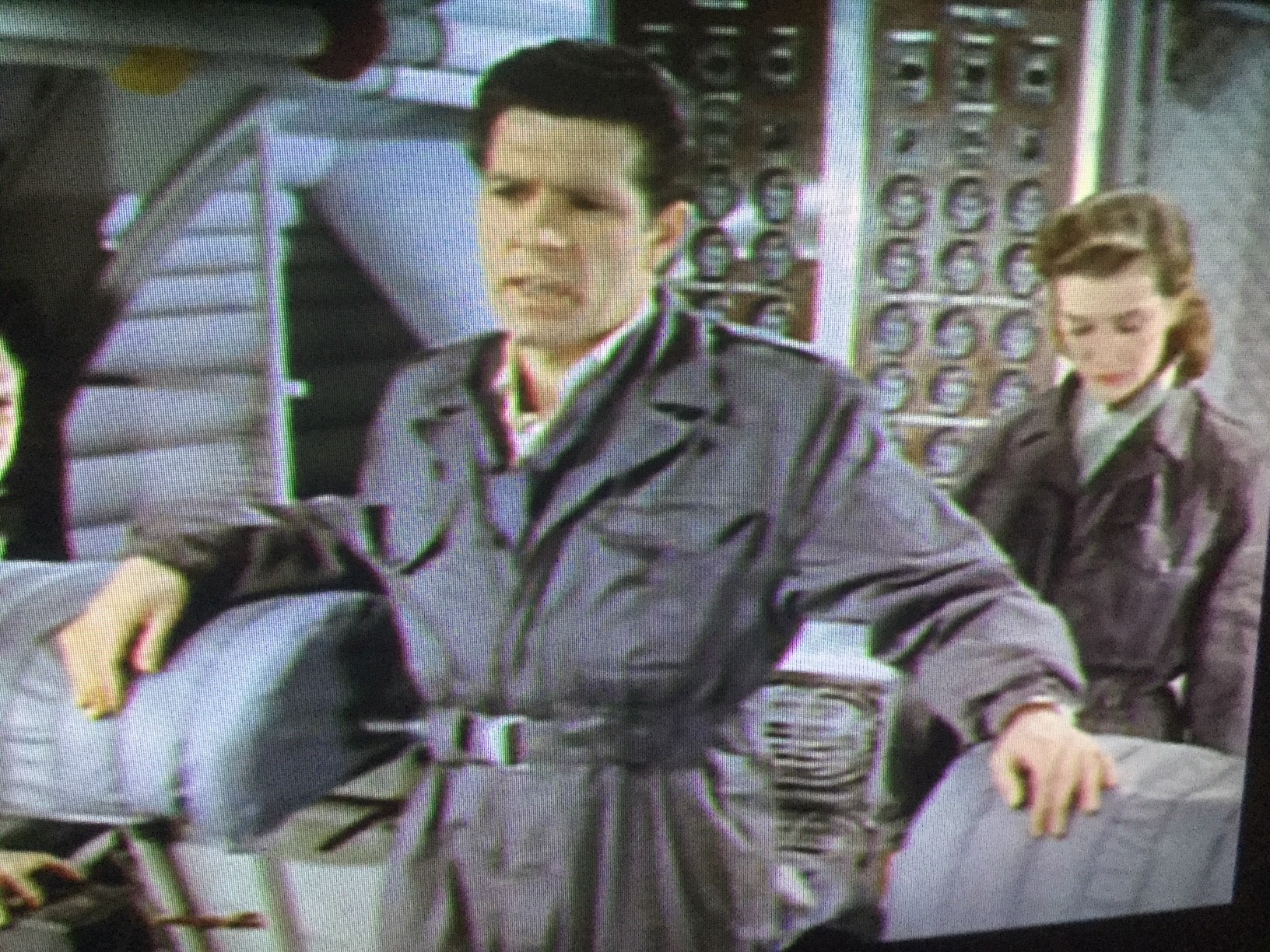
Kieron Moore and Lois Maxwell on board the Spaceship
In Satellite in the Sky 1956 – we have that grand thespian Donald Wolfit – BELOW who, to me, is the most interesting character in the film – and gives the best performance.
Satellite in the Sky should really have a far higher profile in British sci-fi history, or even as a classic British film but somehow it is a forgotten relic – which I think is unjust for such an expensive and, at times, impressive film.
Sir Donald Wolfit made quite a few films and was always good but he never ventured to Hollywood as people like Laurence Olivier did – both Shakespearean Actors of some note although Donald Wolfit had the edge. He could tackle – and did tackle on stage – all the major Shakespearian Characters whereas Olivier could not. His Othello was pretty poor.
If Donald Wolfit had gone to Hollywood I am certain that he would have fared very well indeed.
To finish we quote just two of the impressive Theatre reviews Sir Donald Wolfit received :-
From James Agate the influential Critic wrote :-
“I say deliberately that his performance on Wednesday was the greatest piece of Shakespearean acting I have ever seen”
AND
C.B. Cochranwrote :
‘In Donald Wolfit a new ‘giant’ has arisen .. It is my decided opinion that there has been no actor on our stage since Irving’s great days comparable to Wolfit in the great roles’
Edith Sitwell after seeing him in King Lear wrote that the cosmic grandeur of his performance left her and her brother Osbert unable to speak
I always seem to manage to come back to this one – a very favourite film of mine for many reasons.
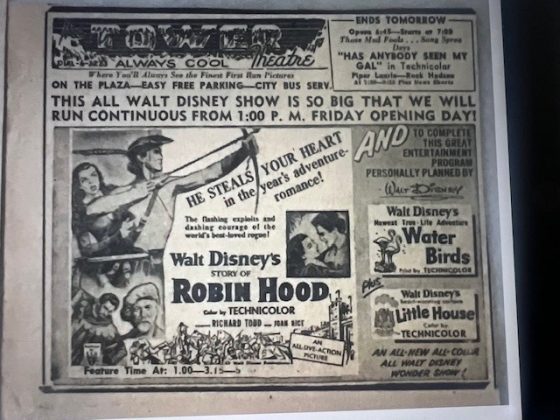
This is a US advertisement for the film
The Story of Robin Hood and His Merrie Men was released in Britain with ‘Hammer the Toff’ as the supporting film – I am told. However, my thoughts are that it would be much more likely to be on an ‘All Disney’ programme as above.
Also the film is titled ‘The Story of Robin Hood’ and not the longer version but I note with great pleasure that Joan Rice is shown in the star billing area – that is not the case sometimes in the later release AND some of the TV listings
That really annoys me – She was orginally Star Billed alongside Richard Tod – where she should be.
An added note here – Peter Lamont the famous James Bond Art Director – was employed on this film as a junior draughtsman – Uncredited.
I spoke to him once of the telephone during the making of ‘Goldeneye’ in 1995 but at that time did not know of his link to this film or I would certainly have asked himabout it – and about any recollections of stories
I have written about this lovely actress before –.
She was actually in THREE of the Edgar Wallace Mystery series – Marriage of Convenience, Clue of the Silver Key and Return to Sender.
She was married to Dinsdale Landen the actor from 1959 until his death in 2003.
They met when she played Clara in a BBC TV adaptation of ‘Great Expectations’ – he played the leading role as Pip in 1959 – and they married 6 weeks later . What a romantic story.
They later lived in South Creake, Norfolk – where Dinsdale sadly died in 2003 at the youngish age of 71
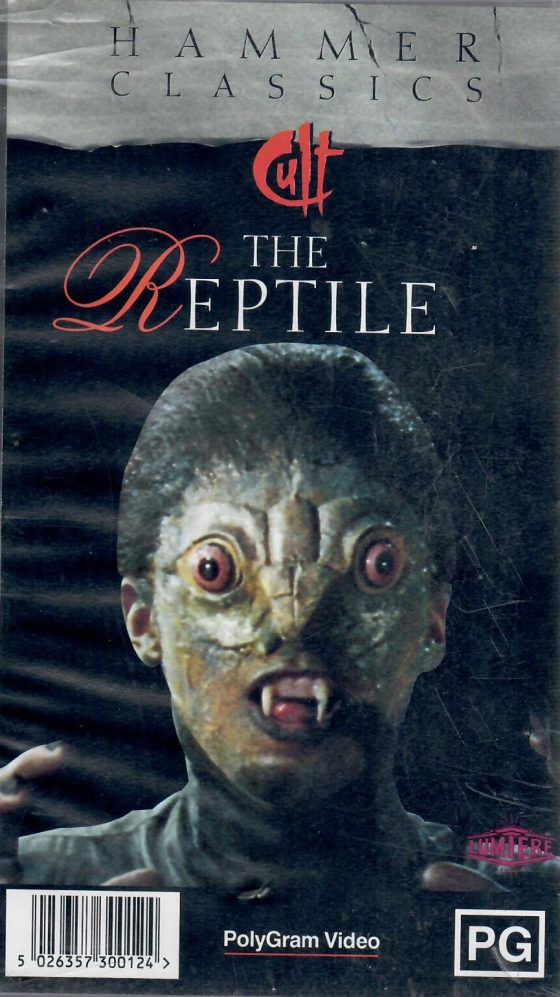
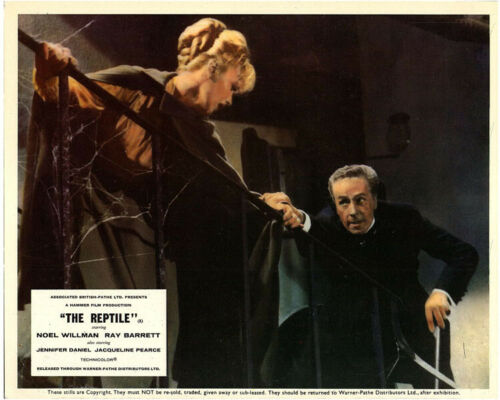
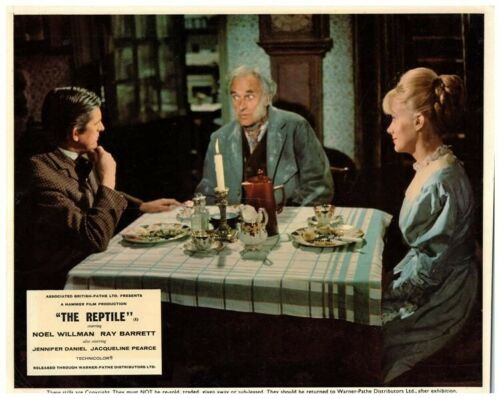
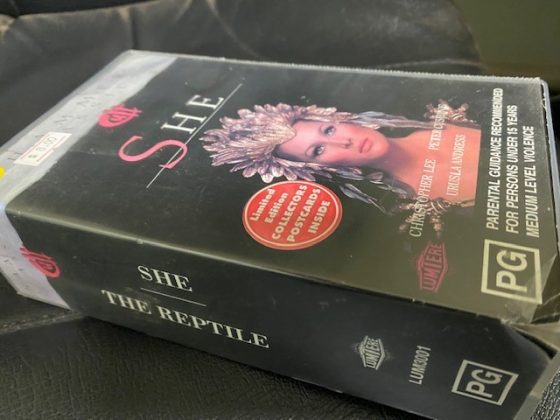
Jennifer Daniel BELOW- a very attractive young lady – starred in ‘The Reptile’
Jennifer Daniel and Noel Wilman in a tense sceneRay Barret, John Laurie and Jennifer Daniel
We have mentioned her before but mainly with regards to her film career – however from 1958 she had been active in the Theatre starting up in Dundee Rep with a small part in ‘Jonah’s Ark’ and another one before coming down South later that year to have a significant role in ‘The Voice of the Turtle at the New Theatre in Hull.
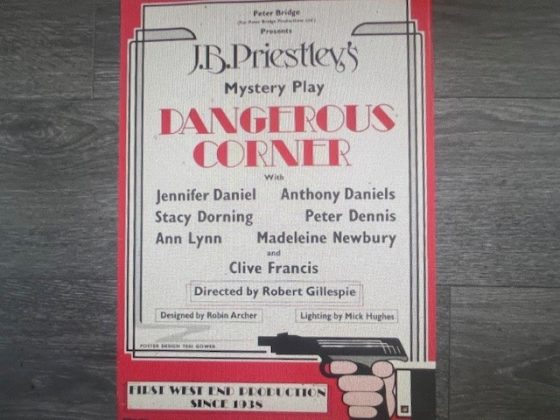
Then she was in the West End in 1959 in ‘Fool’s Paradise’ at the Apollo Theatre in Shaftesbury Avenue. She continued in many productions until 1981 when she was in ‘Dangerous Corner’ at the Ambassadors Theatre.
Before this she had played Lady Clarissa Eden in the stage play ‘Suez’ in 1977 which did a lengthy tour of the UK – very successfully too. I think she looked a lot like Lady Eden. Incidentally although Jennifer Daniel was much younger than Lady Eden, she actually died some time before her– mind you Lady Eden lived to be 101
I watched an episode yesterday on Talking Pictures – not of the best quality production-wise but the very lovely Jennifer Daniel was in it so it became more watchable. The sets were not brilliant and some of the sword fights not convincing but all in all it was pleasant.
it seems that the producers were looking at building on the huge success of ‘The Adventure of Robin Hood’ and ‘Ivanhoe’ but it didn’t seem to work – Dermot Walsh did not have the charisma or the film star looks of either Richard Greene or Roger Mooreso this series didn’t take on so well.
‘Richard The Lionheart’ portrays Richard I of England in a swashbuckling, family-friendly way.
DERMOT WALSH
Filmgoers in the 1950s had to sit through many a dire, low-budget second-feature, made to satisfy the government ruling that a percentage of films shown in British cinemas must be home-grown rather than Hollywood imports. Dermot Walsh, who has died aged 77, starred in more than 20 such films.
He joined to the Abbey theatre school of acting, he spent three years with Lord Longford’s repertory company, and was in productions at the Gate and Croydon repertory theatre, before being spotted by a Rank talent scout.
His first three films were enjoyably e melodramas starring Margaret Lockwood, then at the peak of her stardom. Little noticed as a chauffeur in Bedelia (1946), Walsh made an impression later that year, in Hungry Hill. In this adaptation of Daphne du Maurier’s novel about an Irish family feud spanning three generations, he played Lockwood’s profligate son, although he was only eight years her junior. In Jassy (1947), he graduated to being her lover, and was well cast as a dispossessed heir whom the half-Gypsy Lockwood steals from sweet Patricia Roc.
Nothing else Walsh did in features was as good. A few feeble films followed, including Third Time Lucky (1949), in which he starred with Glynis Johns.
In the same year, he married Hazel Court, with whom he co-starred in My Sister And I (1948), the first of a number of plays and films they would appear in together. Back on the stage, he was in the first production of Shaw’s Buoyant Billions, as well as in Reluctant Heroes and JB Priestley’s Laburnum Grove.
In 1952, Walsh started his cycle of leading roles in shoestring second features, many of them murky crime thrillers, shot in two weeks, and middlingly directed by John Gilling and Lance Comfort. Despite the functional scripts, Walsh actually gave a good account of himself in, among others, The Frightened Man (1952), Ghost Ship (1952) and The Floating Dutchman (1953).
One of the better of these films, directed by Gilling, was The Flesh And The Fiends (1959) aka Mania, The Fiendish Ghouls and Psycho Killers, about the grave robbers Burke and Hare. In it, Walsh played the medical assistant to Peter Cushing’s Dr Knox, who bought the bodies for experiments. He also played straight man to Arthur Askey in Make Mine A Million (1959). The same year, in Crash Drive, he portrayed a racing driver who believes he cannot walk after an accident.
When the quota quickies faded, Walsh starred in the 39 episodes of the swashbuckling children’s adventure series Richard The Lionheart (1961-62). His last film appearance was in The Wicked Lady (1983), but he continued to act on stage until fairly recently, in The Rivals at Birmingham Rep, Joe Orton’s Loot in London, and Harold Pinter’s A Kind Of Alaska in Cambridge.
He and Court divorced in 1963; their daughter survives him, as does his son by Diana Scougall and two daughters by his third wife, Elizabeth Knox, who predeceased him.
——————————————————————————————————-
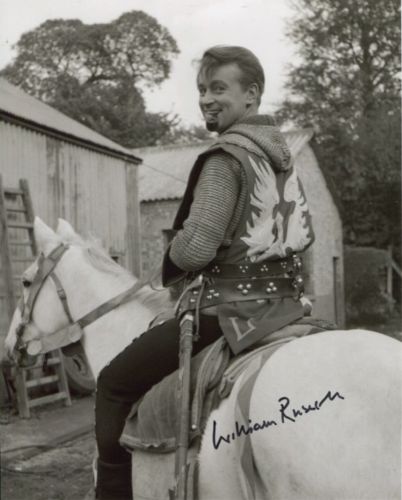
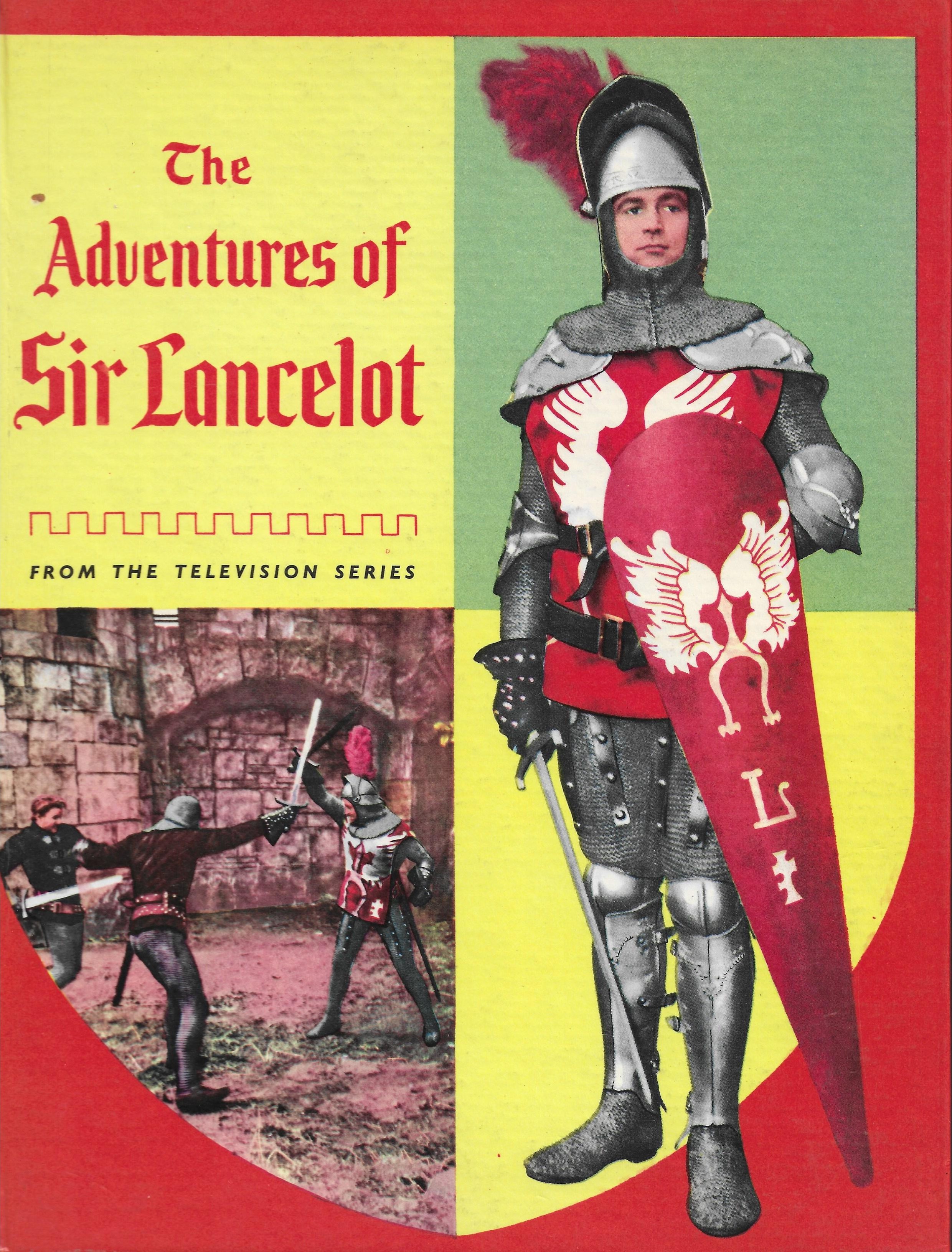
Another similar series – in my view much better – was ‘Sir Lancelot’ with William Russell with one series of this was actually filmed in colour
This series, which only consisted of only 30 episodes in all, was shown over two years 1956 and 1957. It starred William Russell as Sir Lancelot and apparently went well in the USA so that the last 14 episodes were made in Colour. This would have been on film of course as Colour Television Cameras were not around at that time. Mind you most of these series were made on film at the time.
Above William Russell as Sir Lancelot – although he didn’t have the pipe in the show !!
Above William Russell as Sir Lancelot.
The producers went to a lot of trouble with the sets and costumes and they look splendid given the very limited television budgets. William Russell makes a lively and very personable hero and handles the action scenes with dash and enthusiasm.
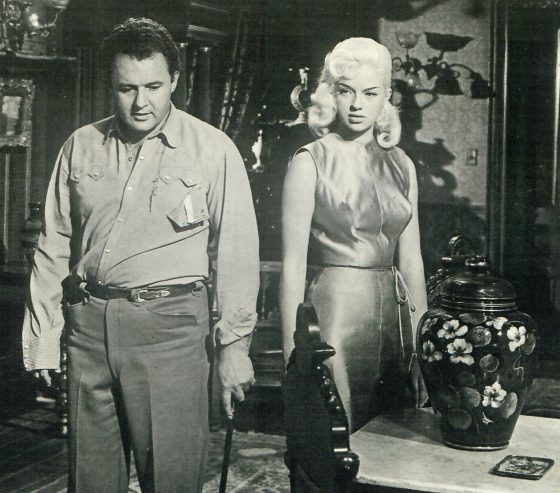
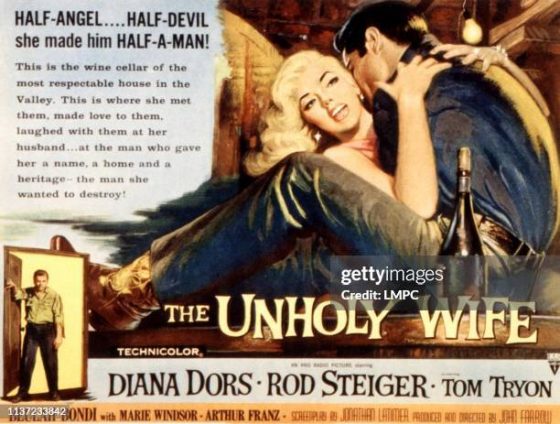
In this 1957 RKO Radio Technicolor production Diana Dors starred in her first American production alongside Rod Steiger.
‘Half-Angel, Half Devil – she made him Half-man’ – this was from the American advertising release
Diana Dors slinked her way through thie film – the story of a party girl who marries wealthy windery owner Rod Steiger, and then quickly falls in love with rodeo performer Tom Tryon and then decides to murder her husband. The plan, however, backfires when she mistakenly kills Steiger’s best friend.
She manages to escape punishment for this murder but is eventually convicted for another murder that she did not commit.
John Farrow directed this one
It was one of the last films from RKORadio
The Unholy Wife, poster, Rod Steiger, Diana Dors, Tom Tryon, 1957. (
The Unholy Wife 1957
Diana Dors is seen on death row telling her story of how her own greed lead to her downfall. She is married to wealthy vineyard owner Rod Steiger whom she met in a bar, but bored spending the day taking care of his elderly mother, she is soon involved in an affair with rodeo horseman Tom Tryon.
Dian Dors proves here – something I have long known – that she is a very good actress. She more than holds her own with Rod Steiger – as she did with many of the male stars she worked with.
This was to be the first of three films for RKO but in the end there was the only one – the film did not do well so she was dropped from her contract. Apparently she sued RKO and was paid something like 200,000 US Dollars in compensation.
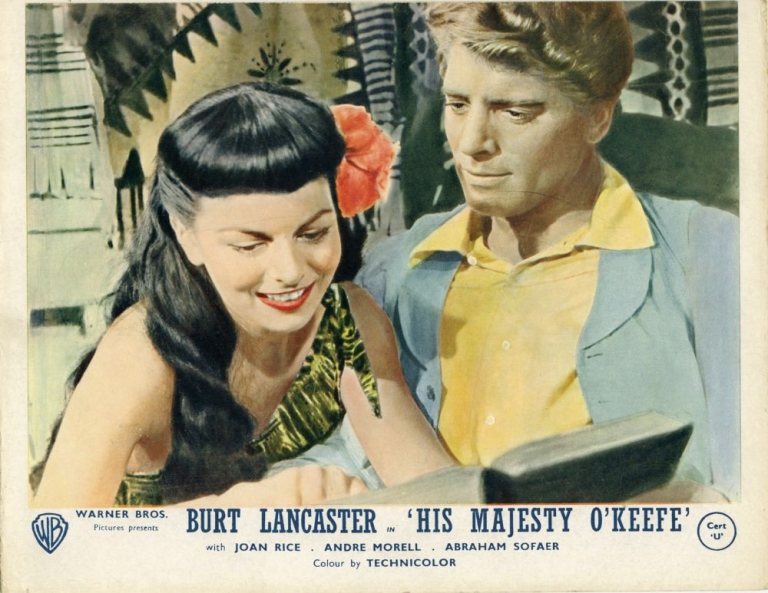
A few years before this, she had been offered the leading female role in ‘His Majesty O’ Keefe’ with Burt Lancaster but her husband Dennis Hamilton – her manager as well – would not let her go out to Fiji to make the film – instead he accepted a Summer Season at Blackpool.–
Eventually Joan Rice got the role and was very good
I am a great fan of Joan Rice who took the part – and was very good in it, but I also am an admirer of Diana Dors who was a very good actor.
Above: Joan Rice and Burt Lancaster in a still from the film
It appears that Burt Lancster asked to see Diana at his suite at Claridges in London and indeed she did have this meeting alone with Burt but with her husband lurking somewhere below. She later tested for the part by darkening her skin a little, donning a sarong, and wearing a black wig but Dennis would not let her take this part. It wouldn’t be much of a guess as to why.
I am pleased however that Joan Rice got the part – but can’t help but wonder what the film would have been like with Diana in that role – but more than that the effect it would have had on her future because she may well have seized the opportunity of such a big film as this. Her husband thought better of her spending months in Fiji on a South Sea Island with Burt Lancaster.