Archive for the 'Uncategorized' Category

Sherlock Holmes in Films, Television and Radio

Sherlock Holmes is certainly a fictional character that seems to intrigue us all judging by the interest and the number of films made about him, the many Television Series and the excellent Radio Dramas with firstly Carlton Hobbs as Holmes and then later, Clive Merrison.

I do remember in the very early fifties on Radio hearing and being fascinated by an adaptation of ‘The Hound of the Baskervilles’ and then later came the Hammer Film Production with Peter Cushing as Sherlock Holmes in the same story in 1959.

However in the early Sixties ITV ran the Basil Rathbone films which were not big budget and not at all true to the novels – in fact they were virtually all upgraded in time to the Forties – but somehow we loved them. Maybe it was Basil Rathbone’s portrayal of Holmes – he certainly looked the part – and Nigel Bruce’s bumbling Dr Watson that we thought was just perfect – it certainly was perfect for the way the films were made or maybe, and more likely, it is the timing of the films being shown to an audience that had never seen them before.
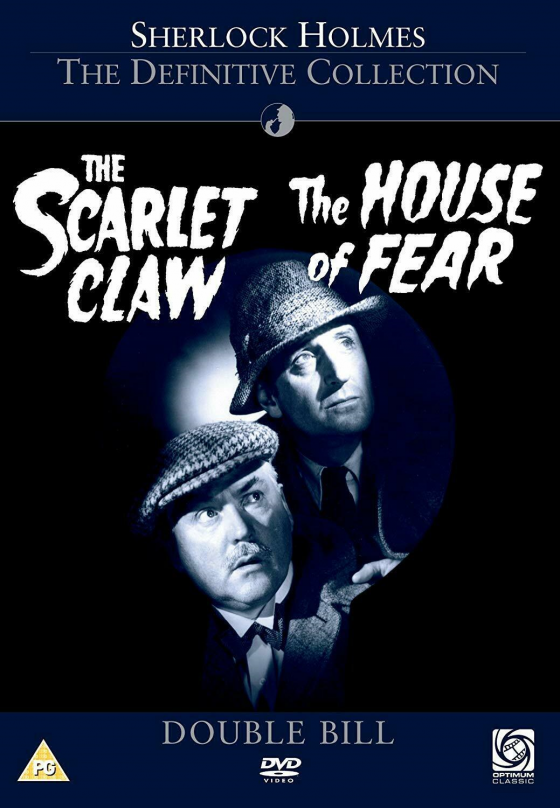
My own two favourites are ‘The Scarlet Claw’ and ‘The House of Fear’ – I remember Basil Rathbone pacing up and down outside that large cliff-top house in The House of Fear – and we the audience and Dr Watson could not work out what he was doing and why he was doing it. In fact he had noticed and was checking that the house measured much more externally than it did on the inside – leading him to discover ? Well if you haven’t seen it I had better not reveal just what that is.
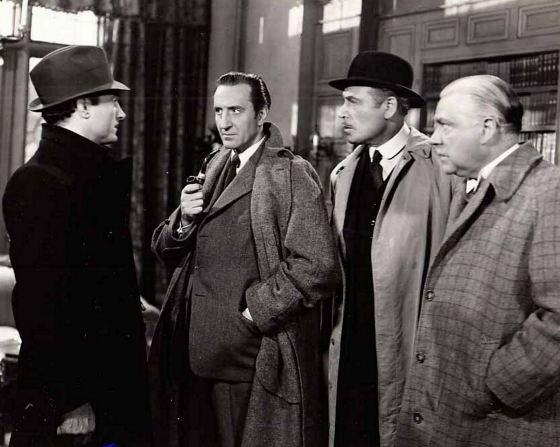
ABOVE and BELOW – The House of Fear
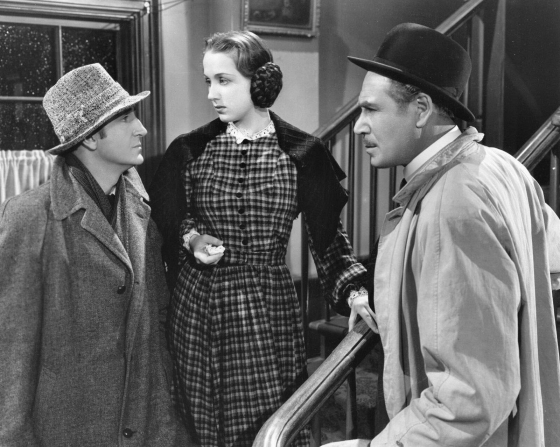
The Scarlet Claw’ was quite disturbing because of what seemed to be a serial killer on the loose against a snowy landscape but the killer was driven, we later learn, by revenge for past injustices – and he carried out his horrifying retribution against the perpetrators from years before.
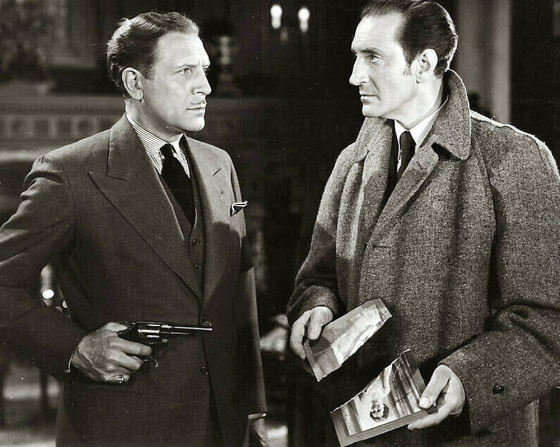
ABOVE – Still from The Scarlet Claw

To the purist these Basil Rathbone films were not really appreciated although I have to say that when Universal started the series in 1939 they kicked off with ‘The Adventure of Sherlock Holmes’ and then ‘The Hound of the Baskervilles’ which were big budget productions and right on it as regards the period and the style.

I always remember the very last line of one of the films when Sherlock Holmes turned to Watson and said ‘Watson, the needle’ a reference to Holme’s cocaine habit which is never explored again thankfully and only mildly hinted at in the books.
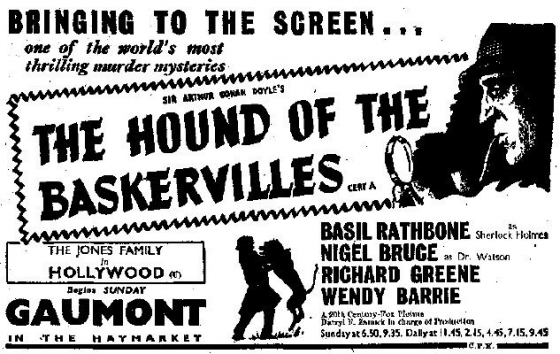
ABOVE – The 1939 Film Version

Apparently in the USA Basil Rathbone and Nigel Bruce played these roles on the Radio for quite a few years and very successfully too.

In Britain Peter Cushing again played Holmes in a lavish BBC Television production of The Hound of the Baskervilles and this time he had Nigel Stock as Dr. Watson who was excellent in the role. This is one of my favourite adaptations of the story which was shown in two parts on BBC Television in September 1968 – A Colour Production
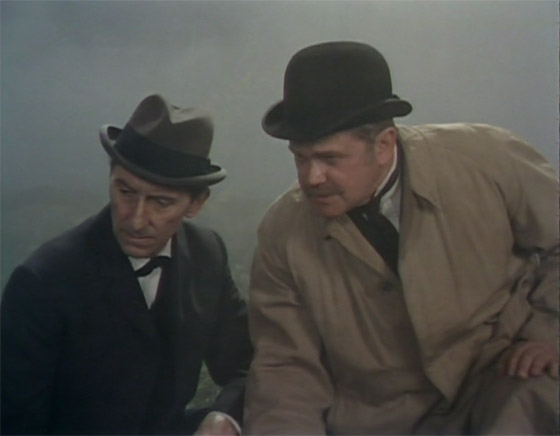
Peter Cushing and Nigel Stock – on the Moors

Later of course we had the superb Jeremy Brett TV series and this time there were two Dr Watsons – first it was David Burke and later Edward Hardwicke. Both were good but my preference would be Edward Hardwicke in this role.
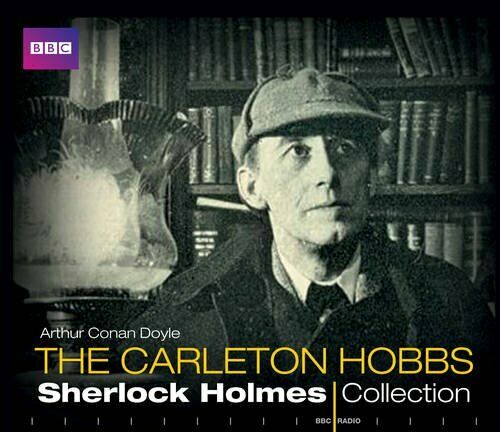
Carlton Hobbs – The Radio Collection as Sherlock Holmes

Now back to Radio and Carlton Hobbs who played Holmes for a long time alongside Norman Shelley as Dr Watson. These episodes I believe are still available and I remember them as being very good. I must seek them out again and have a listen.

Somehow Radio drama – which I love – has a power that the other visual ones do not have – they can and do harness the mind with its incredible power, to bring these stories and others to life in a way that visual ones can’t because the characters and the scenes are already there but on Radio those same scenes are conjured up by each and everyone of us – in our mind’s eye.
posted by Movieman in Uncategorized and have Comments (11)

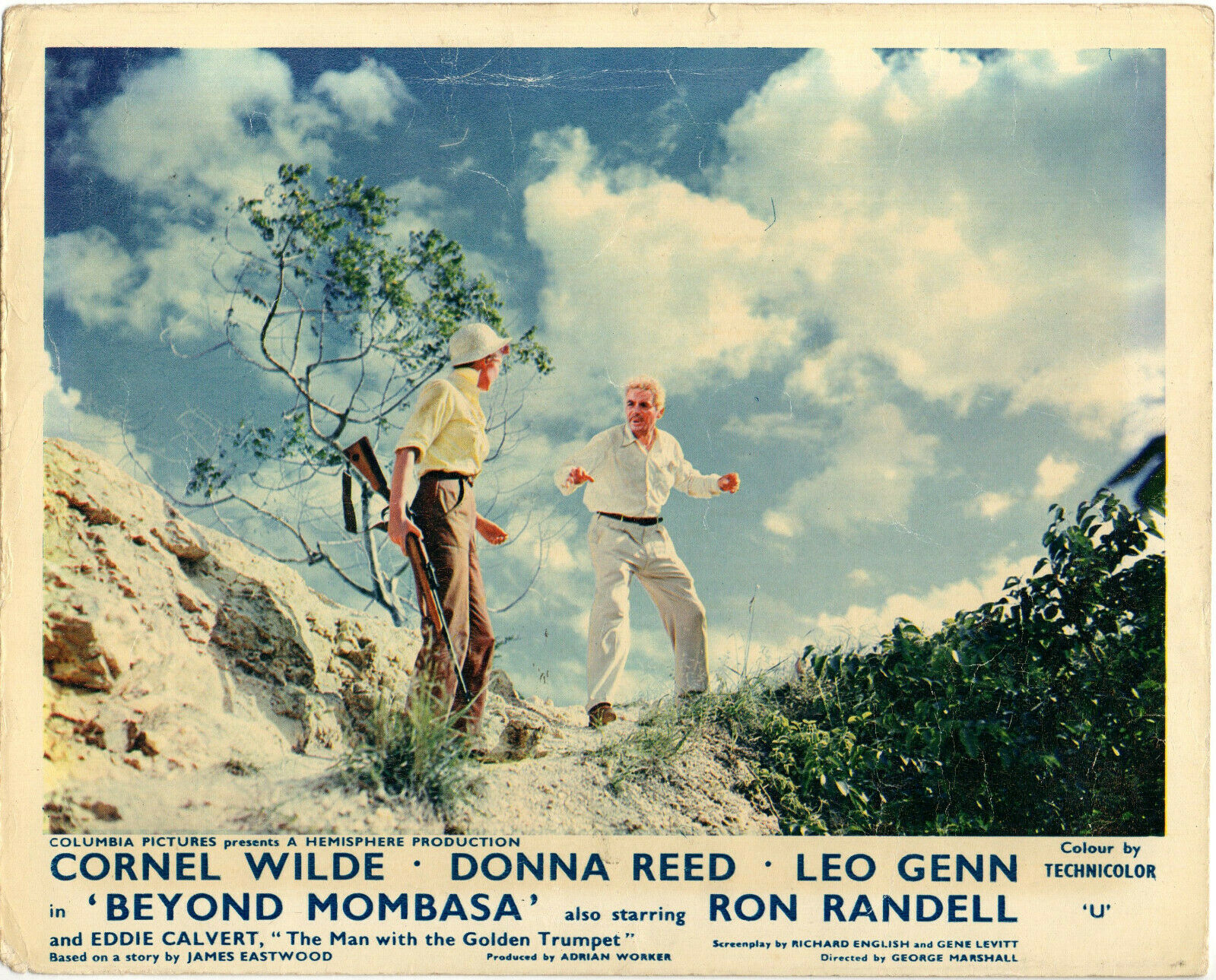
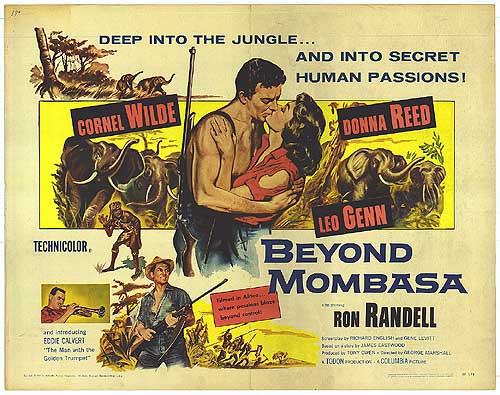
Beyond Mombasa 1956 – With Cornel Wilde

A colourful adventure film set in Africa

I am reminded of another film I really like set in Africa which was ‘Tanganyika’ 1954 with Van Heflin and Ruth Roman. It doesn’t seem to get good reviews but is certainly does from me – although filmed entirely in and around Hollywood it has that African feel.

‘Beyond Mombasa’ in truth I have not yet seen but it gets some poor reviews but I have a feeling that I will like it – in fact it is just they type of film that I enjoy – with Adventure, Glamour, African locations, Technicolor and Action.

Beyond Mombasa 1956


Cornel Wilde is in Africa having been sent for by his brother who even made hotel reservations in Mombasa for him. Upon arrival he finds kindly missionary Leo Genn and his anthropologist niece  Donna Reed breaking the bad news about his brother’s death at the hands of a revived cult of the Leopard. 

Determined to get to the bottom of things, Wilde goes with Genn and Reed into the interior of Kenya, Beyond Mombasa to find where his brother might have found uranium. Their guide is another partner of the brother Christopher Lee and they’re to join yet a third partner Ron Randell near the mine.

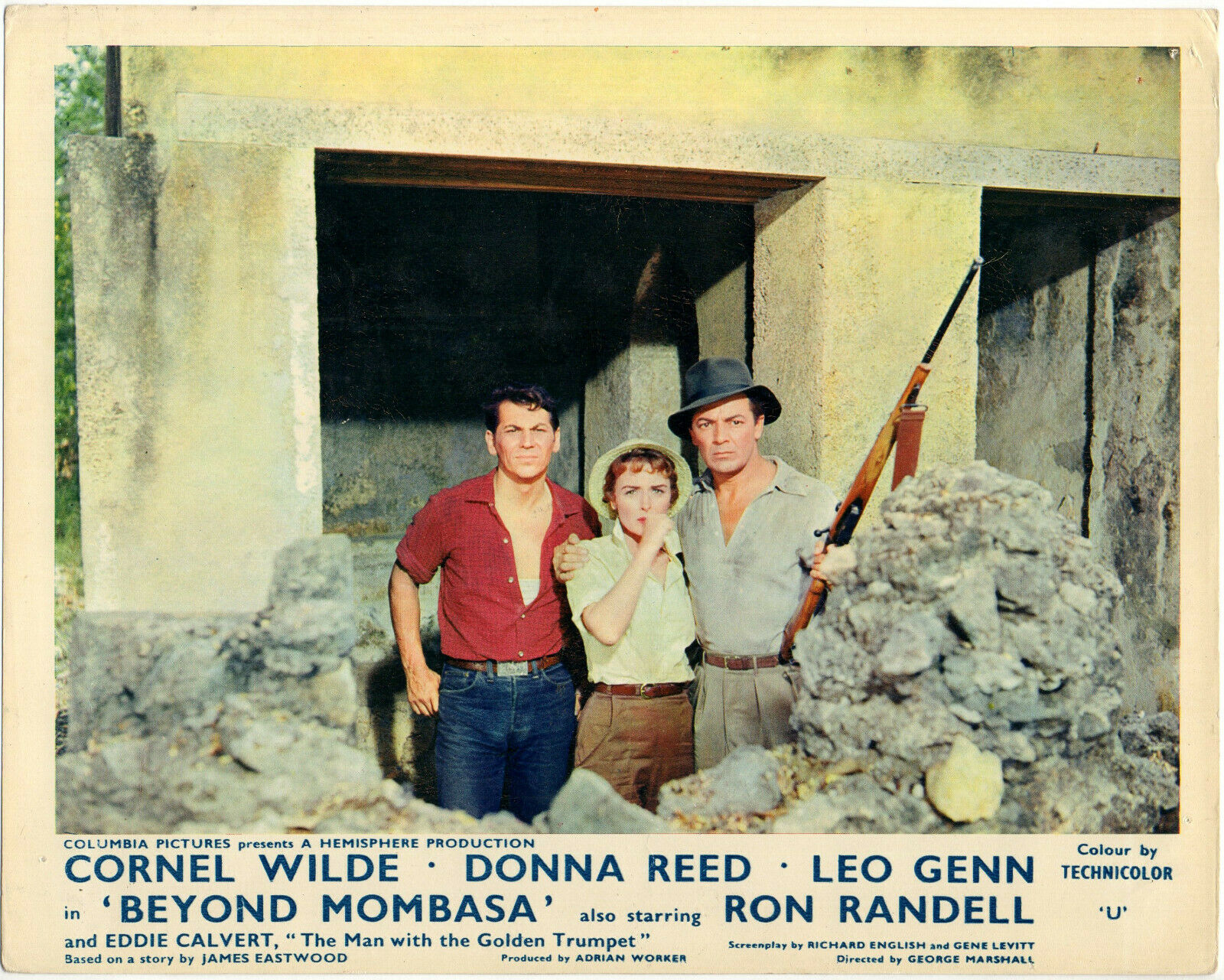
Beyond Mombasa 1956 2

Probably an  attempt to copy the 1950 “King Solomon’s Mines” and the success that film had –  in Columbia’s “Beyond Mombasa,” . The story is notably similar—an expedition goes into the African veld to solve the mystery of the death of an explorer who had discovered a valuable mine. A good deal of African fauna and flora is observed en route, and the picture is photographed in colour so that it captures and entertains the eye.   “Beyond Mombasa” is  a colourful  African adventure film made on location – however many of the scenes were shot on stages in London –

The cast has Cornel Wilde playing the leader of the expedition, Donna Reed as the pretty lady who goes along, Leo Genn as her seemingly gentle uncle and Ron Randell as the white hunter

Beyond Mombasa 1956 3

Christopher Lee is excellent as the only elegant member of the party, a dashing French hunter in Africa leading the others into the depths of the jungle to solve the mystery of Cornel Wilde’s brother’s mysterious death.

Beyond Mombasa 1956 4

Eddie Calvert – ‘The Man with the Golden Trumpet’ – has a guest performance in this colourful safari film.

There is excitement and charm to the film, the jungle environments are terrific with their hidden dangers.  It’s an entertainment with a fresh and nice dialogue, that at least should leave you happy and content afterwards when the curtain has fallen on this exotic drama

Beyond Mombasa 1956 5

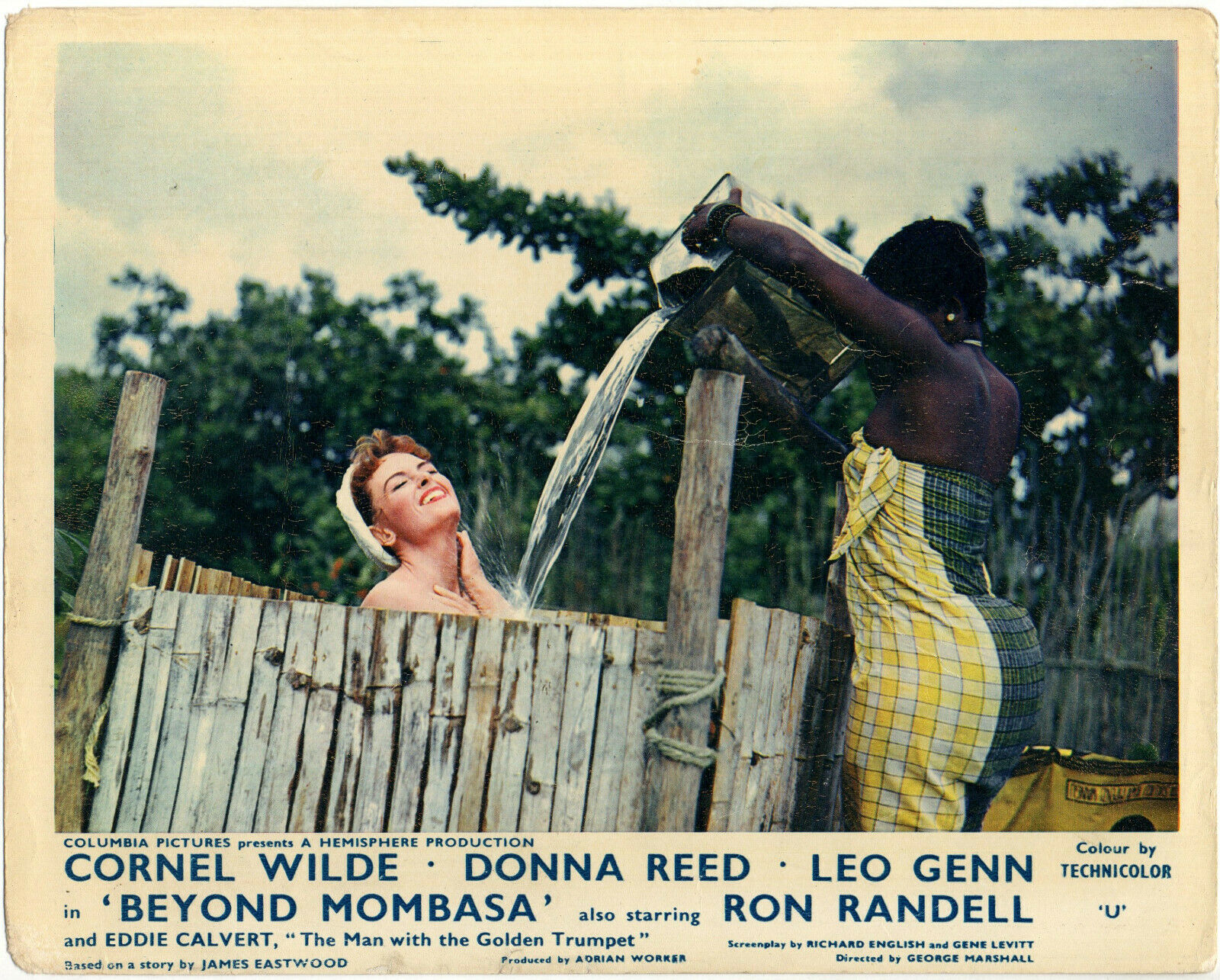
ABOVE – Donna Reed takes a shower

Eddie Calvert plays the theme from the film – released on record

Beyond Mombasa 1956 5


posted by Movieman in Uncategorized and have Comments (12)

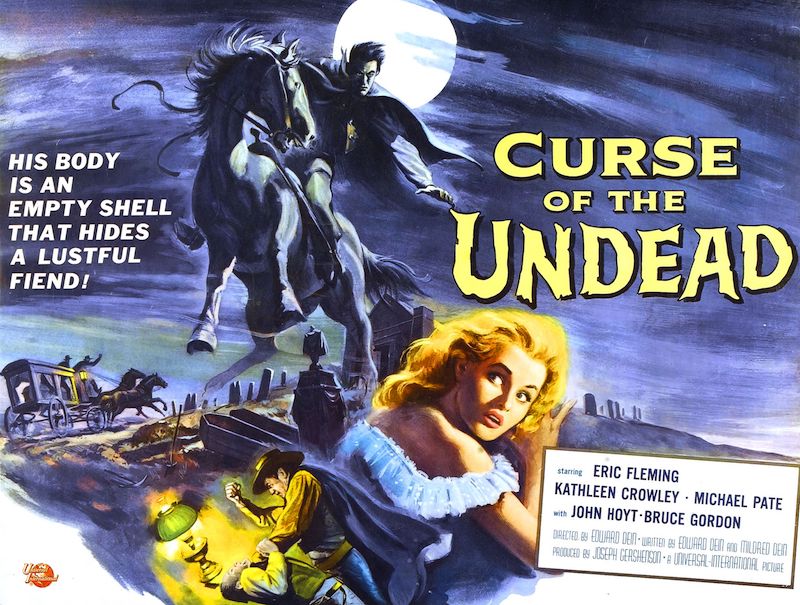
Curse of the Undead 1959


This one is something of a curio from then end of the fifties decade Curse Of The Undead (1959)

Curse of the Undead 1959

Curse Of The Undead is a really strange one in a 50s Westerns list – if there is such a thing. It is  a both Western and Vampire picture nailed together. It somehow stays fairly true to the conventions of both types though.

The combining of westerns with horror has not always made for great films.  We did have  “Billy the Kid vs. Dracula” and “Jesse James meets Frankenstein’s Daughter”.

However “Curse of the Undead”is quite a good one.  This 1959 picture stars Eric Fleming as a frontier preacher who is confronted with a vampire in the form of a hired gun, portrayed with sinister, yet sympathetic overtones by Michael Pate.
Michael Pate’s character had committed suicide after murdering his brother, and that had condemned him for all eternity to be a vampire.

This particular vampire  however seems able to walk around in the daylight with  no ill effects, and we all know from the films,  that vampires  cannot be exposed to sunlight, or they will be destroyed.

Curse of the Undead 1959 2


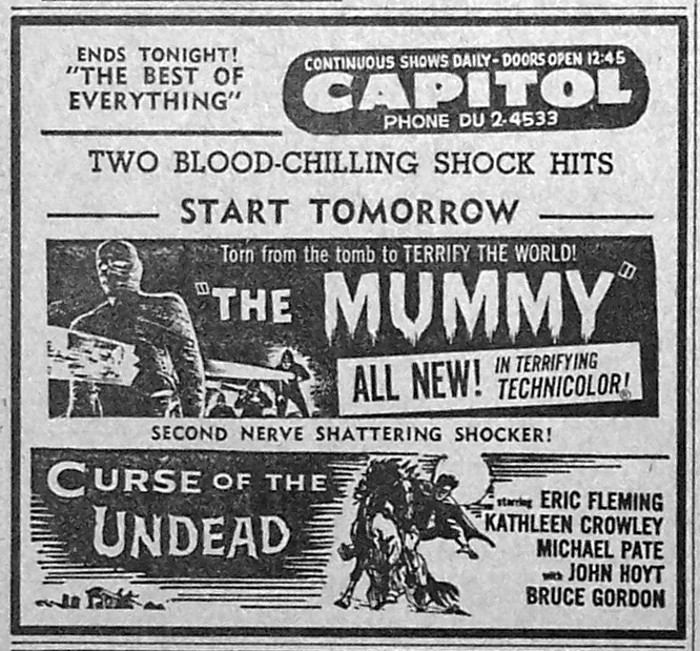
ABOVE It looks as though – in the USA – this film was on a bill with the Hammer hit ‘The Mummy’  – a film I really like

Curse of the Undead had the novelty of being the first vampire Western.   In the 1940s and 50s, the Western was as popular and far more prolific in its output than the modern action and science-fiction films are. I think I have pointed out  in the past that the 1951 Western Film Review gave details and a list of around 115 Western films released that year.   They created a  vision of the Old West where simple tales of heroism could play out in which the good guys WHO dispensed justice with six guns and their fists. All of the  heroic types that the action film draws on today had their roots  in the Western.

Curse of the Undead 1959 3


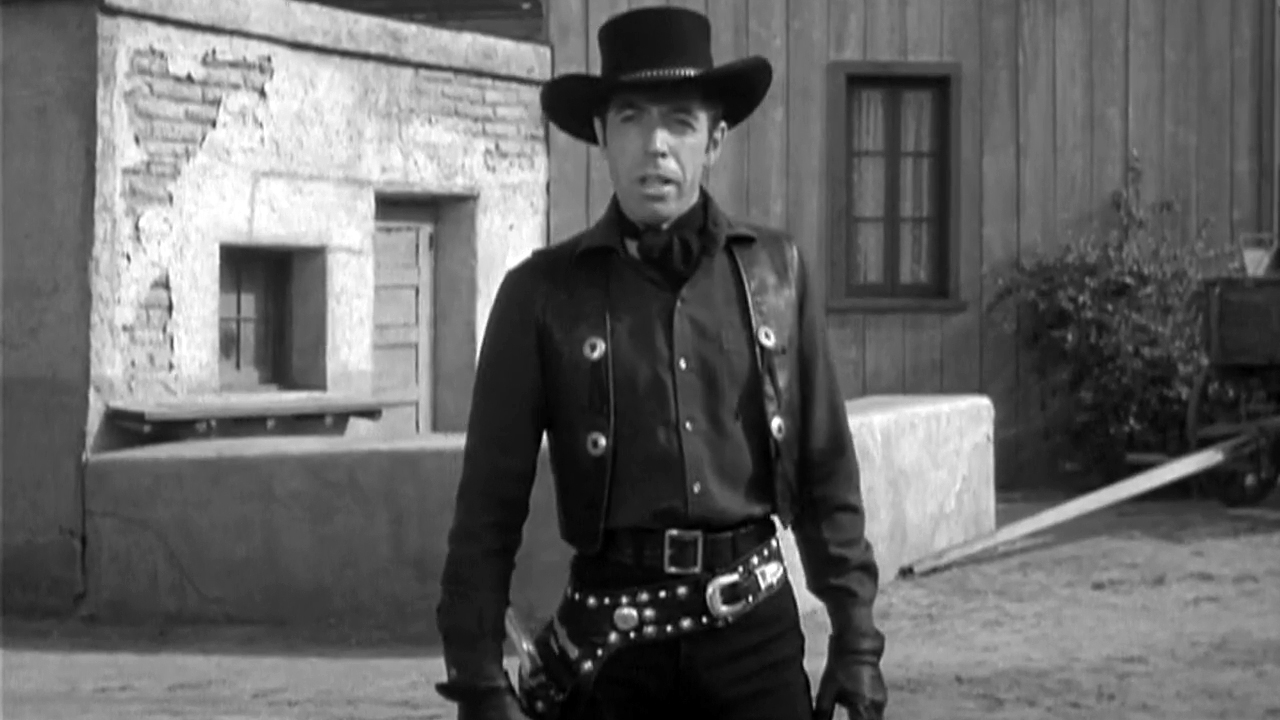
Michael Pate ABOVE was an Australian-born actor who played numerous parts in B movies in the 1940s and 50s, becoming a prolific guest star on TV shows of the 1960s, where he was more often cast as an ethnic character, in particular as an American Indian.


As the vampire, Michael Pate has a terse and harsh presence, a sense of contained danger that immediately makes him stand out from the rest of the characters around him. He had a long career in films and Television – he was in Gunsmoke and   Rawhide on Television  among many other roles. The rest of the cast of the film are largely unknown names today.


Curse of the Undead was shot on the Universal Studios backlot, using the standing Western town, sets and warehouse costumes that were also used in dozens of other B Western films of the era. It is even shot with the same typically stolid and unimaginative camera set-ups and flat photography of these B Western programmers.   Director Edward Dein had worked as a screenwriter during the 1940s where he had written a number of Westerns.


He had also written several horror films, including additional dialogue for the Val Lewton film The Leopard Man (1943) and the screenplays for Calling Dr Death (1943), Jungle Woman (1944), The Soul of a Monster (1944) and The Cat Creeps (1946). He made seven films as director, including two co-directed in Spain. His only other venture into this type of film  as a director was The Leech Woman (1960) about a rejuvenation process.


posted by Movieman in Uncategorized and have Comments (11)

Rosamund John in Cleethorpes


List of the cast for a production of “Gaslight”at the Empire Theatre, Cleethorpes, 1953.


Rosamund John in Grimsby

The part of Mrs Manningham was played by Rosamund John, who was a major star of British stage and screen in the 1940s and 1950s. She had significant roles in two classic aviation-related films from the ‘40s: “The Way to the Stars” and “The First of the Few”.

Rosamund John 2

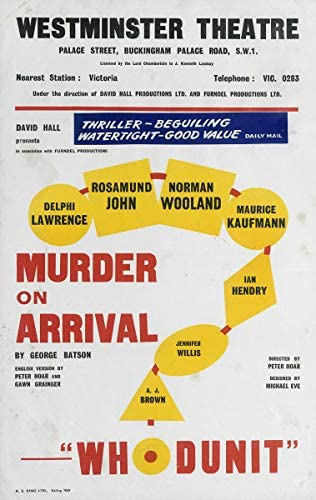
Here she is a decade later at the Westminster Theatre in London ABOVE – so it does seem that her marriage to politician John Silkin did not altogether stop her acting career as these two plays are well after they wed.

Back to her beginning  the  actor-producer Robert Donat  had spotted her while she was working at Stratford for C.B.Cochrane  doing walk on parts and understudying several Shakespearean roles, and he then cast her as an understudy in his production Red Night (1936).

Robert Donat’s biographer Kenneth Barrows recounts that the actor not only had great faith in  Rosamund John’s ability – he was to write in his journals, “One day I shall be proud to say I was one of the first to recognise her great gifts” – but he also fell deeply in love with her and, though he was married, by Christmas 1938 he was writing that  Rosamund John was “the first truly passionate affair of my life”.

Rosamund John did only a few  films .   Sadly this splendid actress is all, but forgotten nowadays.

Though her films were few, most were classics. The Gentle Sex directed by Leslie Howard was a tribute of the women in the ATS and then  The First Of The Few. She also played a nurse in The Lamp Still Burns with Stewart Granger. However, Rosamund John had a memorable role in The Way To The Stars were she played the films pivotal role of Toddy, playing the girlfriend, wife and widow of Michael Redgrave.

There was also Fame Is The Spur where she played the wife of Labour M.P Michael Redgrave, life.

Then one I remember more thany any other was Green For Danger, where she again plays a nurse, only a murdering one. She then  played a policewoman in Street Corner at a time when women Police Officers weren’t high profile

Rosamund John

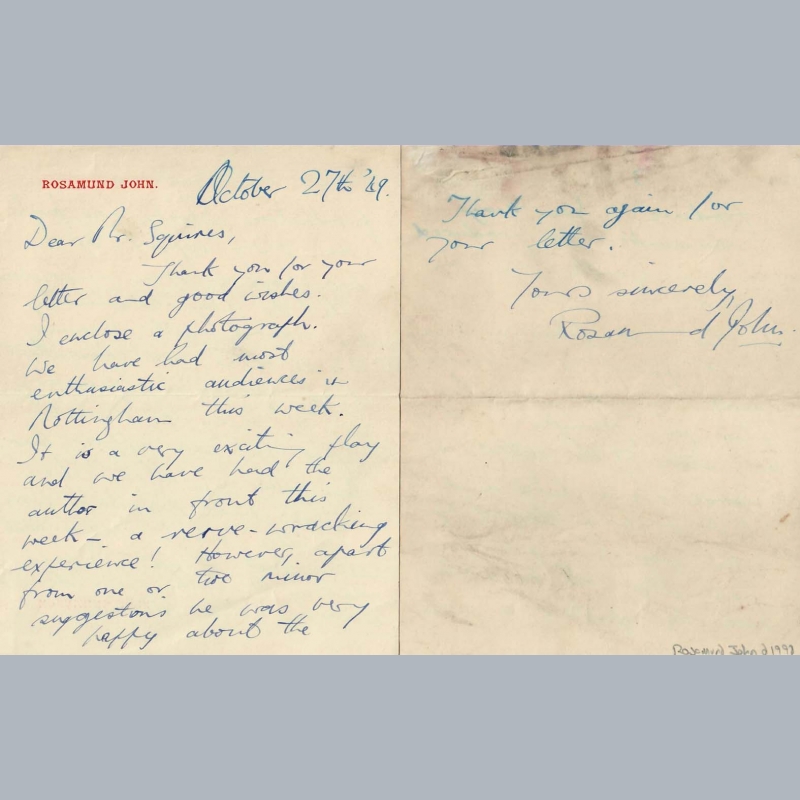
Rosamund John ABOVE a letter to an fan after she had been appearing in a stage play in Nottingham.

Rosamund John 3

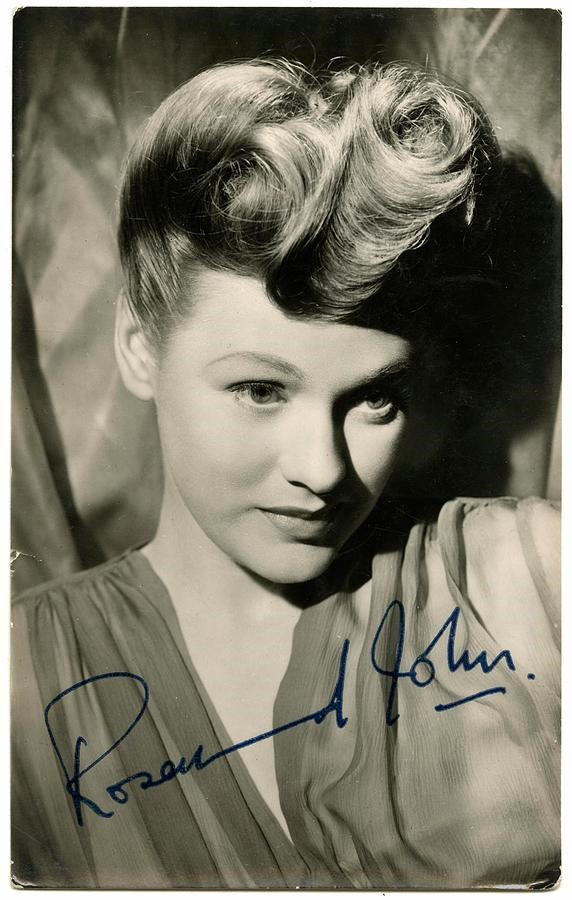
Rosamund John  – ABOVE a Signed picture

Rosamund John 4

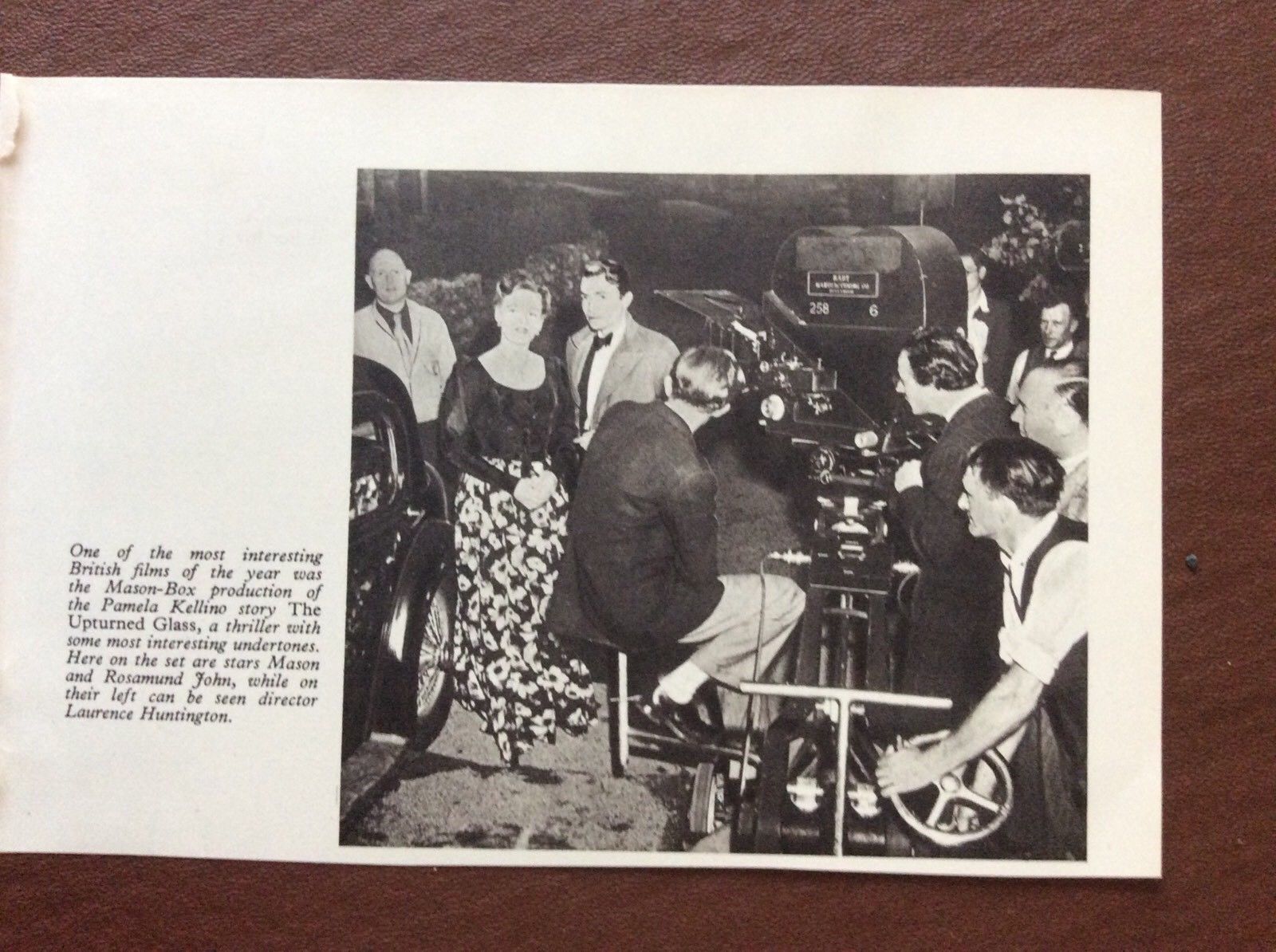
ABOVE Rosamund John with James Mason in The Upturned Glass

Rosamund John 5

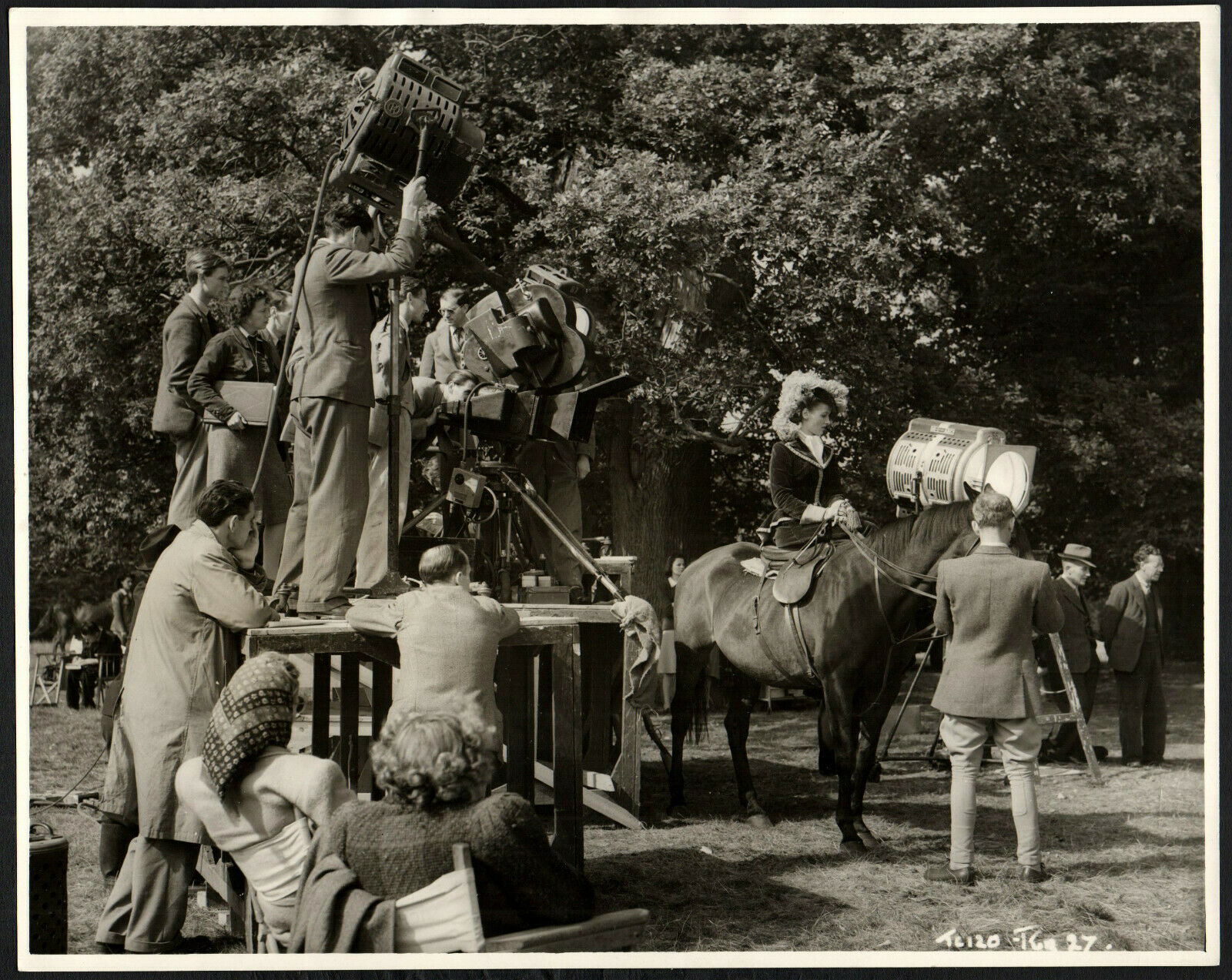
Rosamund John  – ABOVE – ‘Fame is the Spur’ 1947

Robert Donat

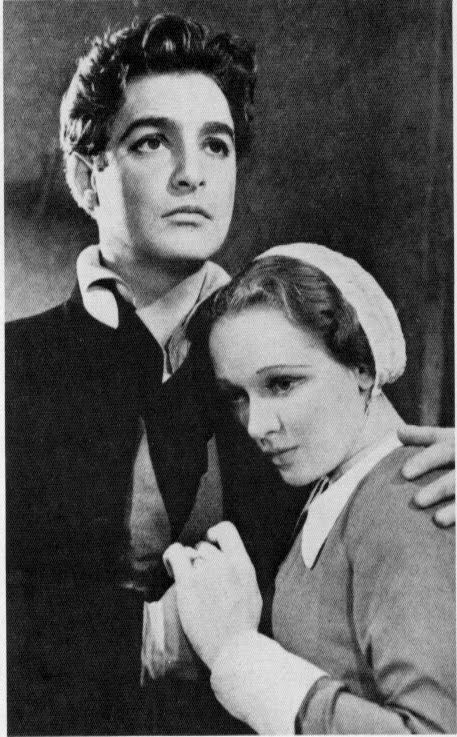
ABOVE – Rosamund John and Robert Donat – Lovers in real life- seen here in a stage performance of The Devils Disciple in London’s West End in 1938

posted by Movieman in Uncategorized and have Comments (12)

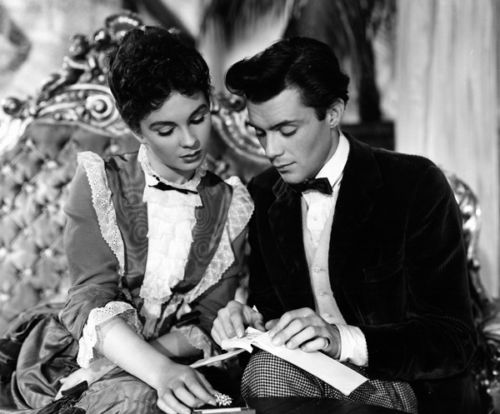
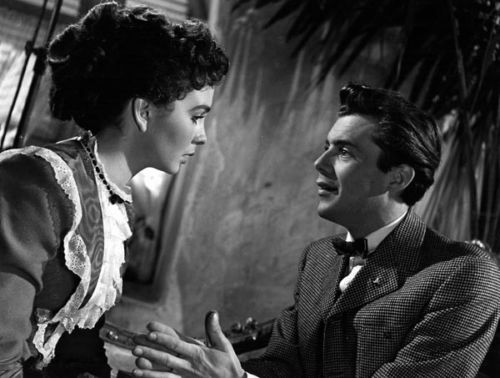
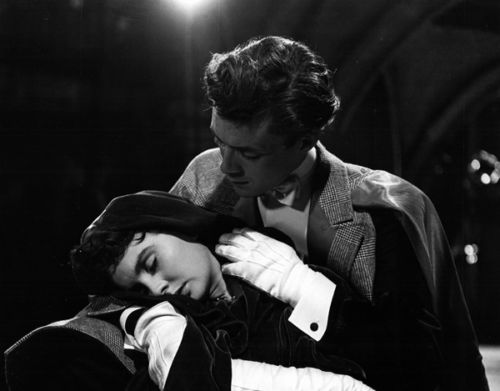
So Long at the Fair 1950 – My second review here of this film with Jean Simmons and Dirk Bogarde

This film is on Talking Pictures this evening – Monday 30 March 2020 at 10 pm – Don’t miss it !!

So Long at the Fair

David Tomlinson and Jean Simmons – ABOVE and BELOW

So Long at the Fair 2

This is one to watch if you haven’t seem it before – I defy anyone to work our what is going on in this sinister plot where a brother and sister visit Paris at the time of the great Paris Exhibition in 1900

Everything seems just normal, until the morning after their arrival when the brother ( David Tomlinson) completely disappears and Jean Simmons his sister, starts a search but there is one big problem – no-one remembers seeing him at all and even the room he is supposed to have booked into just isn’t there.

The Hotel staff and everyone thinks that Jean Simmons is somehow losing her mind – and that her brother never existed. However she meets up with Dirk Bogarde who is an artist living in Paris – he believes her and the search commences.

What will they find ?

This is a great story – and to anyone who hasn’t seen it I can guarantee that they will be glued to the screen until the climatic ending.

So Long at the Fair 6

There is no way that Jean Simmons could hallucinate her own brother, her only relation in the world! Stuck in France, not able to speak much French, and all alone, hers is a desperate search.

The film moves in quite a frightening way – overall it is brilliant, and a must-see.

So Long at the Fair 5

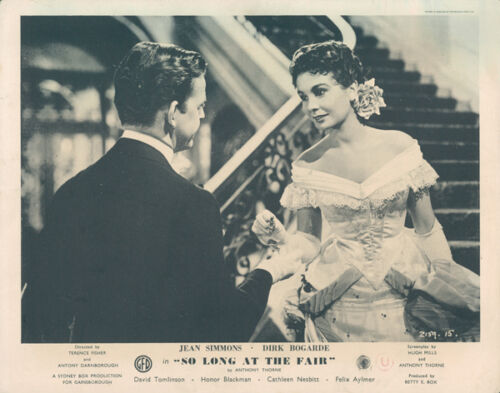
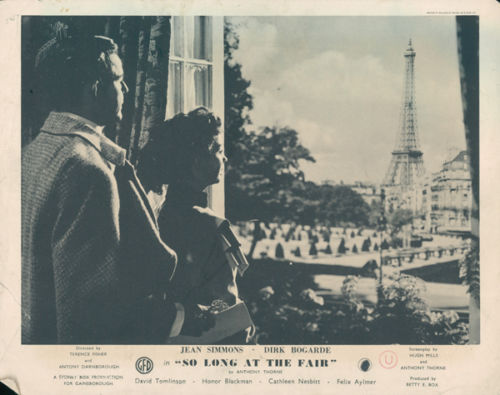
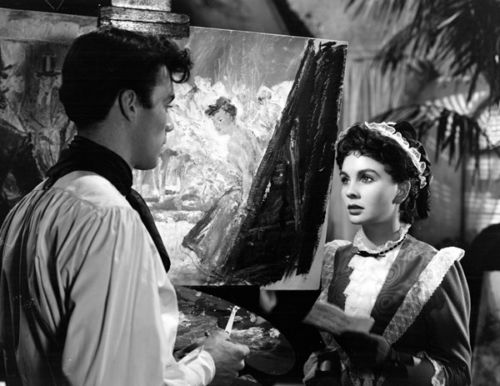
ABOVE – Jean Simmons and Dirk Bogarde


So Long at the Fair 4

ABOVE – Jean Simmons and Dirk Bogarde


So Long at the Fair 3

ABOVE – Jean Simmons and Dirk Bogarde

Cathleen Nesbitt - So Long at the Fair

Cathleen Nesbitt also stars ABOVE

posted by Movieman in Uncategorized and have Comments (16)

Children of the Stars


These pictures I find to be quite unusual and ones that I have not seen before. They date back before the Fifties however as they appear in a Film Annual of 1948

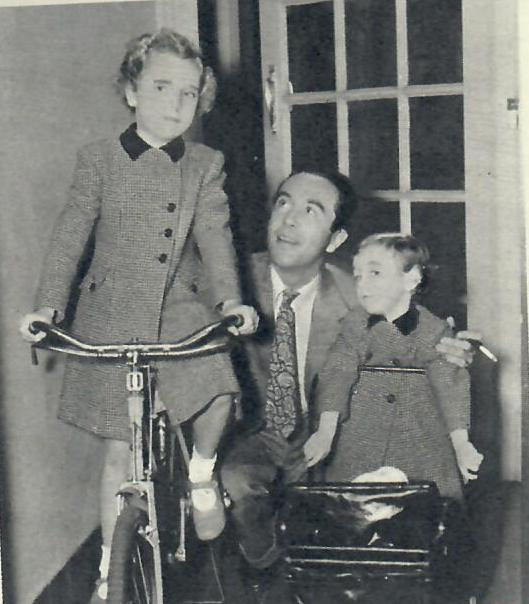
Hugh Williams with his son, Simon

ABOVE –  High Williams Film and Theatre actor and his son Simon who, as we know, went into the acting profession with much success – and he is at present playing Justin in ‘The Archers’ on BBC Radio – I am a regular listener to this programme


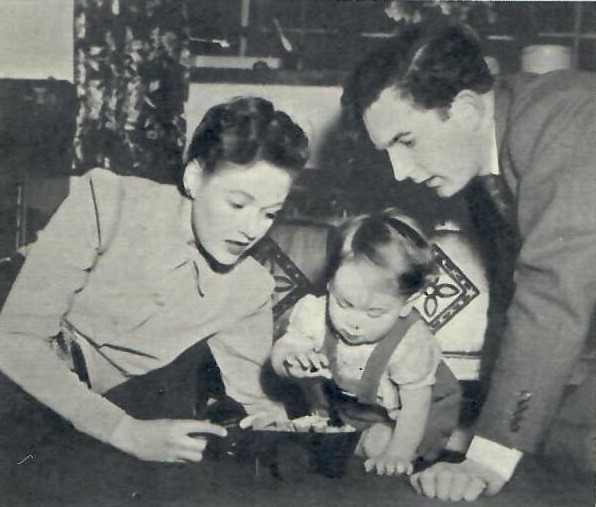
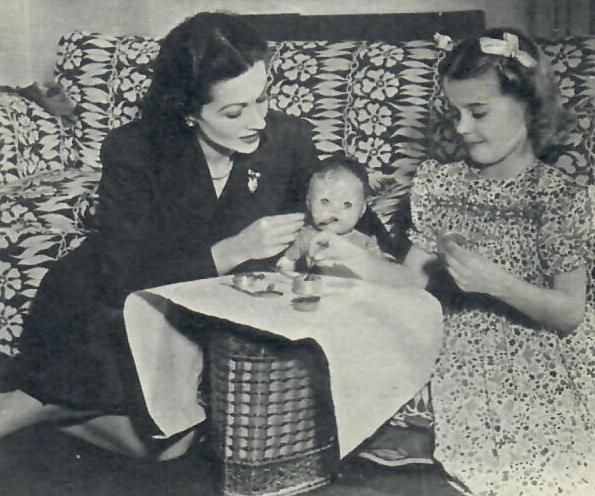
Rosamund John with her son and husband

ABOVE – Rosamund  John with her husband Russell Lloyd and son John at home. Russell Lloyd was a very successful Film Editor – he and Rosamund John were divorced the very next year in 1949 – but soon after in 1950 he married Valerie Cox and remained married to her until his death in 2008.


I am puzzled however by this picture because within a short time of this picture being taken Rosamund John had divorced Russell Lloyd and married the politician John Silkin who she had met through her interest in politics. He was nearly ten years younger that Rosamund but they soon had a child – a son – and went on to live a long and very happy life together. He became an MP and was in the Labour Government of Harold Wilson – she frequently attended Parliament to listen to him speak.


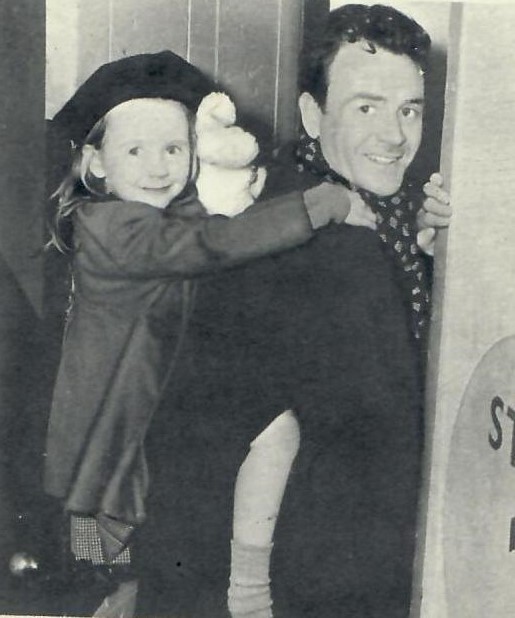
John Mills with Juliet

ABOVE – John Mills on the set of ‘The October Man’ – another film I like very much. Here he is with his daughter Juliet who had a small part in the film – as she did in ‘The History of Mr Polly’ soon afterwards.


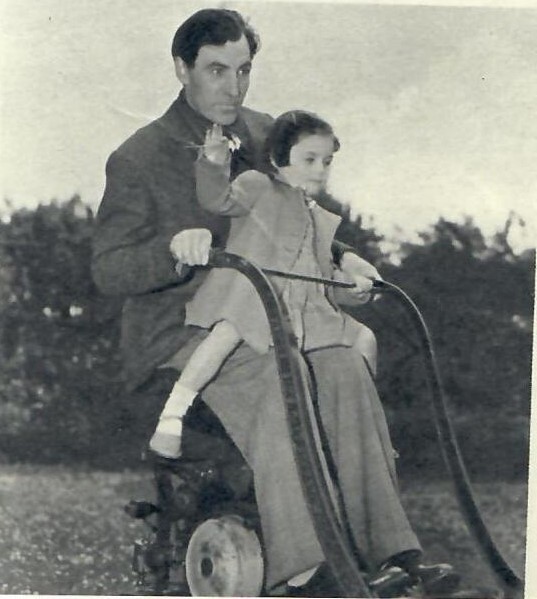
David Farrar with Barbara his Daughter


ABOVE – David Farrar in grim-face pose with his Daughter Barbara. He is mowing the lawn at their home is Dulwich – could that have been an early motor mower ?   He again looks suitably dis-interested.

More about Barbara Farrar in later years, to come on this Blog. Not that I have found much but one very interesting snippet of her later life in South Africa


Stewart Granger and his Daughter


Stewart Granger ABOVE with his Daughter Lindsay – one of two children he had with his wife Elspeth March – they also had a son Jamie. They were divorced around the time – or a bit after this picture was taken.


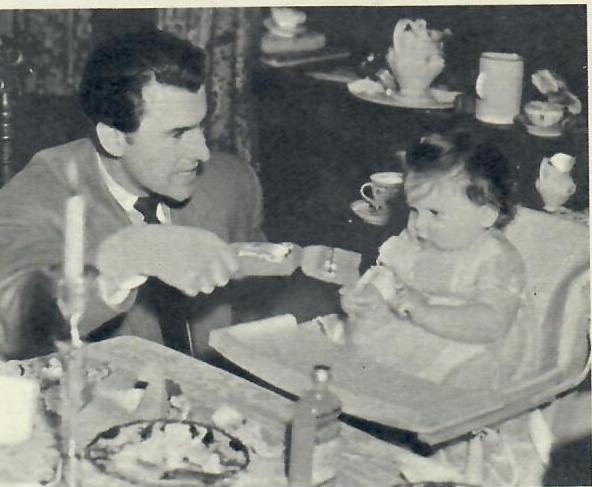
Dennis Price with his daughters


Dennis Price with his daughters Susan and Tessa. He looks very happy here – as he would with those two girls beside him.  He was at the peak of his career at this time. About the time of ‘Kind Hearts and Coronets’ I would guess – and that saw him at his best in my view.

Alec Guinness gets most of the plaudits for the film, but Dennis Price was great – and was in nearly every scene in the film – and even was the narrator of the story.  Wonderful performance.


Margaret Lockwood and Toots


ABOVE – Margaret Lockwood and daughter ‘Toots’ who herself became an actress of some note both in films and early Television.


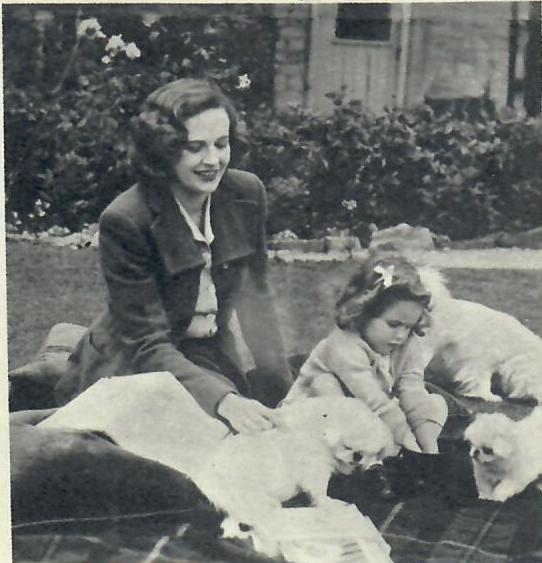
Phyllis Calvert and Ann Auriol


ABOVE – Phyllis Calvert and her Daughter Ann Auriol in the garden of their Cotswold Home – mind you it doesn’t look much like Phyllis Calvert here, I have to say !

Children of the Stars


posted by Movieman in Uncategorized and have Comments (11)

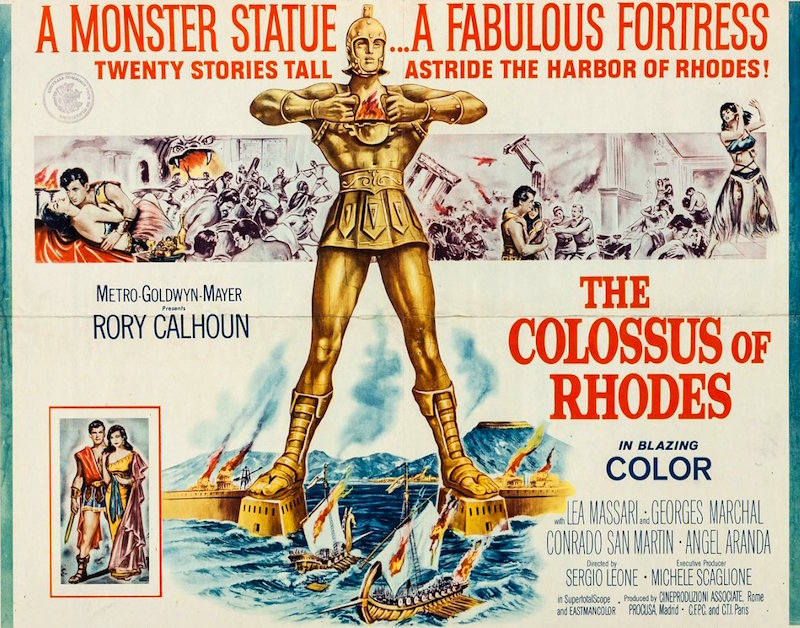
The Colossus of Rhodes 1961 – Rory Calhoun

This film came out a little bit later than  the Steve Reeves ones – ‘Hercules Unchained’ was one of them.  Steve Reeves was good in these and fitted the role of Hercules well. The first Hercules was 1959 – and Steve Reeves continued to play in this type of role for the next decade almost – and very successfully too.

He looked the part and seemed very ‘at home’ with these roles  – more so that Rory Calhoun in this one.

“Colossus of Rhodes” is a good  action thriller with  Rory Calhoun in a role that you would not normally associate him with but he  is pretty good as the Greek adventurer  visiting the island who finds himself  in the middle of a sinister conspiracy. His villa is invaded one night by mysterious marauders and a very exciting fight ensues with  Rory Calhoun outnumbered and desperately fighting until he’s overpowered … It seems the  young lady he’s been chasing (Lea Massari) is also in the plot.

As Rory Calhoun gets more drawn in, his safety is put at risk and he has to take sides. The duel he fights inside and outside the colossal statue is an unforgettable piece of cinema. 

He suits  the devil-may-care adventurer  who is reluctantly forced into violent action to risk his own skin and stand up for what’s right.


The Colossus of Rhodes


Rory Calhoun was an underrated actor who deserved more roles than the many westerns to which he was mainly relegated. This is one of the few times he gets to break the mould. 

It is an action film with quite a good  plot and with  outstanding costumes and sets to fill up the impressive Wide screen – in SuperTotalScope


The Colossus of Rhodes 2


The Rhodes statue of the Colossus is a great design. The use of widescreen – Supertotalscope – is excellent. Overall, the  sets and the production values are well above average than your standard Sword & Sandal films of the day. 

As the story goes – it seems that Rebels want to overthrow the King of Rhodes because of corruption and the lack of justice but then other people within the Kingdom also want to overthrow the King and his army with a group of Macedonian “slaves” captured by Phoenicians who are actually soldiers and are brought into Rhodes.  The Rebels fight the Rhodes soldiers.


The Colossus of Rhodes 3

The story is not too complicated really although it sounds  like it is.  If all this action weren’t  enough, during the film’s climax we get  an earthquake which levels Rhodes.

Maybe then we can pause for breath.

According to the records that I have seen – the film brought in a profit of $350,000 which just underlines what we cinema-goers wanted to see at that time – I must admit, this type of film is just my cup of tea – even now !!

Apparently John Derek had been to original choice to take the lead role but for whatever reason he didn’t take it on – and so Rory Calhoun made the trip to Europe to do it.


posted by Movieman in Uncategorized and have Comments (9)

James Robertson Justice – Again


There is no doubt that James Robertson Justice enjoyed a long and quite successful film career from about 1949 with ‘Scott of the Antarctic’ through to ‘Chitty Chitty Chitty Bang Bang’ in the mid Sixties and he was continuously working in films throughout that time.

He played Little John in  ‘The Story of Robin Hood and His Merrie Men’ and later again for Walt Disney was in ‘The Sword and The Rose’ and ‘Rob Roy The Highland Rogue’

James Robertson Justice C


ABOVE – James Robertson Justice as Little John,   Richard Todd as Robin Hood and James Hayter  as Friar Tuck in ‘The Story of Robin Hood and His Merrie Men’ 1952

This scene  ABOVE – does not appear in the film at all,  as many of you will know – so it was probably just a publicity still. Very good it was too.

He was very good as Little John I have to say – he fitted the part physically and had a good role and played it well – although very much as he would play many if not all, of his later film roles – with a loud voice and much bluster.

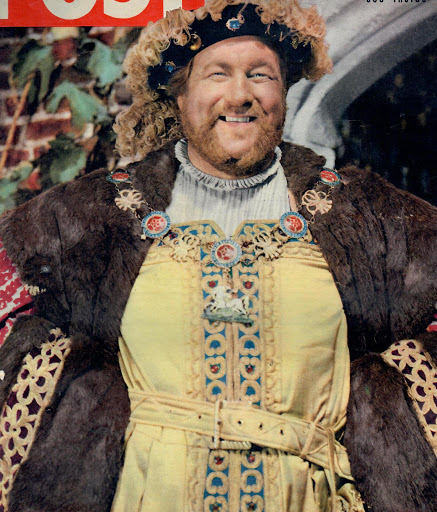
He was very good as King Henry VIII in The Sword and The Rose – in fact he really looked that part there – however in his next film ‘Rob Roy The Highland Rogue’ for a man who proudly claimed to be a Scot, he had the worst Scottish accent I have heard in films – he didn’t seem to get it at all.  I always admire the way that actors of all eras seem so able to drop into virtually any accent or dialect that is required to play a part – maybe this exposed James Robertson Justice’s lack of acting skills – I reckon it did.

James Robertson Justice B


However, for all my reservations about this character, he was remarkably successful over a number of years – so that certainly says something about him.


James Robertson Justice


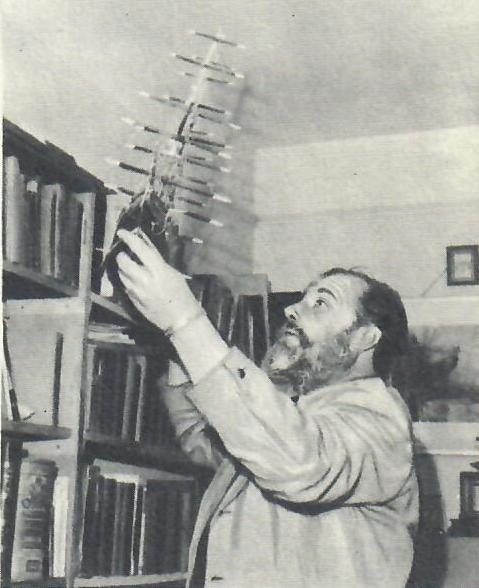
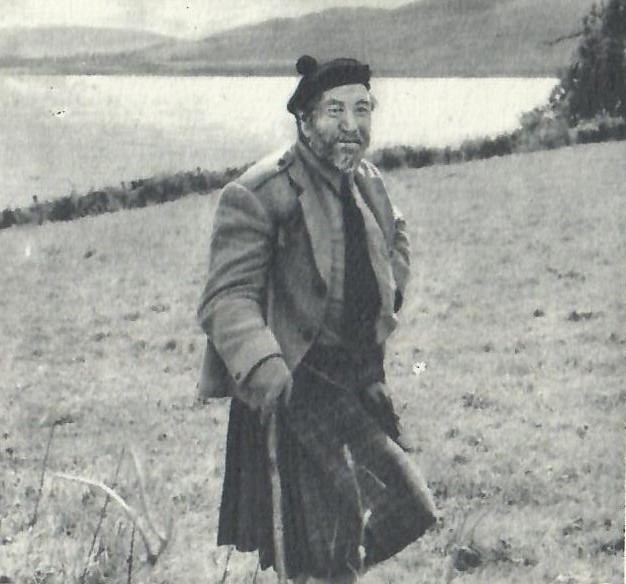
James Robertson Justice ABOVE at  home in his cottage in Spinningdale, Scotland.

During the 1950s, Justice bought a cottage at Spinningdale in Sutherland where he ‘drank neat Rose’s Lime Juice and breakfasted on whisky and a raw egg’.  He loved to stay there between films, entertaining guests who ranged from locals to royalty, and usually travelled north by road. 

The route to and from Spinningdale took him past the Glenmorangie distillery nearby, and Justice befriended the distillery manager Gordon Smart. Smart’s grandsons remember him turning up at the manager’s roadside cottage on many occasions, often with a glamourous female companion in the passenger seat of his latest sports car. He would speed up and down the road to show off the car’s performance, before going inside to enjoy a dram or two.    


James Robertson Justice 2

James Robertson Justice at Home at Spinningdale  ABOVE and BELOW


James Robertson Justice 3

James Robertson Justice


James Robertson Justice 4


James Robertson Justice


James Robertson Justice 5


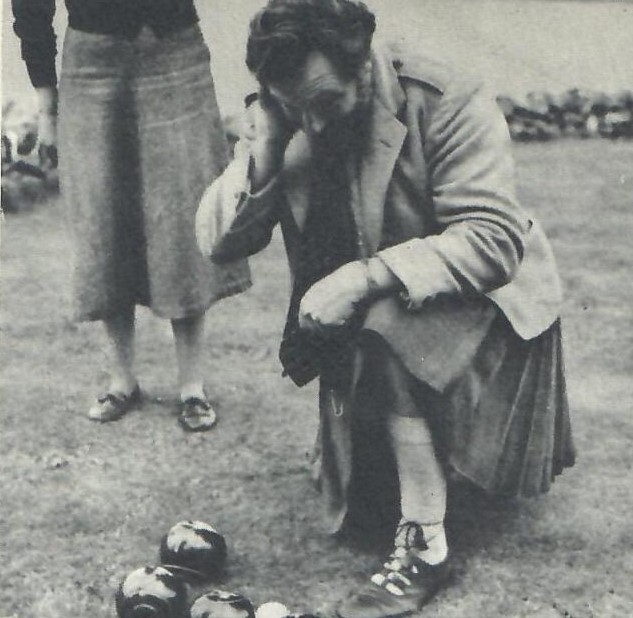
James Robertson Justice – ABOVE surprisingly to me anyway, he seemed to enjoy a game of bowls.


James-Robertson-Justice a


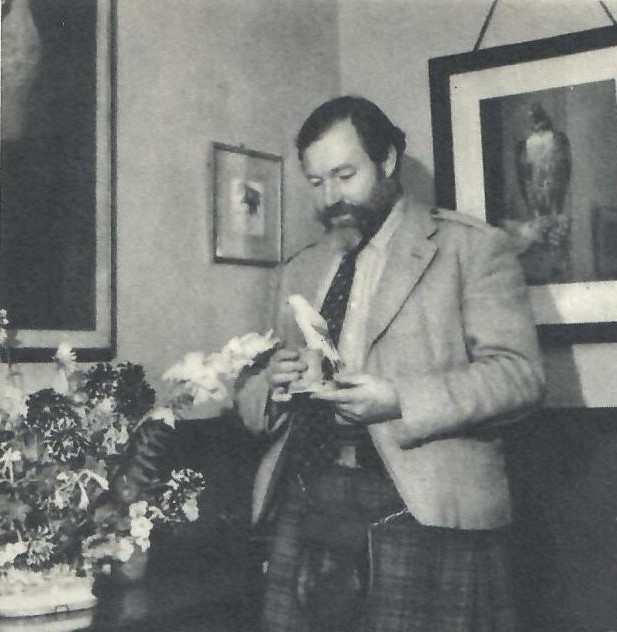
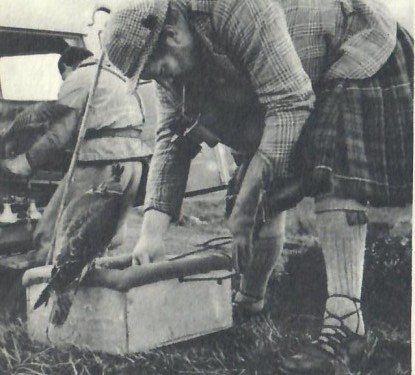
James Robertson Justice ABOVE with his falcons


James Robertson Justice 7

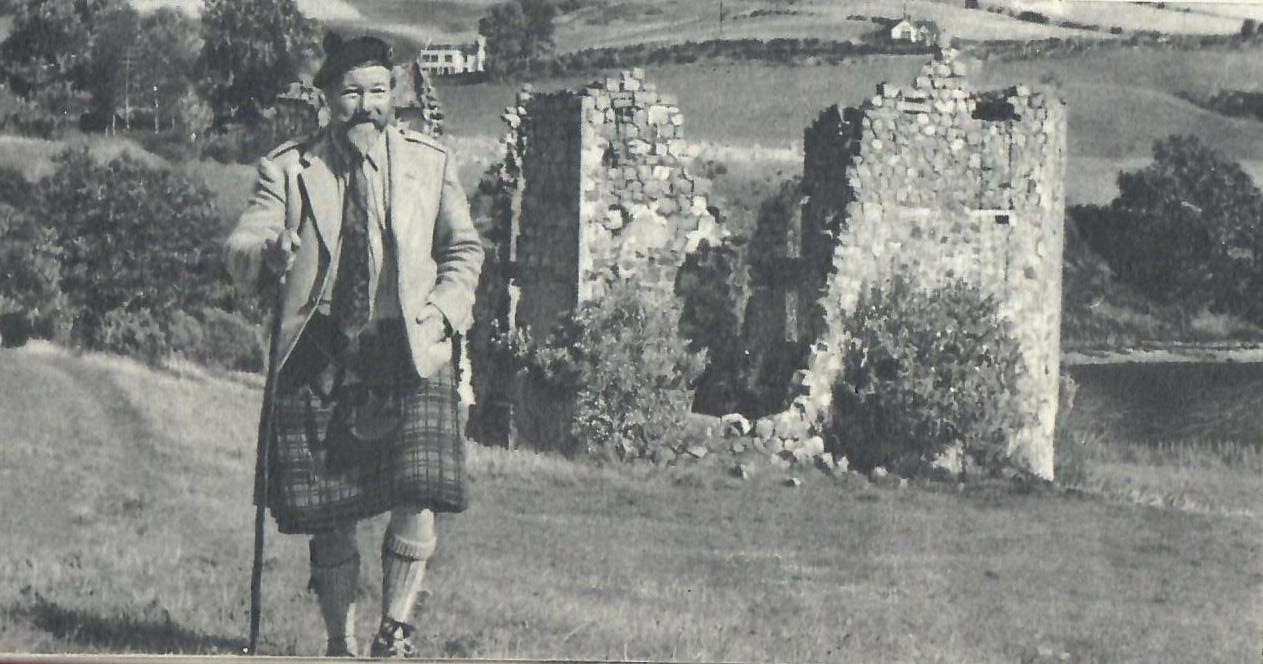
James Robertson Justice ABOVE and BELOW – walking close to his home in Scotland.


James Robertson Justice 8

James Robertson Justice


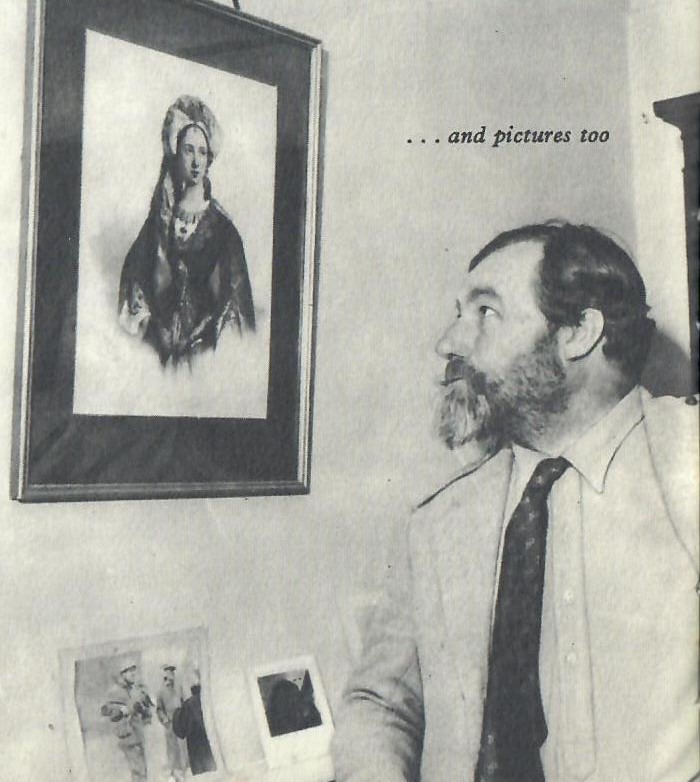
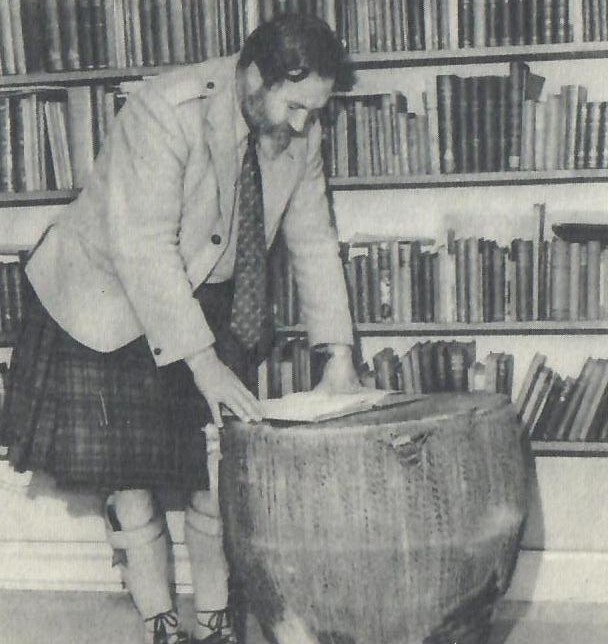
James Robertson Justice (1907-75) was not born ‘under a distillery in Skye’, as he  claimed. In fact this most famous Scottish actor was actually born in London and christened James Norval Harald Justice.  However he decided that he wanted to be a Scotsman like his father and so he adopted  more of a Scottish-sounding name, and an enthusiasm for wearing the kilt.

He claimed that his  early life was full of adventure. He studied in Germany where he was able to develop his  linguistic skills – he briefly became a journalist and the tried his hand at various jobs while living in Canada during the Depression.

Returning home to England, he played ice hockey professionally and competed as a racing driver. In the mid-1930s he served as a League of Nations peacekeeper in the Saar and, subsequently, a fighter (on the Republican side) during the Spanish Civil War. He joined the Royal Naval Volunteer Reserve during the Second World War but was invalided out.

He became an actor at the age of 37.

His breakthrough film performance came in 1949, when he played Dr Maclaren in Ealing the  classic Whisky Galore!. He subsequently made around 90 films, appearing in box office hits such as Land of the Pharaohs (1955), The Guns of Navarone (1961), and Chitty Chitty Bang Bang  (1968). His most famous role was that of the eminent and gloriously belligerent surgeon Sir Launcelot Spratt, in the hugely successful Doctor in the House (1954) and its sequels. 

He always denied being  a film star – he acted, he said, simply to pay the bills for his many other enthusiasms. His greatest love was for the countryside and he was especially keen on wildfowling (he was a founder of the Wildfowl Trust), fishing and falconry.

It was falconry that brought him into contact with Prince Philip, and the two became lifelong friends. The Prince invited him to join his exclusive Thursday Club, and sent his teenage son Prince Charles to stay with Justice one summer, to learn about falconry and country pursuits.

After separating from his first wife at the beginning of the 1950s, Justice became the subject of gossip about romances and dalliances with a number of young women including the designer and author Molly Parkin. 

He died virtually penniless in 1976, after a punishing divorce settlement and a period of ill health. He left behind on film a series of performances – Little John, Sir Lancelot Spratt, Lord Scrumptious and others, which continue to delight fans of British cinema. 

He was a ‘larger that life’ character


posted by Movieman in Uncategorized and have Comments (16)

David Farrar at Home in Dulwich 1952


David Farrar and his family confess to being anti-social and consequently the star is seldom on view at any of the popular night clubs or restaurants. He has lived nearly all his life in Dulwich and spends much of his time educating his daughter, for neither he nor Mrs Farrar – who is a qualified music teacher – likesd schools.  That seems a crazy outlook to me I must say.

The basement or cellar of their home is converted into a little Theatre.

 When he can, David Farrar goes out car driving, riding ( he is a keen steeplechaser ) or has a round of golf.

David Farrar with Family


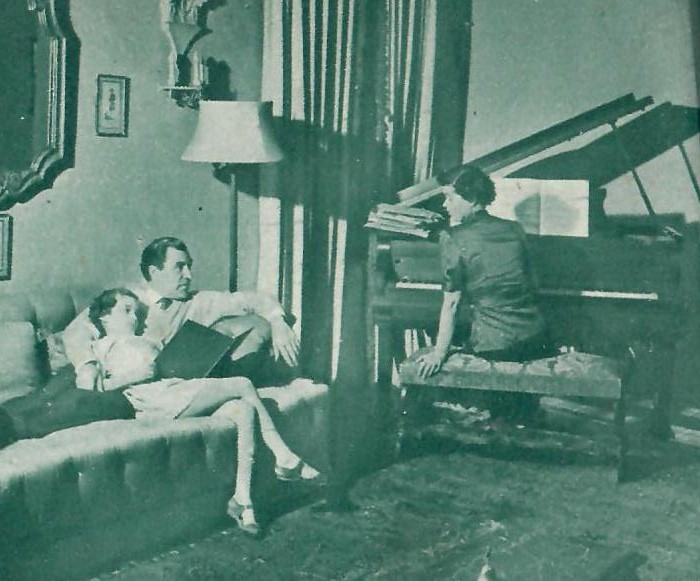
Above – We see David Farrar at home with his daughter Barbara and at the Piano his wife Irene.

If we piece together things we have learned about him – we have the visit by the Monrovians to Denham in 1948, where as one of the party said ‘ he seemed disinterested, posed for a picture then disappeared into his dressing room and was not seen again that day’ while the visitors were there.

Then we read as above – about him admitting to being anti-social and finally when he was retired and living alone close to his daughter in South Africa, he admitted to not being in touch with any of his colleagues from the film industry – and stated that he had no friends. Then he added ‘Ain’t that sad’ – it certainly is a sad reflection on all that had gone before.

Back to his film career – after he did The Small Back Room and then Gone to Earth for Powell and Pressburger he thought he’d done all he could in Britain and Europe so he went to Hollywood.  However the roles he got there were usually “friend of hero” or occasionally a role as the villain.

David Farrar  wasn’t really all that happy with his career in Hollywood either. He came back to the UK but by then he was getting roles as the father or the uncle where he still saw himself as the leading man.

He did a good father of the heroine in Beat Girl (1960) and his last film was the epic The 300 Spartans (1962) where he played Xerxes, leader of the Persians – a decent villain role

His wife Irene died in 1976 and he thought that would be a good time to retire so he moved to South Africa where his daughter Barbara was living and he stayed there living in a quiet retirement until he died in 1995, aged 87.


We should remember him for his great performances, like as the detective Sexton Blake in a couple of detective thrillers; as the Englishman in the Himalayas flaunting his bare torso and short shorts in front of the nuns in Black Narcissus (1947); as the RAF pilot who comes back to post-war England with the German girl who helped him escape in Frieda (1947); as the physically and spiritually damaged bomb disposal expert Sammy Rice in The Small Back Room (1949); and as the classic “wicked squire” Jack Reddin in Gone to Earth (1950).

His career may not have been all he thought it should have been or could have been, but he did all right, much better than many. As with Roger Livesey and a few others,  he was someone who was mainly a stage actor but who did quite a few films.

Really he gave his  best performances on film  in the films of Powell & Pressburger.   They knew how to get the best out of people.

posted by Movieman in Uncategorized and have Comments (11)

Kidnapped 1960 from Walt Disney

This was Walt Disney’s first foray back into England since Rob Roy The Highland Rogue some seven years earlier. This was a great story and one which has been filmed quite a few times – but this has to be one of the best.

He appointed Robert Stevenson as the Film Director backed up by Carmen Dillon in charge of set design as she had been with his last British Films, and the Matte Artist Genius Peter Ellenshaw to add the the Highland Scenery – as if anyone could !!

Kidnapped 6

Peter Finch took the lead as Allan Breck with Jmes MacAthur as David Balfour.

Kidnapped is based on the novel by Robert Louis Stevenson – this Disney version is excellent.

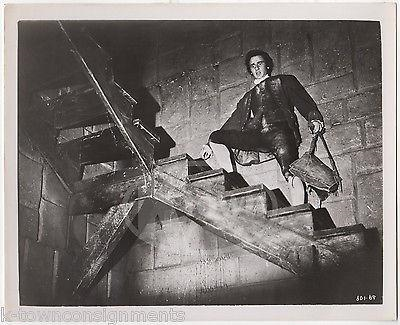
David Balfour’s uncle arranges for him to be kidnapped – and it is that memorable visit he makes to his Uncle’s house – The House of Shaws – where  Uncle ( John Laurie) tries to kill him be sending him up to a room where, when he opens the door in the dark he will fall down a huge drop to his death. There is a storm however and just as he opens this door a flash of lightening shows him what would have been his fate.

Kidnapped 7

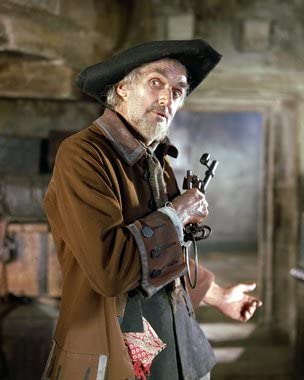
Kidnapped ABOVE – A shocking moment for David Balfour – and BELOW John Laurie as Uncle Ebenezer – a wicked and murderous man

Kidnapped 8

Needless to say he is not well pleased.   However he ends up being  taken aboard a ship which gets shipwrecked along the coast and somehow manages to wash up in the  Scotland Highlands after teaming up with adventurer Alan Breack Stuart. Alan Breck had saved him from being murdered on the ship.The two of them then begin a  journey takes right across the Scottish Highlands and the film makes good use of the spectacular scenery there – they also face dangers along the way including a confrontation with the Redcoats.

This film is shot on location in the Scottish Highlands and contains some great scenery. Peter Ellenshaw chips in with his superb Matte Painting but the scenes that are on the screen show just how good he is at the job – as Director Ken Annakin once said ‘Peter knew how to make his paintings realer than real’

The cast includes James MacArther, Peter Finch, Benard Lee, John Laurie, Finlay Currie, Nial MacGinnis and Peter O’Toole  who were all excellent 


Kidnapped

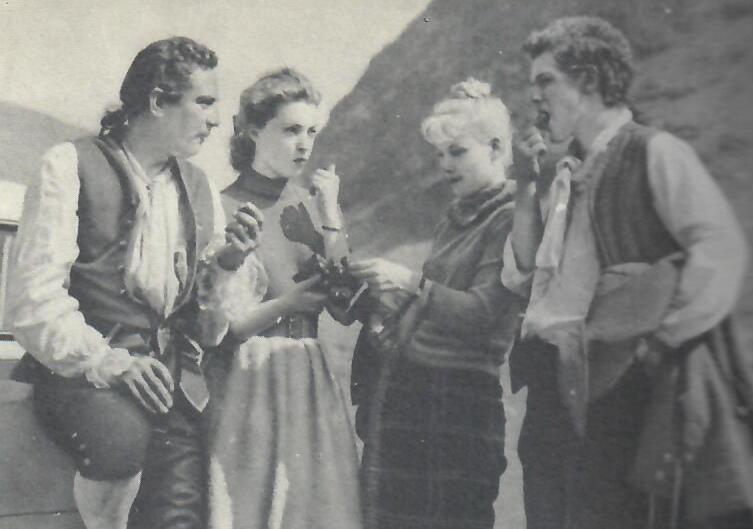
Kidnapped ABOVE – On Location in the Scottish Highlands Peter Finch with his wife Yolande enjoy a brief picnic lunch with James and Joyce MacArther


Kidnapped 2

Kidnapped – ABOVE Back at Pinewood Film Studios, Peter Finch is paid a visit by Pier Angeli and John Gregson who were filming SOS Pacific there


Kidnapped 4

Kidnapped ABOVE  Peter Finch poses in costume somewhere at Pinewood


Kidnapped 5


Kidnapped – ABOVE Duncan MacRae filming on a shore in the Scottish Highlands – No studio Tank here as the real thing is wanted


Kidnapped

Kidnapped

posted by Movieman in Uncategorized and have Comments (8)