Archive for the 'Uncategorized' Category

Herbert Lom dies aged 95

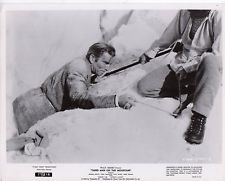
Herbert Lom – who I have mentioned before in a film featured here earlier ‘Third Man On The Mountain’    has died at the age of 95

 The headlines show him as one of the stars of The Pink Panther but I will recall him for all those roles throughout the fifties like in North West Frontier from 1959 which conicidentally I have just been preparing for a post very shortly.  There were  others –  The Ladykillers ,  Fire Down Below and War and Peace among many.  He was a prolific film actor of the time and a very good one at that.

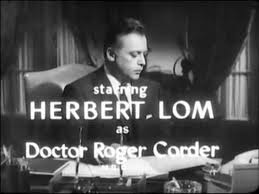
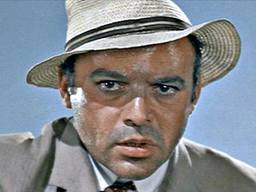
But my main memory will be of him as Dr. Roger Corder in one of my favourite TV series of all time The Human Jungle from the sixties

Above – Herbert Lom in North West Frontier 1959

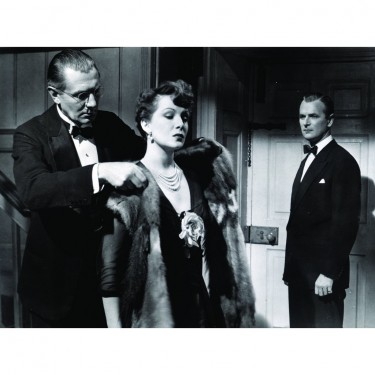
The above still from North West Frontier I feel really captures the style of Herbert Lom in this role as Van Liden in a thrilling railway escape through India.

His son Alec  said: “Like many actors, he never wanted to be pigeon-holed in a particular role and, after having played the role of East European gangster in many films, it was a delight to him later in his career to be cast by Pink Panther producer and director Blake Edwards in a comedy role opposite Peter Sellers, and he hugely enjoyed that move.

“He had many funny stories about the antics that he and Peter Sellers got up to on the set. It was a nightmare working with Peter because he was a terrible giggler and, between my father and Peter’s laughter, they ruined dozens and dozens of takes.” 

                                         —————————————-

Something I didn’t know was that in the early 1950s, Herbert Lom had a huge stage success as the King of Siam in the original London production of musical hit The King And I at the Theatre Royal Drury Lane opposite Valerie Hobson. It was the part that had been made famous by Yul Brynner on Broadway who also starred in the film version.

posted by Movieman in Uncategorized and have Comments (16)

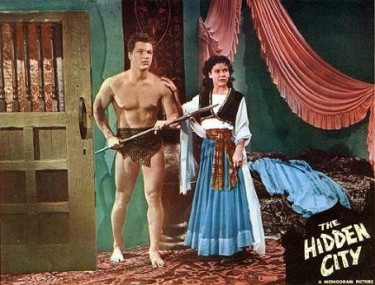
Bomba and the Hidden City – Johnny Sheffield

This is a real B movie. I saw it many years ago at the local Jubilee Cinema in the town – now no longer there – as a very young boy and seem to think there was a Bowery Boys film on with it.

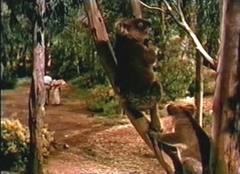
Johnny Sheffield had been cast as Boy in the Tarzan series with Johnny Weismuller but by the late 40s both were getting too old for their parts. Johnny Sheffield then accepted the part of Bomba The Jungle Boy in a series of 12 films- all made very much on the cheap by Monogram. They were mainly filmed on indoor studio sound stages and in and around  the eucalyptus trees of the Santa Anita Botanic Gardens in Los Angeles and possibly the director’s back garden !

                                      Bomba and The Hidden City


However  they appeared to be good fun and juvenile audiences liked them – that’s probably why so many were made.

After the Bomba series ended he tried to get a TV show called Bantu the Zebra Boy going – indeed a pilot episode was made but it failed to catch the TV people’s interest so he left acting and set up in property and apparently did quite well to such an extent that for some time he lived in Pacific Palisades but died in Chula Vista Southern California.


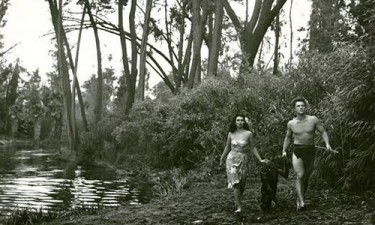
The film is African Treasure 1952

Lauretta Luez and Johnny Sheffield


Johnny Sheffield’s death in October 2010 at the age of 79 came after he had fallen out of a tree he was trimming which resulted in him having  a fatal heart attack about four hours later  – ironic really for a man who had made a long career swinging through the treetops.

B Movies were an essential part of cinema life through the forties before fading out in the mid fifties. They were usually made for between 70 and 80,000 dollars and the aim was to bring in a profit of say 10,000 dollars. Sometimes they did hit the jackpot though.


They relied on studio bound sets and stock footage from newsreel and older films.

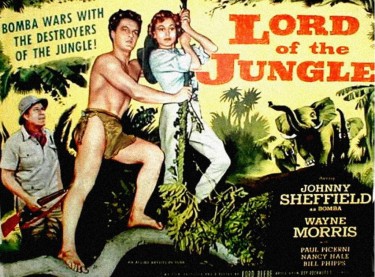
Lord of the Jungle from 1955 was in fact the very last of the 12 films in the Bomba series – after this one Johnny Sheffield never made another film.

Johnny Weissmuller

Needs no introduction at all to film fans of all ages and Johnny Sheffield played alongside him in many of the great Tarzan films of the forties – partcularly the MGM ones. When Weissmuller died Johnny Sheffield said of him:

 “I can only say that working with Big John was one of the highlights of my life. He was a Star (with a capital “S”) and he gave off a special light and some of that light got into me. Knowing and being with Johnny Weissmuller during my formative years had a lasting influence on my life.”

For his contribution to the motion picture industry,  Johnny Weissmuller has a star on the Hollywood Walk of Fame  at 6541 Hollywood Boulevard in Hollywood – and so he should have !

Lord of the Jungle from 1955 with Wayne Morris.

Wayne Morris played the villain in this although apparently he does not appear that much in it.   He does however share star billing with Johnny Sheffield which was understandable because he was a well know movie actor.

Wayne Morris had developed quite a good movie career before the war.

However he had become interested in flying in 1940 and became a pilot. He joined the Naval Reserve and became a Navy flier in 1942  leaving his film career behind for the duration of the war.      Morris shot down seven Japanese planes and contributed to the sinking of five ships. He was awarded four DFCs  and two Air Medals

Following the war, Morris returned to films, but his nearly four-year absence had cost him his career.  He continued to act in movies, but the pictures generally were not of the best quality and in the early fifties he was playing in mediocre westerns.

He did come over to England in 1955 to make Cross Channel and The Gelignite Gang – which gets a very good review.

He had become overweight and was a heavy smoker

He had started a TV career in Westerns but this was was cut short when he died unexpectedly of a heart attack at the age of 45 on September 14, 1959.     Morris had been a guest of his World War II commander and was watching aerial maneuvers on an aircraft carrier when he died.

posted by Movieman in Uncategorized and have Comments (12)

The War of the Worlds 1953 – Gene Barry

I hadn’t realised until quite recently that George Pal originally wanted the last third of the film in 3D but this was abandoned probably due to cost.   It would have been great in 3D though and of course it’s release coincided with a great many 3D films being around.   Directing the film was Byron Haskin – great film director !!
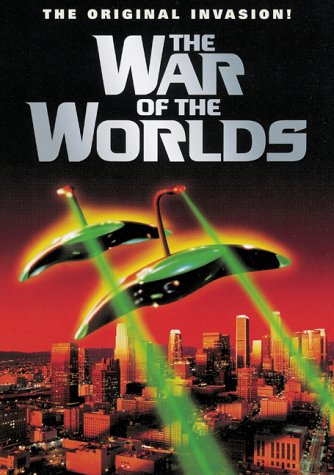
Gene Barry was really good in the leading role here – many of us will remember him from the later TV series we had from the USA ‘Burkes Law’ which was very popular here in the UK – in fact apart from Burkes Law and The War of the Worlds I can’t think of any other picture he was in off the top of my head.

 A lobby card showing the final minutes of the film where sheltered in a church they prepare for the end – not knowing that the smallest living beings on this earth would save them and the world.

Even by todays standards  this is classic,  and an almost perfect  masterpiece.    Brilliant design work on the alien ships, incredible sound effects, and sharp, vivid colours are in evidence here.    Director Byron Haskin’s pacing of the  film is tight and he draws out a masterful performance from Gene Barry as a scientist in  awe of the alien’s capabilities.     The realism of the story telling is unrivalled in most modern science fiction films.

Maybe it’s not true to H.G.Wells’ original story but so what – this is a great film..

GENE BARRY

Gene Barry was born Eugene Klass on June 14 1919 in New York City.

A radio contract led to a prewar stint as a vocalist with Teddy Powell’s band during which he was spotted by the producer Max Reinhardt, who cast him as The Bat in the Broadway show Rosalinda. Two years later he went into The Merry Widow.

In 1944 Barry found himself unemployed but in 1951 his luck changed when  Paramount offered him a film contract.

They put him first in  The Atomic City and  then came this one War Of The Worlds  BELOW

This was followed by  Soldier of Fortune (1955), with Clark Gable, and in 1957 he was twice used by Samuel Fuller, in China Gate and Forty Guns.

Gene Barry made TWO films  in the 1960s – Maroc 7 in 1967 and Subterfuge with Joan Collins two years later – but they were judged to be dire.

He was however  nominated for a Tony award for his portrayal of Georges in the 1983 Broadway production of La Cage aux Folles, the magnificent farce about a homosexual couple in St Tropez.

When not acting, Barry performed a cabaret turn in which he sang, danced and told jokes. He was frequently seen on British television in ITV’s Sunday Night at the London Palladium and starred at The Talk of the Town in the 1960s and 1970s.

Gene Barry travelled everywhere in a Rolls-Royce Silver Cloud and dressed to suit this image.  His home was a colonial-style Hollywood mansion complete with enormous swimming pool.

Gene Barry died  on December 9th 2009 at the age of 90 of congestive heart failure at Sunrise Assisted Living in Woodland Hills, California but had lived at his home  in Beverly Hills until about a year before.

BYRON HASKIN – Director.Oregon.

We have featured Byron Haskin as a film director before on this Blog – and I make no aplogies for that !   – On Treasure Island and His Majesty O’Keefe

He is remembered today for directing 1953’s  The War of the Worlds one of many films where he teamed with producer George Pal.    In his early career he was a special effects artist for which he earned Three Oscar nominations but later in the1940s he turned to directing and came to England to make  Treasure Island for Walt Disney at Denham Film Studios – He did a superb job on it too.   Another he directed was The Naked Jungle with Charlton Heston and with him at the climax of the film were  millions of ants.

ANN ROBINSON.

She played the female lead in this film BUT I have to say that I don’t know anything much about her. However here are some snippets I have discovered.

Ann Robinson grew up close to the Hollywood film studios,  acted in a few  school plays and then later fibbed her way into the movie business as a stunt woman.   She became part of Paramount’s golden circle of new stars in the early 1950s  but War of the Worlds was her only starring role up to that time.   In 1957, she ran off to Mexico to marry a famous matador Jaime Bravo  (“and blew my career right out of the water”).  They had two sons.

Since 1987 Ann Robinson has been married to real estate broker Joseph Valdez.

She is a fixture at sci-fi conventions and autograph shows mainly on the back of this film.

———————————————————————————————————————————————————-

I just wonder what H.G. Wells would have made of this film – I rather think and hope – that he would have liked it


posted by Movieman in Uncategorized and have Comments (13)

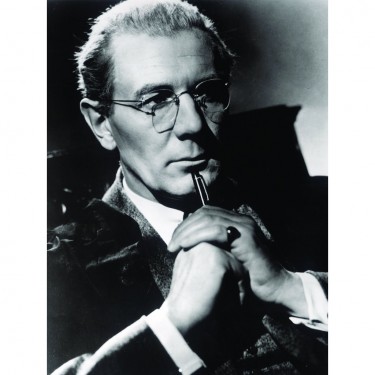
The Browning Version 1951 – Michael Redgrave

 This is one of my all time favourite films with Michael Redgrave giving a wonderfully moving  performance as schoolmaster Andrew Crocker-Harris – from the Terence Rattigan play.

It is a touching story of how the confidence of an elderly and unsuccessful schoolmaster  Andrew Crocker-Harris is restored through affection of one of his pupils and the friendly advice of other teachers.  This is regarded with some justification as Terence Rattigan’s best serious achievement in the theatre, and this film adaptation manages the transition to the screen very well.

The Film is, quite rightly, dominated by Redgrave’s brilliant performance as the prim, ailing, seemingly unlikeable schoolmaster, a beautifully written part,   played with technical mastery and finely controlled feeling.


Michael Redgrave is completely and touchingly convincing as the pathetically unsuccessful and cruelly treated schoolmaster – a memorable figure and a memorable piece of acting.      Jean Kent is alarmingly credible also as his wife, selfish, snobbish and repulsively possessive – this is not giving her any redeeming features at all – however in the dialogue Crocker Harris justifies his wife’s behaviour and says that when they married they had both required a different form of love from each other and as the years went by he had hoped that they would  grow closer but in fact those differences had become magnified and had torn them apart.   

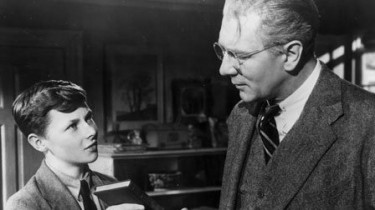
 Jean Kent didn’t get many parts in her career as good as this one.        Nigel Patrick is the wife’s repentant lover and Wilfrid Hyde White plays the unctuously amiable Headmaster.         Brian Smith plays Taplow the schoolboy whose gift of the Browning Version of the Agamemnon deeply touches Crocker-Harris.

Above:   Taplow gives a copy of the Browning Version of the  Agamemnon  to  Crocker-Harris.

Interesting to see that Terence Rattigan actually wrote the screenplay for the film adapting it from the stage version.

It was made in 1951 and Directed by Anthony Asquith.   I do remember Robert Morley saying that Asquith was always referred to as  ‘Puffin’ – he didn’t know why though BUT he did say that he always directed his films dressed in a Boiler Suit.       His greatest films were  Pygmalion, The Way to the Stars, The Winslow Boy, The Browning Version, and The Importance of Being Earnest –  although there were many more.      The Winslow Boy made in 1948 was, of course, from another Terence Rattigan play.

The Browning Version was shot at Pinewood Film Studios and the school exteriors were filmed on location at Sherborne School  in Dorset.

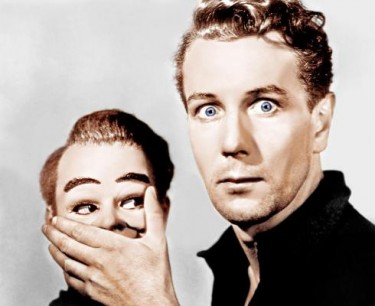
Dead of Night – couldnt resist putting this film still in – this shows Michael Redgrave in a segment of the film Dead of Night – and I have to say that this story about the ventriloquist is probably the most frightening I have ever seen.


posted by Movieman in Uncategorized and have Comments (11)

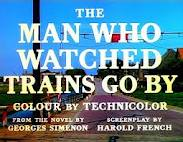
The Man Who Watched Trains Go By – who remembers this one ?

I don’t know why but I quite often think of this film title – particularly when crossing a rail line or even on a train journey.   Funny because I have never seen the film – and it is NOT widely known these days.

Maybe it is just the that title intrigues me. Who knows.

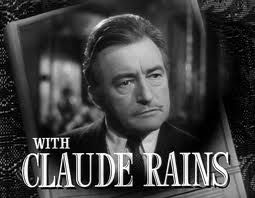
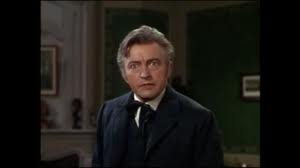
This is a rarity, an obscure colour film starring Claude Rains late in his career – he was 63 when it was made.           He plays a quiet and respectable Chief Clerk of a Dutch manufacturing firm which is owned by Herbert Lom and his aged father.     Unknown to everyone, Lom has been obsessed for some time by a scheming and criminal Parisian prostitute  played  by Marta Toren.     He has looted the company of all of its cash and left it a bankrupt shell  prior to running off to Paris to a new life with his beloved.

This is discovered at the last minute by Rains, who has sunk his entire family’s savings in the company, and hence lost everything.   Rains snaps and turns on Lom, pushing him into a canal in a rage, where Lom drowns. Rains takes Lom’s suitcase containing all the company’s remaining cash and runs off to Paris, which he has always wanted to visit. He has been a train-spotter all his life, and for years has been noting the passage of the Paris Express.    Now at last he is on it.

Marius Goring is a Dutch policeman who suspects Lom, and now trails Rains. When he arrives in Paris,   Rains wants to find Marta Toren and he asks directions of a young prostitute in the street  played by the 20 year-old Anouk Aimée.      Eventually, Rains meets up with Toren, who at first laughs at him as a ridiculous old man and throws him out. Her attitude towards him changes however when she realizes he has Lom’s money.   Things go from bad to worse  as Rains sinks deeper and deeper into delusion and intrigue. 

The film is only mildly interesting, but the performance of Claude Rains is masterful, and truly makes something out of nothing.

Admirers of Claude Rains will like watching this.

Rains served in World War One  in the London Scottish Regiment with  fellow actors Basil Rathbone, Ronald Colman  and Herbert Marshall.   He was involved in a gas attack that left him nearly blind in one eye for the rest of his life. However, the war did aid his social advancement and, by its end, he had risen to the rank of Captain.


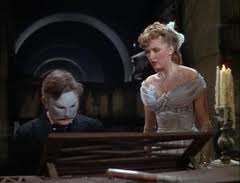
From his glitteringly successful film career I can think back to a colour version of The Pahntom of The Opera 1943 – before I could remember BUT sometimes seen on TV.

Very Good Version too.

posted by Movieman in Uncategorized and have Comments (12)

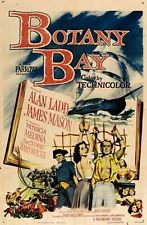
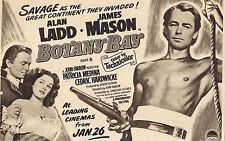
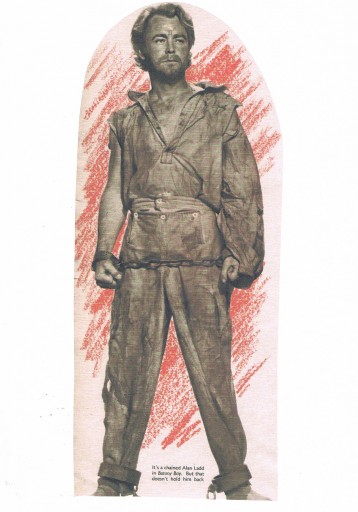
Alan Ladd – Botany Bay

When it comes to Film Stars then there aren’t many who could rival this man who  fits the title Movie Star  perfectly.     Alan Ladd was a major film star throughout the forties and the fifties – indeed it is early in the 50s that he had , maybe, his greatest role in the Western ‘Shane’ – one that will certainly be featured on this Blog in the future.

This film Botany Bay was made some time after  Shane but was released around the same time but it  did not have the budget it deserved possibly because Alan Ladd’s contract at Paramount was coming to an end – something that quite honestly amazes me because Shane had been such a massive Box Office hit grossing some $20 million dollars.   Normally Hollywood would hold on to a star of such financial clout. That does baffle me as I say –  but it does seem that Alan and his agent wife Sue Carol made a decision to move to Warner Brothers – and I think that was the real point here.


Having said that Botany Bay is not a bad film and it certainly did give American audiences some idea about the founding of Australia as a haven for convict prisoners.

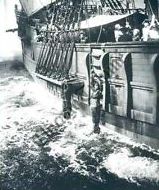
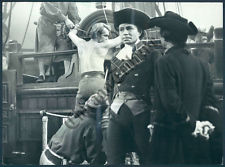
Alan Ladd is Keel-Hauled AND Flogged by sadistic captain James Mason – See Below.

Among the prisoners of a convict ship heading for Botany Bay in 1787  is Hugh Tallant (Alan Ladd) an American Medical Student wrongly convicted of being a highwayman.His repeated efforts to escape arouse the hosility of Captain Gilbert (James Mason).  On the long voyage brutal treatment is meted out to many of the prisoners and Alan Ladd is lashed and keel-hauled but survives.     An attractive girl on board Sally Monroe (Patricia Medina) takes the eye of the captain and also Tallant.

On their arrival in Australia the Governor Cedric Hardwicke sympathises with Hugh Tallant.     Captain Gilbert tries to trick and frame him though but an attack by aborigines sees the violent end of the Captain.  There then follows an outbreak of the plague which Tallant copes well with earning a pardon and leaving him free to live happily ever after with Patricia Medina.

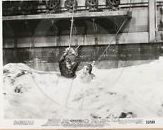
Patricia Medina is the  lovely girl that Alan  Ladd wins in the end.

There were some brilliant studio sets including this one  above – the very last shot of the film (showing a Happy Ending )

James Mason talked about the film much later in 1974 and said of Alan Ladd:

‘Having been fascinated by the Alan Ladd phenomenon, I had now the opportunity to study it at close quarters. It turned out that he had the exquisite coordination and rythm of an athlete and it was interesting to watch him play out his scenes’

Not a bad film  but not the greatest of send offs for one of Paramount’s biggest stars.


posted by Movieman in Uncategorized and have Comments (9)

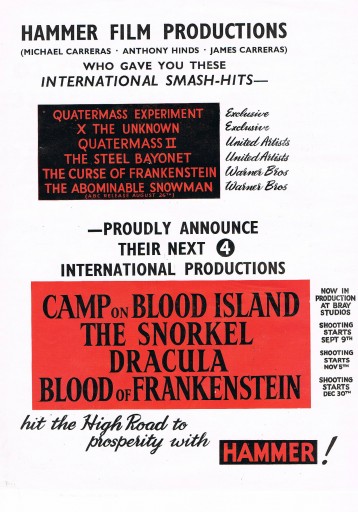
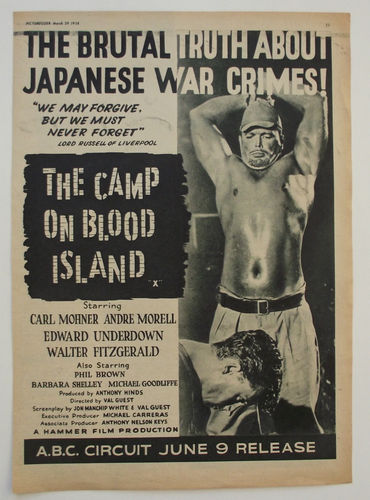
Hammer Film Releases 1957

From To-Days Cinema Magazine of 8th August 1957 – this advertisement for the Film Distributors shows what would be coming up in the near future.

The Curse of Frankenstein was a big one for Hammer and went incredibly well here and in the USA which was a market that needed cracked by the British Film Companies if they could.

Hammer Films was really a very good studio – not just for horror movies but also for war ones. Remember Val Guest’s films such as CAMP ON BLOOD ISLAND and YESTERDAY’S ENEMY. These films were very tense, well paced, sharply shot, with very deep characters. 

I don’t know much about The Steel Bayonet but have found out that it is the story of a group of British soldiers, during WW2, in Tunisia, who get orders to hold a position, in the middle of the desert, in order to prevent Afrika Korps advancing.

The Abominable Snowman was also a good one but I think in Black and White and I reckon Forrest Tucker was in that with Peter Cushing.

The Snorkel Poster

The Snorkel is directed by Guy Green who had early in the fifties been the colour camera expert on The Story of Robin Hood for Disney. The film stars Peter van Eyck, Betta St. John, Mandy Miller, Gregoire Aslan & William Franklyn.

 The story has us witness the perfect murder of a wife and mother, and we know who perpetrated it as well, it’s the husband! There’s a gimmick, the snorkel of the title, and film’s success mostly hinges on a devilish twist for the finale. In between the plot revolves around the daughter of the deceased, Candy – Mandy Miller, trying to prove her stepfather has killed her mother even though it appears near impossible for him to have done it. Stepfather has plans for Candy as well.

You will remember Many Miller for films BUT I featured her earlier in Adventures in the Hopfields – which is good.  I don’t remember this film at all – BUT it does sound good.

The Camp on Blood Island I well remember and when I see the picture above it  shows just how horrifying an ordeal it must have been  for those servicemen who were taken prisoner by the Japanese during the Second World War. It stars one of my favourite actors Andre Morell.   Also cast is Edward Underdown – who much later was in Dads Army very odd times – and also Hammer stalwart Barbara Shelley. I will return to this film in a ater post I am sure !


posted by Movieman in Uncategorized and have Comments (8)

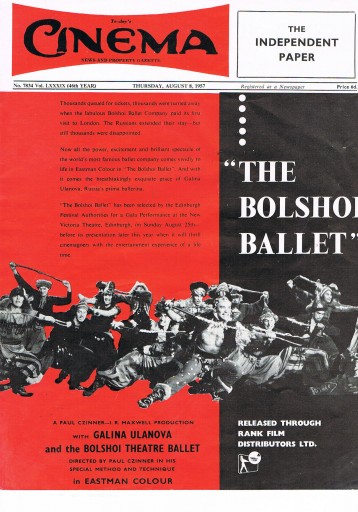
The Bolshoi Ballet 1957 – Who saw this one ?

I remember as a young lad being taken by the local Grammar School to see this film and coming across this old magazine reminded me of the film and that occasion. All the class and more were effectively marched down to the centre of town to the old Majestic Cinema I think – in fact I am pretty sure it was. This sort of culture didn’t exactly excite us at the age we were but I do remember the film was in colour AND Cinemascope I think – but if not certainly wide screen. During the years at the Grammar School, we went to the cinema to see The Conquest of Everest,  Richard III  and  The Bolshoi Ballet. An unusual selection BUT a good one at that and very varied.

Below I have found a comment from someone who must have really known about the film’s quality – as I wish we had at the time. The Director of the film was Paul Czinner.

Czinner’s film records performances by Galina Ulanova and the Bolshoi Ballet in England in 1956. Ulanova’s Giselle is the greatest ever recorded, and this film is precious. Czinner filmed with multiple cameras one act of “Giselle” each night at Covent Garden after the regular performance. Ulanova was considered the greatest Giselle of her time, and this film shows why. She was at the end of her performing career, but her dancing is brilliant (though mostly not virtuosic) and heartbreaking. This film is of inestimable value.

                                              —————————————-

I did pose the question in the title to this item – Who saw this one ?   So if anyone did see this at the time then please make a comment which would be very welcome.  Thanks.

posted by Movieman in Uncategorized and have Comments (9)

The Miniver Story 1950

This one just scrapes into the fifties as it was released quite early in 1950. The film although treated to MGM s expensive production values somehow did not appeal to the public as Mrs Miniver had done a few years before. Maybe fashions had changed and also it was no longer wartime and maybe people wanted something else from a film. It wasn’t a bad film although it is some years since I saw it.

This film was made in England by MGM

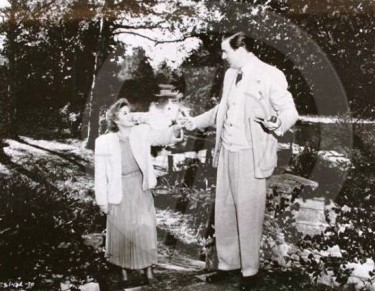
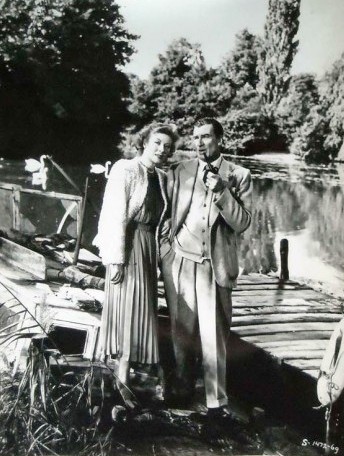
 The pictures  below show Walter Pidgeon and Greer Garson posing for publicity stills – I wish I knew where that was – does anyone know ?  MGM were at Boreham Wood at the time and previously had used Denham Studios – my own favourite – and I reckon these shots are on the lake at the back of Denham Studios where Treasure Island and Mr Polly were filmed.

 Film Publicity Stills below  –   at Denham ??

This film was released late 1950 

Greer Garson reprises her award-winning performance as Kay Miniver in this sequel to the wartime hit MRS. MINIVER. World War II has ended and like most families in England, the Minivers are trying to rebuild their lives. Mr. Miniver (Walter Pidgeon) wants to start over in Brazil. Son Toby (William Fox) wants to jitterbug in America. Daughter Judy (Cathy O’Donnell) is in love with a married officer. And, Mrs. Miniver (Greer Garson) is struggling with her own deep, dark secret that threatens to destroy the entire family. Kay has learned that she has terminal cancer, but with the family finally reunited in London after a lengthy separation, she does not feel it’s the time to reveal this sad news. Instead, the selfless Kay, knowing the end is near, decides to make sure that her loved ones will be well taken care of after her death. H.C. Potter directs and manages to keep the story sympathetic without falling prey to melodrama.

Interestingly in the storyline no mention is ever made of the eldest Miniver son, Vincent, who appeared in the earlier film, possibly because Greer Garson and Richard Ney (the actor who portrayed him) had been married and divorced (1943–1947) by the time The Miniver Story was produced in 1950.

Another character in the film was Peter Finch, then largely unknown and in fact he remained that way largely until he portrayed The Sheriff of Nottingham in Walt Disney’s The Story of Robin Hood – made at Denham – in fact the very last film to be made there.   In that film  he seemed to catch the eye of producers and from then on went  from strength to strength.

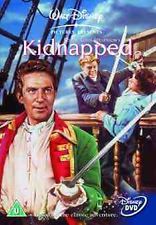
Above is Peter Finch in a much later Disney film ‘Kidnapped’ as Alan Breck Stuart

Leo Genn had a leading role. He later played in Moby Dock I remember.

Interestingly an early role went to actor  William Fox as the son  – later to become much better known as James Fox who has had a prolific career in films, TV and theatre.


posted by Movieman in Uncategorized and have Comments (12)

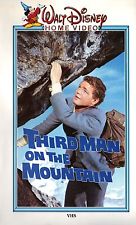
Third Man on the Mountain – Disney 1959

This is described as the best film about mountaineering ever made.    That is quite a boast but anyone seeing this movie might well agree with that comment.


Ken Annakin directed what was his third film for Walt Disney – and what a good one it was.

 For anyone who’s ever or who’s NEVER climbed a mountain (like me)this movie is a real treat.
James MacArthur  plays Rudy Matt, the son of the famous mountain climber Joseph Matt who tragically lost his life while climbing the famed Citadel mountain. Rudy’s father sacrificed his own life to save the climber that he was responsible for as his guide.

Janet Munro could melt any mans heart. She is sweet, full of fun and very beautiful. What a shame for her to die so young.   In this film she was a ball of energy.  It’s easy to realize why Walt Disney saw so much in her.

Michael Rennie was cast as the famous climber captain Winter who helps Rudy with his support when his uncle, played by James Donald, does not want him to be a guide and meet with the same fate as his father.

Laurence Naismith as always gives a great performance as Teo; the older friend and climber of Rudy’s father who was there when he died. Teo’s bark is worse than his bite and his warmth and love for both Lizbeth and Rudy is seen in many ways.

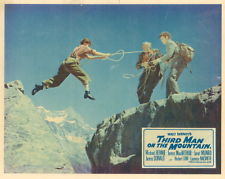
Herbert Lom also had a leading part in the film but on location he proved a bit of a pain because as Ken Annakin says, he would not do any dangerous shots on the mountain without scaffolding and he did not like the heights at all with the effect that  filming was held up  a number of times while safety elements were put in place.  However despite these difficulties with him,  the film was completed.    Herbert Lom turned to Ken and said  that although he would not risk himself  that he was after all  an actor and he assured Ken that what he would get on the screen would be OK.   On seeing the completed film, Ken Annakin had to admit that the most convincing actor climing the Matterhorn was – you guessed it – Herbert Lom !!!

HERBERT LOM

Herbert Lom was born Herbert Karel Angelo Kuchacevič ze Schluderpacheru in Prague to upper-class parents Karl ze Schluderpacheru and his spouse Olga née Gottlieb who were members of Austrian nobility

Lom escaped to England  in January 1939 because of the impending Nazi occupation of the Czechoslovaki.   He made numerous appearances in British films throughout the 1940s, usually in villainous roles, although he later appeared in comedies as well.

In the Fifties he made a number of films including this one and the same year he was in North West Frontier – another one I like – set in India.

 Many of us will remember him as Dr.Roger Korda in the British television drama, The Human Jungle  (1963–64) as a Harley Street psychiatrist and this was very good and is frequently talked about even today.

                              ———————————————————

Back to First Man on the Mountain –

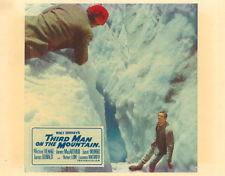
The acting is amazing, the cinematography is breathtaking.    The filming was on location in Zermatt Switzerland where the 14,000 foot Matterhorn stands.

PETER ELLENSHAW

However one thing must be said about the terrifying shots achieved on screen because much of the really scary stuff was actually painted in later by Matte Genius of the World – Peter Ellenshaw who had worked for Disney on Robin Hood, Sword and the Rose, Rob Roy, 20,000 Leagues etc etc and many of the breathtaking scenes in any of these films were the work of Peter –  BUT so good was he with this special craft that most of the audience wouldn’t know that for instance – when you see a castle on a hill with the action below – the castle itself was matte painted onto glass in front of the camera and fitted exactly to the picture on screen. This was done to great effect on this film. Walt Disney wrapped up filming in Switzerland and turned to Ken Annakin and said ‘ Peter will be able to paint in the scary down shots far better than we can get’ and as Ken says ‘ Walt was right to such an extent that some of the audience at a preview of the film left the cinema with vertigo after seeing the sheer cliff faces and the drops below –  although none of them were aware that a master craftsman had in fact painted them in.

So just remember that when anyone says that ‘it was filmed in Switzerland on location with great effects’ that you are being visually tricked – and you would never know.

It still remains one of the most beautiful climbing films of all time thanks in a great part to Peter Ellenshaw. His work in Mary Poppins and Darby O Gill are outstanding – in fact Darby O Gill and the Little People is rated by many film experts as being one of the outstanding special effects films of all time. I have done a post on it earlier

If you are a fan of Walt Disney, this is a must see film.
This is the way movies should be made. It’s sad Hollywood does not do it like this anymore.

posted by Movieman in Uncategorized and have Comments (9)