Kangaroo – Australian Western ?

Some films of whatever age seem to remain well known and popular and are quite often on TV.   However this is NOT one of those – it is not easy to find and at this time I have never seen it.

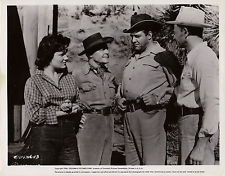
Filmed on location mainly in South Australia in 1950 -51,  which at that time would  be pretty remote – well it still is today come to that – and it was the first feature film in Technicolor produced by Hollywood in Australia,

It  is an interesting film though and released  in 1952
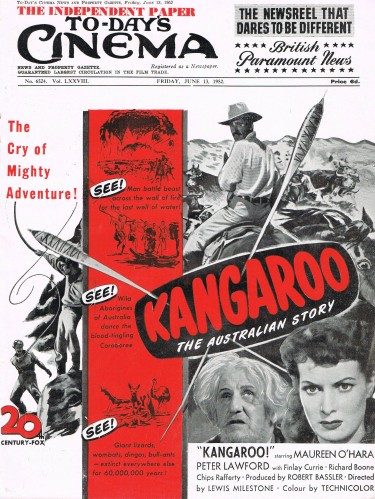
The cast has Peter Lawford, Maureen O’Hara, Chips Rafferty, Richard Boone and Finlay Currie so a veritable Whos Who of film actors .

The story line concerns  the fortunes of an Irish immigrant Finlay Currie and his daughter  Maureen O’Hara in rural Australia. This would have been a long trip for Maureen and  following this film  she travelled back to her native her native Ireland to make The Quiet Man with John Wayne – what a good film that was.

Richard Boone, of course,  plays  the bad guy and Peter Lawford  provides the romantic interest.

Aussie character actor, Chips Rafferty has a role on his home soil.

Lewis Milestone directs and the film is in Technicolor.
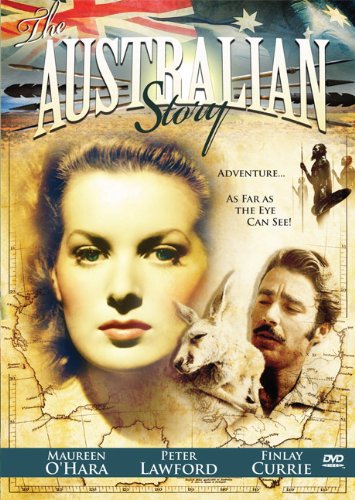
 

 The film was also known as The Australian Story.

 Maureen O’Hara actually fought to get into this film according to her memoirs and then regretted it.    She liked the original script as a straightforward Aussie western  but much of the story was rewritten by Lewis Milestone, the director.   To quote Maureen from her autobiography ‘It was the worst piece of rubbish I had ever read’.

Whilst she hated the film she loved Australia and the Australians who were very kind.  The same could not be said for Richard Boone and Peter Lawford who were horrible to her.  The two of them had been involved in a scandal up in Sydney not long after they arrived where the press had followed them to a brothel but this incident was kept very quiet after some negotiations.

Maureen states that most of the film was made in the outback near Port Augustus with the temperature most days around 105 degrees.  Apparently the scenes in the Australian outback are nicely done but at the end of the day  the film was described as ‘ just an average western set in the land down under’.

She got back to Hollywood in March of 1951 after 5 months of filming.    The next Hollywood production shot there was The Sundowners and while star Robert Mitchum had his problems with the Aussie press also, The Sundowners is a much better film than Kangaroo.

 Kangaroo  made  its debut before distinguished audiences at gala charity previews in Canberra, Sydney, Melbourne, Adelaide, Brisbane and Port Augusta (S.A.) . It had been  “Two Years in the Making”  so said the publicity machine.

 Filming Locations:- Buckaringa Gorge, Catninga, Flinders Ranges, Quorn, Sandy Creek, Port Augusta, Woolundunga Station, South Australia; Pagewood Studios, Sydney, The Rocks, New South Wales, Australia.

Just a thought on this – around the same time the British made a South African set picture called ‘Diamond City’ with David Farrar and a very young Diana Dors. 

DIAMOND CITY 1949 David Farrar UK QUAD POSTER        Much of the film was made in England in the studio but there was also quite a lot of location filming. I always remember that my Mother and Dad had bought me a jig saw puzzle for Christmas of Diamond City – that is something that is a lovely memory for me. I have never seen such a puzzle since. If anyone out there has one I would love to know. Thank You.
 

posted by Movieman in Uncategorized and have Comments (10)

Walt Disney

Any forum on films,  the film industry or Hollywood  would never be complete without mention of  Walt Disney.

Walt Disney strides like a colossus among the so called giants of the industry and occupies a position in film history that is  unique.

Starting out in the 20s he made his films and went out and marketed and promoted them so successfully that by the very early fifties his name was known the world over – a name that is synonymous with movies – and he had also developed a knowledge of every aspect of film making.  However what he also had was an uncanny feel and instinct for what his audience wanted.

I do think that England played in big part in the success of Disney because up until 1949 Walt had continued successfully to make animated features – and some classic ones at that – but the company seemed always to be financially stretched.   Things improved quite a lot when, after the war  he came to England and made his first live-action film Treasure Island – see earlier post – and followed this up with another even more successful one The Story of Robin Hood and His Merrie Men. Both of these were made at Denham Film Studios. Then came  The Sword and the Rose and Rob Roy.  Back in Hollywood he then made 20,000 Leauges Under The Sea and this proved a really big box office hit for Walt Disney.   It was those films he  made here in England though that coincided with the company becoming much more stable, effectively turning round its fortunes.  They were also very good films – well the first two anyway.

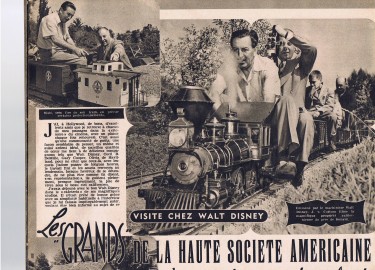
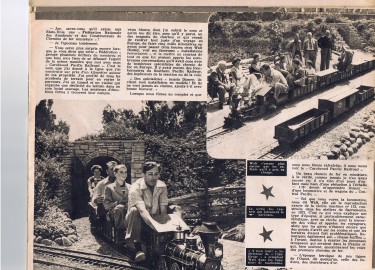
At his Hollywood home in the Holmby Hills Walt Disney had had built his very own model railway capable of taking passengers all round the large acreage and helping the gardeners he employed to make use of it too. The pictures I have are from a French magazine but I’m sorry to say that I am unable to offer a  translation – but the scenes tend to be self explanatory anyway. This would have been in the very early fifties.   Here again this interest started when he visited England in the summer of 1951 to oversee  the filming of  The Story of Robin Hood at Denham – the film was released in 1952.  He spent a lot of time on that visit at Beaconsfield working and helping with the model trains. I imagine that would have been at the delightful Bekonscot model village

Ken Annakin the Director on Robin Hood said ‘“I remember that he used to go off to a place very near Denham where we were shooting, he used to go off to Beaconsfield and spend hours with a guy who had the best model railway, I think in the world.”

One thing about him though , as Ken Annakin mentions,  is that he tended to leave them to get on with the filming and didn’t stay around too much at all in the studios so his presence would not be a distraction. However he did look at the so called ‘Rushes’ of the previous day’s filming to be sure it was what he – and more importantly his audience – wanted.

Fast forward a few years now after Ken Annakin had directed four films for Disney –  Robin Hood, The Sword and the Rose,  Third Man on the Mountain and Swiss Family Robinson – all very successful with Swiss Family Robinson being a real blockbuster in financial terms alone and he was then looking at a project with Ken Annakin to make a film centred on Sir Francis Drake and his exploits to be called ‘Westward Ho’.    With this in mind Walt and his wife Lilian had again travelled to England and Ken and his wife Pauline had invited them to their home in Onslow Square in central London for a dinner party one evening.

It had been  a very pleasant evening and they had been chatting about the film and Walt had been telling Pauline of his early efforts in cartoons. The film Westwood Ho was to be made the following year in California and Hawaii although nothing specific had been agreed.  The wine had flowed quite well also throughout the evening .

At around 11 o clock Walt’s limousine arrived to transport them back to their hotel.  They had all said their goodbyes but as Walt’s wife Lilian began descending the steps outside she teetered and fell, sprawling on the ground. Ken rushed to help pick her up but Walt took over quickly. Brusquely he pushed Ken aside and led her limping to the car.

As Walt waved them away and closed the door, Pauline turned to Ken and said ‘You’ll never work for Walt again’.   ‘Don’t be ridiculious’  Ken said ‘ We’ve practically made a deal on ‘Westward Ho’.

She shook her head. ‘ I know Walt, he’ll never  forgive you for witnessing that!’

Although it seemed absurd. she was proved right.  Ken said that ‘to his sorrow I never did work for Walt again.’

Nor did Walt Disney ever make a movie out of Westward Ho


posted by Movieman in Uncategorized and have Comments (7)

What Was Happening at our Film Studios 1950 ?

This  Post is hopefully to underline just how much interest there was in films during the 50s – as I am sure we all know anyway. This was reflected in the number and type of magazines around at the time.

For instance The Cinem Studio was a weekly publication although To-Days Cinema – Can you believe it – was published DAILY !!!

Picturegoer and Picture Show were  popular aimed very much at the general public, whetting their appetites for the New Releases.

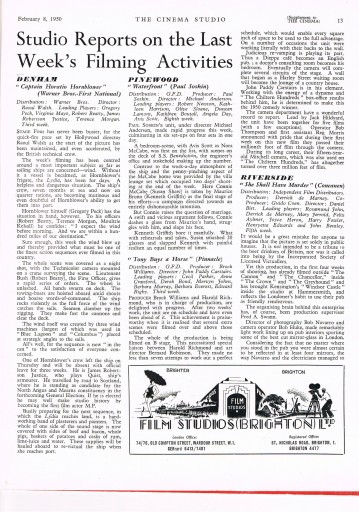
I do like The Cinema Studio magazine and below is an extract from the page that deals with the films being made at our very own British Film Studios.

At Denham we had Gregory Peck and Virginia Mayo filming Captain Horation Hornblower – not one of my favourites by any means – but colourful and action packed.   Don’t think I was a Gregory Peck fan really and I didn’t think he was well cast at all in a later British made film ‘Moby Dick’ made I think at Elstree.   In an article in the same publication we learn that  the Hornblower film now at Denham was being transferred to Elstree.   That seems very odd.

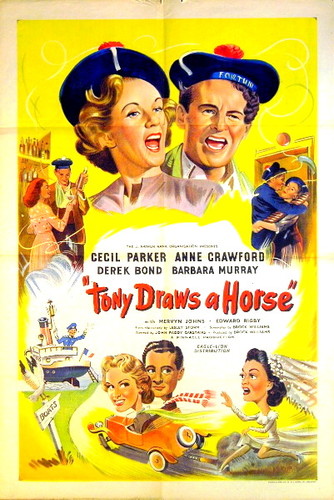
Also there is a film being made called ‘Tony Buys a Horse’ – a typical British comedy. I am trying to buy a DVD of the film at the moment and I am pretty sure that the name of the film on release was changed to ‘Tony Draws a Horse’.   It was a comedy starring Cecil Parker and Anne Crawford.  

Just up the road from Denham ‘Waterfront’ was in production at Pinewood with Robert Newton and directed by Michael Anderson who went on the better things with such films as The Dam Busters.  Don’t know anything much about this one though.

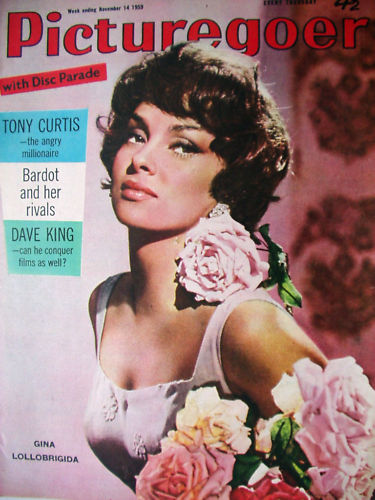
Picturegoer Magazine in the late fifties

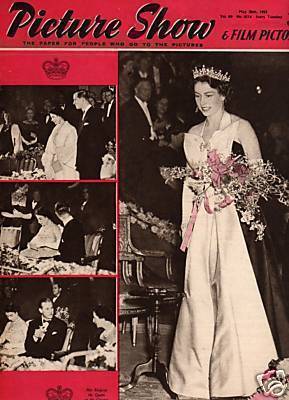
Picture Show Magazine – Looks like a Royal Premier issue.


posted by Movieman in Uncategorized and have Comments (3)

Kodak and Ilford Films

Dont know why I picked these two items but I have.

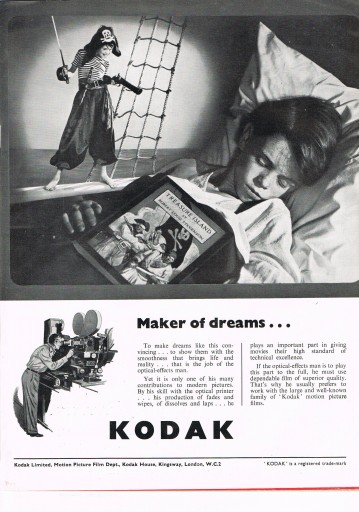
The Kodak advertisment comes from a publication called The Studio Review of 1950 and obviously seeks to capitalise on the release of Walt Disney’s Treasure Island – as a child one of my first memories of the cinema.

Walt Disney was a proclaimed master at promoting a film in the lead up to its release and afterwards too – as  anyone who was around at the time of Davy Crockett King of the Wild Frontier will know.   I bet most could still sing  the song from the film although they would by now have discarded the Davy Crockett hats which we all wore at the time.

The first post I did in July of this year featured Treasure Island – well I had to start off somewhere and in terms of 50s films it wasn’t a bad place to start. The boy in the picture does look a bit like Bobby Driscoll, who played  Jim Hawkins but Jim Hawkins but its not him.

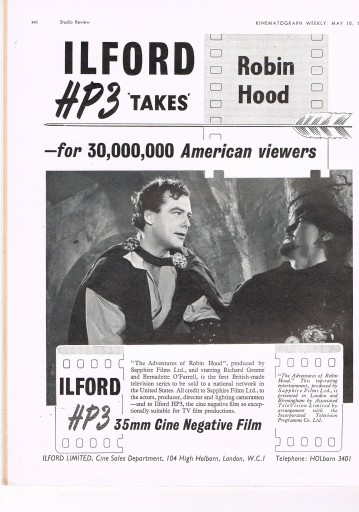
We then jump a few years to May 10th 1956 by which time TV was in full swing and one of the most memorable series EVER made was The Adventures of Robin Hood with Richard Greene.

Made by Sapphire Films it became a great success in the USA.

Who could forget that thrilling opening sequence as the arrow thuds into an oak tree with rousing music accompanying it, so  setting the scene for the excitement of the next half hour. It’s funny how little things lodge in the memory because I do remember one of the episodes called  ‘The Goldmaker’ which had Alfie Bass playing that  part,  an actor we all think of as Bootsie from The Army Game and later ‘Bootsie and Snudge’.  He also had a small part in a film from the fifties that fascinates me called ‘ ‘The Night My Number Came Up’ about a dream of impending doom that becomes a self fulfiiling prophecy on a military transport plane in the far east. I will save that one for another day though.


I do recall the slogan ‘Ilford Films for Faces and Places’ at the time and I have to say that based on the above it would seem that Ilford came out on top here although it’s fair to say it was published some 5  years after the Kodak one.

In a way it just shows how the world moves on even in a few short years.


posted by Movieman in Uncategorized and have Comments (9)

Not Quite JAWS – but Victor Mature in THE SHARKFIGHTERS 1956


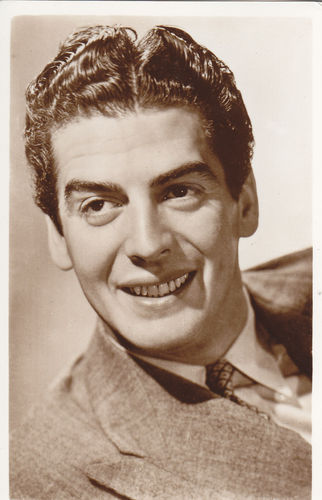
 Victor Mature was my dad s favourite actor – dont know why but he liked him particularly in The Robe I remember.

He was terrific as Samson in Samson and Delilah and this seemed to set him off into Biblical epics that became popular in the early to mid fifties.

The Robe was followed by Demetrius and the Gladiators and The Egyptian – all of them pretty good.

Mature was famously self-deprecatory about his acting skills. Once, after being rejected for membership in a country club because he was an actor, he joked, “I’m not an actor — and I’ve got sixty-four films to prove it!”  

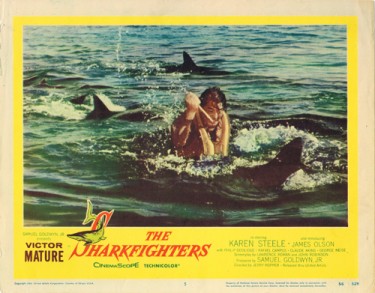
 As regards The Sharkfighters it is not a film I have ever seen to be honest but I did always remember it and it seemed to me to underline the importance of timing as in almost any walk of life because this was a kind of ‘Jaws’ film although I wouldnt think anywhere near as good BUT the concept and fear in the film did not at that time gel with the public as it was to do 20 years later. The film was not successful – although I reckon it would have had a meagre budget compared to the Spielberg Blockbuster.

Victor Mature had also impressed as Doc Holliday in My Darling Clementine in 1946 for John Ford and then on to The Las Vegas Story with Jane Russell – a film I remember from TV,  years after it was made.

He also came to England – as many of stars of the day did – and made so-called epics such as Zarak and The Bandit of Zhobe but also a more limited budget type fim called The Long Haul about lorry drivers. 

I have a friend in the haulage business who, whilst not a film fan at all, often talks of The Long Haul because of the trucks on view ( of their time) and it is something of a curio to him.  It also featured Diana Dors who was always good. She was an underrated actress really .

His career was very varied.     In 1952 he starred opposite Esther Williams in ‘Million Dollar Mermaid’ and she has something to say about him in her colourful autobiography ( which to me seems to stretch believability to the extreme )  and then on to ‘Androcles and the Lion’ opposite Jean Simmons and Robert Newton. This was from the George Bernard Shaw play.

Back to The Sharkfighters – I chuckled at one comment on the Movie Data Base forum which went as follows:-

Victor Mature spends more time drinking beer than fighting sharks in this shamefully bad film about a U.S. military shark-fighting operation in Cuba. It looks like it was shot with only camera (which has a hard time staying in focus). The film was probably just an excuse to take a vacation in Cuba.

Mind you another of the comments gave it quite a good review – but this one made me laugh !!

He did return to the screen after five years of of retirement  and was lured back  by the prospect of parodying himself in the Peter Sellers film ‘After The Fox’ .   He gave a brilliant performance in this. 

Mature was always a self-effacing star and  had no delusions about his own work.

He was married five times so not very successful in that area of life but overall he was very likeable and very good at his job.

 I have to say,  generally speaking, I like to watch a   VICTOR MATURE FILM.

He fitted the role perfectly as A FILM STAR  !!!


posted by Movieman in Uncategorized and have Comments (4)

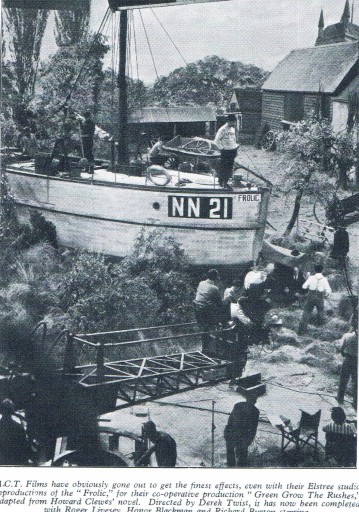
On a Film Set – Green Grow the Rushes 1951

I have always been fascinated by film studio sets and would love to have walked around one but never have.     This one below I came across quite by chance from a film I didn’t know at all – but I am now trying to buy the DVD – it sounds good.     This is a subject we will come back to time and again on this site as I find more pictures like this – Really good set I am sure you will agree.

This is a rare Very British comedy from 1951 and stars
Honor Blackman, Roger Livesey, Geoffrey Keen, Vida Hope, Frederick Leister, Richard Burton, John Salew, Colin Gordon.

Brief synopsis of the film:-

A group of enterprising smugglers make use of an ancient charter to smuggle brandy into the southern coast of England. When their ship is seized it looks like they are in trouble until the Customs Officers try & find out where the brandy went.

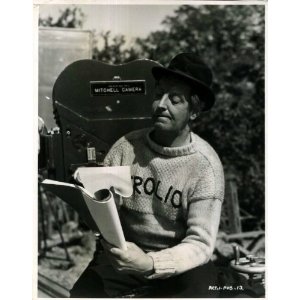
Roger Livesey looking very relaxed as he reads and maybe learns his next lines. This does look like a location shot.    Much of the filming was done around Romney Marsh in Kent – curiously not far from the village where Adventures in a Hopfield was filmed – see earlier post – and then the studio set was cut into this presumably.      Roger Livesey was in many of the really great British films of the forties – A Matter of Life and Death, Colonel Blimp and a favourite of mine ‘I Know Where I’m Going’  co starring Wendy Hiller.    All these from the wonderful team of Michael Powell and Emeric Pressburger

This was the last film that Richard Burton made in England before he went off to Hollywood.

Keep a look out for Arnold Ridley well before Dads Army of course and Colin Gordon a very busy and very good actor. Does anyone remember him doing that brilliant Tax Inspector part in Steptoe and Son ‘Live Now PAYE Later’ when investigating Albert’s tax claim for his wife – who had been dead for many years – he is plied with drink by the old man.   He gets well the worse for wear and his acting of this is superb.    Actually I think that was the last TV part he played before his death. 

 Colin was in countless Films and on TV and the stage even appearing on Broadway – so a seasoned actor and a very very good one at that.

posted by Movieman in Uncategorized and have Comments (8)

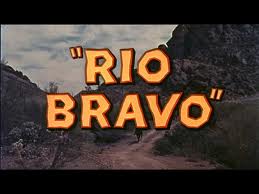
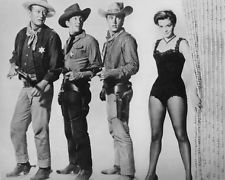
Rio Bravo 1959

From a very low key little known CHF film to a big budget Hollywood Western

RIO BRAVO

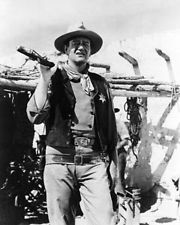
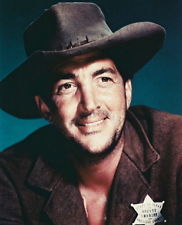
With John Wayne, Dean Martin and Ricky Nelson.

When we first saw this as young lads what an impression it made on us.   All action adventure in colour. What more could we have wanted- John Wayne and Dean Martin – and just for good measure the girl was Angie Dickinson looking  really lovely. Also cast was pop singer Ricky Nelson who even had time to sing – as did Dean of course.

The scene in the saloon when Dean Martin is ridiculed when he comes in chasing a gunman was memorable.  When he shoots the killer down from the attic  he is exonerated and so turns the tables on the taunting mob. Big John has by then arrived and helps him put the crowd in their place. Thrilling stuff.

Also we were able to see the old west as we thought it would have been – albeit a romanticised Hollywood version but to me that was all the better.

John Wayne excelled in this sort of role and he was great although he didn’t come anywhere near to the towering performance he gave as Ethan Edwards driven on for years in the hunt for his niece who had  been  kidnapped  by  Indians  in  that  fabulous  film ‘The Searchers’ which must come in to my own ‘top ten of all time’ films. Who could ever forget that final scene when he finds the girl (Natalie Wood).   A very moving and memorable scene indeed.

Dean Martin in the early fifties broke up from the successful film partnership with Jerry Lewis. At the time it was thought that Dean would be no good on his own. How wrong we all were !

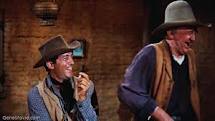
Here he is with Walter Brennan in another scene.

Ricky Nelson in contrast was not a film actor of any note. He was a recording singing star with Hits like Its Late and Never Be Anyone Else But You under his belt and it was maybe thought that he would help appeal to a younger set of fans. Maybe that was the case.

Angie Dickinson went on  TV fame with Police Woman in the 70s although even by this time she had already been in westerns such as ‘Run of the Arrow’ and   ‘Colt 45’ and in her long career she was seldom out of work and in both films and TV over decades.

Rio Bravo was a good film and a good western – not a great one – but as young lads viewing  this film in 1959 – who cares !!!


posted by Movieman in Uncategorized and have Comments (9)

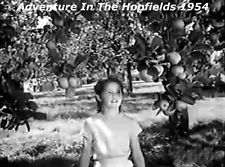
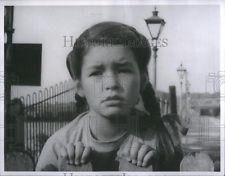
Adventures in the Hopfields 1954

This is a rare curio that I have just come across and the story of the films survival intrigued me. It had been assumed lost with no copies surviving until an American found one in some rubbish. It was later shown in the village where it had been filmed.

What a great Story !!!

‘Children’s Film Foundation’ released in  1954.

Stars of the film:

Mandy Miller, Melvyn Hayes, Harold Lang, Russell Waters, Mona Washbourne, Hilda Fenemore, Jane Asher and Anthony Valentine

An American film fan found a copy of this film which was thought to have been lost, in a rubbish skip outside a Chicago television studio. He sold it to a UK enthusiast who showed it for the first time in fifty years on 8 March 2002 in the village hall at Goudhurst, Kent where it had been originally filmed nearly 50 years before.


Beautiful movie from CFF, for what was just a low budget children’s film shown at Saturday Morning Pictures. 

Melvyn Hayes says that he was paid £24 a week for this film which was a good amount in those days. Mandy Miller had already been in a major British film ‘Mandy’ with Jack Hawkins and Phyllis Calvert and Jane Asher had one of her first roles as did Anthony Valentine. I bet they had loads of fun making this.

Interesting  that the Director was John Guillerman who went on to films such as The Blue Max and The Towering Inferno as well as a couple of Tarzan films in his career.

posted by Movieman in Uncategorized and have Comments (14)

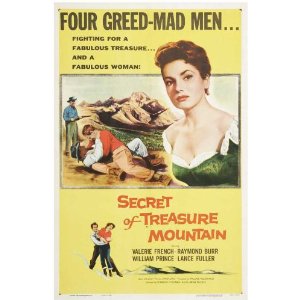
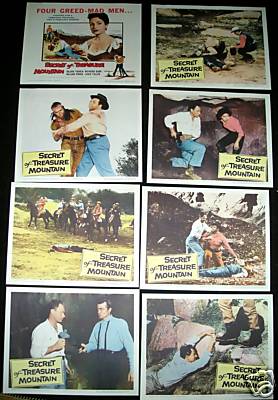
The Secret of Treasure Mountain 1956

PLEASE HELP with this film. I can’t seem to locate it either on film, VHS or DVD or anytime on television.

Is it a Lost Film  ?

I saw it as a young kid and it was probably a second feature as it is labelled a B Movie. Saw it at the Pavilion Cinema – like so many no longer there.

I have looked for it  for years and didnt know the name of the film but remembered something of the storyline. I had missed the ending at the cinema having to catch a bus home.  I had thought it centred around Inca treasure but just by chance I got a clue to the name.

A few Christmases ago I purchased a Glenn Ford film ‘Lust for Gold’ made in the late forties and sat down and watched it.  I then saw some of the same scenes as I had remembered for more than 50 years involving Indians firing arrows and attacking in a mountain terrain which was a very large and well prepared studio set. 

However even though the shots looked the same this was NOT the film I remembered – I knew that.

 I looked Lust for Gold  up and sure enough turned up the following:-

Extensive stock footage from 1949 film Lust for Gold with Glenn Ford,  is used to flesh out the Columbia potboiler Secret of Treasure Mountain….

 So this was the film and then on searching further found a storyline that I recognised:-

 The Apache Indians made three crosses of gold, which, when combined, will reveal the gold’s hiding place.  One of the crosses  is held by the people searching for the treasure and if they find all three crosses they will locate the horde.   Two men later become involved in a fight  and roll down an embankment. Their fall loosens some rocks and another cross is found.

 The two characters Audrey and Robert find some unusual rock formations,  and in a rock archway  Robert notices that his body casts a shadow across the rocky valley. Where the shadow is cast is where they need to be but then they are attacked by the Indians and the rest I do not know as I am still waiting after all these years to see the end !!!

Another synopsis from the Columbia film book states:-

Two Hundred Years after the Apache Indians killed a Spaniard – who buried gold on their land, then cursed the spot – a villain and his henchmen  attempt to find the gold. They fall victim to the curse and the treasure remains buried (65 mins.)

One other clue is that I seem to remember that the items that linked up for the treasure were called The Braganza Crosses’.  That is a 50 plus year old memory but I am pretty sure thats what the name was.

The film starred Raymond Burr – who the following year started his long stint as Perry Mason – Valerie French and William Prince and was a Columbia Pictures release in June 0f 1956. It was in Black and White.

Don’t know much about Valerie French except that she was born in London and had been married to Michael Pertwee.   As for William Prince well I feel I should know a lot about him as he made loads of film and TV appearances over many years.

posted by Movieman in Uncategorized and have Comments (15)

ELVIS – King Creole

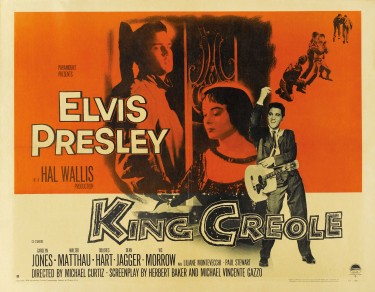
This must be  one of Elvis Presley’s best films – although that might not say much.   Colonel Tom Parker his manager had cleverly moved to get Elvis into films because this was the only way at the time to capitalise on his worldwide  potential.  In those days there was no satellite TV or video tape – not even a colour TV – so this was the only route forward and it proved a very successful one. The early films such as Love Me Tender, Loving You and this one  gave Elvis good roles but it was King Creole  that to me gave him the best storyline and certainly ths strongest cast of co players.


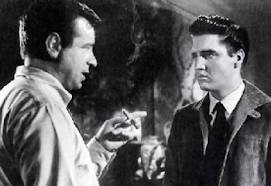
The  Colonel in a master stroke got him Michael Curtiz as  director and a top flight supporting cast consisting of Oscar winners like Dean Jagger as his father and Walter Matthau as the villain of the piece.  The other top rate players were  Carolyn Jones, Vic Morrow, Paul Stewart, and Dolores Hart.


Elvis plays Danny Fisher a troubled youth searching for himself a role that  James Dean excelled with in East of Eden. To spport his family, Elvis has to go to work because his father has been unable to hold down a job ever since the death of his wife.  He gets a break in Walter Matthau’s club with an impromptu audition, but it is rival owner Paul Stewart who hires Elvis. That sets the stage for a lot of the action to come.

Walter Matthau plays  an exceptionally nasty bad guy in King Creole.


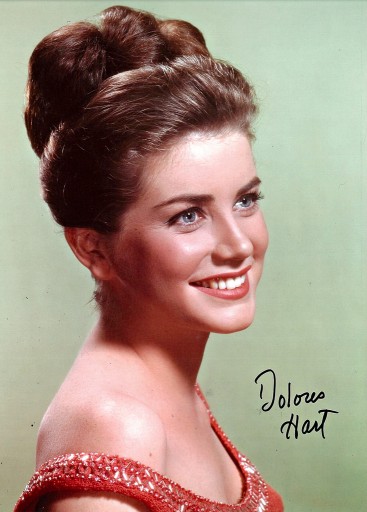
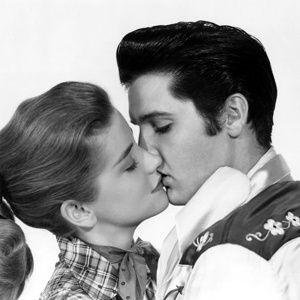
Dolores Hart was here in her second film with Elvis having starred with him in Loving You in 1957 . She has been the subject of much speculation over the years about her relationship with Elvis. In one interview during her movie career she was often asked, “What is it like kissing Elvis?” She chuckled a bit at the memory, “I think the limit for a screen kiss back then was something like 15 seconds. That one has lasted 40 years.”

Her last film role was in 1963  and for whatever reason at that time she made up her mind to leave the film industry, and after breaking off her engagement to Don Robinson, the 24-year-old actress became a Roman Catholic nun in Bethlehem Connecticut.

So ended the film career of this very attractive young girl who left the world of glamour and has since led a very different life although probably much more fulfilling.

  She has recently been interviewed about those now far off days.

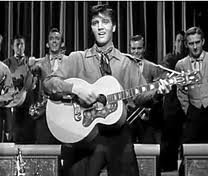
The title song became one of Elvis’s early best sellers and it is also the name of the club Matthau owns in the New Orleans French Quarter. Presley has some other good numbers in this film as well.

King Creole also was one of the first of Harold Robbins’s novels to be made into a film.

In order to make this film Elvis had to defer  beginning his military service from January to March 1958. 

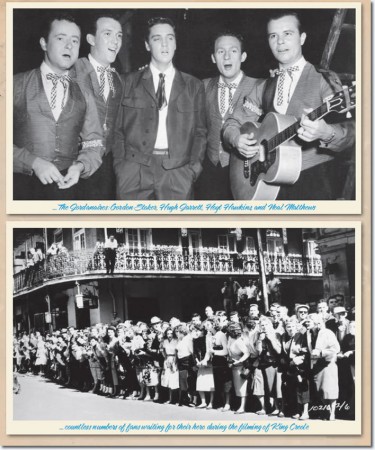
Crowds wait for a glimpse of Elvis during filming


Filming waswas delayed several times on location by crowds of fans attracted by the apperarance of Elvis on to the location set. The film was released by Paramount Pictures on July 2, 1958, to both critical and commercial success. The critics were unanimous in their praise of Presley’s performance.

posted by Movieman in Uncategorized and have Comment (1)