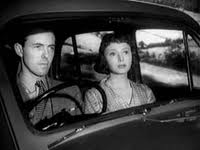
The Franchise Affair 1951 – Michael Denison and Dulcie Gray

The 1951 film was based on the Josephine Tey novel – recently voted by the Crime Writer’s Association as one of the Top 100 Crime Novels of All Time.

THE FRANCHISE AFFAIR – 1951  UK Michael  Denison is a small town solicitor ( lawyer)  who gets himself involved in a suspected kidnapping. Dulice Gray is a woman who along with her mother is accused of grabbing a local teenager and forcing her to become a maid.

She hires Denison to prove her innocence.  Very soon rocks are coming through the window and threats are coming thick and fast. Not as silly as it might sound – the film was directed by Laurence  Huntington.
                
The film was made in moody black and white. . The story was updated by author Jopsephine Tey to the late forties  and the film presents pleasant views of English village life at that time.   The script is extremely well-written.  As in films of this era and type, there is a great deal of dialogue whereas today both in TV , films  and maybe in life itself, people do not seem to converse to the same extent – I dont know why really.
The acting is, as always with films made in the golden years of British film making, is  good. There are also a number of future British film stars in small roles here including Kenneth More, Patrick Troughton and Jean Anderson and there is a delightfully dotty performance from  Athene Seyler as the lawyer’s mother. Such witty and well-judged performances like those are always worth a look.

A review of the novel rather than the film went as follows:-

A true oddity. A novel that always shows up on various lists of the greatest mystery novels ever written, but it’s hardly a mystery at all. It’s loosely based on the true story of Elizabeth Canning, and it has a mystery premise: a young woman named Betty Kane accuses two spinster women, a mother and daughter, of kidnapping her in order to turn her into their maid. She claims that when she refused they kept her in an attic room and beat her. The story is narrated by the mild-mannered solicitor  hired to defend Marion Sharpe and her mother-  the two women accused.
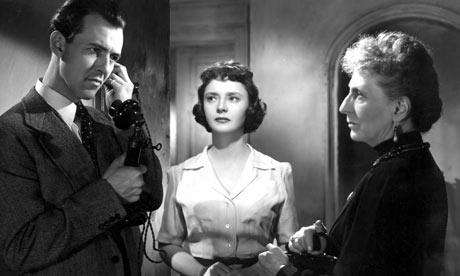
 Michael Denison, Dulcie Gray and Marjorie Fielding – above

Josephine Tey was, in reality, the Scottish writer Elizabeth Mackintosh, who wrote just eight mysteries under her pseudonym. What makes her truly stand out from other writers during the golden age of the mystery novel is how unorthodox she was as a plotter; some of her mystery novels barely qualify as mysteries at all, including this one, for the simple reason that it is made clear early on who is telling the truth and who isn’t. The suspense comes from wondering if the innocent will triumph in the end.

The film was made at Welwyn / Elstree Studios, Borehamwood in Hertfordshire, England. – The last film made here see below.

The story opens in a solicitor’s office in a quiet country town. The scene is set perfectly. Robert Blair’s usual business is conveyancing, wills and investments but, just as he is rising to leave the office, he receives a telephone call that will lead him to a very different case.

He is summoned to The Franchise, a large house behind a high wall on the edge of town. Marion Sharpe lives there with her mother in genteel poverty. The story he hears there is extraordinary.

Betty Kane had just left school. One day, she says, she missed the bus home from town. She accepted a lift from two ladies in a car. And those two women kidnapped her and kept her prisoner to act as their servant. Because they couldn’t find anybody willing to work in their big house on the edge of town. She was locked up, beaten and kept hungry to make her comply. Finally she found a locked door and made her escape.

Betty Kane was played by Anne Stephens who after a film career lasting well over a decade – and as a child star – actually died in 1966 at the very young age of 35.  Here she is with James Mason’s daughter in They Were Sisters 1946 – Below:-

Betty Kane  describes the Sharpes, their car, details of their home perfectly.

They are astounded, and insist that they have never seen the girl before. Robert believes them. But how does she know so much. How can he prove that she wasn’t there?

So begins an extraordinary mystery. A crime without a body, without a single drop of blood shed.

Little facts emerge and a picture builds and changes. Progress is slow, and yet a fairly unremarkable country solicitor holds the attention.

Why? Well Josephine Tey can certainly write. All of her characters are distinctive beautifully drawn, her story-telling is assured, her plotting is clever, and she paints a clear picture of a time and place.

The social changes that followed the war are illuminated. The tabloid press take a keen interest. And their neighbours are eager that the women that they perceive to be wicked criminals are punished. There is much food for thought, with every element judged and balanced perfectly.

The story culminates in a brilliant court room scene. The truth is revealed.

It was the right conclusion to a wonderful story.

Micahel Denison had a long career in Film and Theatre and also a good long marriage to Dulcie Gray.  They very often appeared  together and may be better known to TV audiences for their appearance in Howards Way in the late 80s.

1956 Love Affair Dulcie Gray & Michael Denison Original Press Photo

Michael and Dulcie 1956 – above Studying a script.

Last Film to be made at these studios :-

Welwyn Studios:-


Studio Photograph

The final productions made at Welwyn in 1950 were  the comedy Talk of a Million (1951) and The Franchise Affair (1951), which starred husband-and-wife team Dulcie Gray and Michael Denison.   ABPC sold the site shortly afterwards bringing to an end the three-stage studios that had produced over 70 films, and tobacco company Ardath took over the premises in late 1951. The premises were shortly after used as warehouses by DIY manufacturers Polycell. Supermarket giant Tesco cleared the site in 2007.
 

posted by Movieman in Uncategorized and have Comments (4)

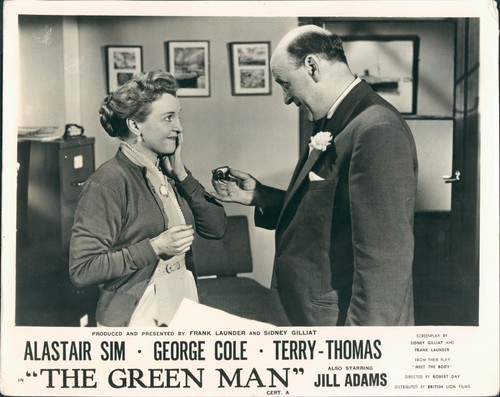
The Green Man – Alistair Sim

Now this one is definitely among my VERY favourite films – a comedy thriller with the magnificent Alistair Sim with all his incredible facial expressions at his very best and among a crowd of now famous character actors from  British Films at that time.

Above – Alistair Sim and Avril Angers

This is a film that used to crop up on TV in England on a regular basis but I haven’t seen it for ages.

Alastair Sim plays a retired assassin who has been hired to do one more job.   He plays  Hawkins who had been involved years before in espionage  (we assume)  but had  retired at the end of WWII.  However now  he is  hired to eliminate Sir Gregory Upshott – a pompous minister played by   Raymond Huntley   – before he leaves for the Middle East.

In the process Hawkins romances Upshott’s secretary Marigold to find out his schedule and she  tells him  that Upshott is going to the Green Man Hotel with one of the office girls under an asssumed name.  However  when he was making notes  he didn’t see a piece of carbon paper under his sheet.

Alistair Sim meets George Cole who is selling ‘the little wizard of the carpet’   door to door

Marigold finds the carbon  copy  and rings  Hawkins asking why he was so interested in her boss – the government minister.  She insists on  coming over for an explanation.   Hawkins sends his assistant  next door and he switches  house names so that Marigold will go to the wrong place which  she does and the assistant murders her.

Stumbling into this situation comes  William Blake (George Cole), a vacuum cleaner salesman – I always remember he was trying to sell ‘the little wizard of the carpet’. He had made an appointment with Hawkins housekeeper. and since the house names were changed he thinks he’s in the right place. He dumps soot on the carpet for the demonstration but there is a problem here – no electricity.

Blake is left alone until Ann Vincent (Jill Adams) comes in. The house belongs to her fiancee, a BBC radio announcer.   The two are due to get married and the house is empty and waiting for them to set it up.

George Cole meets Jill Adams – but it is not what it looks like !!

Her fiance comes by and catches the two hiding under the bed.  Reginald the fiance played by that wonderful character actor Colin Gordon,  doesn’t believe  why they are hiding  and becomes angy and storms out.   Blake then discovers Marigold’s body in the piano.

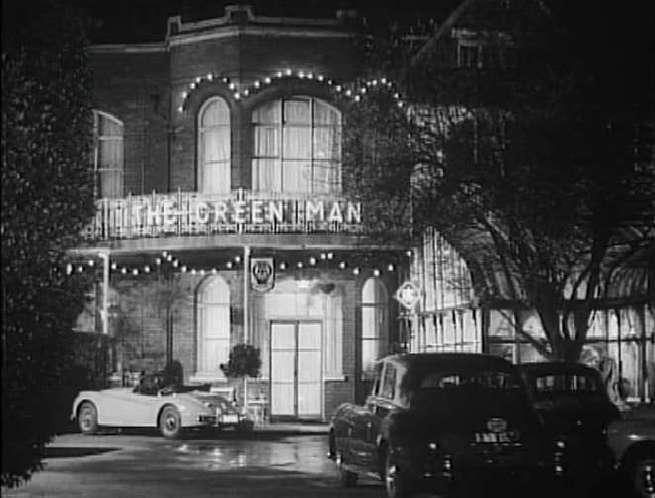
It all comes to a climax at the Green Man – a cliff to hotel somewhere in the South of England.

The Thrilling Climax of the film takes place here – at The Green Man Hotel. – above.

Sidney Gilliat and Frank Launder were up for the BAFTA award for Best British Screenplay.

Extracts below from one viewers comments which I have to agree with:-

Great performance from Alistair Sim surely Britains greatest actor (well I think so), with all round good performances from the rest of the cast. The film is farcical in the best tradition of British farce  but all good clean innocent fun really.

1957 MOVIE LOBBY CARD #2-876 - THE GREEN MAN - ALASTAIR SIM

Above all it is truly funny and it contains one of the best lines in British film comedy.  When the character Reginald Willoughby-Cruft ( the brilliant Colin Gordon) confronts William Blake (George Cole) and says, “by heaven I’d thrash the life out of you, if I didn’t have to read the 9 o’clock news.” How much more British can you get !!

Alistair Sim in one of his best remembered roles as Scrooge – above


posted by Movieman in Uncategorized and have Comments (6)

Victor Mature and Diana Dors in ‘The Long Haul’ 1957

This is a very good film  with a good  script, terrific acting from Victor Mature and Diana Dors   and beautiful wide-screen photography.  A work colleague of mine who is not at all a film fan really  likes this one because it centres on the old vehicles which seem to have such a nostalgic pull for some people and I suppose shows a world gone by.
These are two very good actors – both often underrated and in my book wrongly so.  Diana Dors is particularly good  in this role displaying great sensitivity and Victor Mature plays his part well.  The relationship between the principal characters is very well drawn and the outcome is not the normal  ending that one would expect    For a film made in England in the mid fifties the production values are high and they seemed to have spent some money on this one.   One  scene where Victor Mature changes the front wheel of his truck under 5 foot of water in a Scottish loch  has to be seen to be believed –  I wonder how many truckers could equal Victor Mature’s prowess in this area !!This  is  much more than just a movie about truckers although fans of trucks will be able to see the Leyland Octopus 8 wheel truck in action.The Long   Haul is a good film of it’s day. It is available on DVD now I understand.
posted by Movieman in Uncategorized and have Comments (5)

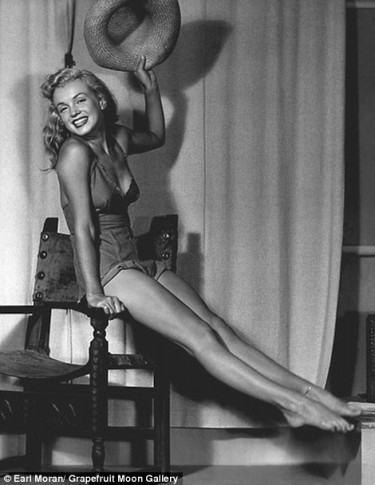
Marilyn – Before She became famous !

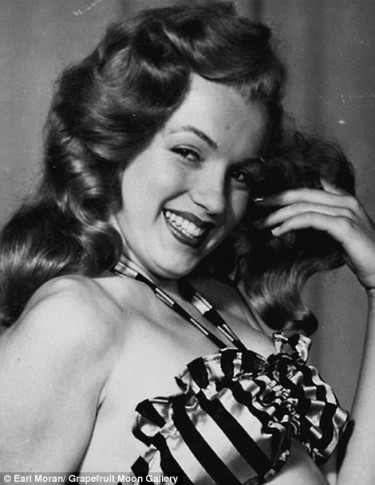
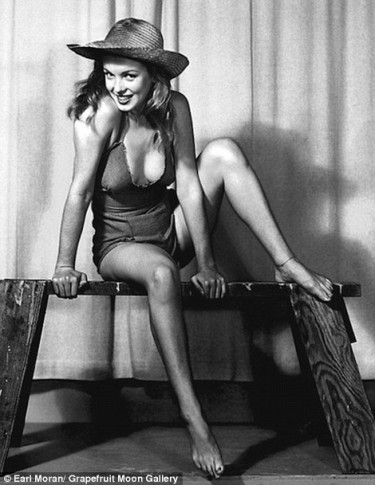
When the former Norma Jeane Mortenson teamed up with pinup photographer Earl Moran as a model in the 1940s, the result was nothing short of stunning.     At the time, Marilyn  Monroe was a model for Blue Book Modeling Agency, and was paid 10 dollars  an hour for the shoot. The images are being displayed  in Minneapolis.

Even then it was evident that she had real star qualities

It was probable that this photo shoot helped her into films.

I didn’t know much about Earl Moran, the photographer but he certainly did a good job – and I have discovered something – as below:-

In 1946, Earl Moran  moved to Hollywood though having already painted many movie stars and soon after his arrival, he interviewed a young starlet named Norma Jean Dougherty who wanted to model for him.    For the next four years, Marilyn Monroe  posed for Moran and the two became friends.     She always credited him with making her legs look better than they were as she felt they were too thin.

Moran’s work during this time period is now his most valuable; a Moran Marilyn pastel sold for $83,650 in 2011 nearly doubling the previous record for one of his works.


posted by Movieman in Uncategorized and have Comments (5)

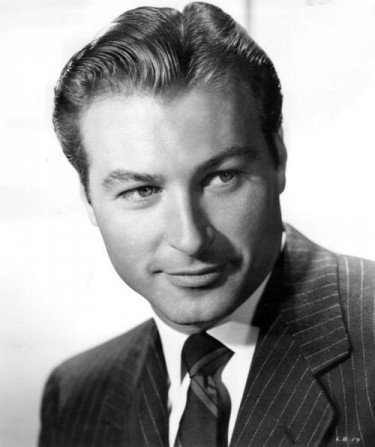
Tarzans Magic Fountain 1950 – Lex Barker

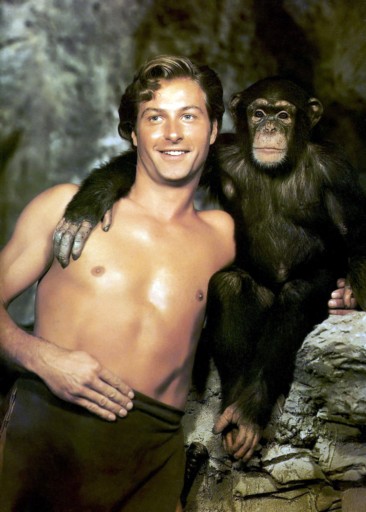
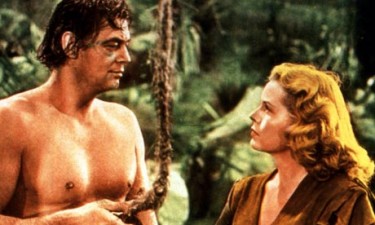
Mainly for the reason that I like the storyline, this must be my favourite Tarzan film – and there are a lot of them. In this one Lex Barker takes over the main role from Johnny Weissmuller who retired after 16 years.  Lex went on to  make  five Tarzan films  before he too moved on.    This role however is the one for which Lex Barker is best known – even though it only accounted for about 4 years of his film acting career.

Lex Barker and Cheetah in Tarzans Magic Fountain – above

Tarzan’s Magic Fountain was Lex Barker’s first Tarzan film — producer Sol Lesser interviewed more than 1,000 actors to replace Johnny Weissmuller in the role of Tarzan. 

 Lex Barker turned out to be one of the better film Tarzans, even though Johnny Weissmuller was obviously a hard act to follow.

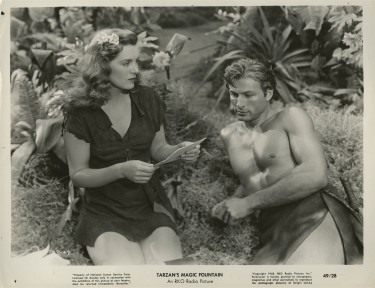
 The film is about a tribe of people hidden deep in the jungle. In their secret valley is a fountain of youth, which keeps a woman who crash landed in the jungle decades ago looking as young as she was when her plane went down. After she had returned to the outside world, word of the fountain leaked out and unscrupulous hunters try to find and exploit it. Tarzan tries to keep the hunters from finding the hidden valley of the fountain.   The flyer ages as the effects of the fountain wear off — a theme originally used in James Hilton’s wonderful film Lost Horizon years earlier. 

 Elmo Lincoln, the original Tarzan from 1918’s Tarzan of the Apes  has a cameo role as a fisherman in this film.

Brenda Joyce plays Jane in the film and became the only actress to play the part with two different Tarzans – she had made 4 films with Johnny Weissmuller – although after a reasonably long career in films , she packed it in after Tarzans Magic Fountain with Lex Barker and left acting for good.

Brenda Joyce swoons in Weissmuller’s arms
Away from the jungle sets at MGM  Brenda Joyce admitted that she did not like playing Jane and  she was upset by Johnny Weissmuller’s persistent sexual harassment.

She once told one of  her friends   “How Johnny holds all that manhood tamed under his loincloths defies the laws of nature.”   . She was once certified as having the longest hair in Hollywood – 39 inches – outranking Katharine Hepburn and Veronica Lake.

Born Betty Graffina Leabo at Excelsior Springs, Missouri in 1912, she was educated at San Bernardino and Los Angeles High Schools and much later 20th Century Fox spotted her in a fashion magazine layout.

She was signed to a two-picture contract. but first 20th Century Fox changed her name to Brenda Joyce.

She made her screen debut as Fern Simon, the second lead in the Oscar-winning earthquake epic The Rains Came (1939) with Tyrone Power and Myrna Loy. The role won her good reviews and after Here I Am a Stranger (also 1939), about a young Englishman (Richard Greene) in search of his alcoholic father (Richard Dix), Brenda Joyce was signed indefinitely.

Her off-screen interests included gardening (she was one of Hollywood’s best horticulturists) and art.

She later  married Owen Ward, an Army officer. For this the studio punished her by relegating her to a string of B-pictures.

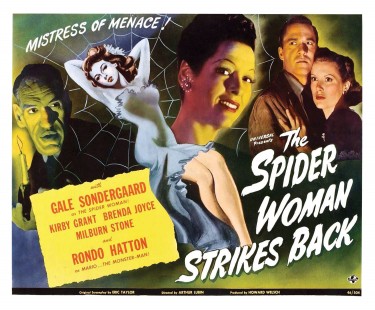
Following this and a bit of  cooling off time ahe came back  as a second-feature star at Universal and RKO and later more notable roles saw her star opposite Lon Chaney Jr and Gale Sondergaard in such B-chillers as Pillow of Death (1945) and The Spider Woman Strikes Back (1946Co-starring with Brenda Joyce is  Rondo Hatton (April 22, 1894 – February 2, 1946) – he was an actor who had a brief, but prolific career playing thuggish bit parts in many Hollywood  B-movies.  He was known for his brutish facial features which were the result of acromegaly  a disorder of the pituitary gland.

Acromegaly distorted the shape of Hatton’s head, face, and extremities in a gradual but consistent process.   Hatton apparently in his younger days had been voted the handsomest boy in his class at High School  but he eventually became severely disfigured by the disease.      Because the symptoms developed in adulthood,  the disfigurement was incorrectly attributed later by film studio publicity departments to his exposure to a German mustard gas attack during service in World War I.

Universal Studioss attempted to exploit Hatton’s unusual features to promote him as a horror star after he played the part of the Hoxton Creeper alongside Basil Rathbone as Sherlock Holmes  in  The Pearl of Death (1944).  He made a half dozen minor films playing variations of the Creeper character, including The Brute Man (1946). Hatton died of a  heart attack  in 1946.

I always felt so sorry for Rondo Hatton who was billed as The Screens Ugliest Man and yet off screen known by his family as one of the nicest kindest men you could hope to meet.

——————————————————————————————————————–

Back to Brenda Joyce :-

Two children later, Brenda Joyce seemed to have lost interest in her film career, but was coaxed back to the film set by the producer Sol Lesser after  Maureen O’Sullivan had  left the Tarzan series and Weissmuller approved  the athletic beauty as his new blonde jungle  mate.

Tarzan and the Amazons was followed by Tarzan and the Leopard Woman (1946), Tarzan and the Huntress (1947) and Tarzan and the Mermaids (1948).  After Weissmuller hung up his loin cloth, she played Jane for one last time, opposite Lex Barker in Tarzan’s Magic Fountain (1949) – making her the only Jane to co-star with two different Tarzans – before quitting show business forever.

Between the Tarzan movies, Joyce made several B films for Universal, two with Lon Chaney Jr, Strange Confession and Pillow of Death (both 1945),  The Spider Woman Strikes Back (1946), pitted against Gale Sondergaard in the title role; and Little Giant (1946), with Bud Abbott and Lou Costello, playing it straighter than usual as a foil to the comedians.

After a painful divorce in 1949, she retired into obscurity, working for a decade (under her real name) in Washington for the department of immigration. She also kept her famous past in films from staff at the nursing home in Santa Monica where she spent her final years.  However she was visited there by actor Johnny Sheffield who played Boy alongside her in the Johnny Weissmuller Tarzan films.   She is survived by her three children.

Lex Barker.

Lex Barker collapsed and died whilst walking along the street in New  York in May 1973 at the age of 54.

Lex Barker was a direct descendant of the founder of Rhode Island, Roger Williams, and of Sir ‘William Henry Crichlow’, historical governor-general of Barbados. He excelled in football and track at Fessenden School and Phillips-Exeter Academy.

He went to Princeton but left to become an actor. A year later he was spotted in summer stock and received a contract offer from 20th Century-Fox.  Then came World War II and he enlisted as an Infantry Private and rose to the rank of Major.     Signed initially by Fox  and then Warner, he was too tall for supporting parts and too unknown for leads.      Tarzan’s Magic Fountain (1949) (RKO) provided his first starring role.      After five Tarzans he went into other adventure films.    After 16 non-Tarzan films, mostly westerns, he went to Europe in 1957 .  He went on to make more than 50  films all over the world.

Must admit that I think Tarzans Magic Fountain was released in 1949 so technically doesn’t qualify as a ‘films of the fifties’ but maybe it came to England in 1950 – I will pretend it did !!!

posted by Movieman in Uncategorized and have Comments (4)

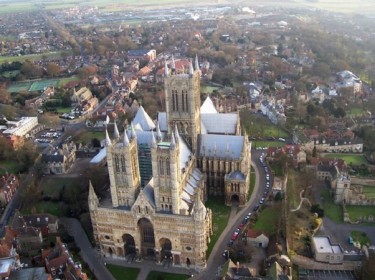
The Dam Busters – Lincoln Cathedral and The Lincolnshire Aviation Centre

Earlier I posted a subject on The Dam Busters which included a terrific shot of Lincoln Cathedral from the air.

In the film The Dam Busters there is a sequence where we see the Lancaster Bombers fly over Lincoln.


Follow this link below for a brief look at Lincoln Cathedral :-

https://www.youtube.com/watch?v=p9vk3v-MD0I&feature=player_detailpage

 Just down the road is the wonderful Lincolnshire  Aviation Heritage Centre.

I WOULD VERY MUCH RECOMMEND ANY READERS HERE TO VISIT. If you can’t make it however click on this link below and you will be taken there. You will see the only airfield in the world where you can see a Lancaster Bomber taxi on the runway – Thrilling !!!

https://www.youtube.com/watch?v=FnVqQQ0Jyno&feature=player_detailpage

Now Below click on the Link and YOU will fly over Buckingham Palace in the Lancaster for the Queens Diamond Jubilee earlier this year:

https://www.youtube.com/watch?feature=player_detailpage&v=_BoUIvfO3ys

History of the Museum

The Lincolnshire Aviation Heritage Centre is a privately owned and run Museum and was set up by two farming brothers, Fred and Harold Panton. It has been built up as a memorial to Bomber Command and primarily as a tribute to their eldest brotP/O Christopher Pantonher Christopher Whitton Panton; who was shot down and killed on a bombing raid over Nuremberg on 30/31 March 1944.
For a short time after the war there was interest from the brothers to visit Christopher’s grave in Germany, but their father denied them the chance as he wanted ‘nothing more to do with the war’. Until, in the 1970’s Mr Panton called Fred over and told him to ‘get off to Germany and bring me a photograph of Chrisy’s grave’ which of course Fred did as soon as he could. This reignited Fred’s interest in the War and when NX611 came up for sale it was eventually purchased by the brothers and brought to their land at East Kirkby. Even though they had planned to keep it only for their private collection it was suggested that they should make it into an exhibit for the public and this Museum was set up with the Lancaster and Control tower as its centre pieces.
The Lincolnshire Aviation Heritage Centre was then opened in 1988 and has hosted visits from many famous people both from the aviation and show-biz worlds. We are all extremely proud of the accomplishments of the Centre, one of the biggest independent museums receiving no funding or Lottery grants. We can only hope that we will be able to continue to educate the following generations to the sacrifices and roles of Bomber Command.


Only a few miles away is the Battle of Britain Memorial Flight at RAF Coninsby again in famous Lincolnshire.

Above Picture is of the City of Lincoln  PA474 which was transferred to the Battle of Britain Memorial Flight in 1973.   This is not the Lancaster at the Heritage Museum though.

In 1975 a mid-upper turret was found in Argentina and fitted.

The  City of Lincoln  now wears the KC-A markings from the 617 Dambusters squadron and wears the Thumper MKiii nose art, originally painted by Flt Lt Bob Knights upon posting to the 617 squadron . She displays the markings of bombs for operations over Germany, ice-cream cones for operations over Italy, and poppies for when she has released poppies during exhibition flights.

She had appeared in two films- Operation Crossbow and The Guns of Navarone.


Lincolnshire Countryside with Lincoln Cathedral in the distance.

posted by Movieman in Uncategorized and have Comments (2)

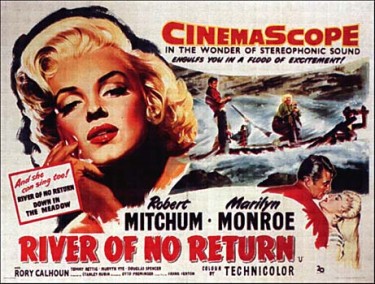
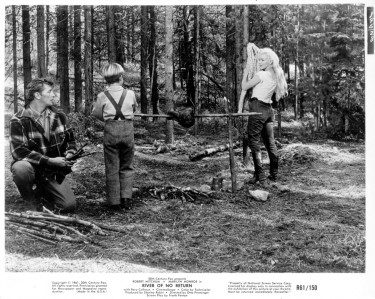
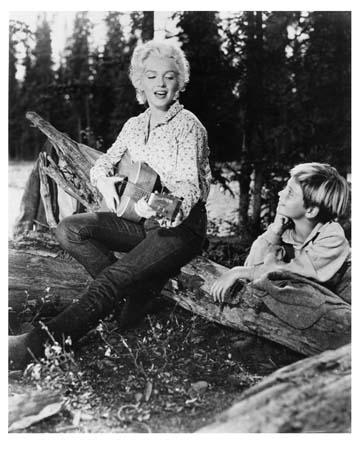
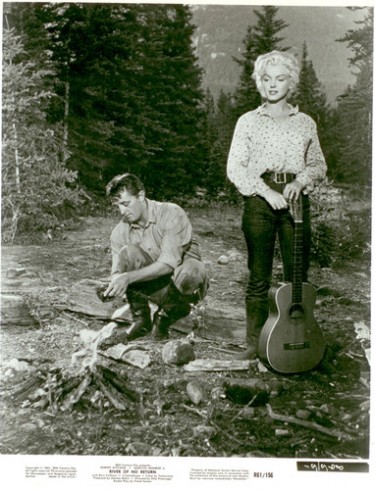
Marilyn Monroe – River of No Return 1954

We go back again to Marilyn for one of her best remembered films with Robert Mitchum made in Cinemascope and Technicolor. Much of the filming was done in and around Banff and Jasper in Canada.

Brief Synopsis of the Film:-

Robert Mitchum is released from jail, picks up his ten year old son and decides to live on a farm. He rescues a couple from a raft on the river (Marilyn Monroe and Rory Calhoun). Calhoun wants to register a gold claim, and from then on its Marilyn, Mitchum, the boy, the raft and the river –  not to mention the Indians.   Marilyn is fabulous in this role and at her most glamorous.   The beautiful scenery- made even more impressive by the use of cinemascope,   Marilyn at her prime,  Mitchum good as always  together make River of No Return an outstanding western.

Robert Mitchum was the only one of her leading men who knew her from way back in 1941 before he made his screen debut – in a film starring  Hopalong Cassidy.  Before his film career took off  Mitchum had worked in an  aircraft factory along with James Daugherty who had just married  Norma Jean and the four socialised on occasions.

He knew all about her psychological problems and when it came  to making  a film with her when both had become well known screen actors,  Mitchum did not seem keen to get  himself involved.  However  during the shooting of the film Marilyn and director Otto Preminger had a major fall out and stopped speaking and would only communicate through Mitchum.  This may not have been entirely Marilyn’s fault because Preminger was a difficult man – a few years later he subjected a young unknown Jean Seberg to quite a difficult time during the making of St.Joan 1957. In fairness to him though he had plucked her from obscurity to star in a major film – so he did give her a great chance.

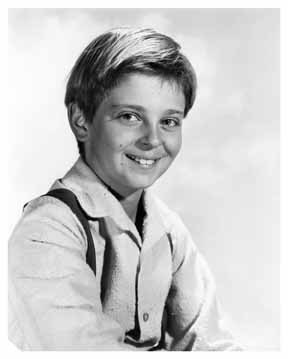
In River of No Return Marilyn plays a  saloon girl who gets involved with  a no good gambler/drifter played by  Rory Calhoun.    Calhoun and Monroe almost  drown in a river when Robert Mitchum rescues them and their raft. Following such a good deed  Rory Calhoun  steals their horses and then the three – now including Mitchum’s son in the film played by a young Tommy Rettig – go in pursuit of him. 

Marilyn  proves to be quite a distraction and at one point Mitchum does give into his feelings ever so briefly.

Twentieth Century Fox decided to go out on location in a big way for the  shooting the film – in fact up to Banff  in the Canadian Rockies – although with Marilyn and Otto feuding it was not a happy set.   Preminger  eventually walked out on the picture and Jean Negulesco finished it off.   During this time  Joe de Maggio, Marilyn’s husband   flew up because of rumours about her and Mitchum which were unfounded .   This was a film though that Otto Preminger shuddered about when recalling it in later years.


Watch the Trailer to this exciting film on the Link below :-

https://www.youtube.com/watch?v=RSaI1CJPwEY&feature=player_detailpage

 It was made in Cinemascope and 3D apparently which I have only just learned about – although since writing this I cannot find any reference to it being in 3D from any official source – so maybe I have the wrong information here.  

 I do remember seeing it up on that large wide screen and it was very impessive.   Not really a film for TV though as it loses so much on the relatively small screen.

Tommy Rettig.

An interesting character – Tommy Rettig (December 10, 1941 – February 15, 1996) was an American child actor who later became a wizard on computer programming.    He will be best remembered for portraying the character “Jeff Miller” in the first three seasons of  the TV series Lassie between  1954 and 1957.    He was also in another Western which has been featured on this Blog – The Last Wagon – one of my favourites a few years after River of No Return.

posted by Movieman in Uncategorized and have Comments (6)

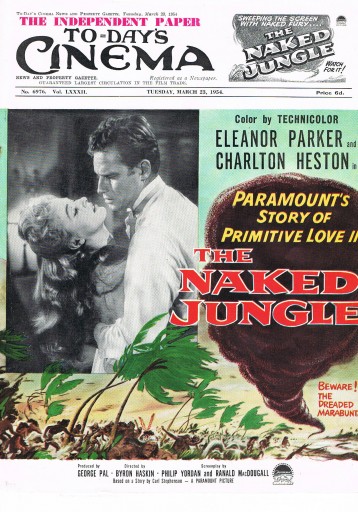
The Naked Jungle 1954 – All those Ants !!!

This was a big colour picture made in 1954 and directed by Byron Haskin – one of my favourites – He certainly knew what he was doing and was always able to deliver. I have written before that when Walt Disney came to England to film Treasure Island in 1950 he turned to Byron Haskin who brought in a great movie and because it was Disney’s very first venture away from animation it was vital that he did. It set them up to move forward – although surprisingly Walt turned to a then relatively unknown young director Ken Annakin for The Story of Robin Hood 1952 made in England at Denham and up to that time THE most expensive film ever made here – and it showed !  It was a sumptuous and expensive production that combined so many top technicians including Peter Ellenshaw, Carmen Dillon and Guy Green who supervised the stunning Technicolor production.   Ken Annakin was really made after he had a success with this one on a world scale.

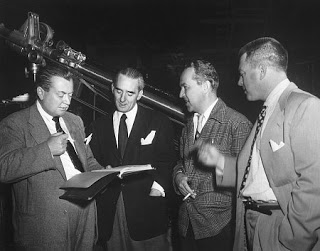
Above – Byron Haskin and George Pal ( and others ) in discussion

Coming back to The Naked Jungle though the film is set in Peru and stars Charlton Heston and Eleanor Parker and tells the story of an attack of army ants on a cocoa plantation.  The film  was based on the short story by Carl Stephenson.

Eleanor Parker who had top billing in this film plays a woman from New Orleans who  arrives at a cocoa  plantation in Peru to meet her new husband, plantation owner Christopher Leiningen played by Chalton Heston who she has married by proxy and has never met.

Leiningen is cold and remote to her, rebuffing all her attempts to make friends with him. She’s beautiful, independent, and arrives ready to be his stalwart helpmate but  no one it seems has told him she is a widow. He rejects her.

As she awaits the boat to take her back to the US.A.  they learn that legions of army ants – the Marabunta  – are on the move and will strike in a few days’ time. Leiningen refuses to give up the home he fought so hard to create and so  instead of evacuating,  he resolves to make a stand against the army of ants.   Joanna joins the fight to save the plantation and  so the film is set up for this final showdown.

 Ants everywhere – how did they do that in 1954 I wonder.


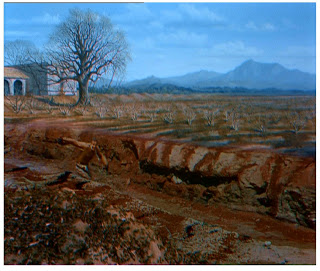
Above – The best effects sequence in the film – Charlton Heston on the run as an enormous tidal wave from the blown dam heads his way. Several brilliantly choreographed tricks were employed in this terrific sequence – the first shown above is a straight forward though perfectly matched split screen of Heston in dug out trench and Jan Domelas‘ sprawling matte painting dominating the shot.

Also cast in the film is William Conrad later to achieve TV fame as Frank Cannon.

I think this comment on one of the sites is interesting:-

THE NAKED JUNGLE is based on Carl Stephenson’s story “Leiningen Vs The Ants.” There was at least one excellent radio adaptation in which William Conrad (who has a supporting role in this film) played Leiningen. The first half of this screen adaptation is pretty ordinary mainly focusing on the romantic problems of Heston and his mail order bride Eleanor Parker.  

However when the ants arrive  this film really takes off.    One scene where the ants devour a drunk down to his bones must have looked pretty shocking in 1954.

 The film was reasonably successful and was actually re-released in 1960.

posted by Movieman in Uncategorized and have Comments (4)

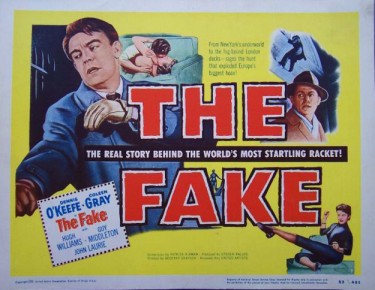
The Fake 1953

I have just received a DVD of The Fake having not seen it for years – and can’t in fact EVER remember it being on TV either.  By the way it is a very good copy on the DVD.

It was  1953 British crime film which starred Americans  Dennis O’Keefe and Coleen Gray who came over here as many did in the fifties.  Among the British actors were  Hugh Williams, John Laurie, and Dora Bryan.   

The plot concerns an American detective who tries to solve the theft of a priceless painting from the Tate Gallery in London. In this crime drama an American played by Dennis O’Keefe is assigned to guard a US art exhibit in London to protect one of da Vinci’s most priceless paintings- Madonna and Child.

A series of art thefts has put the museum officials on red alert and they anxiously await the painting’s arrival. Unfortunately, the painting is stolen en route to the show and replaced by an imitation. The intrepid guard follows the thieves to a private gallery run by a wealthy criminal.

This also was actress Billie Whitelaw’s very first film.

I do remember seeing this in St Albans , maybe at the Odeon, but certainly while we were down there on holiday – it was our regular holiday location for many years – and very good it is too. Can’t have been very old but I am pretty sure it was the supporting film to Raider of the Seven Seas with John Payne – which was very colourful.


St. Albans Odeon Cinema – above.

St Albans Odeon – the shot probably from the mid to late 1980’s – before screen 4 was added in 1988. The cinema originally opened in 1931 as the Capitol and  was enlarged and reopened in 1934 when it had  a staggering 1,728 seats. Renamed just after the War in 1945 the Odeon  eventually closed as a 4-screen operation in 1995.

It is currently being restored as the Odyssey Cinema – set to reopen in all its art deco splendour in the near future and I for one look forward to that  !!!

 The Odeon was one of the main cinemas in the City.

posted by Movieman in Uncategorized and have Comments (9)

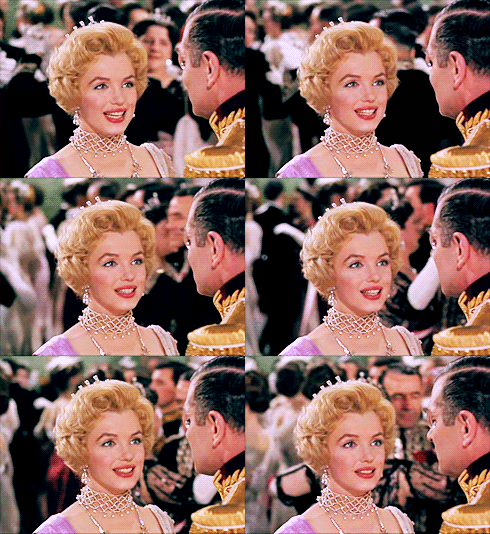
Marilyn Monroe – The Prince and the Showgirl 1957

I have just watched the  film ‘My Week with Marilyn’ which is adapted from diaries and a book written by Colin Clarke the 3rd Unit Director on the film ‘The Prince and the Showgirl’  who as a young man of 24 was lucky enough to befriend Marilyn and become quite close to her during that time in England in 1956.

I have featured The Prince and the Showgirl  before on this blog – in fact one of the first posts I ever did.   I am also pleased at least that Marilyn did come over to England and spent hopefully some happy time here. We would certainly have made her welcome – of that I am quite sure.

Marilyn is a great star of this or any other era.

She had come over to make what would be her only film outside the USA along with her husband playwright Arthur Miller.   In My Week with Marilyn Michelle Williams plays Marilyn quite brilliantly with Kenneth Branagh giving a good but slightly camp portrayal as Sir Laurence Olivier.  I thought one telling line of dialogue came from Colin Clarke when talking to Marilyn who had been upset by Sir Laurence’s treatment of her.   He says something like ‘ The trouble is that he is a great actor who wants to be a film star – and you are a great film star who wants to be an actor’

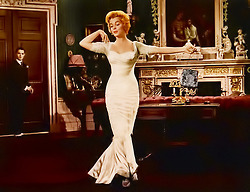
Above – Marilyn at her dazzling best – on screen.

I would ask any one reading this blog to view the film – if you haven’t already as it gives a wonderful insight into the fragility and naïvity of Marilyn and yet shows us also her incredible screen prescence and as my daughter pointed out maybe the ability either wittingly or not to  manipulate people – and men in particular.    In the film Olivier philosophically points out that any of them could practise their art until they were near perfect but even then they wouldn’t get 10 per cent of what she had – referring to her dazzling screen persona.

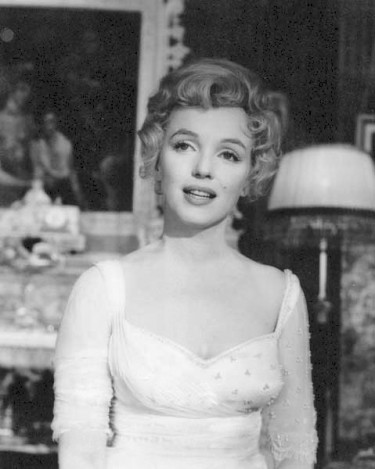
 Marilyn in The Prince and the Showgirl at Pinewood

See this Link to the film Trailer of My Week With Marilyn 2011 film

http://www.youtube.com/watch?v=NeHDZODFKNw&feature=player_detailpage

The Prince and the Showgirl was Olivier’s  first and last attempt at directing a film for an American movie star.  If Marilyn was ill-equipped to handle Olivier’s rigid stage-influenced directorial style,  then Olivier himself was equally as inexperienced at interpreting popular material and handling screen stars of this calibre.

The challenge of maintaining some semblance of a working relationship between Marilyn and Olivier fell on the shoulders of Milton Greene, while Arthur Miller assumed the duties of caretaker and manager for his unstable wife.  Arthur Miller was often placed in the awkward position of having to explain or defend Marilyn’s behaviour.

It was difficult for those living through the ordeal to have sympathy for Marilyn at the time –  particularly after an episode in which she kept the elderly Dame Sybil Thorndike waiting on the set in full costume for hours.

Dame Sybil Thorndike steadfastly refused to criticise  Marilyn though.       Instead she insisted   “We need her desperately. She’s the only one of us who really knows how to act in front of the camera.”

Watch the Trailer to The Prince and the Showgirl – Link Below:-

http://www.youtube.com/watch?v=PWa9lm7sILs&feature=player_detailpage

After filming had been completed Marilyn apologised to the entire cast and crew for her behaviour which was certainly not all her fault. She was in a foreign country after all where she had not been before – although a country that warmed to her in every way, and she suffered a miscarriage around this time also – so she was in a particularly frail and vulnerable state.

On screen though she was Marilyn Monroe – and when she appears she displays a magnetism and a screen prescence that very few come anywhere near.

posted by Movieman in Uncategorized and have Comments (5)