Archive for the 'Uncategorized' Category

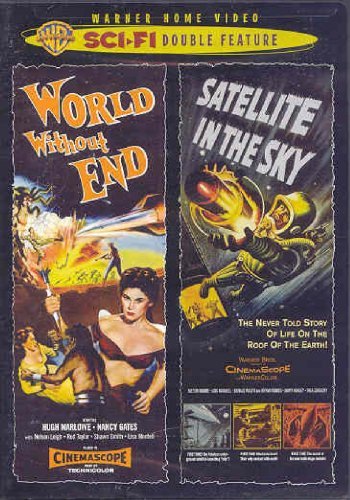
Satellite in the Sky and World Without End 1956

Now I don’t think that these two were released in the Cinema as a Double Feature – but it seems the Video or DVD was released that way – and when I look back and think of these two films which I saw at the cinema, it does seem a good idea to release them together. They are produced in the widescreen Cinemascope format that they were made in.
Satellite in the Sky

I seem to remember Satellite In The Sky under a different name but the more I look the more I think I may be mistaken.

With Quite a big budget,  and some good actors, it proved to be both fascinating and enjoyable.

Satellite in the Sky has quite a  controversial plot. The film was also made at a time when Britain was  in the space race –  It’s the story of mankind’s first trip into space, launched from England.

After the initial tests are successful, the mission gets the go ahead but what the crew don’t realise is that the government have plans for a secret payload to be installed in the huge rocket ship.

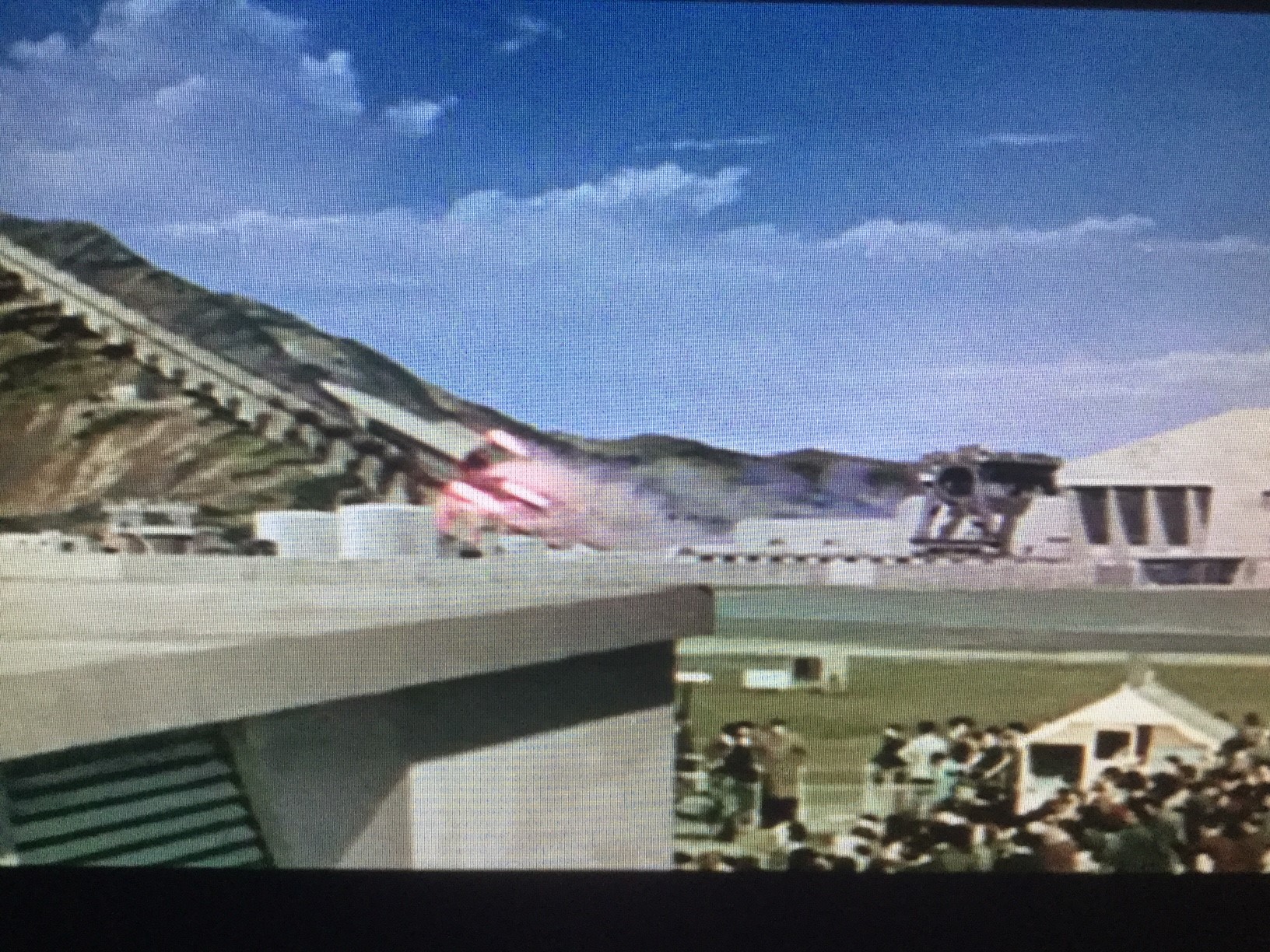
The mission does not  run smoothly. The long launch ramp is very similar to When Worlds Collide although the rocket in Satellite in the Sky  seems to use less runway and the take off sequence is not as long – I think it should have been because that could have been much more impressive. It was good to be fair.

The extensive use of  models  and matte paintings, Cinemascope and colour make this a definite ‘A’ picture.
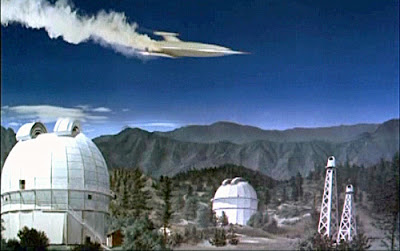
 

Satellite in the Sky 9


It’s marvellous to see Lois Maxwell in a leading role, playing a reporter who is  against the expensive project and she manages to stow away on the Rocket Ship – a preposterous story if ever there was one.

Kieron Moore  plays the rocket captain. Not that much of a part really. The previous film he had made was a favourite of mine The Blue Peter 1955 with Sarah Lawson, Greta Gynt and Mervyn Johns.  It was a story set at an outward bound school and filmed in Aberdovey – and beautifully filmed there.

This gave him and the others good roles to play. Quite thrilling too.

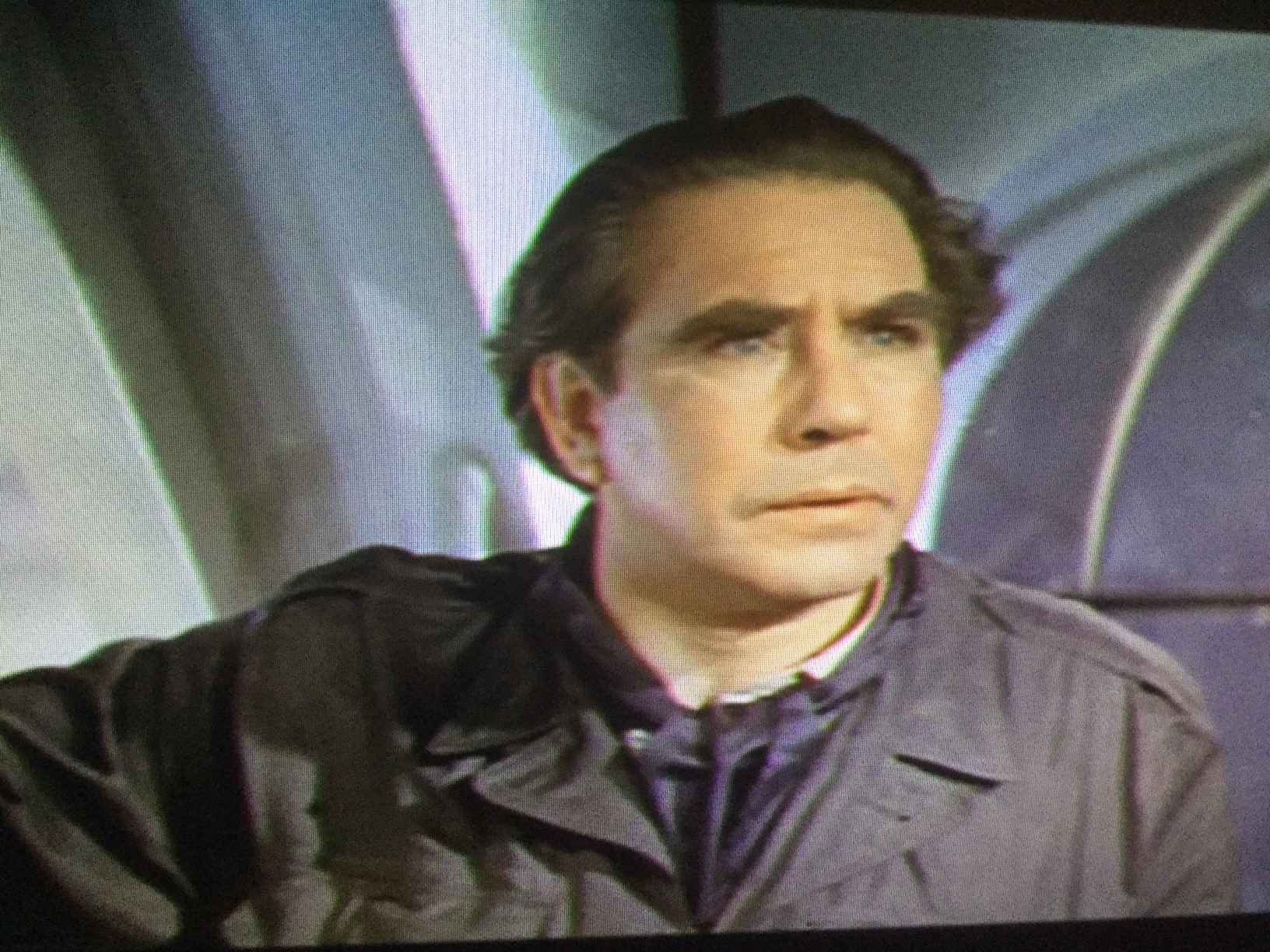
Back to Satellite in the Sky 1956 – we have that  grand thespian Donald Wolfit  – BELOW  who, to me, is the most interesting character in the film – and gives the best performance.
Satellite in the Sky 7

Another crewmen is a very young Bryan Forbes.

Donald Gray  actor and former Newsreader is featured in a ground based role – he does not go into space – so he doesn’t get much of a chance to deliver a performance.

Satellite in the Sky should really have a far higher profile in British sci-fi history, or even as a classic British film but somehow it is a forgotten relic – which I think is unjust for such an expensive and, at times, impressive film.

Here it is anyway on a DVD release with World Without End


Both films on the DVD  are presented in  2.35 widescreen (from Warner Home Video).

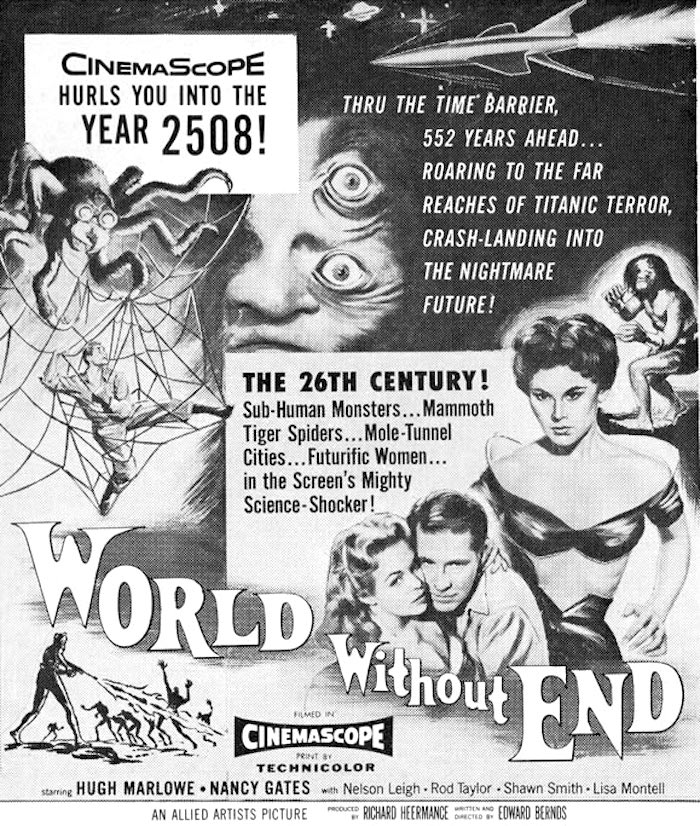
World Without End 1956

World Without End when viewed as a young lad at the time, was really gripping and at times scary – good colour and Cinemascope for them both.
World Without End 1956 2

World Without End

Satellite in the Sky 2


Satellite in the Sky

Satellite in the Sky – Start of the Take-off
Satellite in the Sky 2

Satellite in the Sky – The Spaceship speeding up the Ramp

Satellite in the Sky 3

Satellite in the Sky – We have lift-off
Satellite in the Sky 4

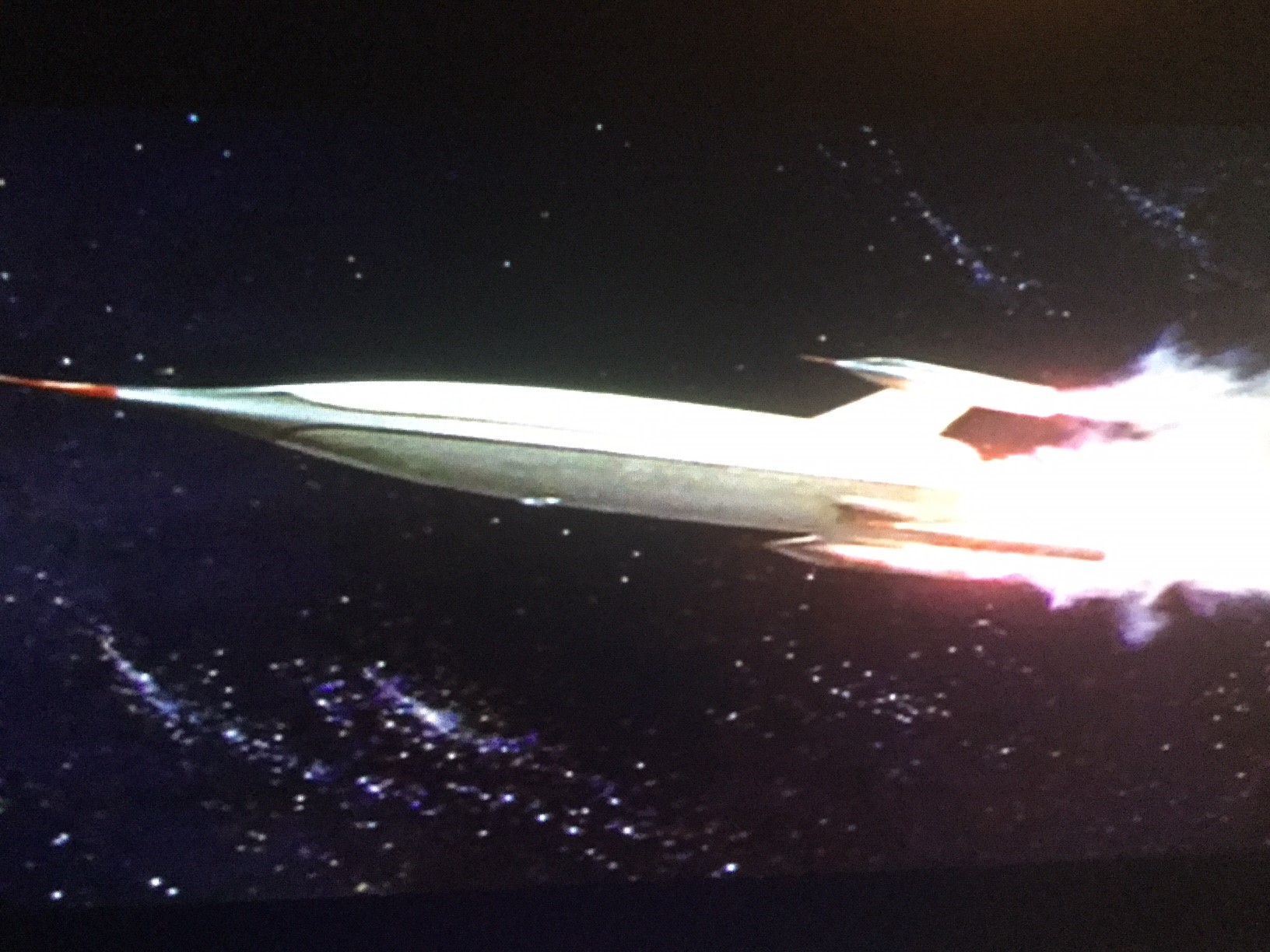
Satellite in the Sky – The Spaceship cruising along in space

Satellite in the Sky 5

Satellite in the Sky 6

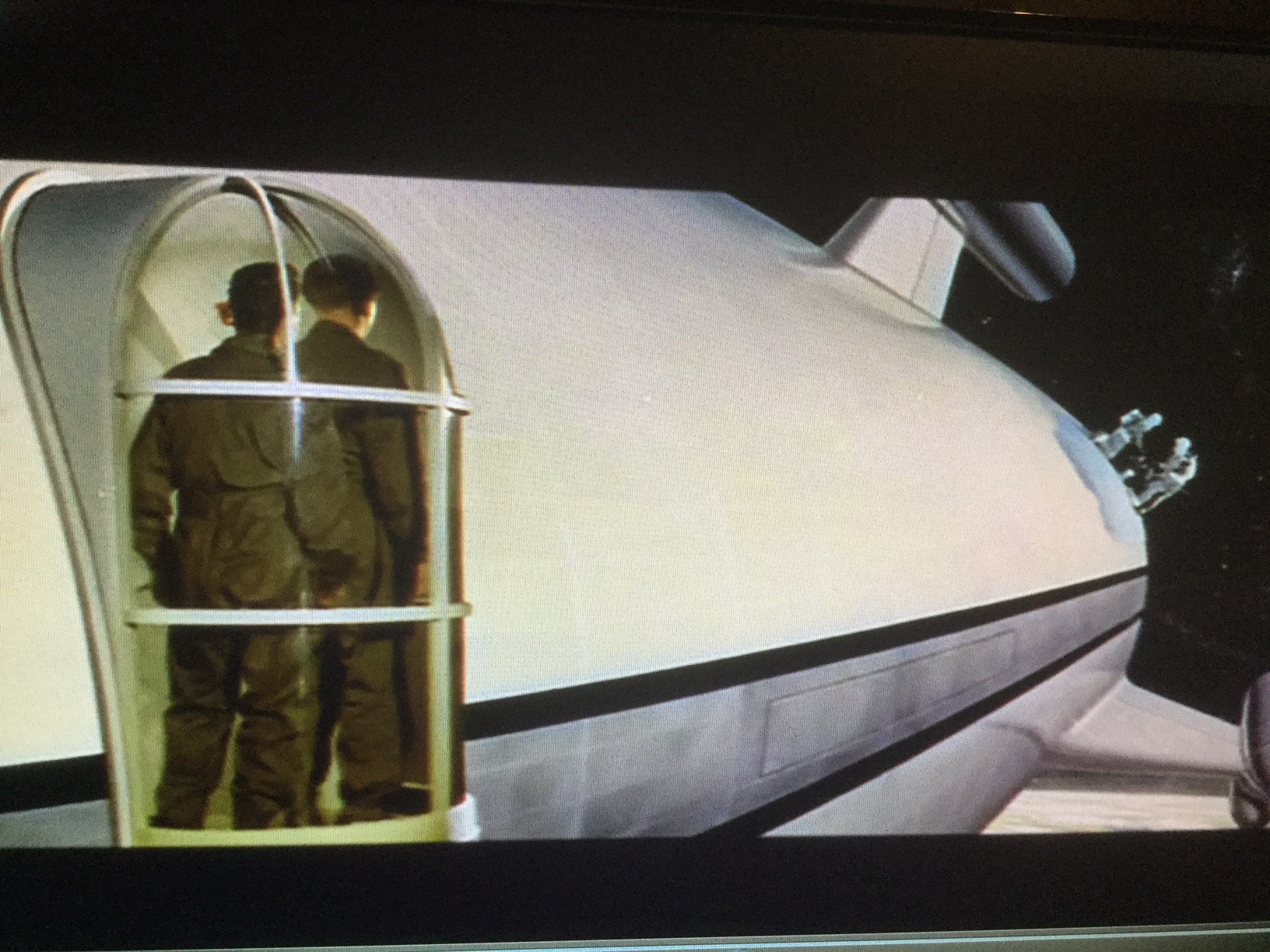
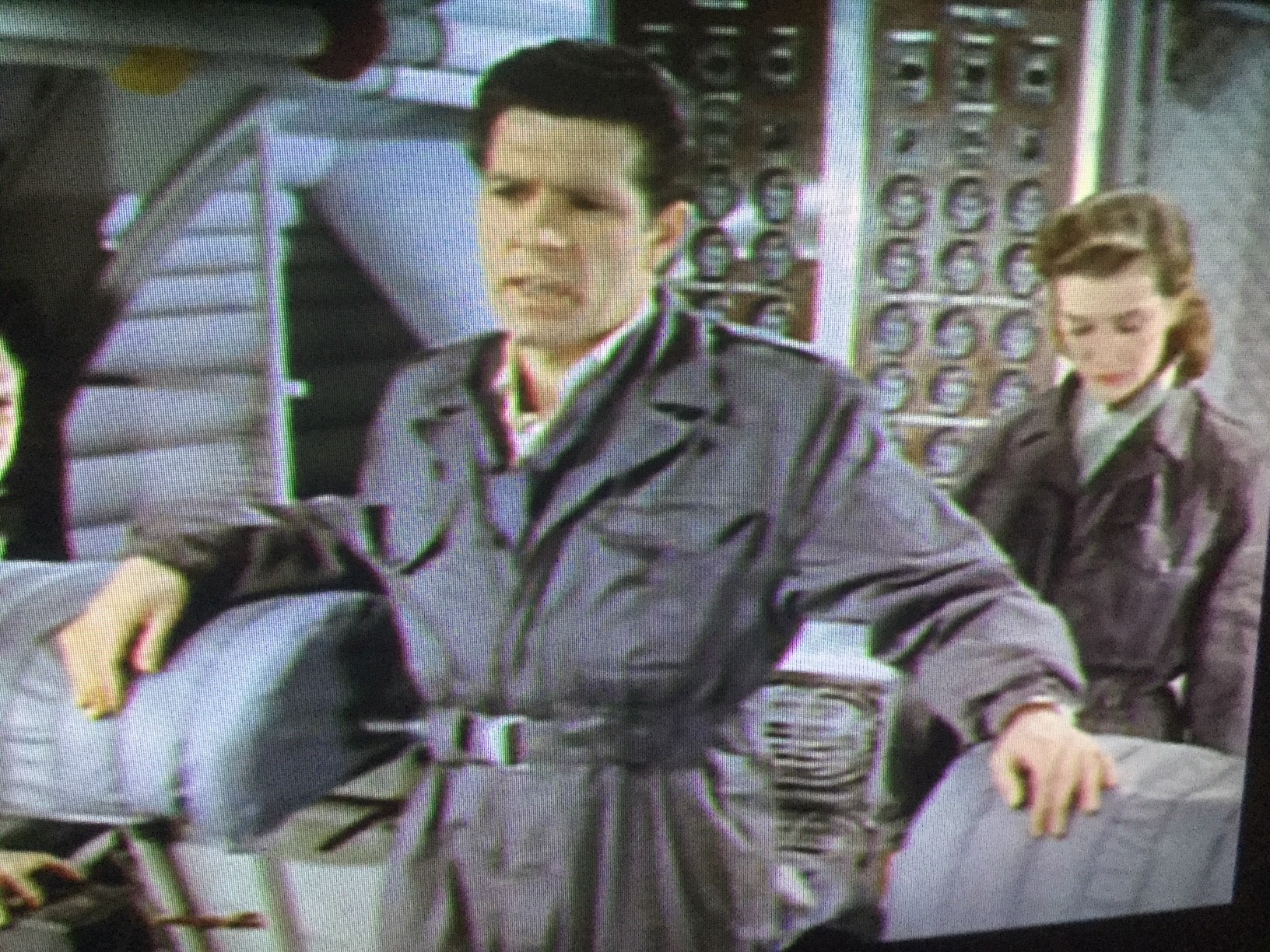
One scene in Satellite in the Sky on the big wide screen that remains with me to this day is a brief shot when Keiron Moore looks out of the space craft from a side viewing area, and we are looking back with him towards the earth and other planets – and that was extremely well done although you could see that it was fake – it didn’t seem to matter anyway as the film was so enjoyable.  Now I see it again – as above – still pretty good, I would say.
 

Satellite in the Sky 8

Kieron Moore and Lois Maxwell on board the Spaceship


posted by Movieman in Uncategorized and have Comments (13)

Julie Adams has died

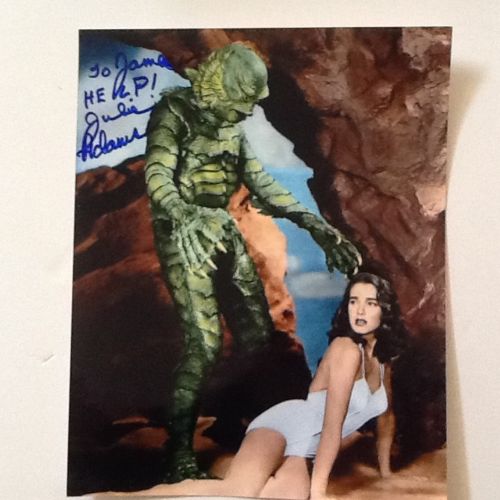
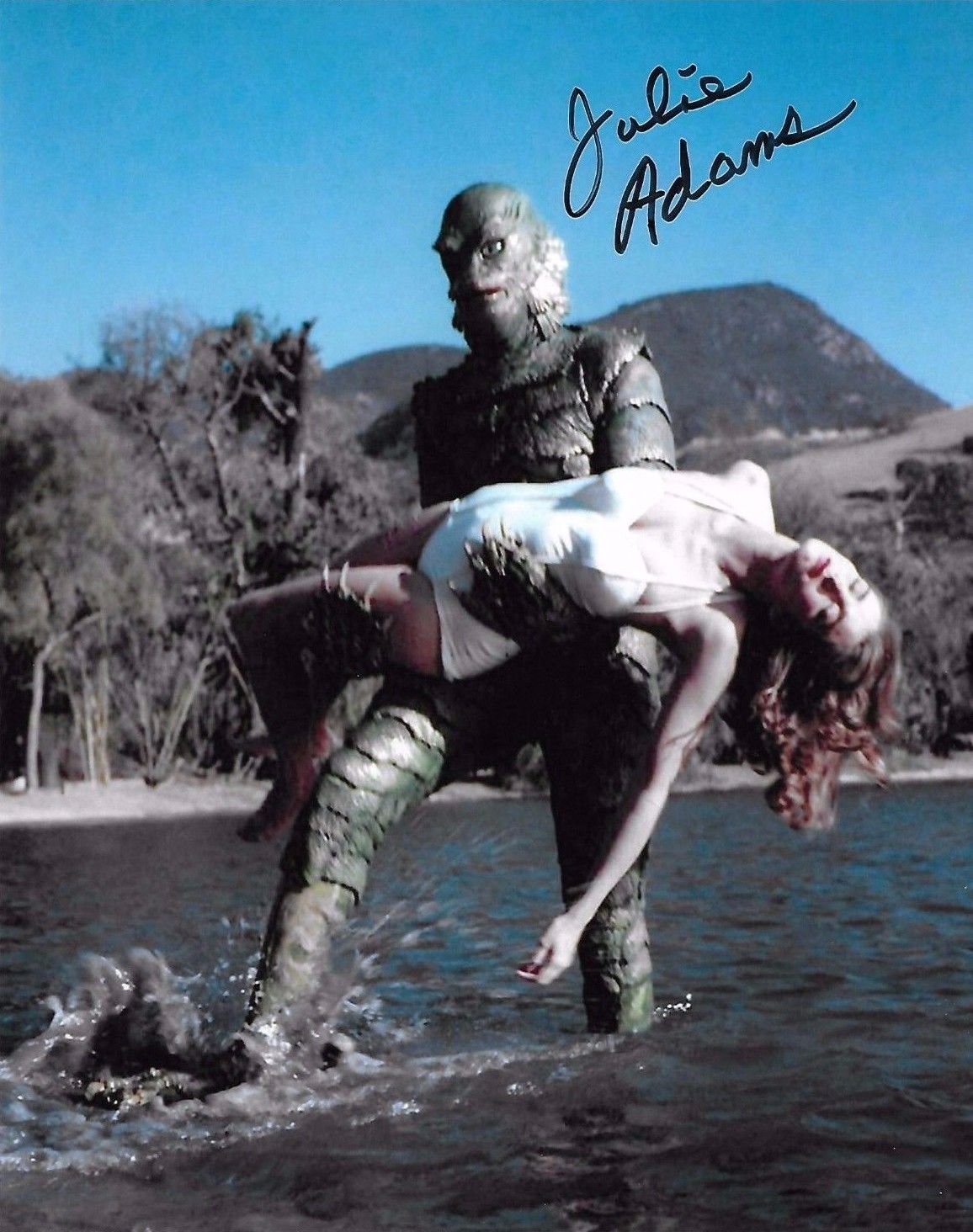
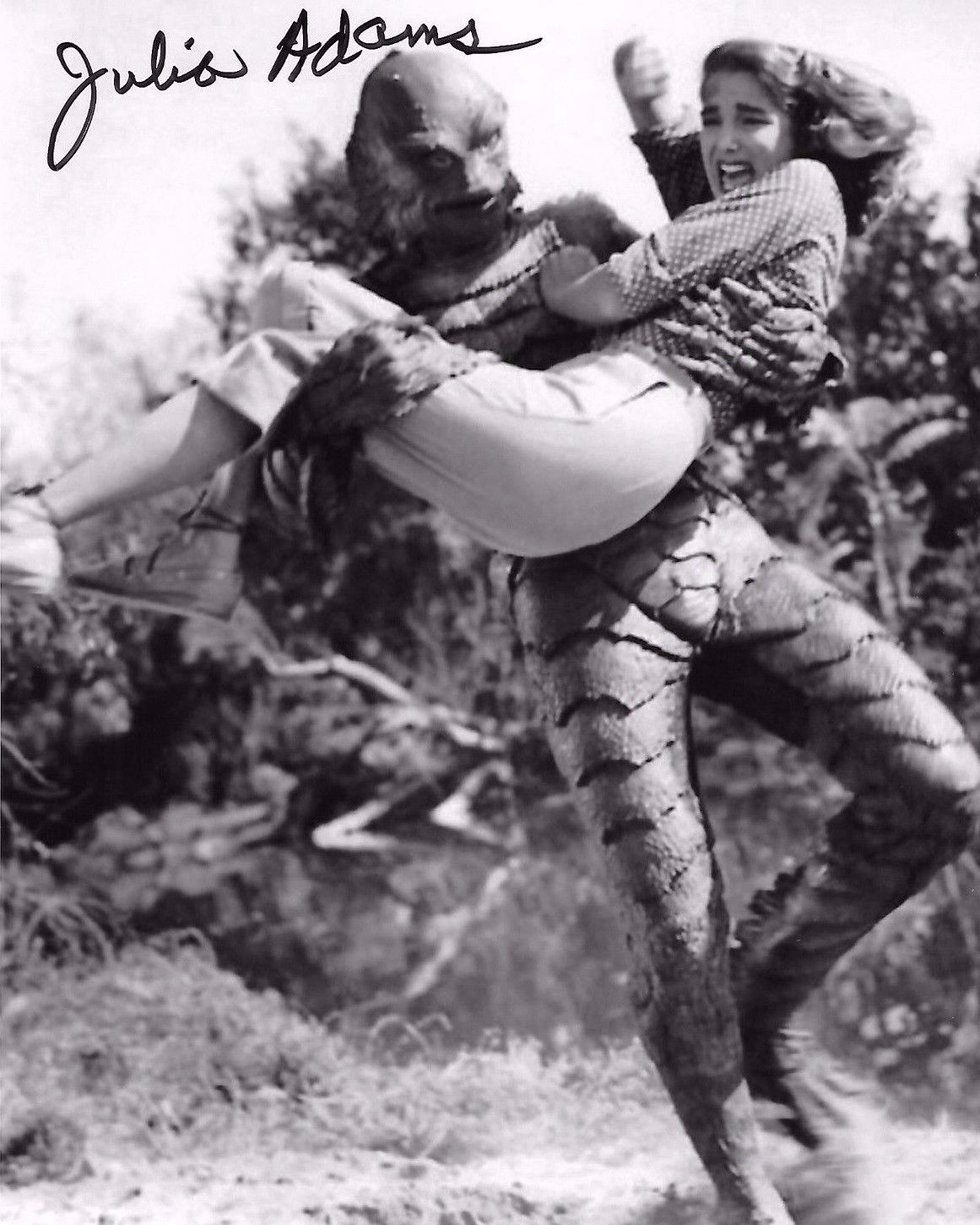
Julie Adams died earlier this month in Los Angeles, her son Mitchell Danton has said.  Her most famous – and most remembered role would be in The Creature From the Black Lagoon 1954 with Richard Carlson – and The Gill Man

Years ago when my daughter was small,  she had woken up and come through to watch the TV with me when this film was showing as a late night film. She was scared stiff when the Gill Man came up beside the trapped boat on the River in this film. His entrance from the water was really quite scary and very well done.

My daughter mentions it on occasions to this very day.

Julie Adams 6

Above – A very lovely picture of the beautiful Julie Adams


Her career spanned  six decades in film and on television – she starred with Donald O’Connor in Francis Joins the WACS (1954), played opposite Elvis Presley in Tickle Me (1965) and appeared with Dennis Hopper in The Last Movie (1971) and with John Wayne in McQ (1974).

Much later came  Murder, She Wrote where she played  Eve Simpson on the long-running Angela Lansbury series, and in the early 1970s, she portrayed James Stewart’s wife in the legendary actor’s first foray into starring on his own series.

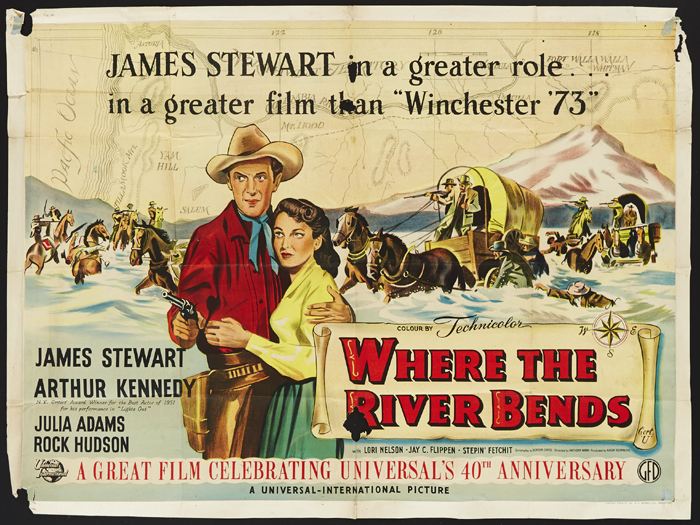
Julie Adams Where the River Bends

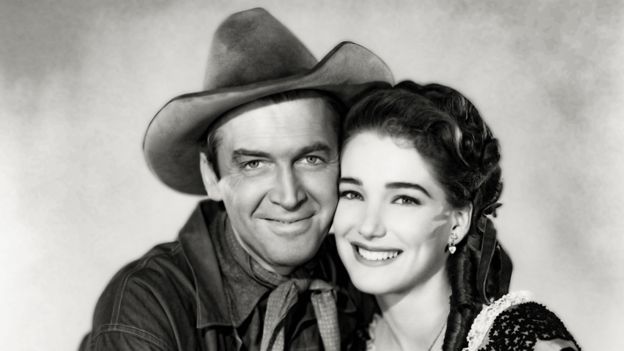
IN Where The River Bends – she was billed as Julia Adams which she very soon after changed to Julie.

Above with James Stewart

Where the River Bends


Julie Adams – then Julia Adams  – had starred alongside as Arthur Kennedy in Bright Victory (1951),  James Stewart in  Where The River Bends (1952), William Powell in The Treasure of Lost Canyon (1952), Rock Hudson in The Lawless Breed (1953) and Van Heflin in Wings of the Hawk (1953).

As a publicity stunt, Universal Studios once declared her legs “the most perfectly symmetrical in the world” and insured them for $125,000. And in “The Case of the Deadly Verdict,” a 1963 episode of Perry Mason, Adams’ character had the notable distinction of being one of the lawyer’s few clients to be found guilty.

Then the actress was offered the role that assured her a place in monster-movie history.

Julie Adams

Seeking to cash in on the growing popularity of 3D films, Universal began production on Creature From the Black Lagoon. Jack Arnold, who had just done It Came From Outer Space, directed this one.

Julie Adams 2

The studio wanted Julie Adams to star as Richard Carlson’s girlfriend, Kay Lawrence, who would become the creature’s object of desire. However at first Julie Adams considered the whole thing a step down in her career.

Julie Adams 3

“I thought, ‘The creature from what? What is this?'” she said in a Television interview in 2013, “because I had been working with some major stars and so on. But I read it and said, ‘If I turn it down, I won’t get paid and I’ll be on suspension.’ And then I thought, ‘What the hay! It might be fun.’ And of course, indeed it was. It was a great pleasure to do the picture.”

BELOW – On this Link View the Thrilling Trailer to the film:

Creature From the Black Lagoon has become a cult classic, with Gill-Man joining the pantheon of Universal legendary monsters alongside Frankenstein, Dracula, The Wolf Man and The Mummy. It spawned the sequels Revenge of the Creature (1955), also in 3D, and The Creature Walks Among Us (1956).  Julie Adams did not appear in those.

In her Horror Society interview, she offered one reason why the first film remains so popular. “I think the best thing about the picture is that we do feel for the creature. We feel for him and his predicament,” she said.

She had made her film debut in an uncredited role in Paramount’s Red, Hot and Blue (1949), and after that was cast in a number of Westerns. Then known as Betty Adams, she served as the female fixture in The Dalton Gang (1949), then played the heroine Ann in Hostile Country, Marshal of Helldorado, Crooked River, Colorado Ranger, West of the Brazos and Fast on the Draw — all released in 1950.

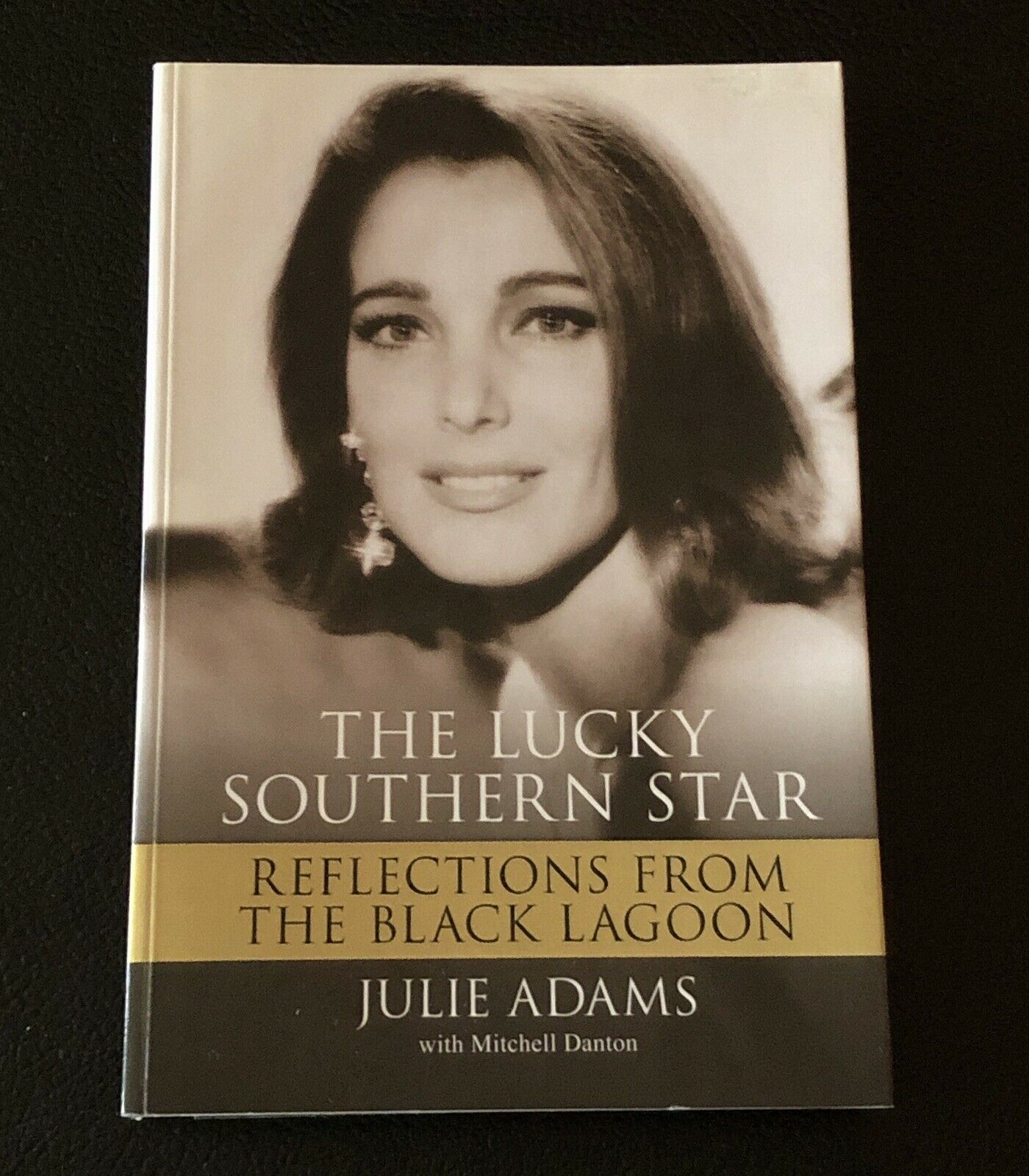
She wrote her Autobiography a few years ago

Julie Adams 4

This Book was published only about 8 or 9 years ago

Julie Adams 5

Julie Adams Autobiography would be a fascinating read I think – and I will now probably go out and buy it. There will be some real insights into her famous life and also details of films and film stars she met or worked with along the way in her six decades long film career.


posted by Movieman in Uncategorized and have Comments (10)

The Lone Ranger 1956 Film and the follow up

The Lone Ranger Film Version 1956

The Lone Ranger

Above: Hi Ho Silver.

The Lone Ranger 2

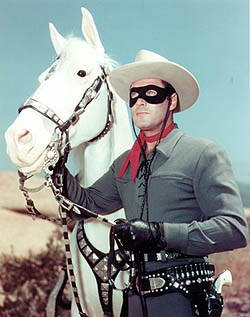
In 1956  Warner Brothers brought us a full length film version of  The Lone Ranger,  starring Clayton Moore and Jay Silverheels.

Shot in WarnerColor

“The Lone Ranger” was the first of two feature films made in the 50s starring Clayton Moore as The Lone Ranger and Jay Silverheels as Tonto. It was of course, based on the long running TV series that began in 1949 and ended in 1957. It was produced by Jack Wrather who also produced the TV series.

The story here has the Lone Ranger and Tonto trying to find out what’s really going on in the town of Brasada as local rancher Reece Kilgore (Lyle Bettger) seems to be defying statehood for the territory against the wishes of the territorial governor (Charles Meredith). Kilgore has a hot headed foreman named Cassidy (Robert Wilke), who turns out to be a real enemy of the local Indian tribe and puts a number of his henchmen to work disguised as Indians so that the blame falls on the local tribe.

This, the first of two full length features to star Clayton Moore as the legendary masked

This film was quite successful at the Box Office so in 1958 there was a follow up

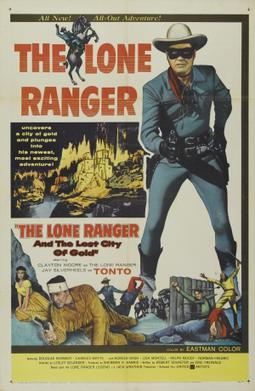
The Lone Ranger and the Lost City of Gold 1958

 The Lone Ranger and the Lost City of Gold 1958

“The Lone Ranger and the Lost City of Gold” was the second of two features made in the 50s starring Clayton Moore as The Lone Ranger and Jay Silverheels as Tonto. As in the previous film, there is an excellent cast of veteran western performers.

The “Lost City” of the title is an old Spanish city of gold hidden away on Indian tribal lands. There is a five piece amulet that when assembled, will show the location of the treasure. The holders of the various pieces begin to turn up murdered by a gang of hooded riders and it falls to The Lone Ranger and Tonto to solve the mystery and bring these people to justice

In many ways this story reminds me very much of a particular favourite of mine mentioned often on this Bl0g – The Secret of Treasure Mountain 1956 – where the hidden Braganza Crosses lead to the gold in Treasure Mountain.

I now have this film – The Secret of Treasure Mountain 1956 in 16 mm film form  – and on DVD I am pleased to say – as I reported below a year or two ago :-

The Secret of Treasure Mountain 1956 – NEWS

This is a film I have been searching for for years – and I am not alone in this search either. I know people who have read this Blog –  a previous Post on this film – and have commented about their looking for it for ages. As stated before, the plot fascinated me as a youngster when I saw it but due having to catch a bus to the remote village I lived in, I missed the climatic ending so never knew the outcome.  For some reason I thought that it involved an Inca treasure but that was not the case.

The Secret of Treasure Mountain 2


The film was released in 1956 and was a B movie with a running time of 68 minutes.

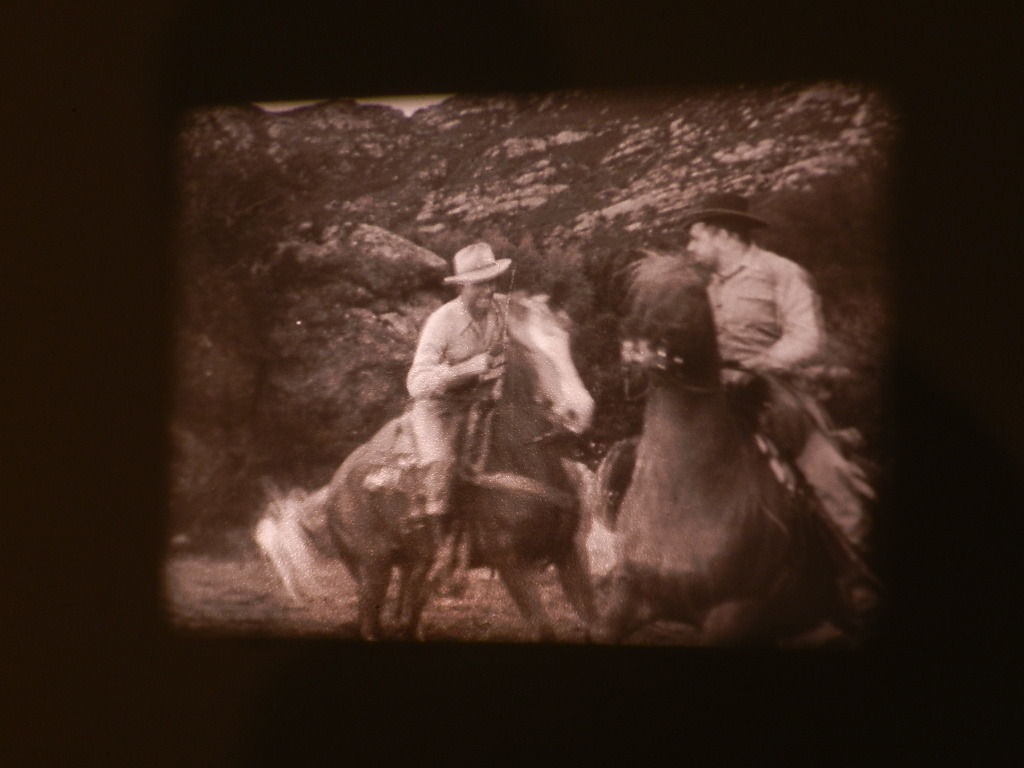
These scenes are from the 16 mm film – long lost. The News is GOOD in that I have found a 16 mm print of the film which as we speak is on its way here – I had better be wary and say that with luck it will be here within a week.

This is GREAT NEWS for films fans I know. I may have to arrange a new WORLD PREMIER in the UK – new for this century I would guess !!  


posted by Movieman in Uncategorized and have Comments (11)

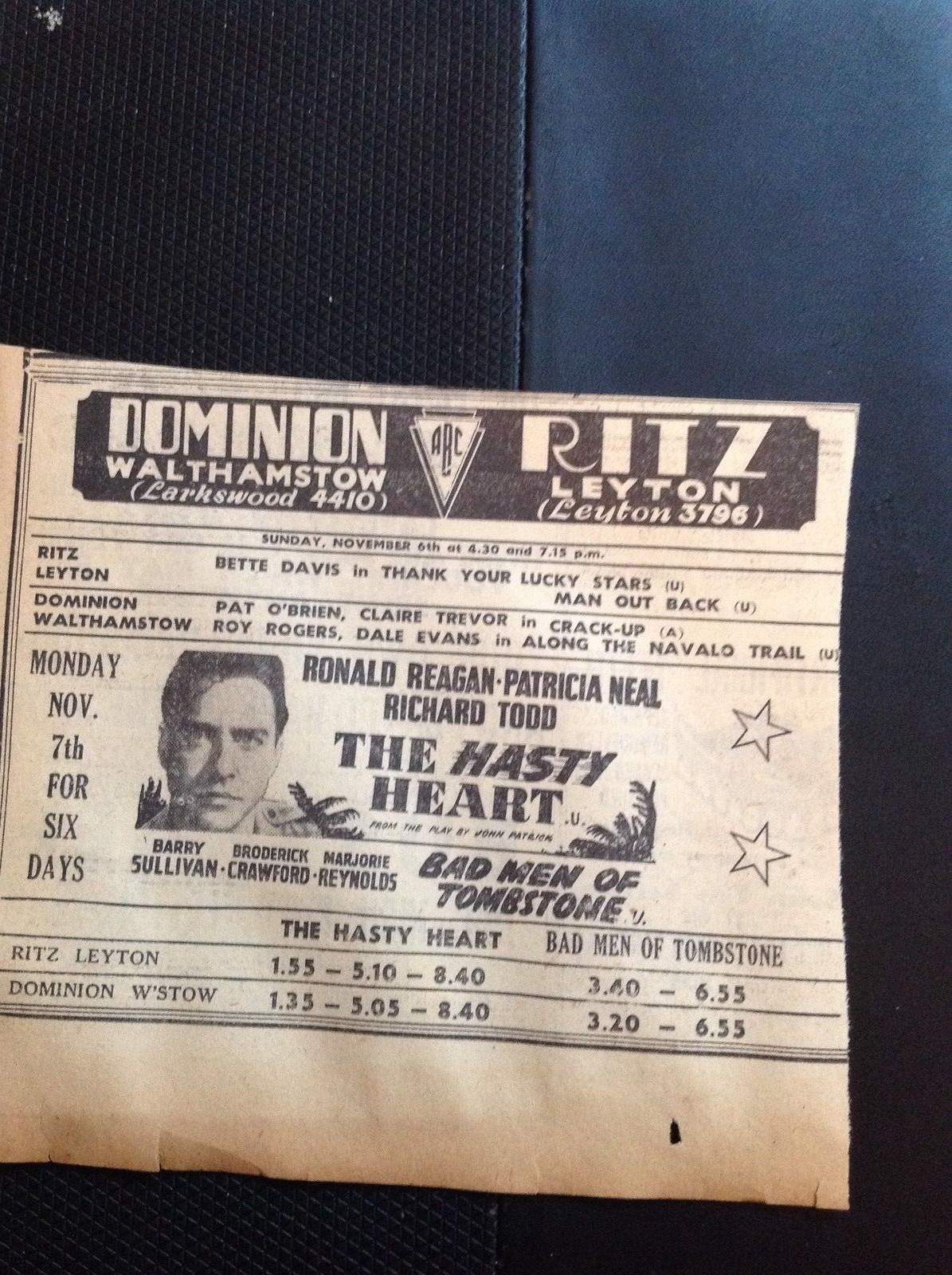
The Hasty Heart

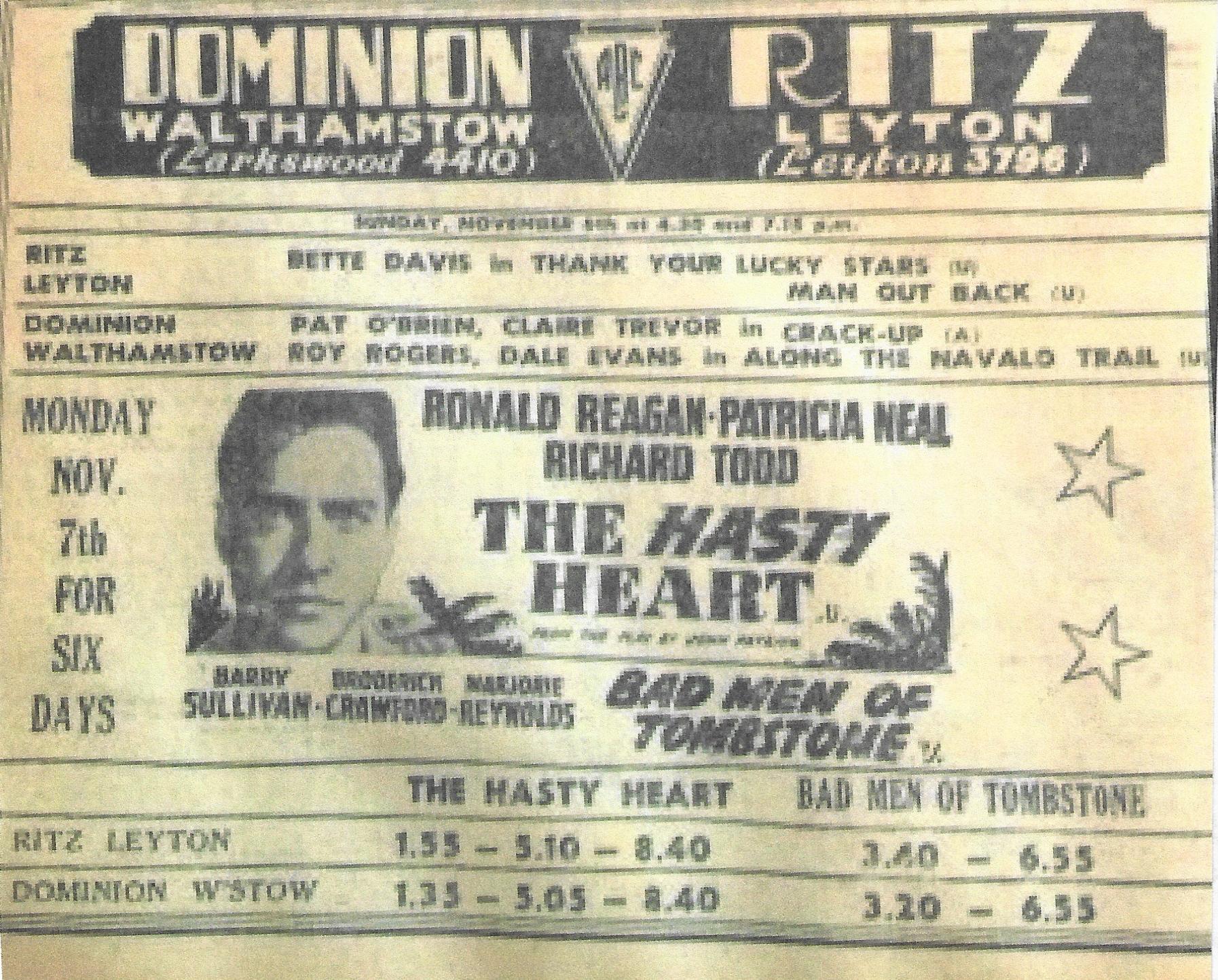
A great success on both sides of the Atlantic – THE HASTY HEART

The Hasty Heart 1950


Ronald Reagan came over to England to make this film – as of course did Patricia Neal

Richard Todd gave an absolutely wonderful performance as the  soldier Lachie who has no idea that he is dying.   Totally alone in the world with a terrible attitude, the film deals with his coming to realise that there is kindness in the world. Naturally, this is put to the test when he discovers the truth.

Ronald Reagan is excellent as the American soldier who works with the others in the Burma Hospital to bring happiness to the Scot.

Richard Todd received a best actor nomination for his performance. It catapulted him to stardom as it was such a big hit on both side of the Atlantic.

Patricia Neal is equally impressive as the nurse who goes out of her way to show kindness to the dying the Scot.

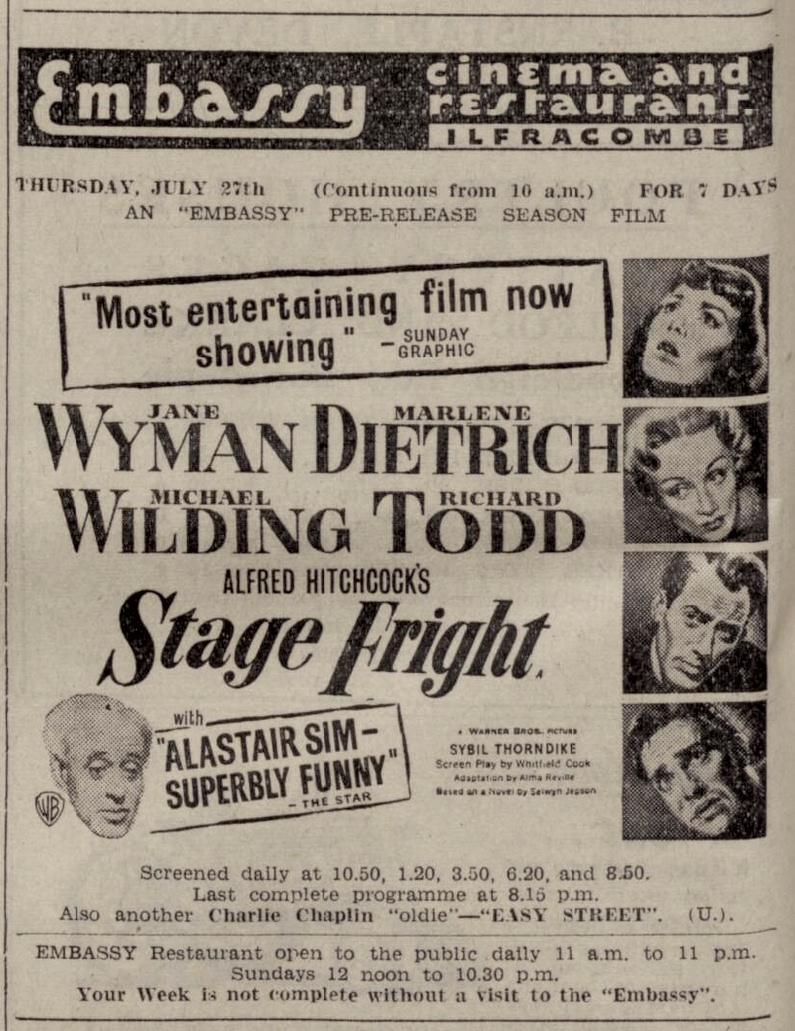
Stage Fright


Richard Todd was back in Alfred Hitchcocks Stage Fright – Made In England. This did not do much for Richard Todd’s career though as the film was just about ok – and didn’t fare that well at the Box Office.


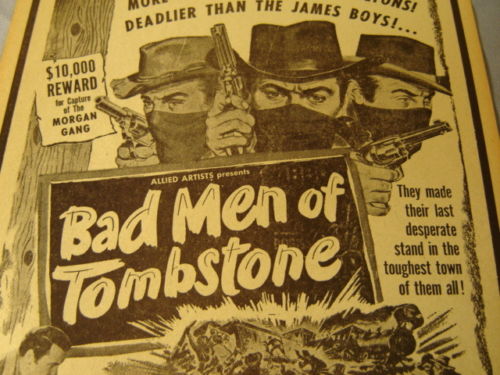
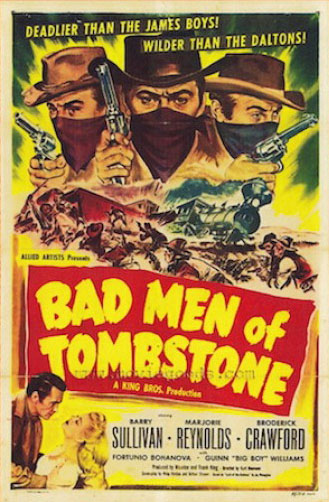
When I saw the supporting film on the programme with The Hasty Heart, I had to look much further into it as this was a Western that I did not know although it does get quite good reviews.

Bad Men of Tombstone 1949

Bad Men of Tombstone 1949

Bad Men of Tombstone 1949 2

With Barry Sullivan and Broderick Crawford we had two pretty top line actors involved.  It is ironic that this is on the same bill as The Hasty Heart because Richard Todd was narrowly beaten to the Oscar that year by none other than Broderick Crawford in All The Kings Men – and here he is on the supporting programme to the Richard Todd film – so in this respect he is Second Billed here anyway.

posted by Movieman in Uncategorized and have Comments (13)

Scenes I Can’t Forget – Margaret Hinxman Picturegoer 1959-60 Edition

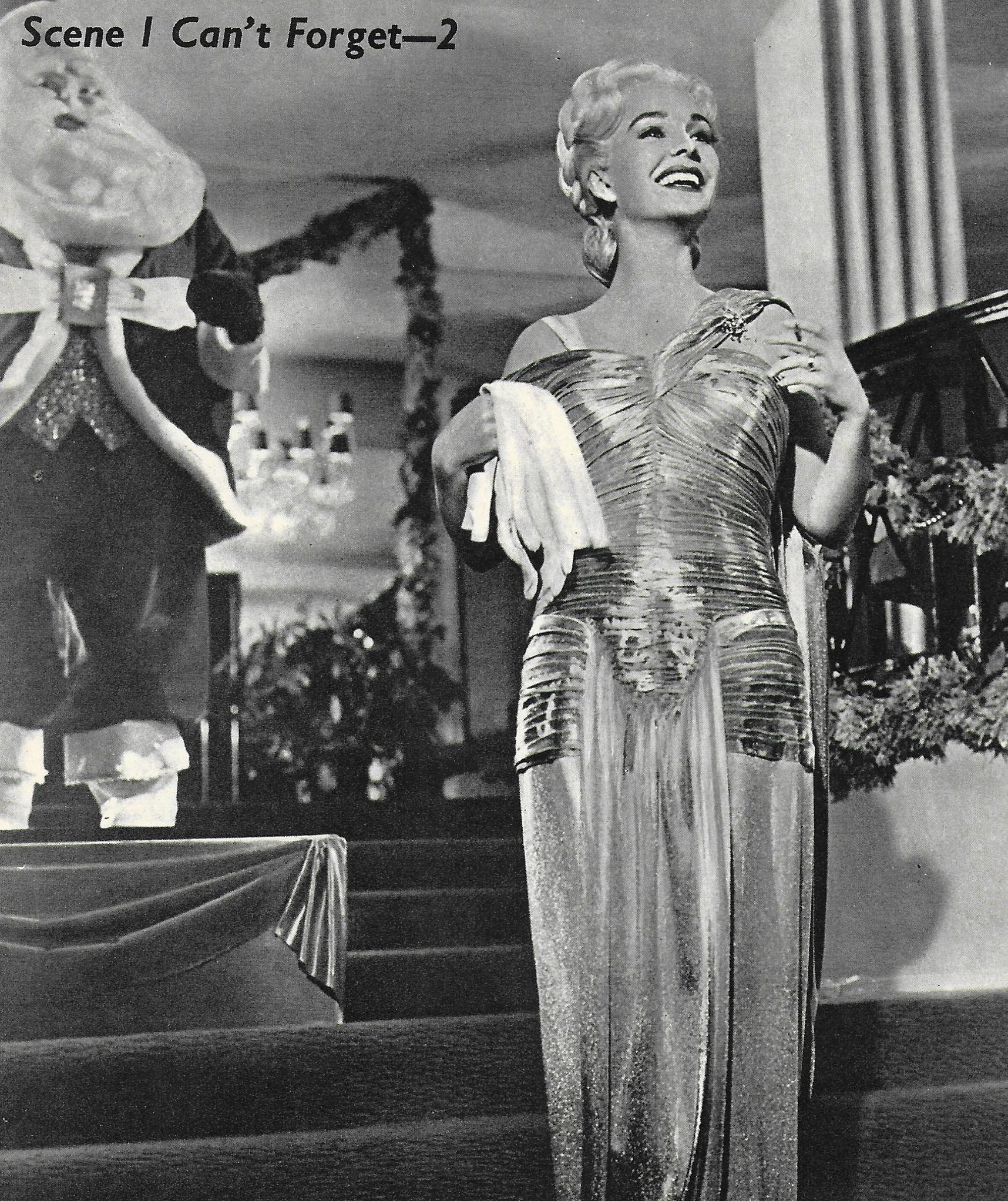
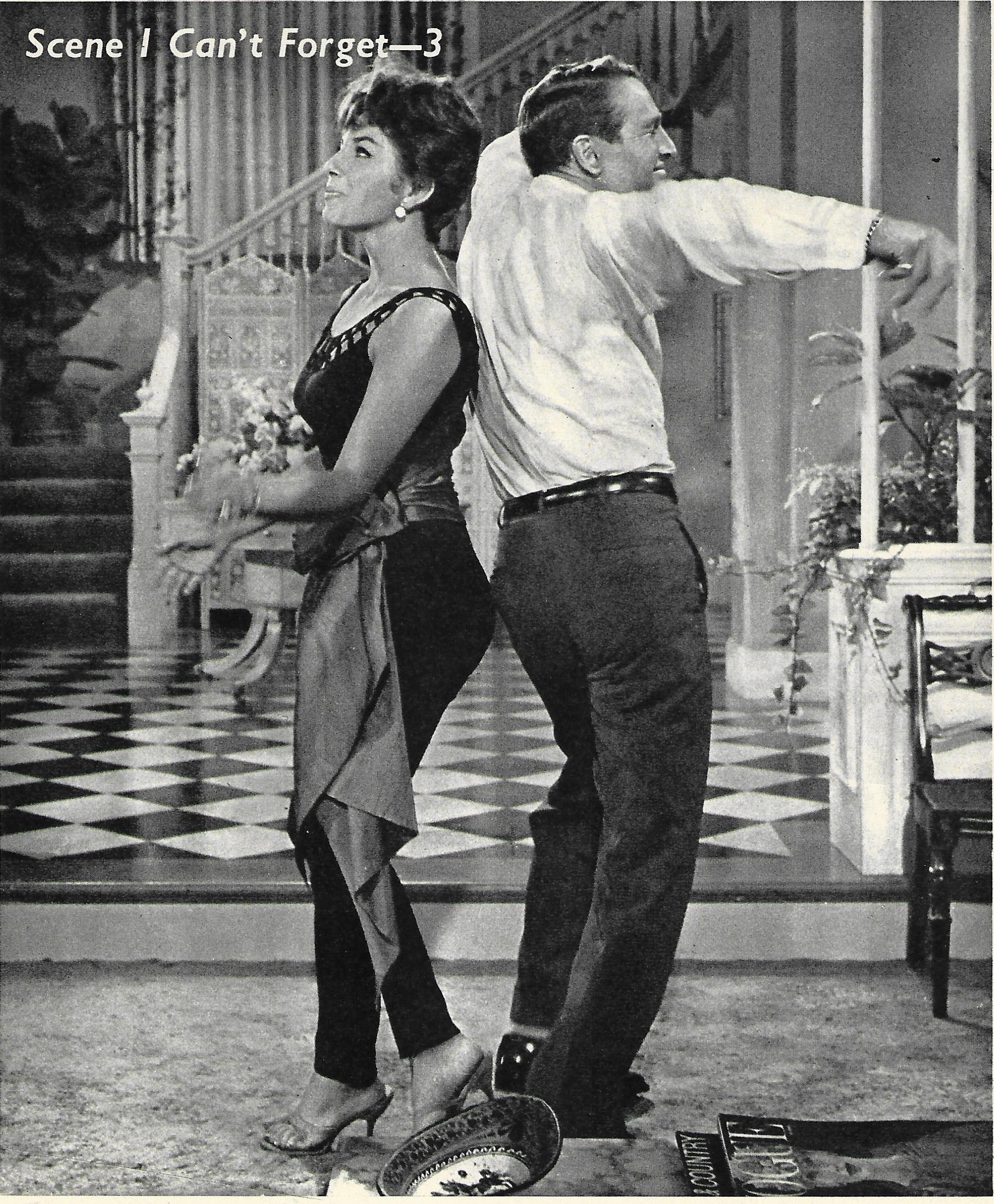
I have to say that these SIX Scenes I Can’t Forget was written by Margaret Hinxman – Chief Film Critic of The Picturegoer Magazine for the 1959-60 Annual.

They would not be my memorable scenes I have to say – but well worth looking at all the same.

After all Margaret Hinxman  was very knowledgeable on films of the era and had seen so many in her illustrious career which is outlined below

Scenes I can't forget

June Thorburn and Russ Tamblyn Tom Thumb 1959. Margaret Hinxman was amazed as we all were at the wonderful special effects in this film – as illustrated above

Scenes I can't forget 2


ABOVE: Jean Simmons in Home Before Dark – Here she makes a humiliating entrance, as a neurotic guest at a big dinner party. A grotesque pitiful figure, with her over blonde hair, over size dress and over heavy make-up, she teeters to her embarrassed husband’s table. A nightmare moment that must strike a chord of sympathy in every female picturegoer- and Jean Simmons makes it the most striking moment in a striking film.

Scenes I can't forget 3


Paul Newman and our own Joan Collins in Rally Round the Flag Boys

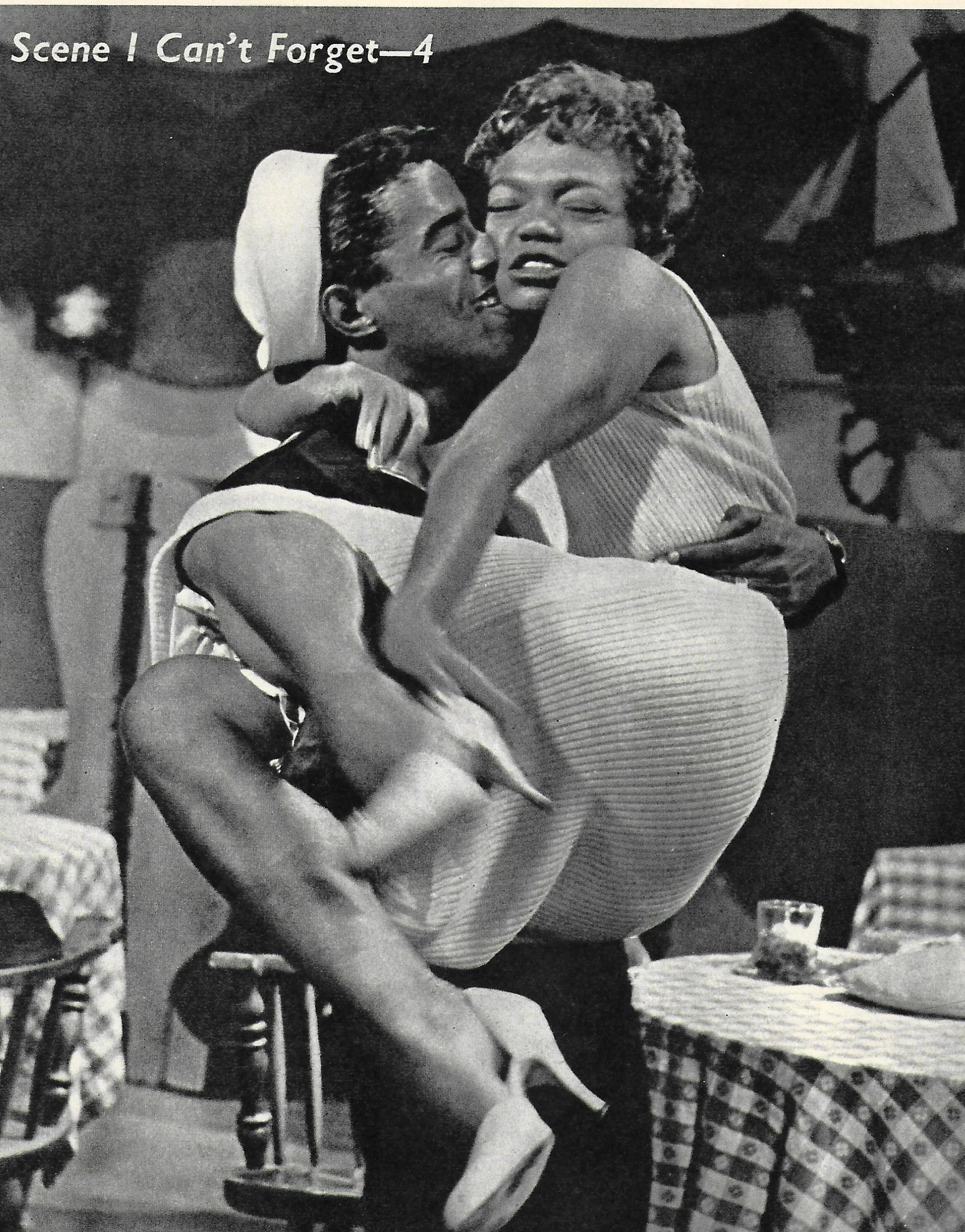
Scenes I can't forget 4


ABOVE: Sammy Davies Jnr. and Eartha Kitt in  Anna Lucasta – this was his first film appearance – and what an appearance that was.

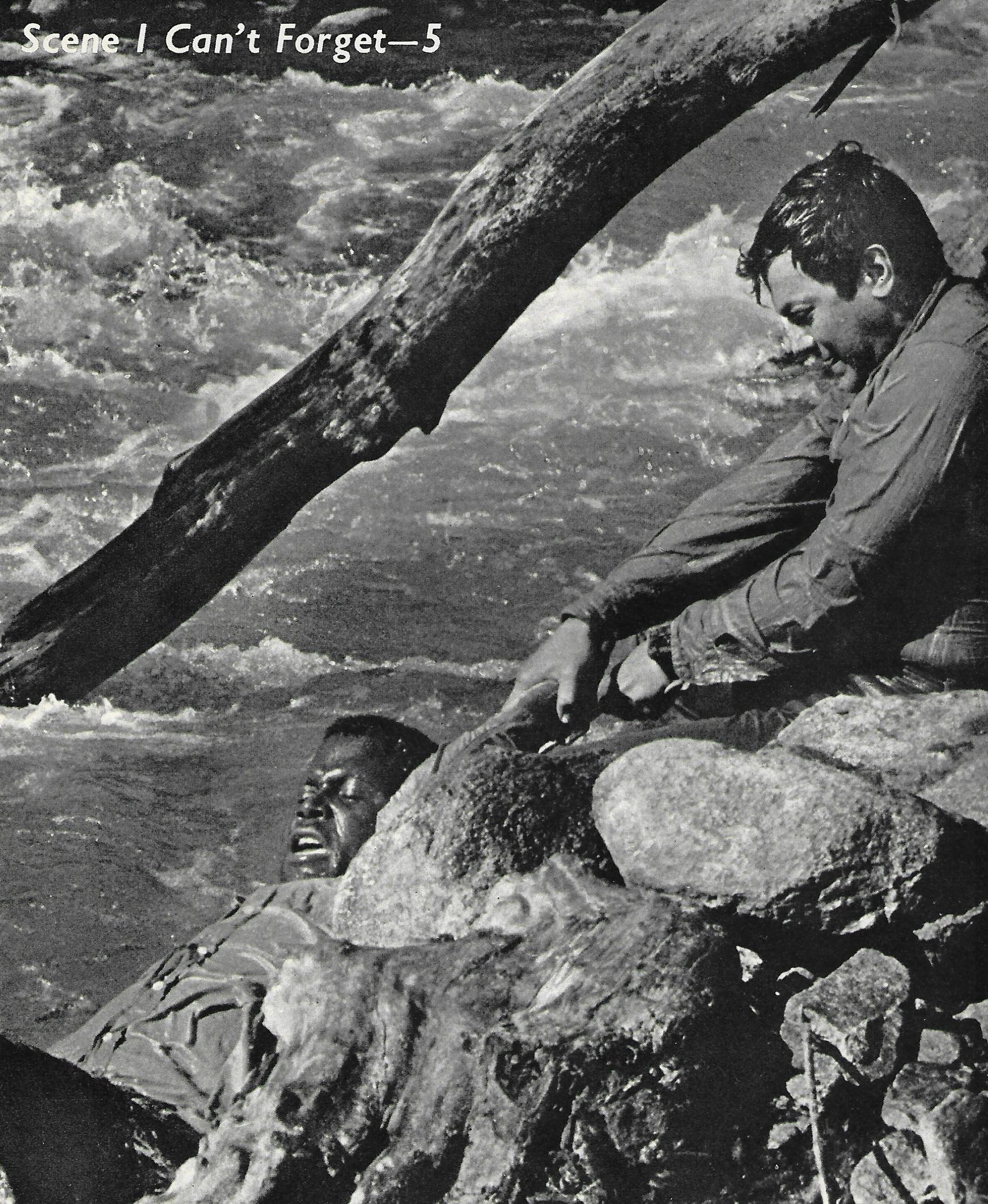
Scenes I can't forget 5

ABOVE: Tony Curtis and Sidney Poitier in a dramatic scene from The Defiant Ones

Scenes I can't forget 6


Above : Rex Harrison and Kay Kendall in The Reluctant Debutante.

Margaret Hinxman Obituary

One of the leading British film critics of the postwar years who went on to write crime novels

The writer Margaret Hinxman, who died aged 94 only a few months ago in October 2018, was one of the influential band of female critics who did much to encourage film in postwar Britain. She enjoyed a long and productive career on numerous magazines, including the influential Picturegoer, two national newspapers, the Sunday Telegraph and Daily Mail and as a writer of fiction.

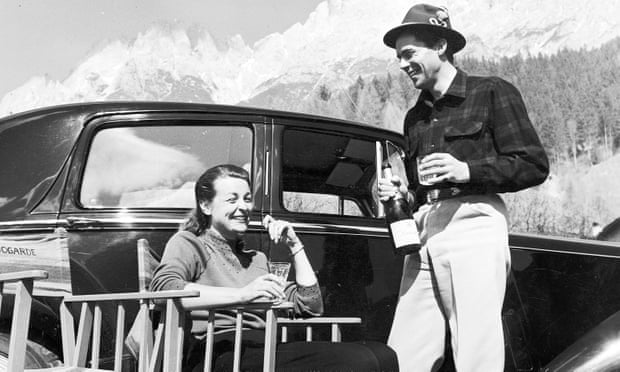
Margaret Hinxman with Dirk Bogarde


ABOVE With Dirk Bogarde while filming Campbells Kingdom


For Margaret Hinxman, the late 1970s, when she was working on the Mail, proved something of a turning point. She lamented the demise of her favourite genres – the musical and the traditional gangster movie – and found the ever-changing television schedules (she provided the capsule reviews of movies on TV) increasingly irksome. At the age of 60, she left to devote herself to a career as a writer of crime novels.

The youngest of four children of Charles Hinxman, a first world war veteran who worked on the railway, and his wife, Alice, Margaret was born in Greenwich, south-east London, and served in the Women’s Royal Naval Service towards the end of the second world war. She came from a family of film enthusiasts and saw up to three films a week as a child. Aged 21, she entered journalism as an editorial assistant (or “general dogsbody”, as she described it) on the feminist weekly magazine Time and Tide, later claiming that her career was based on this “happy accident”.

Her love of writing and cinema led over the next two decades to steady work. For Woman magazine, she provided extended celebrity interviews; for the glossy Queen she worked as a reviewer, and she published short stories in Woman’s Realm. Later in that busy period she became the reviewer for the trade paper Daily Cinema, sometimes reporting on the box-office potential of four films in a day.

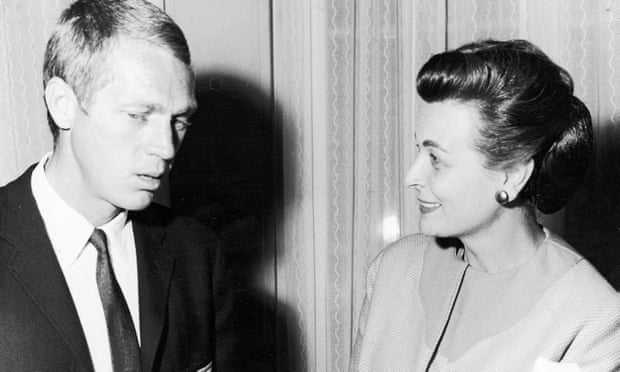
Margaretr Hinxman with Steve McQueen


Above: With Steve McQueen in 1966

But it was on Picturegoer (the superior rival to Pictureshow) that she came into her own from the late 40s onwards. This colourful, fan-based weekly, devoted to the careers and alleged love lives of (mainly) British and American stars, gave her opportunity for features and criticism. Those generous, but informed, opinions – especially when accompanied by four stars and the magazine’s seal of approval – sent film buffs hotfoot to join the queues.


In that austere period – well into the 50s and the onslaught of television – popular reviewers were influential and Hinxman wrote prolifically. After this 20-year “apprenticeship”, she was asked in 1966 to join the Sunday Telegraph, where she was given a free hand, with only one weekly visit to the office required.

This also allowed her time to freelance and she became a regular interviewer at the National Film theatre in London. Many of the lectures were filmed by BBC television and Hinxman proved an adept foil to occasional superstar egos. In the early 70s she began The Films of Dirk Bogarde (1974), written with her niece, the film publicist Susan D’Arcy; it was the only survey of his career on which the star collaborated.

In 1974 she was enticed to the higher profile job of critic at the Daily Mail. A decade later, when television listings and advertising-led reviewing became an increasing burden, she decided to leave London and popular journalism for the south coast and a different venture.

Between 1976 and 1991 she published, under the Collins Crime Club imprint, nine thrillers, including One-way Cemetery (1977), The Night They Murdered Chelsea (1984) and Nightmare in Dreamland (1991). After the Show (1993) was a change of pace: although crime-based, it was an affectionate portrait of a theatrical dynasty, containing nicely judged liberal touches salted among the showbiz story.

When a big-business-based novel, Losing Touch, initially found no publisher (though it was later published by Severn House, in 1996), she decided to enjoy retirement to the full and travelled extensively, mainly in the US and Canada, with her sister Elizabeth, with whom she shared a home in Sussex.

After her sister’s death, she lived with Susan, and then close by in a nursing home.


posted by Movieman in Uncategorized and have Comments (12)

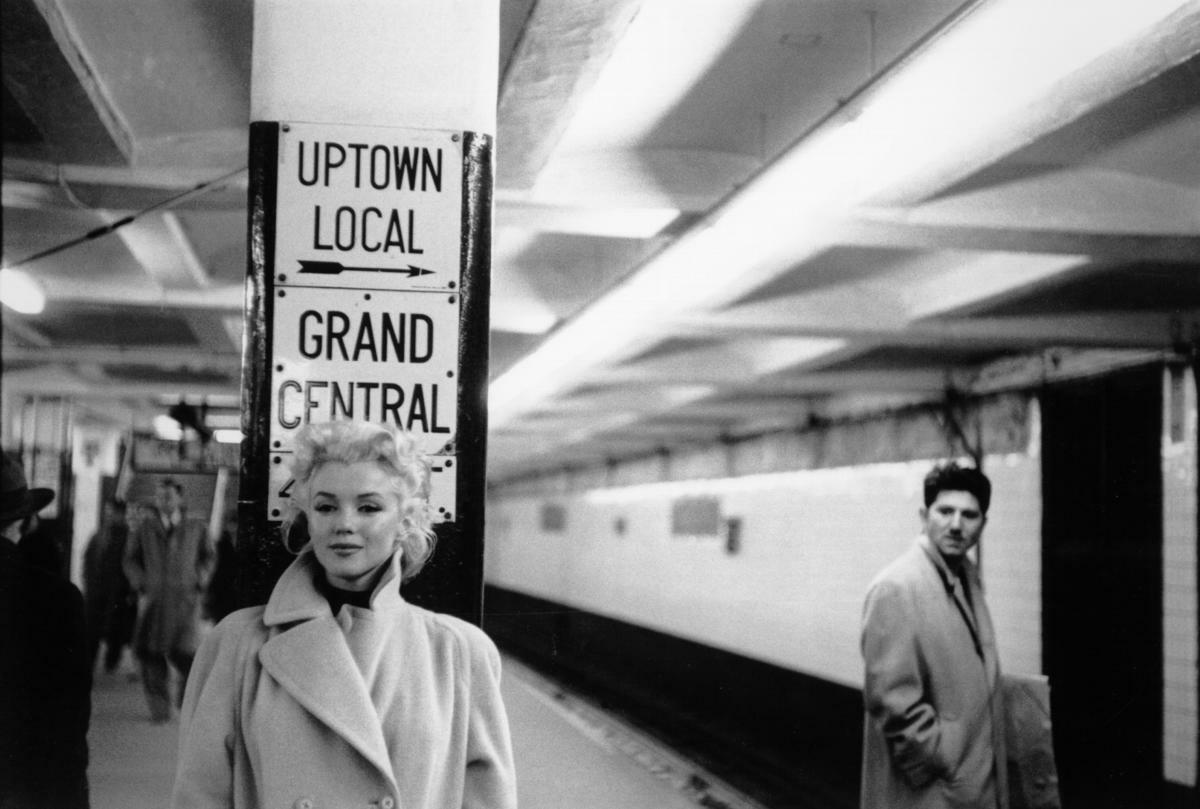
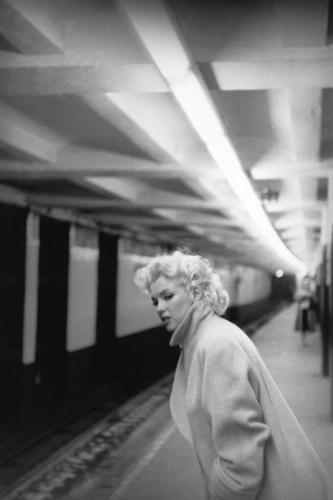
Marilyn Monroe – more pictures

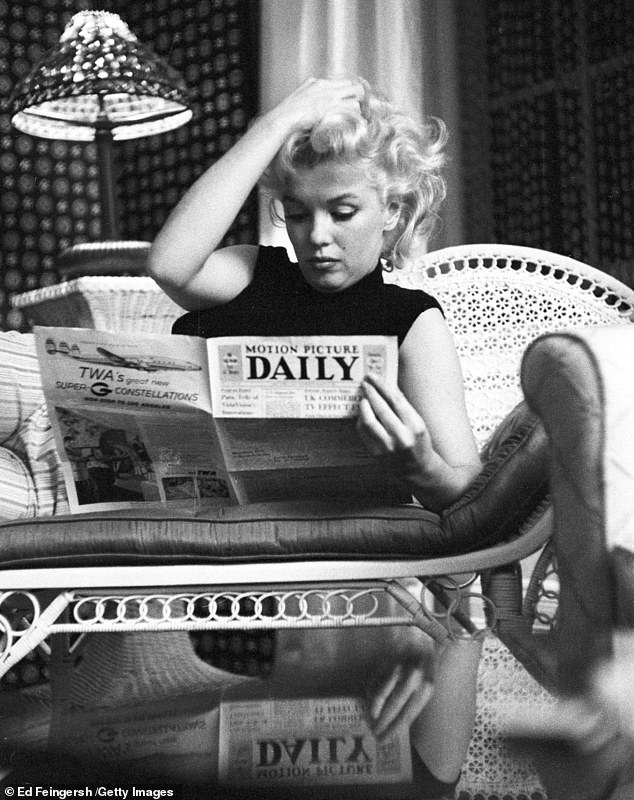
It always seems a good idea to include on the Blog as much as I can about this screen actress – and what a screen actress she was and for that matter still is.

Marilyn Monroe 6

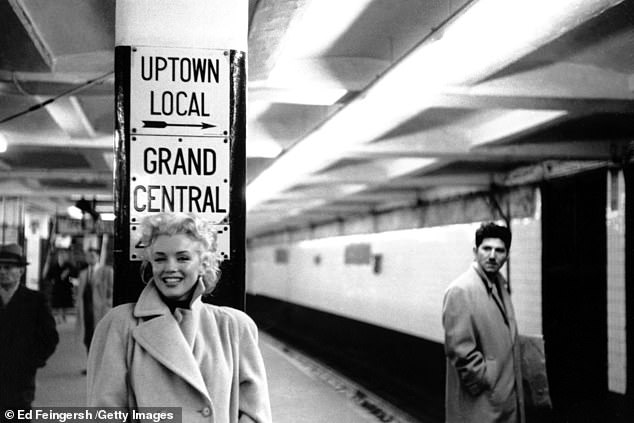
 Marilyn seems to have appealed to the man getting on the train – well she would wouldn’t she !

Marilyn Monroe 7

Above: Boarding a train at New York Central Station in 1955

She visited London and stayed for quite a few months during 1956 for the filming of The Prince and the Showgirl with Sir Laurence Olivier

Marilyn Monroe 2

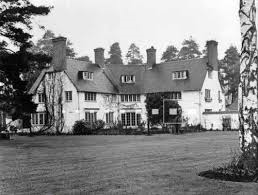
During that period in England  she seemed to socialise quite a lot  – mainly in London of course although she and her husband Arthur Miller rented a house in the country at Wick Lane, Englefield Green a beautiful location close to the edge of Windser Great Park – and not too far from Pinewood Film Studios.

Parkside House

It was the summer of 1956, when the world’s press turned their attention to the tiny village, which had become home to one of most famous faces in the world.

Marilyn Monroe and her new husband, playwright Arthur Miller had moved from Hollywood, to a large house in Englefield Green.

Parkside House was hidden away in Wick Lane, a small country road which leads into Windsor Great Park.

The film star was in the country to film The Prince and the Showgirl, with Sir Laurence Olivier.

Parkside House 2

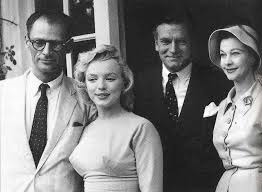
 Above: Arthur Miller with Marilyn at their home in England with Sir Laurence Olivier and Vivien Leigh who each look totally overawed by being in Marilyn’s presence. Sir Laurence looks totally besotted. 

Parkside House 3

Some of the people who were around at that time shared their memories :-

Marilyn’s chauffeur’s widow, now in her 80s, told us that she has letters and photographs from Mr and Mrs Miller, thanking him for his services throughout their stay, including driving them back to the house, through thick fog.

But her husband was never mentioned in either of

Having spent time at the house and after hearing from her husband about his daily experiences as Marilyn’s driver, she has many clear memories of events during that period.

Some  local people do still have very personal memories of Marilyn and Arthur Miller in Englefield Green, which have never been shared publicly before.

Nigel Hammett’s Aunt Florrie lived in a small flat in Parkside House at the time, when she worked in the market garden.

As a 15 year old schoolboy, he recalls being very embarrassed and completely bowled over by Marilyn when introduced to her by his aunt. He says she was “stunningly beautiful.”

Patrick O’Shea, now living in Australia, remembers the day when Marilyn went shopping for shoes!

He told us his stepfather Frank Parker and mother Dorothy, ran a shoe shop at 42 High St, Egham called Woodmans.

One day a chauffeur-driven car pulled up outside and the driver came in, advising Patrick’s parents that Miss Monroe required a pair of tennis shoes.

Having been handed a piece of paper noting her size, his stepfather duly boxed up the shoes, before the uniformed driver paid for them.

As he was leaving the shop, Frank asked would it be possible to have some sort of memento of the star’s purchase from him.

Apparently, a few days later, her chauffeur returned with an envelope containing a signed photograph, which he gave to the couple, on the strict understanding it was not to be used for any advertising.

It was of Marilyn and her husband cycling in Windsor Great Park, and showed her wearing the tennis shoes.

Patrick, then aged 16, added:  “What a buzz that night , when I told my friends!”

“I will say this – they look very happy in the photo and they were not too important to ignore the request from a very small local shopkeeper and give great pleasure to my parents. I am now probably the only one left to recall this very small event but big in my memory of course..”

“I now have the photo and smile with fond memories at the mention of Marilyn Monroe.”

It is possible this was the same bicycle given to the star on her arrival in the UK, by national newspaper the Daily Sketch, in the hope of getting lots of shots of her riding it.

It was later reported that the paper’s editor was somewhat disappointed that the only people ever captured on film using it, were members of Marilyn’s staff!

 Marilyn with Terence Rattigan

Marilyn With Terence Rattigan – he, of course was the writer of The Prince and the Showgirl – he also wrote the Screenplay for the film.

On 27 July 1956, Marilyn attended an evening house party at “Little Court” in Windlesham, on the invitation of the owner, writer Terence Rattigan.

PC 607 Jack Packham from Bagshot police station was on duty at the gates to keep out uninvited guests.

He had already waved through a string of famous faces such as Sir Lawrence Oliver with his wife Vivien Leigh, Dame Margot Fonteyn, Audrey Hepburn and John Mills.

A large black limousine pulled up and a body guard clambered out, waving a glass of champagne. He told PC Packham to let them through as it was Marilyn Monroe’s car.

The constable was reported to have said “I’m sorry sir, I don’t know the lady.”

He did eventually concede and allow the car to continue to the house!

And according to retired policeman and local historian Ken Clarke, whose boss happened to be PC 607 in later years, Jack Packham was teased mercilessly by his colleagues at the time, for not recognising Marilyn.

Marilyn Monroe 3

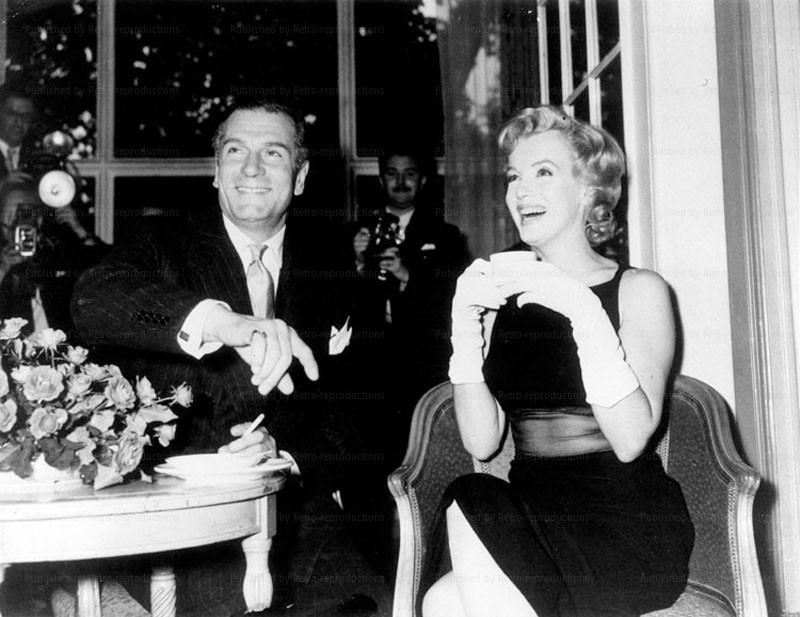
Marilyn with Sir Laurence Olivier at  the Press Conference soon after her arrival to film The Prince and the Showgirl.

Again in this picture he looks like ‘the cat who had got the cream’

NPG x136481; Jeremy Spenser; Marilyn Monroe on the set of 'The Prince and The Showgirl'

Above: A very disinterested Jeremy Spenser sitting next to Marilyn on the film set


THE PRINCE AND THE SHOWGIRL 1956

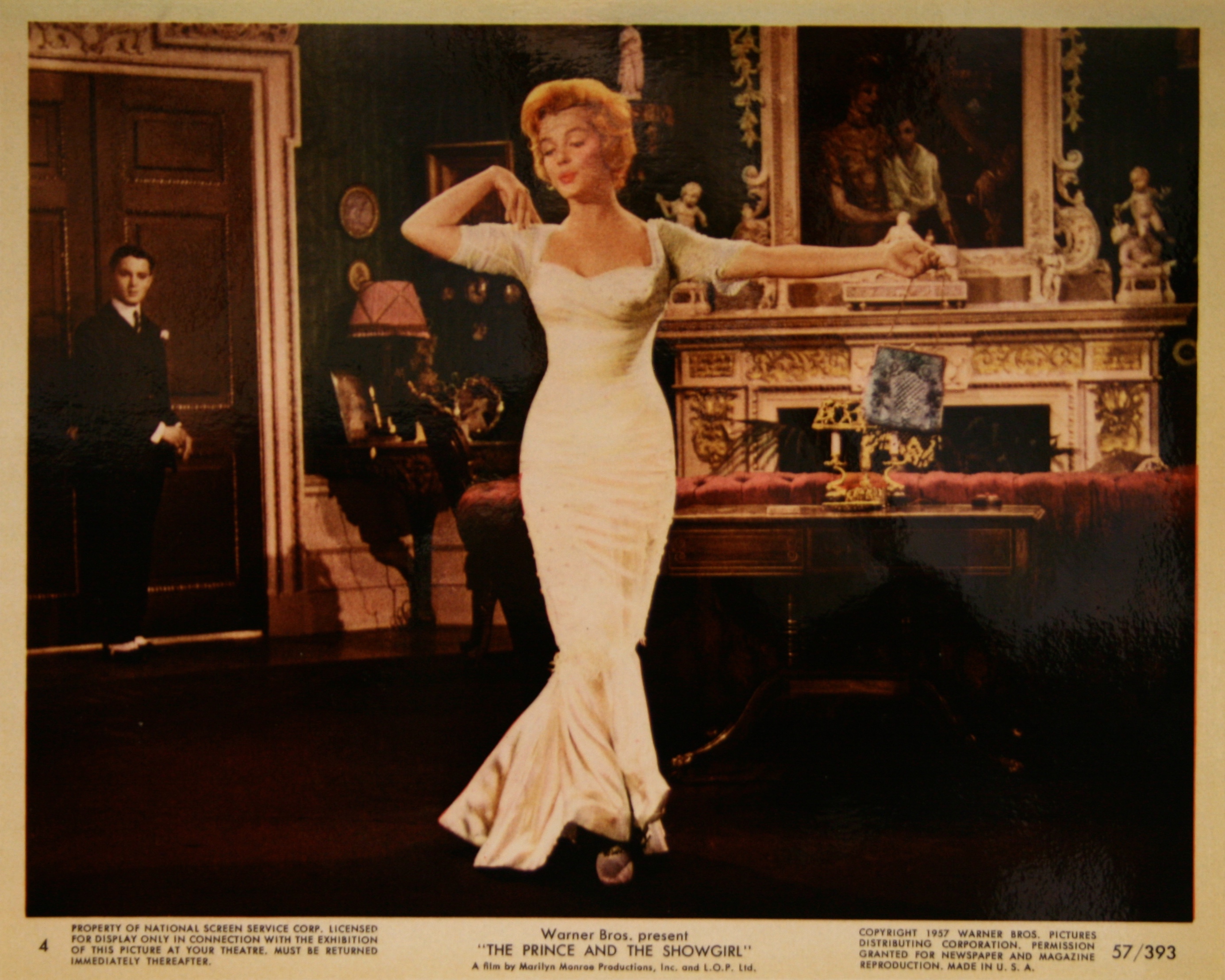
The Prince and the Showgirl 1957

Sir Laurence Olivier and  Marilyn Monroe – you would at first think were an unlikely combination and  yet Olivier’s blustering pomposity and Monroe’s giddy naivete create a surprising chemistry between them. It is reported that they did not get on too well during the filming – she was often late and sometimes did not know her lines it is said. However as Dame Sybil said in a later film ‘ We have to give her some space – after all she is the only one of us who knows how to act on screen’    I don’t know how true that was but it might well be.

The Prince and the Showgirl 1957 2

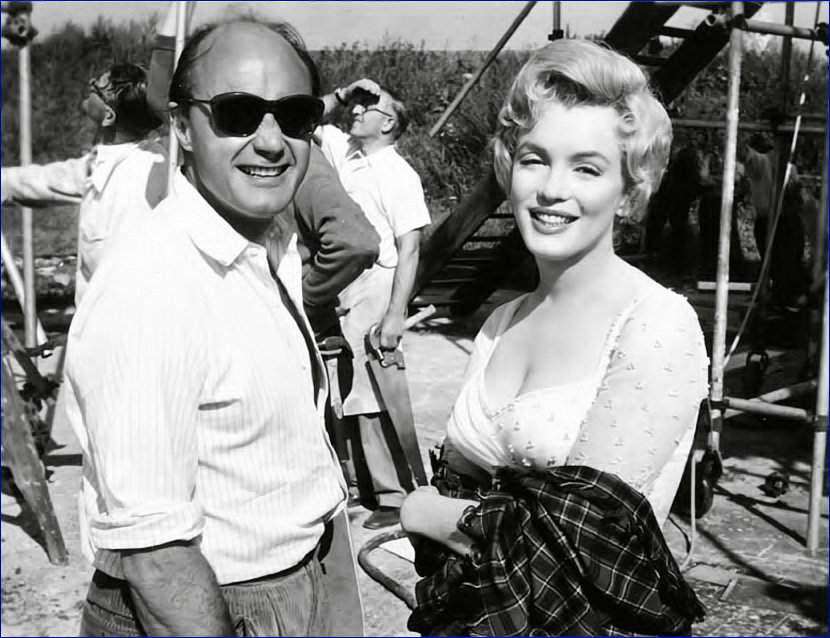
Above: With Jack Cardiff Cinematographer on the film

Marilyn Monroe is absolutely superb –her performance is well thought out and very strong, using every ounce of her famed comedic skill . Plus she is beautiful as always.

The Prince and the Showgirl 1957 3

In support there are wonderful are the outstanding performances by Richard Wattis  and Sybil Thorndike 

It is very well filmed .


Marilyn Monroe 5

Not only was Marilyn in England in person in 1956, but she was also starring at this London West End Cinema in The Seven Year Itch


posted by Movieman in Uncategorized and have Comments (3)

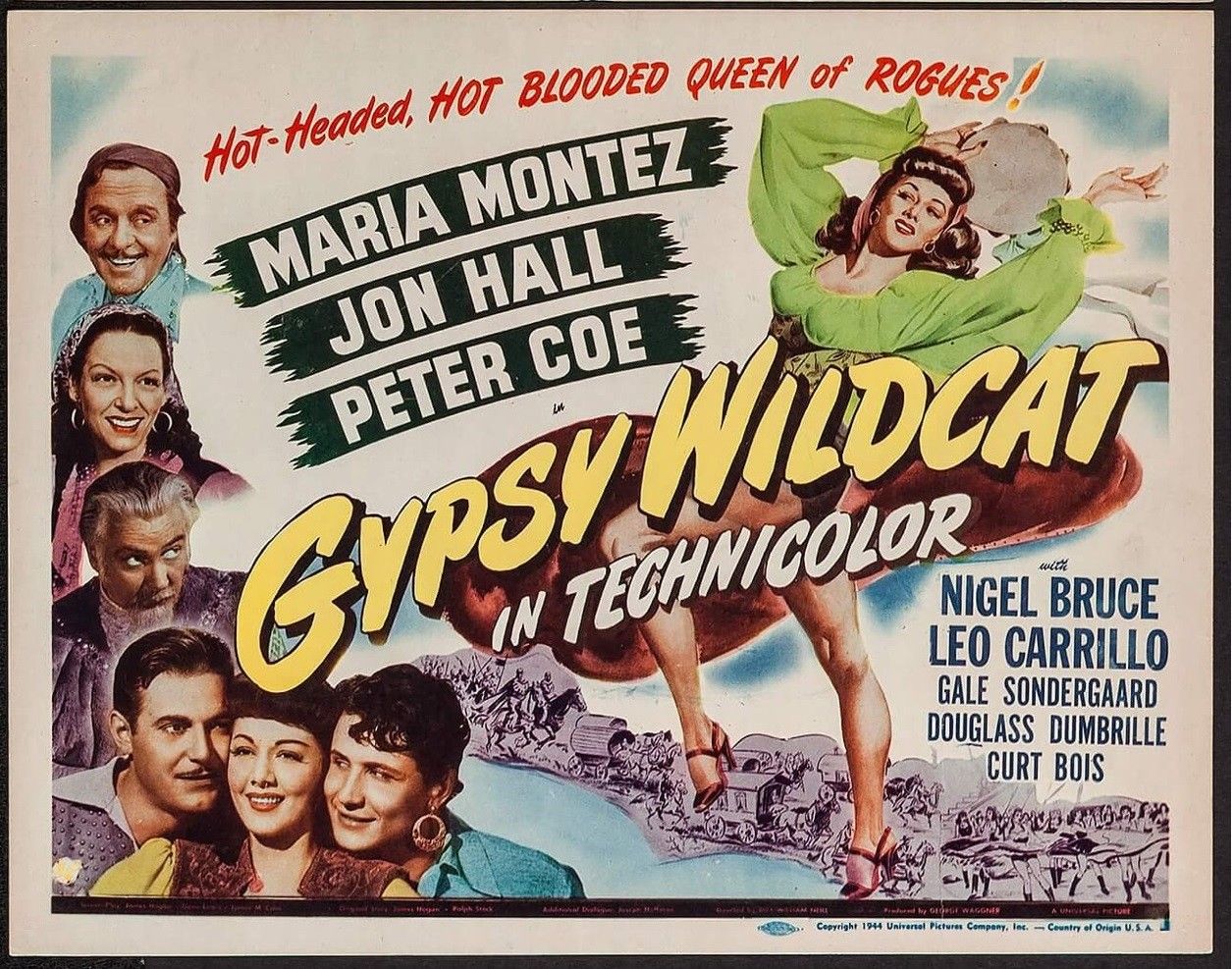
Gypsy Wildcat

Gypsy Wildcat 1944Gypsy Wildcat Director: Roy William Neill


Writers: James P. Hogan, Gene Lewis (screenplay)


Stars: Maria Montez, Jon Hall, Peter Coe, Nigel Bruce, Leo Carrillo, Gale Sondergaard, Douglass Dumbrille


After the success of Arabian Nights Universal requested a series of films starring Mari Montez, Jon Hall and Sabu. It was followed by White Savage and Cobra Woman. Gypsy Wildcat Double Feature


Roy William Neill replaced James Hogan as the Film Director on this one – he later did the Basil Rathbone Sherlock Holmes films of the time. Filming started October 1943.


Peter Coe played Tonio  – he was a former swimming champion, Acquacade performer and stage actor. He later claimed that he and Montez had an affair. Whether that was true or not we will never know.


I was not at all familiar with the Actor Peter Coe but looking him up he was married eight times. This was only his third film in fact but a year or two after this he was in Rocky Mountain which starred Errol Flynn.


Maria Montez on set


Maria Montez and Jon Hall were again exotically paired in Gyspy Wildcat, a romantic adventure with a mediaeval setting in which a group of innocent gypsies find themselves imprisoned in the bowels of wicked Baron Douglass Dumbrille’s castle, charged with the murder of Count Orso. It’s Dumbille who is really the villain and hero Jon Hall, the King’s messenger knows it having witnessed  the murder of the Count by  the Baron’s henchmen. 

Gypsy dancer Maria Montez was top billed at the Count’s daughter who Dumbrilles wishes to marry, as she is the heiress to a fortune but unfortunately from his point of view – but not ours – she is in love with Jon Hall.

This was a Technicolor Production and released in  1944 so not really a Fifties film – although the stars went on to appear into the next decade


posted by Movieman in Uncategorized and have Comments (10)

Huckleberry Finn 1960

Image result for huckleberry finn  1960 film

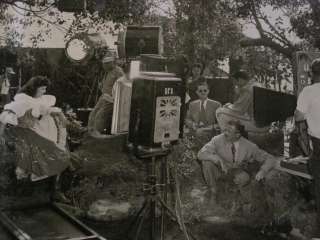
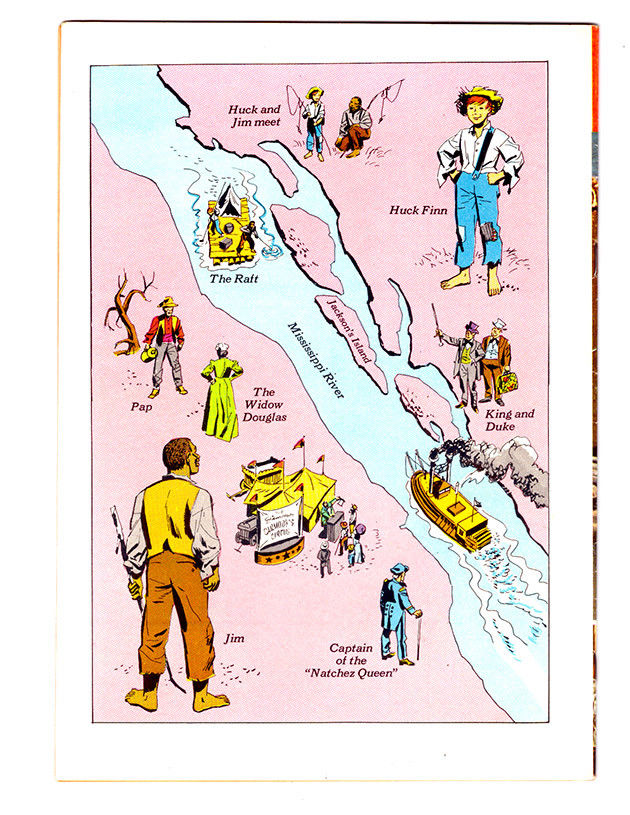
Purists of Mark Twain will find fault with this adaption of Huckleberry Finn, but I like it and I think it captures the charm of Mark Twain and perhaps the lessons he was trying to teach.

Huckleberry Finn 1960


Huckleberry Finn 1960 2

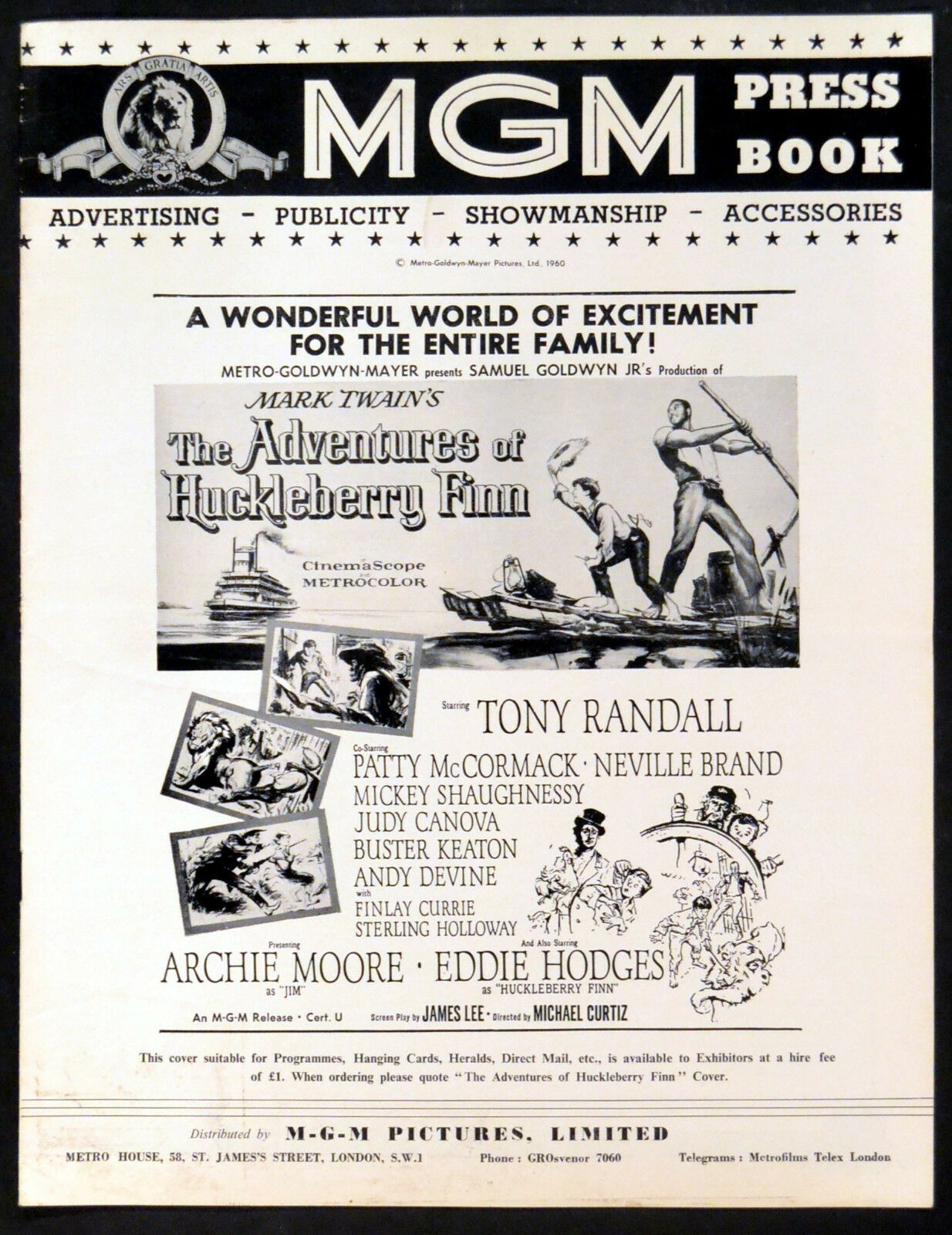
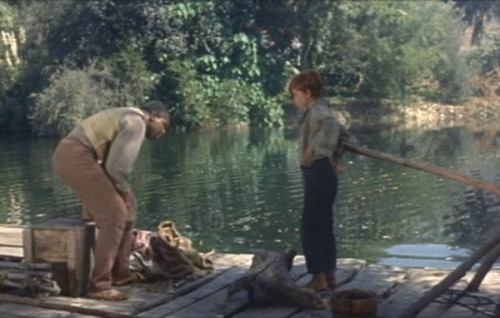
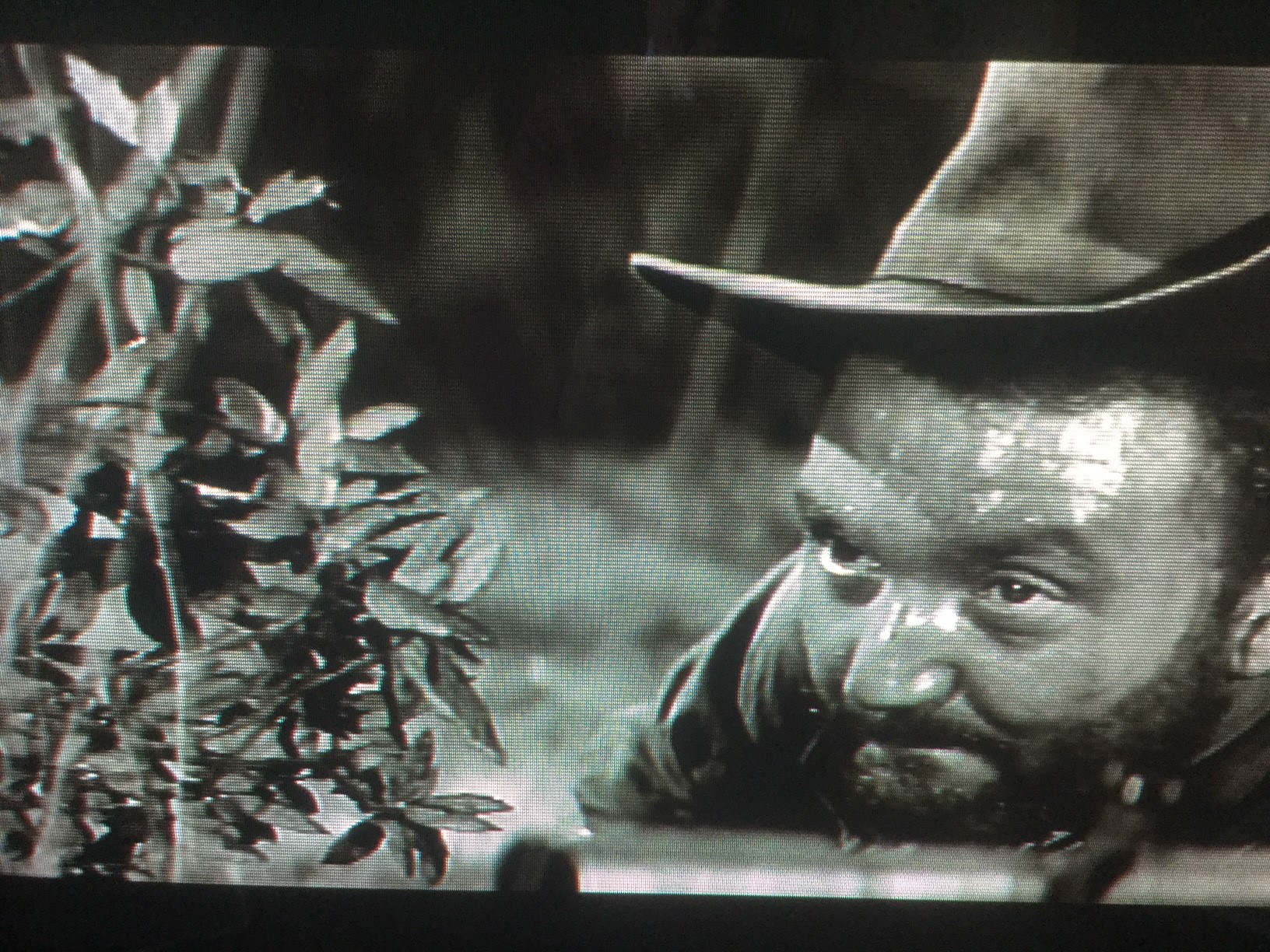
Because the two are on screen for nearly the whole time, the actors playing the  parts of Huck and Jim have to be good. Archie Moore who was the reigning Light Heavyweight Champion when this was made delivers a great performance as the runaway slave Jim as does Eddie Hodges as Huck. Probably the most riveting performance in this film is Neville Brand as Huck Finn’s Father.

He’s as bigoted and narrow-minded man. In fact MGM put together an excellent supporting cast –  Eddie Hodges and Archie Moore. Tony Randall and Mickey Shaughnessy as con men King and Duke are a joy to watch.

I had not realised until I saw the poster above the veteran actor Finlay Currie the Scottish born actor was in this one as were Buster Keaton and Andy Devine.

Huckleberry Finn 1960 4

Huckleberry Finn 1960 3


posted by Movieman in Uncategorized and have Comments (13)

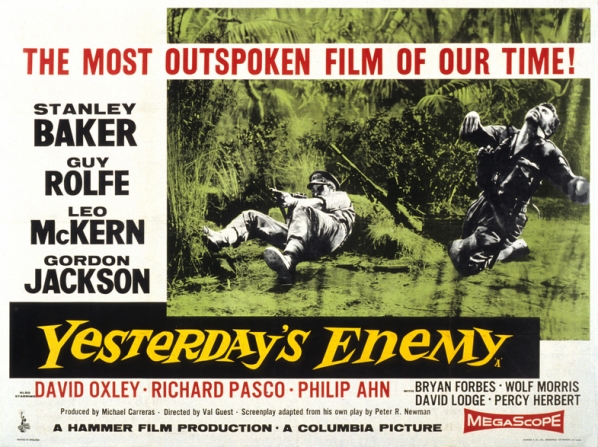
Yesterday’s Enemy 1959

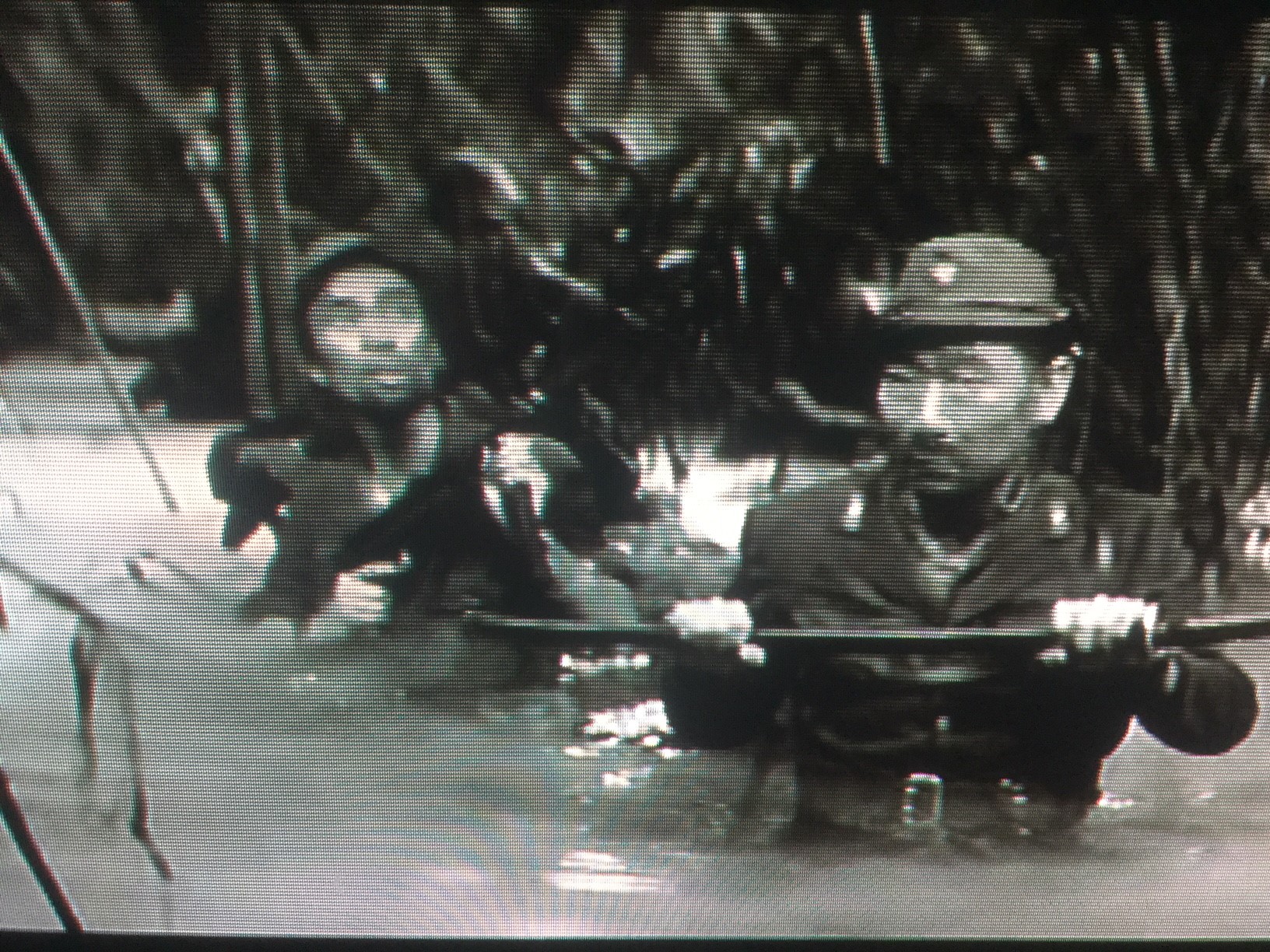
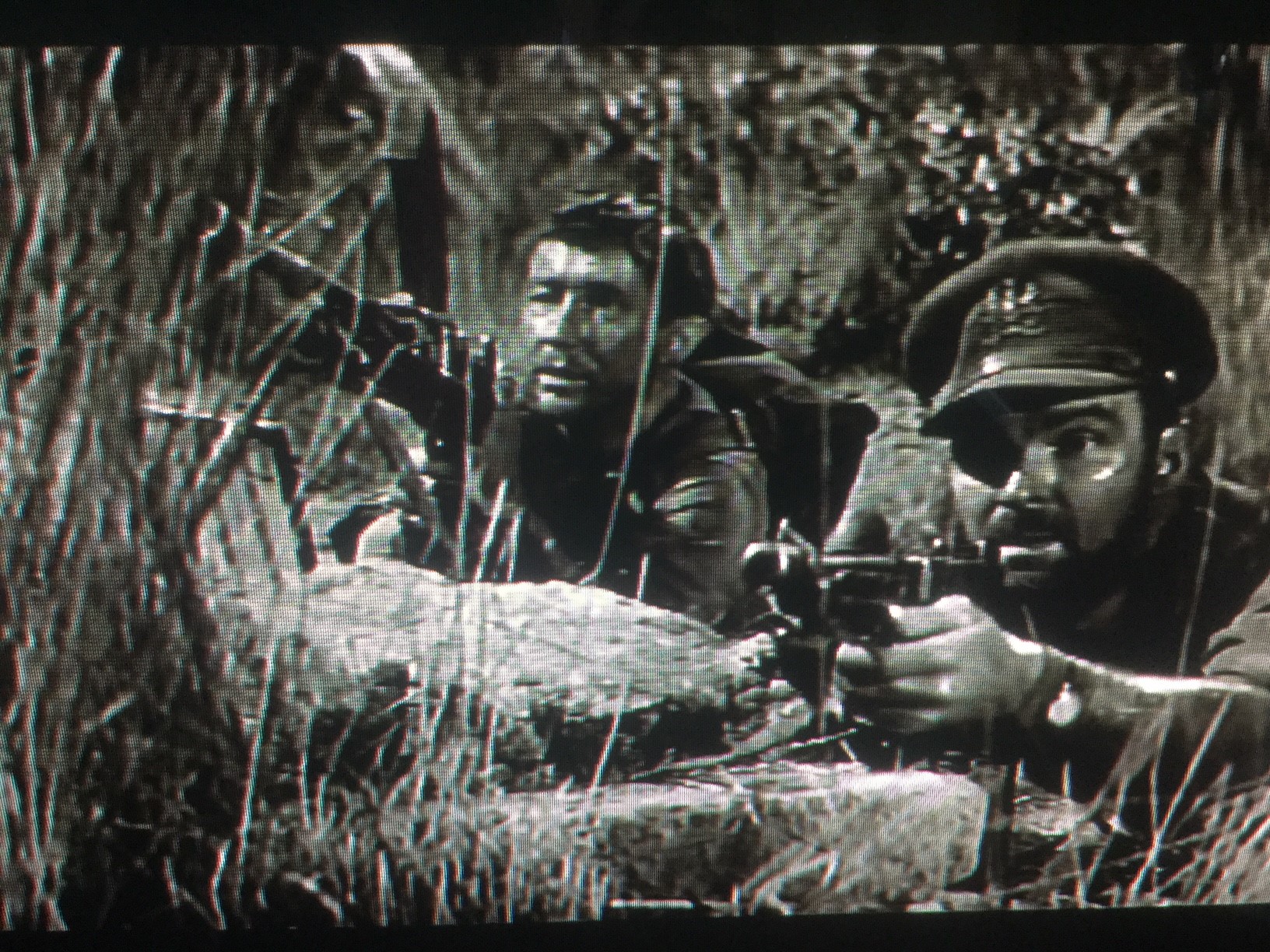
A British officer (Stanley Baker)  leading a patrol through the Burmese jungle during the Second World War uses brutal methods to gain vital intelligence from prisoners, to the outrage of a chaplain and war correspondent travelling with them. When the unit is captured by Japanese forces, he faces similar treatment at the hands of his captors.

This film  was shown on Talking Pictures today – and I watched much of it.   Widescreen and thankfully it was shown in that format – which apparently was called  MegaScope and it was quite impressive.

It did strike me that in many ways this was similar to The Long and The Short and the Tall 1961 – just a couple of years later. Both featured similar studio bound jungles and action behind enemy lines at times. Yesterday’s Enemy was filmed at Bray Studios – and this one at Elstree.

Another film made well before this – and another studio bound jungle film was The Hasty Heart and that was very well received all over the World – whereas these two didn’t do that well. The Hasty Heart was made at Elstree

Yesterdays Enemy 1959 Poster

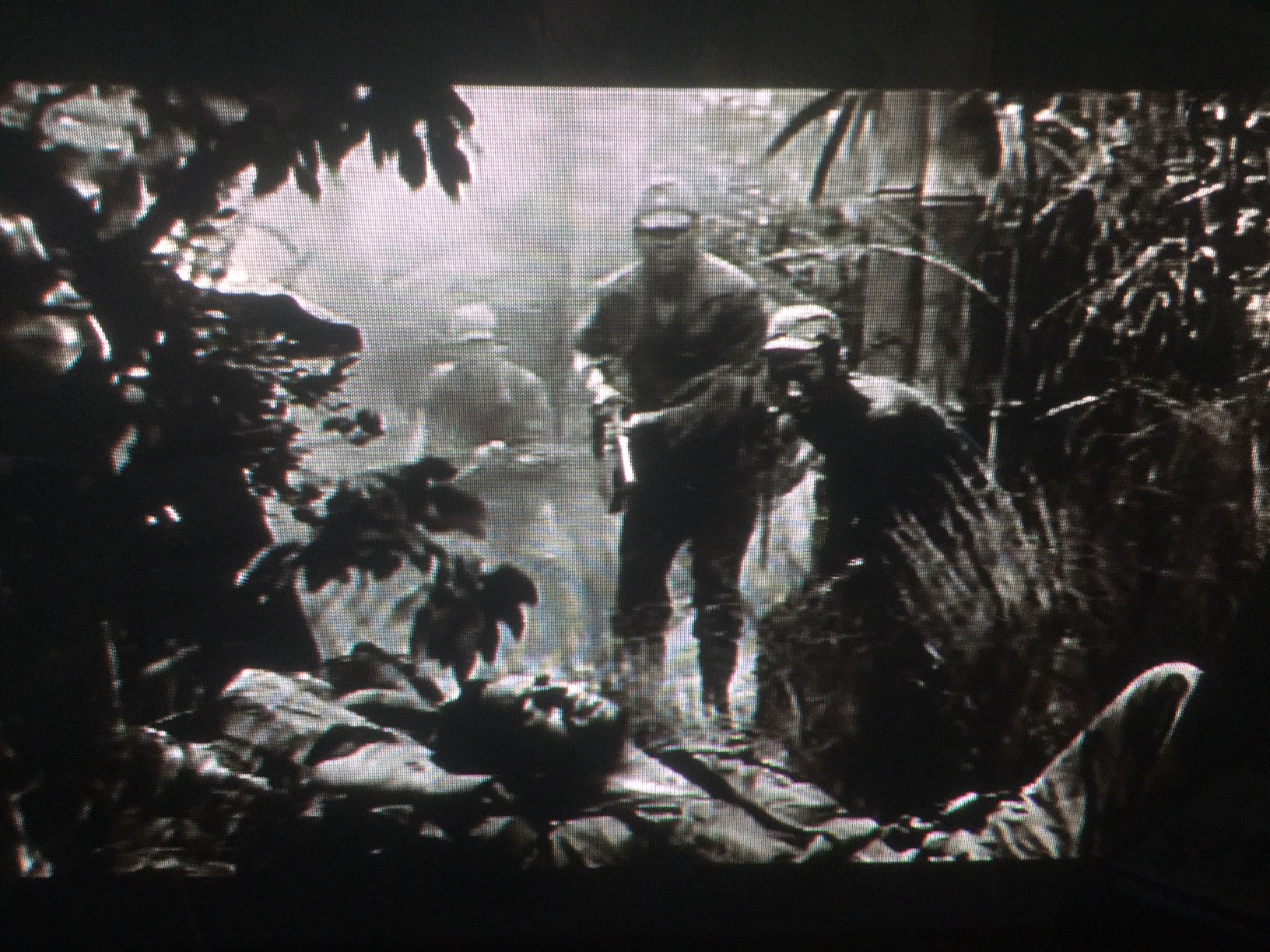
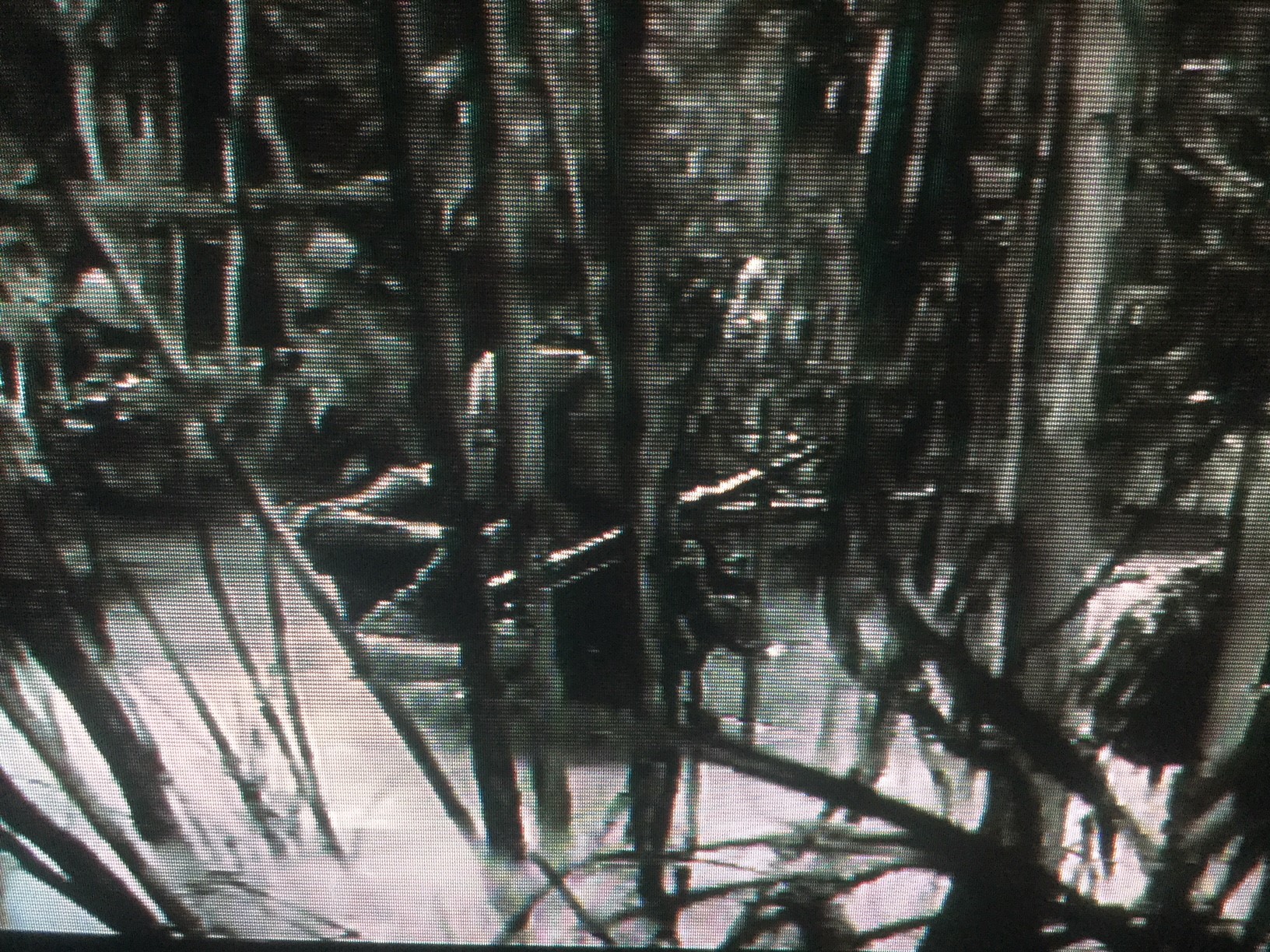
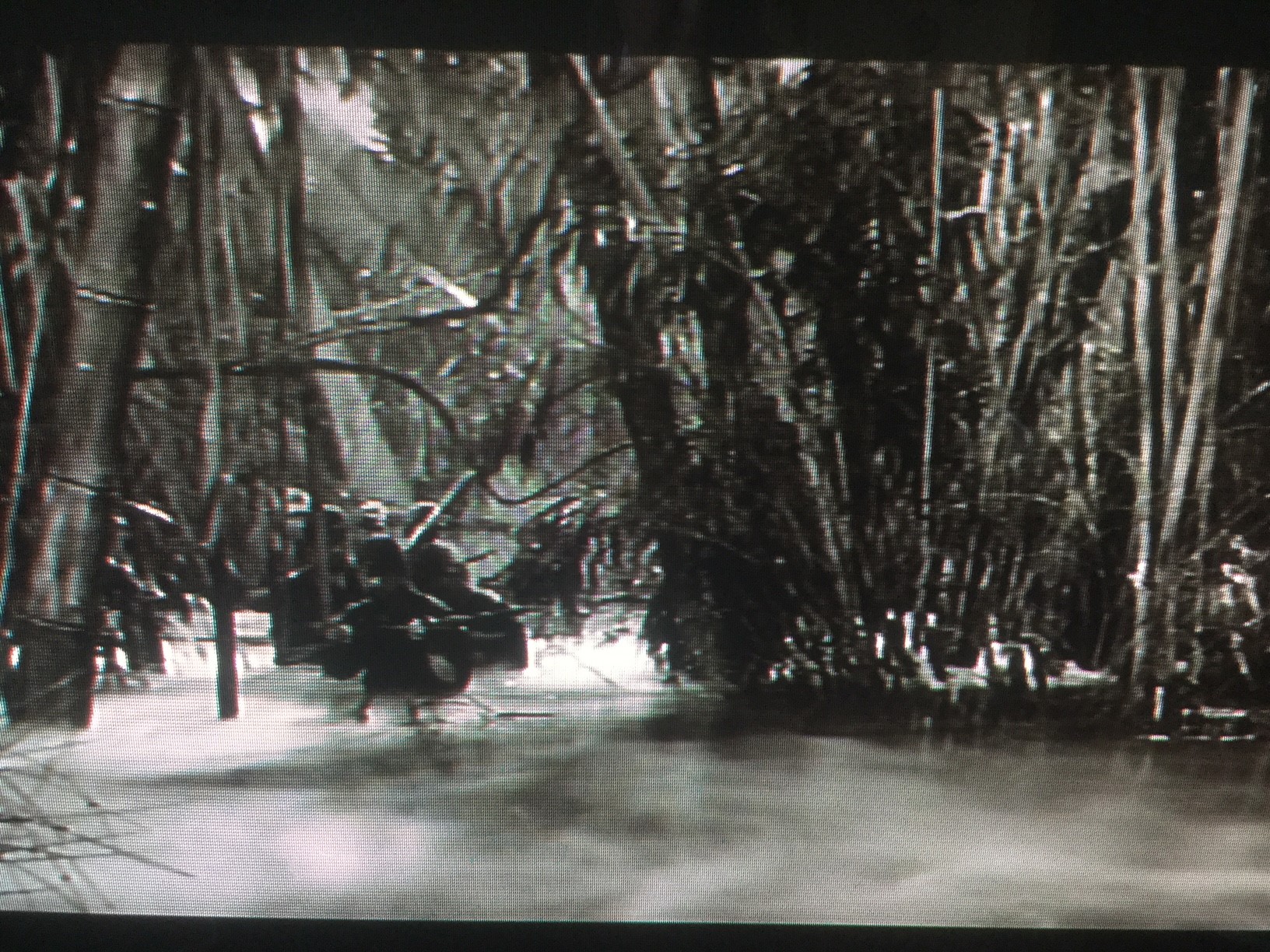
The Studio Jungle Sets I thought were excellent – and very realistic

Yesterdays Enemy 1959


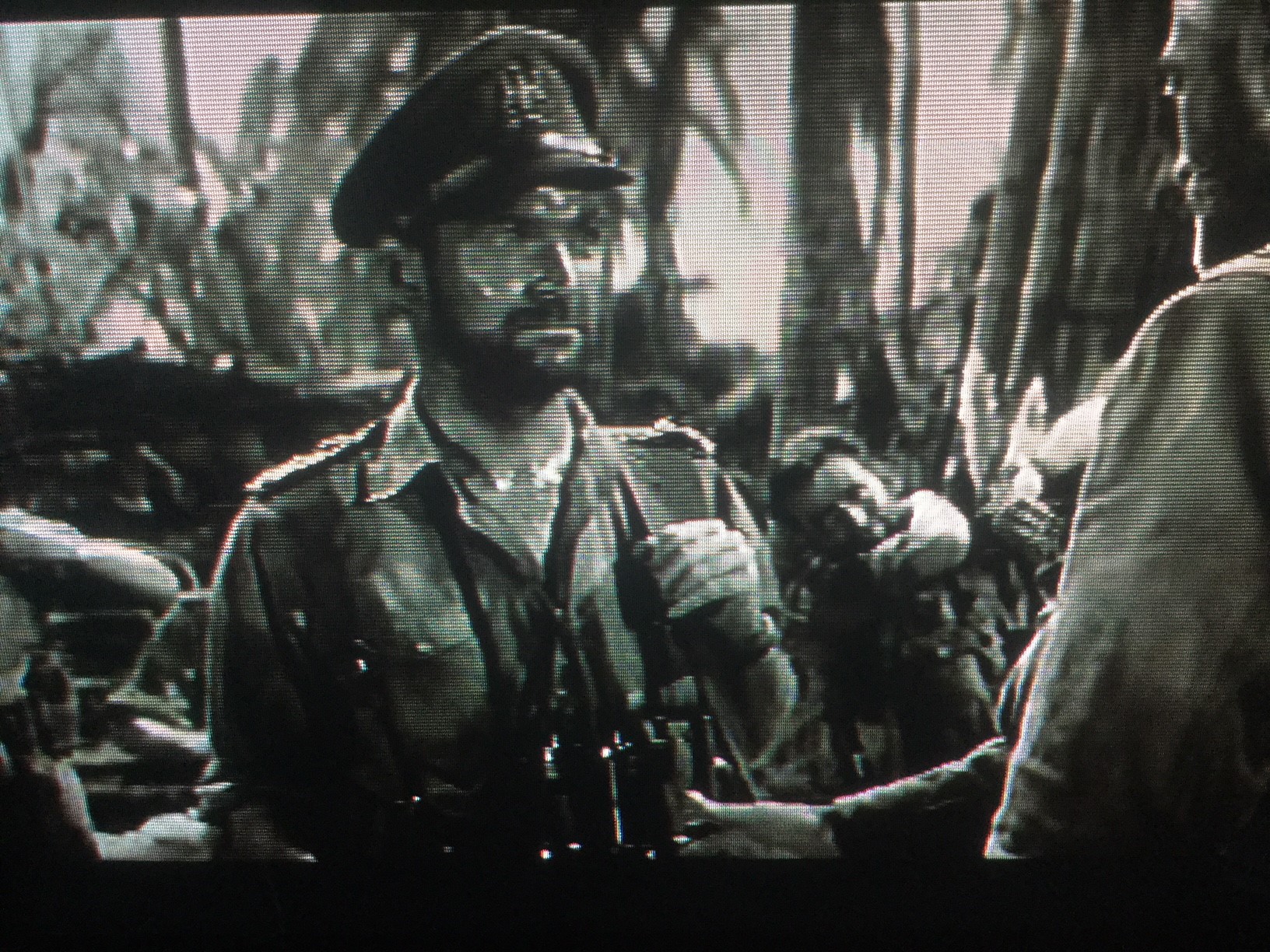
Yesterdays Enemy 1959 2


Lost in the jungle, the film illustrates the quandary of the last remnants of a British brigade, who — without any method of communicating with headquarters — attempt to make their way to safety. Stanley Baker plays Captain Langford, who guides his men into a tiny Burmese village, only to find a small group of Japanese soldiers there, accompanying a very high-ranking officer. The enemy’s location is not a coincidence, either: the Japanese colonel happens to have in his possession a map that will either mean victory or defeat for the Allies.


Yesterdays Enemy 1959 3

Based on the 1958 BBC teleplay of the same name, the 1959 World War II drama Yesterday’s Enemy.

With Yesterday’s Enemy, however, we get to see something altogether different: the plight of a British regiment in the Burmese jungles fighting against the Japanese.

Yesterdays Enemy 1959 4

Filmed in MegaScope

Yesterdays Enemy 1959 5

Val Guest directs this wartime drama which has  some very good  performances. Guy Rolfe is the British padre, Leo McKern – in an early role – is a journalist along for the bumpy ride, and Gordon Jackson, David Oxley, and Philip Ahne also star (the latter as a villain, of course).  Also I must mention Richard Pasco, who I remember, much later,  in Walt Disney’s excellent The Watcher In The Woods. He is very good in this one too.
Interestingly enough, the film contains no music score – unusual but in some ways adding to the drama.


Yesterdays Enemy 1959 6

Columbia Pictures co-funded the film alongside Hammer Films

Yesterdays Enemy 1959 7

Good Studio Sets of the Burmese Jungle

Yesterdays Enemy 1959 8

Realistic sets taking us into the Burmese Jungle.

Yesterdays Enemy 1959 9

I don’t know too much about MegaScope but it was a wide screen process that certainly looked good.

This 1959 black and white WWII film is, I would imagine,  one of the most realistic depictions of jungle warfare . Well  acted by all concerned


posted by Movieman in Uncategorized and have Comments (4)

Cyd Charisse

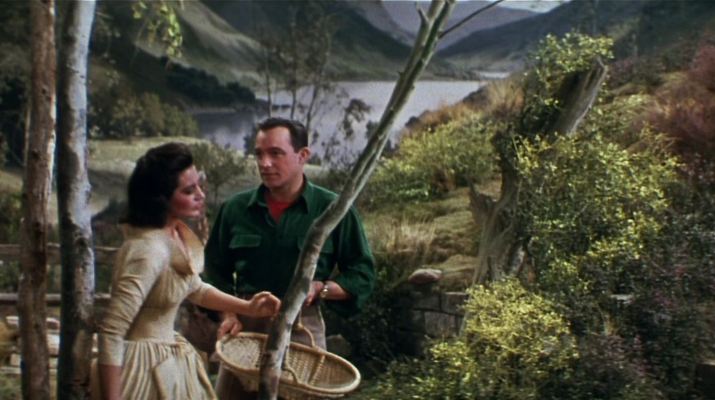
I remember Cyd Charisse from ‘Brigadoon’ set in  the Scottish Highlands – but actually filmed on the enormous studio sound stages of MGM Film Studios. Even though what we saw was a very large film set – it was beautifully done and on such a large scale that we were in the Scottish Highlands. Cyd Charisse

This picture was taken from the front cover of Illustrated magazine of 10 March 1951 – so quite a few years before Brigadoon Cyd Charisse, took up dancing to build up her strength after surviving polio as a child.    At age 6, the girl from Amarillo, Texas, found her calling.

Cyd Charisse didn’t stay in Amarillo for long and was soon studying ballet in California. She joined a professional company while still a teen and eventually married one of her instructors, Nico Charisse. He was 32, she still in her teens. The pair moved to Hollywood and taught together, but soon she was turning more toward films, appearing in several small films and eventually abandoning her dreams of being a touring ballerina with the birth of her son, Nicky, in 1942.

Fortunately, by 1946 she had signed a contract with MGM and began appearing in major films such as The Harvey Girls and Ziegfeld Follies. . Soon after that Cyd Charisse became a Hollywood star – she and her husband split (she kept his last name).

She was married to Tony Martina year later in 1948 and they remained together for more than 60 years. Her career stalled, unfortunately, because of a combination of injury, pregnancy and a poorly received film.

In 1952, her luck turned around when she won a role as Gene Kelly’s dance partner in the famous “Broadway Melody Ballet” from Singin’ in the Rain. Cyd Charisse

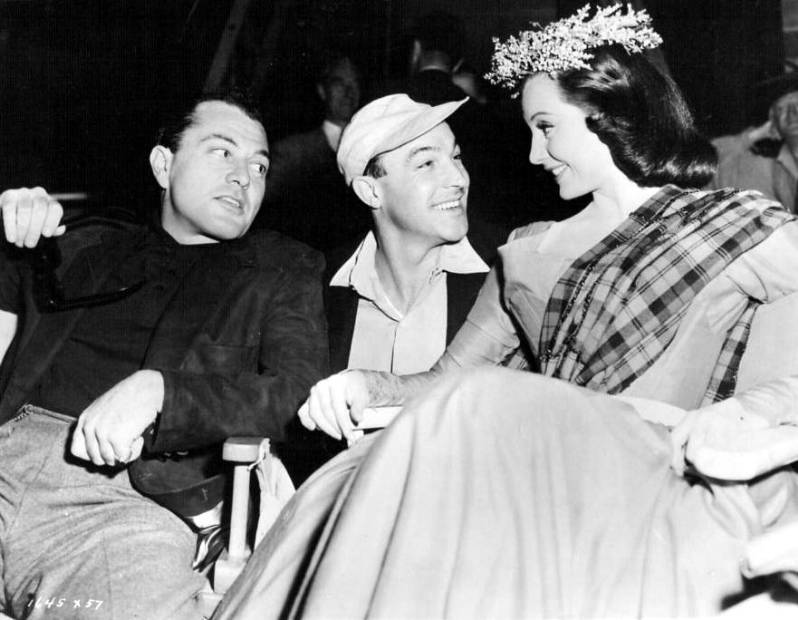
ABOVE:   Cyd Charisse with her Husband Tony Martin Left and Gene Kelly – centre – on set for Brigadoon.

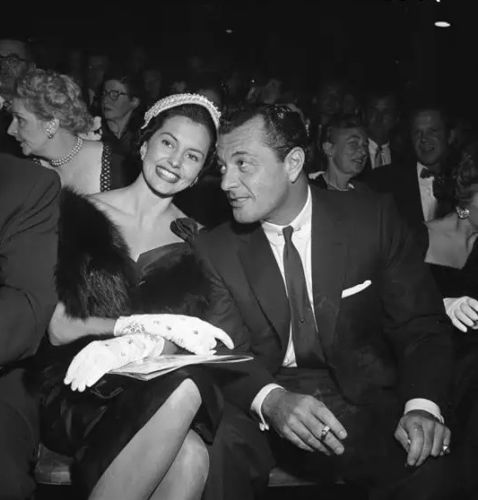
Cyd Charisse and her husband Tony Martin   Cyd Charisse and her husband Tony Martin 2

ABOVE – Two Photographs of Cyd Charisse with her Husband Tony Martin In Brigadoon 1954 it sems that MGM’s musical producer, Arthur Freed, and Gene Kelly,  famously failed to find the Scottish location they wanted in the real Scotland. So they built their mysterious disappearing village and surrounding scenery in Culver City, Los Angeles.

Brigadoon 1954 There was enough heather, tartan and painted Cinemascope landscape to please most filmgoers though

posted by Movieman in Uncategorized and have Comments (11)