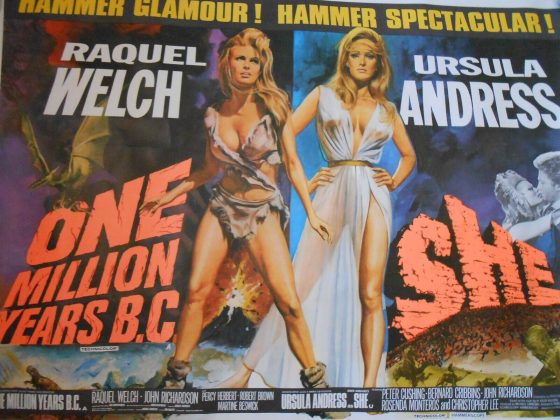
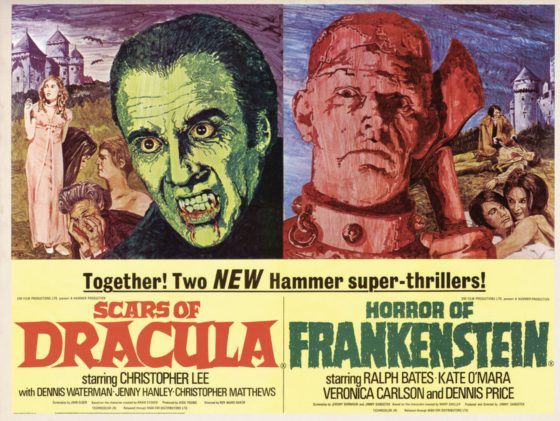
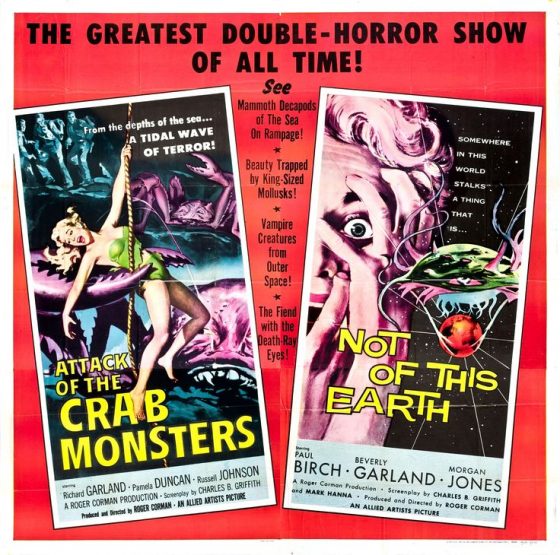
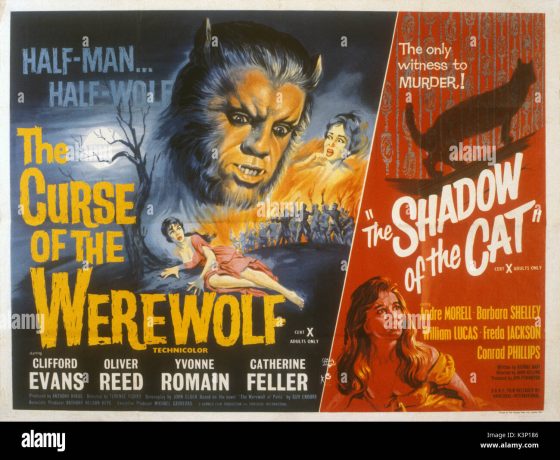
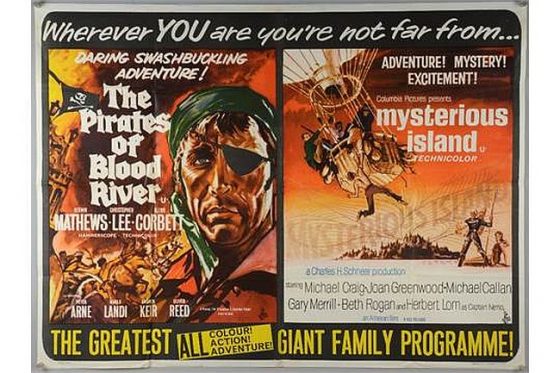
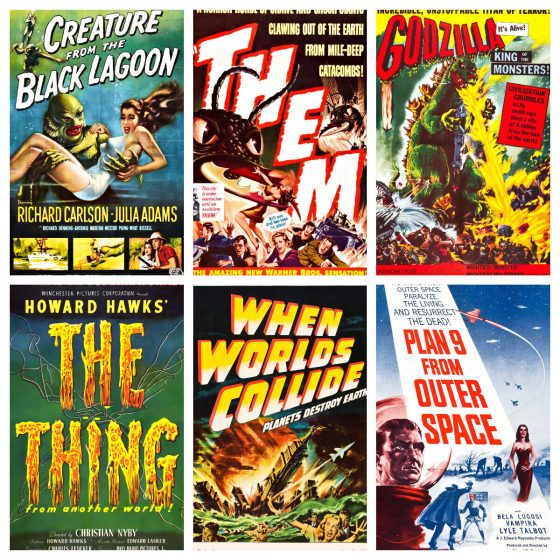
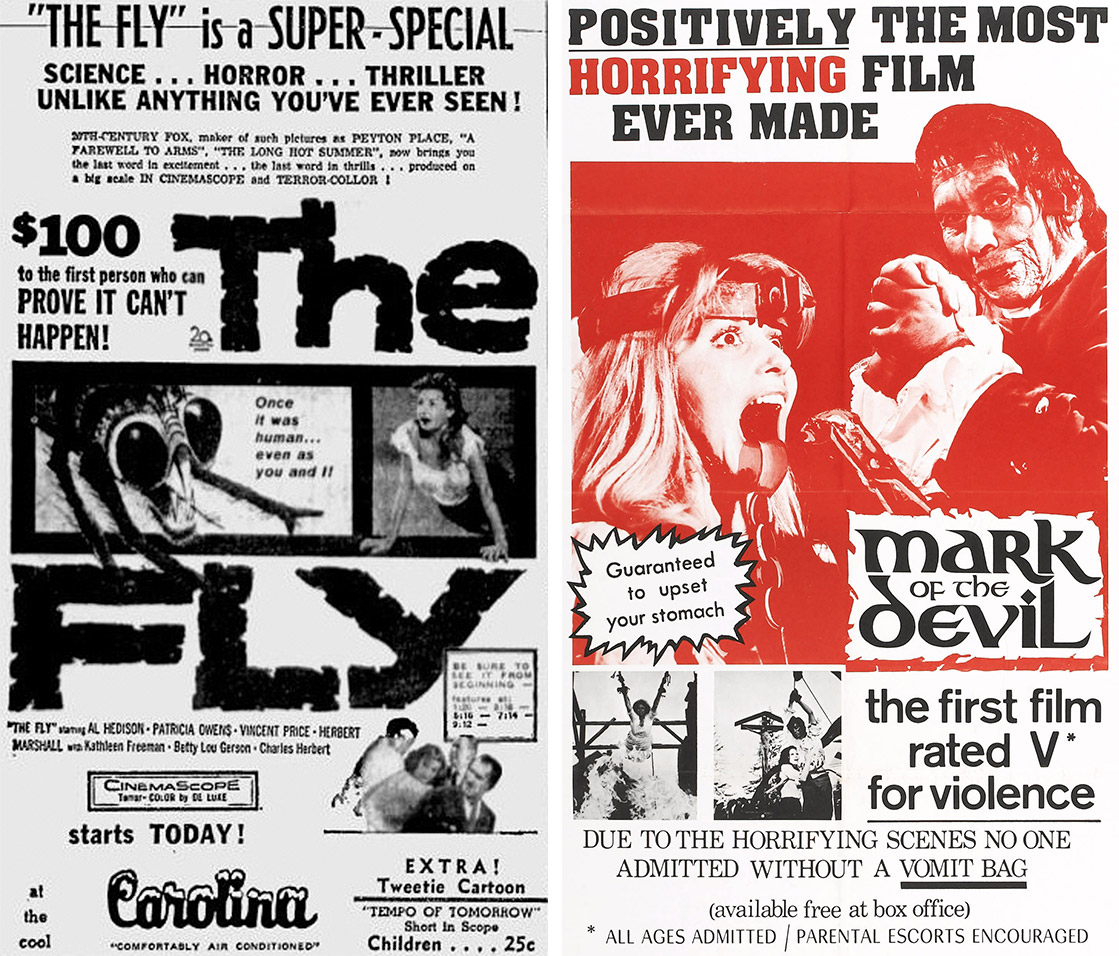
As anyone reading the articles I post on this site will know, I am a real fan of this type of Poster. These Double Bills were often when a re-run of the films came round – I suppose we were getting a real bonus – I always thought that was true !
These are good examples BELOW – but cheating a little, as they are not all from the Fifties as everyone will know
I watched quite a lot of ‘She’ a few weeks ago and liked it
Double Bill
ABOVE – ‘Scars of Dracula’ was one of the later ones from Hammer and I do know ‘The Horror of Frankenstein’ was from 1970 and had the very last film appearance of Joan Rice who played the part of the wife of Dennis Price. Both of these actors had seen better days career-wise. Dennis Price had been a very big star of the late forties and early fifties and was a very fine actor. His key role in ‘Kind Hearts and Coronets’ was nothing shore of brilliant. He had the misfortune to pick – or was given – some pretty poor films after that.
ABOVE – Both films from 1957 = both American films and released together in the USA on this Double Bill. Beverley Garland was in ‘Not of this Earth’ – I remember her for one of the Bomba films. Coincidentally on this programme in ‘Attack of the Crab Monsters’ the leading man was Richard Garland.
Reading more about him he and Beverley were married in 1951 but divorced in 1953 but they both continued their acting careers and were in films paired together here
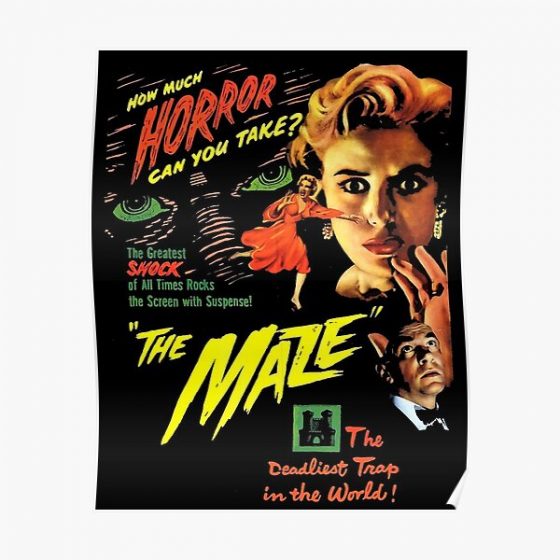
ABOVE – Not really a Double Bill but I really like ‘The Maze’ apparently filmed originally in 3D
ABOVE – Oliver Reed in an early film
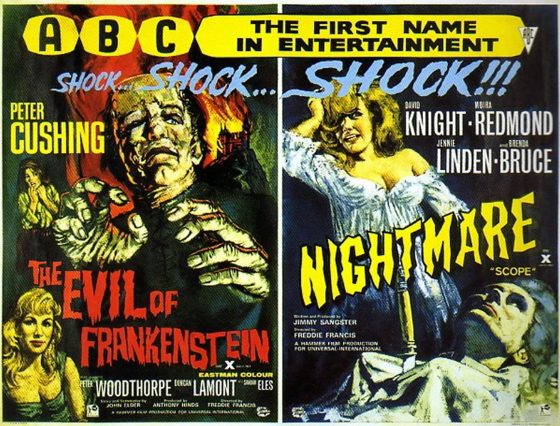
and BELOW :A Very good Double Bill here. These two films were very well made and anyone seeing them on the same bill would get plenty for their money
Double Bill
ABOVE – ‘The Evil of Frankenstein’ with an unusual and very interesting film ‘Nightmare’– a good storyline :-
NIGHTMARE
When was an eleven year-old child, Janet witnessed her insane mother stabbing her father to death on their bed. Six years later, Janet (Jennie Linden) is a wealthy teenager outcast in a boarding school afflicted by dreadful nightmares and fearing to have inherited her mother´s insanity.
After a series of nightmares, her teacher Mary Lewis (Brenda Bruce) brings Janet home and she is welcomed by the family chauffeur John (George A. Cooper), by his wife and housekeeper Mrs. Gibbs (Irene Richmond) and by the beautiful nurse Grace Maddox (Moira Redmond), who was hired as a companion by her guardian Henry Baxter (David Knight).
However Janet continues to have nightmares with a woman (Clytie Jessop) with a scar on her face and wearing a white shroud wandering in the house and stabbed on her parents´ bed. After trying to commit suicide, two doctors and Henry summon Janet to the living room to decide whether she should go to an asylum.
When Henry brings his wife to the room, Janet sees the woman with scar and stabs her to death. She is sent to an institution and soon a diabolical plot is disclosed.
“Nightmare” is an underrated and unknown thriller by Hammer, with a great story of greed and insanity.
Jennie Linden was a late replacement for Julie Christie who had a better film offer.
ABOVE – Not so much a ‘Double Bill’ but What a Line-up
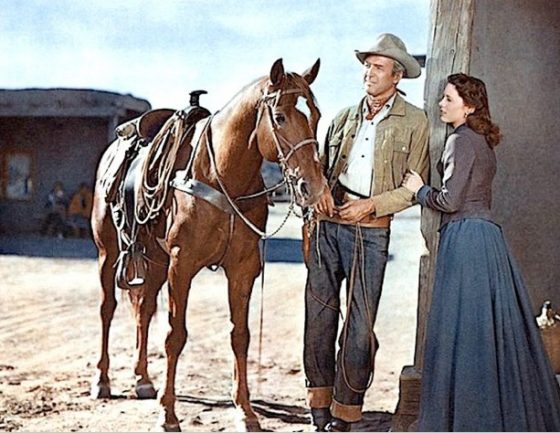
Actor JAMES STEWART explains his love of the Horse his co-star he rode for 22 yearsin a number of Westerns.
“The horse [Pie] was amazing. I rode him for 22 years. I never was able to buy him because he was owned by a little girl by the name of Stevie Myers, who is the daughter of an old wrangler who used to wrangle horses for Tom Mix and W.S. Hart. He retired and he gave this horse to her. He [Pie, the horse] was a sort of a maverick. He hurt a couple of people. I saw [Pie] when I started making Westerns.
Audie Murphy rode him a couple of times. He nearly killed Glenn Ford, ran right into a tree But I liked this darned little horse. He was a little bit small. I got to know him like a friend. I actually believed that he understood about making pictures. I ran at a full gallop, straight towards the camera, pulled him up and then did a lot of dialogue and he stood absolutely still. He never moved. He knew when the camera would start rollingand I always knew that because his ears would come up.
Robert Mitchum’s daughter, a horse enthusiast and the author of “Hollywood Hoofbeats” told this story:-
“James Stewart rode Pie in 17 westerns. They became so attuned to each other that in one film, “The Far Country,” Stewart had developed such a rapport with him that he was able to get the horse to do something even when the trainer was not around.
They were on this location. The trainer wasn’t on the set and the horse needed to walk from one end of a street to another with no ropes on him or anything. James Stewart just went up to him, whispered in his ear and told him what he needed him to do – and the horse did it.
Everyone on the set was absolutely amazed, and James Stewart just said, that was Pie. That’s what he did.
He had an incredible bond with the horse.
“Beyond the work Pie did with James Stewart, on film he was also ridden by Kirk Douglas, Audie Murphy, Glenn Ford and more than likely, a number of other actors.
There is no exact count of the number of films in which this little quarter horse appeared.
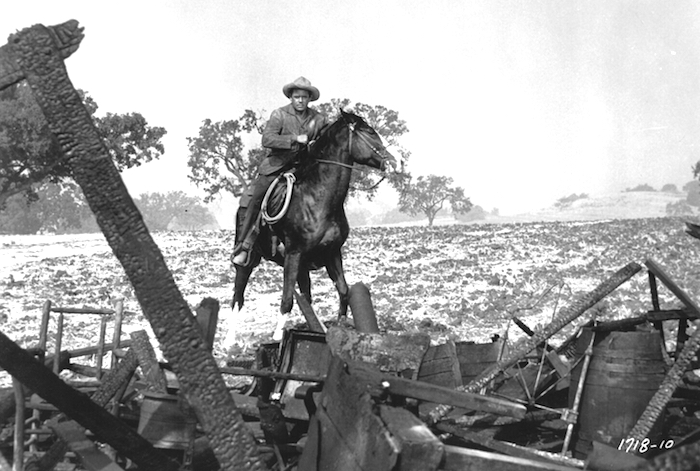
James Stewart refers above to the horse having nearly killed Glenn Ford when they ran into a tree. I am pretty sure that would be when, in ‘The Man from the Alamo’, Glenn suffered three broken ribs and production was held up for three weeks until he recovered
Alfred Hitchcock’s film Saboteur is one of my favourites – certainly of all the films he directed I think that I enjoy this one the most of all.
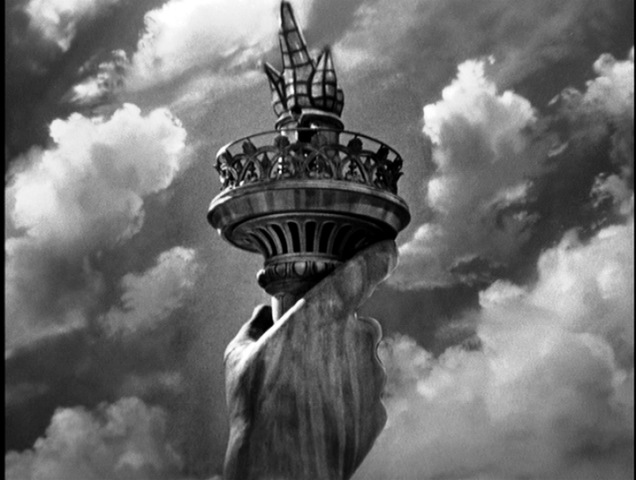
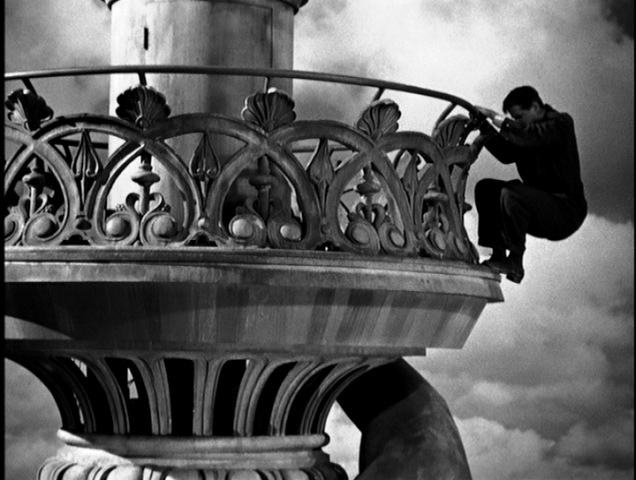
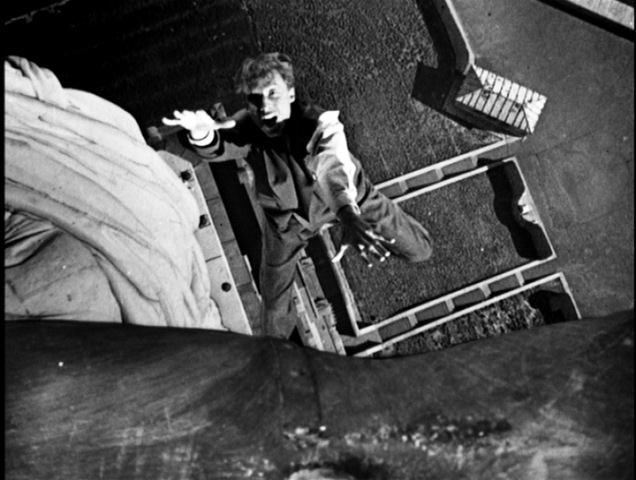
It had a wonderful climax at the top of the Statue of Liberty which was brilliantly done and on first seeing the film, I could barely dare to look at the screen
It’s a Hitchcock film I like as it takes us on a roller coaster ride across the USA and back to New York Harbour – as this final scene sequence shows when the hero Robert Cummings and villain Fry played by Norman Lloyd climb out onto the torch of the Statue of Liberty. In this sequence how varied the shots are. We don’t just get a shot of the statue followed by close-ups of the action, we get this complex series of Matte shots – see below
Maybe this is why I find myself drawn to the sequence – in that it is so unusual and original with shots cut in from every angle.
Saboteur
BELOW:
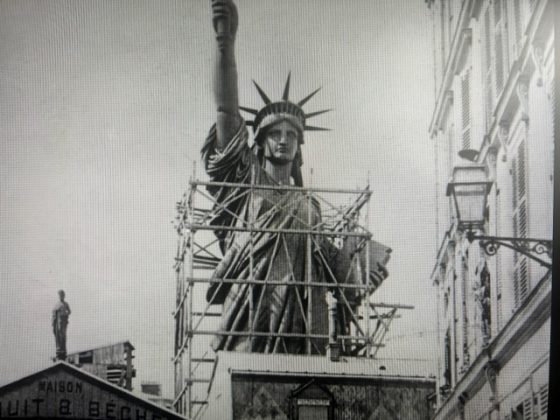
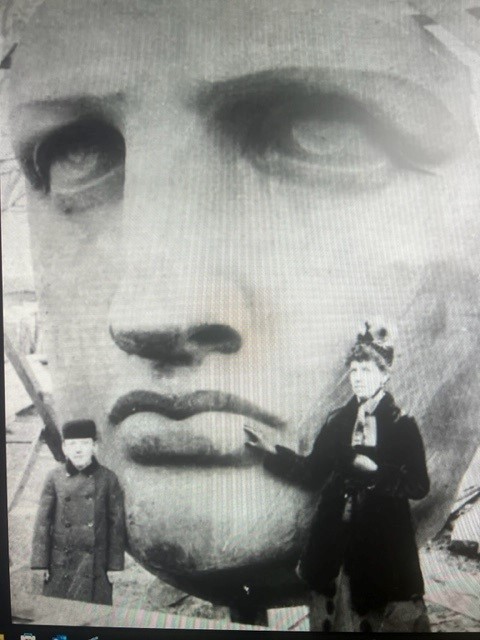
I had not realised how the Statue of Liberty had been made or even the date but this gives us something of an insight – it was coming across these pictures that made me immediately think of ‘Saboteur’
A rare look at the statue as it was being built before getting carefully shipped and pieced together on it’s pedestal. Picture it is stated is from in 1884
This photo was taken in 1885 – very rare photograph
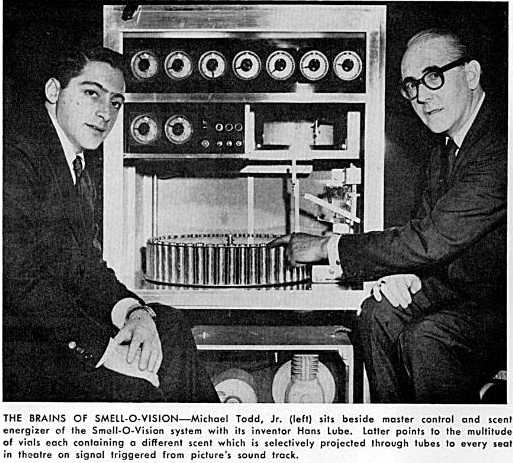
Possibly the most bizarre film gimmick involved film screenings enhanced with specific smells. “AromaRama” made its big-screen debut in 1959 with Carlo Lizzani’s “Behind the Great Wall,” using the cinema’s air conditioning system to disperse scents through the auditorium.
ABOVE: producer Mike Todd, Jr. and inventor Hans Lube display the “Smell-O-Vision” “Scent of Mystery” perfume apparatus
Only a few weeks later, producer Mike Todd, Jr.’s “Smell-O-Vision” premiered with the film “Scent of Mystery.” Todd’s system relied on a network of pipes connected to vents beneath the seats that would release perfumes at specific points during a screening. Both gimmicks were spectacular critical and popular flops, as audiences found they merely distracted from the viewing experience.
One contributor on a Film Site commented :
I was at the premiere in Hollywood (1960) –
Didn’t know what to expect .. but the pipe tobacco and peach smells (among SEVERAL more) were astounding! Each time you smelled the perfume… you KNEW something bad was going to happen! ..…
I don’t know how they did it, maybe a hose or fan mounted on the seat in front of you, but when the scene changed, the smell did too !!
If I remember correctly, the program LISTED all the smells you would encounter during the film
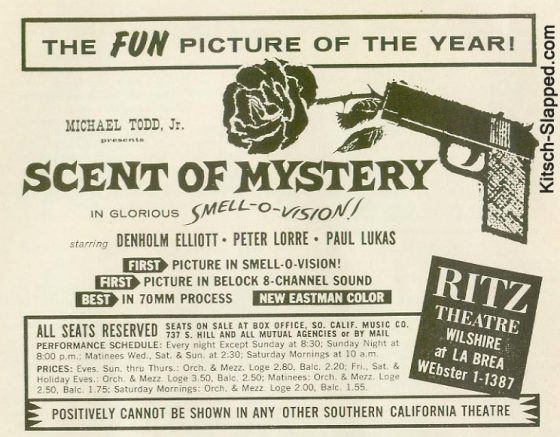
ABOVE: A poster for “Scent of Mystery ”
One interesting comment from someone around at the time :-
“I’ve never even heard of anyone trying to re-create this. The problem is, how do you get the smells out once they’re in the cinema.
Many years later in 1981John Waters did revive the scented film with “Polyester,” this time with “Odorama” whihc was supposed to have improved the original idea by giving audience members scratch-and-sniff cards numbered by scene.That seems even more bizarre to me
APRIL FOOLS DAY in England
Smell-O-Vision was a way to add smell to television — so said the BBC in a 1965 April Fool’s Day report. The broadcaster pranked television audiences in England by claiming that they’d perfected Smell-O-Vision — and as ridiculous as this sounds it had been done a few years before
Like Percepto! before it, Smell-O-Vision was a short lived concept that never took off and it remains one of the strangest cinematic gimmicks that’s ever been dreamed up.
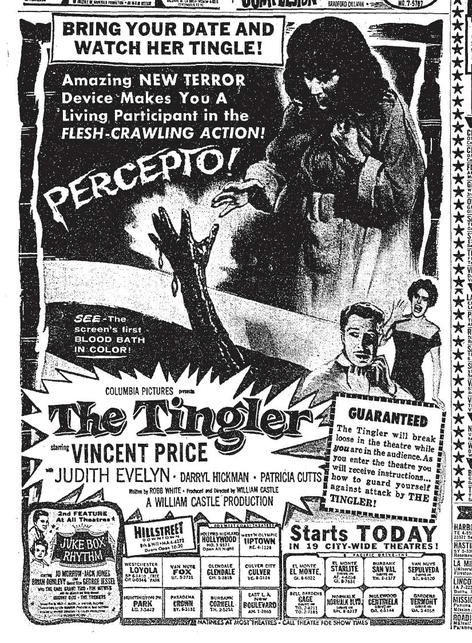
“Percepto!”. A $1,000 life insurance policy against “Death by Fright” for Macabre (1958) and sent a skeleton out above the audiences’ heads in the Cinema in House on Haunted Hill (1959).
PERCEPTO: “SCREAM FOR YOUR LIVES!”
“Percepto!” was a gimmick where William Castle attached electrical “buzzers” to the underside of some seats in cinemas where The Tingler was screened.
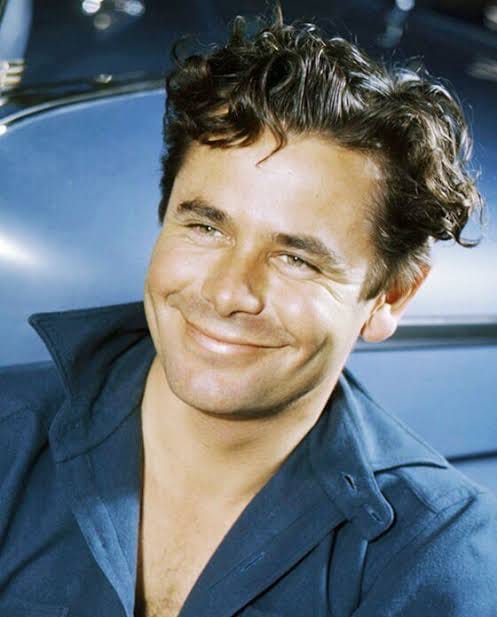
Glenn Ford made his film debut in the 1939 drama Heaven With a Barbed Wire Fence. It is a wonder that, after this, Glenn continued with his career. The film’s director, Ricardo Cortez, bullied Ford the whole time. The harassment culminated in a mortifying incident where Cortez dressed Ford down in front of the whole crew, telling him that he was a bad actor and that he wished he’d never hired him.
GlennFord neither forgave nor forgot the incident.
GlennFord later met actress Eleanor Powell when he went on a cross-country 12-city tour to sell war bonds for Army and Navy Relief as the United States entered World War II. He soon proposed to her and they married in 1943. Their son named Peter Ford (later become singer and actor) was born on February 5, 1945. The couple appeared together in the 1950s film Have Faith in Our Children and eventually divorced in 1959.
According to Ford’s son, he had a decades long love affair with his famous co-star Rita Hayworth, that began during the filming of Gilda in 1945.
He has appeared in five films with Rita Hayworth: Affair in Trinidad (1952), The Lady in Question (1940), The Loves of Carmen (1948), The Money Trap (1965) and Gilda (1946).
He had intended to portray Hondo Lane in Hondo (1953), but backed out when John Farrow was chosen to direct. Ford and Farrow did not get on – while making Plunder of the Sun (1953), causing Ford to lose interest in the role. The role was subsequently portrayed by John Wayne.
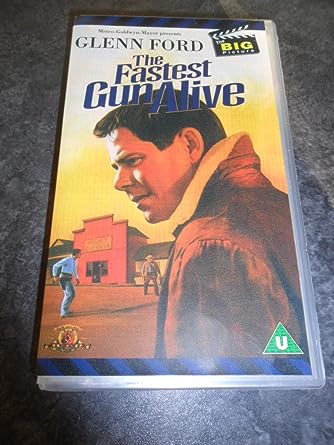
One bit of useless information – He is credited with being the fastest “gun” in Hollywood westerns, able to draw and fire in 0.4 seconds, he was faster than James Arness (Matt Dillon of “Gunsmoke” (1955)) and John Wayne.Well he did star in the excellent ‘The Fastest Gun Aiive’
Despite his illustrious career in films that spanned more than 50 years, he was never nominated for an Oscar.
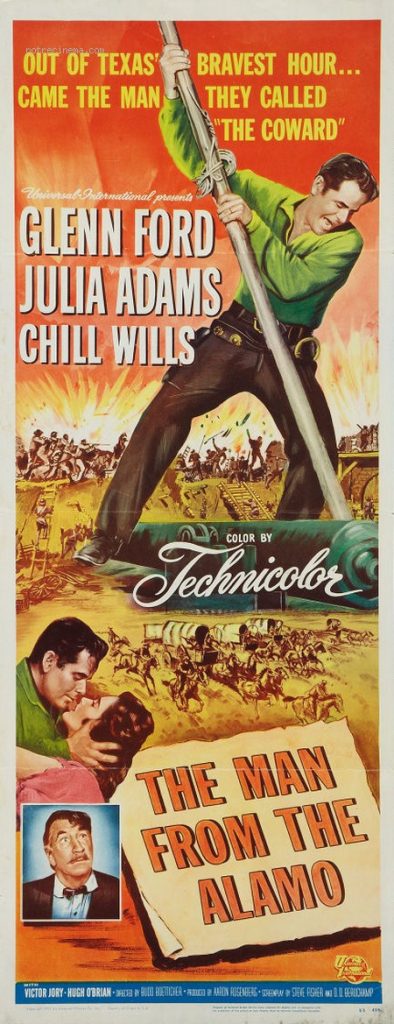
Glenn Ford – The Man from the Alamo
Directed by Budd Boetticher
Cast: Glenn Ford (John Stroud), Julie Adams (Beth Anders), Chill Wills (John Gage), Hugh O’Brian (Lt. Lamar), Victor Jory (Jess Wade), Neville Brand (Dawes), John Day (Cavish), Myra Marsh (Ma Anders), Jeanne Cooper (Kate Lamar), Mark Cavell (Carlos), Edward Norris (Mapes), Guy Williams (Sergeant)
__________
Budd Boetticher made some terrific pictures and The Man From The Alamo (1953) is one of the best. It’s a film filled with action — from the attack on the Alamo to a number of fist fights to the climactic wagon train scenes. It’s all handled perfectly.
The actual filming seemed to be plagued by injuries, it’s easy to see why.I think I have read that Glenn Ford broke three ribs and the filming was halted for three weeks or so
John Stroud (Glenn Ford) is the one man who left the Alamo after Travis wrongly labelled him as a coward.
Stroud sees the chance to help other families make their way to safety as a way to clear his name — and get his revenge on Wade (Victor Jory), the leader of a band of mercenaries
Glenn Ford does a good job here as a man who’s lost everything, even his good name.
Victor Jory is Wade, the soldier responsible for the death of Ford’s family. Jory proves to be a great baddie – he’s at his absolute best in this film
Julie Adams is so beautiful in Russell Metty’s Technicolor — she was perfect for Universal International’s bright, colourful Westerns of the 50s.
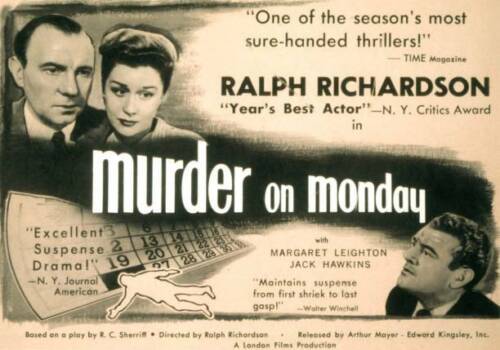
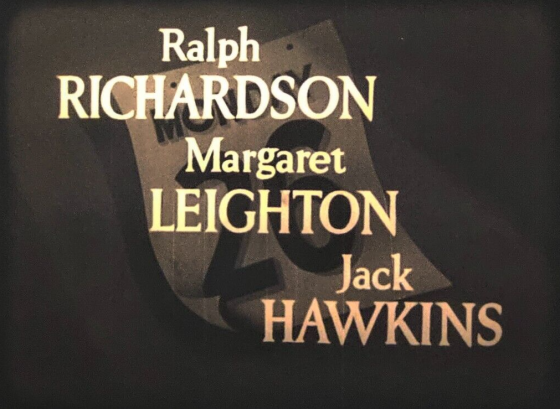
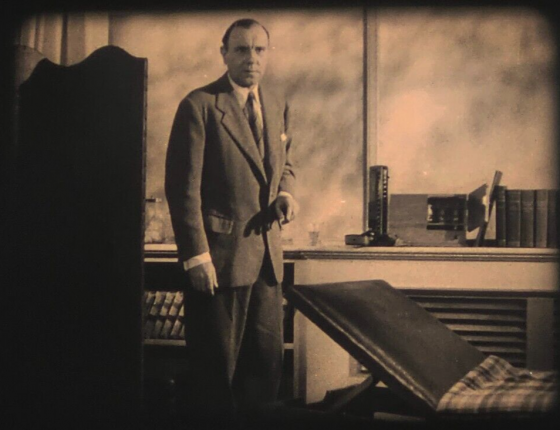
Ralph Richardson stars and also directs this intriguing drama abot a Bank employee who goes missing for 24 hours and finds himself in deep trouble for the theft of money from a social club and maybe even murder.In this film, and in his next one he would be joined by Margaret Leighton playing his wife whereas in the very next film ‘The Holly and the Ivy’ she plays his daughter
They very often appeared together on stage – where in fact, they were both at their best.
Another slice of news if true, is that Alexander Korda directed the film then handed over the credit to Ralph Richardson giving him his only directorial job in films.
Must have been the American Release title ABOVR
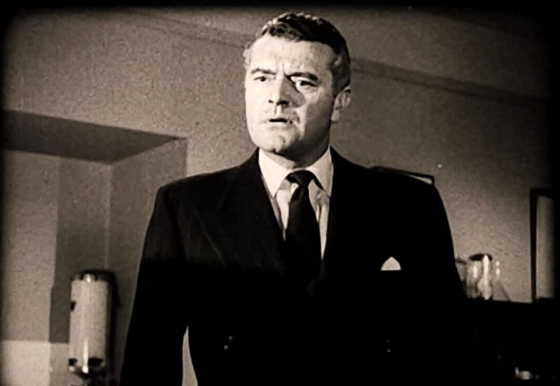
Jack Hawkins plays a Doctor who is a good friend of the coupleBELOW
This is really a simple story that depicts a short period in the life of a middle-class couple in post-war England whose routine is suddenly disrupted by the memory lapse of the husband.
The story is brought to life by the acting of the three main actors – Richarson and Margaret Leighton as the couple and the doctor, Jack Hawkins.
Ralph Richardson plays the dutiful husband who is stricken with an anxiety attack that causes him to relive his days in conflict to such an extent that when this mental episode is over, he cannot remember what happened for a full 24-hour period.
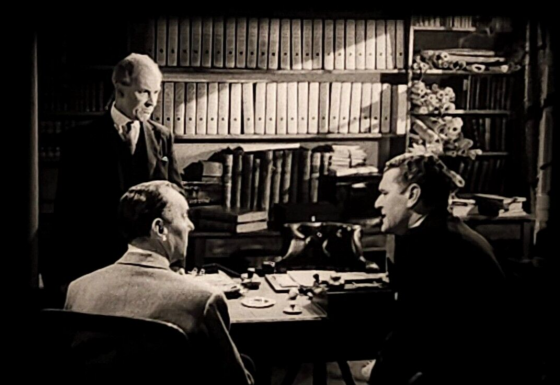
Husband and wife are at a loss to know what to do and and so they turn to their friend and family doctor played by Jack Hawkins. He is sympathetic and not too worried but eager to find out the source of the problem.
To complicate things a theft and murder has occurred and it seems to implicate the husband – so the couple fear. Everything seems to point to him being involved – it all seems to fit
These are two decent people who are frightened as to what might happen to them – they fear the worse and to us watching the film, it all looks ominous
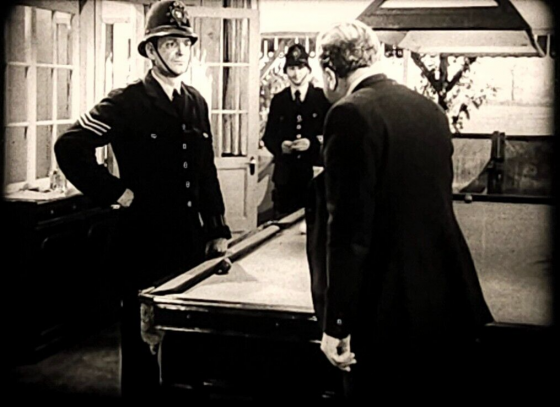
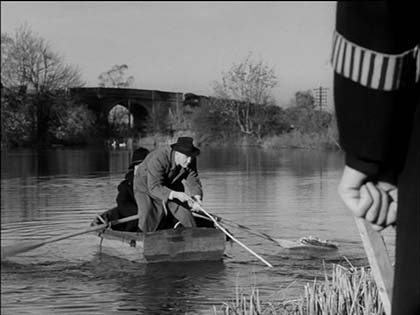
Ralph Richardson walks past this scene – seeing the police drag the river for a body – and he thinks it could be the body of a man that he may have murdered while enduring a 24 hour loss of memory
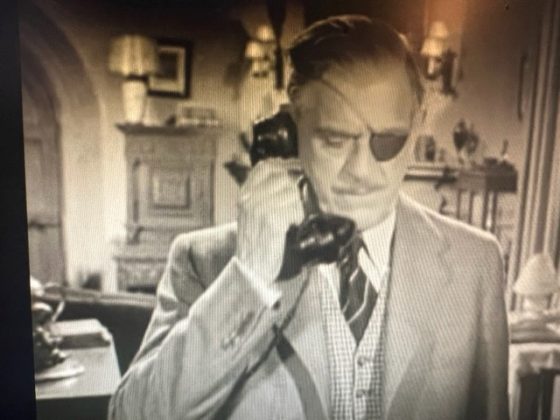
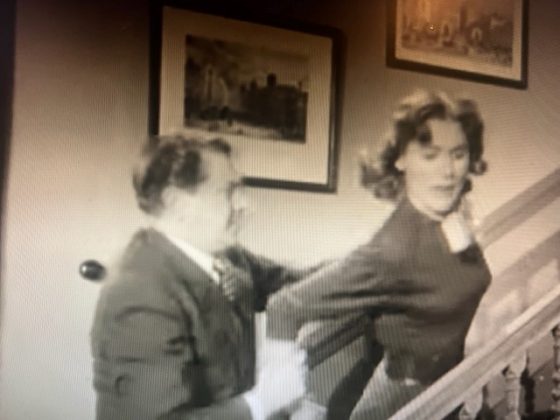
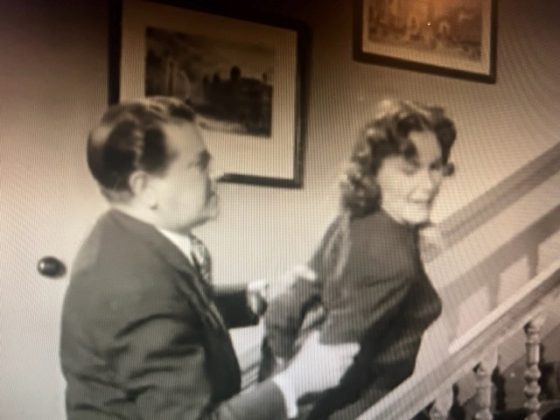
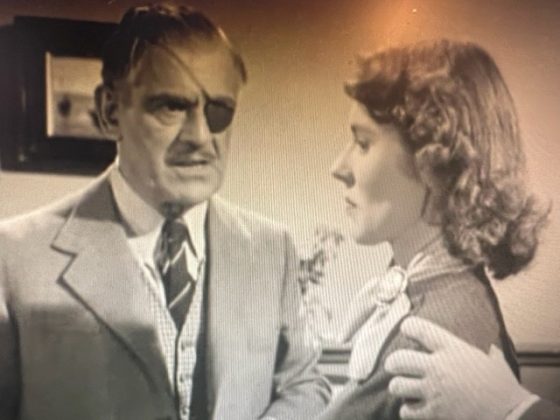
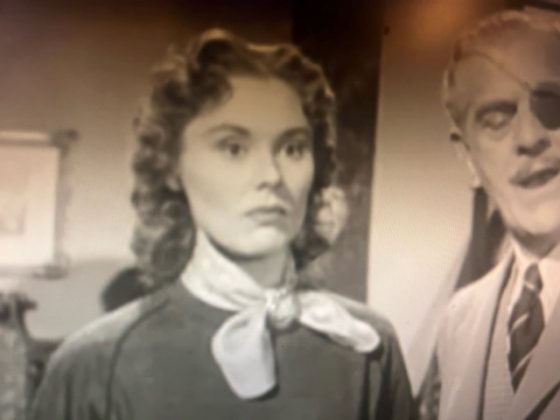
Just over a week ago on Talking Pictures Television, we had another episode of ‘Colonel March’ with Boris Karloff. I have to say that we have watched all the episodes to date. After a pretty poor start these stories got progressively worse but the last two or three have been pretty good.
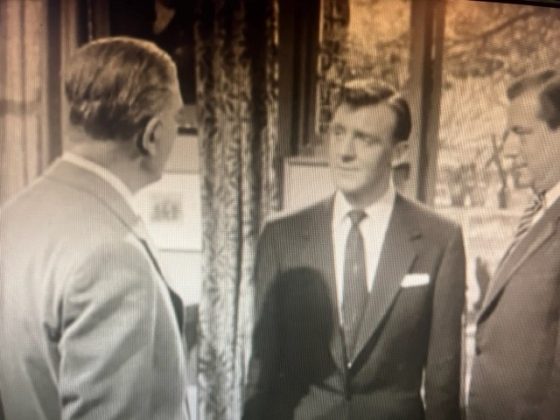
“The Stolen Crime” begins with Peter Ridgway (Glyn Houston) asking Inspector Ames (Ewan Roberts) to arrest him for plotting the perfect murder of his wealthy wife.
At that point in the story, she is not actually dead, and when she does die within a few days, her death is put down to natural causes.
It doesn’t take long for Colonel March and Ames to travel to the house and get to the bottom of things but things are never quite what they seem to be
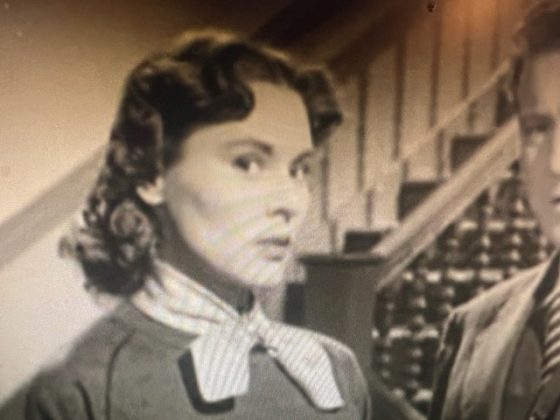
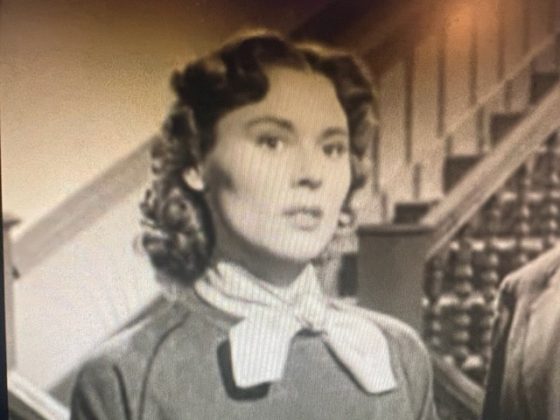
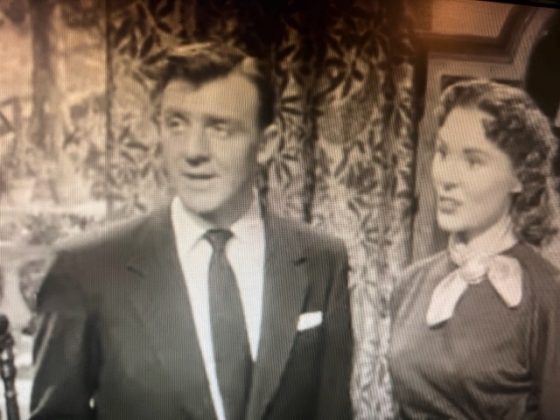
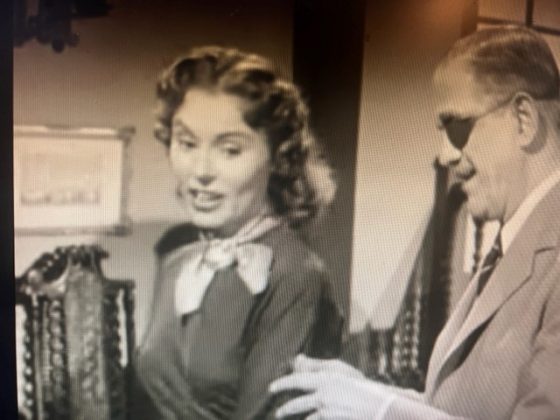
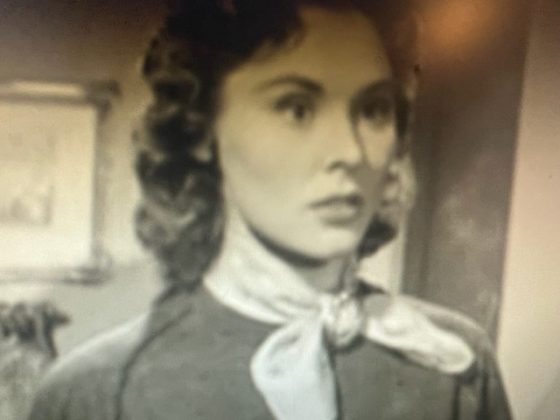
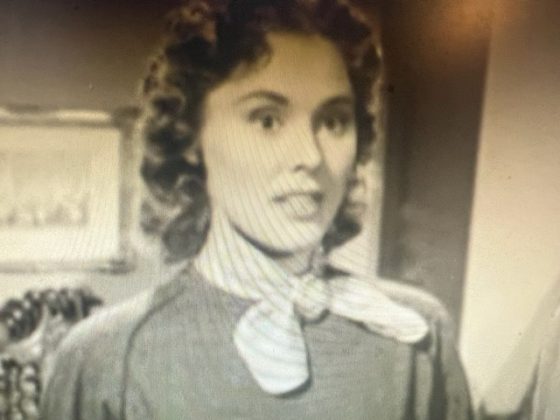
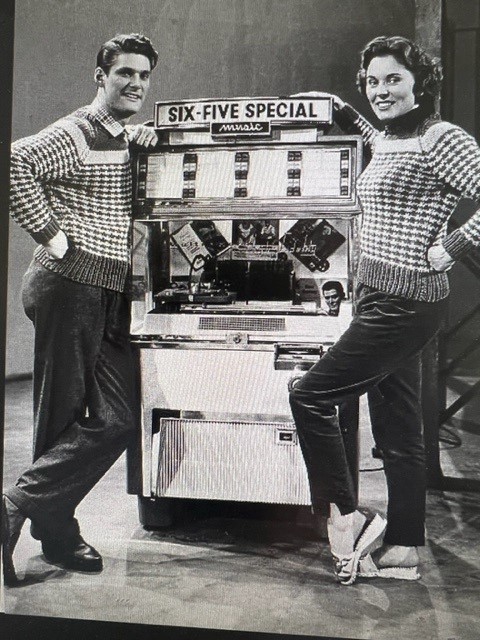
Josephine Douglas at that time a young actress, was in this one. Later we would see her presenting ‘Six Five Special’ along with Peter Murray. She was also a presenter, producer and director in Television. This episode was her last acting role – she obviously had a talent in many other areas of entertainment and pursued those
All the pictures below are of Josephine Douglas taken from the film
ABOVE – Josephine Douglas who according to various web sites was born Josephine Reckitt in Dewsbury West Yorkshire in 1926 – same year as The Queen.
However, without being totally sure, I think that her surname could have been Rickett or Ricketts. Quite a number of years ago when I had just started work, there was a person among the many employees called Ricketts and I do remember him and his wife attending the wedding of his cousin who would be Josephine and a picture appeared in the local newspaper at the time.
However that gives me another reason to query the Online Records because this would have been 1960 or 1961 maybeand yet her marriages are shown as before this.
Is there anyone out there that could shed some light on this please
I am sure that many would remember Josephine Douglas presenting ‘Six Five Special’
I have come across this BELOW which confirms that her real name was ‘Rickett’ as I thought :-
Josephine Douglas was born on October 6, 1926 in Earlsheaton, Dewsbury, West Yorkshire, England as Josephine Rickett. She was a producer and director, known for The Arthur Askey Show (1961), Love Story (1963) and Virgin of the Secret Service (1968). She was married to Christopher Doll and Pouton, Douglas.
She died on July 12, 1988 in Slinfold, Sussex, England. She was only 62.
I am pleased to have seen her starring alongside Boris Karloff in the last of her acting roles and also noting that her very first film part was in Alfred Hitchcock’s ‘Stage Fright’ in 1950,
I hope this article on Josephine Douglas helps brings her back in the memory of many people who remember her – as I do
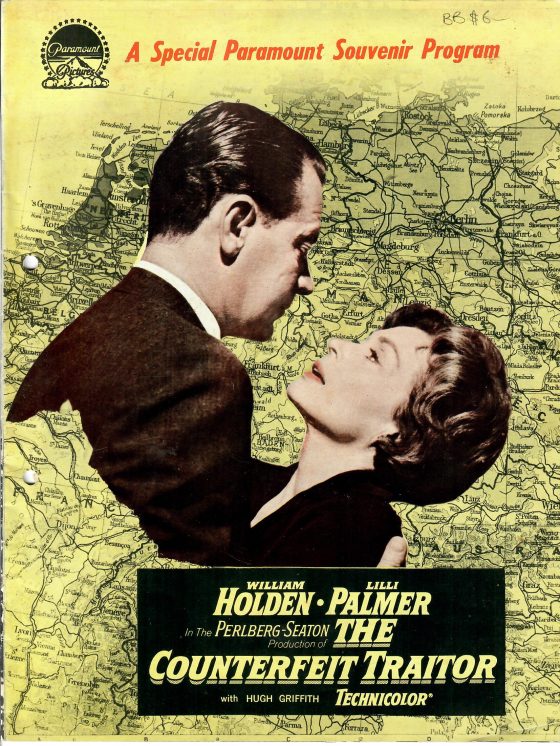
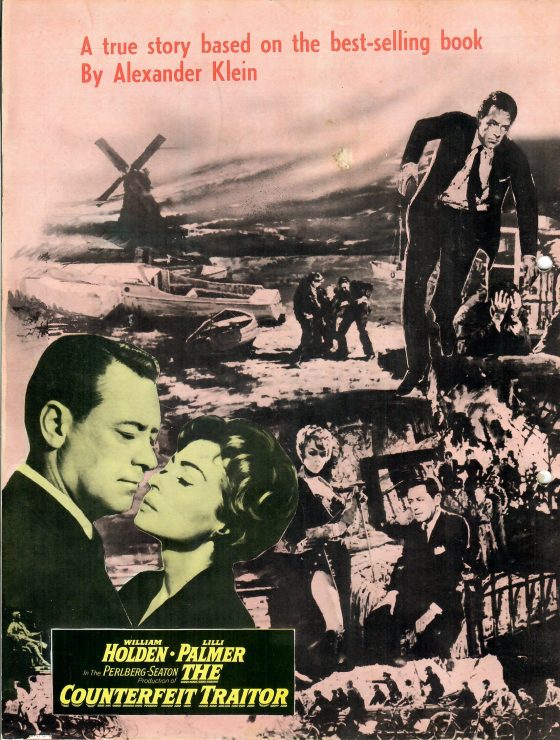
In this film William Holden plays master spy Eric Erickson whose stranger than fiction adventures led him to be labelled ‘the man who did business with Himmler’
It is a very good William Holden performances in The Counterfeit Traitor where he plays an American born Swedish businessman who agrees to spy for British Intelligence
They made him an offer he couldn’t refuse after Holden is put on a list of undesirable businessmen who are doing trade deals with the Germans. Holden’s character is American born, but had become a Swedish subject after deciding he would be working and living out of Stockholm. By agreeing to spy William Holden will get cleared after the Allies win the war we assume.
Eric Erickson ( played by William Holden ) proves to be quite useful to the Allies giving them all kinds of information about where Nazi war production is so it can be targeted by Allied bombing. Of course each trip from Sweden to Germany brings new risks as the Gestapo crack down on traitors.
One of his contacts is Lilli Palmer, a prominent society woman with whom he begins an affair. Lili Palmer herself was a refugee from Nazi Germany so she was well able to understand and get into the part and the era
Hugh Griffith is very good as the cynical British agent who is Erickson’s contact. Also in there was Werner Peters the German actor who played a really terrific variety of Nazi types throughout the Sixties and later. Here he is very suspicious of Erickson from the outset.
The Counterfeit Traitor is a fine espionage film and definitely in the top ten of William Holden’s performances.
Lili Palmer
Actress Lilli Palmer fled Nazi Germany after her theater contracts were revoked and she was branded a “non-Aryan” and narrowly escaped arrest. She first fled to Paris and then to London, where she acted in her first film and married Rex Harrison in 1943. Following Harrison to Hollywood, she made a name for herself and was immortalized with a star on the “Walk of Fame.” In 1948, they moved to New York, where Palmer shifted from films to theatre. Palmer returned to Germany in 1953 to make several award-winning films. She later turned her hand to painting, writing, and hosting a talk show with Dick Cavett.
“There was never any doubt in my mind that I would become an actress,” Lilli Palmer wrote in her autobiography. Defying the wish of her physician father Alfred Peiser (d. 1934) that she study medicine, Palmer fulfilled her own prophecy by following instead in the footsteps of her mother, actor Rose Lissmann. Palmer became not only a prominent actor in numerous successful plays, films and television programs, but also a painter and an author of both fiction and non-fiction.
Early Life and Family
Lilli Peiser was the middle daughter born to an assimilated Jewish family in Posen, Germany (now Poznan, Poland) on May 24, 1914. She had two sisters, Irene (?) and Hilde (b. 1921). As she later wrote in her memoirs, she was reminded in her childhood only once a year that she was Jewish, when she was discouraged from participating in the school Christmas play. But she acted in many other performances at the Open Air School in Berlin-Grunewald—where she already took the stage name of Palmer, who was a friend and colleague of her mother—and secured a contract with the well-reputed Darmstadt State Theater upon graduation from drama school. After Hitler came to power in 1933 Palmer soon faced grave reminders of her Jewish heritage. Her recently negotiated two-year contract with the Frankfurt Playhouse was cancelled. Branded a “non-Aryan” she came near to being arrested by local Nazi authorities during a performance in Darmstadt. After a harrowing opening before rows of Storm Troopers, Palmer was spared at the last minute when they learned of the World War I Iron Cross medal earned by her father, who was at this point serving as chief surgeon at Berlin’s largest Jewish hospital.
Acting in Exile: London, Paris, Hollywood, Broadway
These events forced Palmer into exile, the first year of which she spent in Paris. Hindered by linguistic, cultural and bureaucratic barriers, Palmer and her sister Irene barely scraped by with performances at the Moulin Rouge and at nightclubs. But Palmer was able to establish connections which led to a screen test in London, where she landed a part in her first film, Crime Unlimited (1935). Soon she signed a contract with the Gaumont-British film company and after various hurdles in obtaining work permits in England she was eventually granted a permanent permit, lending some security to her life in exile.
In London Lili Palmer met one of her greatest influences, Elsa Schreiber, considered by many to be a mediocre actor but a marvelous acting teacher. Schreiber taught her the subtleties of refining a character and a script—a method which later brought Palmer into conflict with some of her directors—and helped Palmer with her roles for years to come.
LiliPalmer married actor and frequent co-star Rex Harrison (1908–1990) in 1943 and had their son, Carey, in 1944. The family narrowly survived air-raid bombings during wartime in England. They moved to Hollywood in November 1945 for Harrison’s role in Anna and the King of Siam. Palmer quickly resumed her career with the lead role opposite Gary Cooper in Cloak and Dagger, amid heated disputes with émigré director Fritz Lang (1890–1976) which nearly caused her to withdraw from filming. With such films asBody and Soul (1947), My Girl Tisa (1948) and No Minor Vices (1948), Palmer continued to make a name for herself in Hollywood, where she was eventually immortalized with a star on the “Walk of Fame.”
After a scandal involving the 1948 suicide of Harrison’s lover, actor Carole Landis, Palmer and Harrison moved to New York and sought work on Broadway. Palmer quickly revived her reputation with such successes asGeorge Bernard Shaw’s Caesar and Cleopatra (1949) and, starring with Harrison, John van Druten’s Bell, Book and Candle (1950). Harrison and Palmer divorced in 1957, and Palmer married Argentine movie star and writer Carlos Thompson (1923–1990) the following year.
When Palmer returned to Germany to make the film Fireworks (1953) she realized her German had grown rusty during her prolonged absence: she did not know the technical terms for making movies in German. In addition, she struggled with being back in her home country for the first time since 1933 and was haunted by the question “What did a former Nazi party member look like today?” (Change Lobsters—and Dance 257). Palmer made several more German films, including Devil in Silk (1956), Anastasia: The Czar’s Last Daughter (1956), Between Time and Eternity (1956) and Tempestuous Love (1957). She won the Berlin Film Festival’s best actress award for the drama Devil in Silk in 1956, three years after winning the Venice Film Festival’s Volpi Cup for The Four Poster.
Working with New Media: Painting, Television, and Writing
Palmer once noted that she wanted to be remembered simply as a person who had led an interesting life (Huebner, 235). The varied activities undertaken in the last few decades of her life only increased her chances of this commemoration. She began to pursue more seriously her hobby of painting, even receiving advice and encouragement from the renowned painter Oskar Kokoschka. An exhibit at London’s Tooth Gallery showcased twenty-five of Palmer’s paintings, most of which were sold on the spot. Palmer also displayed her writing talents in a witty and best-selling autobiography, Change Lobsters—and Dance, as well as four novels and a short-story collection.
Gradually decelerating her movie-making, Palmer began work in another popular medium: television. In 1972 she acted in a German comedy, “A Woman Remains a Woman” (Eine Frau bleibt eine Frau), for which she won a Golden Camera award. She also did much of the show’s writing under the pseudonym of her grandfather’s name, Herrmann Lissmann. Palmer soon became a familiar television personality, hosting a talk show with Dick Cavett in 1979 and conducting a candid interview with German Chancellor Helmut Schmidt in 1982. In 1987 she received a posthumous Golden Globe nomination for her supporting part in the American mini-series Peter the Great. Despite her fame in many diverse areas, resulting in occasional mud-slinging from the press, Palmer always made time for her fans, whose books she happily autographed.
In May 1985, as she worked fervently on her final book, When the Nightbird Cries, Palmer hid her diagnosis of abdominal cancer from friends and family. She died in Carlos Thompson’s arms in Los Angeles on January 27, 1986, having left her mark as an accomplished actor of stage and screen, painter, and writer
Another Box Office hit – at this time Glenn Ford had a run of Westerns that were VERY good indeed
Directed by Russell Rouse Starring Glenn Ford, Jeanne Crain, Broderick Crawford, Russ Tamblyn, Allyn Joslyn, Leif Erickson, John Dehner, Noah Beery Jr., J. M. Kerrigan, Rhys Williams, Virginia Gregg, Chubby Johnson, John Doucette, Paul Birch, Glenn Strange, Kermit Maynard, Dub Taylor, John Dierkes
Glenn Ford made so many terrific Westerns around this time — Jubal (1956), 3:10 To Yuma (1957), Cowboy (1958), The Sheepman 1958 etc.
Glenn Ford was perfect for this role as he played the part of a reluctant gunfighter but was uneasy that he was saddled with the fact he was fast with a gun.That in itself makes for a good Western and this one hits the bullseye
It’s a really terrific with and George Folsey’s cinematography outstanding. I just wish that it had been in colour and wonder now – has it been colorised ?
The answer is YES – that means that I just have to get it as soon as I can
https://youtu.be/L3EjfJVdFZ0?t=3
The original Trailer ABOVE is nothing like as exciting as it should be – I thInk that MGM could have made a much better job than this.
This is a very good Western although classed as a B Movie by some – not me.
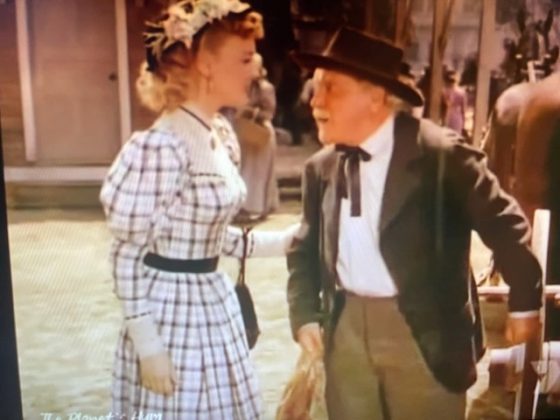
It is in Technicolorand came up on Television earlier this week. I had not seen it before
George Montgomery stars
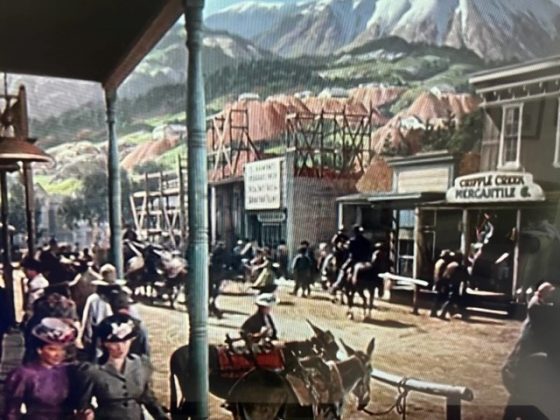
George Montgomery, Jerome Courtland and Richard Egan are undercover agents in the old west trying to break a gold smuggling ring working out of the town of Cripple Creek.
This is good a good western with plenty of action. It is well paced, and well written and acted. It has some plot twists along the way too
For the Western Film fan, there are a few familiar faces among the cast, and everyone gives a good account of themselves.
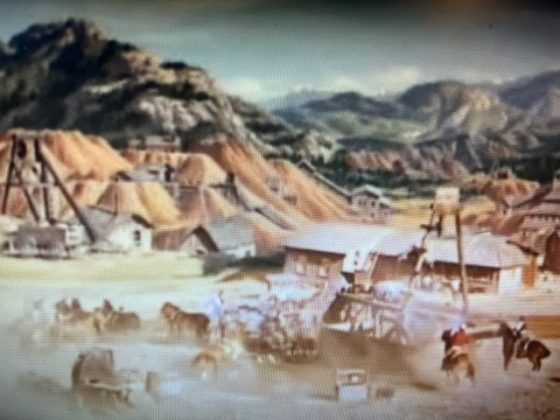
The ABOVE shot from the film was a quite good Matt Shot but not in the same class as Peter Ellenshaw – the Matte Artist genius – would have put his name to.
Same with the one BELOW – although my pictures is not too good either