This turned out to be George Formby’s last feature film, made just after WW2 had finished in 1946 – and maybe audiences tastes had changed by then, although I personally don’t give much credence to this theory because George Formby remained very popular and even had a hit show in London’s West End in 1951 – Zip Goes a Million.
With his ongoing popularity it should have been easy to adapt the films but here again I don’t think there would need to be much change there even.
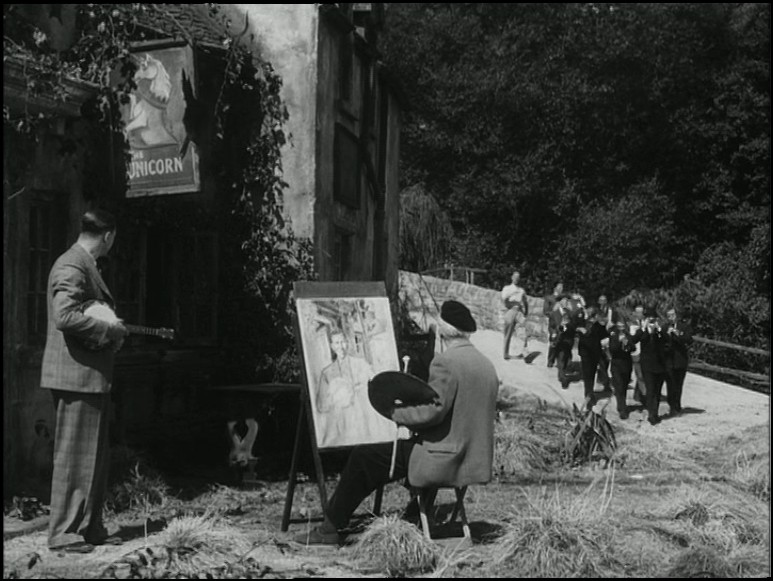
In the film, George and his pal Ronald Shiner go back to George’s rundown pub the Unicorn and try to run it as a business. They find it difficult going – the main problem being the rivalry between the Lion pub across the river from them (even though George’s childhood sweetheart owns it.)
Wally Patch plays one of the baddies this time trying to close them down with various wicked schemes. Songs include We’ve Been A Long Time Gone (on the demob ship), Christened With A Horseshoe (in the civilian clothes shop), It Could Be (in the Unicorn), and a really good one called You Don’t Need A License For That’
Rosalyn Boulter plays his girl friend – we have done a piece on her before on here – She had made a number of films before this, but to be in a George Formbv film means she is well remembered really for that one only even though her talents on screen and Theatre are impressive. She married and went to the USAto live and work.
ABOVE:‘For Them That Trespass’ in 1948
Not long after this film she had a leading part in Richard Todd’s first film ‘For Them That Trespass’ in 1948
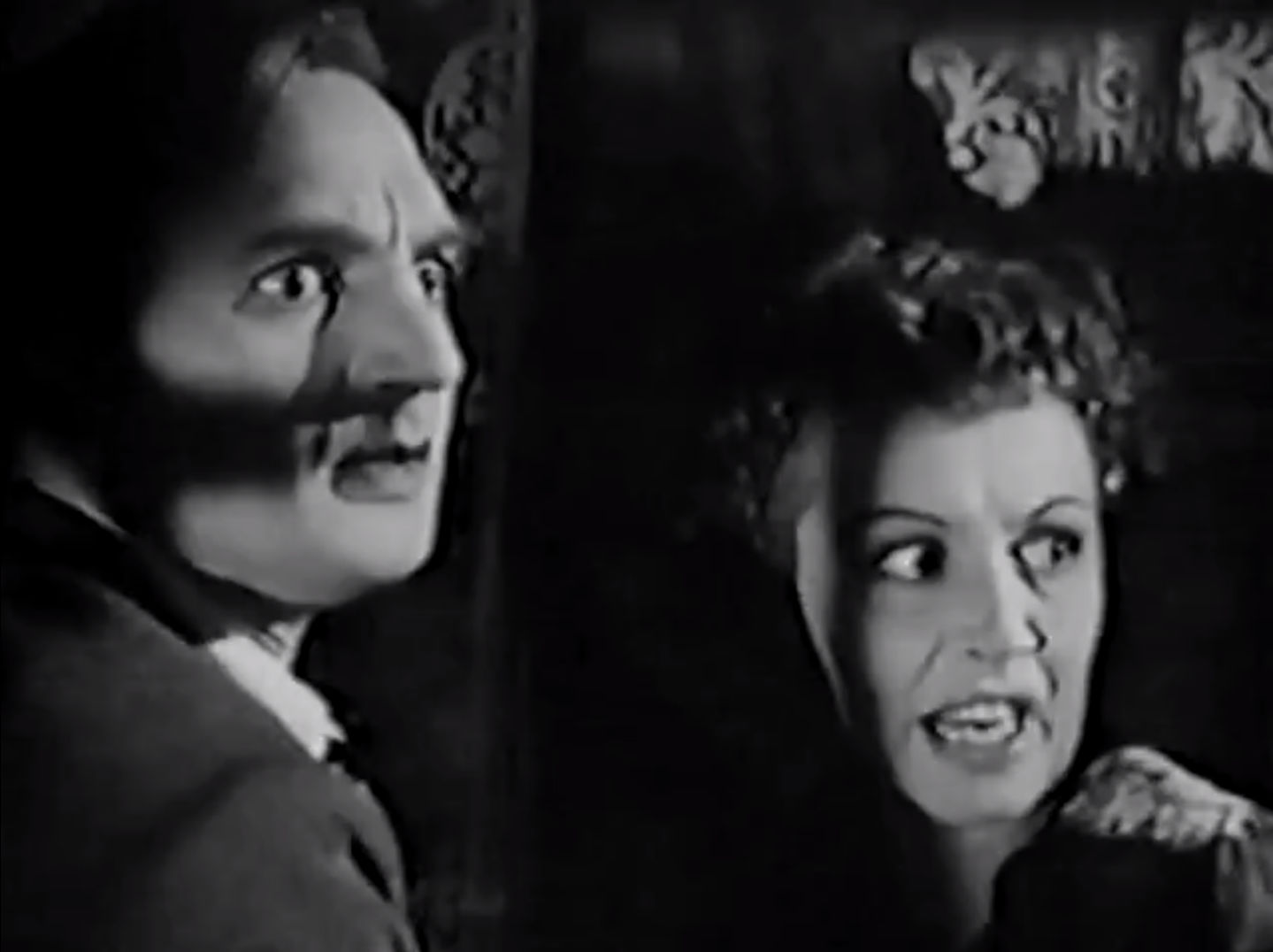
The Alice dream sequence with the Mad March Hare song was really good and unusual, featuring George singing ‘ The Mad March Hare’.
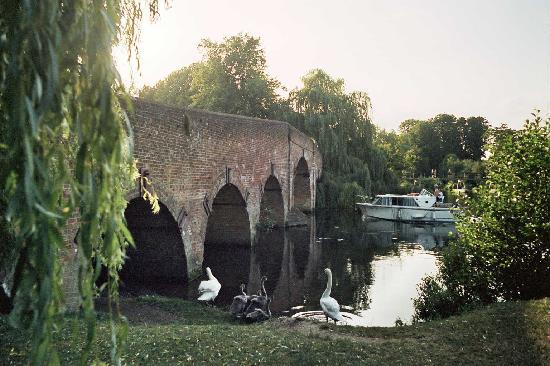
Some of the outdoor scenes were shot near Richmond in Surrey – and probably Sonning Bridge – pictured below.
Sonning is where the Prime Minister – very much in the news at this time – lives
There is a down-to-earth charm about the films of George Formby, and in them his performances are much better than he is often given credit for. His films exude the warmth and charm of a bygone era.
On screen in ALL of his films, he dominates the screen and is able to pull off singing the songs – sometimes direct to camera which is rarely done although he has the charisma and confidence to pull that off. I can’t think of many – if any film stars who can do that.
He is the star of every film he is in – Star with a capital S, I think
I came across this lovely picture on a Railway Nostalgia Calendar which came earlier this year – a spectacular view of a spectacular castle.
Bamborough Castle has been used in film locations over the years – and the whole area too – with the Television Drama Series ‘Vera’ being the setting for all the stories. Probably done a lot of good for tourism – in the much same way as ‘Heartbeat’ did for Whitby and the surrounding area.
Not too far away is Alnwick Castle – probably used more in films – and I can go back to the 1954 adventure film ‘Prince Valiant’ which included shots of that castle – although the vast majority of the film was made in Hollywood and the main characters would not come to England for filming
Prince Valiant was a super adventure film in Cinemascopeand Colourand it certainly looked good. I remember seeing it on that enormousewide screen and it wasindeed very impressive.
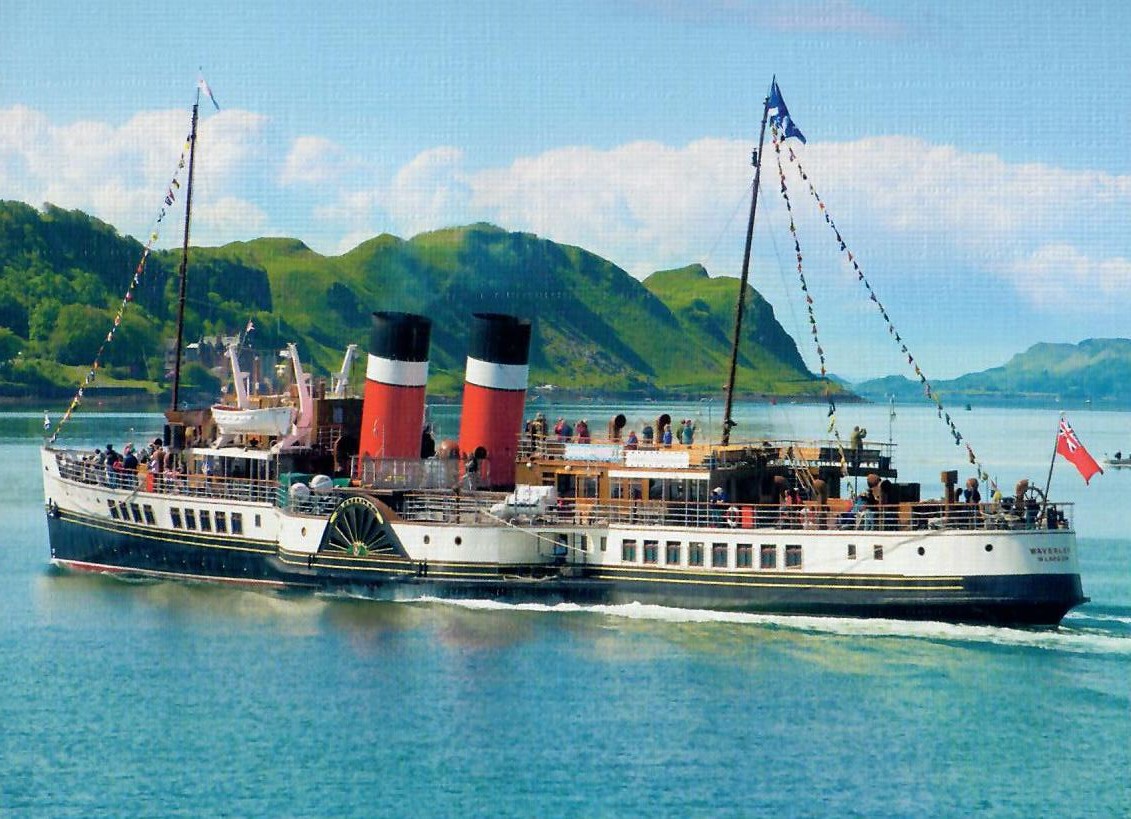
This iconic Paddle Steamer P.S. Waverley. In truth I could not find a link for PS Waverley to the film world but I liked the picture above so much I could not resist putting in this article
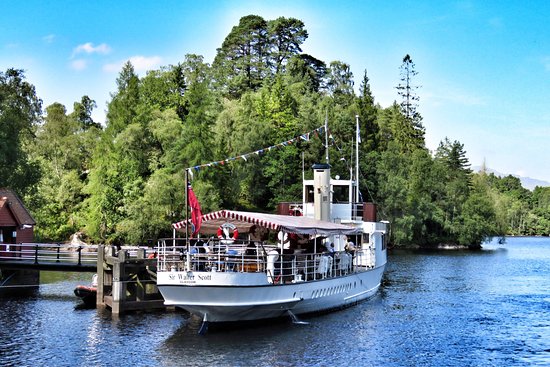
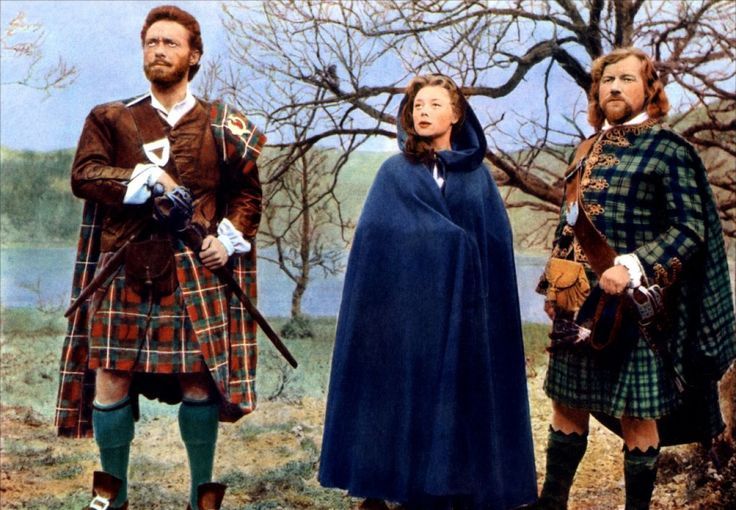
I had also looked at the Steamer on Loch Katrine – The Sir Walter Scott. – In The Trossachs area of Scotland – how beautiful that is and I am reminded of the film Rob Roy The Highland Rogue made in that area by Walt Disney – starring Richard Todd.
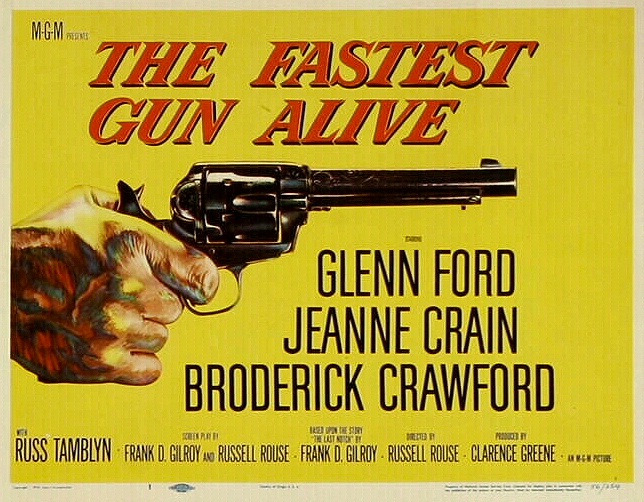
The Fastest Gun Alive—Glenn Ford, Jeanne Crain, Broderick Crawford, John Dehner, Russ Tamblyn, Noah Beery, Jr.
This Film is a real humdinger of a Western from 1956
Broderick Crawford is great as the criminal leader and a psychopath who must continually show that he is the fastest gun around.
Glenn Ford is superb as the introverted shy storekeeper with a lightning fast draw.
The Supporting cast also adds good depth and character.
A blind man near the start of the film issues the warning to us “no matter how fast you are there’s always somebody faster” That really sets the scene for the film.
‘The Fastest Gun Alive’ proved to be one of the Box Office hits of 1956 – although it has been made on a minor budget
ABOVE: This would be a great DVD pack to have in any collection.
The Sheepman 1958
Glenn Ford had a remarkable run of top class Westerns from 1956 to 1958 – with ‘ The Fastest Gun Alive’ followed by ‘3:10 To Yuma’ and then this one ‘The Sheepman’ – These were about as good as any actor could hope for.
This is one of the 1950’s best westerns and ideally cast – it is certainly one of Glenn Ford’s best roles. He and Shirley MacLaine have screen chemistry. Familiar faces Edgar Buchanan, Mickey Shaughnessy,and Slim Pickins are around to add to the Western flavour.
Leslie Nielsen plays Ford’s rival for Shirley’s affections. Pernell Roberts – later of Bonanza Fame is a slimy villain.
Director George Marshall was an old hand at combining comedy with action and The Sheepman proved that.
I’s sure that the Trailer to this film BELOW – will make you want to see the film again – that’s assuming you have seen it before as many of us will have done
The Sheepman still holds up well today and will appeal to anyone who is a fan of western’s,comedies,or just plain entertaining movies. It’s good, clean, old fashioned fun and a prime example of one of those kind of films”that they just don’t make anymore!” More’s the pity
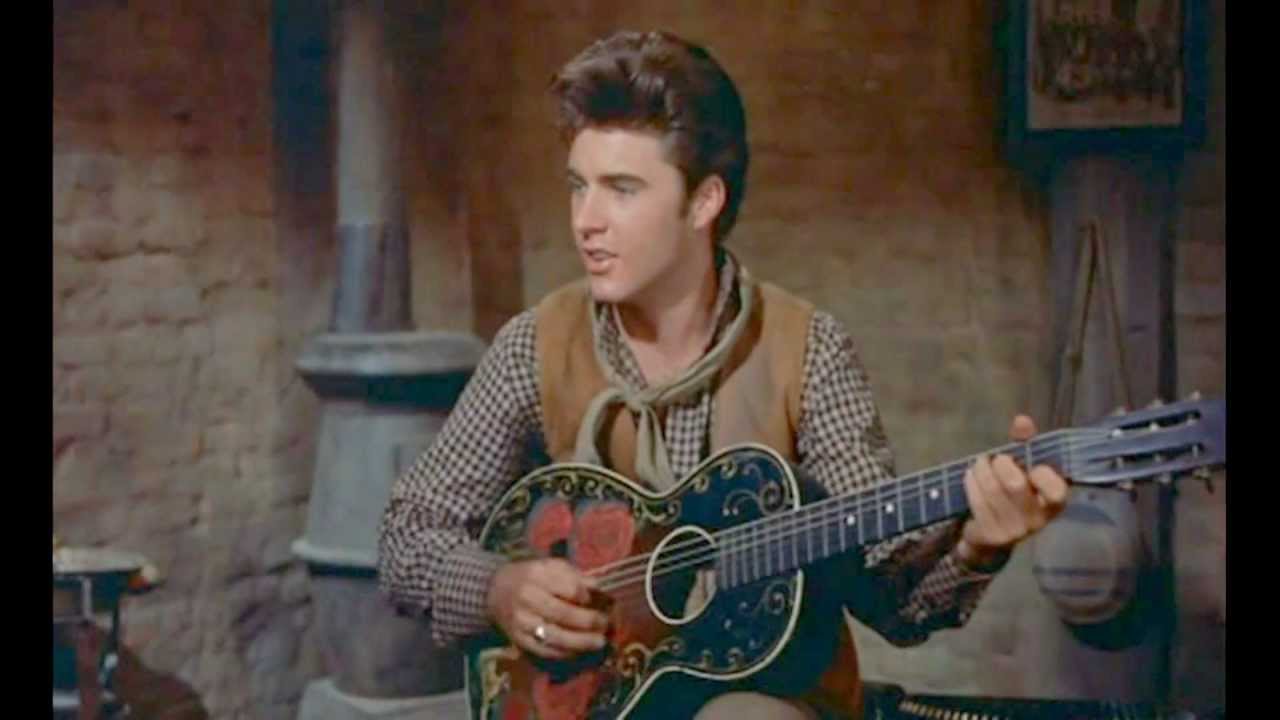
Ricky Nelson in Rio Bravo where he played Colorado – very much playing second fiddle to John Wayne and Dean Martin in the film but nevertheless a really good part in a big film for him, in what would have been his first film
Rio Bravo was a big hit at the Box Office – but then again John Wayne was starring and so was Dean Martin so it had a good start.
From a personal angle and from my many memories of that era, as a young teenager quite a crowd of us went each week to a popular dance hall in our local town and after what was always a wonderful night we finished with Ricky Nelson singing ‘It’s Late’.
It was a double sider with ‘There’ll Never be Anyone Else But You’ on the flip side.He had another hit with ‘Poor Little Fool’ and a year or two later came ‘Travellin Man’ and ‘Hello May Lou’
By the time Ricky Nelson was 22, he had sold 35 million records and had had 17 Top 10 hits – that is some measure of success by any standards.
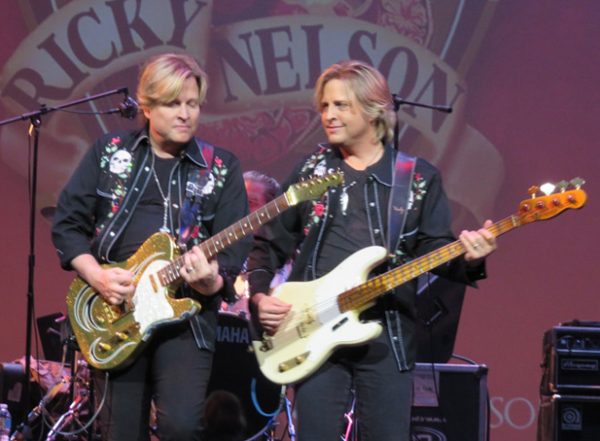
His twin sons gave a concert in 2016 in honour of their fatherBELOW
Above: Gunnar and Matthew Nelson
Most of the concert was dedicated to early rock and roll and Ricky Nelson’s music, including “Travelin’ Man,” “Hello Mary Lou” and “Garden Party.” The twins offered sweet harmony and tight rock and roll.
Then Gunnar talked about what really motivated Ricky Nelson. “My father lived and died for rock and roll – and his fans.”
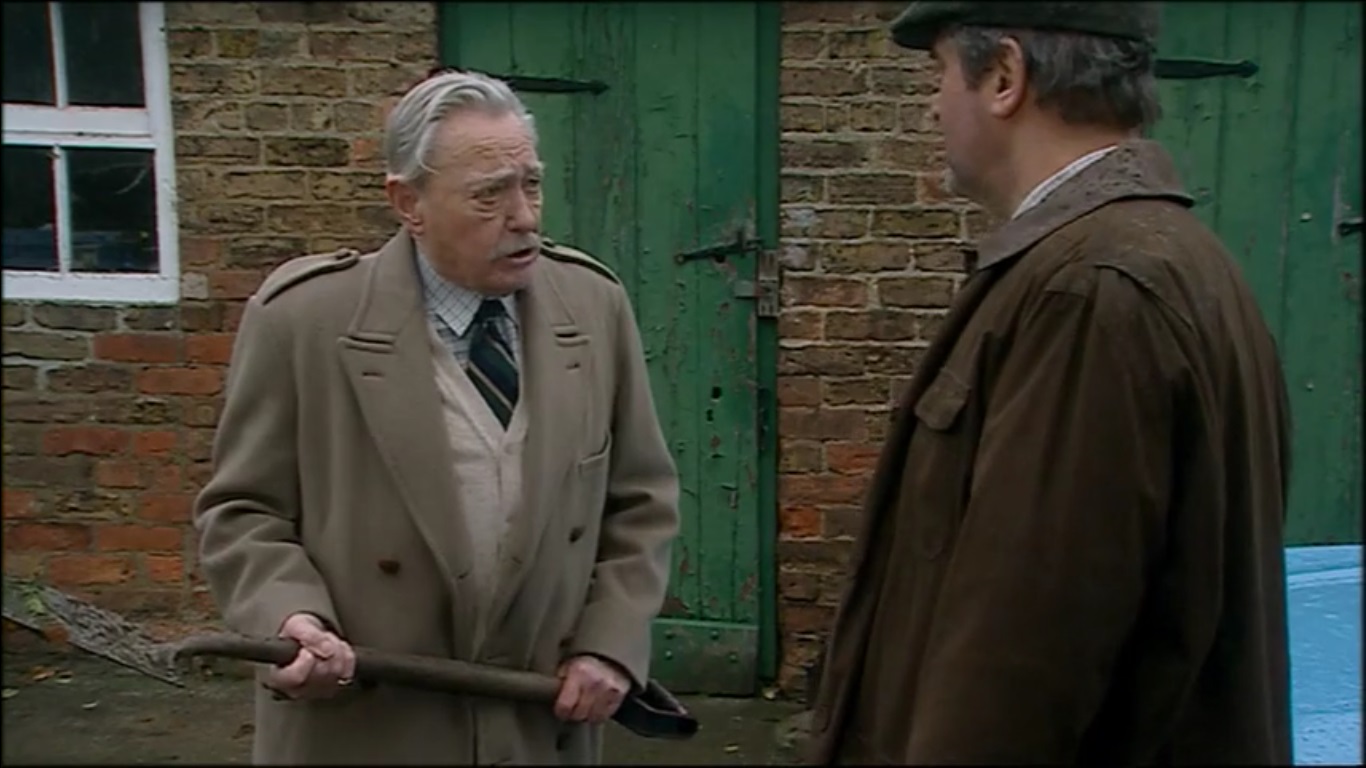
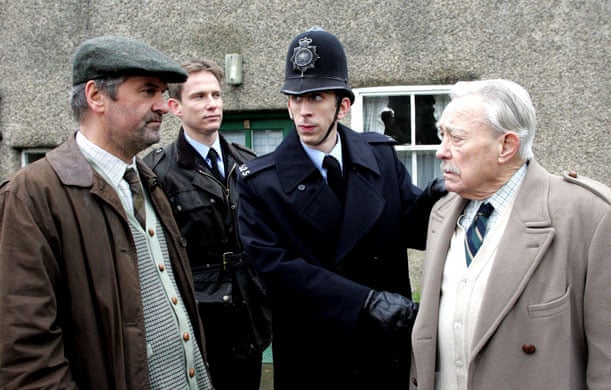
Anyone tuning in tomorrow evening to the episode of Heartbeat on ITV3 in England – it is also on during the daytime – an episode called ‘Seeds of Destruction ‘ will see the very last appearance on screen of the legendary actor Richard Todd playing Major Harold Beecham ( 2007)
Richard Todd – ABOVE and BELOW – as Major Beecham in Heartbeat
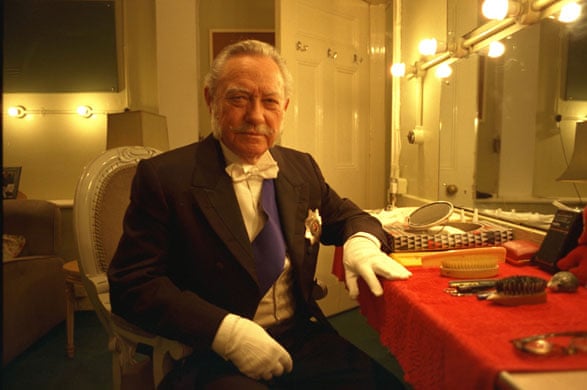
Richard Todd BELOW – as Lord Caversham on the London Stage in a Countrywide tour of ‘An Ideal Husband’ – he had scored a major success with this and broken Theatre records when he appeared in this Oscar Wilde play in the late Sixties when he played the leading man.
In those days it virtually did a tour of London Theatres – The Strand Theatre, the Garrick Theatre and I think Wyndhams – something highly unusual and a mark of its tremendous success.
This Production starred Richard Todd, Margaret Lockwood, Roger Livesey and Ursula Jeans – a huge hit in England, a kind of yardstick for Oscar Wilde and wonderful escapism
We saw him as Lord Caversham at one of the Theatres in the tour of this famous Oscar Wilde play in early May 2001, where Patrick Ryecart played the lead.
He appeared in the leading role in the stage play ‘The Business of Murder’ at the Mayfair Theatre from 1983 to 1991 and he still holds the record for the number of appearances in the West End in a straight play as the same character
Richard Todd’s acting career had indeed been a long and illustrious one – being at the very top of the Film World for a time on both sides of the Atlantic.
He was a star of the Screen and the Stage and before that a War Hero who was one of the first paratroopers – if not the first – to land at Pegasus Bridge under the command of Major John Howard who he later portrayed in the film ‘The Longest Day’
From a personal angle, to me his most famous role would always be as Robin Hood in the 1952 film ‘The Story of Robin Hood and His Merrie Men’ – the best version of the famous story that I have seen !!
However we will all be able to see him in Heartbeat tomorrow evening 22 May 2019 on ITV3. Don’t miss it !!
I am cheating a bit here because these films are actually from the Sixties – so a little bit later than we normally do
It’s also interesting to look at the quite famous names of the actors and see just how many well known names seem to be in just one film alone at that time. Must have been good work for them then – probably filing by day and on stage in the evening.
A friend of mine did point out some time ago, just how many big names appear here in the one film – and as he said it would be unusual today.
Donald Houston in the film featured above for instance started off in The Blue Lagoon 1949 – a film that often crops up on this Blog – but after that quite big one his career never hit the high spots it should have done – and certainly nowhere near as successful as his co-star in that film – Jean Simmons.
Shirley Ann Field above – we saw her in a straight play at the Theatre about three years ago – so she is still active.
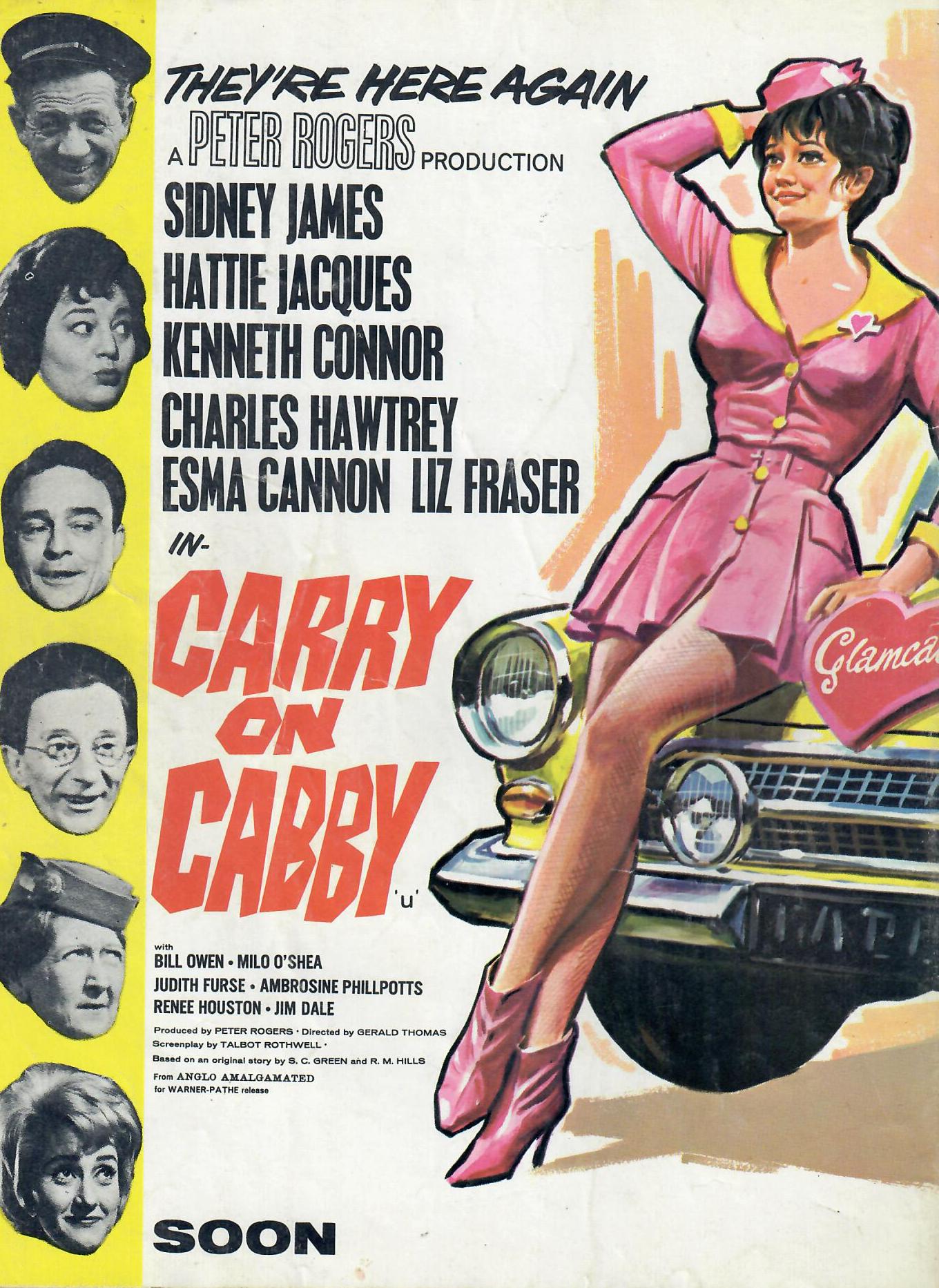
Then we come to a Carry On film – just look at the names in this one.
I notice Esme Cannon and always remember her as the naïve young girl staying at a Butlins like resort in the film ‘Holiday Camp’ – a film I really like. She is murdered by Dennis Price in that film.
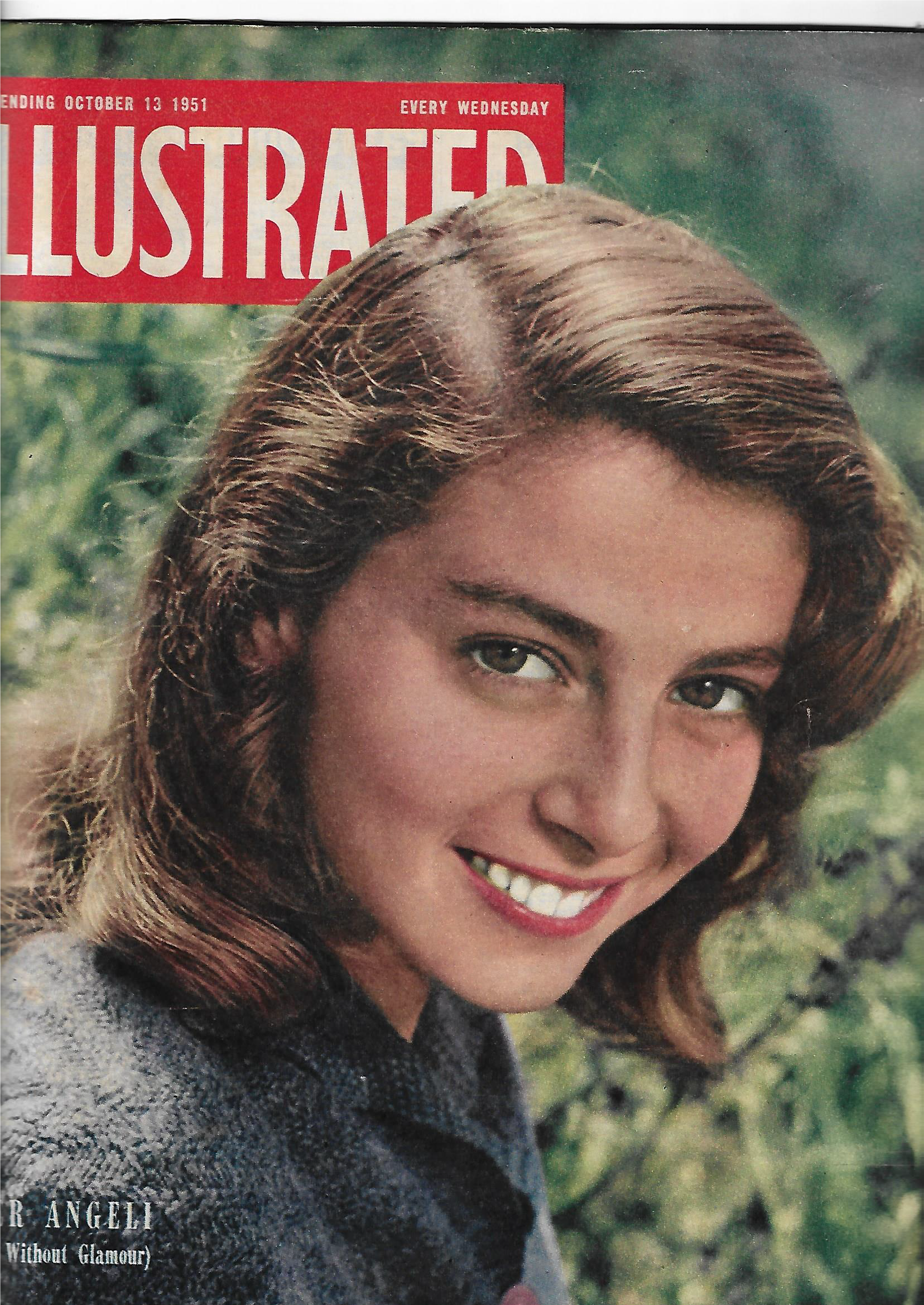
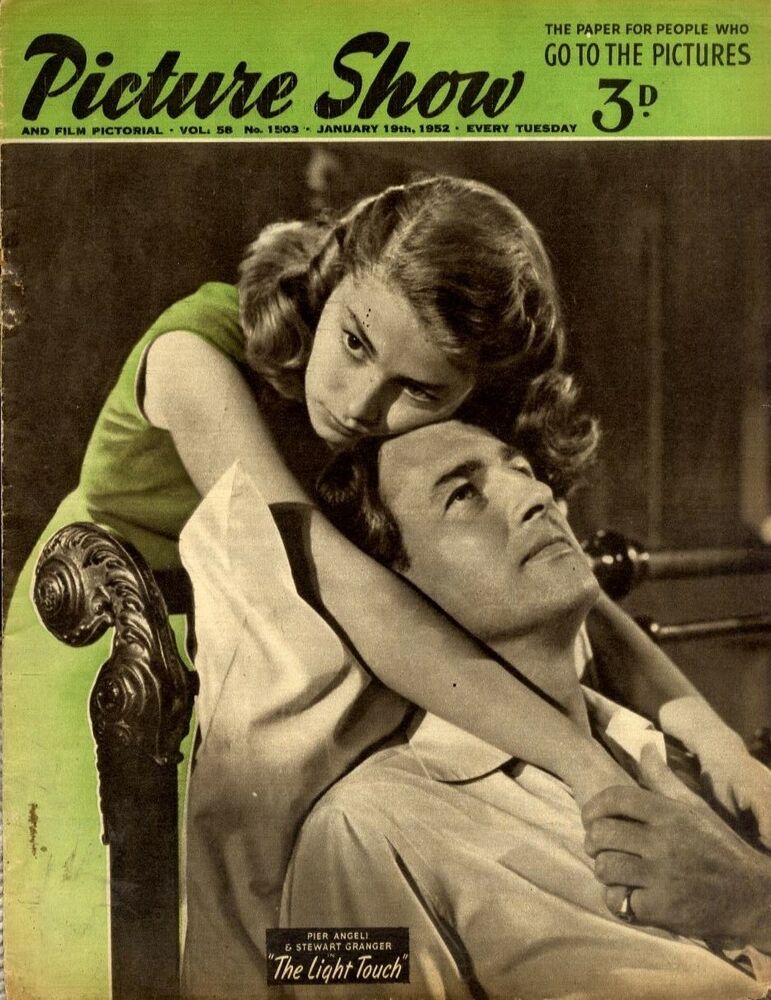
This pictures appears on the cover of Illustrated of October 1951
I had not realised that she was the Twin sister of actress Marisa Pavan.
In the Illustated Magazine there is a feature of her with showing Stewart Granger round the sights of Rome – she grew up in Italy – and the location for the film ‘The Light Touch’
This is a shorter article than I would like but I will come back with much more about Pier Angeli who died so young
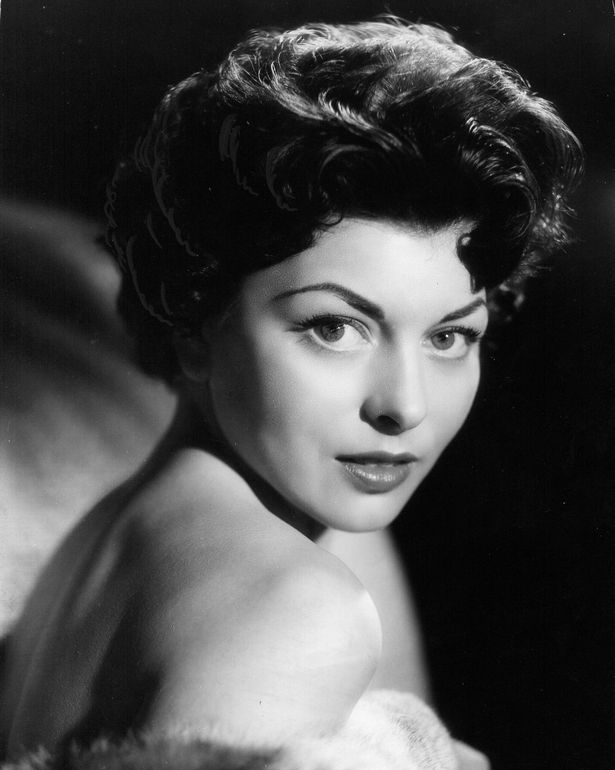
On January 1, 1997, Derby’s Joan Rice died. Her name may eluded many but to film fans like me she needs no introduction.
Her natural, dark-haired beauty lent itself just as easily to exotic island beauties as it did to perfect English roses.
As well as being a talented actress, she had added a welcome note of glamour to her roles.
Many Derby residents might have been surprised to learn that she was originally one of their own, born here almost 67 years earlier, one of four daughters of Hilda and Harold Rice of 314 Abbey Street.
Dorothy Joan Rice was born at the City Hospital on February 3, 1930.
Her early life had been troubled. Her labourer father was imprisoned for child abuse and, subsequently, she spent eight years in a convent orphanage in Nottingham.
She took work as a lady’s maid and as a housemaid before leaving for a new life in London with just half-a-crown (12.5p) in her purse.
She took a job as a Lyon’s Corner House waitress, or “nippy” as they were popularly known, earning the princely sum of £3 per week.
In 1949 her pretty looks and natural poise helped her to win the “Miss Nippy” competition.
The prize was a week-long promotional tour to Torquay, but more importantly, it lead to an introduction to a theatrical agent who arranged for her a screen test.
From this came a contract with the Rank Corporation who sent the previously untrained actress to the Company of Youth, otherwise known as the “Rank Charm School”.
In reality it was a training institution for young film actors that occupied a disused church hall – the Highbury Studio.
There, youngsters were trained in all manner of useful skills, like voice production and fencing.
Other stars who trained there included Honor Blackman, Kay Kendall, Shirley Eaton, Joan Collins, Diana Dors, Christopher Lee, Donald Sinden, Patrick McGoohan and Dirk Bogarde.
It was with the last of these with whom she appeared in her first notable film role – the feature Blackmailed (1950).
Another role, in the Robertson Hare and Stanley Holloway film One Wild Oat (1951) soon followed.
Unfortunately, the Rank organisation never saw her potential as a lead actress and instead she was given numerous supporting roles.
Finally none other than Walt Disney saw her star potential, in 1952, when he cast her kin the leading role as Maid Marian in his live action film The Story of Robin Hood and His Merrie Men (1952) made in England at Denham Film Studios.
Joan played opposite Richard Todd and was declared “the new Jean Simmons”.
Very quickly afterwards she again took one of the starring roles in His Majesty O’Keefe (1954) where she played Dalabo, the Polynesian girl who marries Burt Lancaster’s daring sea captain. For this she flew out to Fiji to make the film.
So she had just completed two major films and everything looked good.
For whatever reason – we have speculated for years as to why – lead roles in major films remained hard to come by which is unbelievable after these two very good films so she took roles in ‘B’ movies like A Day to Remember (1953) with Stanley Holloway and Donald Sinden, as were smaller roles in feature films like Curtain Up with Robert Morley, Margaret Rutherford and Kay Kendall.
In 1954, Joan Rice appeared as Iris in Norman Wisdom’s film, One Good Turn, in which the residents and staff of an orphanage, including Thora Hird and Shirley Abicair, fight to save it from closure.
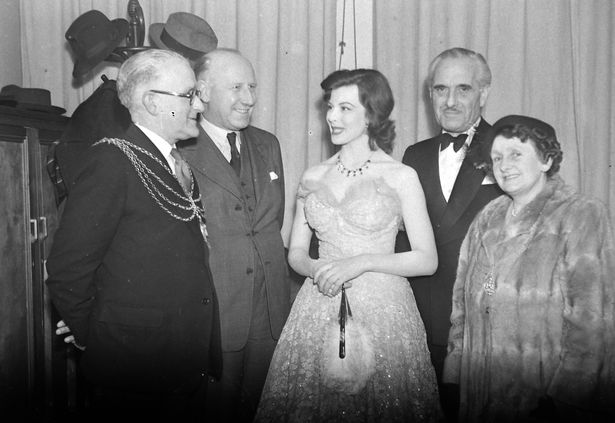
ABOVE – Joan Rice in Plymouth attending the cinema showing The Story of Robin Hood and His Merrie Men – one of the mots successful films of 1952
However, changing fashions – in the minds of casting directors at least – and the arrival of the Hitchcockesque blonde, meant that she was unable to land many more lead roles.
Instead she took the supporting roles of Pat Lewis in Police Dog (1955), a prisoner Cleo Thompson in the prison drama Women Without Men (1956), also known as Blonde Bait, and the part of a young ATS private in the wartime comedy Operation Bullshine, which starred Donald Sinden and Barbara Murray.
What would be her last film role for more than a decade came in 1960, in the crime drama, Payroll.
There were roles in television series like Zero One, The Pursuers, Ivanhoe (starring a young Roger Moore), and The New Adventures of Charlie Chan.
Eventually, Derby’s Joan Rice left the film business and, after her ten-year marriage to David Green ended in divorce, she built a successful career in repertory theatre with a role, among many others, as Catherine in Arthur Miller’s A View From the Bridge, and John Mortimer’s Voyage Around My Father.
In 1970, she did return to the big screen with a small role in The Horror of Frankenstein.
She then left the business and set up her own Estate / Letting Agency from an office in Maidenhead and she carried this on until she died.
She was a very memorable actress and somehow fitted the era of the early 50’s so well. No one could have looked lovelier than her dashing around in Sherwood Forest opposite Richard Todd – and that is how will I remember her.
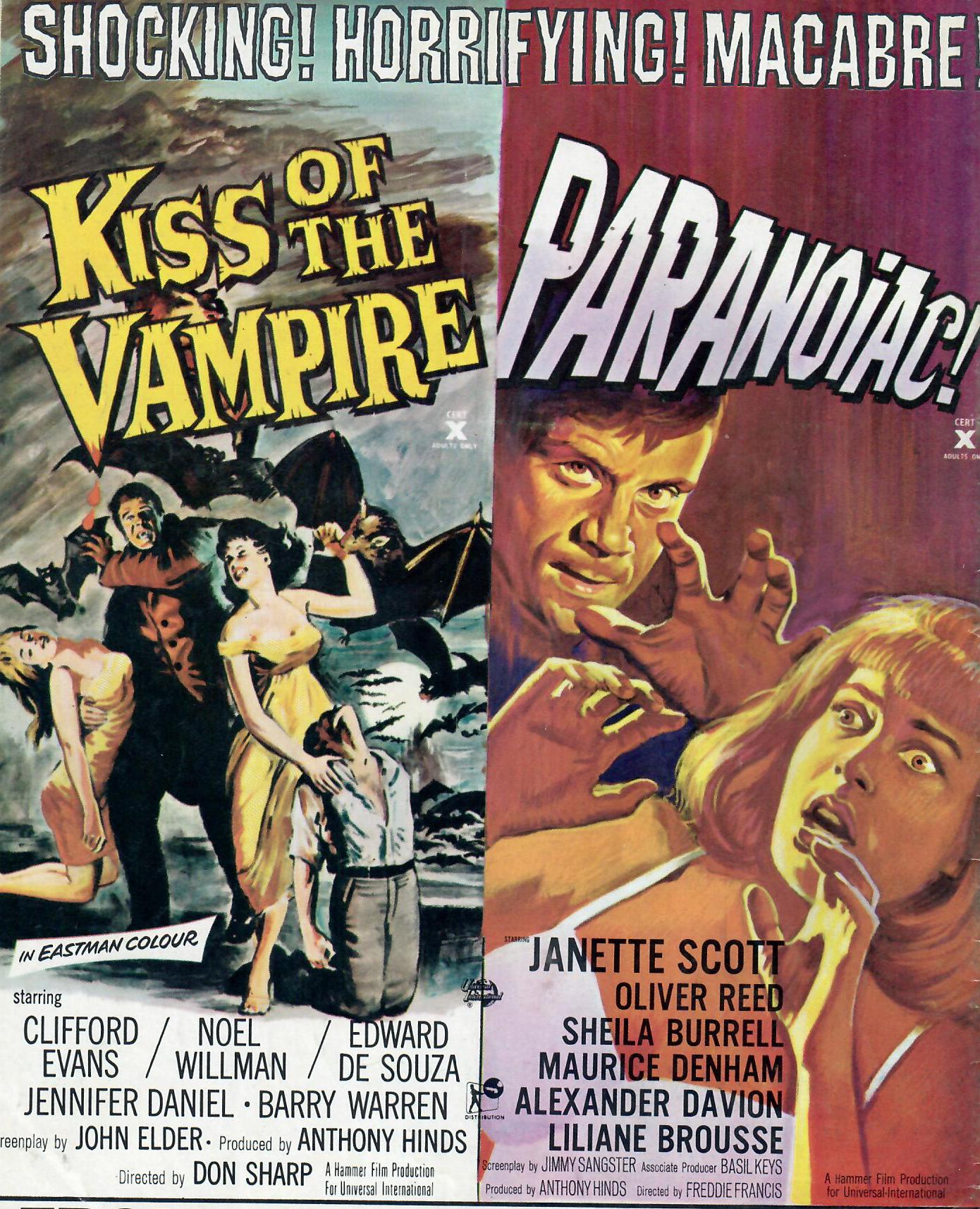
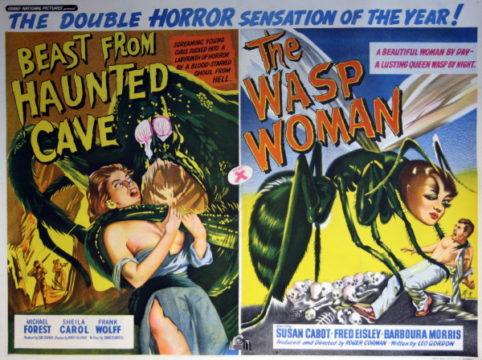
We did get quite a lot of this type of Double Bill at the Cinema – certainly in the mid to late Fifties. As we have seen, some of them were full of gimmicks to pull the customers in – we had 3D and Emergo then seats that gave us an electric shock – although really it was this sort of Poster that tended to sell the film to us.
Somehow they were cleverly able to lure us in and although time has passed since those days, I can still see why as looking at them I get a tinge of excitement.The Wasp Woman 1959
The Wasp Woman.
One of Film director Roger Cormans’ most beloved pictures and it is great fun. Nowadays it has become something of a minor classic. Roger Corman regular Susan Cabot plays Janice Starlin, a 40 year old cosmetics magnate who fears getting old. One day, she makes the acquaintance of mad scientist Eric Zinthrop. He’s developed a serum, derived from wasp enzymes, that can restore youth to living things. She insists that she be the first human guinea pig, with devastating results: she sometimes turns into a humanoid monster with a wasp head and hands, and seems compelled to kill.
Beast from Haunted Cave 1959
Another one from Roger Corman. This plot centres on a group of gold-robbers who unwittingly run into trouble when they become stalked by a strange spider-like beast while hiding out in the woods.This film has an ending which is a surprisingly effective climatic showdown with the monster which is certainly entertaining.
This is the scene ABOVE outside a Cinema in Sydney in the 50s. At first I was looking at the programme with Dean Martin and Jerry Lewis but also Copper Canyon supporting – this must have been in the early fifties because Dean and Jerry went their separate ways quite early in the decade – but then I became intrigued with WVDASCOPE screen which must only have been at this cinema – unless it was an Australian style I don’t know.
It is billed elsewhere as the ‘Giant WVDAscope’ screen.
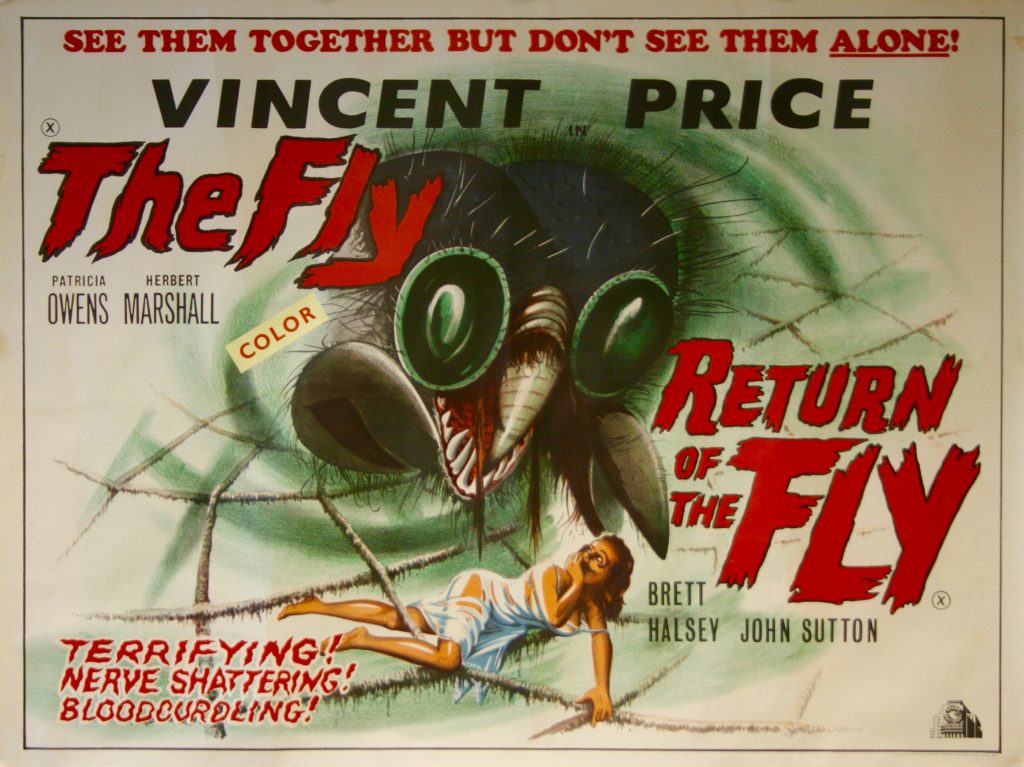
Well, The Fly and Return of the Fly really need no introduction to film fans.
Another Double Bill ABOVE – Featured on the front cover of Radio Times
Even a Triple Bill ABOVE – ‘The Astounding She Monster’ dates from 1957 and is billed in England as ‘The Mysterious Invader’
John Cobb died whilst attempting to break the Water Speed Record of Loch Ness in September of 1952.
He is nothing like as well remembered as is Donald Campbell but in my view he should be. Maybe it is because he was a quiet type was much less of a showman.
There is a link to the film world here here as John Cobb appeared in a 1941 film Target for Tonight which was a Crown Film Unit Production for the Government – much of it filmed at RAF Mildenhall.
The A82 is the major transport route south from Inverness to Fort William at the opposite end of the Great Glen. Exactly 1 mile south of Urquhart Castle the A82 passes a beehive-shaped cairn by the side of the road overlooking Loch Ness. Itcommemorates the tragic story of John Cobb, who lost his life while attempting to break the world speed record on Loch Ness on 29 September 1952.
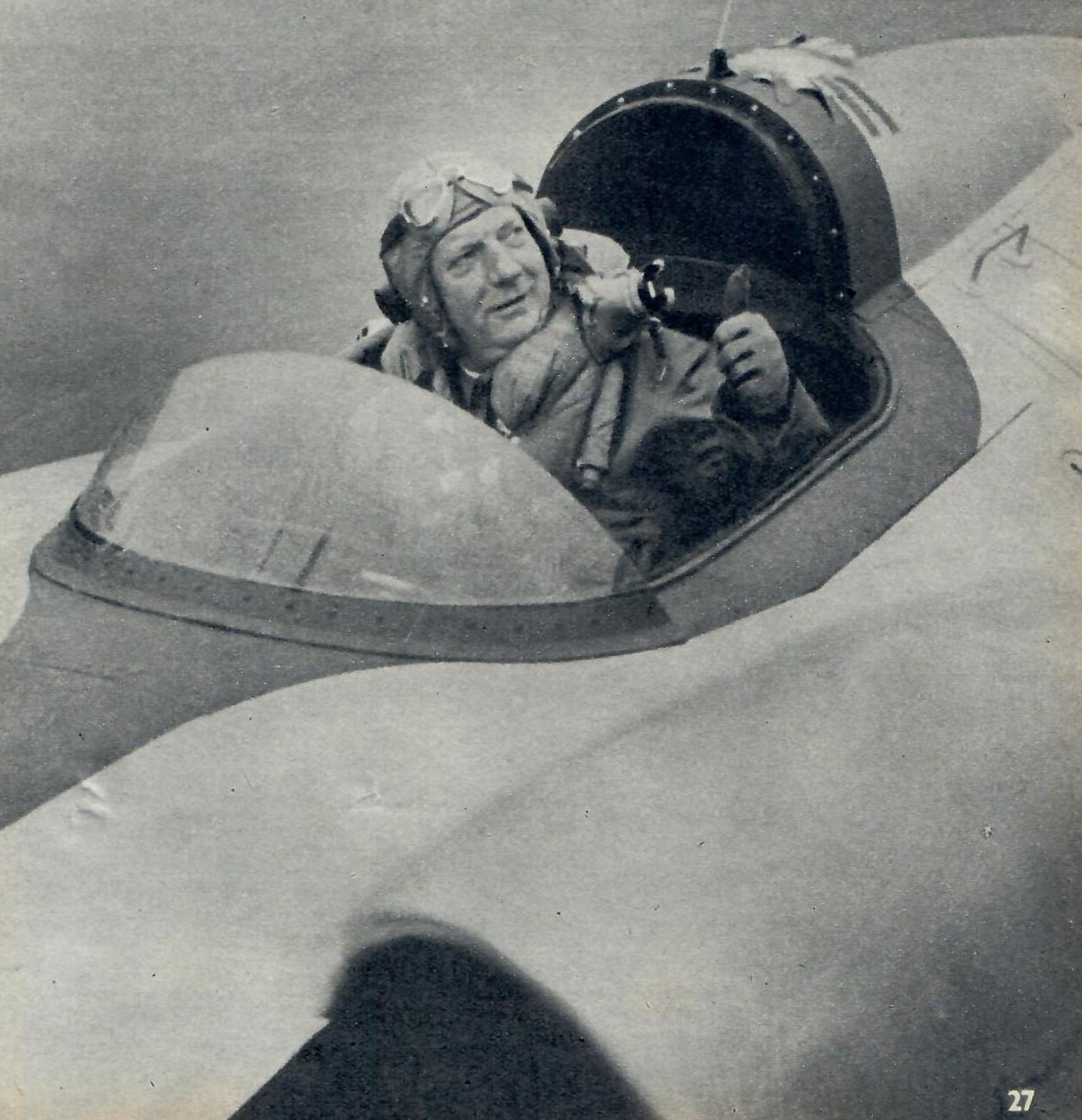
John Rhodes Cobb was born in Esher, Surrey in 1899. He was quiet spoken and unassuming. His wealth enabled him to follow his passion for fast cars and that evolved into repeated attempts to break the Land Speed Record, a feat he achieved in 1939 by travelling at 367.91 mph. He broke the record again in 1938, travelling at 394.19 mph
During the War he served as a pilot in the Royal Air Force between 1943 and 1945 and was demobbed with the rank of Group Captain.
He made an appearance in the wartime propaganda filmTarget for Tonight (1941).
This film was made using actual service men and women of the Royal Air Force, as a wartime morale-booster. When viewed over fifty years later, it is still fascinating to watch the planning and execution of the raid over Germany, and in particular follow the progress of F for Freddie and her crew. For once we can be sure that this is how it was done, it has the sense of realism that most dramas lack. A film made by the Crown Film Unit.
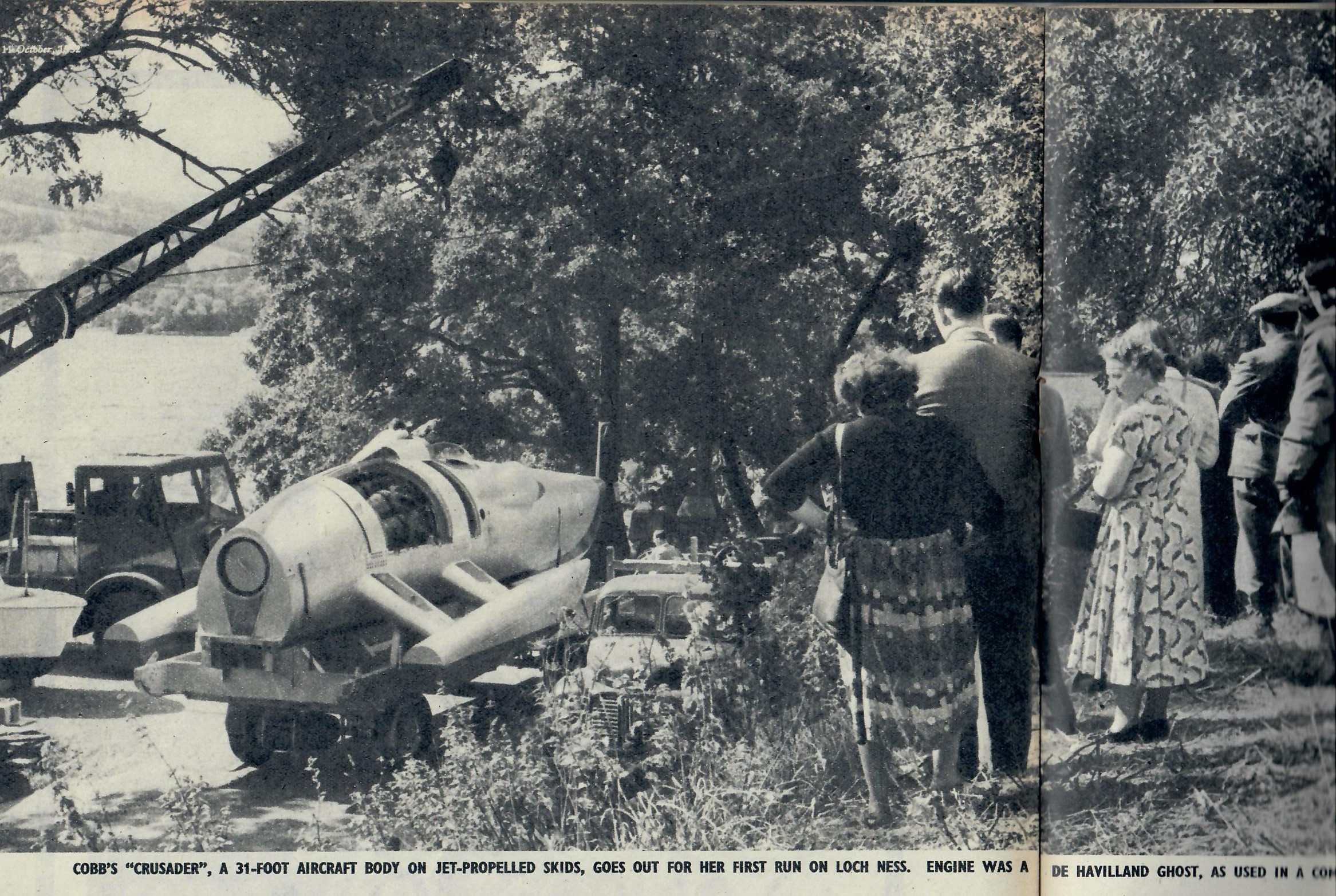
Not content with holding the Land Speed Record, John Cobb turned his attention to water. He spent some £15,000 designing a jet-propelled watercraft dubbed The Crusader and transporting it to Loch Ness.
Crusader was the first boat in the world to be built specifically for jet propulsion. It was 31 feet long and powered by a De Havilland Ghost 48 Mk1 engine. It was officially launched at Temple Pier, just north of Drumnadrochit on 26 August 1952.
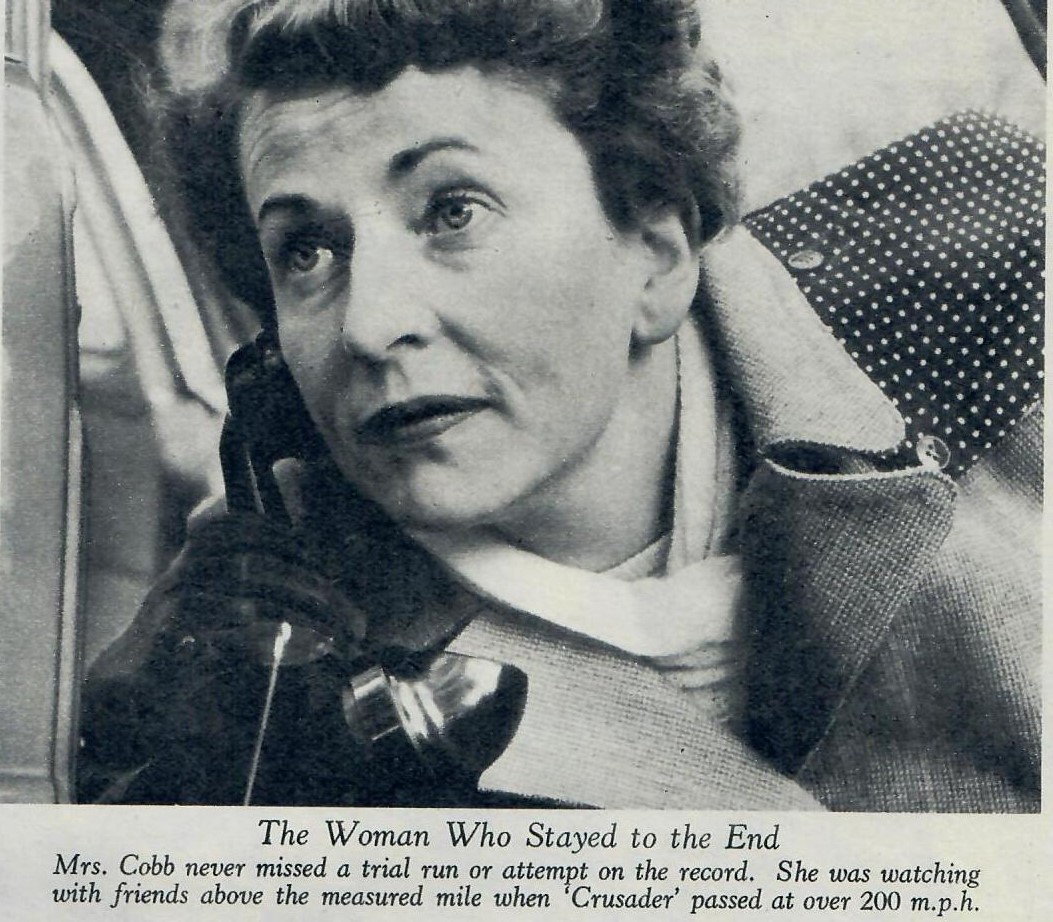
ABOVE – John Cobb’s Wife waits, as she always did, for her hsuband to attempt a trial run or a run for the record. This time he did not come back to her. This is such a good picture of Mrs. Cobb and yet a very sad one too.
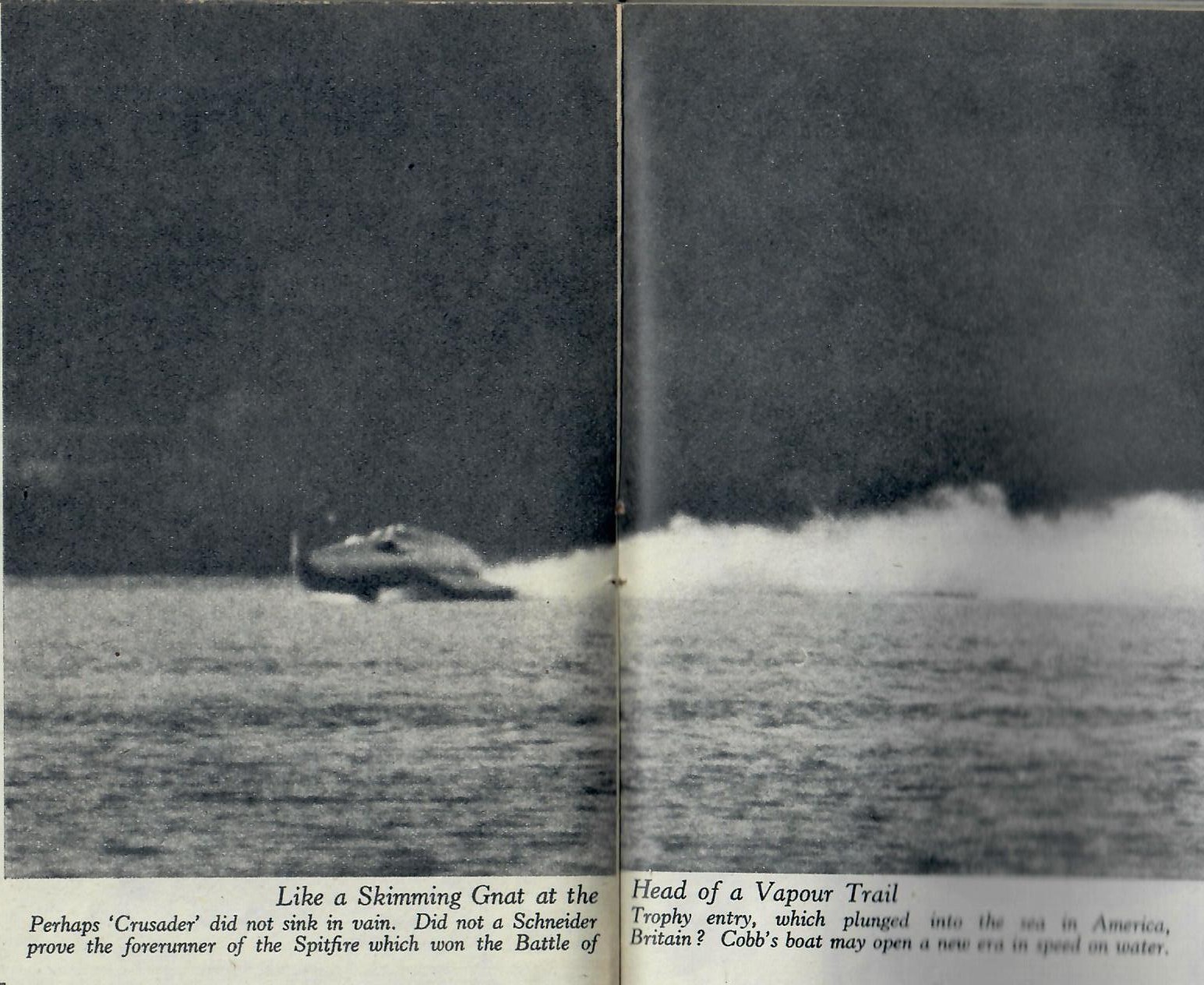
John Cobb made his record attempt on 29 September 1952 over a measured mile from Urquhart Castle. According to the generally accepted rules of the time for speed records, two runs were required. On the first run, Crusader travelled at 206.89mph, making Cobb the first man in history to reach 200mph.
Tragedy struck on the second run, however, when Crusader hit a boat wake that should not have been there and nosedived suddenly into the depths of the loch, killing Cobb instantly. Believers in the Loch Ness monster would later claim that Nessie was in some way to blame for the accident. Cobb was buried at Christ Church in his birthplace of Esher, Surrey.
In 2001 the Loch Ness Project launched an attempt to discover the wreckage of Crusader, thought to lie over 650 ft below the surface. Over 18 months the research vessel Deepscan traversed the likely wreck location with sonar, mapping the loch floor.
One of the men assisting the search was Gordon Menzies, who as a child had witnessed the tragedy and as an adult owned Temple Pier where Crusader had first launched. At 3 pm on 5 July 2002 the remains of Crusader were found. They were left where they lay on the bottom of the loch.
This Post on the Blog has a tenous link to films in that John Cobb appeared in a 1941 film Target for Tonight which was a Crown Film Unit Production for the Government