James Robertson Justice – Again


There is no doubt that James Robertson Justice enjoyed a long and quite successful film career from about 1949 with ‘Scott of the Antarctic’ through to ‘Chitty Chitty Chitty Bang Bang’ in the mid Sixties and he was continuously working in films throughout that time.

He played Little John in  ‘The Story of Robin Hood and His Merrie Men’ and later again for Walt Disney was in ‘The Sword and The Rose’ and ‘Rob Roy The Highland Rogue’

James Robertson Justice C


ABOVE – James Robertson Justice as Little John,   Richard Todd as Robin Hood and James Hayter  as Friar Tuck in ‘The Story of Robin Hood and His Merrie Men’ 1952

This scene  ABOVE – does not appear in the film at all,  as many of you will know – so it was probably just a publicity still. Very good it was too.

He was very good as Little John I have to say – he fitted the part physically and had a good role and played it well – although very much as he would play many if not all, of his later film roles – with a loud voice and much bluster.

He was very good as King Henry VIII in The Sword and The Rose – in fact he really looked that part there – however in his next film ‘Rob Roy The Highland Rogue’ for a man who proudly claimed to be a Scot, he had the worst Scottish accent I have heard in films – he didn’t seem to get it at all.  I always admire the way that actors of all eras seem so able to drop into virtually any accent or dialect that is required to play a part – maybe this exposed James Robertson Justice’s lack of acting skills – I reckon it did.

James Robertson Justice B


However, for all my reservations about this character, he was remarkably successful over a number of years – so that certainly says something about him.


James Robertson Justice


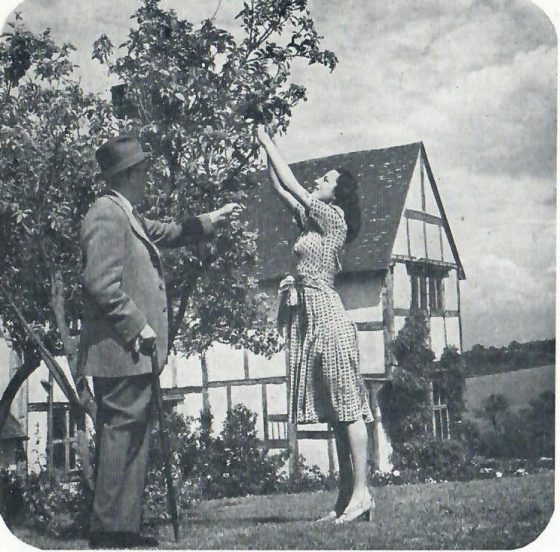
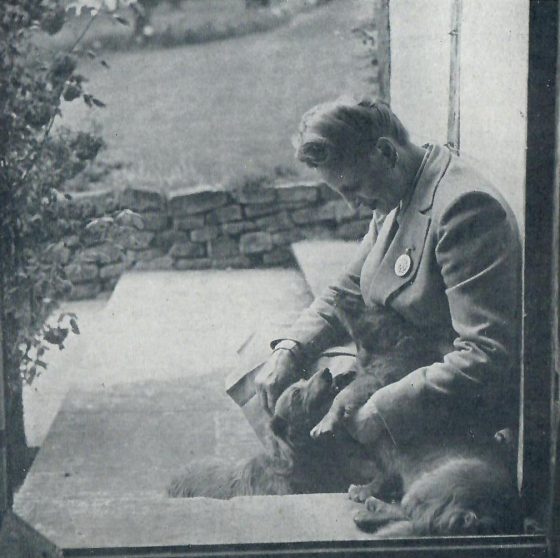
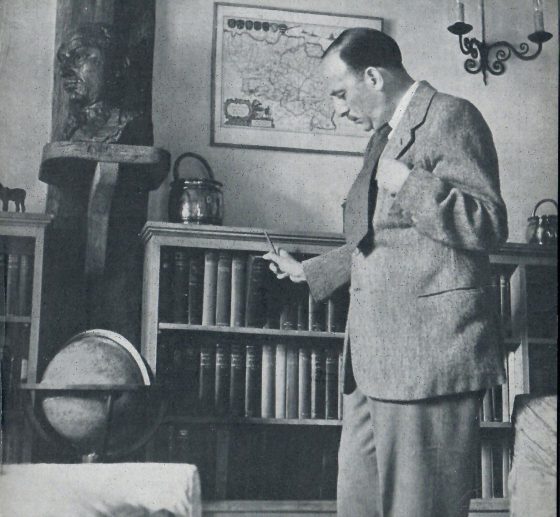
James Robertson Justice ABOVE at  home in his cottage in Spinningdale, Scotland.

During the 1950s, Justice bought a cottage at Spinningdale in Sutherland where he ‘drank neat Rose’s Lime Juice and breakfasted on whisky and a raw egg’.  He loved to stay there between films, entertaining guests who ranged from locals to royalty, and usually travelled north by road. 

The route to and from Spinningdale took him past the Glenmorangie distillery nearby, and Justice befriended the distillery manager Gordon Smart. Smart’s grandsons remember him turning up at the manager’s roadside cottage on many occasions, often with a glamourous female companion in the passenger seat of his latest sports car. He would speed up and down the road to show off the car’s performance, before going inside to enjoy a dram or two.    


James Robertson Justice 2

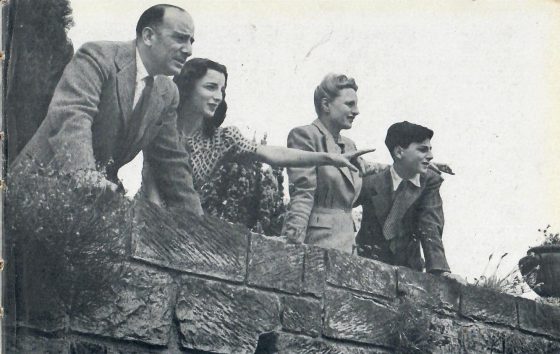
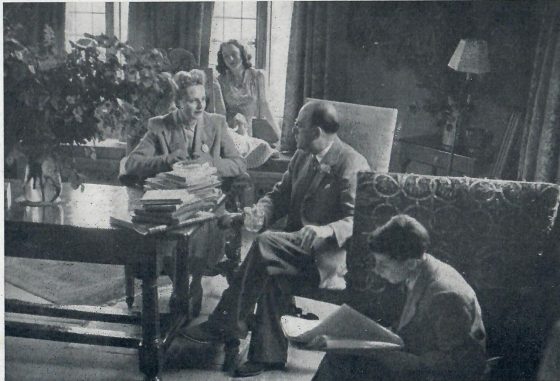
James Robertson Justice at Home at Spinningdale  ABOVE and BELOW


James Robertson Justice 3

James Robertson Justice


James Robertson Justice 4


James Robertson Justice


James Robertson Justice 5


James Robertson Justice – ABOVE surprisingly to me anyway, he seemed to enjoy a game of bowls.


James-Robertson-Justice a


James Robertson Justice ABOVE with his falcons


James Robertson Justice 7

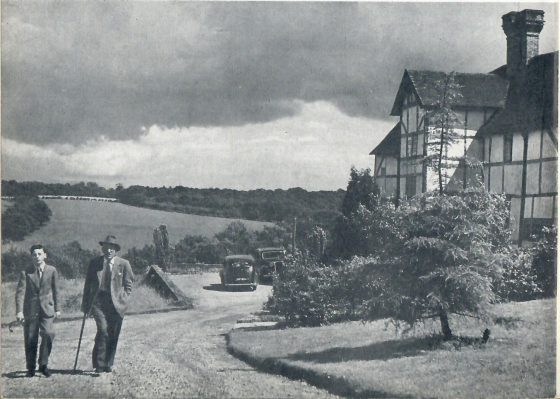
James Robertson Justice ABOVE and BELOW – walking close to his home in Scotland.


James Robertson Justice 8

James Robertson Justice


James Robertson Justice (1907-75) was not born ‘under a distillery in Skye’, as he  claimed. In fact this most famous Scottish actor was actually born in London and christened James Norval Harald Justice.  However he decided that he wanted to be a Scotsman like his father and so he adopted  more of a Scottish-sounding name, and an enthusiasm for wearing the kilt.

He claimed that his  early life was full of adventure. He studied in Germany where he was able to develop his  linguistic skills – he briefly became a journalist and the tried his hand at various jobs while living in Canada during the Depression.

Returning home to England, he played ice hockey professionally and competed as a racing driver. In the mid-1930s he served as a League of Nations peacekeeper in the Saar and, subsequently, a fighter (on the Republican side) during the Spanish Civil War. He joined the Royal Naval Volunteer Reserve during the Second World War but was invalided out.

He became an actor at the age of 37.

His breakthrough film performance came in 1949, when he played Dr Maclaren in Ealing the  classic Whisky Galore!. He subsequently made around 90 films, appearing in box office hits such as Land of the Pharaohs (1955), The Guns of Navarone (1961), and Chitty Chitty Bang Bang  (1968). His most famous role was that of the eminent and gloriously belligerent surgeon Sir Launcelot Spratt, in the hugely successful Doctor in the House (1954) and its sequels. 

He always denied being  a film star – he acted, he said, simply to pay the bills for his many other enthusiasms. His greatest love was for the countryside and he was especially keen on wildfowling (he was a founder of the Wildfowl Trust), fishing and falconry.

It was falconry that brought him into contact with Prince Philip, and the two became lifelong friends. The Prince invited him to join his exclusive Thursday Club, and sent his teenage son Prince Charles to stay with Justice one summer, to learn about falconry and country pursuits.

After separating from his first wife at the beginning of the 1950s, Justice became the subject of gossip about romances and dalliances with a number of young women including the designer and author Molly Parkin. 

He died virtually penniless in 1976, after a punishing divorce settlement and a period of ill health. He left behind on film a series of performances – Little John, Sir Lancelot Spratt, Lord Scrumptious and others, which continue to delight fans of British cinema. 

He was a ‘larger that life’ character


posted by Movieman in Uncategorized and have Comment (1)

David Farrar at Home in Dulwich 1952


David Farrar and his family confess to being anti-social and consequently the star is seldom on view at any of the popular night clubs or restaurants. He has lived nearly all his life in Dulwich and spends much of his time educating his daughter, for neither he nor Mrs Farrar – who is a qualified music teacher – likesd schools.  That seems a crazy outlook to me I must say.

The basement or cellar of their home is converted into a little Theatre.

 When he can, David Farrar goes out car driving, riding ( he is a keen steeplechaser ) or has a round of golf.

David Farrar with Family


Above – We see David Farrar at home with his daughter Barbara and at the Piano his wife Irene.

If we piece together things we have learned about him – we have the visit by the Monrovians to Denham in 1948, where as one of the party said ‘ he seemed disinterested, posed for a picture then disappeared into his dressing room and was not seen again that day’ while the visitors were there.

Then we read as above – about him admitting to being anti-social and finally when he was retired and living alone close to his daughter in South Africa, he admitted to not being in touch with any of his colleagues from the film industry – and stated that he had no friends. Then he added ‘Ain’t that sad’ – it certainly is a sad reflection on all that had gone before.

Back to his film career – after he did The Small Back Room and then Gone to Earth for Powell and Pressburger he thought he’d done all he could in Britain and Europe so he went to Hollywood.  However the roles he got there were usually “friend of hero” or occasionally a role as the villain.

David Farrar  wasn’t really all that happy with his career in Hollywood either. He came back to the UK but by then he was getting roles as the father or the uncle where he still saw himself as the leading man.

He did a good father of the heroine in Beat Girl (1960) and his last film was the epic The 300 Spartans (1962) where he played Xerxes, leader of the Persians – a decent villain role

His wife Irene died in 1976 and he thought that would be a good time to retire so he moved to South Africa where his daughter Barbara was living and he stayed there living in a quiet retirement until he died in 1995, aged 87.


We should remember him for his great performances, like as the detective Sexton Blake in a couple of detective thrillers; as the Englishman in the Himalayas flaunting his bare torso and short shorts in front of the nuns in Black Narcissus (1947); as the RAF pilot who comes back to post-war England with the German girl who helped him escape in Frieda (1947); as the physically and spiritually damaged bomb disposal expert Sammy Rice in The Small Back Room (1949); and as the classic “wicked squire” Jack Reddin in Gone to Earth (1950).

His career may not have been all he thought it should have been or could have been, but he did all right, much better than many. As with Roger Livesey and a few others,  he was someone who was mainly a stage actor but who did quite a few films.

Really he gave his  best performances on film  in the films of Powell & Pressburger.   They knew how to get the best out of people.

posted by Movieman in Uncategorized and have Comment (1)

Kidnapped 1960 from Walt Disney

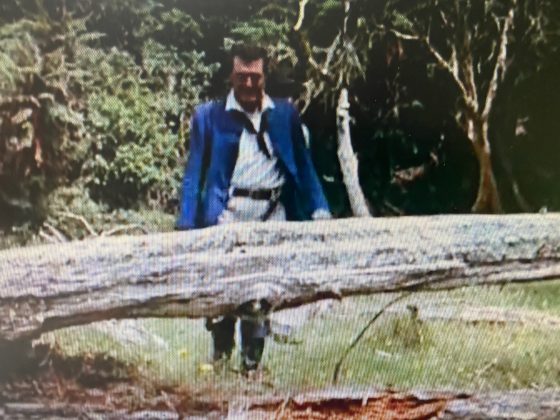
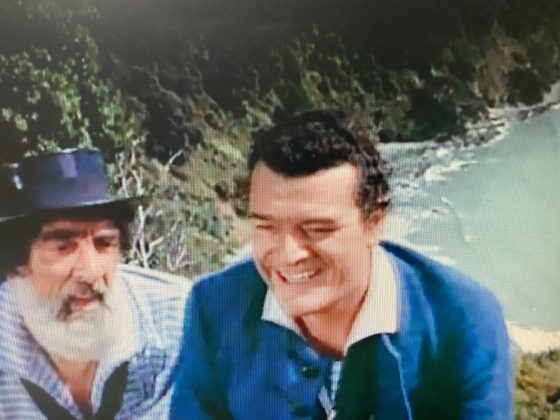
This was Walt Disney’s first foray back into England since Rob Roy The Highland Rogue some seven years earlier. This was a great story and one which has been filmed quite a few times – but this has to be one of the best.

He appointed Robert Stevenson as the Film Director backed up by Carmen Dillon in charge of set design as she had been with his last British Films, and the Matte Artist Genius Peter Ellenshaw to add the the Highland Scenery – as if anyone could !!

Kidnapped 6

Peter Finch took the lead as Allan Breck with Jmes MacAthur as David Balfour.

Kidnapped is based on the novel by Robert Louis Stevenson – this Disney version is excellent.

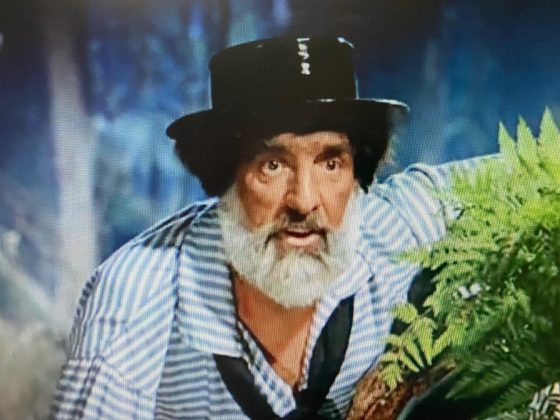
David Balfour’s uncle arranges for him to be kidnapped – and it is that memorable visit he makes to his Uncle’s house – The House of Shaws – where  Uncle ( John Laurie) tries to kill him be sending him up to a room where, when he opens the door in the dark he will fall down a huge drop to his death. There is a storm however and just as he opens this door a flash of lightening shows him what would have been his fate.

Kidnapped 7

Kidnapped ABOVE – A shocking moment for David Balfour – and BELOW John Laurie as Uncle Ebenezer – a wicked and murderous man

Kidnapped 8

Needless to say he is not well pleased.   However he ends up being  taken aboard a ship which gets shipwrecked along the coast and somehow manages to wash up in the  Scotland Highlands after teaming up with adventurer Alan Breack Stuart. Alan Breck had saved him from being murdered on the ship.The two of them then begin a  journey takes right across the Scottish Highlands and the film makes good use of the spectacular scenery there – they also face dangers along the way including a confrontation with the Redcoats.

This film is shot on location in the Scottish Highlands and contains some great scenery. Peter Ellenshaw chips in with his superb Matte Painting but the scenes that are on the screen show just how good he is at the job – as Director Ken Annakin once said ‘Peter knew how to make his paintings realer than real’

The cast includes James MacArther, Peter Finch, Benard Lee, John Laurie, Finlay Currie, Nial MacGinnis and Peter O’Toole  who were all excellent 


Kidnapped

Kidnapped ABOVE – On Location in the Scottish Highlands Peter Finch with his wife Yolande enjoy a brief picnic lunch with James and Joyce MacArther


Kidnapped 2

Kidnapped – ABOVE Back at Pinewood Film Studios, Peter Finch is paid a visit by Pier Angeli and John Gregson who were filming SOS Pacific there


Kidnapped 4

Kidnapped ABOVE  Peter Finch poses in costume somewhere at Pinewood


Kidnapped 5


Kidnapped – ABOVE Duncan MacRae filming on a shore in the Scottish Highlands – No studio Tank here as the real thing is wanted


Kidnapped

Kidnapped

posted by Movieman in Uncategorized and have No Comments

Colin Tapley


Here is an actor who, up until about a week ago, I did not know.    ‘Blood of the Vampire’ was on Talking Pictures last weekend and I saw the end of it which I thought was quite good – it also starred Sir Donald Wolfit who I like and admire as an actor. 

Looking down the cast list I happened to click on – among others – Colin Tapley.  The thing that interested me about him was that he was born and raised in Dunedin in New Zealand.   Earlier this year with my family, I was on a cruise ship out of Sydney that docked there for the day – the second time in a decade we had done this – and Dunedin was a place that I fell in love with – and so did my daughter.

I just love the place as I felt at home in this beautiful and welcoming city. It was summertime there and a beautiful warm to hot day – so that is always a factor.

Colin Tapley – Colin Edward Livingstone Tapley was born in Dunedin on 7 May 1909. He was employed by H L Tapley and Co Ltd, the Dunedin shipping agency, his late father had founded.

Dunedin 3


 ABOVE – The Centre of Dunedin as it is today 2020 – the former home and resting place of Colin Tapley

However in 1933 he entered and won a film talent contest that took him to Hollywood


Colin Tapley found his own cinematic niche playing character roles in American and British films for more than 30 years, without any real desire for stardom.

In 1933 Tapley won the New Zealand male section of Search for Beauty, a worldwide talent quest conducted in English-speaking countries by Paramount Pictures. His prize included a trip to Hollywood to cameo alongside the other winners in the Search for Beauty movie  a comedy romance set in a physical culture school.

The contest he had entered as a dare brought the additional reward of a contract with Paramount for his agreeable performance in the film, which was his first. Tapley was the contest’s male runner-up, and South African-born Eldred Tidbury the male winner. Tidbury changed his name to Donald Gray, and would appear with him more than 20 years later in British TV series The Vise.

Tapley meanwhile acted in several Paramount movies of the mid-late 1930s. “The most wonderful experience of my life,” is how he recalled those glorious years. “I adored every bit of it.”

Colin Edward Livingstone Tapley was born in Dunedin on 7 May 1909. At the time he won the contest that changed his life, he was employed by H L Tapley and Co Ltd, the Dunedin shipping agency, his late father had founded.

The screen test that took him to Hollywood was shot at Filmcraft, later National Film Unit, studios in the Wellington suburb of Miramar. Tapley and the other nervous finalists then waited three suspenseful weeks for the judges at Paramount Pictures to name the man and the woman to represent New Zealand.

Tapley’s wish to play character parts came early in his career. He wrote home enthusiastically to one of his brothers about his small, unbilled part in The Scarlet Empress (1934); he described in detail the long black beard and wonderful uniform that transformed him into the captain of the Queen’s Bodyguard.

Colin Tapley derived great personal satisfaction from playing Captain Dobbin in Becky Sharp (1935), the first film shot in three-colour Technicolor. But his favourite role from his Hollywood movies was probably Barrett, the spy, in Oscar-nominated adventure The Lives of a Bengal Lancer (1935).

Colin Tapley

His only starring role at Paramount was in Booloo (1938) ABOVE – playing Robert Rogers in a tiger hunt adventure set in the Malaysian jungle. During the eight months the crew spent filming in the country’s jungles more than 3500 millimetres of rain fell. One subtropical storm saw them climbing into the trees with the monkeys for survival, after streams rose 11 metres above normal. Tapley regarded the noise of the monkeys as the worst part of his tree-living experience.

His last film before World War II service was a Western –  Arizona (1940). The normally well dressed actor wore cowboy clothes, chewed tobacco, for this role,

He enlisted in the Royal Canadian Air Force in 1940. Posted to Britain, Flight Lieutenant Tapley met his future wife, Patricia (Patsy) Lyon, the widowed daughter of Major-General Sir Percy and Lady Hambro. They married quietly in London on 6 August 1943 and had a son, Martin, the following year. Colin cast his best friend, American actor Fred MacMurray, in the real-life role of godfather. Patsy had a daughter named Charlotte from her first marriage.

A brief retirement from acting followed Tapley’s World War II service.  He and his family had settled in New Zealand, where he operated a launch charter service at Wanaka.

The death of his son Martin  in November 1947 was the catalyst for the grieving family to leave New Zealand.   When back in Hollywood, he resumed his film career in a very different atmosphere to the Arabian Nights world that had existed prior to World War Two.

The town was now more coldly competitive,  television had now took a hold. Yet while sitting in a restaurant Cecil B DeMille offered him a role in Samson and Delilah (1949), a friendly gesture that he never ceased to appreciate. He was unrecognisable as one of the princes in the final temple scene.

British films now seemed more inviting than the bleak new Hollywood.    His move to Britain saw him cast in Cloudburst, a 1951 Hammer thriller starring Robert Preston, another former Paramount contract player.  Colin Tapley was third billed as Inspector Davis.

Cloudburst defined the path for much of his future career. Instead of the Ronald Young-type comedy parts he had earlier craved, he often played police officers in Britain. An exception was the slightly dishevelled, moustached and bespectacled scientist Doctor WH Glanville in The Dam Busters (1955).

Colin Tapley spoke in an article at the time about how the realistic approach to filming in British studios enabled actors to give a better performance than in the superficiality of Hollywood.

Tapley appeared regularly in the British TV series The Vise from 1955 to 1960, playing at least five different police inspectors. Donald Gray, his long time friend,  starred as ex-Scotland Yard detective Mark Saber.

Colin Tapley

ABOVE – Colin Tapley – the Matinee idol that might have been – But he didn’t want the leading man roles – he was a character actor all his life – and apparently very good and very well liked !!

Colin Tapley and his wife Patsy lived in New Zealand and Hollywood before settling down in Coates, Gloucestershire.  Colin Tapley had also lived in  lived in New Romney, Kent working for the first time in a regular job not as an actor – he  was employed by the CEGB in 1964 as a meter reader in the control room at Dungeness ‘A’ nuclear power station.

On night shifts he would keep his fellow workers amused with tales of Hollywood actors, their life and loves.  I would have loved to have listened to him on this subject as he would know exactly what went on there during the Hollywood Golden Era in the Thirties.

His last film was a small part as a general in Dino De Larentis spy thriller Fraulein Doktor (1969).

Colin Tapley died on 23 November 1995, survived by his wife, second son Nigel, and Charlotte. His ashes were buried at Wanaka alongside his first-born son, Martin. 

posted by Movieman in Uncategorized and have No Comments

The Pickwick Papers 1952 – James Hayter


In 1952 James Hayter appeared in his two most famous roles – and the roles to me that he was best in and best remembered in.  First came the wonderful ‘The Story of Robin Hood and His Merrie Men’ with Richard Todd and Joan Rice – with James Hayter playing Friar Tuck – with his performance ensuring that he was one of the main characters.

Then came this one as Mr Pickwick in The Pickwick Papers.

Interestingly James Hayter played Friar Tuck in the classic Disney Film mentioned above – and Alexander Gauge, who was in The Pickwick Papers played him in the TV Series with Richard Greene – and played the part in similar style to the way James Hayter had done.


Pickwick Papers 1952


James Hayter  is excellent as  Mr Pickwick, the lead character in this adaptation of ‘The Pickwick Papers’ by Charles Dickens.

Not in the same league as the David Lean-directed ‘Great Expectations’ and ‘Oliver Twist’ which preceded it, this film, directed by Noel Langley, is nevertheless not bad. It is entertaining, with an excellent cast ranging through character actors such as Donald Wolfit,  James Donald, Hermoines Baddeley and Gingold, Nigel Patrick, and William Hartnell and  Joyce Grenfell.

This was not  an expensive production, but it contained nice touches, such as Kathleen Harrison’s twitchy Rachel; Mr Jingle’s deck of cards; the runaway horse; and an early display of outraged bluster from Hattie Jacques.


Pickwick Papers 1952 2ABOVE:  Diane Hart as Emily Wardle watches hairdresser Bill Griffiths tidy up the Fat Boy played by Gerald Campion – later to become very famous at BBC TVs Billy Bunter


James Hayter is also often  remembered in the UK as the voice of Mr Kipling in the TV advertisements, but here as Mr Pickwick he is excellent

Pickwick Papers 1952 3


ABOVE: The Pickwickians – Mr Snodgrass ( Lionel Murton), Mr Pickwick (James Hayter) and Mr Winkle ( James Donald)


Pickwick Papers 1952 4


ABOVE:  Grandma Dingle ( Mary Merrall),  Mr Wardle (Walter Fitzgerald) and Mr Pickwick and Emily


Pickwick Papers 1952 5


ABOVE:  Harry Fowler with Joan Heal and Diane Hart


Pickwick Papers 1952 6

ABOVE:  Harry Fowler as Sam Weller – he got the part on the performance he had give in the film ‘I Believe in You’

posted by Movieman in Uncategorized and have Comments (2)

David Farrar – Film Star with An Interesting and varied career

English star  David Farrar was born on August 21, 1908, in Essex.

When looking back at his childhood he writes: “Apparently showed some historical leanings from early age as I played Shakespearean roles at school.”

After some time spent with a repertory school and  then in touring companies, David became actor-manager of his own company in 1930. The same year he took over the lead in The Wandering Jew in the West End, bringing notices that immediately established him as one of the most promising young leading men in the West End.

He took over London’s Grafton Theatre for a series of plays, as he puts it: “Of course, playing the leads. As George Arliss once said, ‘Well, there’s one advantage of having your own theatre – you can always choose the best parts.'”

He says he was “lured” into films in 1937 when he made his screen debut in The Face Behind the Scar. Until the war broke out his screen career consisted of’ ‘big parts in small pictures and small parts in big pictures,” according to Farrar.

One of his early films was ‘Went the Day Well’  – an absolute classic from 1942

Shortly after a bomb hit his theatre he was called up by the Ministry of War and put to work making propaganda films. He is responsible for the feature For Those in Peril (1944), much of which was shot during actual maneuvers in the English Channel.

The Dark Tower (1943) with the late Ben Lyon and They Met in the Dark (1943) came out during the War. Immediately afterward he made Lisbon Story (1946), now a cult film because of the appearance in it of the legendary tenor Richard Tauber.

When David Farrar arrived in New York City in 1947, his film Frieda, which introduced Mai Zetterling to the world and was a smash hit in Europe, was playing at one Broadway theatre and Black Narcissus at another.

Black Narcissus (1947), which costarred Deborah Kerr, was about sexual frustration and madness among a group of Anglican nuns. The film  did very well at the box office in the United States and won two Oscars.

One of my own favourite films of his was ‘Mr Perrin and Mr Traill’ 1948 with Marius Goring giving a wonderful performance as Mr Perrin.

The Wild Heart (1950) or ‘Gone to Earth’ as we in England know it, with Jennifer Jones was nowhere near as successful in America as it had been here

He was offered the lead role of Edvard Grieg in the screen version of The Song of Norway, but the film was to be shot in Hollywood and Farrar was committed in England. Once he was contractually free, there began years of commuting between Hollywood and London, starting with The Golden Horde (1951).

After that he appeared in Night Without Stars (1951) with Nadia Gray, Obsessed (1951) with Geraldine Fitzgerald, Duel in the Jungle (1954) with George Coulouris, Lilacs in the Spring (1954) with Anna Neagle, Lost (1957), Solomon and Sheba (1958), John Paul Jones (1959) with Bette Davis, Middle of Nowhere (1960) [aka The Webster Boy (1962)], and Beat Girl (1962) with Shirley Anne Field and Adam Faith.

David Farrar with Jeannette Sterke in Captain Banner BBC

ABOVE – David Farrar – here with Jeannette Sterke in a BBC Play ‘ Captain Banner – BBC Armchair Theatre – 8 th August 1954 – this would have gone out ‘live’ in those days of course.

United States television viewers probably know him best for his portrayal of the strong, silent “Mr. Dean” in Black Narcissus and the “Black Duke” in Son of Robin Hood (1958).

David Farrar himself believes that he misjudged his choice of film parts to his own detriment – the first was when he could have played the villain in the 1952 film of Ivanhoe, made here in England,   but declined because it was not the title role. He later admitted  “The part I had been offered, which was subsequently played by George Sanders, was the most colourful. In retrospect it was a bad mistake to turn it down.”

In 1962 he played Xerxes, which he considered to be a “wonderful, flamboyant part,” in The 300 Spartans, and “then I quit while the going was good!”

David Farrar, a widower, lives near his daughter on the Natal coast of the Republic of South Africa.

David met his wife, Irene Elliot, in 1926 when he was playing the title role on stage in David Copperfield. He describes her as an “actress and beautiful pianist” After she died in 1976, he followed their only child to the Natal coast of the Republic of South Africa.David Farrar with his Daughter Barbara

ABOVE – David Farrar with his Daughter Barbara

David Farrar with his Daughter Barbara 2


ABOVE With His Daughter Barbara – reading her a Fairy Tale before bedtime. Not sure he should have been smoking his pipe though but that was how things were in the day.

David Farrar with his Daughter Barbara 3

ABOVE With His Daughter Barbara

He admits to having made no effort to keep in touch with those he knew in England and, has been rumored dead among his profession.

He lived with his dog, a few miles from his daughter.  David Farrar described his activities in retirenment as “a bit of writing and painting. He played the piano often and golf three times a week. He said that he read a lot and averageed fifteen crossword puzzles a week.

Sounds a lonely existence

He sums up his career thusly: “Tough, frustrating, but with many wonderful moments and memories. I found being a star a lonely business. I have no friends. Ain’t that sad?”

 David Farrar in Hollywood

David Farrar went to Hollywood and, though he enjoyed the glamour, it ruined his career, via films such as The Golden Horde (US, d. George Sherman, 1951) and The Black Shield of Falworth (US, d. Rudolph Maté, 1954), usually in two-dimensional villain roles.

A strongly virile figure, he had served a ten-year apprenticeship in British films before making his mark in Michael Powell‘s Black Narcissus (1947), as the district agent who stirs up sexual tensions in a Himalayan convent. There were two other striking roles for Powell – as the lame bomb-disposal expert in The Small Back Room (1948) and the swaggering squire in Gone to Earth (1950) – and substantial leads for Ealing in Frieda (d. Basil Dearden, 1947) and Cage of Gold (d. Dearden, 1950).

This burst of star filming climaxed a career begun in 1937, after a stint at journalism and stage experience from 1932: he played Sexton Blake twice, had small parts in big films, like Went the Day Well? (d. Alberto Cavalcanti, 1942), starred in Ealing’s semi-documentary about the Air-Sea Rescue Service, For Those in Peril (d. Charles Crichton, 1944), and made several poor films at British National, including Lisbon Story (d. Paul L.Stein, 1946), before hitting his stride in the late 1940s.

David Farrar at Home in London

David Farrar lived at Alleyn Park in Dulwich.  One of his daughter’s School Friends recalled this :-

Your article about David Farrar brought back many memories of the times my sister Gill and I spent with his family when they lived in Alleyn Park. They lived in a huge house – probably number 14 (possibly the site of Rouse Gardens). It had a lovely garden with a grass tennis court. We often played tennis and David Farrar sometimes joined us. As their daughter, Barbara was an only child who did not attend school; Mrs Farrar was keen for her to have local friends. Although she was younger than us, she was so used to adult company that she seemed older in many ways. She was a demon at Canasta!

The basement of the house was where Barbara had a little theatre. We used to make up plays and once we performed at one of Barbara’s parties. I remember being the Mad Hatter and Gill was the Dormouse (guess who was Alice?). On another occasion Mrs Farrar took us to the cinema. We walked down the end of Alleyn Park and caught the bus to Crystal Palace. As we walked down Church Road I could see the enormous photos of David advertising the film ‘ Cage of Gold’. As Mrs Farrar was paying for the tickets I kept thinking this is odd – surely she should get in for nothing! During the film whenever he kissed someone I looked at Mrs Farrar to see her reaction – disappointingly there was none. The film was too old for Barbara and I fancy we left before the end!

That is a very interesting and telling memory.  I must just finish by going back to one of my very favourite film ‘Mr Perrin and Mr Traill’ which starred Marius Goring and David Farrar. I have previously posted this – but it concerns a visit to Denham Film Studios by the Old Monrovians School when this film was being made.  The group were shown round and introduced to some of the actors – Edward Chapman was very kind and friendly – However David Farrar appeared from his dressing room, greeted the party with little enthusiasm or interest, had a picture or two taken – and then disappeared back into his room and was not seen again while they were there.

I must admit that some of his acting he seems to portray a superior and even dis-interested manner – but that may just have ben the parts that he was playing. 

David Farrar certainly had a long and successful film carer on both side of the Atlantic and seemed a devoted family man who loved his wife and daughter.  He must have been very lonely after his wife died.

I wish he hadn’t retired so early – it seems such a waste of talent.

posted by Movieman in Uncategorized and have Comments (3)

Diamond City


This film which I remember well from childhood – mind you no-one else remembers it – is nowadays shown quite often on Talking Pictures

Director David MacDonald’s 1949 adventure film Diamond City is a  tale conflict  in a South African diamond mine. Diamond City gives the British an interesting chance for a British Western type film.

In the star role, David Farrar plays a self appointed peace-keeping lawman Stafford Parker in the diamond fields of South Africa in the latter half of the 19th century. Niall MacGinnis has a better role as the unscrupulous rum-dealer and illicit diamond buyer Hans Muller.

Honor Blackman (as Mary Hart), Diana Dors, Niall MacGinnis, Andrew Crawford and Mervyn Johns were all on good form here though.

18-year-old Diana Dors plays Dora Bracken, and was lucky to get the role as a last-minute replacement for Jean Kent. She had already acted for director David MacDonald as Lyla Lawrence in her fifth film, Good-Time Girl (1948).

Diamond City also features Phyllis Monkman, Hal Osmond, Bill Owen, Philo Hauser, John Blythe, Dennis Vance, Norris Smith, John Salew, Reginald Tate, Ronald Adam, Harry Quashie, Julian Somers and Ernest Butcher.

Unfortunately Gainsborough Pictures filmed it in black and white when colour is called for. It was shot at  Denham Film Studios, Denham, Buckinghamshire,  although  some of the filming took place in South Africa

Diamond City

Diamond City

This is quite a good film but would have been much better in colour. However for film fans of the day, the main interest is probably in the cast – David Farrar (of Black Narcissus fame) has the lead, with a  supporting cast including a very young Diana Dors and an equally young Honor Blackman.

Honor Blackman plays a prim and proper  type, in stark contrast to some of her later roles.

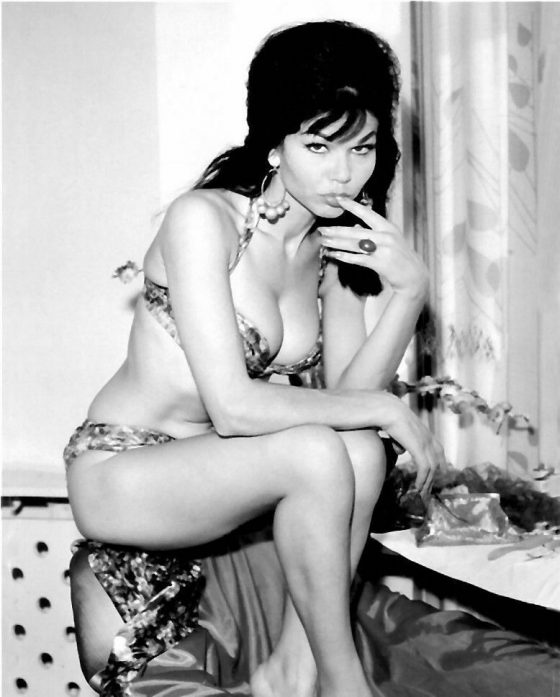
Diana Dors has her largest role to date in this film and as always is good – she also looks lovely. in fact here she is AS BELOW

Diana Dors in Diamond City

Much of the film was made at Denham Studios where they had the studio space to create almost anything – and the outside grounds again to replicate what they wanted.

Not many studios had the size or the facilities to cope as Denham did.

Thinking about it I doubt if any film studios has the size and space of Denham today

Diamond City 2


Diamond City – Later on Richard Todd didn’t fare much better with The Hellions which came over a decade later – and was in Colour and Technirama but somehow even that missed the mark at the Box Office although I thought it a good film.


Diamond City 3


Diamond City ABOVE – a bar room brawl as it happens

Diamond City 4


Diamond City – ABOVE  A Studio set but looking good.


Diamond City 5


Diamond City – Another Scene ABOVE again probably a Studio Set

Diamond City 7


Diamond City – Another Scene ABOVE probably filmed in South Africa where a small unit was sent prior to the main filming – I don’t think any of the actors went out there


Diamond City 9


Diamond City ABOVE – Again possible from the location filming in South Africa

Diamond City 10


Diamond City  ABOVE  Directing a boxing sequence with  David Farrar, Director David MacDonald, amateur boxer Bombardier Billy Wells 


posted by Movieman in Uncategorized and have Comments (4)

The Titfield Thunderbolt – Again

No apologies for going back to this lovely Technicolor Film with a typically English feel to it – and filmed in summertime in the glorious English Countryside.

These pictures and snippets of information are taken from an article written by Hugh Samson dated August 1952 who had travelled down to Limpley Stoke Nr Bath and then to the disused railway track at Monckton Combe Station between  Limpley Stoke and Camerton that Ealing Studios had taken over for the filming.

Titfield Thunderbolt


ABOVE – George Relph has time for a drink on a hot English summer day

Titfield Thunderbolt 2

 ABOVE – Stanley Holloway seems to be enjoying his pack up – I think we see him along with others, being given this in a picture below

Titfield Thunderbolt 3


ABOVE – John Gregson always appears very self confident as he does here

Titfield Thunderbolt 4


ABOVE – Stanley Holloway seems to be collecting  his pack up – along with others working on the film – we see him eating it above


Titfield Thunderbolt 5


ABOVE – Hugh Griffith doing a spot of poaching in the film

Titfield Thunderbolt 6


ABOVE – Make-up man Harry Frampton ( with scarf) and Naunton Wayne resting between scenes as they await the arrival of the  ‘Thunderbolt’.

Titfield Thunderbolt 7


ABOVE – George Relph chatting with Film Director Charles Crichton

Titfield Thunderbolt 8

ABOVE – Dummies are being used as passengers for a long-shot on the Thunderbolt as it draws the train to Titfield Station


posted by Movieman in Uncategorized and have Comment (1)

Cinecolor – and Super Cinecolor

I have seen a few films using the Cinecolor process and one film that used it was the subject of the  last article on ‘The Man from Nevada’  or ‘The Nevadan’ released in 1950.

Previous to that I have a DVD of The Prince of Thieves’ with Jon Hall playing Robin Hood.  I just loved the Cinecolor in that one – it seemed to fit the film so well.

Another one – a bit later – with Jon Hall was ‘Hurricane Island’ filmed in Super Cinecolor – see further below

Cinecolor 5

By the end of the 1940s, Cinecolor seemed to have improved their process quite a bit (they eventually switched to three strip colour) 

I read a comment from someone who originally thought the Cincolor was poor  but late changed his mind after seeing nice looking cartoons originally processed in Cinecolor.

He thought that it was just as appealing as Technicolor, but in a different way.  Technicolor seemed richer, but Cinecolor has a sort of shimmering quality to it.

I would tend to agree with this observation.

Cinecolor 4


Cinecolor

Cinecolor

Cinecolor


Cinecolor 3


While Cinecolor wasn’t perfect, I read a comment about it’s long lasting qualities –  Cinecolor standard 8mm print I have,  Blackhawk eastman color print is only 25 years old, (and already starting a slight fade), the Cinecolor print is at least 50 years old, (as Cinecolor ceased in 1955) and yet still retains it’s full and rich color, which at least tells me that this cinecolor process, while a little grainier, was a much better process.

Randolph Scott made all the films he produced himself in cinecolor. Notoriously tight with money, the Cinecolor process was much cheaper than techicolor.

In “The Gunfighters,” Cinecolor looked as great as Technicolor.

While Cinecolor may not have been equal to Technicolor’s 3-color system, it was  far superior to the 2-color Technicolor that was its early competition, both in colour balance and a pleasing appearance on screen.  Cinecolor never stopped refining and improving its process, and by the 1940’s achieved some outstanding results.

Hurricane Island 1951


Hurricane Island 1951 2

Hurricane Island 1951 3


ABOVE: Jon Hall was ‘Hurricane Island’ filmed in Super Cinecolor

Cinecolor was a dye-transfer printing process very much like Technicolor.

posted by Movieman in Uncategorized and have Comment (1)

The Man from Nevada 1950


Now this is a Western I was not familiar with but watched it on TCM at the weekend. It starred Randolph Scott, Dorothy Malone and Forrest Tucker but also in the cast was Jack Mahoney – later to become The Range Rider to all us young kids at the time.

Apparently in this film former Stunt Man Jack Mahoney also doubled as Randolph Scott in some of the fight scenes – he was probably one of filmlands most accomplished Stunt Men and famous in this job as he later would be in film acting

The film was made I Cinecolor which I have to say I like – a more muted colour than the wonderful Technicolor but appealing in it’s own way. I did buy ‘The Prince of Thieves’ on DVD released in 1948 with Jon Hall, and that too used the Cinelocor process – here again very good.


The Nevadan 5


The Man from Nevada ABOVE – Randolph Scott squares up to Jack Mahoney


The Man from Nevada 1950

The Man from Nevada

The Man from Nevada 1950 2

The Man from Nevada ABOVE – Randolph Scott and Forrest Tucker

The Man from Nevada 1950


The Man from Nevada

The Nevadan 2

The Man from Nevada is 80 minutes in which you can simply enjoy the  storytelling, the characters, the beautiful locations, and the rugged action. – but it is much more than that

The story is set pretty quickly by the theft of  gold by Tom Tanner (Forrest Tucker) and his arrest and escape, followed by wary partnership with a mysterious man, Andrew Barclay (Randolph Scott), who he meets on the trail.  The story leads us to an abandoned mine where Tom has left the gold.  Other characters play come into the story and a number of other relationships are treated, all with increasing drama as these characters move toward  the eventful climax.

Edward Galt (George Macready), a rancher and saloon owner, wants to take the gold for himself, and his daughter Karen (Dorothy Malone), involved after she becomes attracted to Barclay, comes to see the unhealthiness of her father, both in his obsessive greed and obsessive attachment to her in the absence of her mother who left him long ago.
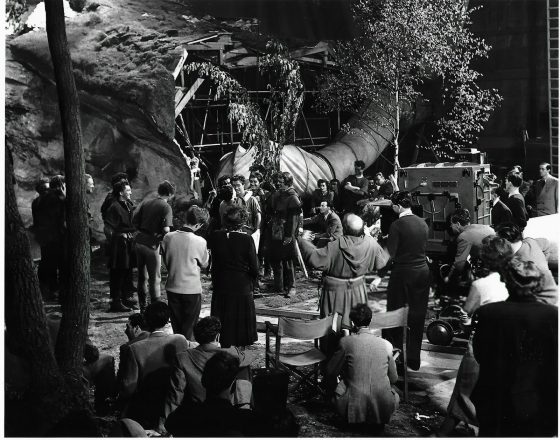
There are also two brothers who work for Galt, Jeff (Frank Faylen) and Bart (Jeff Corey) – they were excellent characters and their acting was impressive particularly in the final gunfight sequence played out against an imposing rocky landscape –  a landscape that I can’t remember seeing in any other film.
The Man from Nevada

The Man from Nevada 1950 2

There is a great action sequence in the film where Jack Mahoney pursues Dorothy Malone – both on horseback. She cleverly gives him the slip but he is persistent and this shot above and below sees him riding through a small lake as he bears down her.

He very shortly comes to a sticky end as he is knocked off his horse by an overhanging branch that he did not see. I would bet that Jack Mahoney peformed this stunt which was very well done

The Man from Nevada 1950 3

The Man from Nevada

The Nevadan 3

The Man from Nevada – ABOVE a still showing Jack Mahoney coming off his horse – this is the stunt that I would bet Jack Mahoney did himself.

The Man from Nevada

ABOVE – Jock Mahoney looks to be finished

The Man from Nevada 1950 4

The Man from Nevada – Dorothy Malone saves the day

The Man from Nevada 1950 5

If you haven’t seen this film, I would recommend you do – some of the comments you read online are not that good but I thought it was excellent and thoroughly enjoyed it. Like going back in time to a night at the ‘pictures’

The Man from Nevada 1950 6

ABOVE – Forrest Tucker and Randolph Scott

The Man from Nevada 1950 7

The Man from Nevada – This film was shown under the title ‘The Nevadan’

The Man from Nevada 1950 8

The Man from Nevada


posted by Movieman in Uncategorized and have Comment (1)