Archive for 2019

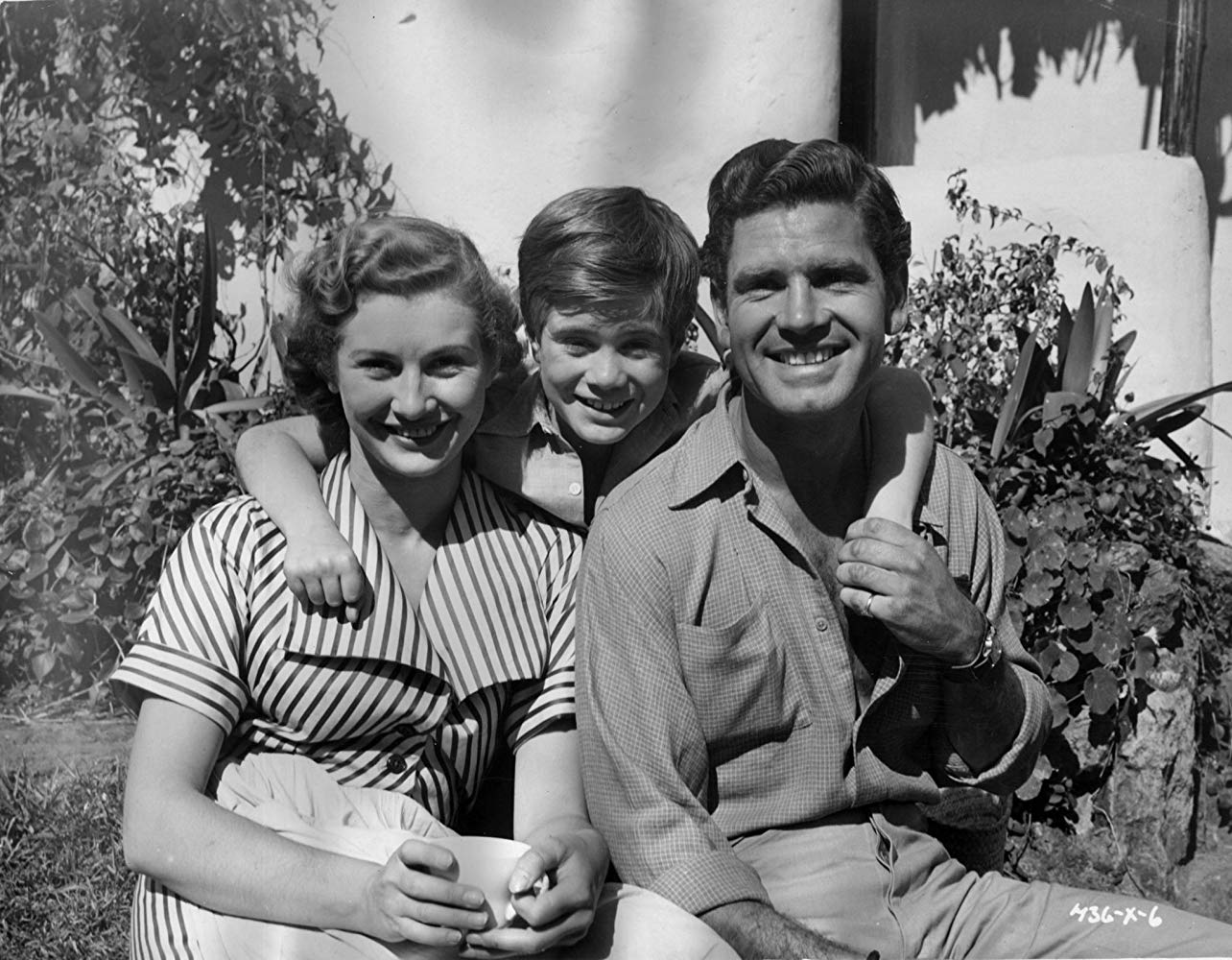
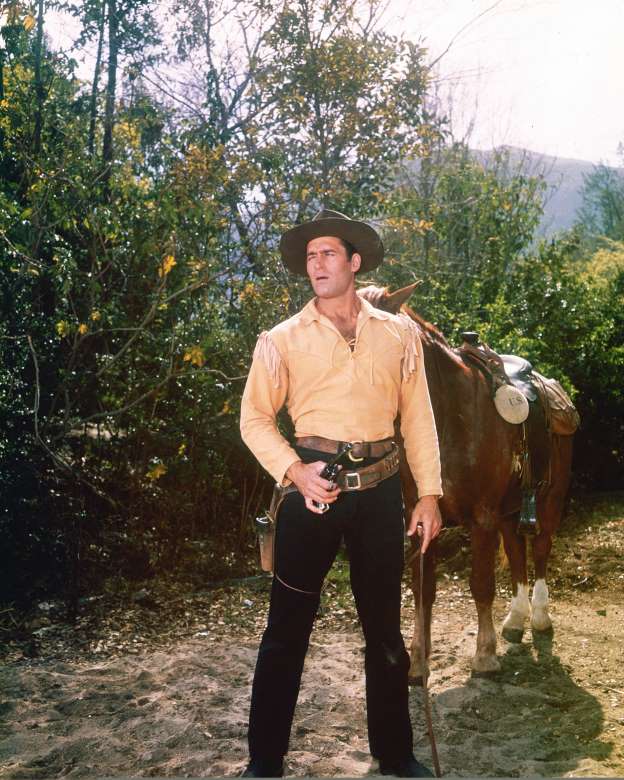
Clint Walker

Norman Eugene “Clint” Walker May 30, 1927 – May 21, 2018

Last year Clint Walker  passed away at the age of 90.
Clint Walker 2

Walker died  of congestive heart failure at a hospital in his longtime home of Grass Valley, California at age 91.

 “He was a warrior, he was fighting to the end,” said Valerie Walker – his daughter herself a retired commercial pilot who was among the first women to fly for a major airline.

Clint Walker, whose film credits included “The Ten Commandments” and “The Dirty Dozen,” wandered the West after the Civil War as the solitary adventurer Cheyenne Bodie in “Cheyenne,” which ran for seven seasons on ABC starting in 1955.

Born Norman Eugene Walker in Hartford, Illinois, he later changed his name in both public and private life to the more cowboyish Clint.

He worked on Great Lakes cargo ships and Mississippi river boats and in Texas oil fields before becoming an armed security guard at the Sands Hotel and Casino in Las Vegas.

There, many Hollywood stars, including actor Van Johnson, saw the 6-foot-6, ruggedly handsome Walker and encouraged him to give the movies a try, which Walker said he did after realizing the money would be better and the bullets would be fake.

He soon found himself under consideration for his first role in “The Ten Commandments,” starring Charlton Heston and Yul Brynner. He had a meeting with the film’s legendary director Cecil B. DeMille, but was late after stopping to help a woman change a tire and feared he’d blown his shot.

“He just exuded power,” Walker said of DeMille in a 2012 interview for the archive of the television academy. “He looked me up and down and said, ‘You’re late young man.'” “I thought ‘oh no, my career is over before it even started.'”

Clint Walker explained why he was late and said Demille responded “Yes, I know all about it, that was my secretary.”

He was then was cast as the captain of the pharaoh’s guard in the 1956 film.  

He beat out several big names for the role of “Cheyenne,” but speculated that it was because he was already under contract for much cheaper than the other actors would demand to Warner Bros., which produced the show.

Clint Walker 3

Based roughly on a 1947 movie, “Cheyenne” began as an hour-long program that originally was alternated with two other Westerns. The only one of the three programs to survive, it made Clint Walker a star, although a restless one.

He abandoned the role in 1958 in a contract dispute, and Ty Hardin was brought in briefly to replace him. He soon returned under better terms, and remained through the show’s seven-season run.

One of his  most memorable big-screen appearance came in 1967’s “The Dirty Dozen,” whose all-star cast included Lee Marvin, Ernest Borgnine and Charles Bronson.   In it, Marvin baits the much-larger Walker into attacking him then throws him to the ground in a training demonstration to his World War II crew.

Clint Walker

He appeared in many other movies including the westerns “Fort Dobbs,” ”Yellowstone Kelly” and “Gold of the Seven Saints” and in the Doris Day and Rock Hudson film “Send Me No Flowers” in 1964. He most recently lent his voice to 1998’s “Small Soldiers.”

Walker nearly died in 1971 when a ski pole pierced his heart in California’s Sierra Nevada.

“They rushed me to a hospital where two doctors pronounced me dead,” he recalled in 1987. “No pulse, no heartbeat; I was clinically dead.” A third doctor detected life, and an operation saved him.

He would fully recover, and go on to live another 47 years.

In addition to his daughter, he is survived by his wife of 30 years Susan Cavallari Walker.
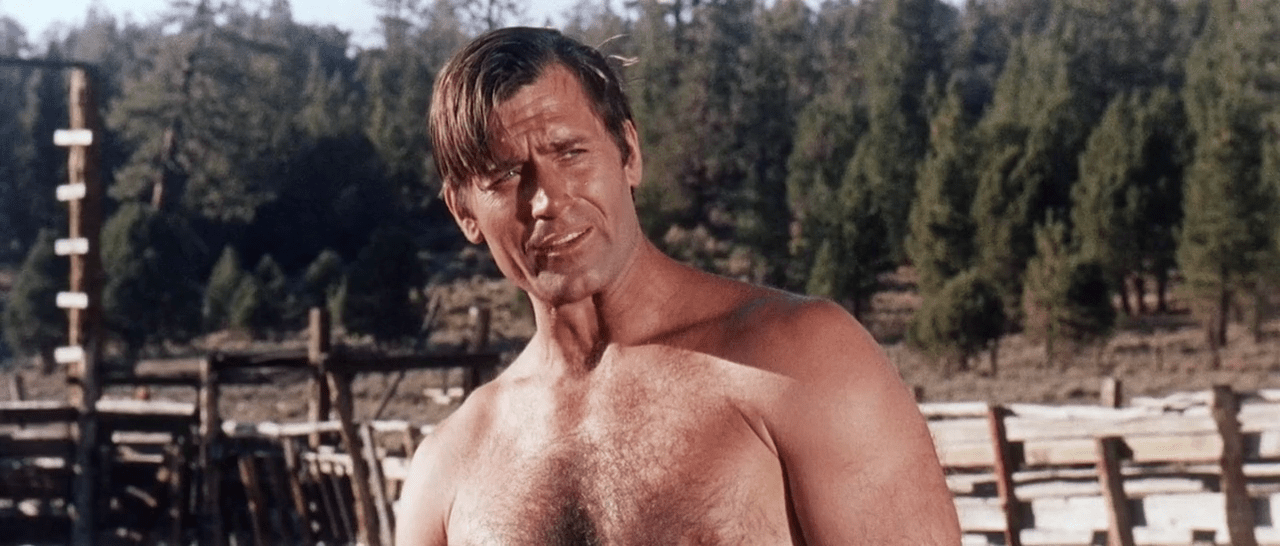
Clint Walker - Night of the Grizzly

My own favourite Clint Walker film is ‘Night of the Grizzly’ where the tension is built up until the final confrontation with the grizzly – very well done too.

This was Clint Walker’s own personal favourite of the films that he was in

BELOW :  Some Great Scenes from the final thrilling climatic confrontation – they don’t do it justice though
Night of the Grizzly

Night of the Grizzly 2

Night of the Grizzly 3


Night of the Grizzly 4

Night of the Grizzly 5


posted by Movieman in Uncategorized and have Comments (2)

Marilyn – The Most Famous Film Star in History – Files and Friends Views on her death


Marilyn Monroe


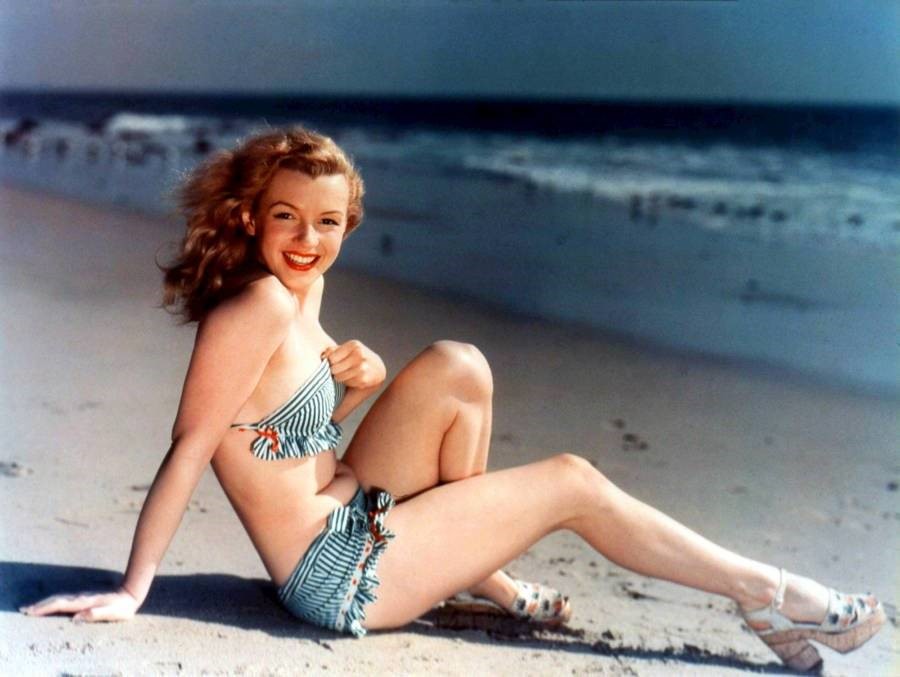
Marilyn Monroe is the Film Star of Film Stars – Her fame and legendary status remains as strong today – and she is just as well known as she always was. To each new generation she is able to work her magic through her films and even such pictures as the one above which has a magical glow about it – as though you are with someone very special.

To watch her in a film even now, she is the person on the screen that you just cannot take your eyes off.

Marilyn Monroe’s official file begins in 1955 and mostly  focuses on her travels and associations, searching for signs of leftist views  and possible ties to communism. The file continues up until the months before  her death, and also includes several news stories and references to Norman  Mailer’s biography of the actress, which focused on questions about whether  Marilyn  was killed by the government.

There have been two major government  investigations into Marilyn’s death – the original inquiry immediately after her  death and another effort by the Los Angeles District Attorney’s Office in 1982.  The second inquiry, released in December 1982, reviewed all files available  investigative reports, including files compiled by the FBI on her death.’

The man who performed  Miss Monroe’s autopsy, Dr. Thomas Noguchi has conceded that no one will likely ever  know all the details of her death. The FBI files and confidential  interviews conducted with the actress’ friends that have never been made public  might help, he wrote in his 1983 memoir ‘Coroner.’


Marilyn Monroes Home in Hollywood


Marilyn Monroes Home in Hollywood 2


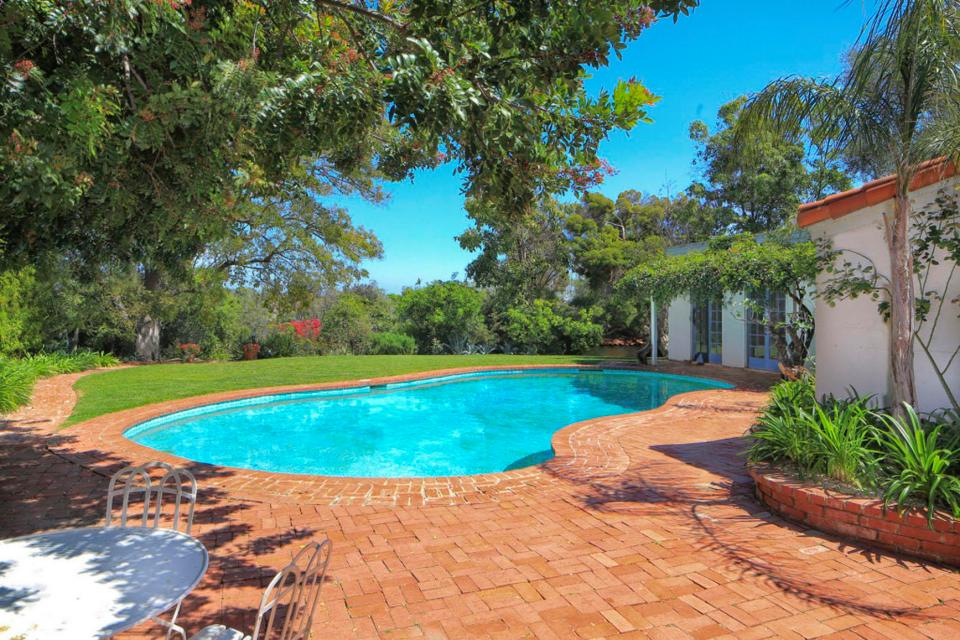
ABOVE – Marilyn’s Home in Brentwood. She purchased the home in February 1962 after she moved back to Los Angeles following the end of her marriage to playwright Arthur Miller.  Some sources say the selling price was 77,500 US Dollars  while others have it as 90,000US Dollars.  

Located at 12305 5th Helena Drive, Monroe’s L-shaped Spanish Colonial Revival originally had adobe walls and a red-tile roof. It also had two bedrooms instead of the four it has now, along with a small guesthouse.

————————————————————————————————————————————————————————————————————

Suspicions Of Murder And A Cover-Up

Friends of the star, among others, have claimed that the official report on the death of Marilyn Monroe was a lie and that, in fact, there was a cover-up and she had actually been murdered.

One friend of the star only a few days before her death, said she was in high spirits. “She wasn’t the least bit depressed,” he said. “She was talking about going to Mexico.”

Another friend, Pat Newcomb, said she had been with Monroe just the night before her death and that they had made plans to go to the movies the next day. “Marilyn was in perfect physical condition and was feeling great,” Newcomb said.

The star had also recently rekindled her romance with ex-husband Joe DiMaggio and was excited about several new projects that had been offered to her, as well as her being re-hired on Something’s Got to Give.

As one of her associates asked, “Does that sound like she was depressed about her career?”

Reporters were also quick to point out that no suicide note was ever found.

The autopsy report was also treated with suspicion upon its release. Although Marilyn Monroe died after supposedly ingesting a large number of pills, there was no trace of any of the capsules in her stomach.

Even the junior medical examiner who performed the autopsy, Thomas Noguchi, had enough doubts that he later called for the case to be re-opened.

To add to the suspicion surrounding the death of Marilyn Monroe, the deputy coroner who signed Monroe’s death certificate eventually claimed he did so “under duress.”

Soon, more and more people grew concerned that the death of Marilyn Monroe was neither accident nor suicide, but murder.

Over the following decade, so many well-outlined conspiracy theories about her death emerged in various reports and books that in 1982, the Los Angeles Country District Attorney’s Office ordered a new investigation into the death of Marilyn Monroe.

Although this 1982 report concluded that the evidence reviewed “fails to support any theory of criminal conduct,” it also admitted that the investigation had turned up some “factual discrepancies and unanswered questions.”


posted by Movieman in Uncategorized and have Comments (6)

Bonnie Prince Charlie 1948 and Last Days of Denham Film Studios


Any film made at the legendary Denham  Film Studios is likely to be dear to my heart, as to me that location  epitomises all that is best in British Films.  Denham had been built by Alexander Korda on a scale that put it far larger than any studio in England or Europe – and certainly on a par with the Hollywood ones.

However surprisingly to me, even though this was very much a Korda picture, this film was made at Shepperton – and on location in the Scottish Highlands

This could be explained now I think of it,  because the studios had changed hands in 1945 when Sir Alexander Korda purchased British Lion Films, giving him a controlling interest in  Shepperton Studios

Maybe if this film had been made at Denham it would have fared better – that seems an illogical statement but you just never know.

David Niven said that throughout the filming there was never a finished script and it seemed to be just made up as they went along – as though this were a reason for its lack of early success – but when I think about it, only a few years earlier in Hollywood, that is exactly how things went during the filming of Casablanca – and look how that turned out


No – David Niven was just looking for excuses – and that seems a lame one to me


Bonnie Prince Charlie 1948 5


Bonnie Prince Charlie 1948 6


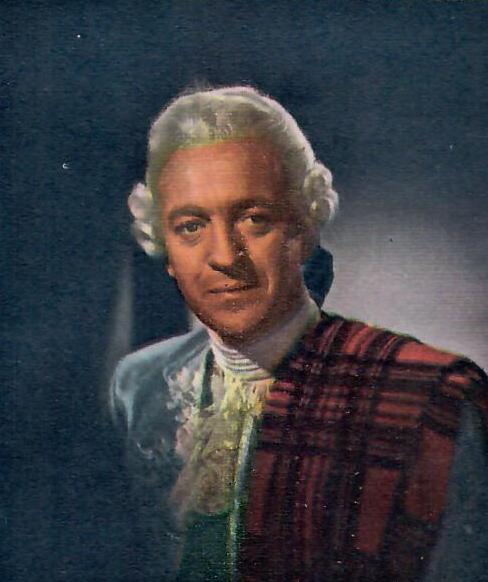
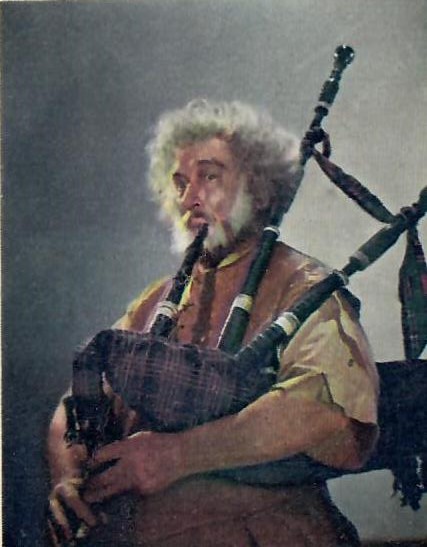
David Niven as Bonnie Prince Charlie – in my book woefully mis-cast


Bonnie Prince Charlie 1948


I just love these Studio scenes

Bonnie Prince Charlie 1948 2


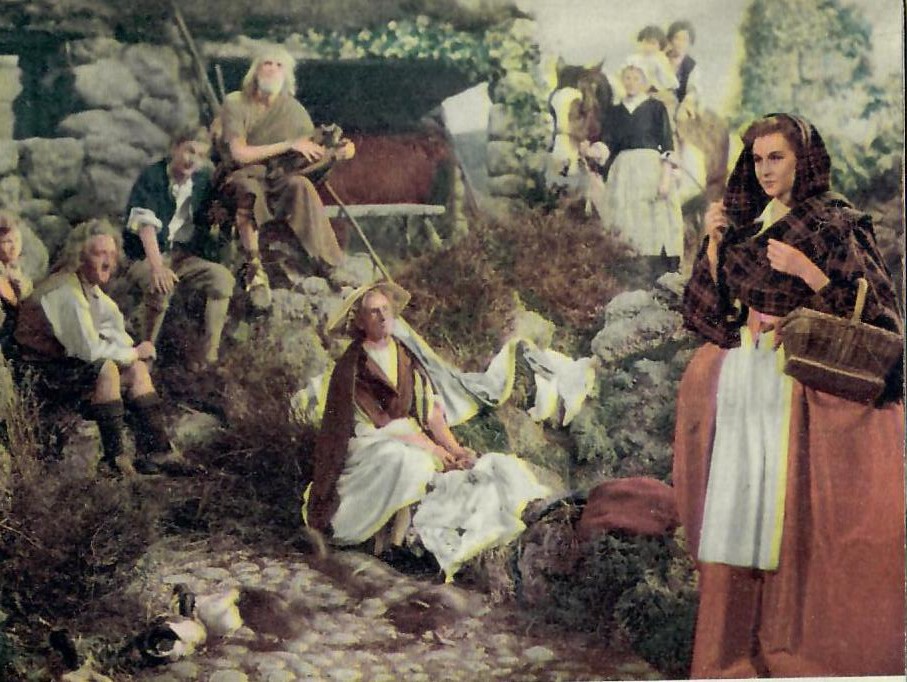
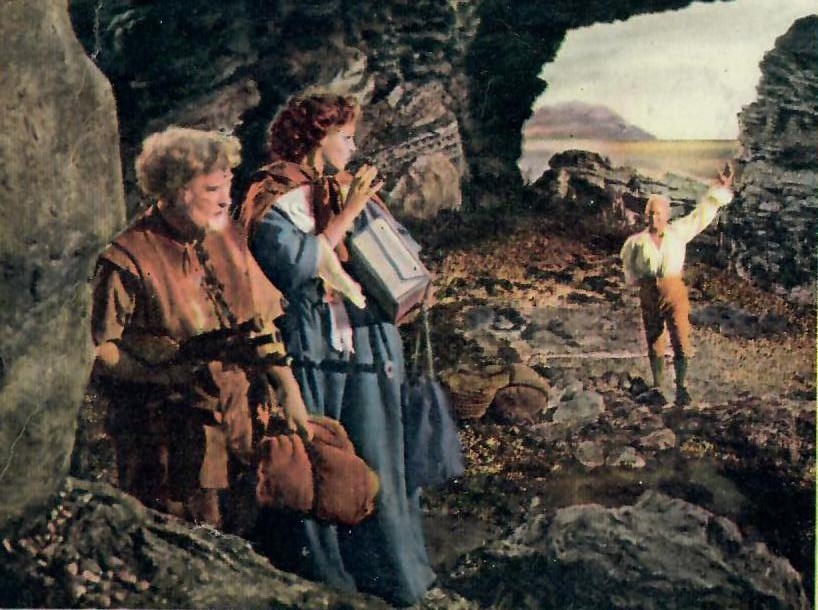
 Another posed still – again in the Studio – Margaret Leighton as Flora McDonald


Bonnie Prince Charlie 1948 3


Bonnie Prince Charlie 1948 4


This is another great set and so realistic – I do have another similar picture showing this film set. Very Impressive.

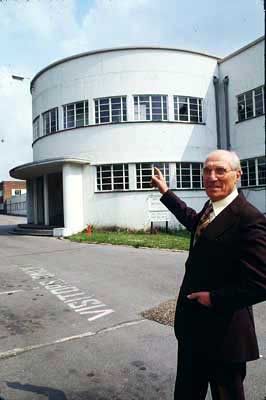
Denham Film Studios – someone who had worked there much of his working life – BELOW

Denham Film Studios

Herbert Smith (1901-1986) started sweeping the floors at Denham Film Studios in Buckinghamshire when he was 13 years old. He eventually became controller of the premier British studios from June 1945 until 1950. Above is a picture of Herbert (pointing towards his old office) taken on his last visit there in 1977 .

Shortly afterwards a golden era of film history ended, when those once famous studios (built by Sir Alexander Korda in 1935) were demolished.

Walt Disney’s Story of Robin Hood and his Merrie Men (1952) was the last major motion picture to be produced at that massive film complex.


posted by Movieman in Uncategorized and have Comment (1)

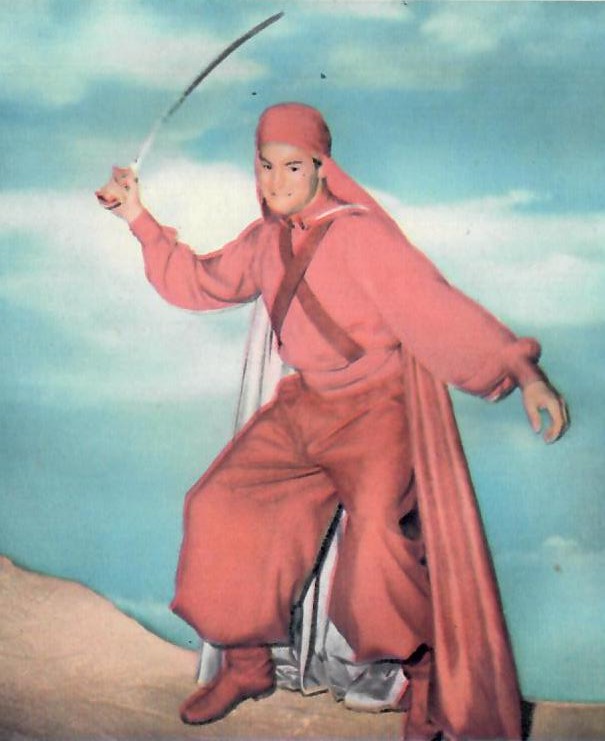
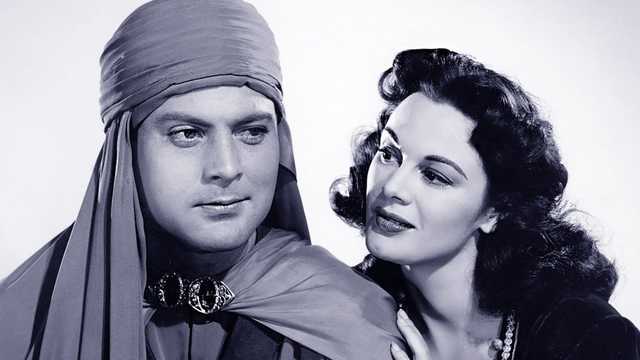
The Magic Carpet 1951

This film  is a low budget  Saturday matinée type film from the 1950’s but in fairness that is exactly what it was meant to be – a bit of colourful fun.

It is not dis-similar to the  1950 Universal Studio Tony Curtis “Son Of Ali Baba” type films and “Son Of Sinbad” with Vincent Price. These films may not be great, but they were really good for us young kids – at the time wanting to see these exotic adventures – and somehow we all grew up with the Hollywood version of what it was like in those far off days. Probably nothing like reality but we weren’t bothered about that.

 The Magic Carpet 1951


The interesting thing about the film was that  how Lucille Ball who was still under contract to Columbia did not want to do this film and the Studio Heads didn’t think that she would,  but she accepted and as soon as the film was completed she left.

Can’t say that I am – or was ever – a fan of Lucille Ball so I will quickly move on to Patricia Medina who I did like. She was at the time of this film married to Richard Greene our own Robin Hood – but that marriage ended in divorce in 1951 – about the time this was released –  and she married Joseph Cotton and lived her life in California.

I have been very lucky to find a rare interview on Youtube  with Patricia Medina – it is 30 minutes long but really interesting and insightful – trouble is, it seems impossible to transfer it on to this Blog.

She talks about her film life and work and being signed by MGM without a screen test – one of only three who could say that and one was Mickey Rooney. She also talked quite warmly of her first husband Richard Greene and said that he was probably the most handsome man she ever met.  However she describes Jospeh Cotton as the love of her life – she said that in thirty years of marriage they only spent one night apart – and she said that was Hell.

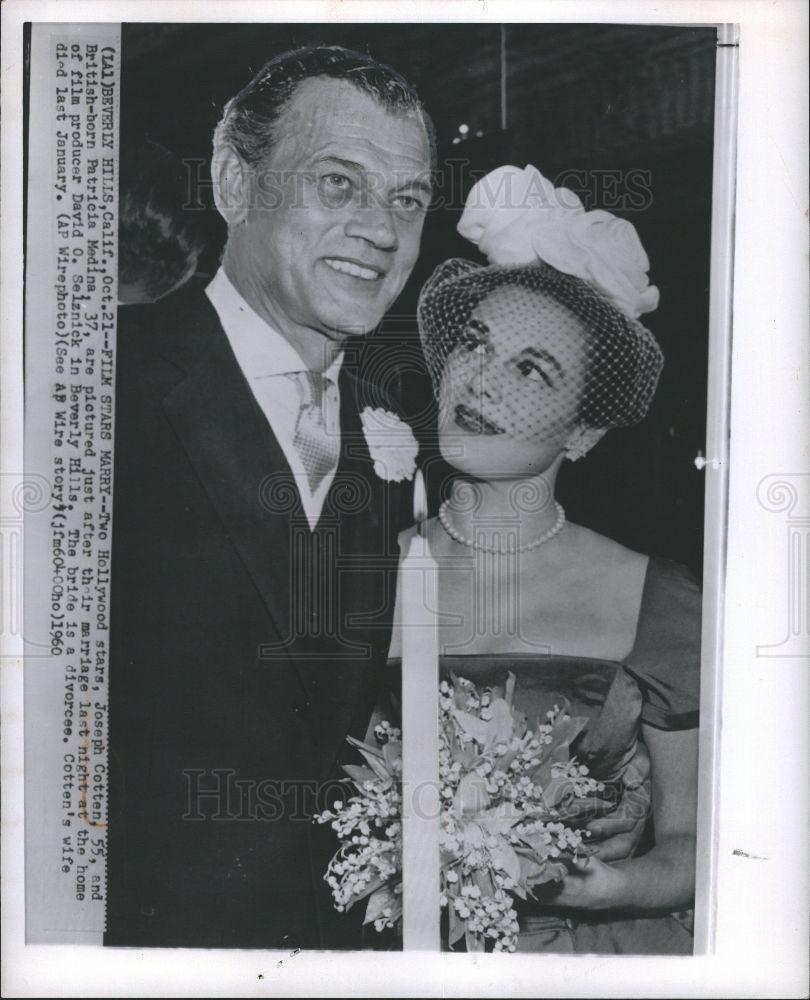
Jospeh Cotton and Patricia Medina were married at the home of David O. Selznick and Jennifer Jones in 1960     and there were many film people there – and the happy couple went on to have a wonderfully fulfilling and loving marriage.

Patricia and Joseph on their wedding day

After his death she admitted to sinking into depths of despair and sadness but soldiered on.  Patricia Medina said that if she watched one of his films on Television it would make her would cry – particularly if his voice came from the TV even when she might have been in another room


The Magic Carpet 1951 2


THE MAGIC CARPET is great fun. A Sam Katzman Super Cinecolor  costume extravaganza with John Agar, Patricia Medina and Lucille Ball 

Apparently that year Monogram’s ALADDIN and HIAWATHA were also in Super cine-color.

The Magic Carpet 1951 3

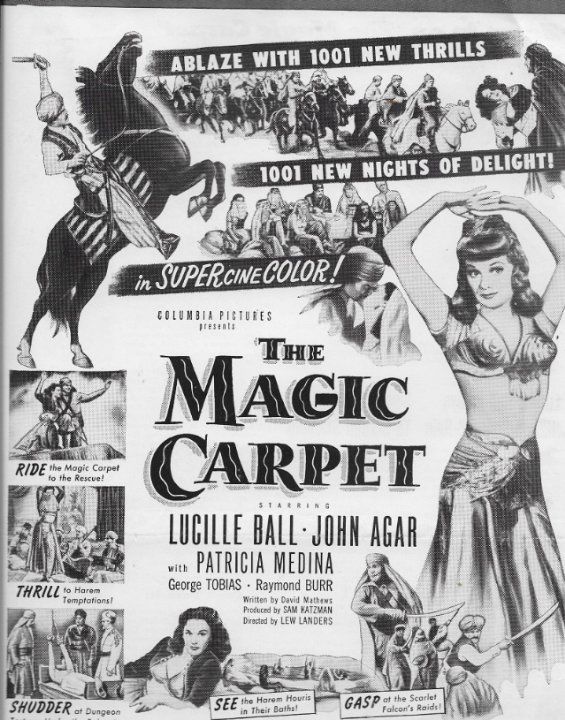
A Newspaper advertisement for the film

The Magic Carpet 1951 4

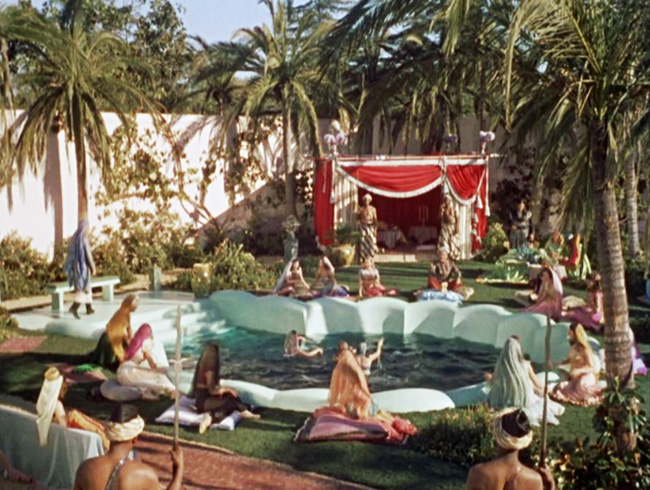
A very colourful scene – In SuperCinecolor

Super Cinecolor

Super Cinecolor

The Magic Carpet 1951 5

ABOVE – John Agar and Patricia Medina

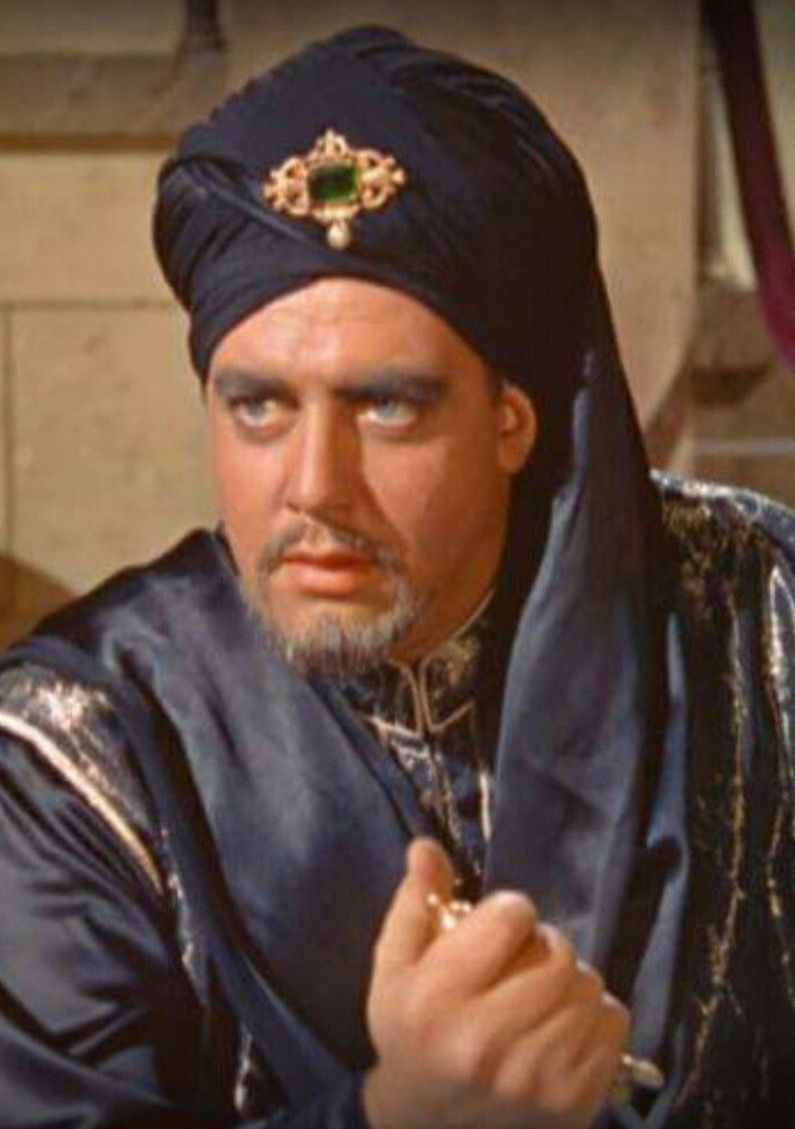
Raymon Burr as The Grand Vizier

Raymon Burr in The Magic Carpet.  A couple of years before his role in Rear Window – and not too long before he found fame and success with Perry Mason

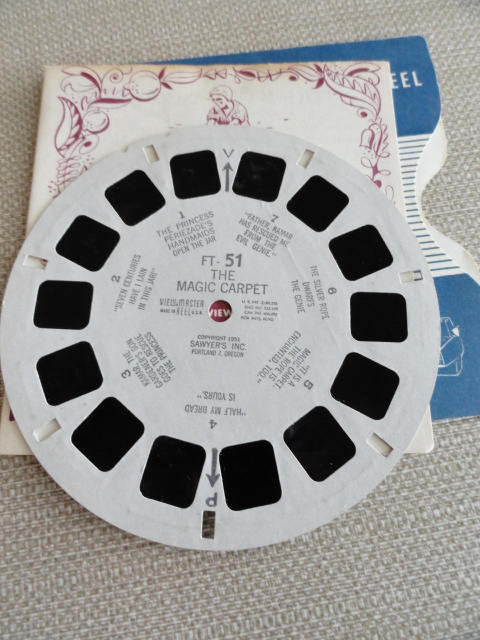
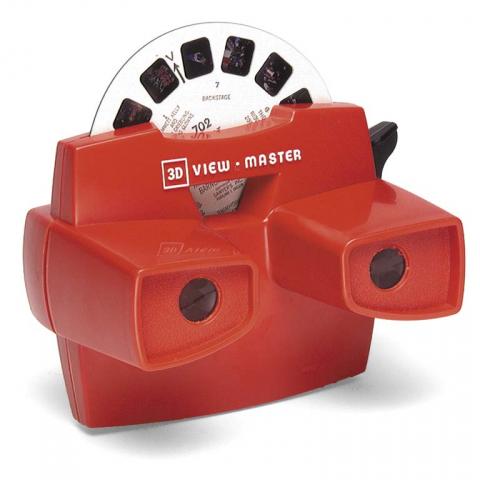
Viewmaster

Viewmaster

Sometimes with these films you could but a Viewmaster – a series of colour slides from the film that you viewed through a special gadget – above is the actual Viewmaster and  ‘The Magic Carpet’  circular slide show from the film


posted by Movieman in Uncategorized and have No Comments

Kon Tiki – Film 1951


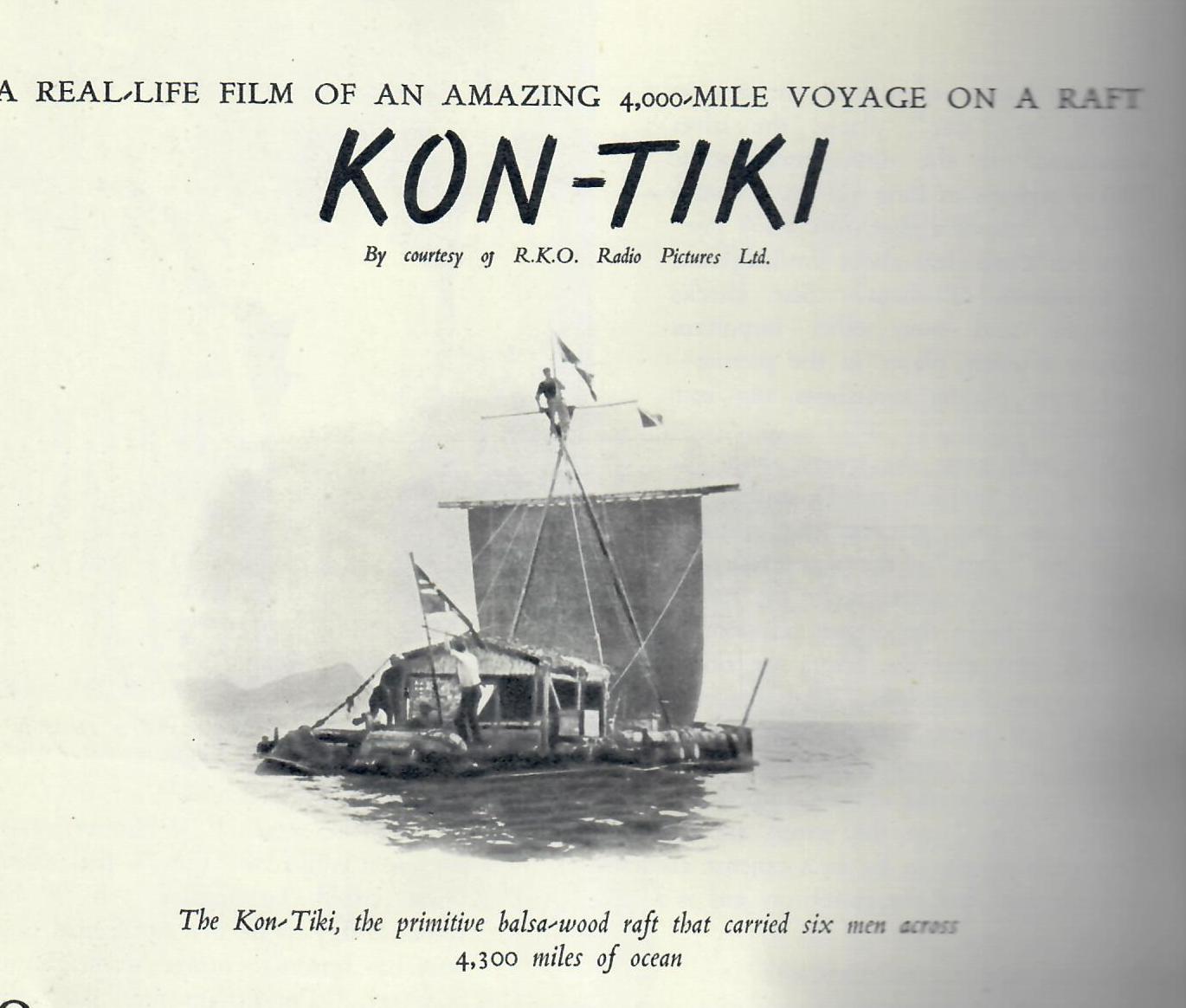
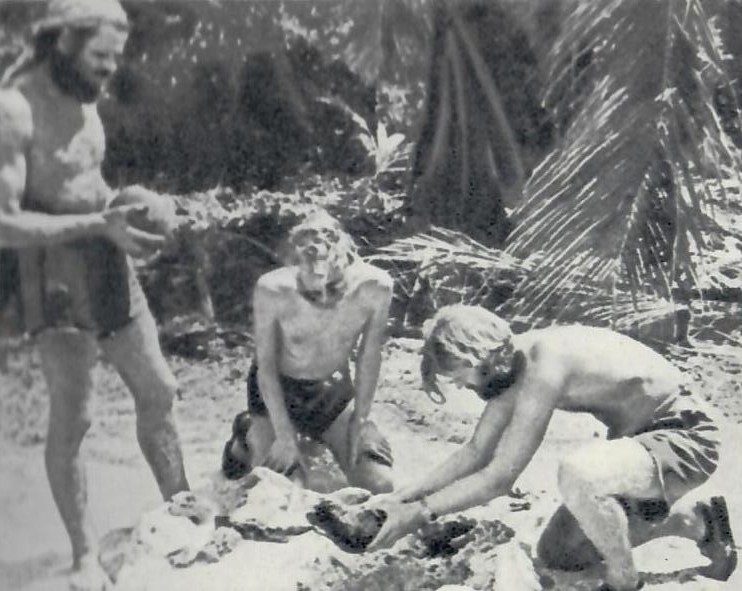
One of the most amazing stories ever to be seen on the screen is shown in ‘The Kon-Tiki Expedition’. The whole film is made up of shots taken on the actual voyage across the Pacific Ocean just after the war – and this documentary style film which was Swedish – as far as I can see was taken on by RKO Radio Pictures and given a worldwide release.

Kon-Tiki 1


I remember the publicity it got at the time – quite often featured on BBC Television

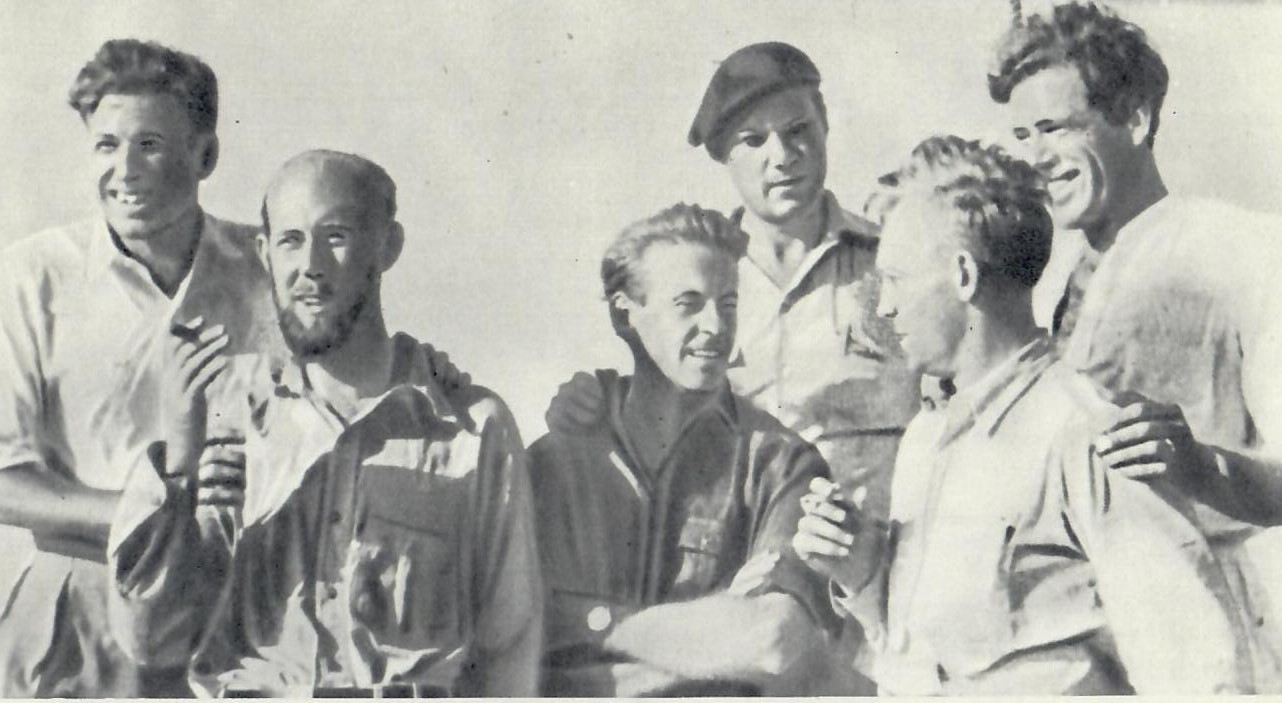
Kon-Tiki


ABOVE –  The Kon-Tiki Adventurers –  Thor Heyerdahl, Knut Haugland, Erik Hesselberg, Torstein Raaby, Herman Watzinger and Bengt Danielsson

This voyage was one of the most thrilling adventure of modern times in 1947 when Thor Heyerdahl and his crew sailed across the Pacific Ocean on a flimsy raft from Peru to the Polynesian Islands – a distance of 4300 miles.

This film was taken on the voyage so almost a diary of what went on. 8,000 ft of film was shot during the voyage


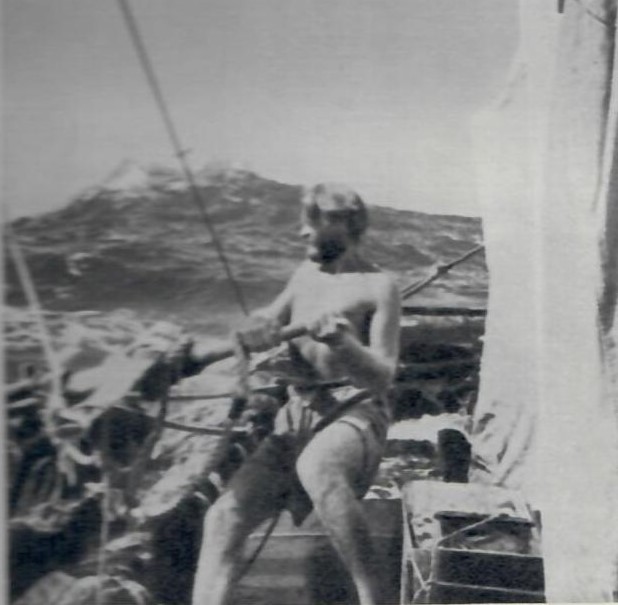
Kon-Tiki 2


ABOVE – A steady Hand on the Tiller – but just look at those mountainous seas behind him

Kon-Tiki 7


ABOVE – This picture I have found just has the caption ‘ Man Overboard’


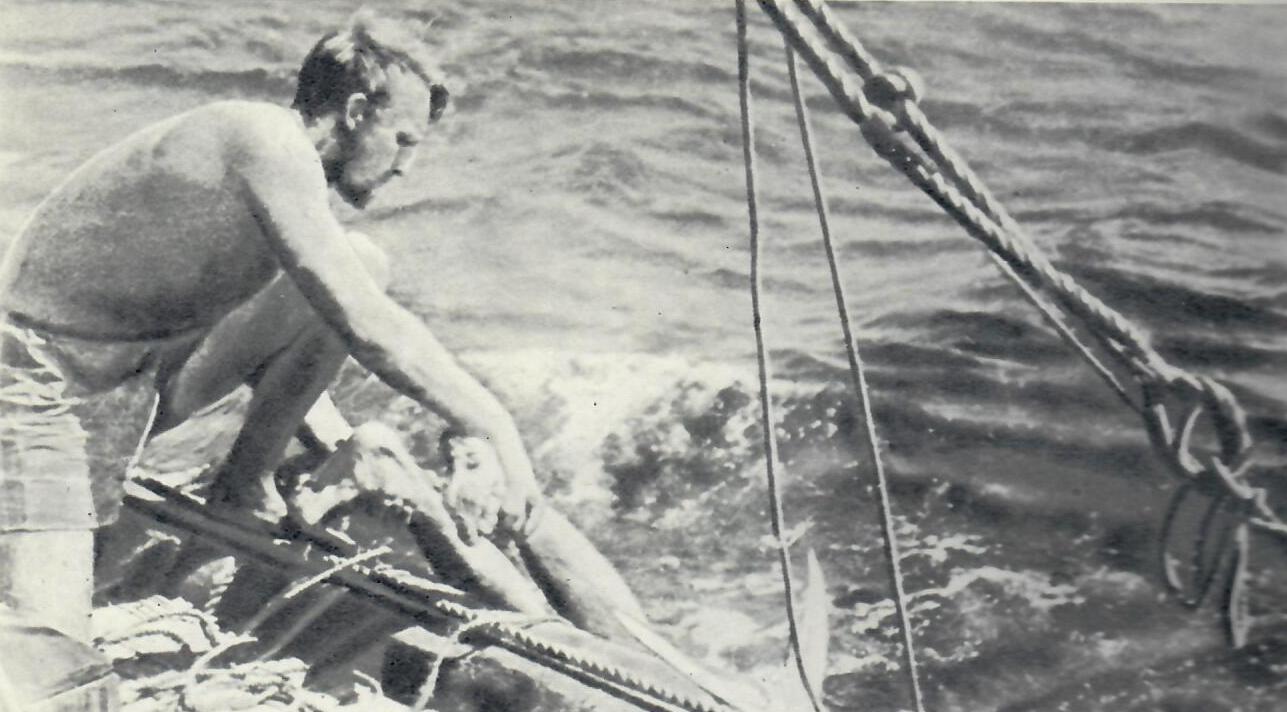
Kon-Tiki 3


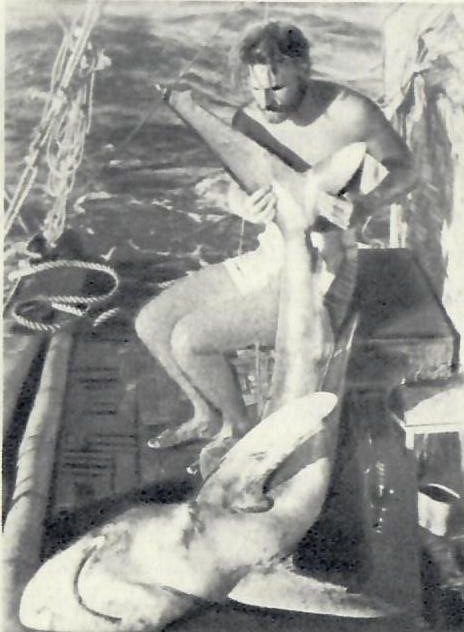
Above – a captured shark – apparently sharks kept the crew company and sometimes threatened disaster to the frail craft.


Kon-Tiki 4


ABOVE – Thor Heyerdahl the skipper contemplates the next meal

On April 28, 1947,  Thor Heyerdahl and five fellow scientists boarded their wooden raft, the Kon-Tiki, to sail from South America to the Polynesian Islands – they reached Raroia in the Pacific 101 days later – he brought his 16mm camera to document the journey. After the expedition, he was offered $200 for the unedited footage, but he refused – he wanted to use it for lectures.

Sweden’s Artfilm was the only Scandinavian laboratory with an optical printer that could transfer 16mm material to 35mm negative and, on January 13 1950, Kon-Tiki had its world premiere in Stockholm. Two years later it became the first (and still only) Norwegian full-length film to win an Oscar, for Best Documentary Feature


Kon-Tiki 5


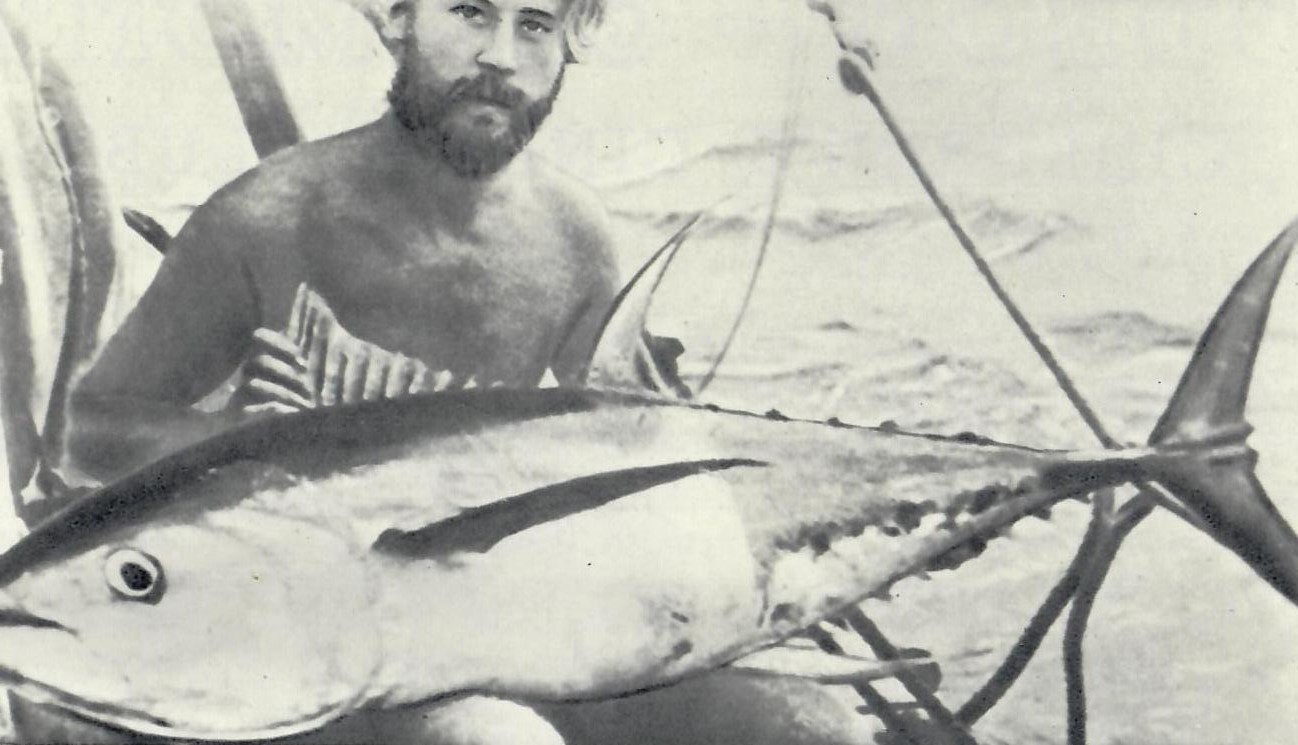
It looks likely to be fish – and a whopper too.


Kon-Tiki 6


ABOVE – Journey’s End – the mariners land on a coral reef in Polynesia in the Pacific Ocean – after 101 days afloat.


posted by Movieman in Uncategorized and have No Comments

Alf Ventress – William Simons

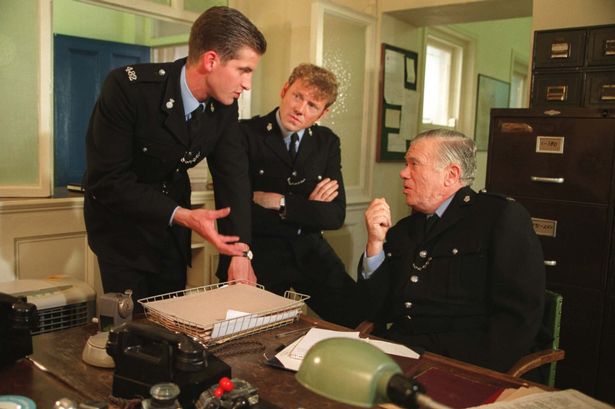
From ‘Where No Vultures Fly’  released in 1952 and filmed in East Africa to ‘Heartbeat’ on the North Yorkshire Moors, William Simons the actor famous for playing Alf Ventress for 18 years had been a successful actor on screen throughout the intervening years.

William Simons

William Simons with Anthony Steel and Dinah Sheridan – Where No Vultures Fly

Where-No-Vultures-Fly-Scene

William Simons with Anthony Steel and Dinah Sheridan – Where No Vultures Fly

Where No Vultures Fly was particularly impressive being filmed in that wonderful Technicolor process and with such African locations and beautiful clear blue skies this just added to its charm. Apparently the newly released DVD which has been digitally remastered is equally stunning when viewed. It was this aspect that made this film so popular at the Box Office – and also of course it was chosen as the Royal Premier of 1952

A sequel to this ‘West of Zanzibar’ was released in 1954 with, again Anthony Steel but this time Sheila Sim played his wife – William Simons also starred.

When you look back at his career, it seems that he was never out of work from 1952 right up to the end of ‘Heartbeat’ in 2011. In fact although he appeared as Alf Ventress in 355 episodes, he was also in The Royal which was a spin-off show – and very good too – in fact he was in 6 of these episodes, but he had been in Coronation Street, Emmerdale, Inspector Alleyn and many many more.

Alf Ventress

His portrayal of Alf Ventress was perfect. We learned so m uch about Alf over the years but although Mrs Ventress his wife was often referred to, she never appeared much like Captain Mainwairing’s wife in Dad’s Army.  When referring to his wife he always said ‘Mrs Ventress’ although she did seem to be a formidable woman or so we imagined.   I well remember one episode when there was a dramatic climax to the story and crooks had been cornered along with Alf in a farmyard. There was a lot of shooting and when it was all over his colleagues feared for Alf’s safety but he emerged from a farm building unscathed. When asked how he had evaded the gunman, Alf said that ‘My Commando training and experience in the War had taught me how to hide from gun fire’ then added ‘ and 30 years of marriage to Mrs. Ventress has taught me when to lie low’

Brilliant lines, I thought – and perfectly delivered by Alf

Only last September 2018, we heard that another ‘Heartbeat’ regular Peter Benson who played Bernie Scripps had died. He had played in 235 episodes and one for The Royal.

Alf Ventress 2


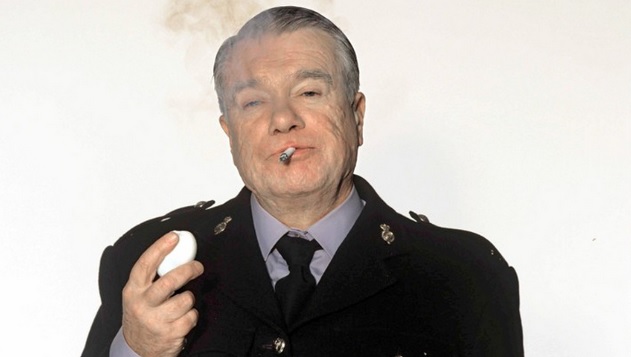
A publicity Still – William Simons as Alf Ventress – in real life William was a non smoker and herbal cigarettes were used when filming.

posted by Movieman in Uncategorized and have Comments (7)

Kynaston Reeves as Quelch – Billy Bunter on BBC Television

I am thinking  back now to one of my favourite horror films of the 1950s and this one was a British Picture.  ‘Fiend Without a Face’ 1958 originally had a budget of £ 50,000 but this stretched to £80,000 by the time they had finished with extra special effects – quite a meagre amount even by the standards of those days

It starred among others Kynaston Reeves – who was famous as playing Quelch the Headmaster in Billy Bunter of BBC Television just before this film was made.

Kynaston Reeves had played one of his  notable acting parts on television, namely that of Henry Quelch, form master to theFat Owl of the Remove‘,  Billy Bunter, in the longrunning television series Billy Bunter of Greyfriars School. He was actually in only 16 episodes between 1952 and 1957 but somehow he is best remembered as Quelch – it was his most famous role even though he had one of the leading roles in ‘Fiend Without  a Face’ in  1958 and later in the Sixties in ‘The Forsyte Saga’


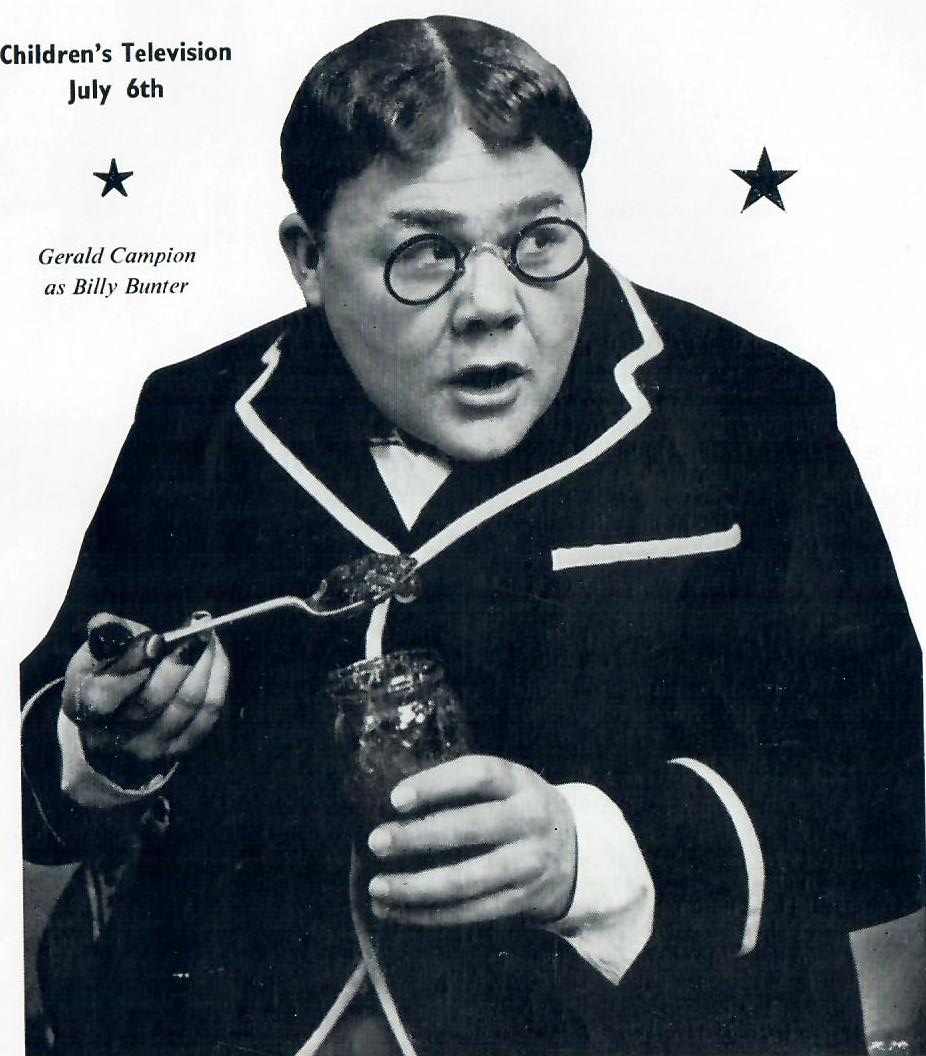
Gerald Campion as Billy Bunter

Billy Bunter played by Gerald Campion – He was actually 29 when he played the part and almost 40 by the time the series ended. He did become type cast and was forever remembered for this role. He did later play Mr Toad but in many ways it was a similar character wnyway

Joy Harrington BBC


ABOVE: Producer Joy Harington – This was a name that was on our BBC screens throughout the Fifties and beyond because she produced so many top shows quite often for children but of course watched by everyone.

In those days we had a weekly 6 part serial very often – and I can think of a number she produced – Kidnapped with Patrick Troughton as Alan Brech in 1952 – then again in 1957 with Patrick Troughton playing the same role with a different set of actors. In between came ‘Robin Hood’ again with Patrick Troughton – I remember it and to my mind he did not fit the role well. Maybe that was because we still had Richard Todd in our minds as Robin from the 1952 film – and later came Richard Greene in the ITV series.

A distinguished producer of early children’s television programmes, Joy Harington had started as an actress (her first professional appearance had been in 1933) and had appeared in various repertory companies. In 1938 she travelled to the US and continued touring on stage before going to Hollywood to work at Paramount Studios as a script editor and dialogue director.

During her Hollywood stint she also appeared in 13 films (often uncredited), including the MGM productions of Gaslight (d. George Cukor, 1944) and National Velvet (d. Clarence Brown, 1945). (Some information sources for this period give her name as Joy Harrington.)

Back in London after the war, Harington joined the BBC as a stage manager when the television service re-opened in 1946. She became producer of BBC Children’s Television in 1950 and for the next ten years excelled in productions of children’s classics such as Treasure Island (BBC, 1951), Kidnapped (BBC, 1952; restaged 1956), Jo’s Boys (BBC, 1959) and Heidi (BBC, 1959).

One of her more light-hearted projects during this period was in bringing the Frank Richards stories of Billy Bunter of Greyfriars School (BBC, 1952-61) to television. These prankish schoolboy yarns – a kind of early sitcom for children – were broadcast live and were the first TV episodes to be presented with matinee and evening performances on the same day. Contemporary critics were at first wary of a television translation that was based on 40-year-old stories (Richards had started writing the Bunter stories in 1908) intended for readers in a less sophisticated time. But with the venerable Richards himself providing many of the scripts, the series soon became a confirmed favourite with junior school-aged children.

But perhaps what is considered her most notable work for television was the eight-part Sunday serial Jesus of Nazareth (BBC, 1956) for which she received the 1956 award of the Guild of Television Producers and Directors (now BAFTA), the first to be presented for a children’s serial. A live studio production with exteriors filmed on location in Galilee and Jerusalem, it was a courageous undertaking. At that time, censorship regulations prohibited the portrayal of Christ by an actor in public performances. However, the Central Religious Council approved the project and Tom Fleming was cast as Jesus Christ. The serial was an outstanding success. Harington followed with a similar ten-part series, Paul of Tarsus (BBC, 1960), for which the exteriors were filmed mainly in Crete.

Until her retirement from the BBC in 1970, Harington worked for religious programmes, schools and further education. She returned to acting in the late 1970s and appeared regularly in the Sykes series (BBC, 1960-65; 1971-79) as well as the occasional Are You Being Served? (BBC, 1973-83) episode and in the fourth Quatermass (ITV, 1979) serial.

billy bunter

Billy Bunter Set BBC

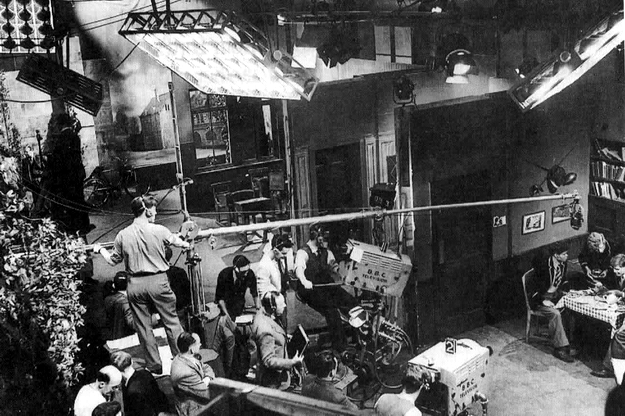
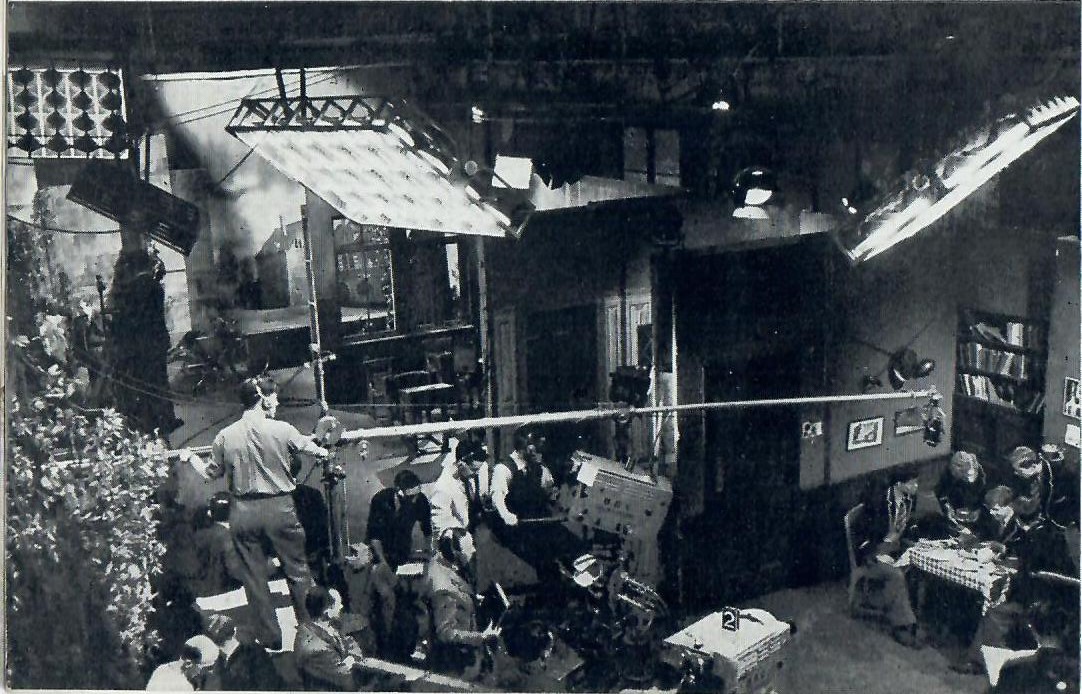
This Picture  ABOVE is one showing the BBC Studio for a ‘live’production of Billy Bunter. Just look how tight the whole thing is – to the right we have the boys in their room then behind that could be one of he school corridors – then on to the school room with a view through the window. To the left there looks to be the school garden or outside area even with small trees  and shrubs.  All seems to be done with two cameras.

The ABOVE  photograph was taken in Studio H of the Lime Grove Studios

BIlly Bunter


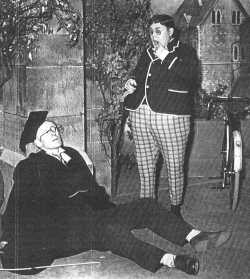
The ABOVE Picture shows a scene which you can see was done at the Studio On the set above towards the left of the picture in the ‘outside’ area.

It shows Headmaster Quelch played by Kynaston Reeves on the floor with Billy Bunter Gerald Campion looking on.


Billy Bunter

posted by Movieman in Uncategorized and have Comments (3)

Jaws – New Photographs of the Filming

This was a very good film indeed and extremely well made by Steven Spielberg and his crew.

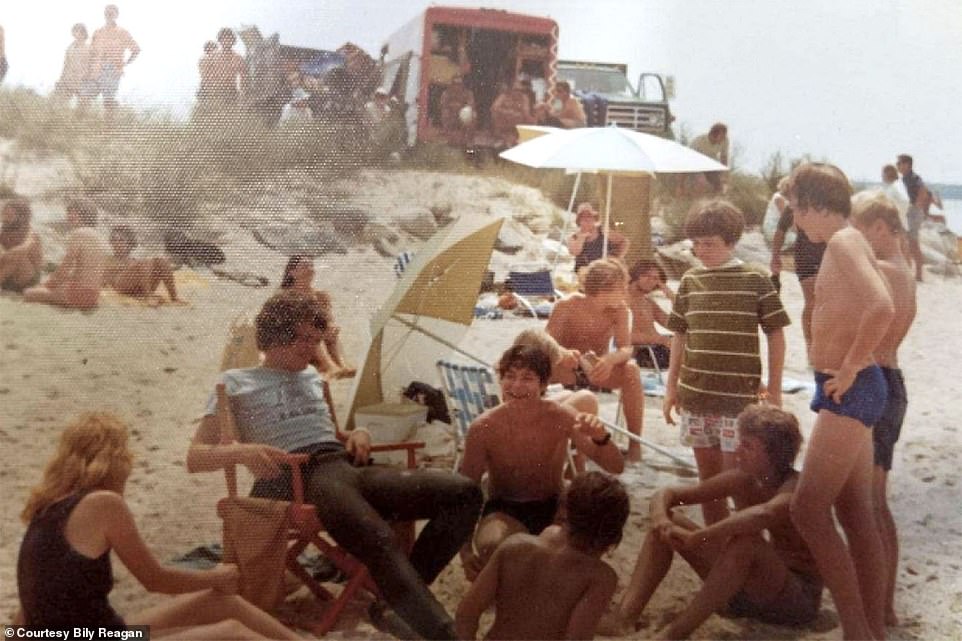
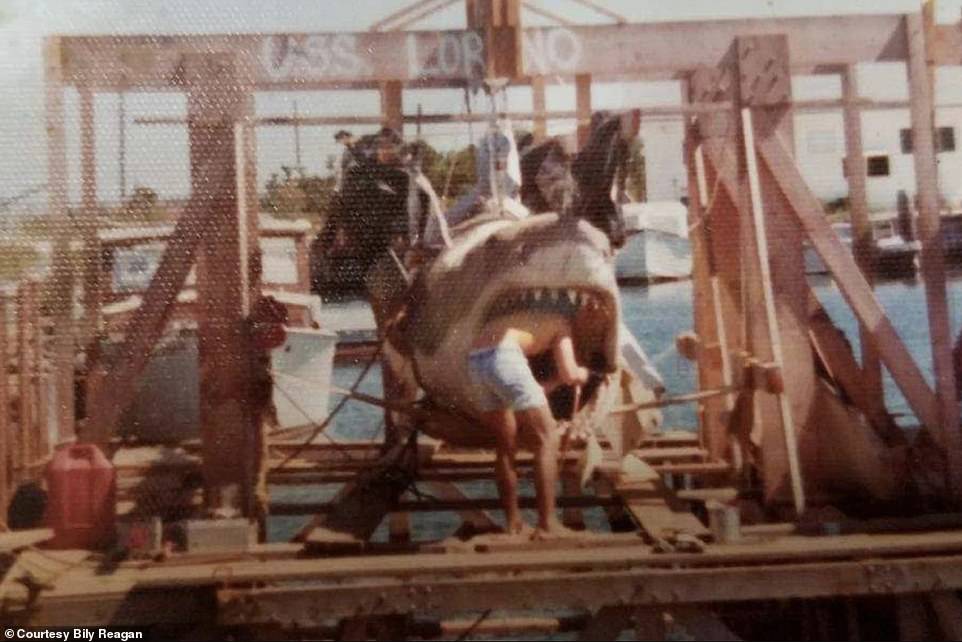
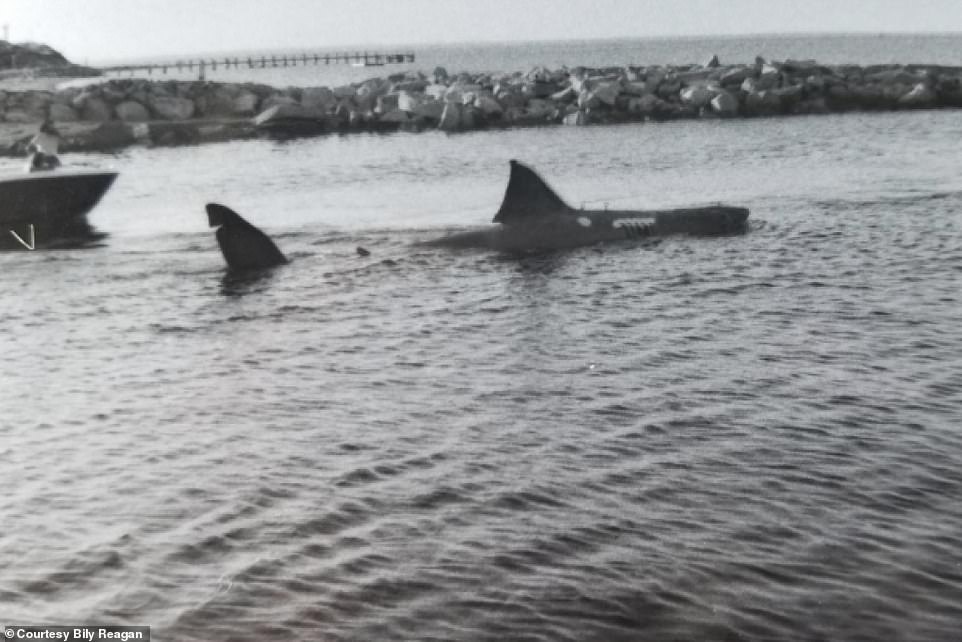
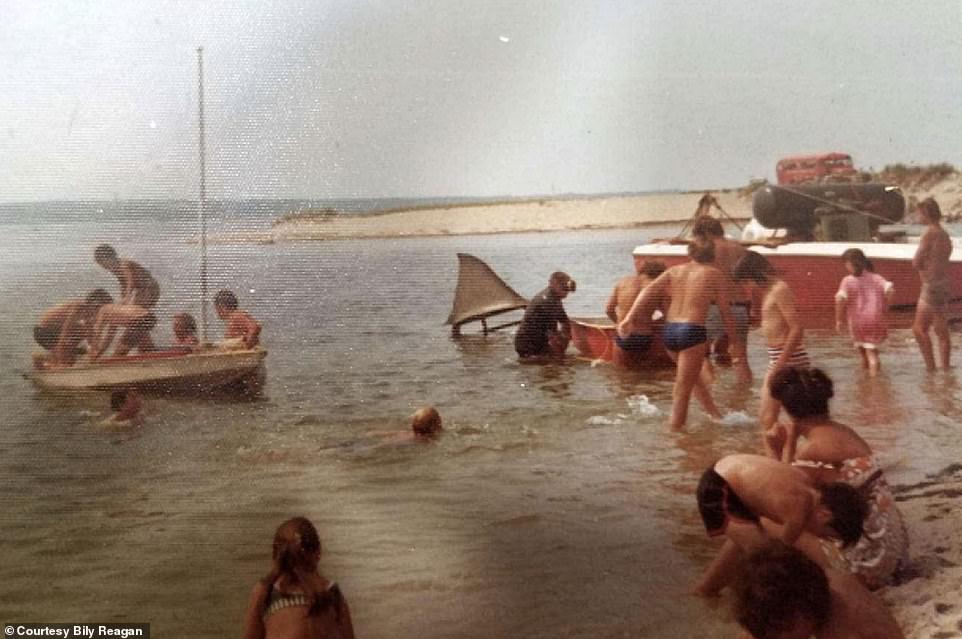
These pictures are from a private collection and have apparently only just come  to light.


Jaws

ABOVE: Relaxing on the beach – Steven Spielberg in the deck chair

Jaws 2

ABOVE: Popular tourist destination Martha’s Vineyard was taken over by trucks and huge wooden structures to help pull of the dramatic motion picture

Jaws 3


ABOVE: A black-and-white shot shows what Jaws look like in its entirety as the filmmakers film at an  island in Dukes County

Jaws 4

ABOVE:

Oaks Bluffs harbour – fake fins were seen in the water and  kept  on accidentally sinking

Jaws 5


Some boat shots  AS ABOVE are from a time when a victim played by Teddy Grossman flips over in his boat and is eaten by the shark

Jaws 6

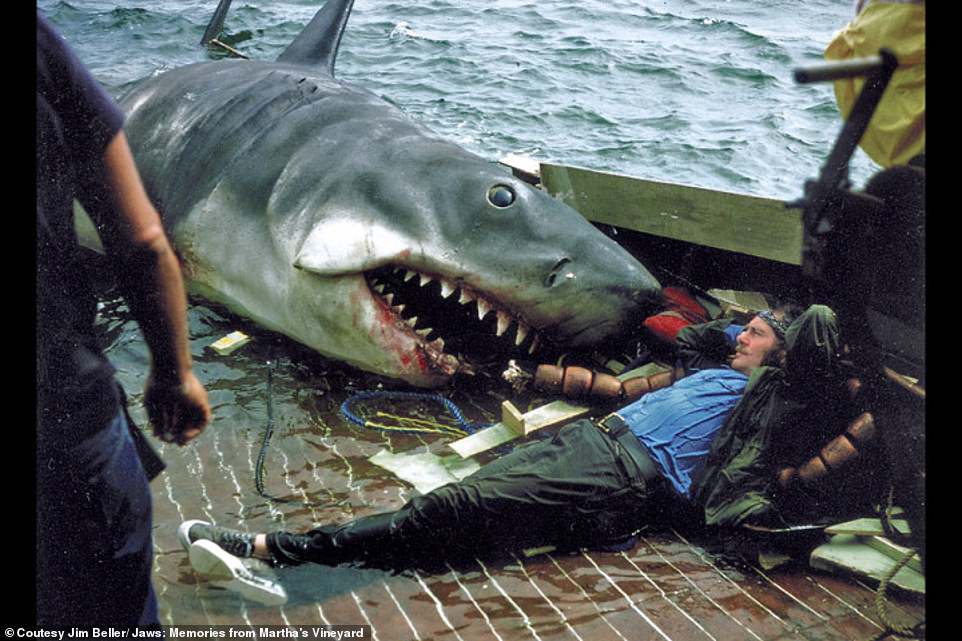
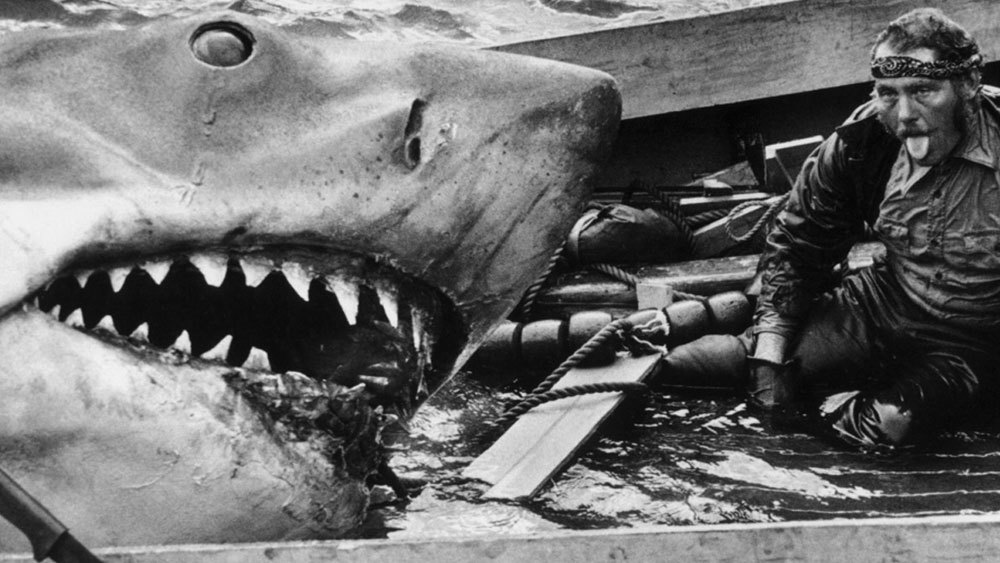
 ABOVE: Robert Shaw about to come to a really bad end

Jaws 11

Jaws 7

ABOVE – That same scene – a crew member in the shark’s mouth – setting up the scene

Jaws 8

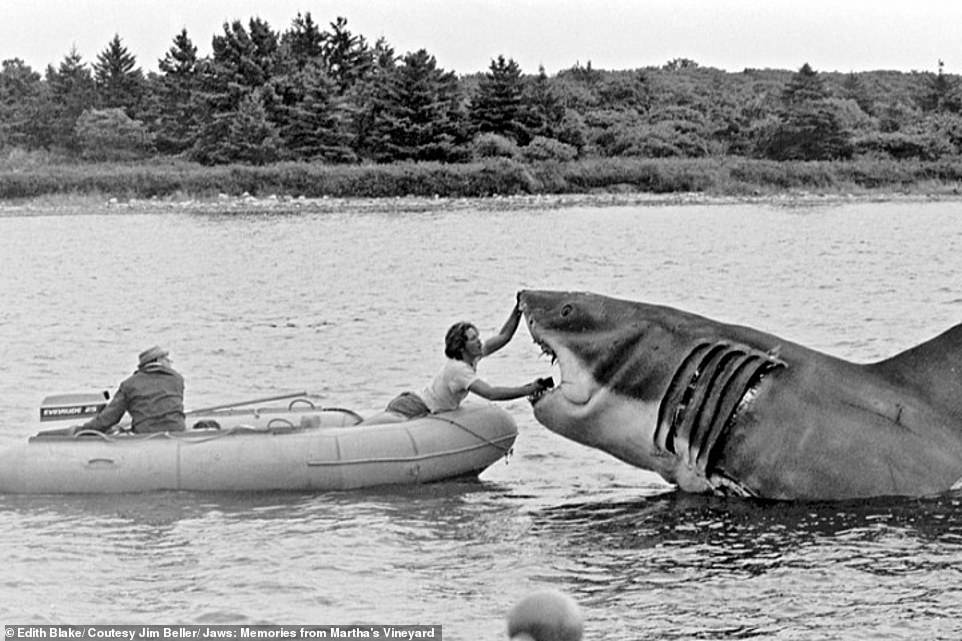
The Above shot seems to show the shark of some kind of wheel and possibly resting between shots. The water doesn’t look that deep here though
Jaws 9

ABOVE – Just checking

Jaws 10


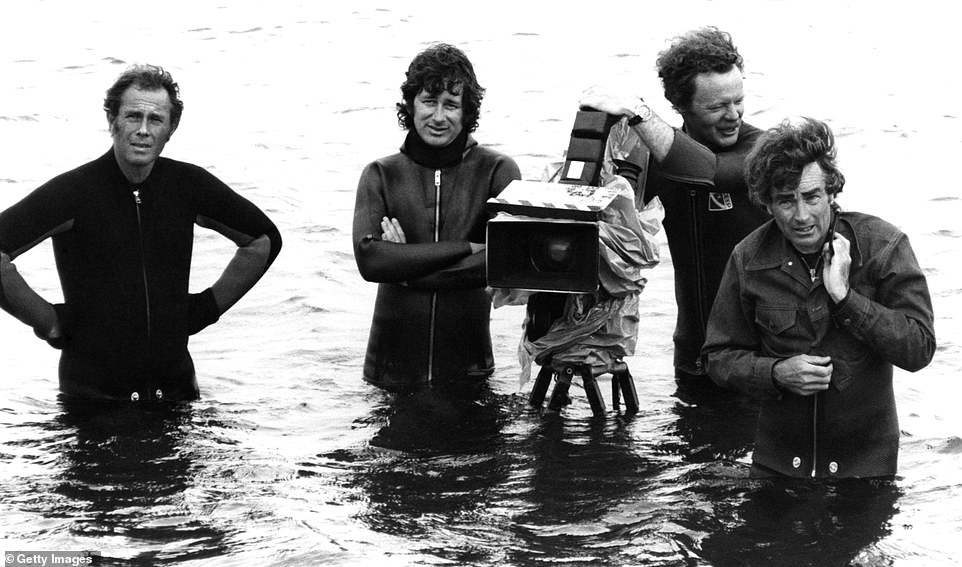
ABOVE: Director Steven Spielberg, camera operator Michael Chapman and cinematographer Bill Butler on the set of the Universal Pictures production

Jaws 12

A dramatic scene – the final confrontation


posted by Movieman in Uncategorized and have Comment (1)

Virginia McKenna


A film star for many years from way back in the early fifties actually – and here is a rare interview with her. It was actually a longer version than this but I finished it just before she had success with Born Free


Virginia McKenna with Lambs


Here below is an extract from an interview she did some time ago which gives an insight into how she got into and flourished in the acting profession :-

I was born in London in 1931. My father was chief auctioneer at Christies and my mother was a wonderful pianist. She was in cabaret act called ‘That Certain Trio’ and they played the Savoy and other high profile venues.

My parents divorced when I was four. I lived with my father and we moved to Slinfold. I actually wrote to the people who now live in my old home and they asked if I would like to come and visit. I went and had coffee with them, walked around the garden and saw where my bedroom was.

I attended Herons Ghyll School near Horsham until the war started. I was boarding at the school and we were in the shelter every night. My father wanted me to be safe so he asked my mother to take me to South Africa. We sailed over and I lived there for six years.


I returned to England and to Herons Ghyll aged 14 and took what was called a Higher Certificate. I was always very interested in writing, reading and literature. I wanted to go to University to read English in order to become a journalist, but I had to earn my money more quickly.

My parents had seen me in school plays and encouraged me to go into acting. I went to an audition at The Old Vic but failed. I was however accepted at the Central School of Speech and Drama, where I satisfied my more academic side by taking a diploma course too.

An agent saw me in one of the school performances and told me he would like to look after me once I left drama school. He found me some work over the school holidays at the Dundee Repertory – a place where many famous actors have started out – Richard Todd springs to mind as one of them – and I absolutely loved it. I felt I was ready to learn out oi the field so I spoke to the Head Mistress and asked if she would allow me to leave a year early. I felt that I was ready. Fortunately, she said ‘yes’.

Today there are so few reps around so people finishing drama school nowadays usually have to start in television, where the technique is completely different from theatre. In theatre, not only do you have to portray your feelings, you have to project them to the front row of the stalls and to the back row of the upper circle. That is a challenge.

Whilst I was at Dundee, playing Estella in Great Expectations, I was watched by Daphne Rye. She was a representative of H.M Tennent, a big London theatre company of the time. They were casting a play called ‘A Penny for a Song’ and thought I would be right for the part of Dorcas. So I left Scotland for the Haymarket Theatre.

I was in some amazing productions with incredible people. H.M Tennent was also putting on A Winter’s Tale with John Gielgud, Dianna Wynyard and Flora Robson, and I went into that and played Perdita. I was very nervous. I remember trembling with fear in the aisles with a young actor, Richard Gale,  who played Florizel. I remember John Gielgud came up to us and said ‘You two, what’s the matter?’ We told him we were worried we would not be good enough and he said ‘Nonsense! It will be perfectly fine.’ He gave us a pat on the shoulder and we wondered if someone had done the same for him once. He was the most lovely man.

My first television show was Shout Aloud Salvation, which was a great success. It was live television in those days, so one shoot would take place in one studio and you would literally have to run along the passageways, throwing on a hat or changing as you went, to make it to another studio for the next scene. You can’t stop. If you made a mistake, you had to cover it up.

The Second Mrs Tanqueray, filmed at the Riverside Studios, was my debut film. I don’t think many people have seen that film, which is probably quite good really!

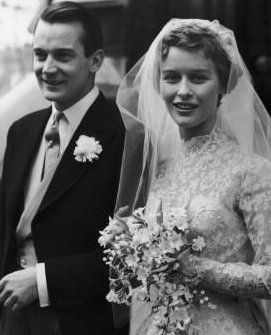
I married Denholm Elliott, who I met on set of The Cruel Sea in 1953. It was a very short marriage. It was not right for either of us, let’s put it like that.

Virginia McKenna marries Denholm Elliott

A Town Like Alice was shot over three months in 1956, which was quite long in those days. I never went to Malaya or Australia, as it was all filmed at Pinewood. There are shots of us withered women prisoners in the last stages of decline, all traipsing through a swamp. We actually plodded through a pond in Burnham Beeches. It was freezing cold, so they were spraying glycerine on our faces to make it seem swelteringly hot!

A wonderful actress of the time called Marie Löhr was also in the film. Marie had known my father. She gave me a beautiful locket that he had given to her years before, and I still treasure it.

I won the BAFTA for Best British Actress, and my co-star Peter Finch won the Best Actor award. It was a surprise to me, as everything is always a surprise. You do what you do. You are not thinking of prizes. Awards are quite hyped these days, but it was a little more reserved in those days. I can’t remember what I said!

At one point I did a series of cameos, as I wanted so much to work with the person I would be doing the scene with. They included Kirk Douglas, Gary Cooper and Donald Sutherland. I was so lucky to have that chance of working in that golden era.

I first met Bill Travers in a play called ‘I Captured the Castle’ by Dodie Smith. I was playing Cassandra, and Bill was given a part and we met. But at that time, in 1953, I was about to marry, Bill was married already, and that was the end of that. We didn’t see each other until a good while later when we met by chance. We were having dinner with different people in the same restaurant and saw each other again. We met up then and never stopped meeting up. We married in 1957.

I was always testing myself. That’s life. You have got to take risks.

The Smallest Show on Earth 1957 4

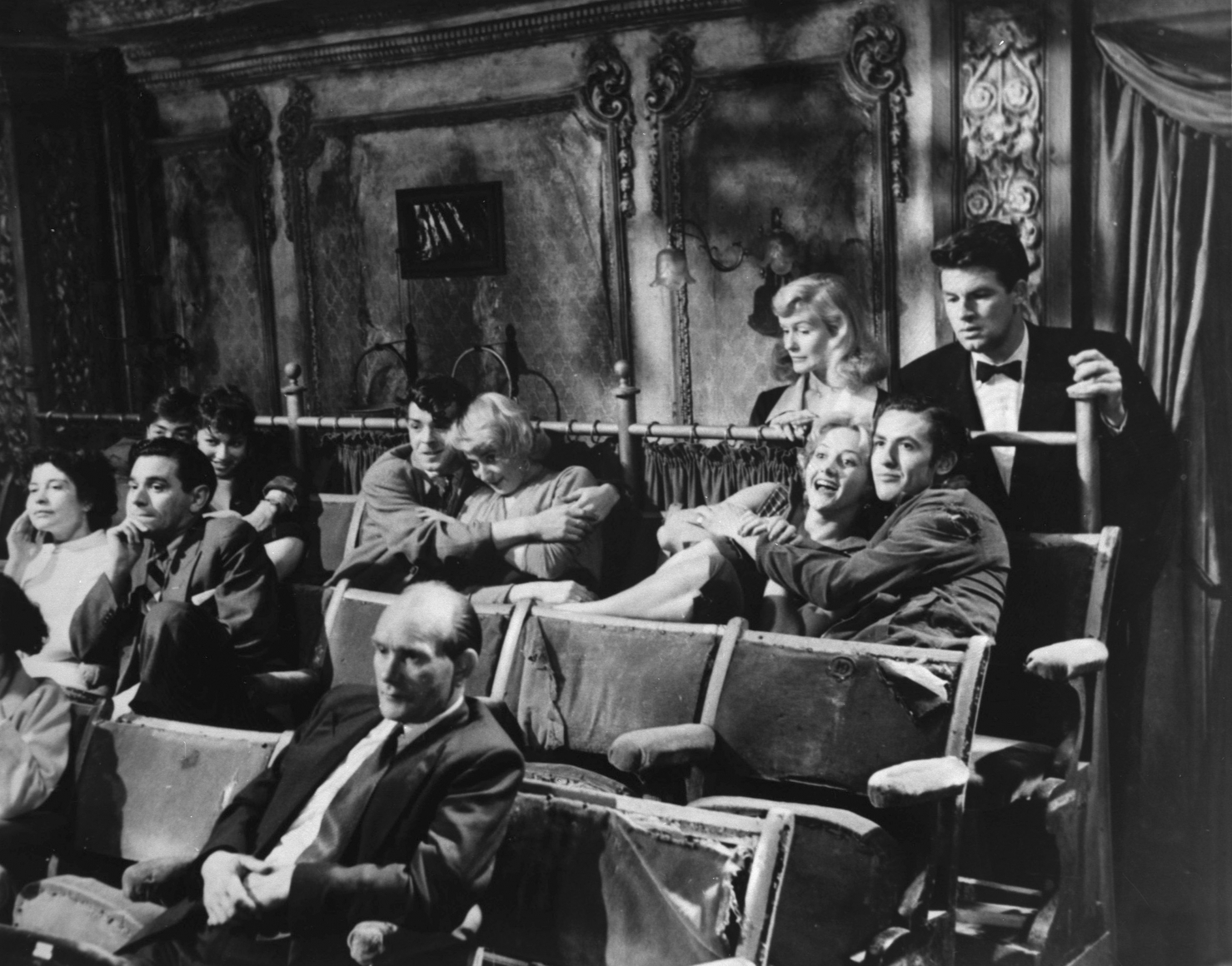
Sometimes Bill and I were in films together. We made a film together called The Smallest Show on Earth. The cast included Peter Sellers, Leslie Phillips, Margaret Rutherford and Bernard Miles and as it was a comedy we were laughing every five seconds. Leslie and I are the survivors of that film and we are still friends today.

The Smallest Show on Earth 1957

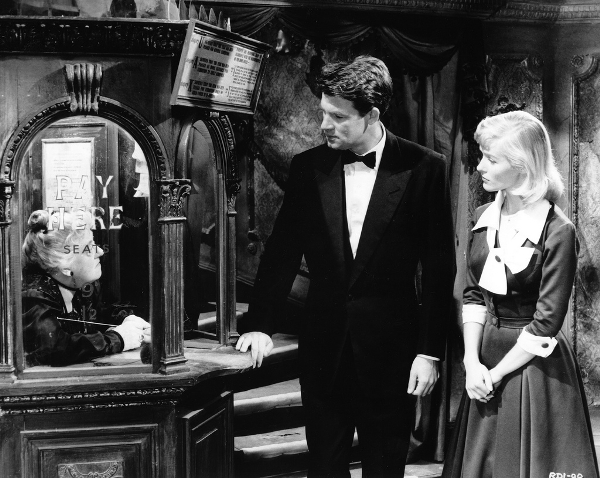
ABOVE – I love this shot and remember it so well. Virginia McKenna gazes at Peter Sellers the projectionis who is totally in love with the films and the magic of the film show. Bill Travers looks on.

I certainly knew someone a few years ago who found that certain something from film shows that Peter Sellers portrayed here.


The Smallest Show on Earth 1957 2


The Smallest Show on Earth 1957 3

ABOVE – Virginia McKenna and Bill Travers with Margaret Rutherford

We followed that with The Barretts of Wimpole Street with John Gielgud and Jennifer Jones, then Passionate Summer and Two Living, One Dead. We had masses of work. Bill enjoyed a great personal success with a film called Geordie in the mid-1950s that led to a lot of work for him.

After marrying, we had two children quite quickly before a little gap and then two more children. They would travel with us as we filmed all over the world. When we made Born Free in 1964, three of the children came with us. William was five when we left for Kenya, and he has adored the continent ever since.


posted by Movieman in Uncategorized and have Comments (6)

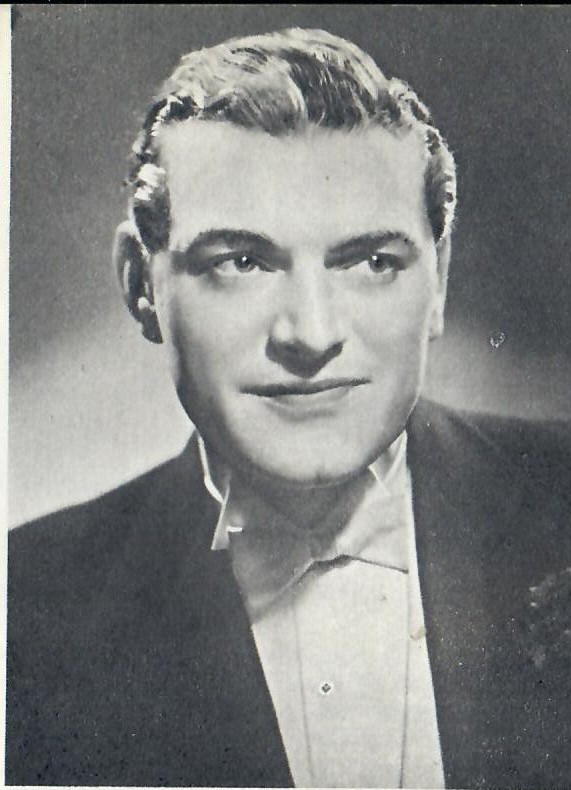
Jack Hawkins goes back down ‘Memory Lane’ in 1955

In the summer of 1955, Jack Hawkins took a stroll back down memory lane with interesting results.


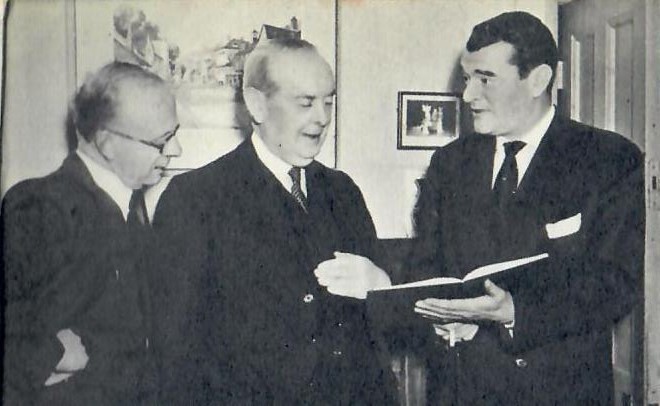
His first stop was at Trinity County School in Wood Green where he met up again with former Headmaster  Dr. E.E. Jones who remembered him as the boy who put acting before everything else including school.  At the time Dr. Jones thought quite reasonably that his stage training was interfering with Jack’s homework. He was probably right – however  Jack’s Father seemed convinced of his son’s dramatic talents so he encouraged him along the acting path.

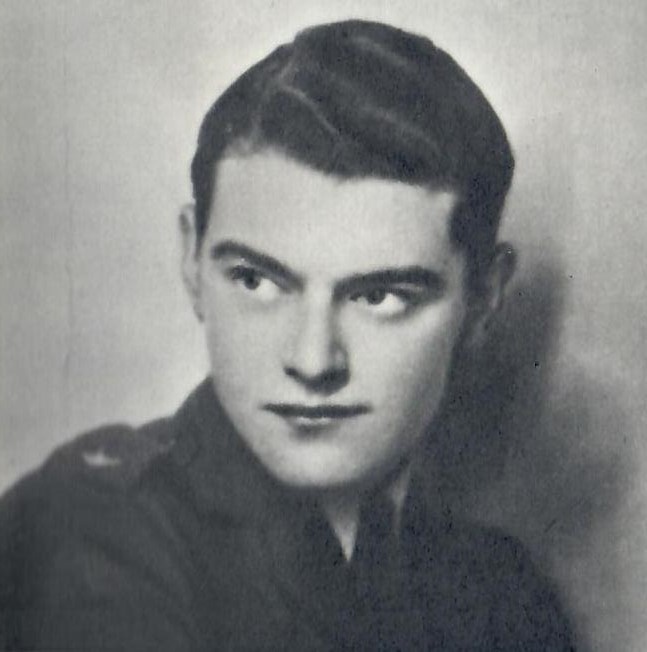
At the age of 14, Jack was appearing in Rainbows End at the Holborn Empire in the afternoons and as a page in Sybil Thorndyke’s Saint Joan in the evenings while still at school.

Jack Hawkins 1937

ABOVE – Jack Hawkins as he appeared in the play ‘Autumn’ in 1937

Jack Hawkins 1


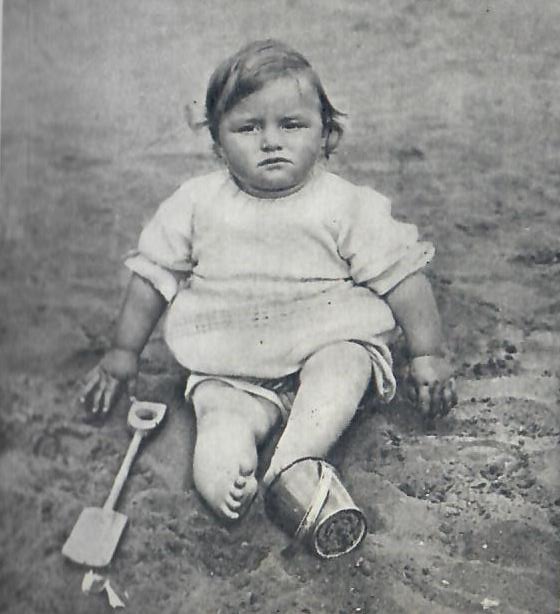
ABOVE – Down at the Seaside – Bit before ‘The Cruel Sea’ though
Jack Hawkins 3


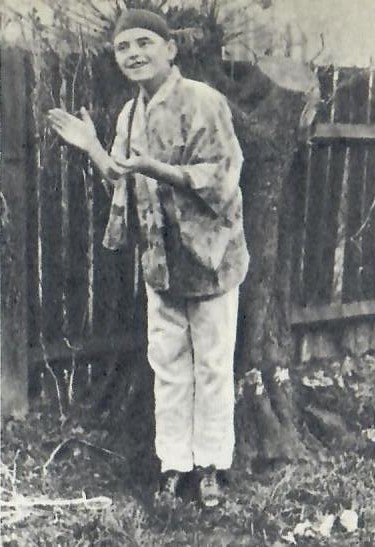
ABOVE – A rehearsal in the Garden – Jack Hawkins was 11 years old then

Jack Hawkins 2

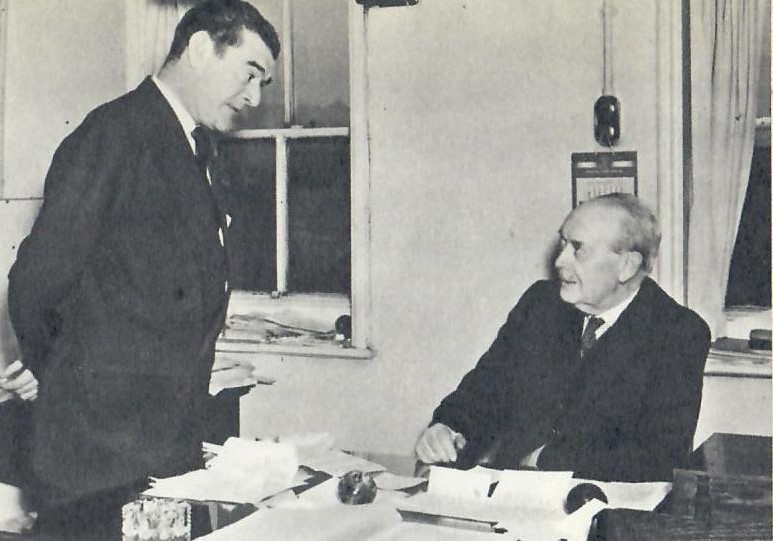
ABOVE – ‘You were quite a trial’ says Headmaster Dr. Jones


Jack Hawkins 4

ABOVE –  Jack Hawkins still has a problem with Geometry

Jack Hawkins

ABOVE –  Jack Hawkins looks back at his ‘record’ along with Dr.  Jones and the current Headmaster

Jack Hawkins 1

ABOVE –  Jack Hawkins in ‘Journey’s End’ which ran for 18 months on Broadway

Jack Hawkins 2

ABOVE –  Jack Hawkins strolls past St. Michaels In Wood Green, London.


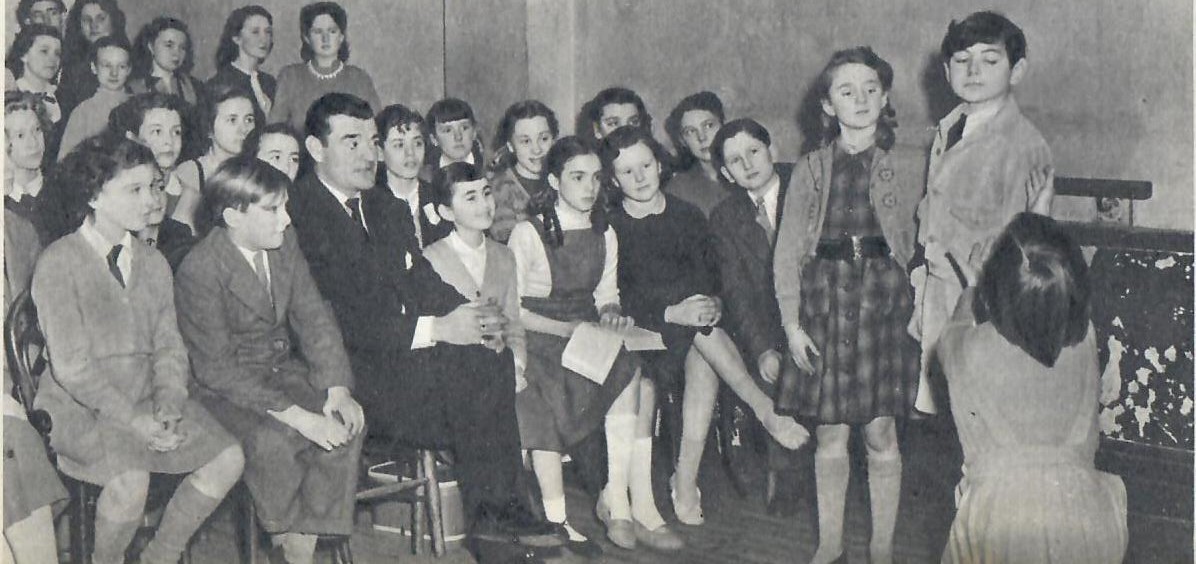
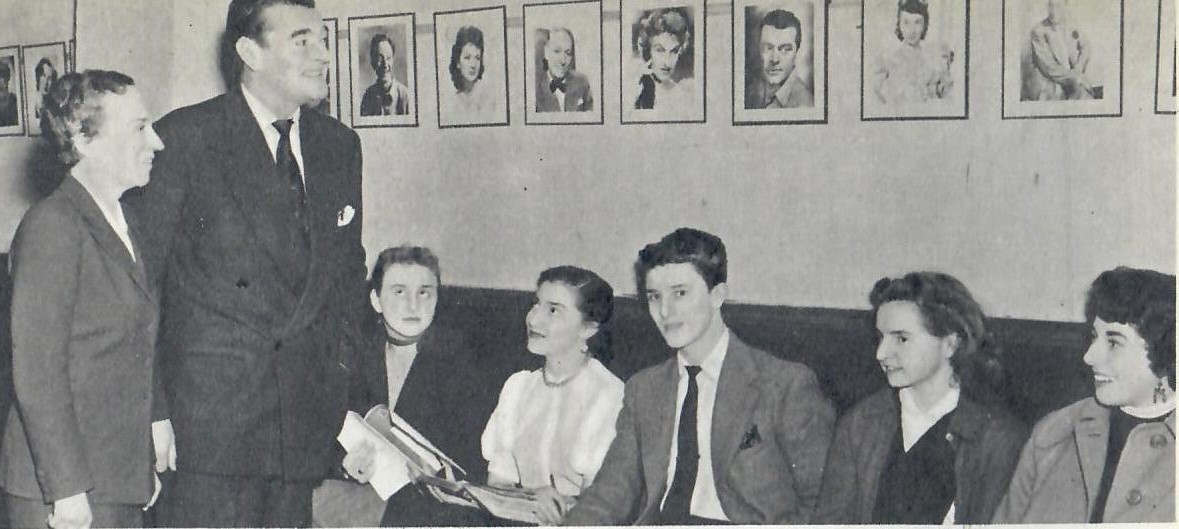
Jack Hawkins then later in the day moved on to the Italia Conti school of acting where he visited aspiring young actors.

Jack Hawkins

ABOVE –  Jack Hawkins with young stage hopefuls at the Italia Conti School

Jack Hawkins 2

ABOVE –  With younger ones in the drama class  – Italia Conti School

Jack Hawkins 3

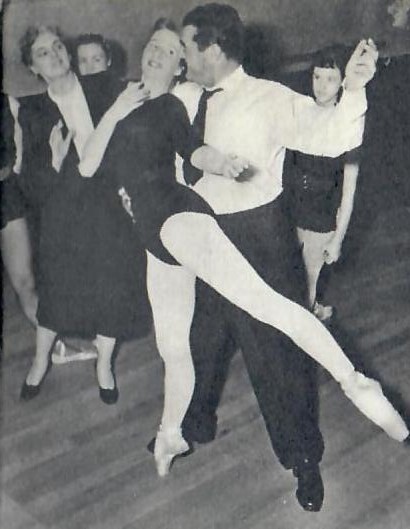
ABOVE –  This time he tries and adagio – and finds it ‘very pleasant too’

Jack Hawkins 4

ABOVE –  Jack Hawkins talks over old times with Jimmy Eastwood and Editor Eric Warman in No. 1 Dressing Room at the New Theatre, St. Martin’s Lane

Jack Hawkins 5

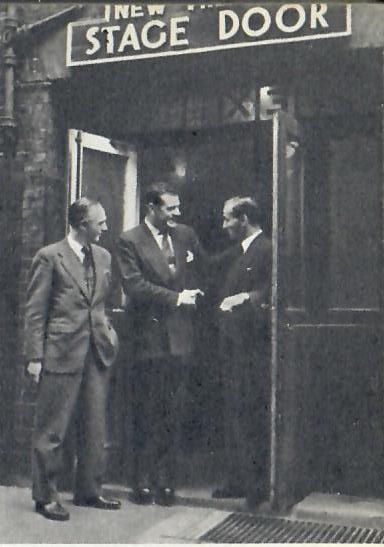
    ABOVE –  Saying goodbye to Mr. Hunter at the Stage Door – New Theatre St.Martin’s Lane


After lunch Jack and his guest drove to Jack’s home in Kensington Gardands and met hid wife – actress Doreen Lawrence and their two small sone Nicholas 6 and Andrew 4

Jack Hawkins

ABOVE –  Jack Hawkins with his wife ( actress Doreen Lawrence ) and family at Round Pond in Kensington Gardens

Jack Hawkins 1

ABOVE –  Captain Jackie Broome ( Cruel Sea adviser ) shows how it’s done


BELOW – Jack visiting his former flat in Sloane Square

Jack Hawkins 2

ABOVE –  Jack Hawkins revisits his old basement flat in Sloane Square

Jack Hawkins was obviously steeped in acting from a vear early age. He had been married to actress Jessica Tandy. He married Doreen Lawrence in 1947 after they met in India.


posted by Movieman in Uncategorized and have Comment (1)