I watched an episode yesterday on Talking Pictures – not of the best quality production-wise but the very lovely Jennifer Daniel was in it so it became more watchable. The sets were not brilliant and some of the sword fights not convincing but all in all it was pleasant.
it seems that the producers were looking at building on the huge success of ‘The Adventure of Robin Hood’ and ‘Ivanhoe’ but it didn’t seem to work – Dermot Walsh did not have the charisma or the film star looks of either Richard Greene or Roger Moore so this series didn’t take on so well.
‘Richard The Lionheart’ portrays Richard I of England in a swashbuckling, family-friendly way.
DERMOT WALSH
Filmgoers in the 1950s had to sit through many a dire, low-budget second-feature, made to satisfy the government ruling that a percentage of films shown in British cinemas must be home-grown rather than Hollywood imports. Dermot Walsh, who has died aged 77, starred in more than 20 such films.
He joined to the Abbey theatre school of acting, he spent three years with Lord Longford’s repertory company, and was in productions at the Gate and Croydon repertory theatre, before being spotted by a Rank talent scout.
His first three films were enjoyably e melodramas starring Margaret Lockwood, then at the peak of her stardom. Little noticed as a chauffeur in Bedelia (1946), Walsh made an impression later that year, in Hungry Hill. In this adaptation of Daphne du Maurier’s novel about an Irish family feud spanning three generations, he played Lockwood’s profligate son, although he was only eight years her junior. In Jassy (1947), he graduated to being her lover, and was well cast as a dispossessed heir whom the half-Gypsy Lockwood steals from sweet Patricia Roc.
Nothing else Walsh did in features was as good. A few feeble films followed, including Third Time Lucky (1949), in which he starred with Glynis Johns.
In the same year, he married Hazel Court, with whom he co-starred in My Sister And I (1948), the first of a number of plays and films they would appear in together. Back on the stage, he was in the first production of Shaw’s Buoyant Billions, as well as in Reluctant Heroes and JB Priestley’s Laburnum Grove.
In 1952, Walsh started his cycle of leading roles in shoestring second features, many of them murky crime thrillers, shot in two weeks, and middlingly directed by John Gilling and Lance Comfort. Despite the functional scripts, Walsh actually gave a good account of himself in, among others, The Frightened Man (1952), Ghost Ship (1952) and The Floating Dutchman (1953).
One of the better of these films, directed by Gilling, was The Flesh And The Fiends (1959) aka Mania, The Fiendish Ghouls and Psycho Killers, about the grave robbers Burke and Hare. In it, Walsh played the medical assistant to Peter Cushing’s Dr Knox, who bought the bodies for experiments. He also played straight man to Arthur Askey in Make Mine A Million (1959). The same year, in Crash Drive, he portrayed a racing driver who believes he cannot walk after an accident.
When the quota quickies faded, Walsh starred in the 39 episodes of the swashbuckling children’s adventure series Richard The Lionheart (1961-62). His last film appearance was in The Wicked Lady (1983), but he continued to act on stage until fairly recently, in The Rivals at Birmingham Rep, Joe Orton’s Loot in London, and Harold Pinter’s A Kind Of Alaska in Cambridge.
He and Court divorced in 1963; their daughter survives him, as does his son by Diana Scougall and two daughters by his third wife, Elizabeth Knox, who predeceased him.
——————————————————————————————————-
Another similar series – in my view much better – was ‘Sir Lancelot’ with William Russell with one series of this was actually filmed in colour
This series, which only consisted of only 30 episodes in all, was shown over two years 1956 and 1957. It starred William Russell as Sir Lancelot and apparently went well in the USA so that the last 14 episodes were made in Colour. This would have been on film of course as Colour Television Cameras were not around at that time. Mind you most of these series were made on film at the time.
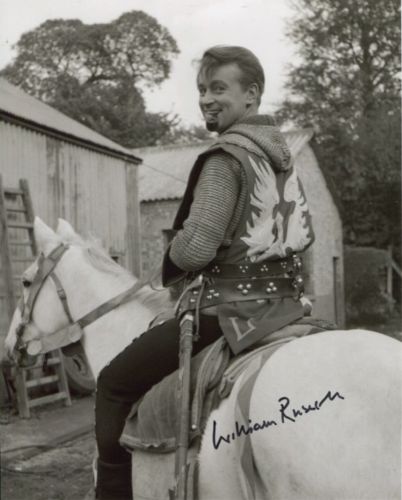
Above William Russell as Sir Lancelot – although he didn’t have the pipe in the show !!
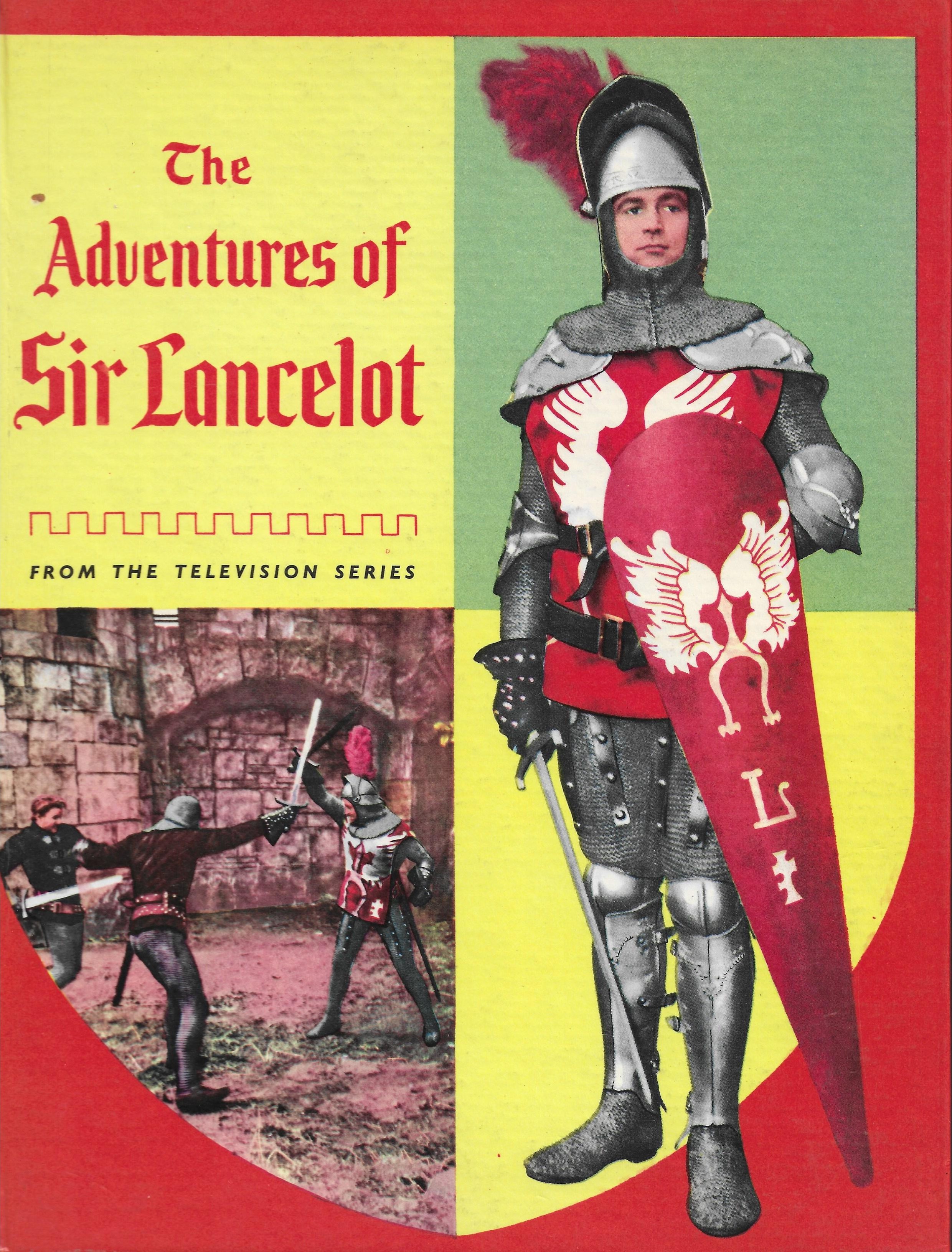

Above William Russell as Sir Lancelot.
The producers went to a lot of trouble with the sets and costumes and they look splendid given the very limited television budgets. William Russell makes a lively and very personable hero and handles the action scenes with dash and enthusiasm.
… [Trackback]
[…] Information on that Topic: filmsofthefifties.com/richard-the-lionheart-dermot-walsh/ […]
… [Trackback]
[…] Information to that Topic: filmsofthefifties.com/richard-the-lionheart-dermot-walsh/ […]
… [Trackback]
[…] Find More Info here to that Topic: filmsofthefifties.com/richard-the-lionheart-dermot-walsh/ […]
… [Trackback]
[…] Find More on that Topic: filmsofthefifties.com/richard-the-lionheart-dermot-walsh/ […]
[6745]vip333 Casino México | Iniciar Sesión, Registro Bono y APK Únete a vip333 Casino México. Regístrate y obtén tu bono de bienvenida, descarga la APK oficial e inicia sesión para disfrutar de las mejores apuestas online. visit: vip333
… [Trackback]
[…] Read More Info here to that Topic: filmsofthefifties.com/richard-the-lionheart-dermot-walsh/ […]