Roy Rogers at Christmas

I don’t know when this pictures would have been taken – with such a Christmas feel to it as Roy sings Christmas Carols. Roy Rogers at Christmas TimeMaybe this was taken in the late forties or early fifties but by then he was a very established star – although on looking again, Roy seems a bit older so this could have been around the early to mid fifties.

One thing I often think underlines his place in films,  is that when he appeared in Son of Paleface in 1952 he actually shared star billing alongside Bob Hope and Jane Russell – so at that time he was not second billed to anyone.

I couldn’t resist including below a great Matte shot from Son of Paleface – I just love the technique :-

Son of Paleface - a great matte shot

posted by Movieman in Uncategorized and have Comments (2)

Come Next Spring 1956 in Trucolor

Recently we did a Post on TruColor which was the process used by Republic Pictures – and this film came from that Studio, and is in  TruColor.

It is billed as ‘The Warmest, Happiest, most Wonderful Picture Ever !

Come Next Spring 1956

This would be one of the last from Republic – and one of the last in  TruColor.

Come Next Spring 1956 Video

Come Next Spring 1956 Video 2

This exceptionally effective and emotional small film is one of Republic’s very best, and one of their last that was creatively and carefully produced as the studio died. In lovely-odd storybook Tru-colour that really suits, and with an excellent cast, especially the always gorgeous Anne Sheridan and Steve Cochran COME NEXT SPRING with its Max Steiner Score, and Tony Bennett theme song has remained unloved an unappreciated for far too long.   Apparently Martin Scorsese puts it forward as being an influence to him in that he thought that it should be studied by film makers to see how well a small budget with love and care can result in an excellent tough, real, romantic family drama.

The real and crumbling backwoods town they all vist in one scene is probably as close to real surviving 1920s small Town America as we would ever genuinely see. Look for this film and get settled and enjoy it.

Come Next Spring 1956 2

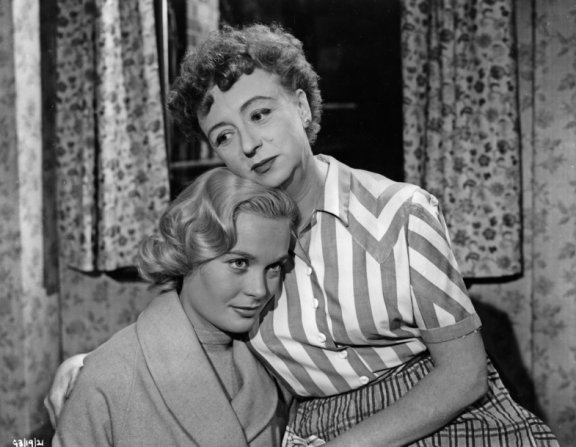
The Above is a Still from film – Still features Ann Sheridan, Steve Cochran, Sherry Jackson and Richard Eyer.

For some reason whenever I hear the word ‘Spring’ I inevitably think of this film – ‘Come Next Spring’ which I remember.  I thought Ann Sheridan & Steve Cochran were near the end of their careers and this was their swansong and did they know how to capture the whole essence of a small town community going through a crisis. It is warm, gentle and has a loving nature running all through it as though they all knew that the studio was near the end like a lot of the cast in their careers.

Filmed in True Color and produced by Steve Cochran’s  own Robert Alexander Productions, Come Next Spring  was released by Republic Pictures in 1956.

With locations shot in Sacramento, the Film was set in rural Arkansas during the 1920s. Steve Cochran playing Matt Ballot returning home after some years of heavy drinking. Considered a disgrace by the local community, he finds himself struggling to win the love of his wife  Anne Sheridan and children.

Little Rock was chosen for the premiere on February 1, 1956.

Steve Cochran making a guest appearance, signing autographs:

A square dance, in front of the theatre, as part of world premiere:

The location of the above photograph is not definitely known.

Steve Cochran had formed his own independent Production Company in 1955, called Robert Alexander Productions (his birth name was Robert Alexander Cochran)

In 1950, while working together on Warner Brothers’ “THE LION AND THE HORSE”, Sherry Jackson introduced her young widowed mother to writer Montgomery Pittman, Steve Cochran’s best friend.(Sherry Jackson’s father was killed in an automobile accident in 1948.) This meeting between Pittman and Jackson’s mother culminated in their marriage two years later, with Steve Cochran acting as best man for his friend Pittman.

In 1955, Montgomery Pittman turned his writing talent to providing a challenging vehicle for his vastly-talented young step-daughter and came up with COME NEXT SPRING. Steve Cochran bought the story for his just-formed Robert Alexander Productions.

Steve Cochran then SOLD it to Republic Pictures Corporation, for an undisclosed amount of money…plus the proviso that he would star in the film and Sherry Jackson would play the role of Annie Ballott. Republic agreed to the terms, laid out the money… and Robert Alexander Productions and erstwhile-producer Steve Cochran made a graceful exit, while (uncredited)Republic staff took over the production of this now-recognised great film, directed by  R. G. Springsteen.

Film Director “Bud” Springsteen did himself proud. – maybe it was because Montgomery Pittman was standing near-by =- who knows !!


posted by Movieman in Uncategorized and have No Comments

Dark Waters – Merle Oberon

I always liked this film – and in fact it was one of the first I ever bought on VHS Video – which I still have – as pictured below.

Dark Waters - Merle Oberon

It is a tense drama – and one you suspect you know what is happening but are never sure.

The Dark Waters of the Bayou are the setting for this mysterious thriller.

A young woman , Merle Oberon, is the sole surviving member of a family whose boat was torpedoed by the Nazis. Alone in the World, she arrives at her Aunt and Uncles mansion in the lugubrious swamps in the deep South of America, and then her troubles really start.

All devotees of spooky horror stories will revel in the pleasures to be found here. The Question is – Dare you take the plunge into these Dark Waters … ?
Dark Waters - Merle Oberon 2

posted by Movieman in Uncategorized and have No Comments

Movie Memories Magazine arrives

Well, a great Christmas Present came through our letterbox just four days before Christmas – the latest Winter Edition of Movie Memories – packed with articles, pictures and Readers Letters covering so many Films and Film Stars of that golden era – and how well it is presented – really impressive. It seems to get right to the heart of what we want to know and read – and uncovers such facts and introduces us to details of the stars we knew something about but maybe did not know well.

Please subscribe to this magazine and you will not be disappointed :  

moviememoriesmagine.com  

NVS0568

In this issue  Thoughts and Memories of Roger Moore, Adele Jurgens and Mari BlanchardRobertMontgomery, Merle Oberon, plus films like The Boys with Richard Todd, and a brilliant article on Lash LaRue as well as Dennis Price.  Snippets on films like The Band Wagon, Calamity Jane and The Quiet Man among many others. Plus there are many Readers Letters – readers from all over the world.

On the back cover of the magazine is a Film Poster for ‘Dark Waters’ starring Merle Oberon with Franchot Tone and Thomas Mitchell. Not a Fifties film really – released in 1944 – a dark brooding melodrama set in the deep South of America where a young girl who had survived a naval attack in World War 2 – had come back to live with her Aunt and Uncle to recover – little did she know what she had come back to !!!

NVS0569

If you wish to subscribe to this excellent magazine – and I think that every film fan should be – just go to the web site   :-

moviememoriesmagine.com  

posted by Movieman in Uncategorized and have Comment (1)

Roy Rogers and Trucolor

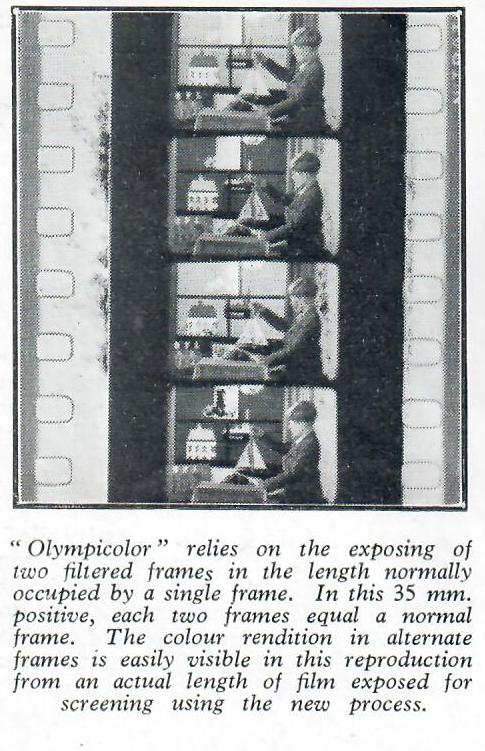
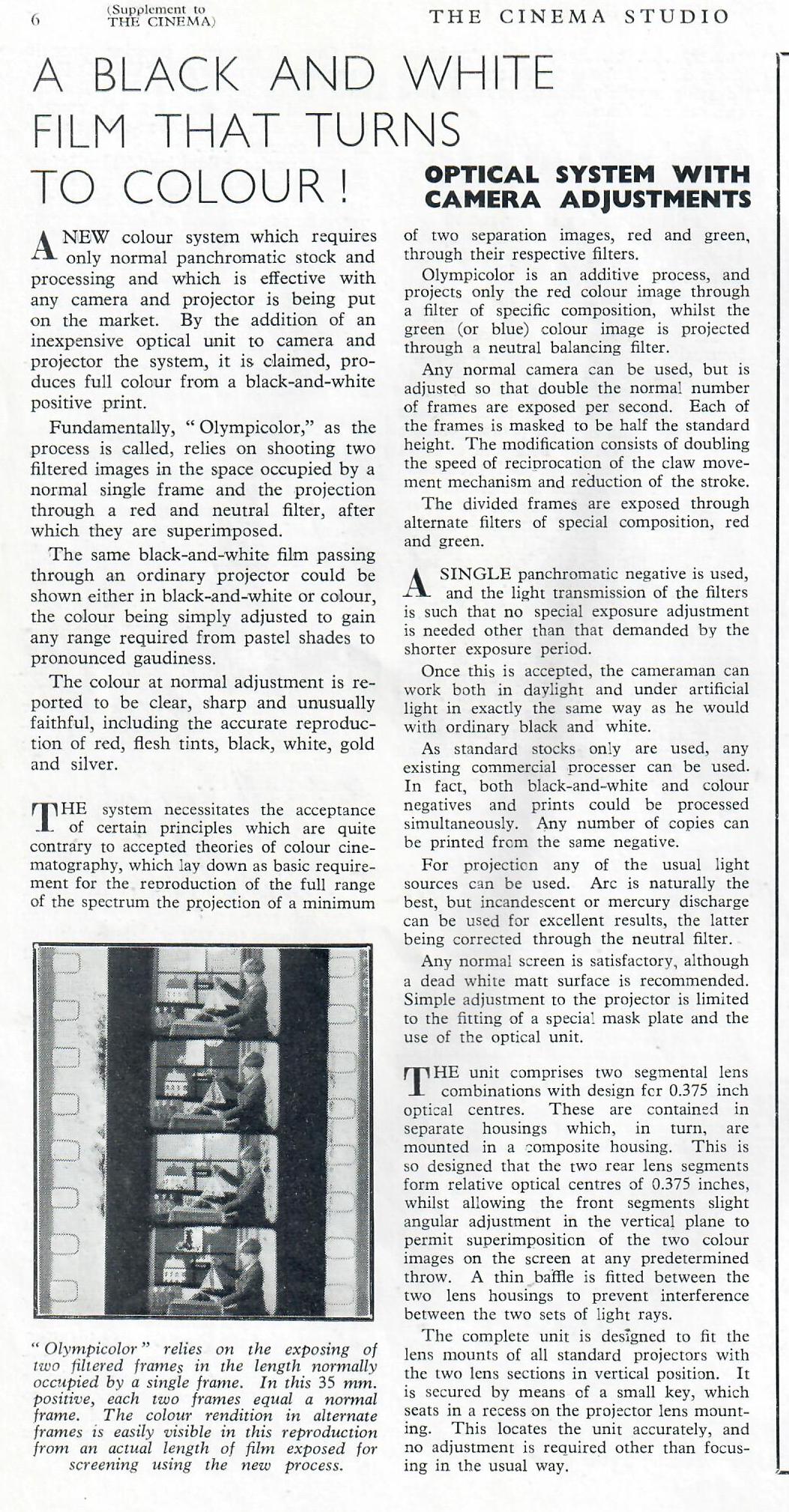
Trucolor was preceded by Magnacolor – used mainly in Republic Pictures films. We have discussed TRUCOLOR on this Blog before, I know but it is quite fascinating.

Roy Rogers starred in Nineteen Trucolor films for Republic Pictures from 1947 up to 1950 but for whatever reason, even as early as 1952, some of these were re-issued in Black and White. It seems that by the  early fifties Television had really knocked the market for B Westerns at the cinema, so these were released in Black and White mainly to save costs Many Roy Rogers films were sold to TV in 1956 but with some cuts to the running time. That sadly meant that a lot of the original footage was discarded and thrown away – so unless a Private Collector has them – and they may well have a copy – then these would be lost. Magnacolor   Roy Rogers Trucolor

By the early Seventies it was discovered that some of the old Nitrate Colour Films were unstable and therefore unsafe and so they were destroyed. I do have a Video of the film Come Next Spring made in 1956 and this was in Trucolor and to be honest it was very good colour I thought. Other films in Trucolor – The Last Command (1955)  and   Montana Belle, a Western starring Jane Russell as outlaw Belle Starr in 1948. This film was made by  independent producer Howard Welsch for intended release by Republic Pictures but was bought back by RKO, to whom Jane Russell was under contract, and released by them in 1952. Republic also made a South Seas adventure Fair Wind to Java (1953)  Nicholas Ray made notable use of Trucolor for his  1954 western, Johnny Guitar, which starred Joan Crawford. Trucolor went on location to Europe as William Dieterle filmed the life of Richard Wagner in Magic Fire (1956) and  Lisbon (1956) directed by and starring Ray Milland.  However, John Ford refused to film The Quiet Man (1952) in Trucolor despite Republic’s head Herbert J. Yates insisting on the process, so Technicolor was used.


One of theTRUCOLOR films of Roy Rogers has recently come to light in its original uncut form – Sunset in the West :- Directed by William Witney Starring Roy Rogers, Estelita Rodriguez, Penny Edwards, Gordon Jones, Will Wright, Foy Willing And The Riders Of The Purple Sage Sunset in the West

The availability, or absence, of the Roy Rogers Trucolor films of late 40s and early 50s is mentioned above – but here is some GOOD NEWS !!. The arrival of one of these FILMS in Colour and uncut is always worth celebrating — and we get this next one, Sunset In The West (1950), on DVD and Blu-Ray.

Another one is Bells of Colornado from 1950, again in Trucolor and the only Roy Rogers film in Trucolor to get an official DVD release at the time.

Bells of Colorado 1950


Also – just come across this Promotional Gift from the era which  is very colourful – as below :-

Promotional Gift Roy Rogers

It is a Playing Card Set in a special tin box. It looks quite stylish.


posted by Movieman in Uncategorized and have Comment (1)

Marylin and Robert Mitchum

This wonderful colour plate is from the 1954  F.Maurice Speed Film Review Annual

NVS0459

These Film Annuals were among my own favourites as they contained so much information on every film that had been released that particular Year with the Director, Cast and Release Date.   Also you would get a section on next year’s films – and one on the Walt Disney releases.  I once heard F.Maurice Speed  of the Film Review Annual, speaking on Radio 2 along with another Film Expert. He was very interesting and I could have listened to him for hours as he had so much information on the film era that I love.

The above picture is of course a Publicity Still from River of No Return

posted by Movieman in Uncategorized and have Comment (1)

Interrupted Journey 1949 – Richard Todd and Valerie Hobson

Just watched this thriller on the Talking Pictures Channel here in the UK. This is a great channel for us fans of older films – they show them all day, every day – so when  I get the chance I try to tune in. Anyway back to this particular film which is quite an unusual story with plenty of twists – even half way through the film it seemed to be wrapped up but then comes a shock revelation and we are back in there trying to fathom out what is going on. Interrupted Journey Interrupted Journey 2 When John North played by Richard Todd, a budding author, pulls the communication cord of a late night train that is taking him away on a weekend with his publishers wife,   he sets in motion a series of events that lead to a train crash, a murder and a police man hunt. As our adventure opens a very angry looking man leaves his house and walks down the street. A moment later a gorgeous young blonde leaves the same house and a man steps out of the shadows to greet her. Together they board a train out of London, and we learn that she is the wife of a prominent publisher and the man she is running away with is an author that her husband publishes. We learn that he is running away from his wife to start a new life with the wife of his publisher. As they head to Paddington Station to board a train, Johnny thinks that a man in a mackintosh is following them but isn’t quite sure . . . Aboard the train Johnny starts getting second thoughts . . . . He is enchanted and filled with lust for the beautiful blonde in his arms, but he also has a loving wife at home. Deep regret and remorse fills him suddenly and he leaves the train booth and stands in the train walkway filled with confusion . . . . Looking up the hallway he spots the man in the mackintosh coat staring at him . . . . . Looking quickly up the other end of the hallway he sees his publisher staring at him . . . . The man whose wife is waiting for him in the coach behind him . . . . In a panic he reaches for the emergency chain that will bring the train to a screeching halt, and as the train slows he jumps off and heads home to his waiting wife . . . . AND then the story really kicks into gear.

The Story of Robin Hood 2


The Story of Robin Hood 1952

Interesting thing here about the TWO of the leading actors in this film.   They both have taken leading roles in productions about Robin Hood A couple of years after this film was made RICHARD TODD was cast as Robin Hood for Walt Disney in The Story of Robin Hood and His Merrie Men – and a year or so after that film Alexander Gauge was cast as Friar Tuck in the long running TV series The Adventures of Robin Hood – a hugely popular Television series it was too, that did really well in the USA as well as here.

He was perfectly cast in this role and he was very good as Friar Tuck.

Alexander Gauge in Pickwick Papers

Above – James Donald and Alexander Gauge in The Pickwick Papers.

Alexander Gauge (1914-1960) actor, best known for playing Friar Tuck in ‘The Adventures of Robin Hood’ from 1955 to 1960. He was born in a Methodist Mission station in Wenzhou, China, but grew up in California before moving to England. He worked on the New York stage in 1945, before becoming a hit in the London theatre production of ‘The Seven Year Itch’.

Physically he was a corpulent character actor, who performed on the New York stage in the 1940s, and then played a succession of minor villains in British films. He is fondly remembered as Friar Tuck in Richard Greene’s TV series The Adventures of Robin Hood (1955). Unfortunately, he found little gainful employment thereafter and committed suicide with barbiturates at the age of just 46.

In 1960, aged just 46, but plagued by gambling debts, he took his own life with an overdose of pills. The Verdict though is that he died from a Brain Tumour – very sad however that his life should end this way at such a young age.


Alexander Gauge
Richard Todd, Valerie Hobson and Tom Walls
Tom Walls
posted by Movieman in Uncategorized and have Comment (1)

David Farrar – Gone to Earth 1950

Interesting article in the 1951 Film Parade about David Farrar who would have been at the peak of his career at this time.

I have held the opinion that David Farrar might not have been the most friendly of people – his attitude appears quite supercilious to me in many of the roles he had at that time. Later when he was not getting the leading roles and was getting older, he packed in with films – he obviously didn’t want to be lower down the cast list.

Gone to Earth is really a  Victorian melodrama – a lecherous squire deflowers simple country girl who has married local vicar – and the dialogue is curiously stilted. However this hardly matters in a work cinematically choreographed with such brilliance by Michael Powell and Emric Pressburger . The final foxhunting sequence, where the film’s many strands are brought together, is visually  one of the most spellbinding in all cinema.  One Reviewer I read said that ‘The huntsman’s cry of “Gone to earth!” at the very end has haunted me for well over half a lifetime’

There is also this really good colour still of him in Gone to Earth:

.

NVS0544

Back in 1947 or 1948 a group of school pupils had a tour of Denham Film Studios and the film being made at the time was a favourite of mine – Mr Perrin and Mr Traill.  If you can please get a copy of this please do , and watch it – a really good film. Anyway here are the comments made about the visit :-

There are six stages at DENHAM, three large and three smaller. We walked on to one of the large stages, where Laurence Huntingdon was directing Hugh Walpole’s school story, Mr. Perrin and Mr. Traill, from the script by L.A.G. Strong.

We talked with Edward Chapman, one of the supporting players of Mr. Perrin and Mr. Traill whom you will remember as George Sandigate in It Always Rains On Sunday. He said, “I’m playing with David Farrar, Marius Goring and Greta Gynt. I’m the only sane man on the staff; I make rude remarks about all the others.”

Hardly had we finished with Mr. Chapman when we were whisked away to meet David Farrar, and an utterly bored David Farrar. A big, beefy man with a still camera took three publicity photographs of David Farrar showing two young enthusiasts around the studios. As soon as the photographs were taken, our guide disappeared into his dressing-room and was never seen again.

posted by Movieman in Uncategorized and have No Comments

T.H.E. Cat – Who Remembers this TV Show

Now here is one to test the memory – Not from the Fifties but from the late 1960s – and was an American  import and went out on ITV possibly only in certain regions. I was living in London at that time and tuned in to this occasionally – and it is one I have remembered mainly, I think, for the title — which seemed so odd.

T.H.E.Cat 4

It starred Robert Loggia in the title role – and always introduced with these words :

“Out of the night comes a man who saves lives at the risk of his own. Once a circus performer, an aerialist who refused the net. Once a cat burglar, a master among jewel thieves. Now a professional bodyguard. Primitive… savage… in love with danger.  T.H.E. Cat!”

His full name was Thomas Hewitt Edward Cat which he spoke and then followed with ‘T.H.E. Cat’

T.H.E. Cat 2

He drove around in a Black Corvette Sting Ray – I reckon Cliff Richard owned one briefly. The one below is a 1967 model and I don’t think is was exactly like this one – may have been customised for the series, I don’t know.

Corvette Sting Ray 1967


A former aerialist and trapeze artist for the circus, and cat burglar, THOMAS HEWITT EDWARD CAT (T.H.E. Cat ) now finds employment as a freelance bodyguard and investigator in San Francisco. He works out of an “office” at the Casa del Gato nightclub, a joint run by his good friend, and sometime cohort,  Pepe. His police contact is Captain McAllister, he of the one arm and bowler hat.

The plots weren’t terribly complex, and you could count on a few good thrills every week just watching T.H.E. Cat  clad entirely in black, scaling tall buildings to death-defying heights, skulking around in the shadows, armed only with a grappling hook and some rope.  He relied instead on intelligence and agility, although odd times  he was known to carry both a sleeve knife — a small dagger which he used to lethal effect.

It had a rather gritty, dark mood to it, lots of shadows and some pretty mean characters.T.H.E.Cat 3

Here are a couple of reviews I have come across

  • “One thing I remember is him having a knife in a contraption up his sleeve. When he needed to, he would swing his arm real fast, and the knife would slide down into his palm — ready for action. I don’t recall him ever actually using it on people, but every episode featured a martial arts type fight with lots of karate stuff, which was the really cool part.”

         . “Thomas Hewitt Edward Cat was possibly the coolest customer on TV.


posted by Movieman in Uncategorized and have No Comments

Alex Bryce – Film Director

An interesting character is Alex Bryce who was involved with Directing or photographing or Producing Films before, during and after the War.

Richard Todd and Alex Bryce


Alex Bryce (1905-1960) was a Scottish screenwriter, cinematographer and film director.

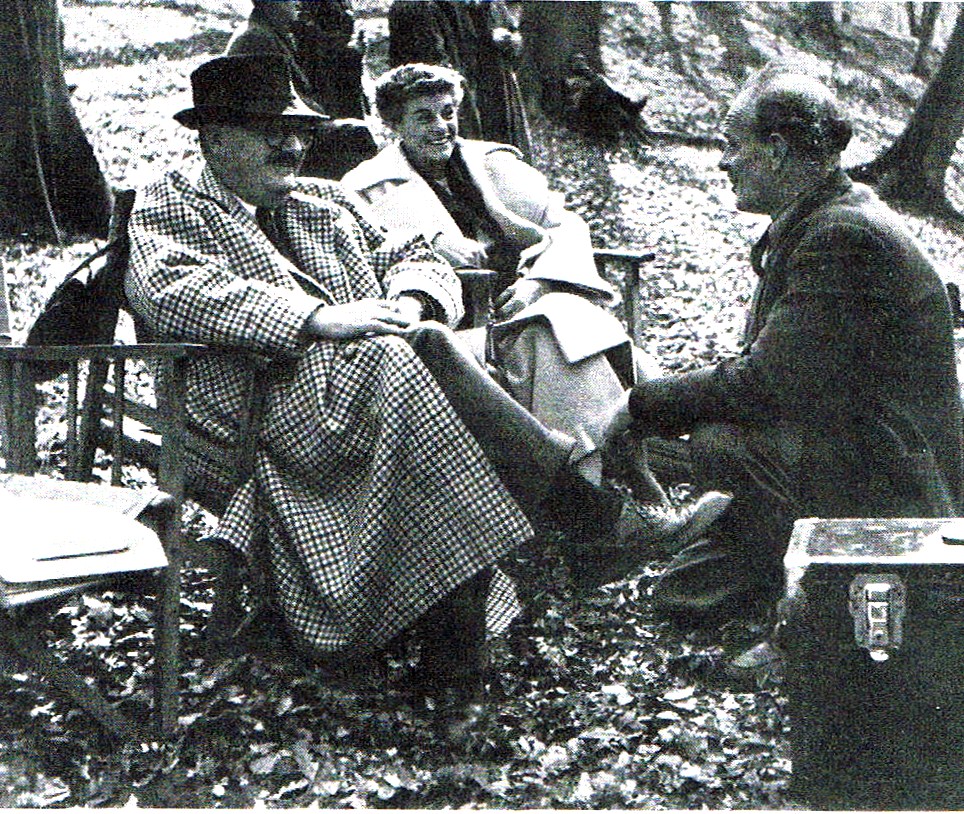
In the picture above we can see Alex Bryce and Richard Todd (Robin Hood) on location at Burnham Beeches in Buckinghamshire for The Story of Robin Hood and His Merrie Men for Walt Disney. Filmed in England at Denham Film Studios

Alex Bryce on location for The Story of Robin Hood 1952

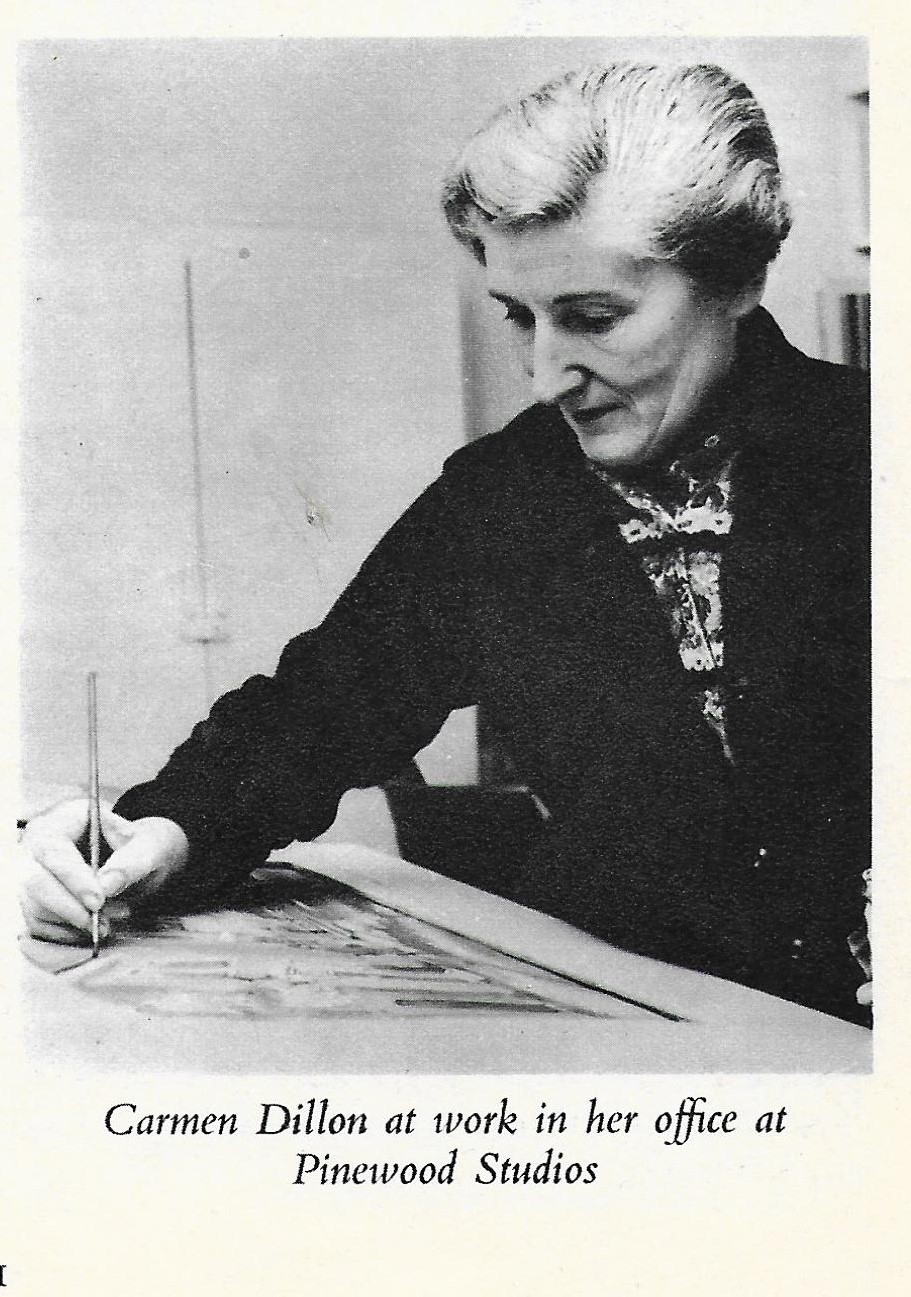
In the picture above we can see Alex Bryce  on location at Burnham Beeches in Buckinghamshire  chatting to Perce Pearce ( Producer) and Carmen Dillon ( Art Director)

I spoke with Alex Bryce’s Daughter,  Elspeth Gill, in the summer of 2011, mainly about her actually being on the set of The Story of Robin Hood throughout the masking of the film. One thing that struck me was that she seemed to be so very fond of her father and spoke about him and told me that he suffered a stroke only a few years later while he was on the continent filming The Cockleshell Heroes in 1955. She herself had been an extra on Rob Roy and danced with Richard Todd in one scene. She also said that it was her father who had persuaded Walt Disney to employ Ken Annakin as the film director for Robin Hood so he was the one that set Ken on his way as an International Film Director.

One other thing also – I sent her the picture above – which had the caption ‘Mr and Mrs Perce Pearce’ and she immediately said ‘ That’s not Perce Pearce’s wife – it is Carmen Dillon. She was right of course.

One of the few people I thought were still around who had actually been there throughout the filming of The Story of Robin Hood and His Merrie Men – seems I was wrong as she sadly died in 2012 but what wonderful memories she had

During the filming of Walt Disney’s Story of Robin Hood and his Merrie Men, Alex Bryce was in charge of theSecond Unit’, which specialised in all the outdoor, woodland and action shotsand fight scenes.

The Director of the film was Ken Annakin who worked very closely with Alex and you can tell from Ken’s Autobiography that the two of them got on very well , and worked closely together, dovetailing the studio footage with the Outside action scenes – they did it very effectively too,

Alex Bryce had worked in The Film Industry throughout the Thirties often as a photographer and occasionally as a writer, and Assistant Director.

Following Robin Hood in which he was  Assistant Director, he again fulfilled this role on another British made Walt Disney film The Sword and the Rose, Rob Roy The Highland Rogue  and then on The Dark Avenger with Errol Flynn.


Back to Elspeth Gill – Alex Bryce’s Daughter – She did send me some fascinating pictures of her chatting with Richard Todd on the set of Robin Hood at Denham and maybe Burnham

Beeches as below :-

elspeth bryce and richard todd 1952 2

Above Richard Todd chats with Elspeth – Actually she looks to be in costume too, so maybe she played one of the Merrie Men in the horse riding sequences.

elspeth bryce and richard todd 1952 robin hood

Above Richard Todd gives Elspeth a demonstration of Archery – he would know after this film.

I must say that I am very proud of these pictures that Elspeth sent me – very kind of her. She was the most knowledgeable person on this film that I had ever heard from.


posted by Movieman in Uncategorized and have No Comments