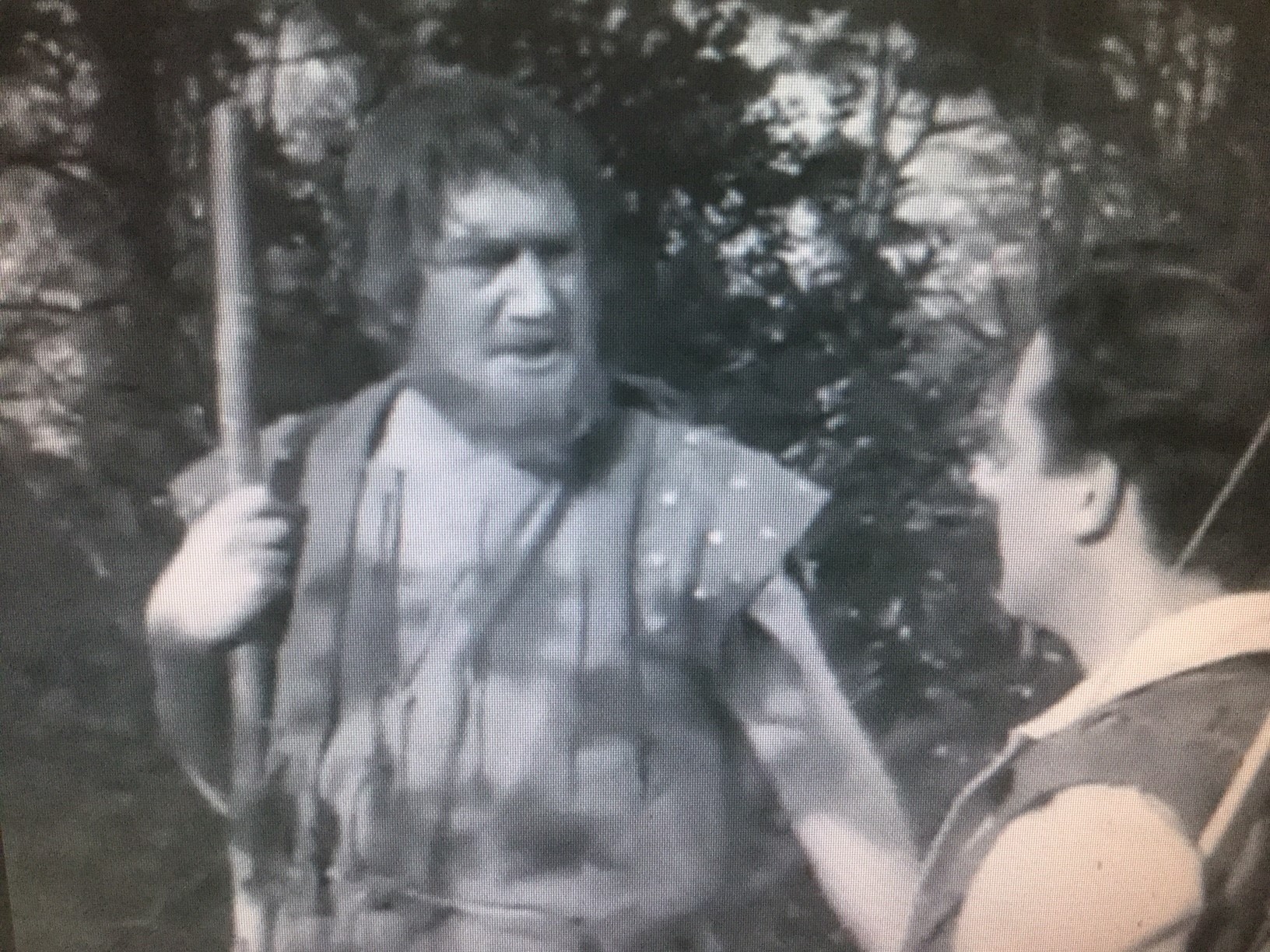
I am reminded of this early Pop Singer – after seeing the film version of ‘Six Five Special’ last weekend on Talking Pictures.
It featured quite a lot of singers of the day. One of the artist featured was this man Russ Hamilton who was , in a way unique.
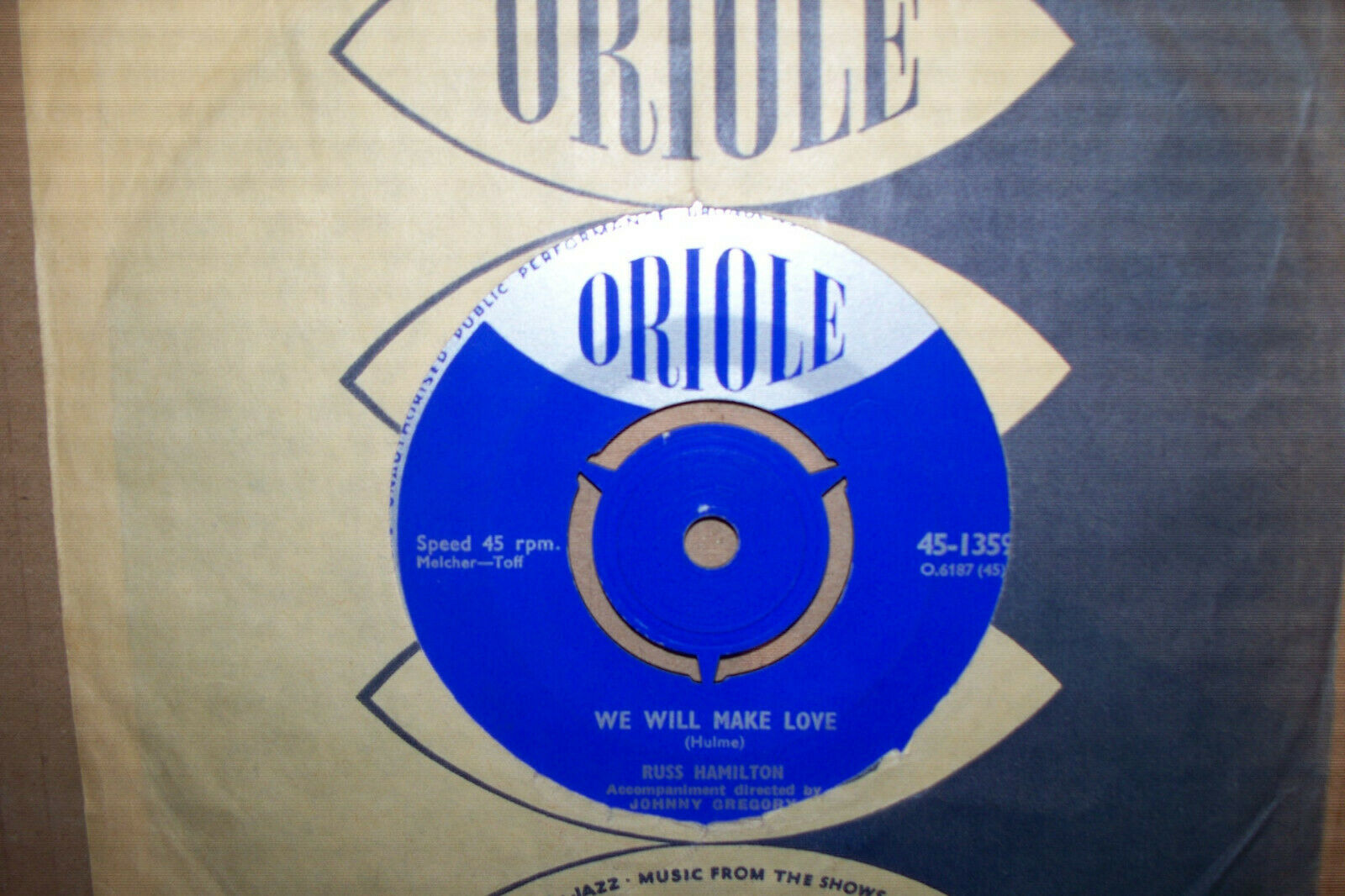
He had a really big hit in the UK in 1957 with ‘We will Make Love’ and the B Side of this called ‘Rainbow’ virtuallu topped the US charts. Unheard of in those days.
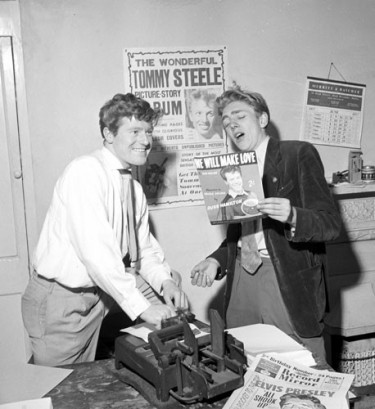
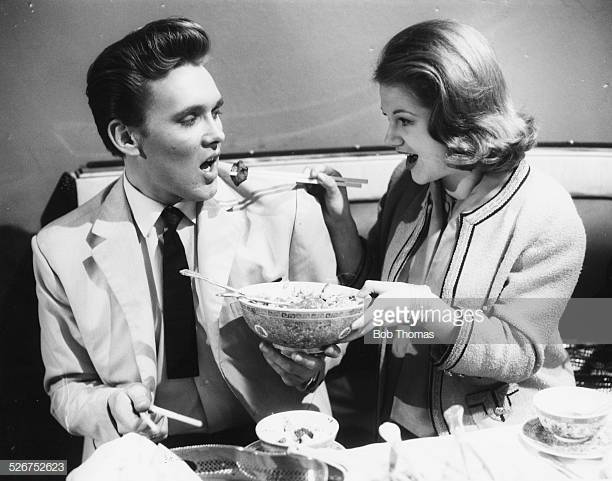
ABOVE: Russ Hamilton with Billy Fury
In 1957, several years before the British beat invasion of America, a young singer-songwriter from Liverpool, Russ Hamilton, made the US Top 10 with “Rainbow”. In Britain the song was the B-side of Hamilton’s hit “We Will Make Love”, which came close to the top of the UK charts in August that year.
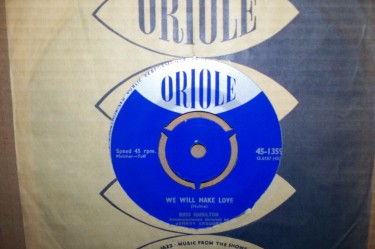
We Will Make Love and Rainbow – were recorded on the Oriole Label ABOVE
The newspapers of the day were full of Hamilton’s success and he was in buoyant mood, planning to buy a car and hoping to give his parents a weekly allowance – once his royalties came through. He would sing “We Will Make Money” to reporters, but despite having a Top 10 record in Britain and America he made very little money.
He offered young musicians this advice: “Never give anyone your power of attorney.”
Russ Hamilton was born Ronald Hulme in Liverpool in 1932. In his early twenties, he fell in love with Pat Hitchin, a girl from Blackpool, and when she jilted him he consoled himself by writing a romantic waltz, “We Will Make Love”.
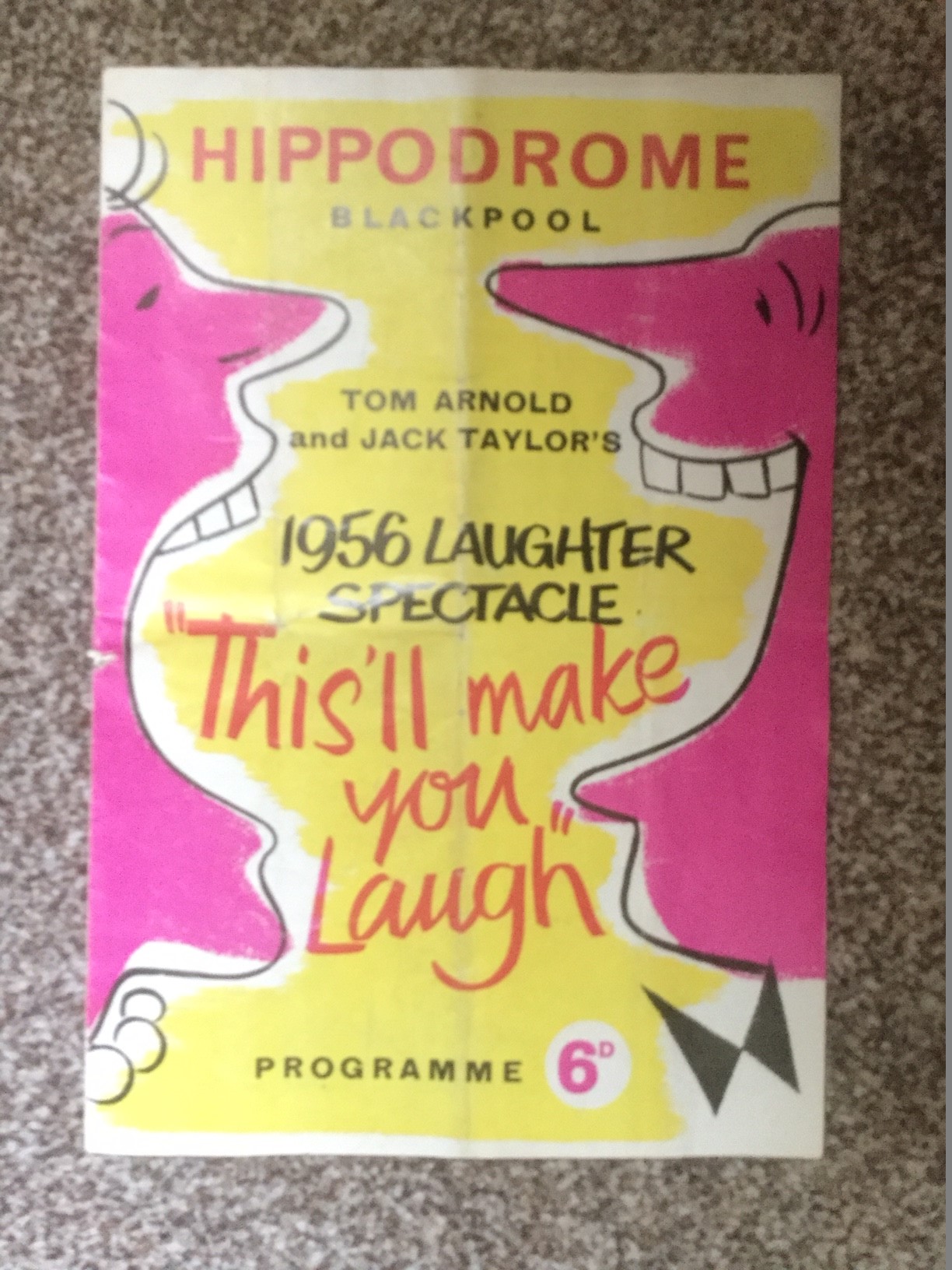
Despite the title, the lyric was very innocent, and the song was literate with good imagery. Hulme had a dreary job as a cost clerk and, in 1956, he became a Redcoat at Butlin’s in Blackpool, where, as Uncle Ronnie, he organised parties and treasure hunts for children. He offered “We Will Make Love” to Frankie Vaughan, but Frankie wasn’t interested.
Hulme then formed a skiffle group, which entertained Butlin’s staff at the Royal Albert Hall. Billy Butlin suggested that they made a record to wake up the campers.
This was arranged with a small independent label, Oriole, and while in the studio, Hulme asked if he could also sing “We Will Make Love”, which he would pay for himself.
Oriole’s musical director, Jack Baverstock, urged the label’s owner, Morris Levy, to sign him. A recording session was arranged in March 1957 with the Mike Sammes Singers and the Johnny Gregory Orchestra.
Oriole thought he should have a new name: Hamilton Square was nearby and Hulme added “Russ” as it sounded American.
During the winter months, the newly named Russ Hamilton was working for Butlin’s at the Ocean Hotel, Brighton, entertaining honeymooners who wanted the tax advantage of marrying before the end of the financial year.
One guest star, the singer Michael Holliday, offered to record “We Will Make Love”. When Hamilton told him it was being released on Oriole, Holliday pooh-poohed its chances as the label had had so few hits, but with Butlin’s publicity, Hamilton secured appearances on BBC TV’s Six-Five Special.
The single climbed the charts, although Scottish sales were split with Kathie Kay’s cover version.
After 11 weeks it reached the No 2 slot. Elvis Presley’s “All Shook Up” had been on top for four weeks and Russ Hamilton was set to replace him.
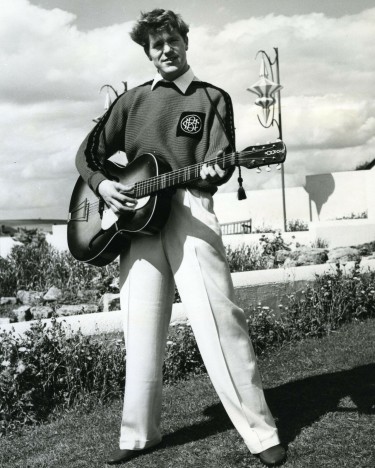
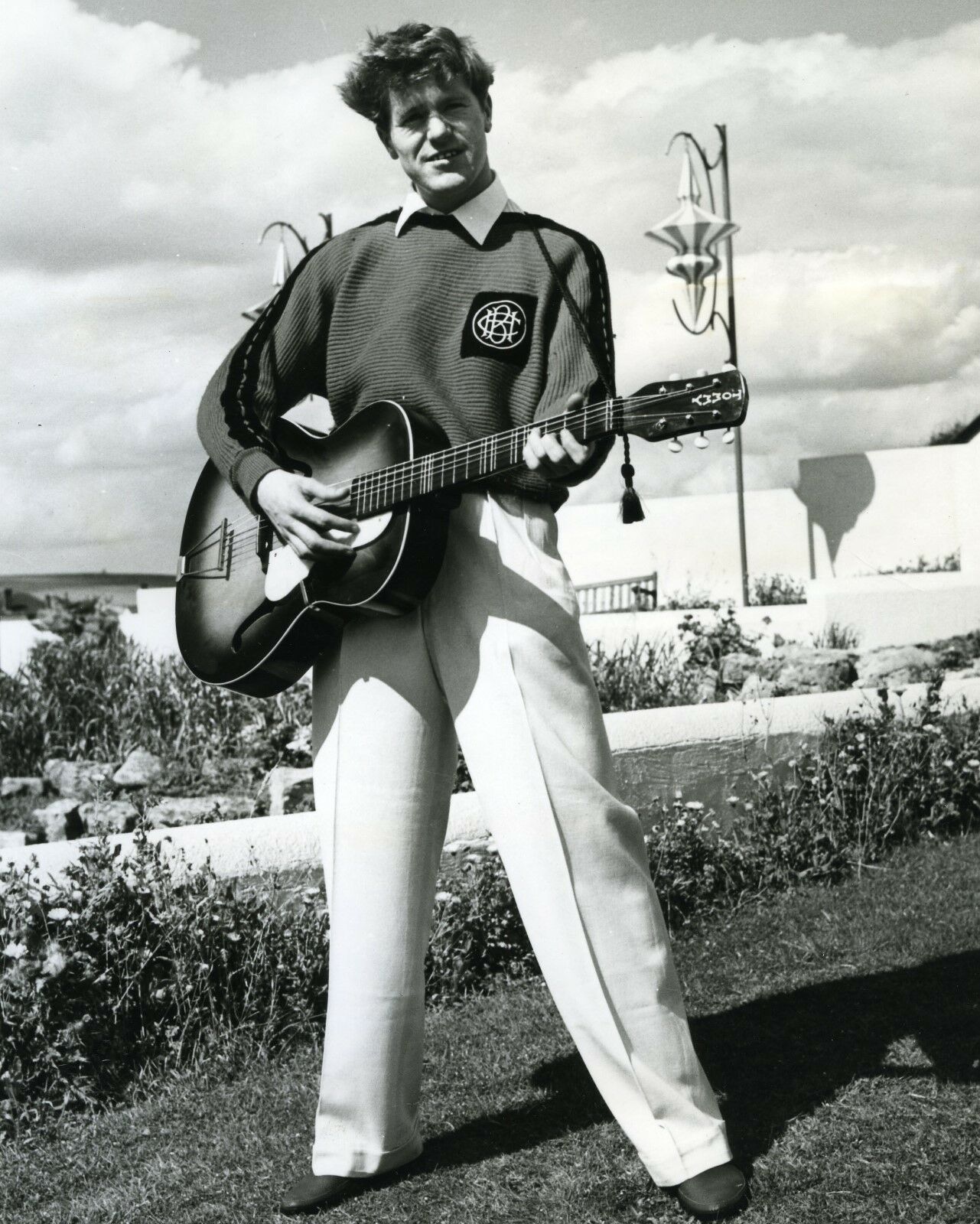
Russ Hamilton ABOVE – Looks like he is at Butlins here where he worked for quite a time.
However on 2 August 1957, Oriole Records placed an advertisement in the music press: “This week and next our factories are closed for the annual holidays. Our presses are at a standstill. Large supplies of this record built up prior to the close-down have been exhausted and for two weeks you may have difficulty in buying Oriole CB. 1359 – which is, of course, Russ Hamilton’s ‘We Will Make Love’.” The ad concluded: “We know that this disc will be a Number One… and it will be up there very soon after supplies start rolling again.”
The huge success of Hamilton’s record had taken Oriole by surprise. The following week, “We Will Make Love” slipped to No 4, and it faded away as Paul Anka’s “Diana” took over from Presley instead. Hamilton was touring Butlin’s camps, judging skiffle contests and singing with the winners: for all he knew, he could have been performing for the workers at the pressing plant. The B-side of the single, “Rainbow”, was a whimsical ballad.
The A-side was published by Dave Toff but the B-side belonged to Robbins Music, who pushed it hard in the US, securing cover versions from Bill Darnel and Bobby Breen. Hamilton entered the US charts and went to No 4 during a four-month stay. Because of commitments to Butlin’s and Six-Five Special, an appearance on Patti Page’s The Big Record Show had to be postponed until October and by then, the moment had passed.
Using the old adage that any publicity is better than none stories were made up, one was that he that I had won a Purple Heart in Korea and had bought Hitler’s yacht for £100,000.
At the time he didn’t even own a Cycle.
His follow-up, the engaging “Wedding Ring”, scraped into the UK Top 20. I
I can remember also the next record he had which was “Little One” – later recorded by Ruby Murray and Houston Wells – it made the sheet music sales charts.
Russ Hamilton made an LP for Oriole and his 12 singles for the label include standards (“Tip Toe Through the Tulips”, “September in the Rain”) as well as an answer song, “The Reprieve of Tom Dooley”.
He did record for other labels, notably “Gonna Find Me a Bluebird” with the Jordanaires in Nashville, and a remake of “We Will Make Love” for Embassy, but he was disheartened. As he said, “I was going round the world singing my head off and I was swindled out of a fortune. I never even got my gold disc.”
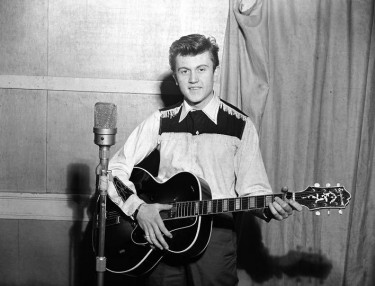
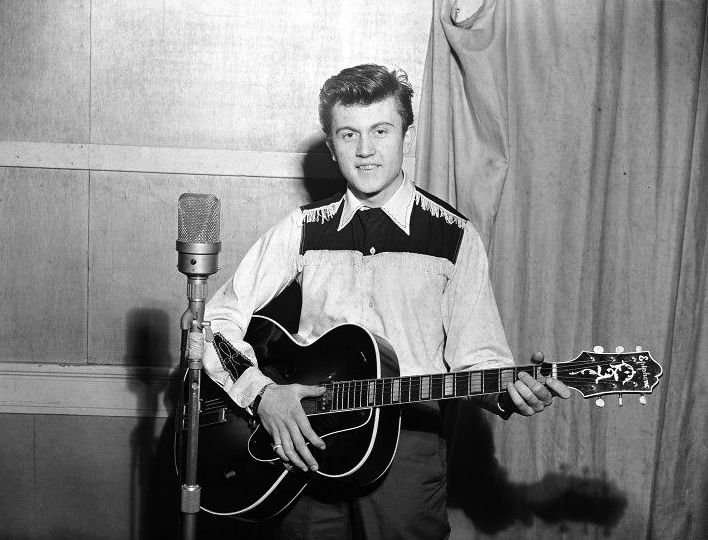
Talking of Golden Discs – another Pop singer of a similar time was Terry Dene PICTURED ABOVE – who starred in a film directed by Don Sharp called The Golden Disc in 1958 – quite a low budget film from Butchers Films who tended to specialise in crime dramas with some success.
I don’t thin I ever saw the film but as it is or has been shown on Talking Pictures I may get to see it.
Terry Dene, at times very reminiscent of Cliff Richard, had 3 top 20 hits between 1957 and 1958. Cliff Richard had his first hit in 1959. Terry Dene is also still performing.
One event I remember clearly was when Terry Dene got called up to the army for his national service. However when he joined up, his arrival was greeted by maximum media coverage, the red carpet and preferential treatment.
This alienated his fellow recruits who bullied him unmercifully and, within two weeks, Terry Dene had a nervous breakdown and was discharged.
All kind of abuse followed and, just as quickly as he had risen to the top, so he descended to the bottom of the heap.
Failure was something that Dene had to get used to over the next 20 years. The bookings dried up and, when he played, he had to endure the mindless taunts about his past fame, discharge from the army and break-up of his marriage to Edna Savage.
Then came a transformation – it came when he walked past the Mobile Evangelistic Crusade Mini Van in Trafalgar Square and at that point Terry decided to follow Jesus Christ.
He became an evangelical singer and, through this, he was able to find some sort of inner peace. How good that was for him.
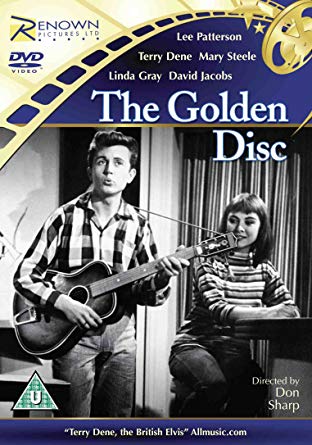
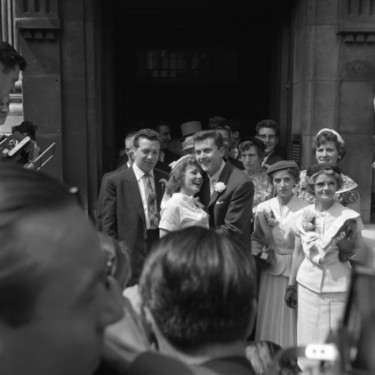
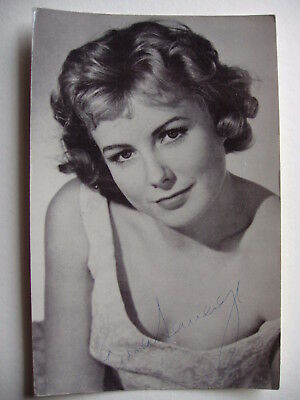
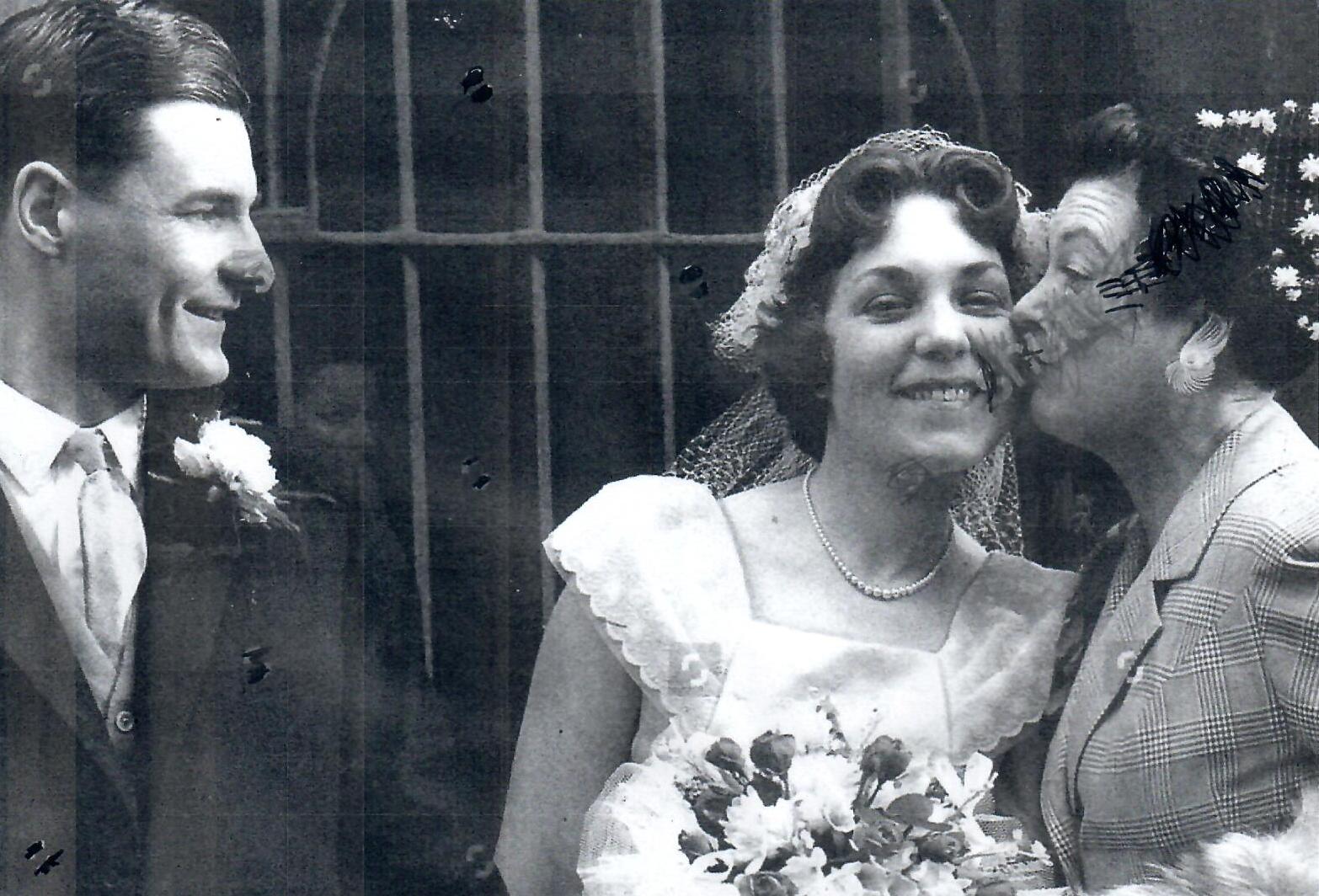
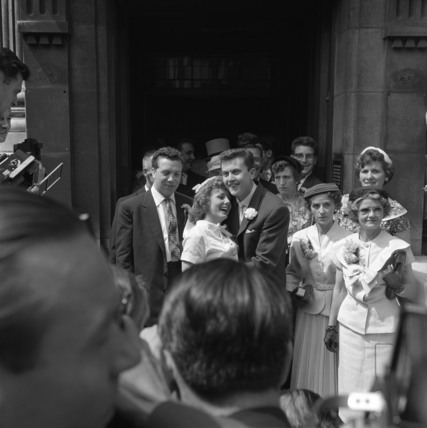
Terry Dene married another very popular singer – the lovely Edna Savage ABOVE.
Edna was born in Warrington, then in Lancashire on 21st April 1936. She had an elder sister, Alice and another sister, Hilda. Her father was a landscape gardener.
Leaving school at 15 Edna trained as a GPO telephonist which was then regarded as a secure job. It wasn’t long before she was able to ‘give up the day job’ as bt then she had got BBC and Parlophone contracts.
In 1954 after two auditions with the BBC came her first radio broadcast with Alan Ainsworth and The BBC Northern Variety Orchestra.
In the 1956 film ‘It’s Great to be Young’ she dubbed the voiceover for Dorothy Bromiley. Ruby Murray sang the number in the opening credit
Edna had four marriages and divorces, the first beingTerry Dene the Rock and Roll singer and later Douglas Wilkes guitarist with the Shondells with who she had twin daughters, Allison and Samantha and lastly Dennis Plowright her pianist.
She spent the later years of her life bringing up her two daughters and grandson.
Edna died in Ormskirk Hospital on 31st December 2000 at age of 64