Elton Hayes promoting ‘The Story of Robin Hood and his Merrie Men’ 1952

What a perfect choice to promote this classic film both in England and the USA.

Here Elton Hayes – or Alan A’Dale – travels around introducing himself to the many fans who would be waiting to see the new film which had been very heavily promoted.

Elton was also enlisted to promote the film in the USA and in 1952 he set off on a demanding eight week tour, making an astonishing 113 visits to cinemas, theatres, Television studios, and whatever was deemed advantageous for Walt Disney, who had taken a lot of interest in this film and its success – and indeed it was very successful.

ABOVE – Elton Hayes visits the Delphian League match between Woodford Town and Rainham Town – and even demonstrates a left foot shot – maybe he is just kicking off the game

ABOVE – Giving youngsters a free song or two in the grounds of Cardiff Castle after he had appeared at the Empire Cinema in the City

ABOVE – Signing Autographs at the Gaumont Cinema in Liverpool

ABOVE – Prior to appearing at the Majestic and Scala Cinemas in Leeds, Elton visited the Tailors – Price – and tried his hand at cutting a suit.

He is watched by Mr W. Finan ( 2nd Left) the Personnal Manager at Price and Mr C. Willmott the Manager of the Scala Cinema ( 2nd Right)

ABOVE – While in Birmingham, where he appeared at the Gaumont, Elton paid a mid-day visit to the National Trade Fair at Bingley Hall, where he is pictured on stage with Harry Roy and his band, entertaining a large audience with hit tunes from the Walt Disney adventure

ABOVE – With Walt Disney himself at Denham Film Studios

ABOVE Elton Hayes in the film

and

BELOW – with the lovely Joan Rice who played Maid Marian

The Technicolor on this film was about as good as it gets – I think that the Technicolor of the early fifties was the best ever.

posted by Movieman in Uncategorized and have No Comments

Ghost Ship 1952

This film always intrigues me because of it’s parallel – at least from the title – with the Marie Celeste although the story does not progress in any way like that

The film stars Hazel Court and Dermot Walsh who were married in real life.

Hazel Court later married actor and Producer/ Director Don Taylor – who had made a Robin Hood film ‘Men of Sherwood Forest’ here in England in 1954.

They remained happily married until he died

An interesting film with some good acting, an excellent flashback sequence which is told by a medium who the young couple who had recently acquired the ‘ghost ship’ employ – who tells them of a love triangle that had gone gone horribly wrong for the previous owners of the boat.

The Medium had been consulted to find out why the many strange and eerie happenings occurred – which had unnerved the young couple.

Of the stars, there are bit players who would later go on to find fame and success (Joss Ackland and Ian Carmichael also Ewen Solon who turned up in a lot of British films of that era, British star, Dermot Walsh, a brief turn for Sewell’s real-life wife, Joan Carol; an excellent performance from TV’s QUATERMASS, John Robinson, as a wronged captain, Hugh Burden, who later found success in television; and of course, a starring role from lovely Hammer starlet Hazel Court. Hazel takes centre stage for much of the production and she was very good

ABOVE – Dermot Walsh and Hazel Court on location

posted by Movieman in Uncategorized and have No Comments

Janette Scott’s London Home

This is 1958 and Janette Scott is 20 years old. When she is working she usually lives with her mother Thora Hird and father Jimmy Scott in a small mews house ‘The Old Forge’ somewhere in central London – I think that could be in Shepherds Bush

ABOVE – Janette outside ‘The Old Forge House’

The family have a love of music and quite a large collection of records of very varying types

They also have a large collection of miniature liqueur bottle which need dusting regularly – here Janette takes on the task

Janette had a secret wish to become a blonde – something she succeeds in becoming in her latest film ‘The Lady is a Square’ with Frankie Vaughan and Anna Neagle.

Here she is with blonde hair BELOW

Ted Lune from ‘The Army Game’ had a small part in this. He was a great comic
Again ABOVE – Janette looking lovely in this scene from the film

posted by Movieman in Uncategorized and have No Comments

The Railway Children – Press Book

Within the last few days, I have been lucky enough to acquire quite a few items of memorabilia from the film world.

One of these items was the original Press Book from the famous film ‘The Railway Children’ of 1977 directed by Lionel Jeffries

Maybe not a Fifties film but there are connections here because in 1957 BBC Television had an 8 part serialisation of The Railway Children with Jean Anderson as the mother and Anneke Wills as Roberta. Norman Shelley played the old gentleman

This 1957 version of The Railway Children  also featured Cavan Kendall as Peter and Sandra Michaels as Phyl.

Jean Anderson reprised her role of Mother from the earlier 1951 BBC version, with Hilda Barry also returning as Mrs Viney. The script stuck closely to Dorothea Brooking’s original 1951 script.

Baynards railway station, on the Cranleigh line in Surrey (now disused) was used for location filming.

In the 1951 BBC Television version Clive Dunn had an early role and so did Ysanne Churchman from The Archers.

ABOVE – The poster really hits the button as regards the joyousness of the film

A tranquil family scene ABOVE – Lovely picture

Oakworth Station

Lionel Jeffries discusses a scene with Bernard Cribbins on the set of the film

I cant recall if the above scene was in the film – I don’t seem to remember it being though – maybe this is from the NEW version filming now

ABOVE – A tense and dramatic scene from the 1977 film

ABOVE and BELOW – The New Film – The Railway Children Return currently in production

I am quite looking forward to this new film being released early next year and seeing it in the cinema on the big screen – I think it will be good. Then again, I thought that the 2016 film version of ‘Dads Army’ was excellent but my views are not shared be everyone I know.

From the original 1977 film Press Book BELOW

From the Press Book

As a friend pointed out, the address ‘Wardour Street London W1’ has been closely associated with the film-land over the years

posted by Movieman in Uncategorized and have Comment (1)

The Love Match –

With football very much with us at the moment, I go back to a great favourite of mine ‘The Love Match’ with Arthur Askey

In the film Arthur’s son is a young professional footballer who has signed for United when Dad, all his life, has been an ardent supporter of City

This is a very funny film from the mid 50’s about Bill ( Arthur Askey) who is a railwayman and a real football fan. He goes to a match with his co-worker Wally (played by the writer, Glenn Melvyn) and by accident he hits the referee with a pie in the face. He is hauled off to court and fined 5 pounds, but Wally, who is deliberately dim, hands the bag of money which was for a railwaymen party to someone who promptly uses the money to pay her fine of 50 pounds.

They then have the task of somehow getting the money back.

There are other characters in this film, namely Bill’s wife – Thora Hird -who has great one liners, his son who is going to play football for the team Bill hates and his daughter, the stunning Shirley Eaton, who is entered in a dance contest in Liverpool. This is a great comedy film.

The screenplay by Glenn Melvyn is superb, and there are genuinely hilarious moments. No matter what kind of comedy you like, this is very highly recommended. Its crisp, the wit keeps flowing and the laughs are plenty.


Alf Hall ( played by Danny Ross ) is Rose Brown’s dim-witted boy friend. When he knocks on the Brown’s front door for the very first time Bill Brown opens it and all Alf can do is splutter out his name “Alf ‘all, Alf ‘all.” Bill’s reply is “Don’t worry I’ll catch you.”

ABOVE – Glenn Melvyn again teamed up with Danny Ross as they appeared together in a stage play at the Victoria Palace in London in the mid to late fifties with Mollie Sugden – and Valentine Dyall – BBC Radio’s ‘The Man in Black’

Valentine Dyall is a name that was around all the time on Radio, TV and films in the fifties. I remember him doing a TV Series with mysterious true stories that both fascinated us and scared the life out of us at the same time

Valentine Dyall

More about him in a later article on this Blog – he is an interesting character

posted by Movieman in Uncategorized and have No Comments

Cinemas in English Towns

We were all lucky enough in the 1950s to be able to visit the cinema in our local town – not just one cinema but two or three or more in each town and each one with a different ‘two film’ programme along with the usual Pearl and Dean advertising slot. Then we got the ‘Coming shortly’ trailers which I just loved – they were very enticing and before we knew it we were planning the next cinema trip as we just could not miss what we had seen – even though we had only seen a tiny bit.

This was a picture taken in the lovely town of Gainsborough in Lincolnshire advertising what was on at the State Cinema in 1960 – but is was not what it seems. In fact ‘Carousel’ was not the film but the Gainsborough Theatre Players putting on their yearly production on the stage of The State Cinema

A truly beautiful vintage cinema, The Palace Cinema in Cinderford proves that running an independent cinema is a real labour of love for owners. There’s a hand-drawn map on how to get there on the website, a whole host of original features in the building itself, and a friendly couple who run it. Free tea and coffee with winter tea matinees are a winner.

ABOVE – Now this is one of the most famous cinemas in the Country in the beautiful small town of Woodhall Spa, again in Lincolnshire.

It is the ‘Kinema in the Woods’

There is still an organ that is, quite often played prior to the film being shown

The Odeon Cinema St Albans

This was a favourite of mine – the Odeon St Albans which is now beautifully restored and has been re-named as the ‘TheOdyssey’

The Odyssey Cinema St Albans

The Cinema is breathtaking the original Art Deco features that remained have been incorporated into the new scheme and the end result is an auditorium which is beautiful and a true picture palace which harks back to a bygone age . Unlike the multiplex’s The Odyssey has Screen Curtains and all the sense of occasion and grandure that a visit to the cinema used to have.

In the Stalls – as shown – are tables with swivel seats which offer a different experience as you can sit at a table with a drink and then turn towards the screen as the film starts. In the balcony the rows of seats have massive amounts of leg room and the seats themselves are all armchair type offering the height of comfort.

The Odyssey technically is brilliant it has a massive Screen with the very latest digital projection technology, the sound system is the very latest reactive sound system and has the surround speakers hidden in the walls, the Odyssey offers sound and vision better than West End Cinemas in Leicester Square.

The Cinema in summary is a beautifully restored Art Deco masterpiece.

It must lay claim to being the finest cinema in the country – maybe even the world !!

———————————————————————————————————

Another favourite the Cinema in Lobethal, South Australia – just outside of Adelaide – a small village in Adelaide Hills

Lobethal Cinema – ABOVE

Lobethal Cinema – ABOVE

Inside this classic cinema – very English

Preparing for ‘Curtain Up’

These pictures evoke a cinema experience from the past.

I love this Cinema in Lobethal

posted by Movieman in Uncategorized and have Comments (2)

Johnny

This is the 900 th article I have written on this films of the fifties site, so I have chosen someone extremely well known and popular as the subject – and someone who requires no introduction to film fans the World over

It would have been Johnny’s Birthday a few days ago on June 2 nd

Here he is Rumanian-born American Olympic gold medallist, competition swimmer, water polo player and actor Johnny Weissmuller on his birthday (June 2, 1904 – January 20, 1984),

Much better known for his roles as Tarzan (1932-1948) and Jungle Jim (1948-1958).

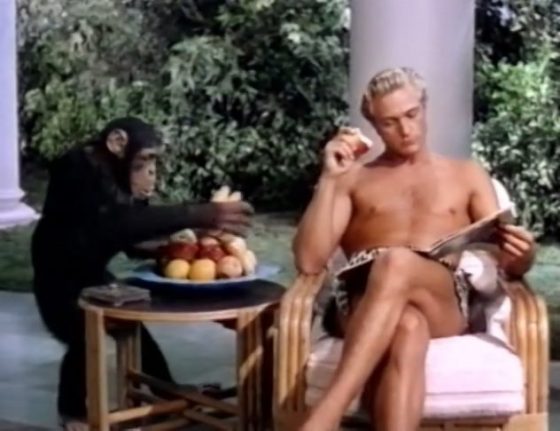
ABOVE – In his most famous role

What a life he had – a swimming World Champion who made the transition to films very successfully indeed with the big budget Tarzan films for MGM – and they were big budget and very well made.

Johnny with Tarzan creator Edgar Rice Burroughs

The next step was when RKO Radio released the next tranche but these, although very good and very watchable were nowhere near as good.

ABOVE – A lovely colour picture of Johnny with a new – and very good Jane – Brenda Joyce

When Johnny got too old he simply got dressed but didn’t retire from the jungle escapades – instead he became Jungle Jim in a series of cinema release films before playing the same role on Television for quite a few years. These were shown in England in the 50s and were very popular.

In his spare time, apart from getting married quite a few times, he played a lot of golf.

A Biography of Johnny – I must try to acquire this book

In 1954, MGM re-released his first two films to great success; a whole new generation now saw him in his prime on the big screen. In fact, most of the 12 Weissmuller Tarzan movies were re-released in theaters worldwide over the years.

And then the television era ushered in five more decades of widespread international viewing of those Weissmuller films, which are among the most broadcasted movies of all time.

By 1957, Weissmuller had retired from acting and went on to partner in various business ventures. In great shape in midlife, Johnny also continued to bring his popularity directly to his fans via water shows throughout the 1950’s.

ABOVE with a young lady and another former Tarzan Buster Crabbe

He also travelled the world doing charity work throughout his life, always willing to lend his fame for a good cause when asked. He helped to open and fundraise for children’s hospitals in places like Istanbul and Madrid. One of his pet charities was the Special Olympics, and to that end in 1976 he donated all of his Olympic medals and many trophies to the Joseph P. Kennedy Foundation for disabled children, to be used in fundraising exhibitions. (They are now housed at the International Swimming Hall of Fame museum.)

Johnny Weissmuller meets The Queen at the 1966 Commonwealth Games

He is so obviously impressed and overawed – and maybe The Queen really enjoyed meeting Tarzan – Johnny Weissmuller

When he died, Johnny Weissmuller was one of the very few non-heads of state ever to be afforded a 21-gun salute, at his memorial service at Good Shepherd church in Beverly Hills. Arranged by Senator Kennedy and President Reagan, it was a singular honour for a man who was a true American icon. Concurrent memorial masses were also held at St Michael’s in Chicago (where he had been an altar boy), St. Patrick’s Cathedral in NYC, and the Vatican in Rome.

Though he had endured many trials and tribulations in his life – growing up in a poor immigrant family with an abusive father, the untimely death of his teenage daughter Heidi and suicide of his beloved Lupe, financial ruin caused by his unscrupulous business manager of 25 years and his own debilitating series of strokes that rendered him so physically disabled the last few years of his life – Johnny was always happy-go- lucky, down to earth and considerate with everyone who crossed his path. And his legendary sense of humor, generosity and accessibility to his fans made him all the more beloved.

As good friend and former TV Tarzan Ron Ely said recently in a filmed interview:

“If you talk about Johnny Weissmuller, you can only say positive things. He was a positive person, and didn’t show his troubles on the outside. He had a lot of friends; everyone loved him. I didn’t know anyone to ever make the tiniest negative comment about Johnny..

posted by Movieman in Uncategorized and have No Comments

So Little Time

This is a very good film but one which, for whatever reason, did not do well at the Box Office. It has been shown recently on Talking Pictures and is recommended viewing.

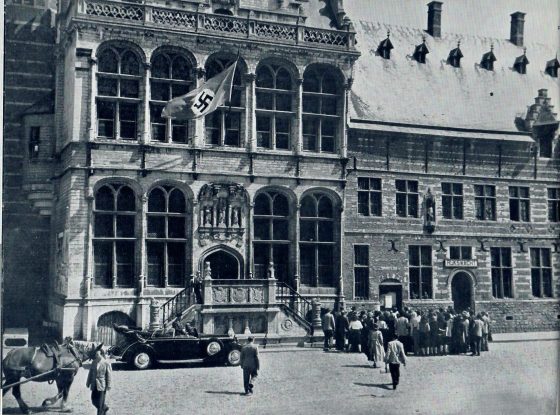
It is a World War II film set in occupied Belgium which has an unusual plot for the time – about a good German officer, Colonel von Hohensee played by Marius Goring, who is appointed Military Governor of Brussels, and falls in love with a Belgian girl, Nicole ( Maria Schell). After a time, Nicole is approached by the Resistance movement and told to steal some documents from Colonel Hohensee

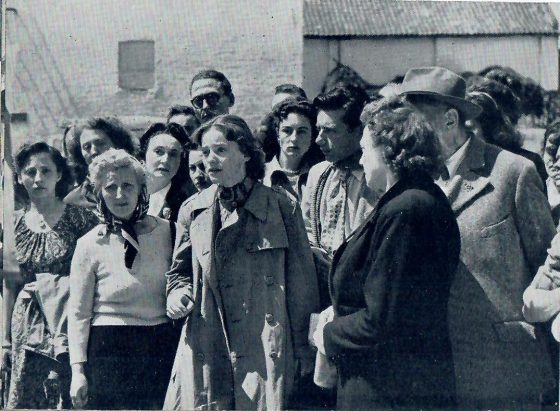
ABOVE – Barbara Mullen being questioned by a German Soldier

Above – That same scene

Without a doubt one of Maria Schell’s greatest roles.

ABOVE with Marius Goring

This film was a personal favourite of Marius Goring who had these words to say – ‘A touching little film . . . Maria Schell was beautiful and extremely good. It was too soon after the war and people still thought every German was a horror. A year later, and it would have been all right.’

Marius Goring was also great in his role – it was an uncharacteristic part for him.

These stills are obviously in Colour – but the film was not

They share a love of music

A Film well worth seeking out – Two actors at the top of their game here with a good and strong supporting cast


posted by Movieman in Uncategorized and have Comment (1)

Over The Garden Wall – Norman Evans 1950

Hugely popular, the Lancashire comedian Norman Evans brings his style and comedy act to this film, the title of which was the same as his radio show and his sketches where he used to tell his jokes in a gossipy, inquisitive neighbour style leaning over the garden wall to face the audience – Les Dawson copied this style when he appeared along with Roy Barraclough as Cissy and Ada in his Television Shows

Over the Garden Wall – Norman Evans and Jimmy James

A working class couple are planning to give their only daughter and new GI son-in-law a right Northern welcome. But trouble starts to flare when a young man flirts with their daughter! Jimmy James is often hailed as the ‘comedian’s comedian’. He developed one of the funniest stage routines in variety history and was an inspiration to his fellow comedians. Norman Evans will forever be remembered for his toothless northern housewife character, Fanny Fairbrother, which influenced the young Les Dawson.

Cast In Alphabetical Order Agnes Bernelle as Val Westwood Alec Pleon as Alec Dan Young as Dan Frederick Bradshaw as Ken Smith Jimmy James as Joe Lawton John Wynn as Tony Harrison Neville Brook as Mr. Smith Norman Evans as Fanny Lawton Sonya O’Shea as Mary Harrison Crew

Directed by John E. Blakeley Written by John E. Blakeley & Harry Jackson Produced by John E. Blakeley

Released 1950 Runtime 94 Minutes

Johnny Blakeley ‘Mancunian Films’ – I remember Michael Parkinson having Peter Sellers on his show who I have to say was one of the very best guests he ever had, and they were both real film fans and they both mentioned Johnny Blakeley and Mancunian Films which they both seemed to remember with great affection.

As Peter Sellers said Johnny Blakeley was not swayed by the critics or by sending a message, he just made films that people wanted to see

John E. Blakeley is the man responsible for the start of the film career of George Formby as well has many other famous northern variety artists. Although Formby’s first two films were produced in London studios, Blakeley is remembered mainly for the film studio he build in Manchester.

He was born in 1889 and was from a family of cinema owners and film renters in the North West.

Together with other film and theatre owners, he formed a company called Mancunian Films.

Around 25 films were produced over the next 20 years and were distributed through a company called Butchers Films.

Initially he travelled to London to produce his films, renting studios like Riverside at Hammersmith, George Formby’s first films are known to have been filmed at Albany Studios.

Film, Camera, Action

By the end of the Second World War John E. Blakeley’s slapstick comedies were extremely popular in the North of England. Mancunian Films had taken some of the most popular music hall acts from the north and turned them into stars.

These acts included Formby, Frank Randle, Dan Young, Norman Evans, Duggie Wakefield and many more.

After 1945 there was a boom in film production and the cost of studio time in London increased dramatically, John E. Blakeley along with his sons and colleagues decided it was time to take film production home to Manchester. An old Wesleyan Church on Dickenson Road, Rusholme was bought, converted and equipped for £70,000. This became Film Studios (Manchester), the first feature film studio outside London in the post war years. On the 12th May 1947 the studio was formally opened amid a sprinkling of stars and excitement from local residents. The ceremony was attended by George Formby, Dan Young, Frank Randle, Norman Evans and Sandy Powell and George Formby and Sandy Powell made speeches wishing the studios well for the future. Film Studios (Manchester) wasted no time and started work straight away producing a whole string of low budget ‘B’ movies. The surrounding areas of Dickenson and Wilmslow Road was used as a backdrop to many a Mancunian film, as were the local people in crowd or street scenes. Local residents often lent their possessions to the props department who came to beg and borrow to fill up the set.

‘Cup Tie Honeymoon’ was the first film to be made at the studio, starring Sandy Powell, Dan Young, Betty Jumel and Pat Pilkington (later Pat Phoenix, Coronation Street’s Elsie Tanner).

The film, based around the theme of football with scenes shot at Manchester City’s Maine Road stadium, was released to coincide with the beginning of the 1948 football season.

‘The International Circus Revue’ was the next release in 1948. This film featured a local circus troupe from Manchester’s Belle Vue amusements and starred Sonny Burke and Bernard Youens (later Coronation Street’s Stan Ogden).

The International Circus Revue was made using footage from a documentary shot by Mancunian called The Showground of the North, released in 1949. The Showground of the North was a travelogue of Belle Vue’s Zoological Gardens, circus and amusements. This was John E. Blakeley’s only departure from comedy during his career.

During the early 1950’s Tom Blakeley was producer for Mancunian Films. He worked with outside directors on productions such as Never Look Back and Love’s a Luxury (1952), Those People Next Door and Lonely Weekend (1953).

Diana Dors and Frank Randle

‘It’s A Grand Life’ (1953) was John E. Blakeley’s 22nd and final feature film at the age of 64 and also Frank Randle’s last film before he died of consumption in 1957. This movie brought together Frank with the 22 year old blonde bombshell, Diana Dors, who was already in her 14th film.

The title of this film must surely reflect the quality of the life which John E. Blakeley shared with the workers and stars of Manchester ’s little Hollywood.

Diana Dors could hold her own in any company and with any actor – she was never overawedonly three years later she was co-starring with Victor Mature in the classic ‘The Long Haul’

By the mid 50’s the cost of film production had increased whilst the advent of television caused cinema audiences to decline. In 1954 Film Studios (Manchester) was sold to the BBC and the church became the first studio to broadcast outside London in the fifties. Eventually the studio was demolished in 1967.

Through his efforts – and those of his fellow director, the box-office money-spinning Lancashire comedian, Frank Randle – this country now has a memory bank of all those wonderful artistes, who, but for Johnny Blakeley and Frank, would have been lost and forgotten, forever.

Frank Randle himself made upwards of 10 record-breaking comedies at Mancunian, and working alongside him were stars like the Irish tenor, Josef Locke; Sandy Powell; Duggie Wakefield; the diminutive ‘boy’ comic Jimmy Clitheroe; Hilda Baker; Jimmy Jewel & Ben Warriss; Tessie O’Shea; Harry Korris, Bobby (Enoch) Vincent, of the BBC Home Service, ‘Happidrome’ programme; Jimmy James and Ely Woods; Norman (‘Over The Garden Wall’) Evans; Gladys Morgan, Betty Jumel, Nat Jackley, Gus Aubrey, the black pianist, Winifred Atwell; Anne Ziegler & Webster Booth, the radio singing group, ‘The Kordites’, and a host of other stars, mainly recruited from all the top theatre venues in Blackpool and along the Fylde Coast…not to mention every provincial Variety theatre, within a 50-mile radius of All Saints.

I have to say that in writing this article – which seemed to interest me more as I got into it – I have taken a lot of it from another site about Mancunian Films

posted by Movieman in Uncategorized and have Comments (3)

Move Memories – The 100th Edition

Again, what a great day it is when the postman delivers this very welcome magazine – it means hours of interesting reading ahead and with all the older editions I have, it is so easy to keep going back and re-reading them and always finding another little snippet or piece of news or Hollywood gossip of the time.

ABOVE – The Front Cover of this Magazine with Yul Brynner and BELOW Chris Roberts introduction to this month’s magazine – and some details about Yul.

Chris Roberts has decided to cease production of this great magazine at the end of this current year which is a very sad day for us all. The quality of this magazine is right out of the top drawer and the articles he does are so interesting and then the contributions of the many readers who write in with information about the stars – quite often their own experience when they have met them. Fascinating and there are always surprises when these revelations come along

This Magazine has been Chris Roberts’ ‘baby’ really and I imagine it will be a huge wrench for him to bring it to a close – but lets not forget the magnificent contribution he has made to the film industry of that era – which has been helped in recent years by the phenomenal success of ‘Talking Pictures’ the TV Channel we all love.

Chris has not enjoyed the best of health recently but I understand that he is ok now – but I know that we all wish him well whatever he now chooses to do

I have copied below his introduction to his 100th Edition :-

It must be said, that we at Filmsofthefifties do not have any connection with this magazine other than being great fans of it

ABOVE – Inside the magazines a gentleman wrote about his correspondence with Robert Cummings – and told us about him receiving this picture after writing to the star, saying that ‘Kings Row’ was his favourite – it was also Robert Cummings own favourite of the films he made.

I would, though, myself lean towards his role in ‘ Saboteur’ for Alfred Hitchcock – an article on which I wrote on this blog earlier this month. That would be my own favourite Robert Cummings film

The back cover has this – ‘Carry on Spying’. In my view not one of the best of the Carry On films of which I am a great fan

posted by Movieman in Uncategorized and have Comment (1)