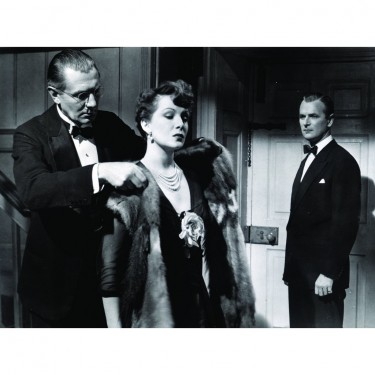
The Miniver Story 1950

This one just scrapes into the fifties as it was released quite early in 1950. The film although treated to MGM s expensive production values somehow did not appeal to the public as Mrs Miniver had done a few years before. Maybe fashions had changed and also it was no longer wartime and maybe people wanted something else from a film. It wasn’t a bad film although it is some years since I saw it.

This film was made in England by MGM

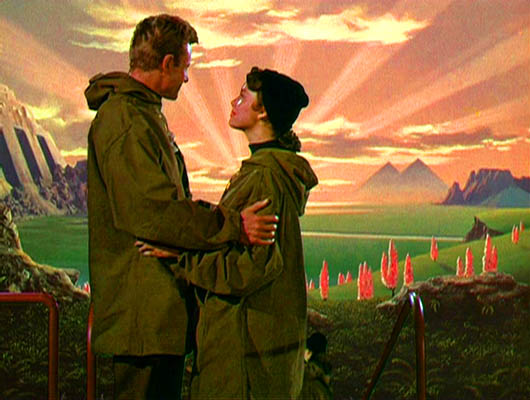
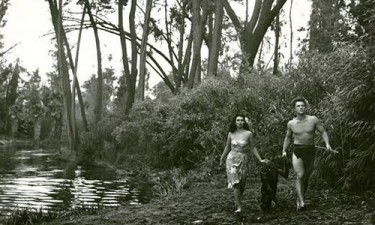
 The pictures  below show Walter Pidgeon and Greer Garson posing for publicity stills – I wish I knew where that was – does anyone know ?  MGM were at Boreham Wood at the time and previously had used Denham Studios – my own favourite – and I reckon these shots are on the lake at the back of Denham Studios where Treasure Island and Mr Polly were filmed.

 Film Publicity Stills below  –   at Denham ??

This film was released late 1950 

Greer Garson reprises her award-winning performance as Kay Miniver in this sequel to the wartime hit MRS. MINIVER. World War II has ended and like most families in England, the Minivers are trying to rebuild their lives. Mr. Miniver (Walter Pidgeon) wants to start over in Brazil. Son Toby (William Fox) wants to jitterbug in America. Daughter Judy (Cathy O’Donnell) is in love with a married officer. And, Mrs. Miniver (Greer Garson) is struggling with her own deep, dark secret that threatens to destroy the entire family. Kay has learned that she has terminal cancer, but with the family finally reunited in London after a lengthy separation, she does not feel it’s the time to reveal this sad news. Instead, the selfless Kay, knowing the end is near, decides to make sure that her loved ones will be well taken care of after her death. H.C. Potter directs and manages to keep the story sympathetic without falling prey to melodrama.

Interestingly in the storyline no mention is ever made of the eldest Miniver son, Vincent, who appeared in the earlier film, possibly because Greer Garson and Richard Ney (the actor who portrayed him) had been married and divorced (1943–1947) by the time The Miniver Story was produced in 1950.

Another character in the film was Peter Finch, then largely unknown and in fact he remained that way largely until he portrayed The Sheriff of Nottingham in Walt Disney’s The Story of Robin Hood – made at Denham – in fact the very last film to be made there.   In that film  he seemed to catch the eye of producers and from then on went  from strength to strength.

Above is Peter Finch in a much later Disney film ‘Kidnapped’ as Alan Breck Stuart

Leo Genn had a leading role. He later played in Moby Dock I remember.

Interestingly an early role went to actor  William Fox as the son  – later to become much better known as James Fox who has had a prolific career in films, TV and theatre.


posted by Movieman in Uncategorized and have Comment (1)

Third Man on the Mountain – Disney 1959

This is described as the best film about mountaineering ever made.    That is quite a boast but anyone seeing this movie might well agree with that comment.


Ken Annakin directed what was his third film for Walt Disney – and what a good one it was.

 For anyone who’s ever or who’s NEVER climbed a mountain (like me)this movie is a real treat.
James MacArthur  plays Rudy Matt, the son of the famous mountain climber Joseph Matt who tragically lost his life while climbing the famed Citadel mountain. Rudy’s father sacrificed his own life to save the climber that he was responsible for as his guide.

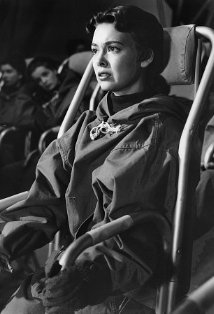
Janet Munro could melt any mans heart. She is sweet, full of fun and very beautiful. What a shame for her to die so young.   In this film she was a ball of energy.  It’s easy to realize why Walt Disney saw so much in her.

Michael Rennie was cast as the famous climber captain Winter who helps Rudy with his support when his uncle, played by James Donald, does not want him to be a guide and meet with the same fate as his father.

Laurence Naismith as always gives a great performance as Teo; the older friend and climber of Rudy’s father who was there when he died. Teo’s bark is worse than his bite and his warmth and love for both Lizbeth and Rudy is seen in many ways.

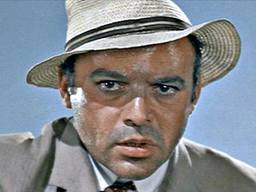
Herbert Lom also had a leading part in the film but on location he proved a bit of a pain because as Ken Annakin says, he would not do any dangerous shots on the mountain without scaffolding and he did not like the heights at all with the effect that  filming was held up  a number of times while safety elements were put in place.  However despite these difficulties with him,  the film was completed.    Herbert Lom turned to Ken and said  that although he would not risk himself  that he was after all  an actor and he assured Ken that what he would get on the screen would be OK.   On seeing the completed film, Ken Annakin had to admit that the most convincing actor climing the Matterhorn was – you guessed it – Herbert Lom !!!

HERBERT LOM

Herbert Lom was born Herbert Karel Angelo Kuchacevič ze Schluderpacheru in Prague to upper-class parents Karl ze Schluderpacheru and his spouse Olga née Gottlieb who were members of Austrian nobility

Lom escaped to England  in January 1939 because of the impending Nazi occupation of the Czechoslovaki.   He made numerous appearances in British films throughout the 1940s, usually in villainous roles, although he later appeared in comedies as well.

In the Fifties he made a number of films including this one and the same year he was in North West Frontier – another one I like – set in India.

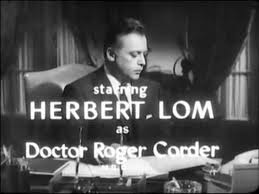
 Many of us will remember him as Dr.Roger Korda in the British television drama, The Human Jungle  (1963–64) as a Harley Street psychiatrist and this was very good and is frequently talked about even today.

                              ———————————————————

Back to First Man on the Mountain –

The acting is amazing, the cinematography is breathtaking.    The filming was on location in Zermatt Switzerland where the 14,000 foot Matterhorn stands.

PETER ELLENSHAW

However one thing must be said about the terrifying shots achieved on screen because much of the really scary stuff was actually painted in later by Matte Genius of the World – Peter Ellenshaw who had worked for Disney on Robin Hood, Sword and the Rose, Rob Roy, 20,000 Leagues etc etc and many of the breathtaking scenes in any of these films were the work of Peter –  BUT so good was he with this special craft that most of the audience wouldn’t know that for instance – when you see a castle on a hill with the action below – the castle itself was matte painted onto glass in front of the camera and fitted exactly to the picture on screen. This was done to great effect on this film. Walt Disney wrapped up filming in Switzerland and turned to Ken Annakin and said ‘ Peter will be able to paint in the scary down shots far better than we can get’ and as Ken says ‘ Walt was right to such an extent that some of the audience at a preview of the film left the cinema with vertigo after seeing the sheer cliff faces and the drops below –  although none of them were aware that a master craftsman had in fact painted them in.

So just remember that when anyone says that ‘it was filmed in Switzerland on location with great effects’ that you are being visually tricked – and you would never know.

It still remains one of the most beautiful climbing films of all time thanks in a great part to Peter Ellenshaw. His work in Mary Poppins and Darby O Gill are outstanding – in fact Darby O Gill and the Little People is rated by many film experts as being one of the outstanding special effects films of all time. I have done a post on it earlier

If you are a fan of Walt Disney, this is a must see film.
This is the way movies should be made. It’s sad Hollywood does not do it like this anymore.

posted by Movieman in Uncategorized and have No Comments

An Inspector Calls – Alistair Sim

A new version of this was done by the BBC in England a few months agp

it was actually very well done and well cast. This version though with Alistair Sim holds up very well indeed. A classic play.

Very much a one-off in character actor terms would be Alistair Sim who had in 1951 starred as Scrooge in A Christmas Carol – the very best version of this Dickens tale.  Later also in the Fifties he would appear in The Green Man a sort of comedy drama and in this he used his wonderfully expressive face to great effect. I love that film and will come back to it later no doubt.

However on to An Inspector Calls – a very well known and frequently performed play by J.B. Priestley another of my personal favourites. A great British playwright and in a different mould to Terence Rattigan but nevertheless he was a provider of thought provoking drama.

The basic stoyline is as follows:-

At dinner at the Birlings’ home in 1912, Arthur Birling, a wealthy mill owner and local politician, and his family are celebrating the engagement of daughter Sheila to Gerald Croft, son of a competitor of Birling’s. Also there  is Sibyl Birling, Arthur’s wife and Sheila and Eric’s mother, and Eric Birling, Sheila’s younger brother, who has a drinking problem that is discreetly ignored. After dinner, Arthur speaks about the importance of self-reliance. A man, he says, must “make his own way” and protect his own interests.

An Inspector Goole (Alistair Sim) arrives quite out of the blue and explains that a woman called Eva Smith has killed herself by drinking disinfectant. He implies that she has left a diary naming names, including members of the Birling family. Goole produces a photograph of Eva and shows it to Arthur, who acknowledges that she worked in one of his mills. He admits that he dismissed her 18 months ago for her involvement in a workers’ strike. He denies responsibility for her death.

Sheila enters the room and is drawn into the discussion. After prompting from Goole, she admits to recognizing Eva as well. She confesses that Eva served her in a department store and Sheila contrived to have her fired for an imagined slight. She admits that Eva’s behaviour had been blameless and that the firing was motivated solely by Sheila’s jealousy and spite towards a pretty working-class woman.

Sybil enters the room and Inspector Goole continues his interrogation, revealing that Eva was also known as Daisy Renton. Gerald starts at the mention of the name and Sheila becomes suspicious. Gerald admits that he met a woman by that name in a theatre bar. He gave her money and arranged to see her again. Goole reveals that Gerald had installed Eva as his mistress, and gave her money and promises of continued support before ending the relationship. Arthur and Sybil are horrified. As an ashamed Gerald exits the room, Sheila acknowledges his nature and credits him for speaking truthfully but also signals that their engagement is over.

Inspector Goole identifies Sybil as the head of a women’s charity to which Eva/Daisy had turned for help. Despite Sybil’s haughty responses, she eventually admits that Eva, pregnant and destitute, had asked the committee for financial aid. Sybil convinces the committee that the girl is a liar and the application should be denied. Despite vigorous cross-examination from Goole, Sybil denies any wrongdoing. Sheila begs her mother not to continue, but Goole plays his final card, making Sybil admit that the “drunken young man” should give a ‘public confession, accepting all the blame’. Eric enters the room, and after brief questioning from Goole, he breaks down, admitting that he drunkenly forced Eva to have sex and stole £50 from his father’s business to pay her off when she became pregnant. Arthur and Sybil break down, and the family dissolves into screaming recriminations.

Goole accuses them of contributing to Eva’s death. He reminds the Birlings (and the audience) that actions have consequences. “If men will not learn that lesson, then they will be taught it in fire and blood and anguish.”

Gerald returns, telling the family that there may be no ‘Inspector Goole’ on the police force. Arthur makes a call to the Chief Constable, who confirms this. Gerald points out that as Goole was lying about being a policeman, there may be no dead girl. Placing a second call to the local infirmary, Gerald determines that no recent cases of suicide have been reported. The elder Birlings and Gerald celebrate, with Arthur dismissing the evening’s events as “moonshine” and “bluffing”.

The film ends with a telephone call, taken by Arthur, who reports that the body of a young woman has been found, a suspected case of suicide by disinfectant, and that the local police are on their way to question the Birlings. The true identity of Inspector Goole is never explained, but it is clear that the family’s confessions over the course of the evening are true, and that they will be disgraced publicly when news of their involvement in Eva’s demise is revealed.

It is a classic case of  ‘unzipping a banana’ in that we all are watching a gradual revelation of cruel and heartless behaviour from so called pillars of society and they themselves are pushed into eventual acceptance of their shame as Alistair Sim’s character The Inspector looks on knowingly as each one is forced to reveal their part in the tragedy.  Although we suspect what the future holds that is left in the air.

This is a similar plot line to a 1935 Film ‘ The Passing of the Third Floor Back’ with Conrad Veidt as The Stranger who enters a house of converted flats or rooms and again gradually opens the door on similar goings on. I wonder how many of the readers here know of this film. I do have a DVD copy if anyone would like one – it is a good film. In this one the unfortunate girl is played by Rene Ray who looks very like Jane Wenham who played Eva Smith in An Inspector Calls.     Again in ‘The Passing of the Third Floor Back’ film Conrad Veidt’s character was mysterious but exhuding great power as if a divine prescence.

I have taken from the Movie Data Base an extract from a comment made about this film:-

René Ray is wonderful as Stasia, servant girl at a London boarding house occupied by a nasty landlady and a wicked bunch of boarders. Stasia was hired on the cheap from a reformatory and receives nothing but scorn and cruelty from the boarders. She longs for escape, or at least a bit of kindness: “If only there was one decent person….” Pushed to her limit, Stasia heads for the door, where—

Conrad Veidt walks in and immediately the girl senses something different in him. It’s a beautiful, surprising scene: She is suddenly smiling.

Veidt is a very polite, extremely soft-spoken and apparently nameless stranger. He leases a tiny third floor apartment in the house and quickly and quietly changes the atmosphere, the relationships, the attitudes of the other boarders.

Among the group, Beatrix Lehmann stands out as Miss Kite, a not-so-old spinster who is bitter that time is passing her by—and in whom the spark of energy and love of life is perhaps re-lit. Anna Lee gives a strong performance as the beautiful young woman who is her impoverished parents’ only valuable possession. Must she marry the wealthy Mr. Wright, thus solving their financial problems? It’s a heartbreaking dilemma; Lee makes it seem real.

Frank Cellier is the slimy Mr. Wright, a businessman whose success is achieved through laying others low. Alone among the boarders, Mr. Wright is not affected by the stranger’s mysterious presence. The action will eventually build toward a showdown of sorts…but not one in any way conventional or expected.

Although most of the action takes place in the boarding house, a joyous sequence in the film’s midsection shows the group taking a boat trip down the Thames. The characters loosen up, find enjoyment, begin friendships. The wonder in Stasia’s face when the boat goes under the Tower Bridge as it opens for them! It’s a glorious moment.

Conrad Veidt (see above still) is mesmerising and intense; –  René Ray is full of fear and joy and excitement. Their scenes together are quite wonderful.

It’s an oddball movie, not particularly easy to watch; it looks evil and human weakness pretty directly in the face. But it’s also positively moving—it’s certainly left me thinking and wondering what it’s all about – and I guarantee it will leave YOU wondering but also mesmerised by Conrad Veidt’s wonderful and powerful performance as The Stranger.

I hope everyone who reads this Blog will watch both of these films – One from the Fifties and the other much earlier.

posted by Movieman in Uncategorized and have No Comments

Separate Tables 1959

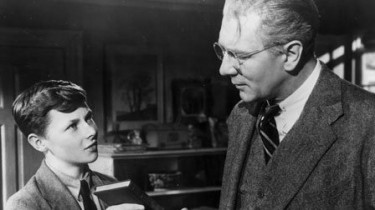
This film is from a very well known  play by Terence Rattigan – one of England’s great playwrights and is set in England in the late 40s.  At some time I will add a post on one of my all time favourite films The Browning Version 1951 again by Rattigan and starring Michael Redgrave who gives a truly magnificent performance as Crocker-Harris a public school tutor who, although possessing  a brilliant brain somehow lacks the warmth to ever gain the popularity with his pupils that he craves.

                                          The Browning Version DVD Michael Redgrave 1951 Sealed

 Back to Separate Tables and It’s the off-season at the lonely Beauregard Hotel in Bournemouth with only the long-term tenants still in residence.

Life at the hotel is stirred up when the beautiful Ann Shankland arrives to see her alcoholic ex-husband, John Malcolm, who is secretly engaged to Pat Cooper, the woman who runs the hotel.

Meanwhile, snobbish Mrs Railton-Bell discovers that the kindly if rather doddering Major Pollock is not what he appears to be although her daughter Sybil is secretly in love with the major.


It is based on a play by Terence Rattigan and is a fascinating study of people crammed together and their reactions to the unexpected.

The  film was made in Hollywood and whilst I am a big fan of Tinseltown I felt that had it been done at a British Studio, there would have been a better feel to it somehow.  I would never have cast Burt Lancaster in one of the leading roles and don’t think he was right in this one.

The Major played by David Niven is exposed towards the end of the film for being  on the seedy side but he gathers sympathy from Deborah Kerr in particular and leaves us with the thought that some kind of relationship might just emerge. It would be interesting to see a sequel to this story or even a type of follow-up but it is too late now as times and fashions have changed so much.

This film boasts a lot of very well known classic character actors who all do well even if some of them are not that stretched.

 Originally Separate Tables had been  two one-act plays written by Terence Rattigan  both taking place in the  Hotel in Bournemouth   on the south coast of England. The first play, entitled “Table by the Window”, focuses on the troubled relationship between a disgraced Labour politician and his ex-wife. The second play, “Table Number Seven”, is set about eighteen months after the events of the previous play, and deals with the touching friendship between a repressed spinster and a retired English army officer, Major Pollock played by David Niven . 


 This second play has been described as Rattigan’s masterpiece although he had so many that almost all could be described this way.

He was a wonderful playwright and deserves his place in Theatre history as one of THE greatest.   Sad that in the 70s he was ‘out of fashion’  possibly politically as much as anything – as though his style was seen to be old fashioned and therefore to be dismissed out of hand. He is now back at the top where he should be.


The Winslow Boy                                              Flarepath
 
His plays are generally set in an upper-middle-class background. He is best known for The Winslow Boy 1946, The Browning Version 1948, The Deep Blue Sea 1952  and this one SEPARATE TABLES in 1954. There were of course many others – most of them done as radio plays over the years and I must say that from the ones I have heard they make compulsive listening – but then I am a great fan of radio drama and we get very good radio drama here in England.
Wonder what is on tomorrow ???
posted by Movieman in Uncategorized and have No Comments

The Last Wagon – 1956

Now I have seen this one and it is a Western Film that I like very much – in fact it is one of my favourite westerns !!!

This was a beautifully filmed Western in Cinemascope which took us right into the USA where at that time few of us could ever dream of going.  It looked so good though and created such an impession on us youngsters. The cinemascope screen in full colour meant that we were almost there with them and the final explosive climax to the film was – and is now – breathtaking. I have not seen anything much better.

 These are action Lobby Cards  fromway back in 1956 – in England we tend to call them Front of House Stills and they were positioned outside so the passers by could get a tiny taste of what the film might be like. It was always exciting to see them though.

Comanche Todd played by Richard Widmark  is a white man who had lived 20 years with the Comanche Indians. However  he is now a condemned murderer, captured  and being taken in to be hanged. 

For security they all  join a wagon train but the it is attacked by Apaches.  A number of the younger members survive the attack  and turn to Comanche Todd as their only chance of  surviving  in hostile Indian country.

     With Apaches on their trail, Todd takes the group through the aptly named Canyon of Death.  Filmed on location in Arizona this film looks stunning; the valleys, desert and forests are simply spectacular as the landscape dwarfs the humans. 

Delmer Daves directed the film.


The beautiful Susan Kohner – one of the young survivors.

One of the youngsters was played by Tommy Rettig – and  he was an interesting character

Tommy was a successful child actor in 1954 when he was chosen out of a field of 500 to play Jeff Miller in the TV series ‘Lassie’

He also landed roles in movies, among them 1954’s River of No Return, starring Marilyn Monroe and The Last Wagon.

  Tommy Rettig being held close by Marylin Monroe. Now that would be something he would remember !!!


After his film career was over – effectively when he had grown up he was in the wilderness for quite a while before he entered a very different world – The world of Computers.

 He built the first add-on library for Clipper, and pioneered the public domain tools that make all our jobs easier. Tom wrote articles for Data Based Advisor, appeared on FoxPro Advisor satellite TV conferences, and spoke at many developer events including the FoxPro DevCons. Tom Rettig’s Help and Tom Rettig’s FoxPro Handbook taught the intricacies of FoxPro. Tom’s ability as a programmer was legendary – he was a guru with a Hollywood-famous name. Yet he was one of the most friendly, accessible people you’d hope to meet.

Tommy died in 1996 at the age of only 54.

At the end of his life, he was again reunited with Lassie, as his ashes were spread off the coast of Marina del Rey onboard the LaSea, with Lassie present to say goodbye.

——————————————————————————————

I saw the The Last Wagon  at our local Pavilion Cinema many years ago and it was ages before I was able to see it again BUT , like so many,  have never again seen it properly – that is on the Cinemascope screen and no matter how advanced our TV sets become – and they certainly are good – they cannot compete with that.

posted by Movieman in Uncategorized and have Comment (1)

Kangaroo – Australian Western ?

Some films of whatever age seem to remain well known and popular and are quite often on TV.   However this is NOT one of those – it is not easy to find and at this time I have never seen it.

Filmed on location mainly in South Australia in 1950 -51,  which at that time would  be pretty remote – well it still is today come to that – and it was the first feature film in Technicolor produced by Hollywood in Australia,

It  is an interesting film though and released  in 1952

The cast has Peter Lawford, Maureen O’Hara, Chips Rafferty, Richard Boone and Finlay Currie so a veritable Whos Who of film actors .

The story line concerns  the fortunes of an Irish immigrant Finlay Currie and his daughter  Maureen O’Hara in rural Australia. This would have been a long trip for Maureen and  following this film  she travelled back to her native her native Ireland to make The Quiet Man with John Wayne – what a good film that was.

Richard Boone, of course,  plays  the bad guy and Peter Lawford  provides the romantic interest.

Aussie character actor, Chips Rafferty has a role on his home soil.

Lewis Milestone directs and the film is in Technicolor.


 The film was also known as The Australian Story.

 Maureen O’Hara actually fought to get into this film according to her memoirs and then regretted it.    She liked the original script as a straightforward Aussie western  but much of the story was rewritten by Lewis Milestone, the director.   To quote Maureen from her autobiography ‘It was the worst piece of rubbish I had ever read’.

Whilst she hated the film she loved Australia and the Australians who were very kind.  The same could not be said for Richard Boone and Peter Lawford who were horrible to her.  The two of them had been involved in a scandal up in Sydney not long after they arrived where the press had followed them to a brothel but this incident was kept very quiet after some negotiations.

Maureen states that most of the film was made in the outback near Port Augustus with the temperature most days around 105 degrees.  Apparently the scenes in the Australian outback are nicely done but at the end of the day  the film was described as ‘ just an average western set in the land down under’.

She got back to Hollywood in March of 1951 after 5 months of filming.    The next Hollywood production shot there was The Sundowners and while star Robert Mitchum had his problems with the Aussie press also, The Sundowners is a much better film than Kangaroo.

 Kangaroo  made  its debut before distinguished audiences at gala charity previews in Canberra, Sydney, Melbourne, Adelaide, Brisbane and Port Augusta (S.A.) . It had been  “Two Years in the Making”  so said the publicity machine.

 Filming Locations:- Buckaringa Gorge, Catninga, Flinders Ranges, Quorn, Sandy Creek, Port Augusta, Woolundunga Station, South Australia; Pagewood Studios, Sydney, The Rocks, New South Wales, Australia.

Just a thought on this – around the same time the British made a South African set picture called ‘Diamond City’ with David Farrar and a very young Diana Dors. 

DIAMOND CITY 1949 David Farrar UK QUAD POSTER        Much of the film was made in England in the studio but there was also quite a lot of location filming. I always remember that my Mother and Dad had bought me a jig saw puzzle for Christmas of Diamond City – that is something that is a lovely memory for me. I have never seen such a puzzle since. If anyone out there has one I would love to know. Thank You.


posted by Movieman in Uncategorized and have Comment (1)

Walt Disney

Any forum on films,  the film industry or Hollywood  would never be complete without mention of  Walt Disney.

Walt Disney strides like a colossus among the so called giants of the industry and occupies a position in film history that is  unique.

Starting out in the 20s he made his films and went out and marketed and promoted them so successfully that by the very early fifties his name was known the world over – a name that is synonymous with movies – and he had also developed a knowledge of every aspect of film making.  However what he also had was an uncanny feel and instinct for what his audience wanted.

I do think that England played in big part in the success of Disney because up until 1949 Walt had continued successfully to make animated features – and some classic ones at that – but the company seemed always to be financially stretched.   Things improved quite a lot when, after the war  he came to England and made his first live-action film Treasure Island – see earlier post – and followed this up with another even more successful one The Story of Robin Hood and His Merrie Men. Both of these were made at Denham Film Studios. Then came  The Sword and the Rose and Rob Roy.  Back in Hollywood he then made 20,000 Leauges Under The Sea and this proved a really big box office hit for Walt Disney.   It was those films he  made here in England though that coincided with the company becoming much more stable, effectively turning round its fortunes.  They were also very good films – well the first two anyway.

At his Hollywood home in the Holmby Hills Walt Disney had had built his very own model railway capable of taking passengers all round the large acreage and helping the gardeners he employed to make use of it too. The pictures I have are from a French magazine but I’m sorry to say that I am unable to offer a  translation – but the scenes tend to be self explanatory anyway. This would have been in the very early fifties.   Here again this interest started when he visited England in the summer of 1951 to oversee  the filming of  The Story of Robin Hood at Denham – the film was released in 1952.  He spent a lot of time on that visit at Beaconsfield working and helping with the model trains. I imagine that would have been at the delightful Bekonscot model village

Ken Annakin the Director on Robin Hood said ‘“I remember that he used to go off to a place very near Denham where we were shooting, he used to go off to Beaconsfield and spend hours with a guy who had the best model railway, I think in the world.”

One thing about him though , as Ken Annakin mentions,  is that he tended to leave them to get on with the filming and didn’t stay around too much at all in the studios so his presence would not be a distraction. However he did look at the so called ‘Rushes’ of the previous day’s filming to be sure it was what he – and more importantly his audience – wanted.

Fast forward a few years now after Ken Annakin had directed four films for Disney –  Robin Hood, The Sword and the Rose,  Third Man on the Mountain and Swiss Family Robinson – all very successful with Swiss Family Robinson being a real blockbuster in financial terms alone and he was then looking at a project with Ken Annakin to make a film centred on Sir Francis Drake and his exploits to be called ‘Westward Ho’.    With this in mind Walt and his wife Lilian had again travelled to England and Ken and his wife Pauline had invited them to their home in Onslow Square in central London for a dinner party one evening.

It had been  a very pleasant evening and they had been chatting about the film and Walt had been telling Pauline of his early efforts in cartoons. The film Westwood Ho was to be made the following year in California and Hawaii although nothing specific had been agreed.  The wine had flowed quite well also throughout the evening .

At around 11 o clock Walt’s limousine arrived to transport them back to their hotel.  They had all said their goodbyes but as Walt’s wife Lilian began descending the steps outside she teetered and fell, sprawling on the ground. Ken rushed to help pick her up but Walt took over quickly. Brusquely he pushed Ken aside and led her limping to the car.

As Walt waved them away and closed the door, Pauline turned to Ken and said ‘You’ll never work for Walt again’.   ‘Don’t be ridiculious’  Ken said ‘ We’ve practically made a deal on ‘Westward Ho’.

She shook her head. ‘ I know Walt, he’ll never  forgive you for witnessing that!’

Although it seemed absurd. she was proved right.  Ken said that ‘to his sorrow I never did work for Walt again.’

Nor did Walt Disney ever make a movie out of Westward Ho


posted by Movieman in Uncategorized and have No Comments

What Was Happening at our Film Studios 1950 ?

This  Post is hopefully to underline just how much interest there was in films during the 50s – as I am sure we all know anyway. This was reflected in the number and type of magazines around at the time.

For instance The Cinem Studio was a weekly publication although To-Days Cinema – Can you believe it – was published DAILY !!!

Picturegoer and Picture Show were  popular aimed very much at the general public, whetting their appetites for the New Releases.

I do like The Cinema Studio magazine and below is an extract from the page that deals with the films being made at our very own British Film Studios.

At Denham we had Gregory Peck and Virginia Mayo filming Captain Horation Hornblower – not one of my favourites by any means – but colourful and action packed.   Don’t think I was a Gregory Peck fan really and I didn’t think he was well cast at all in a later British made film ‘Moby Dick’ made I think at Elstree.   In an article in the same publication we learn that  the Hornblower film now at Denham was being transferred to Elstree.   That seems very odd.

Also there is a film being made called ‘Tony Buys a Horse’ – a typical British comedy. I am trying to buy a DVD of the film at the moment and I am pretty sure that the name of the film on release was changed to ‘Tony Draws a Horse’.   It was a comedy starring Cecil Parker and Anne Crawford.  

Just up the road from Denham ‘Waterfront’ was in production at Pinewood with Robert Newton and directed by Michael Anderson who went on the better things with such films as The Dam Busters.  Don’t know anything much about this one though.

Picturegoer Magazine in the late fifties

Picture Show Magazine – Looks like a Royal Premier issue.


posted by Movieman in Uncategorized and have Comment (1)

Kodak and Ilford Films

Dont know why I picked these two items but I have.

The Kodak advertisment comes from a publication called The Studio Review of 1950 and obviously seeks to capitalise on the release of Walt Disney’s Treasure Island – as a child one of my first memories of the cinema.

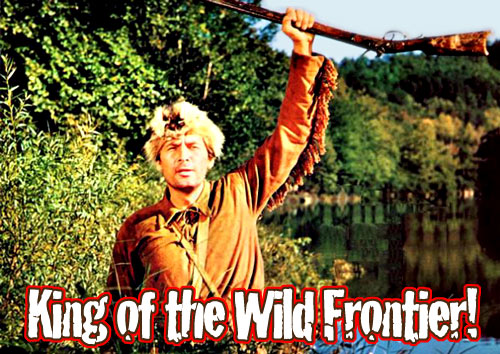
Walt Disney was a proclaimed master at promoting a film in the lead up to its release and afterwards too – as  anyone who was around at the time of Davy Crockett King of the Wild Frontier will know.   I bet most could still sing  the song from the film although they would by now have discarded the Davy Crockett hats which we all wore at the time.

The first post I did in July of this year featured Treasure Island – well I had to start off somewhere and in terms of 50s films it wasn’t a bad place to start. The boy in the picture does look a bit like Bobby Driscoll, who played  Jim Hawkins but Jim Hawkins but its not him.

We then jump a few years to May 10th 1956 by which time TV was in full swing and one of the most memorable series EVER made was The Adventures of Robin Hood with Richard Greene.

Made by Sapphire Films it became a great success in the USA.

Who could forget that thrilling opening sequence as the arrow thuds into an oak tree with rousing music accompanying it, so  setting the scene for the excitement of the next half hour. It’s funny how little things lodge in the memory because I do remember one of the episodes called  ‘The Goldmaker’ which had Alfie Bass playing that  part,  an actor we all think of as Bootsie from The Army Game and later ‘Bootsie and Snudge’.  He also had a small part in a film from the fifties that fascinates me called ‘ ‘The Night My Number Came Up’ about a dream of impending doom that becomes a self fulfiiling prophecy on a military transport plane in the far east. I will save that one for another day though.


I do recall the slogan ‘Ilford Films for Faces and Places’ at the time and I have to say that based on the above it would seem that Ilford came out on top here although it’s fair to say it was published some 5  years after the Kodak one.

In a way it just shows how the world moves on even in a few short years.


posted by Movieman in Uncategorized and have Comments (2)

Not Quite JAWS – but Victor Mature in THE SHARKFIGHTERS 1956


 Victor Mature was my dad s favourite actor – dont know why but he liked him particularly in The Robe I remember.

He was terrific as Samson in Samson and Delilah and this seemed to set him off into Biblical epics that became popular in the early to mid fifties.

The Robe was followed by Demetrius and the Gladiators and The Egyptian – all of them pretty good.

Mature was famously self-deprecatory about his acting skills. Once, after being rejected for membership in a country club because he was an actor, he joked, “I’m not an actor — and I’ve got sixty-four films to prove it!”  

 As regards The Sharkfighters it is not a film I have ever seen to be honest but I did always remember it and it seemed to me to underline the importance of timing as in almost any walk of life because this was a kind of ‘Jaws’ film although I wouldnt think anywhere near as good BUT the concept and fear in the film did not at that time gel with the public as it was to do 20 years later. The film was not successful – although I reckon it would have had a meagre budget compared to the Spielberg Blockbuster.

Victor Mature had also impressed as Doc Holliday in My Darling Clementine in 1946 for John Ford and then on to The Las Vegas Story with Jane Russell – a film I remember from TV,  years after it was made.

He also came to England – as many of stars of the day did – and made so-called epics such as Zarak and The Bandit of Zhobe but also a more limited budget type fim called The Long Haul about lorry drivers. 

I have a friend in the haulage business who, whilst not a film fan at all, often talks of The Long Haul because of the trucks on view ( of their time) and it is something of a curio to him.  It also featured Diana Dors who was always good. She was an underrated actress really .

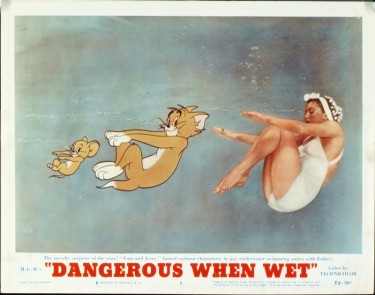
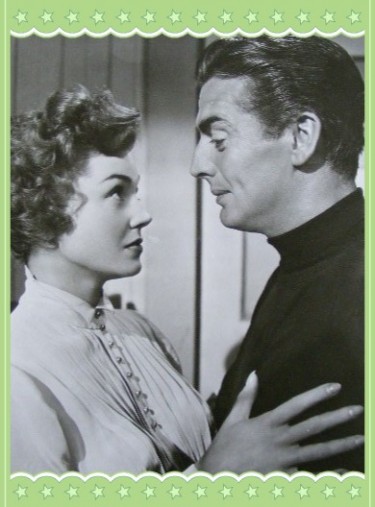
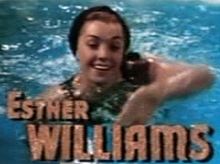
His career was very varied.     In 1952 he starred opposite Esther Williams in ‘Million Dollar Mermaid’ and she has something to say about him in her colourful autobiography ( which to me seems to stretch believability to the extreme )  and then on to ‘Androcles and the Lion’ opposite Jean Simmons and Robert Newton. This was from the George Bernard Shaw play.

Back to The Sharkfighters – I chuckled at one comment on the Movie Data Base forum which went as follows:-

Victor Mature spends more time drinking beer than fighting sharks in this shamefully bad film about a U.S. military shark-fighting operation in Cuba. It looks like it was shot with only camera (which has a hard time staying in focus). The film was probably just an excuse to take a vacation in Cuba.

Mind you another of the comments gave it quite a good review – but this one made me laugh !!

He did return to the screen after five years of of retirement  and was lured back  by the prospect of parodying himself in the Peter Sellers film ‘After The Fox’ .   He gave a brilliant performance in this. 

Mature was always a self-effacing star and  had no delusions about his own work.

He was married five times so not very successful in that area of life but overall he was very likeable and very good at his job.

 I have to say,  generally speaking, I like to watch a   VICTOR MATURE FILM.

He fitted the role perfectly as A FILM STAR  !!!


posted by Movieman in Uncategorized and have Comments (2)