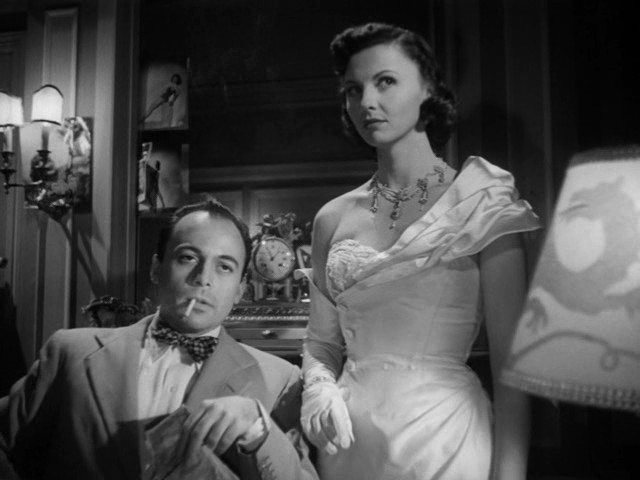
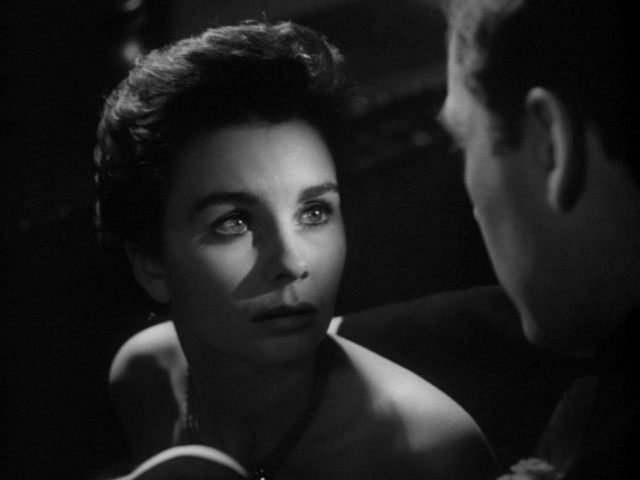
The Secret of Treasure Mountain 1956 – FOUND at last I hope !! More Pictures

The Secret of Treasure  Mountain 4

The Secret of Treasure  Mountain 5.

Above:  Promotional Poster for the Film.

I have found a film copy now and should be able to view it in the next few weeks – and also hopefully produce DVDs from the actual movie film. Quite an exciting find – This is a film that many people have looked for over many years including myself of course. Film is in Black and White and has a running time of only 68 minutes so would be a second feature / B film as we would say – and one that has not been deemed worth releasing in any format.

The Secret of Treasure  Mountain 6.


The Secret of Treasure  Mountain 7.

The Secret of Treasure  Mountain 8.

The Secret of Treasure  Mountain 8. The Secret of Treasure  Mountain 11.

The Secret of Treasure Mountain 1956

The Secret of Treasure  Mountain 12.

The Secret of Treasure  Mountain 13.


The Secret of Treasure Mountain 1956

The Secret of Treasure  Mountain 14.

The Secret of Treasure  Mountain 15.

The Secret of Treasure Mountain 1956

The Secret of Treasure  Mountain 16.

The Secret of Treasure Mountain 1956


posted by Movieman in Uncategorized and have Comments (2)

The Secret of Treasure Mountain 1956 – NEWS

The-Secret-of-Treasure-Mountain-Scenes 12The-Secret-of-Treasure-Mountain-Scenes 11.The-Secret-of-Treasure-Mountain-Scenes 10The-Secret-of-Treasure-Mountain-Scenes 9.The-Secret-of-Treasure-Mountain-Scenes 8The-Secret-of-Treasure-Mountain-Scenes 9.The-Secret-of-Treasure-Mountain-Scenes 7The-Secret-of-Treasure-Mountain-Scenes 5 The-Secret-of-Treasure-Mountain-Scenes 6This is a film I have been searching for for years – and I am not alone in this search either. I know people who have read this Blog –  a previous Post on this film – and have commented about their looking for it for ages. The Secret of Treasure Mountain 2 As stated before, the plot fascinated me as a youngster when I saw it but due having to catch a bus to the remote village I lived in, I missed the climatic ending so never knew the outcome.  For some reason I thought that it involved an Inca treasure but that was not the case. The Secret of Treasure Mountain 3. The film was released in 1956 and was a B movie with a running time of 68 minutes. The Secret of Treasure Mountain 1 These scenes are from the 16 mm film – long lost. The Secret of Treasure Mountain Opening Scenes The News is GOOD in that I have found a 16 mm print of the film which as we speak is on its way here – I had better be wary and say that with luck it will be here within a week.

The-Secret-of-Treasure-Mountain-Scenes 2 This is GREAT NEWS for films fans I know. I may have to arrange a new WORLD PREMIER in the UK – new for this century I would guess !!  

posted by Movieman in Uncategorized and have No Comments

Where no vultures fly – more COLOUR scenes

Where No Vultures Fly (1951)
Anthony Steel
 
Where no Vultures Fly is the fictionalised story of Mervyn Cowie who was the driving force behind the creation of Kenya’s National Parks. Bob Payton (Anthony Steel) is a game warden who grows sick of the wanton destruction of the country’s wildlife by big game hunters.
His wife Mary (Dinah Sheridan) doesn’t want to  in the middle of nowhere and would prefer their son Tim (William Simons) to attend school.
Anthony Steel, William Simons and Dinah Sheridan
Anthony Steel and Dinah Sheridan
This original poster from the film’s British release BELOW :-

posted by Movieman in Uncategorized and have Comments (2)

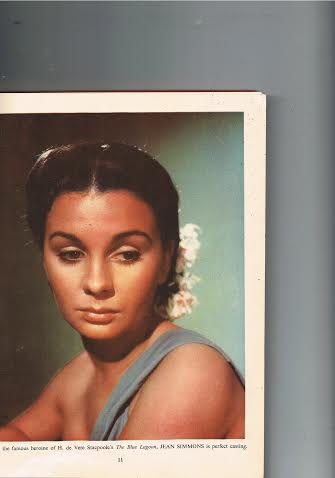
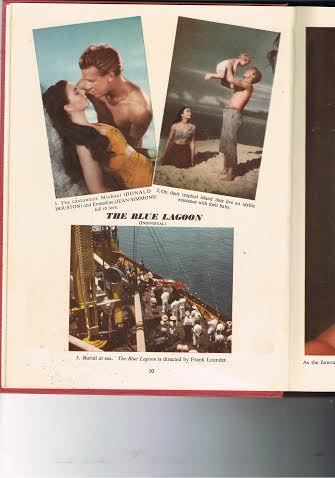
More Stills from The Blue Lagoon 1949

posted by Movieman in Uncategorized and have No Comments

Christopher Lee – Corridor of Mirrors 1948

Christopher Lee  died last week at the age of 93. His astonishing near 70 year film career began in 1948 with this film Corridor of Mirrors although he was not star billed in those days – and as we all know it would take another decade before he achieved fame in The Curse of Frankenstein and then to me the role by which he will be remembered Count Dracula. He did of course also play the title role in The Mummy 1959 which was a film I really liked – both he and Peter Cushing excelled in this one.

Corridor of Mirrors is not a well known film – in fact I have never seen it – but ironically and coincidentally it will be released on DVD on Monday 15th June 2015.  I have ordered a copy. This film was a vehicle to push the star Edana Romney to the top as it was financed by her then husband. I always thought that she was married to Edgar Lustgarten but that is not correct – I am mixing up the link between them – in fact Edana Romney and Edgar Lustgarten had together presented a TV show in the mid fifties – in the early days of British Televsion.

Corridor of Mirrors 1948

posted by Movieman in Uncategorized and have Comments (4)

Where No Vultures Fly 1951

ANTHONY STEEL, the actor, who has died aged 81, was the boyish, square-jawed star of such films of the 1950s as The Wooden Horse, Albert RN and The Sea Shall Not Have Them; but at the height of his fame he married the Swedish actress and former Miss Universe Anita Ekberg, and thereafter his career took a rapid turn for the worse.

Steel was a tall, handsome, former Guards officer, and thus ideally cast in such tales of wartime endurance as The Malta Story (1953). In the late 1940s, fresh out of the Army, he was put under contract by J Arthur Rank after having been introduced to him by his girlfriend, Rank’s niece. Within a few years he was, with Dirk Bogarde, Rank’s best paid actor.

A former guardsman and the epitome of good breeding, he excelled in officer roles in stiff-upper-lip war stories like The Wooden Horse and The Sea Shall Not Have Them, but his own story illustrates the vagaries of fame. In 1951 he starred in the Royal Command Performance film Where No Vultures Fly and was presented to the Queen, and five years later he wed one of the most glamorous stars in the world, Anita Ekberg. Forty years after that he was living in sheltered accommodation.

where no vultures fly

Born in Chelsea, London, in 1919, Anthony Maitland Steel was the son of an Indian army officer. Educated in Ireland, then at Cambridge University, he joined the Grenadier Guards at the outbreak of the Second World War, but at the end of the war decided to take up acting and appeared in small parts on the stage. When his girlfriend, a niece of J. Arthur Rank, introduced him to the film mogul at a party, Rank recognised that Steel could be an asset to British films and signed him to a contract.

For several years the Rank Organisation, noted for its “charm school” in which young actresses were groomed, carefully prepared Steel for stardom by giving him small roles in over a dozen films in three years, including Saraband for Dead Lovers (1948), Quartet (1948), The Blue Lamp (1949), Trotti True (1949), Christopher Columbus (1949), and The Chiltern Hundreds (1949), in which, foreshadowing many of his later assignments, he played an army adjutant.

His first major opportunity came when he was cast as one of the officers who devise a novel method of escaping from a prisoner-of-war camp in The Wooden Horse (1950), based on Eric Williams’s autobiographical book. The film’s director Jack Lee said, “Tony Steel was fine to work with just a physical type, a young chap who could do certain things, though he didn’t have much acting to do in this.” The film was a great success, and established Steel as a star personality.

His next film, Another Man’s Poison (1951), was dominated by the extrovert performance of Bette Davis, and Steel seemed pallid in comparison as the engineer engaged to her secretary but seduced by Davis’s wiles. He was happier starring in Where No Vultures Fly (1951) as an upright game warden who campaigns for a national safari park after he witnesses the slaughter of wildlife in East Africa. Not only was the film chosen for the Royal Performance, but it was the top British moneymaker of 1952.

Steel co-starred with Patricia Roc in the patchy comedy Something Money Can’t Buy (1952), as an army officer who finds it hard to adjust to civilian life after the war, and he was an officer helping a plantation owner (Jack Hawkins) fight off terrorists in Malaya in The Planter’s Wife (1952), a popular film co-starring the Hollywood star Claudette Colbert. The following year Steel starred in two hit war movies, The Malta Story, with Alec Guinness, and Albert RN, in which he was once again a resourceful officer who makes a lifelike dummy to cover the escape of prisoners from a camp in Germany. At the start of 1954 he was voted second to Jack Hawkins in popularity with British filmgoers, and it was announced that he and Dirk Bogarde were the highest-paid actors in the Rank Organisation.

He reproduced his role as a game warden in West of Zanzibar (1954), a sequel to Where No Vultures Fly in which this time he was tracking ivory poachers, and he made a recording of the theme song by Jack Fishman, “Jambo”, which sold well.

His career reached its peak in 1955. In another Second World War story, The Sea Shall Not Have Them, co-starring Bogarde and Michael Redgrave, Steel was an Air Sea Rescue officer who rescues four downed fliers who are adrift in a dinghy in the North Sea, and the year also saw the release of the merchant-navy drama Passage Home and Storm Over the Nile, a remake of The Four Feathers, in which he had the central role of Harry Faversham, branded a coward by his fellow officers after he resigns his commission in 1895 rather than go to the Sudan.

It was in December 1955 that Steel met the blonde Swedish actress Anita Ekberg, a former Miss Universe, at a film premiere. “Anita is the most beautiful woman I have ever met,” he declared, and they were married the following year in Florence. It was Steel’s second marriage, but Ekberg’s first. When Steel announced that he was moving to Hollywood at the request of his wife, the Rank Organisation (in particular its head of production John Davis) considered it an act of ingratitude after the grooming and promotion they had given him, and there is little doubt that the decision damaged his career considerably.

His behaviour, though, had been giving cause for concern. His background and demeanour were in total contrast to that of the extrovert Ekberg, and soon there were stories of the couple’s arguments and heavy drinking. Twice Steel was arrested for drunken driving, and he acquired a reputation as a hell-raiser who would physically attack paparazzi who tried to photograph his wife. His stay in Hollywood yielded just one film, a little-seen thriller with a post-Civil-War western setting, Valerie (1957), co-starring Sterling Hayden and Ekberg.

When he returned to Europe, Steel played in Hugo Fregonese’s superior drama Harry Black (1958), though his role was secondary to that of Stewart Granger, then took the leading role of a sterile husband in Raymond Stross’s production A Question of Adultery (1958), a sensationalist treatment of artificial insemination which anticipated the sort of exploitation movies in which Steel ultimately found himself.

His last prestigious leading role was in Michael Powell’s unsuccessful attempt to recapture the flavour of The Red Shoes with a bland blend of romance and ballet, Honeymoon (1959). Ironically, Steel and Ekberg were divorced in the year Honeymoon was released, with Steel stating, “It was no fun being married to a glamour girl.” (When in 1964 he married for a third time, it was to a former Miss Austria.)

In 1960 he took up residence in Rome and made Revenge of the Barbarians, the first of several films he made on the continent, including Vacanze alla baia d’argento (1961), Tiger of the Seven Seas (1962), Last of the Renegades (1965, one of the German series of westerns featuring the hero “Winnetou”), and Le Fate (1966), called Sex Quartet in the UK. He had small roles in the war epics Anzio (1967) and Massacre in Rome (1973), but as his appearances became fewer he took roles in exploitation features such as Run Rabbit Run (1975), in which he played a music conductor who falls in love with his mistress’s teenage daughter, The Story of O (1976), Hardcore (1977) and Let’s Get Laid (also 1977).

Mainstream audiences saw him for the first time in several years when he turned up, looking much older but still distinguished, in the film version of Jackie Collins’s book The World is Full of Married Men (1979). He had returned to Britain, where he found work touring in stage productions, together with guest spots in such television series as The Professionals, Bergerac and Robin of Sherwood, and played in the BBC’s epic three-hour science-fantasy production Artemis 81 (1981), which featured Sting as an alien.

But work was scarce and before the end of the decade he had moved from his room in a modest Earls Court hotel to sheltered accommodation in a council flat in Northolt, west London, cutting himself off from his agent and his old friends. In the mid-Nineties his agent David Daly discovered where he was living, found him work in the television series The Broker’s Man (1999), and arranged to have him admitted to Denville Hall, a London home for retired theatrical folk.

Daly said, “He was a very private man. If he decided that things weren’t right, he would withdraw into himself and not contact anybody.”

where no vultures fly 2

William Simons enjoyed his time on HeartbeatWilliam Simons enjoyed his time on Heartbeat

– but as a child star he was in Where No Vultures Fly in 1951


A child actor from the age of eight, William has starred in many popular TV dramas in a career spanning more than 60 years. Swansea-born William, 72, who was widowed in 2002, now lives in London with his second wife, Jackie.”I grew up in south Wales because my father was stationed there during the war and then we moved to north London.”As a boy, I showed an aptitude for acting, singing and dancing, so my mother was asked if I’d like to star in family drama No Place For Jennifer (1950) with child actress Jannete Scott.”Then I spent 15 months in the Kenyan bush playing Anthony Steel and Dinah Sheridan’s son, Tim, in Where No Vultures Fly (1951) and the follow-up West Of Zanzibar (1954).


posted by Movieman in Uncategorized and have Comment (1)

Tarzan’s Magic Fountain

Tarzans Magic Fountain
Tarzan’s Magic Fountain (1949)
Directed by Lee Sholem
Sol Lesser Productions / RKO Radio Pictures

Tarzan’s Magic Fountain marked the beginning of a new era for Tarzan films.

Film Producer  Sol Lesser  and RKO Radio Pictures eventually cast 29-year-old  Lex Barker as Tarzan.

Lex Barker who was a native of Rye, New York and a member of a prominent family, and a veteran of World War II had been chosen to take over the role of the ape man from the legendary Johnny Weismuller.

Barker 1949

The script for Tarzan’s Magic Fountain, by Curt Siodmak and Harry Chandlee, tells a story that will be familiar to fans of the film series. Greedy outsiders become aware of something very valuable hidden deep within the jungle, and Tarzan must act to  guard it.

While flying her aircraft some years ago,  Gloria James Jessup (Evelyn Ankers), had been lost and presumed dead but miraculously she walks out of the jungle one day and doesn’t appear to have aged a day since she disappeared.

However a certain Mr. Trask (Albert Dekker) realises that if she’s telling the truth — and there really is a fountain of youth — and that he could stand to make millions selling the water.

The beautiful Brenda Joyce returns in the role of Jane. She appeared in four Tarzan films opposite Weissmuller, and her presence in Tarzan’s Magic Fountain helps to make the transition from Weissmuller to Barker a smooth one. In fact she is the only ‘Jane’ to appear with TWO different Tarzans.

She also plays a pivotal role in the film’s story, as she becomes close friends with Gloria and decides she will do anything to help Gloria be happy — even if it means doing exactly what Tarzan warns her not to do.

Joyce Barker Ankers

Tarzan’s Magic Fountain is a great entry in the series. It’s full of excitement, fantasy and action with lots of  animal action too. Elmo Lincoln, who played Tarzan in the first film adaptation of Burroughs’s novel, Tarzan of the Apes (1918), has an uncredited cameo as a fisherman repairing his net.


posted by Movieman in Uncategorized and have No Comments

Screening: Hondo (1953) In 3-D At The Museumof Modern Arts

Starring John Wayne, Geraldine Page, Ward Bond, James Arness, Leo Gordon

As part of the Museum Of Modern Art’s 3-D Summer, Hondo (1953) will return to New York in 3-D for the first time in decades. There are a number of showings from June 13 until July 4, with Gretchen Wayne introducing the first one.

Of course, Hondo is a terrific picture.

Directed by John Farrow
Screenplay by James Edward Grant
From a short story by Louis L’Amour


posted by Movieman in Uncategorized and have Comment (1)

Rex Harrison

Rex Harrisons

Rex Harrison was married six times.

With his slicked back hair and clipped accent cinema audiences adored the star of a string of hit films including My Fair Lady and Doctor Dolittle. He enhanced his reputation by serving in the RAF during the war. However it’s claimed Harrison’s suave image was a sham. According to the author of a new book the Oscar winner was a cad who treated people with contempt.Eileen Younghusband, who was a Women’s Auxiliary Air Force officer and served alongside Harrison in the 1940s, says: “He treated us like dirt. We were nothing because we didn’t have anything to do with his film career. He really thought he was someone special.”Eileen, now 93, first came across Harrison when he was already a screen heart-throb. He was an RAF officer while she worked in an operations room. She would encounter him in the mess where men and women mingled over breakfast and afternoon tea, and her illusions were soon shattered.In her book One Woman’s War she writes: “I particularly disliked him because of his table manners. He would fill his mouth with toast and marmalade and eat so messily that the soggy bread would ooze out of the side of his mouth. Quite revolting!”

Harrison claimed that he arrived at Landis’s home to find her already dead from a drugs overdose. But rumours persisted that she was still alive and instead of calling for an ambulance he telephoned his publicist to ask for advice.

Eileen also recalls how Harrison used the public mess telephone to call his latest mistress, apparely not caring who overheard.It’s a highly unflattering portrait of one of the nation’s greatest idols but we shouldn’t be surprised.Throughout his lifetime Harrison gained a reputation for being difficult and was often critical of his fellow stars. He also had a tangled personal life, marrying six times and allegedly driving two women to suicide.Harrison, the son of a cotton broker, was born in Huyton, near Liverpool, in 1908, later changing his name from Reginald to Rex. He overcame the partial loss of the sight in one eye following a bout of measles in childhood to first appear on stage in 1924.

His breakthrough West End performance was in a play by Terence Rattigan and he made his film debut in The Great Game in 1930.

War interrupted his career and he joined the RAF in a non-flying position, rising to the rank of Flight Lieutenant.By the time the conflict was over he had divorced his first wife Collette Thomas and married German actress Lilli Palmer. Harrison won plaudits for his performance in Blithe Spirit in 1945 and became an international film star in 1946 when he won a title role in Anna And The King Of Siam.At that stage he was earning the huge sum of $4,500 a week but two years later a scandal threatened to derail everything.He began an affair with starlet Carole Landis, 12 years his junior, who committed suicide after his ardour cooled and he refused to leave his wife.

Harrison claimed that he arrived at Landis’s home to find her already dead from a drugs overdose. But rumours persisted that she was still alive and instead of calling for an ambulance he telephoned his publicist to ask for advice.

Later Harrison is alleged to have bribed a police officer to destroy a suicide note. He became known as Sexy Rexy for his philandering ways and with his film career apparently in ruins focused on stage work for the next decade.

Harrison

Above – Rex Harrison threw his heart into acting, playing Caesar in the 1963 production Cleopatra.

For once he was eclipsed, by the affair between Elizabeth Taylor and Richard Burton.

After a series of solid performances he returned to the big time with My Fair Lady, which began its run in 1956, playing the waspish Professor Henry Higgins.However Harrison was not impressed by his co-star Julie Andrews who was cast as Eliza Doolittle, his Cockney protégée.

“If that b***h is still here on Monday I’m quitting the show,” stormed Harrison during their fraught Broadway run.

One of the numbers included the line, “I’ve grown accustomed to your face”, but Harrison is said to have refused to sing it to Andrews whom he despised because she initially struggled with the role.

In FACT Harrison was himself far from perfect and admitted he could barely sing.

“Originally I had a block about appearing in a musical,” he recalled years later.

“I went to a voice teacher for a while but that did no good. My range is about one and a half notes. I ended up talking the musical numbers, which was revolutionary at the time.”His poor singing voice mattered not a jot and he won a Tony award for My Fair Lady.Andrews later used a profanity to describe Harrison but said he was such a good actor that she could forgive his boorish and selfish behaviour.Ironically when Audrey Hepburn was later cast ahead of Andrews in the film version of My Fair Lady, for which Harrison won an Oscar, he is said to have thrown another tantrum.

He believed Hepburn was badly miscast and referred to her as “bloody Audrey”.

In 1957 Harrison married the vivacious actress Kay Kendall. She did not know she was terminally ill but her doctor confided in Harrison, whose wife Lilli agreed to a divorce so he could nurse Kendall through her final days.

She died two years later aged just 32 leaving Harrison devastated. From that moment he always wore a ring Kendall had given him.


In his memoirs last year Sir Roger Moore remarked: “Rex Harrison could be a rather mean-spirited man and he wasn’t regarded very warmly by those who knew him. The one decent thing he did was look after my lovely friend Kay Kendall when she became ill.

The one very decent thing Rex Harrison did do was look after his third wife, my lovely friend Kay Kendall, when she became ill

 When Rex was in My Fair Lady on Broadway she used to have to stand at the side of the stage when he sang ‘I’ve grown accustomed to your face’, as he refused to sing it to his co-star Julie Andrews, whom he hated with a passion.

The producers wouldn’t hear of dropping it and so Rex said the only compromise would be if he could sing it to Kay.

Ironically, when he won the Oscar for the film version in 1964, he smiled widely as he dedicated it to his two fair ladies: Julie Andrews and Audrey Hepburn.

—————————————————————————————————————————————————–


As Harrison’s fame grew so did his reputation for domineering and unreasonable behaviour on set.

My Fair Lady

 In My Fair Lady Harrison believed Hepburn was badly miscast and referred to her as “bloody Audrey”
Charlton Heston was another co-star to find him difficult stating after working together on The Agony And The Ecstasy: “Rex was in fact a kind of thorny guy but he was so good it was worth the trouble it took.”Many who met him commented on his huge ego and actor Patrick Macnee said: “He was one of the top five unpleasant men you’ve ever met.”Matters came to a head during filming of Doctor Dolittle in 1967. During shooting in St Lucia Harrison moved his yacht to block the cameras in a contract dispute. His antics were so bad that he was replaced by Christopher Plummer until he agreed to be less tyrannical.There were also heated rows with his latest wife, fiery Welsh actress Rachel Roberts.

During that period both were drinking heavily and they would frequently stage their cat-fights very publicly at Hollywood parties.

Scandal continued to dog him although he never found himself short of work and went on to appear in more than 40 films.

He divorced Roberts in 1971 but she committed suicide in 1980, apparently after a failed final attempt to win him back.

His fifth marriage, to Elizabeth Rees- Williams, who was 28 years younger and had been married to actor Richard Harris, lasted four years.

“Wives are like gilt-edged stocks,” Harrison once joked. “The more you have the greater your dividends.”

Harrison, who had homes in London, New York and Portofino, Italy, didn’t mellow in old age. When he last appeared on stage in London in the 1980s a promising young female cast member had the audacity to suggest he was getting a line slightly wrong.

He smiled his deadliest smile and replied: “Mmm, how very interesting to be given advice from quite the worst actress on the English stage.”

He never liked the new National Theatre where the actors’ names were billed alphabetically. “Would it help if I changed my name to ’Arrison?” he asked director Peter Hall.

Harrison, who had two sons, was finally knighted in 1989. The honour was no doubt delayed for many years because of his prolific womanising and arrived just in time. He died only 11 months later aged 82 from pancreatic cancer.

He was survived by his sixth wife Mercia Tinker, another in the line of much younger women.

Rex Harrison was a snob and had a terrible temper. He was loathed by many of his peers and treated many of the women in his life atrociously – but no one ever accused him of lacking talent.

posted by Movieman in Uncategorized and have No Comments

The Man from Colorado

I had never seen or even heard of this film until today 24 May 2015 when it was shown in the UK on Film 4. What a great western this is. In colour  too but actually released in 1948 so technically not really a Fifties film but I am cheating a bit because it was so good.

The Man from Colorado

If you haven’t seen it then please do. Glenn Ford and William Holden star together in this one for Columbia Pictures.   The Man from Colorado, the first Western after the War, was really the first where they were clearly mature, seasoned players doing a serious job. In this slightly unusual psychodrama, Ford is the Union Colonel who becomes a federal judge and Holden the Captain who becomes his US Marshal. We soon perceive, however, that the relationship should have been the other way round as Holden shows the decency and authority required for command while Ford gives a fine performance of a man descending into megalomania. To complicate the issue, the two are rivals for the hand of the fair Caroline (Ellen Drew), who marries Glenn but should have taken Bill.

The Man from Colorado 2

Released in 1948 this dark movie is  directed by Henry Levin (better known for sword and cloak dramas) and well photographed by William Snyder. The film starts on the very last day of the Civil War as Ford gives the order to wipe out a straggling Confederate war party in Colorado despite its Captain running up the white flag. William Holden is shocked but says nothing for the moment out of loyalty. Ford’s villainy worsens in civilian life as he confides his madness to his journal but will not admit it to anyone else. Glenn Ford’s friend Edgar Buchanan (who appeared in three of Ford’s first four Westerns) as the crusty, kindly old Doc makes excuses but the paranoia and blood-lust of Ford grows as he becomes a hanging judge and leads posses to run down criminals or those he only suspects might be criminals.

The Man from Colorado 3

Glenn Ford’s madness – Illustrated in the above picture –  is always measured against the rock-like common sense of William Holden. Glenn Ford is extremely good as the commander descending into insanity and Holden, handsome and noble, is splendid as the former friend who stands up to him. Ellen Drew is moving and strong as the wife even if such parts didn’t allow for much in those days. James Millican plays Jericho Howard, the ex-soldier. The film ends with  with a climactic fire and showdown. Glenn Ford – wild eyed and completely mad – and William Holden are at the top of their game in this one

posted by Movieman in Uncategorized and have Comment (1)