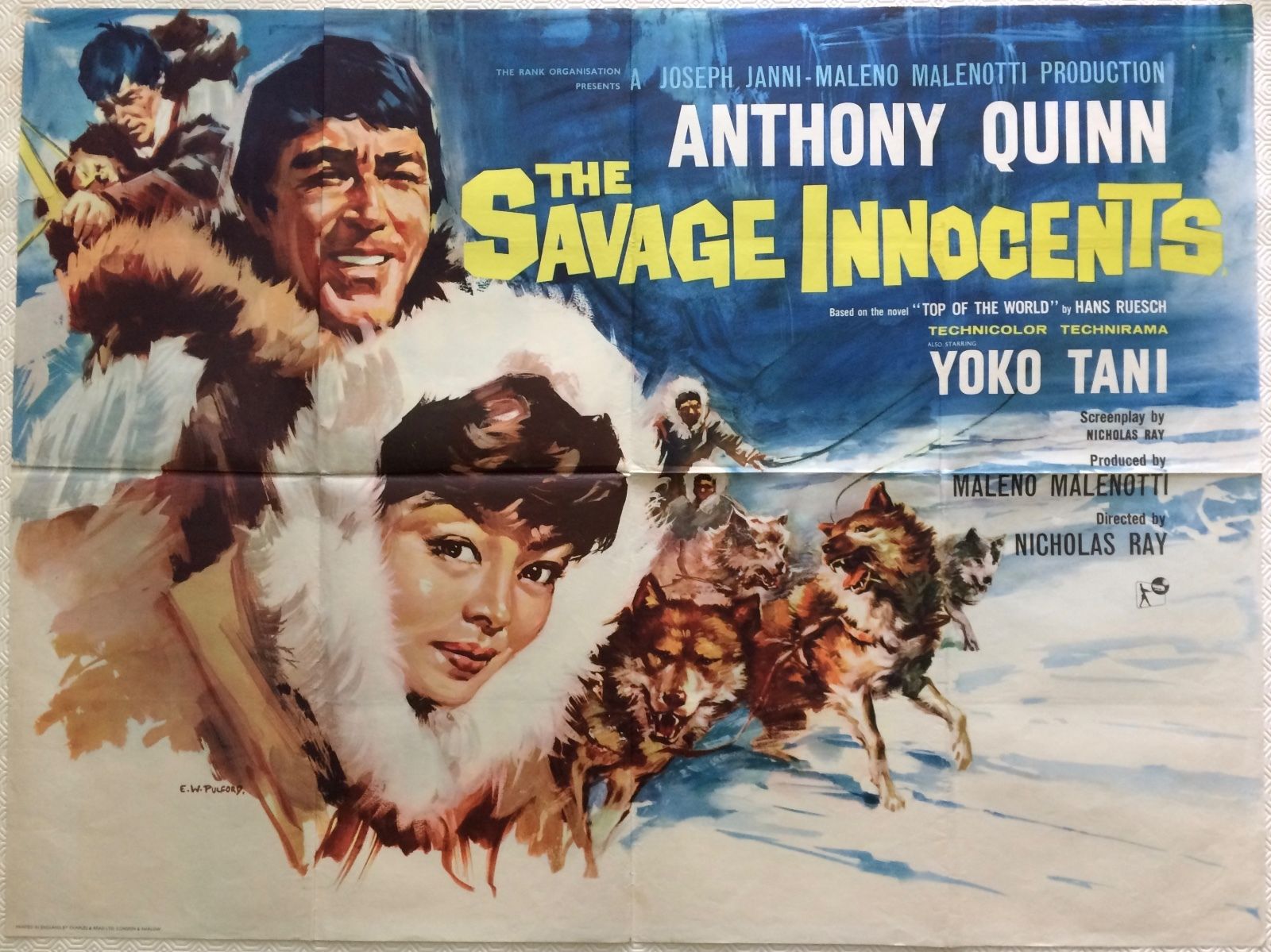
The Savage Innocents 1960 – The Mighty Quinn

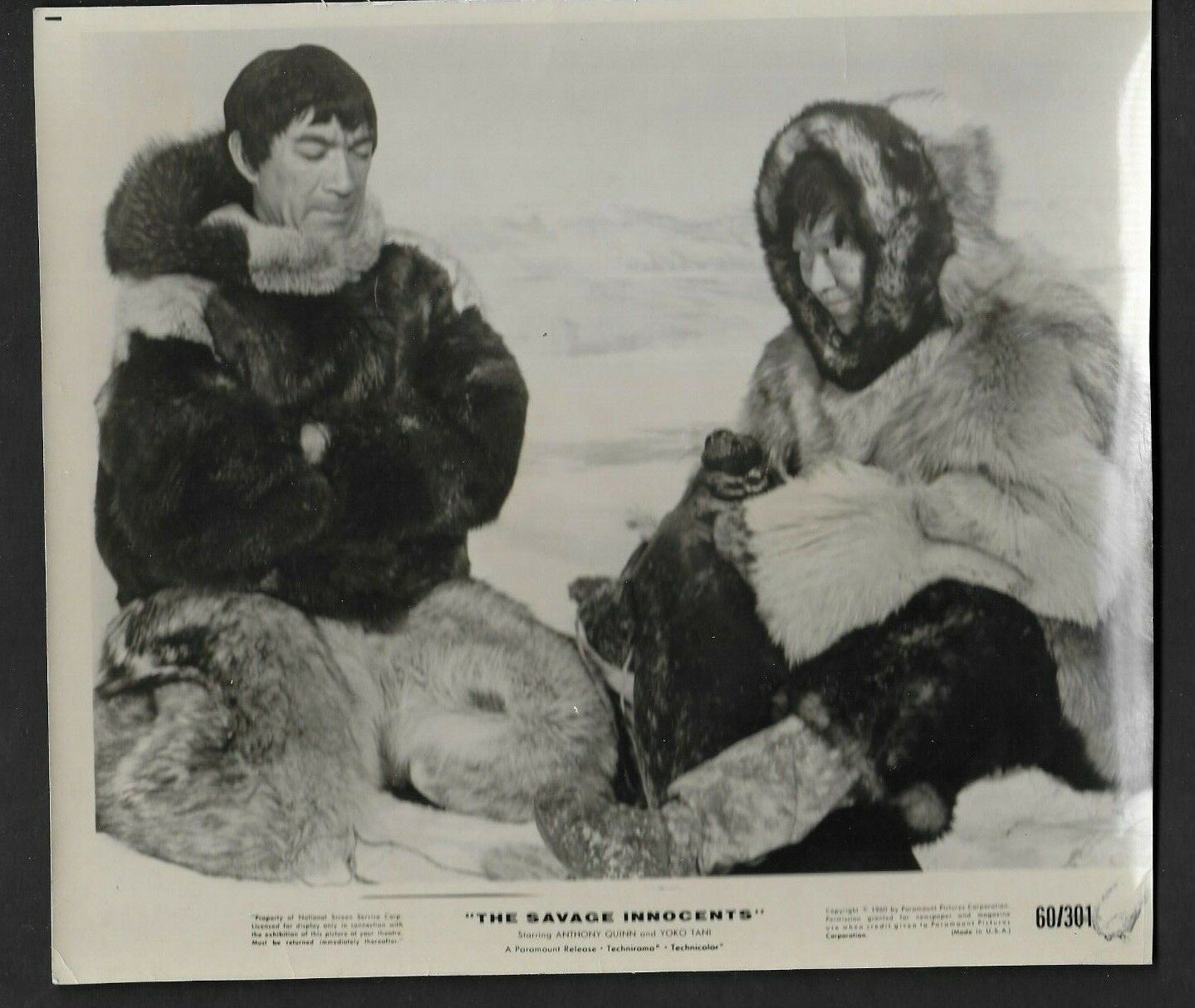
Anthony Quinn on good form here giving a good performance as a native Alaskan Inuit and his daily struggles and challenges. A drama which verges on documentary – and for that matter travelogue –  showing the daily challenges and struggles faced by these people.

Great cinematography of the Alaska wilderness its makes you feel as if your right there in the igloo with Inuk and his wife Asiak as they eat whale blubber and hunt seal and birth babies.

The Savage Innocents 2

It gives a feel of life in the Alaskan wilderness. Scenes such as this one above and below looked even more impressive in Cinerama.

The second unit shot some really quite beautiful location footage in the Arctic, and the cinematography throughout is impressive.

The Savage Innocents 3


Great scenes like the ones above.

The Savage Innocents


I remember seeing this one at the local cinema at the time. Really good but sadly not well known nowadays seemingly.

The Savage Innocents 4

It is filmed in  Technirama .

The film is an accurate portrayal of Eskimo customs I would imagine.  Filmed at Pinewood Studios in England – and on location in Alaska.

The Savage Innocents 5

It contrasts the cultural practices of Inuit and North American societies at a time when many Inuit people had not yet encountered Western influence.  It is full of memorable performances and terrific, and at that time, unusual scenes.

 Anthony Quinn brings tremendous verve to the role, and there are several other memorable parts by the supporting cast, particularly Peter O’Toole. The film also has Yoko Tani in a leading role.

In the late sixties, Bob Dylan was asked how he came to write the song “Quinn the Eskimo”. He replied that he’d seen this film in which Anthony Quinn played an Eskimo- The Savage Innocents. He wrote the song based on that idea.


posted by Movieman in Uncategorized and have Comment (1)

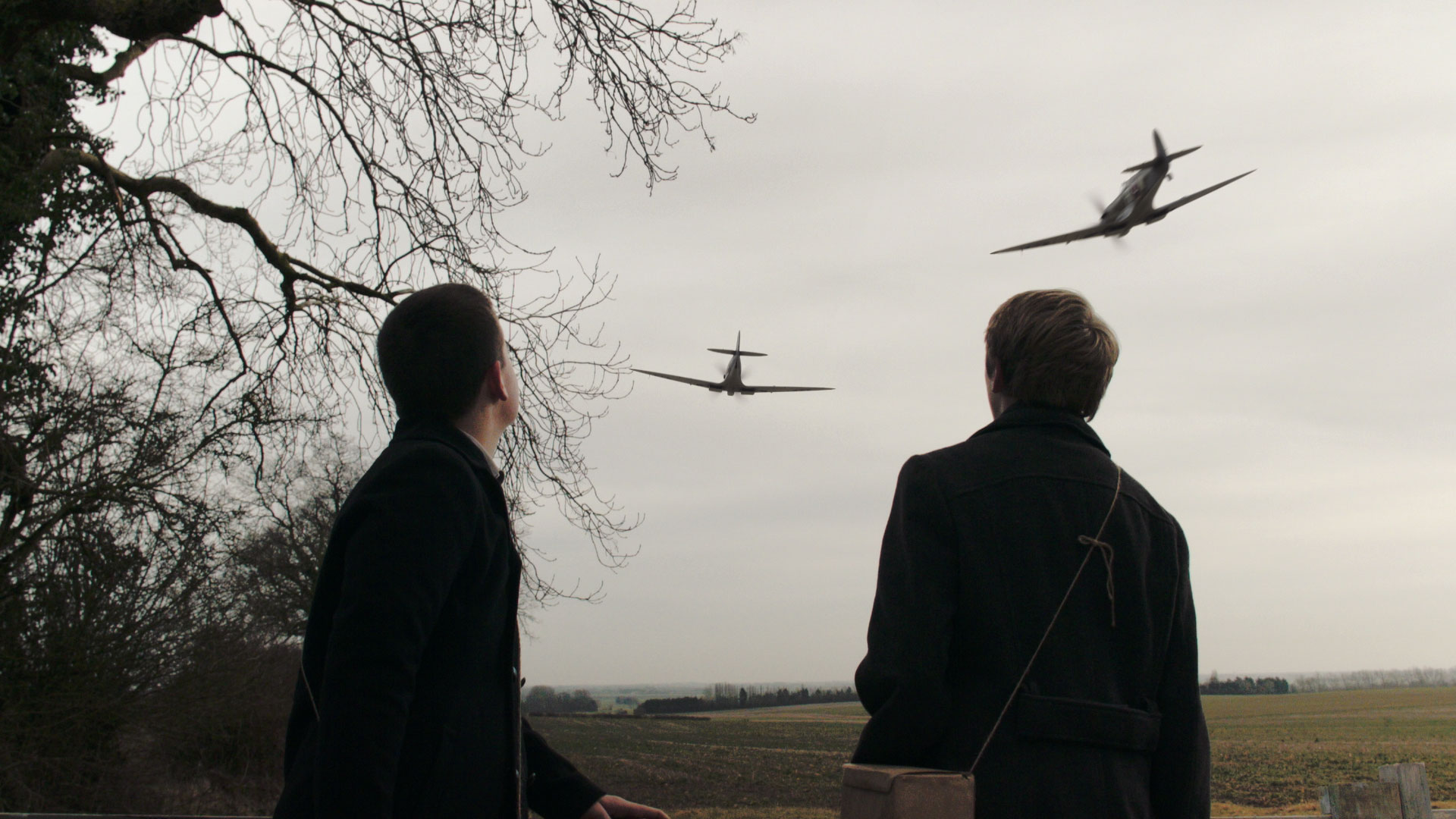
Lancaster Skies 2019 – A New Film – Made In Lincolnshire

Now this of course is a very new film – so technically not a Fifties Film but it’s theme is one that might well have been plucked right out of the era.

Made In Lincolnshire – actually at the film studios of Tin Hat Productions in Sleaford.

Lancaster Skies 2019 2


ABOVE – A Lancaster Skies Day held at Freiston Nr Boston very recently. Looks like the Production Team and the Actors were there. 

Callum Burn has juts had his feature film Lancaster Skies released in 40 cinemas (including Vue) up and down the country from  Feb 27. with further showings  scheduled over the coming weeks at various venues.

The film is almost a throw-back to the classic British war films of the 1940’s and 50’s, and it is being released by Kaleidoscope Entertainment. For those who cannot catch the big screen release,  the film will receive a DVD release in May, and it will be marketed on a Worldwide Scale.

Lancaster Skies 2019


Speaking  about the production, Callum Burn explained how important it was for the film to capture an authentic look and feel of the era, with scale models used for the majority of the visual effects.

“The result is a film with the power to make an audience feel that they have been transported back to the picture houses of the past.” 

From next month, it will be screened in cinemas (including Boston’s Savoy) and the very famous Kinema In The Woods at Woodhall Spa – and from May it will be available to take home on DVD and Blu-ray in countries as far afield as the US, Japan, and Australia.

Lancaster Skies 2019 4

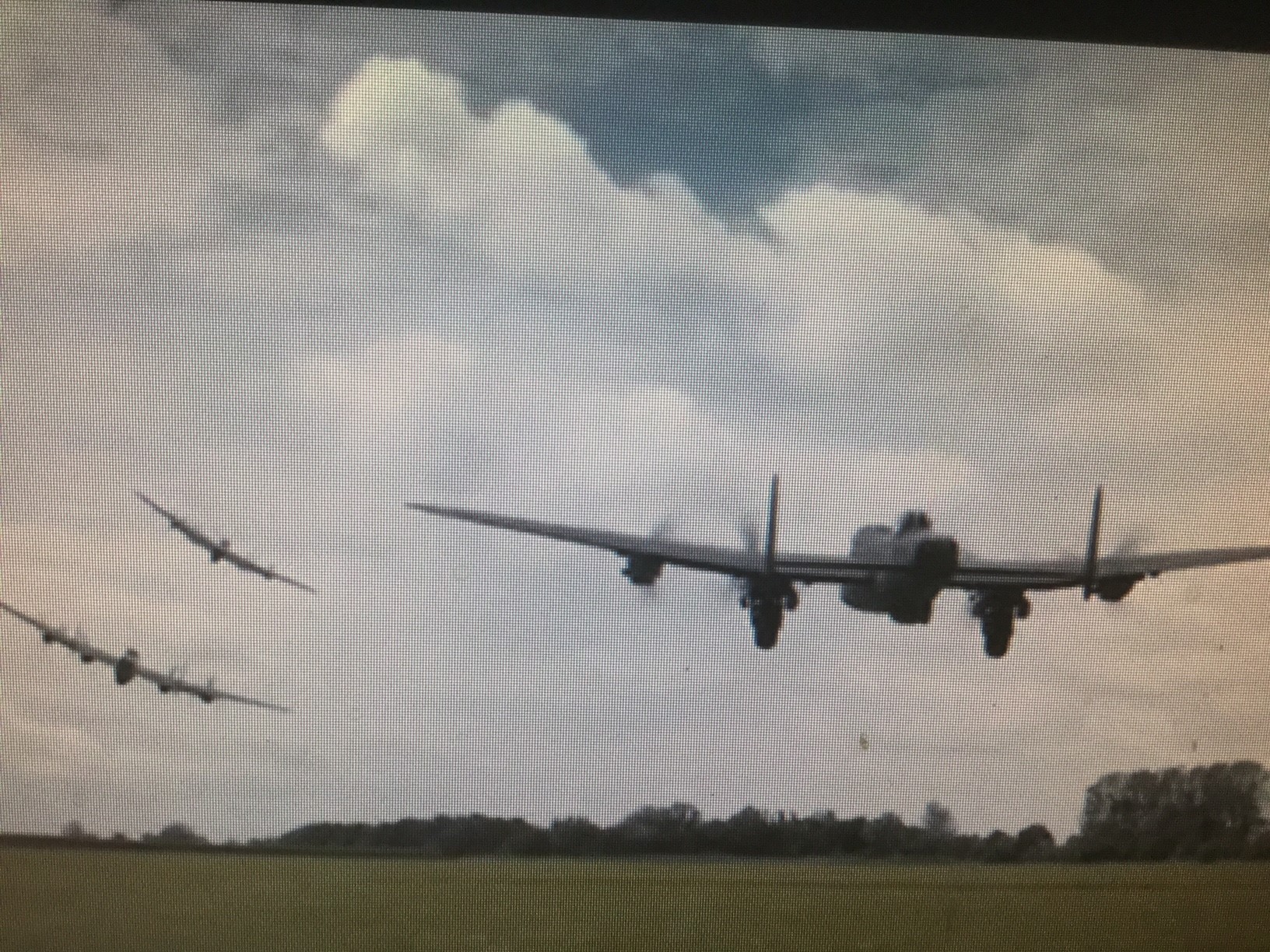
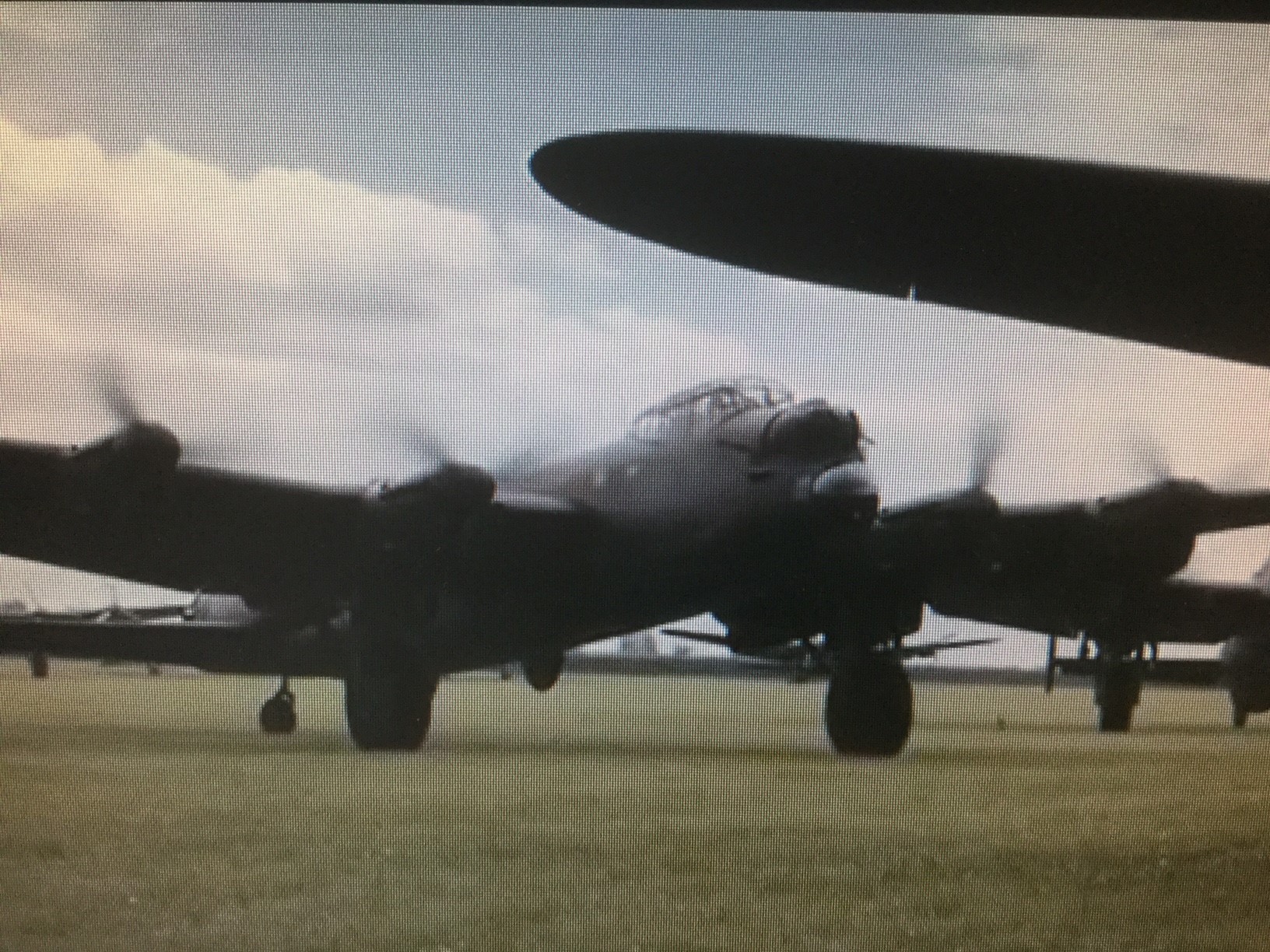
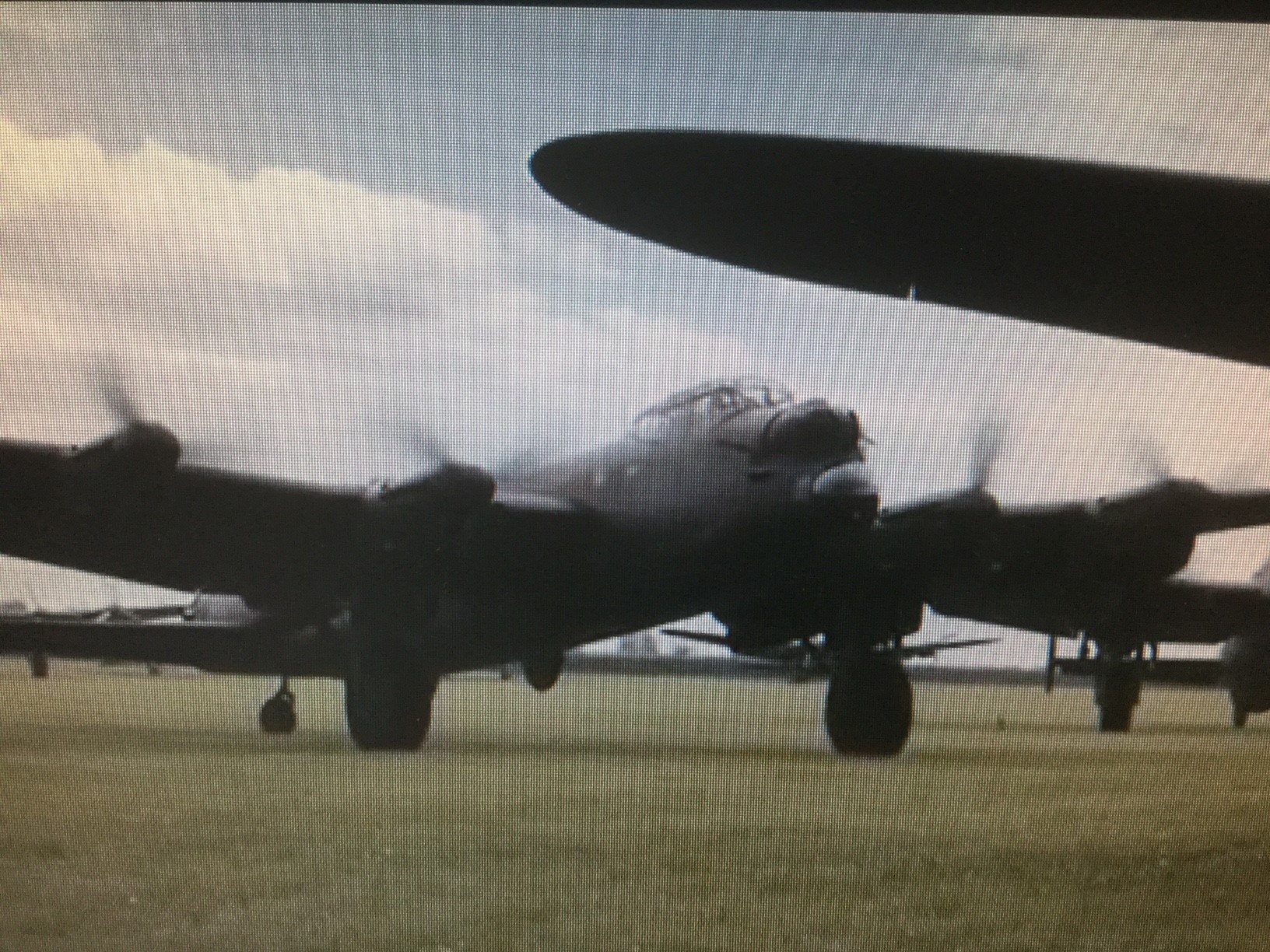
Another scene from the film. features East Kirkby’s Lincolnshire Aviation Heritage Centre and its surviving Lancaster Just Jane.

Lancaster Skies 2019 9

Lancaster Skies 2019 6

Tin Hat Productions is owned by Andy Burn, son Callum Burn, both of Sleaford, and Sam Parsons, of London, who attended film school with Callum. The trio have also had loyal support from Lincoln’s Scott Ellis.

Lancaster Skies  was originally titled Our Shining Sword.

Lancaster Skies 2019 8

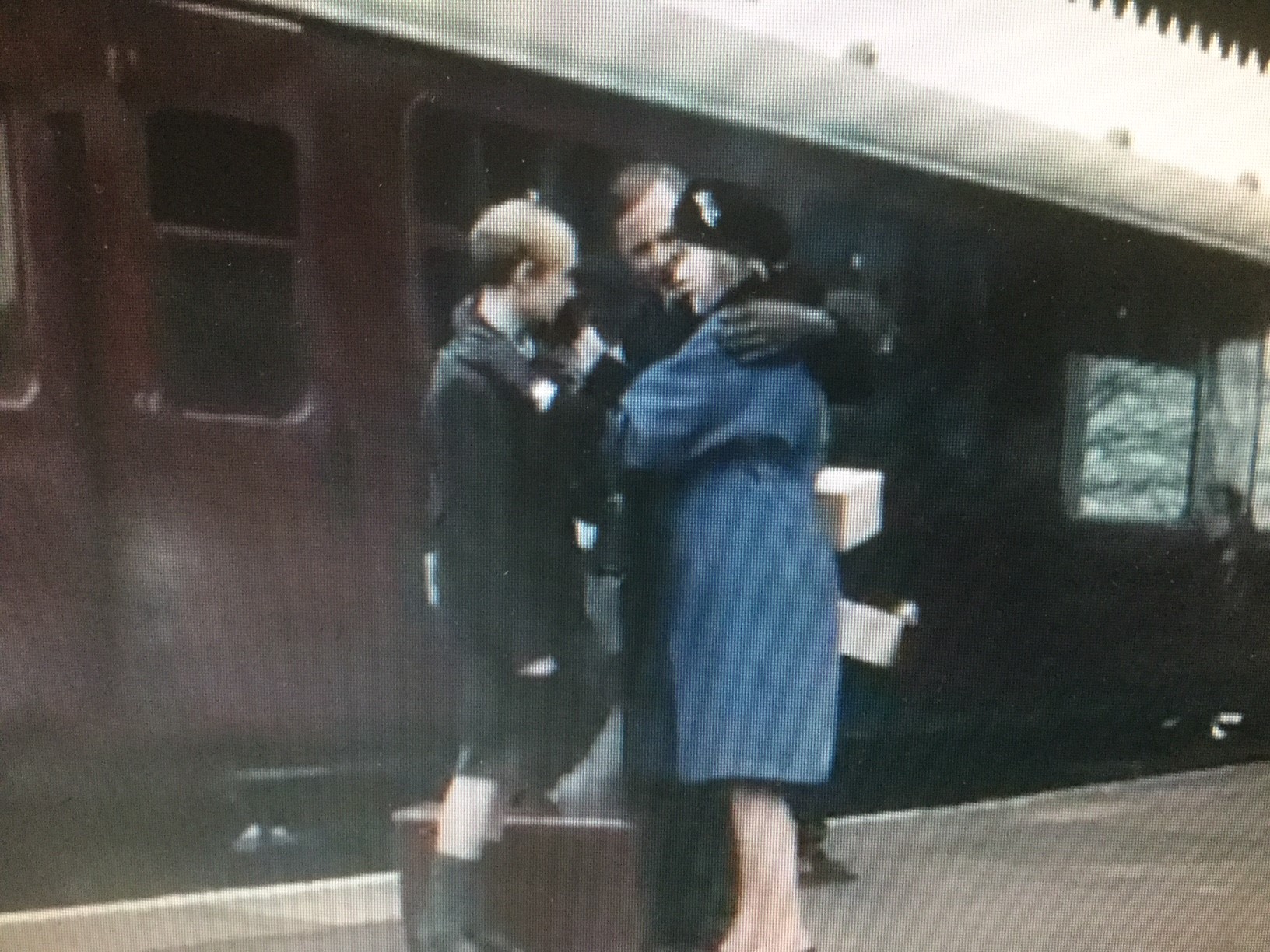
Above: A farewell Scene at a Railway Station

The production team overcame numerous obstacles in their path to get the film finished last year. They made costumes, built sets (including a replica Lancaster), crafted models for special effects sequences, and held fundraising events   – achieving a number of high profile endorsements along the way, including from TV personality Stephen Fry.

Stephen’s endorsement helped pave the way for the distribution deal, said Andy, which he described as ‘a dream come true’.

He said: “We are really, really pleased. The hope was we would get some sort of DVD deal. We would never had dreamt we would get a cinema release. That kind of thing doesn’t happen and it certainly doesn’t happen for films that cost £80,000”

Lancaster Skies 2019 9

On the advice of the distributors, the picture has been transferred back from black-and-white back to colour to give the film its best chance of success in America.

Andy says they have been told they should at least make their investment back, and one encouraging sign of this is that three screenings are already sold out.    Andy paid tribute to everyone who has supported the project, saying: “Thanks to all the people who are buying tickets, and thanks to all the people in the community who helped because there were lots of them, whether they were actors or local businesses that put money in.

For much of the production, the film went by the name Our Shining Sword, but at the start of the year gained a new title. This was done to take full advantage the world-famous star involved in the picture, The Lancaster Bomber.

Lancaster Skies 2019 11

The filmmakers looked to the nearby East Kirkby Lincolnshire Aviation Heritage Centre and its surviving Lancaster Just Jane to help bring their story – one inspired by the missions of Bomber Command – to life.

Having been involved in the production, the Lincolnshire Aviation Heritage Centre has also had the chance to see the film.

Andrew Panton, from the centre, said: “The film has a wonderful story line with great depth and intricacy highlighting many factors of wartime service life.

“We are proud to have been involved with supporting the film both due to its subject matter and the fact that Tin Hat Productions are a local company.”

The Film had a Premier  Type showing at The Kinema In The Woods in Woodhall Spa – home base for the Dambusters in real life of course. Also close to the Lincolnshire Aviation Centre where some of this was filmed and home to a working – but not yet flying – Lancaster Bomber which was used in the film.  So the choice for this event was very apt.

Some of the comments after this showing :

With great anticipation the much awaited film began and we were not disappointed with a few unexpected twists it is a great representative of how these young men dealt with day to day life and death. For a small cast and budget an amazing achievement

Lancaster Skies is different – it has excellent production values and tells the story of a single Bomber Command crew at the height of the war. It would seem to capture the mood of life and death on a Bomber base perfectly.


posted by Movieman in Uncategorized and have No Comments

Genevieve 1953 – with Larry Adler’s Famous Theme

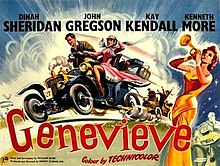
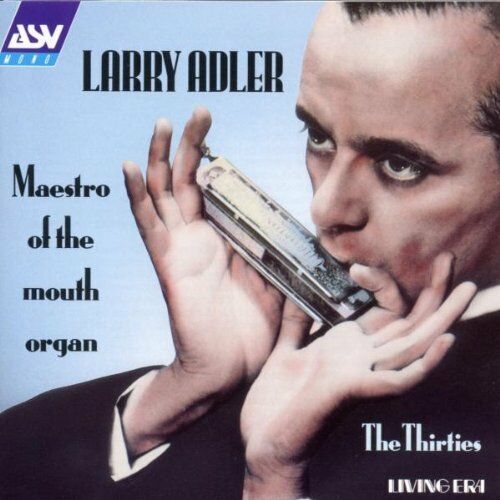
Genevieve is a 1953 British comedy film produced and directed by Henry Cornelius . It stars John Gregson, Dinah Sheridan, Kenneth More and Kay Kendall as two couples comedically involved in a veteran car rally. The main theme of the musical score was composed and performed by Larry Adler. Composer Graham Whettam was commissioned to write the orchestral score incorporating Larry Adler’s tune.

Genevieve 1953 film poster

I heard Larry Adler in a Radio interview some years ago talking about this. Apparently the film was considered by the makers to have little or no potential – in fact a dud.  Larry was offered £500 to compose the theme which as he said even in those days was a poor offer but they also offered a NIL fee and a percentage of the film’s profits. His agent advised him not to go for this option as he and everyone else thought he would get nothing but in fact that is what Larry chose to go with.

As we all know the film was a resounding success and Larry said that the percentage he got year after year, was enough to educate all his children and more was left over. What a good instinct he had there.

Larry Adler

This Film Score was nominated for an Oscar.  However the nomination went to the film’s music director, Muir Mathieson, not Larry Adler, whose name had been taken off American prints of the picture due to his inclusion on the Blacklist.

It wasn’t until June 1986 before the Academy’s Board of Governors had Academy records updated to give Adler his proper credit, which Mathieson had never claimed.

Muir Mathieson’s name was removed from the nomination and Larry Adler’s inserted. Over thirty years later, Larry  Adler finally received his nomination certificate.

His wrote other film scores included  The Hellions (1961)   King & Country (1964) and A High Wind in Jamaica (1965) and A Cry from the Streets (1958)

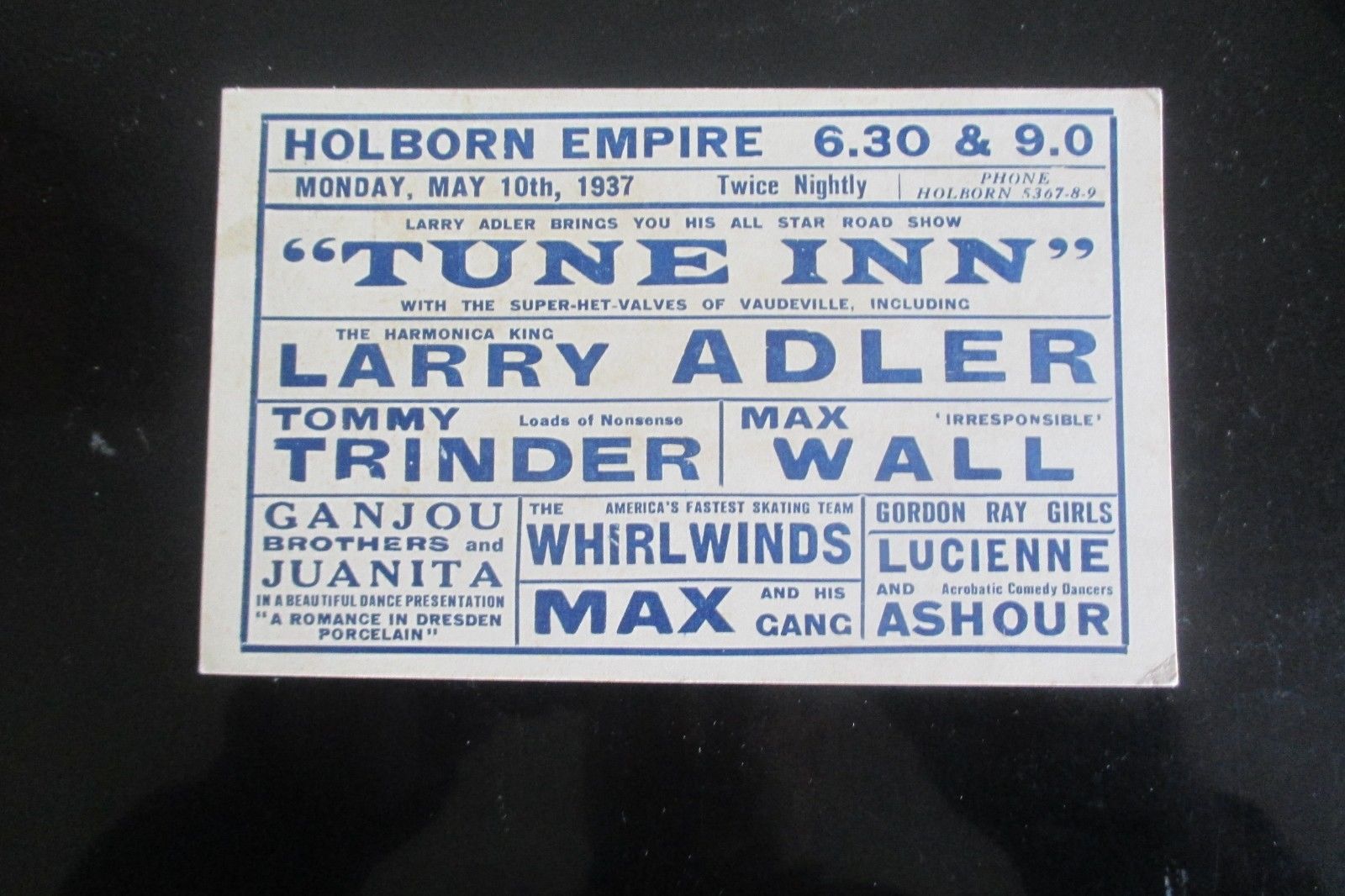
Larry Adler Tops the Bill

I hadn’t realised that before the War – actually in 1937 , Larry Adler was topping the Bill at the Holborn Empire  and he was supported by Tommy Trinder and Max Wall – so the audience would be guaranteed music and a good laugh – SEE ABOVE

posted by Movieman in Uncategorized and have No Comments

Gene Autry – Western Films and so much more

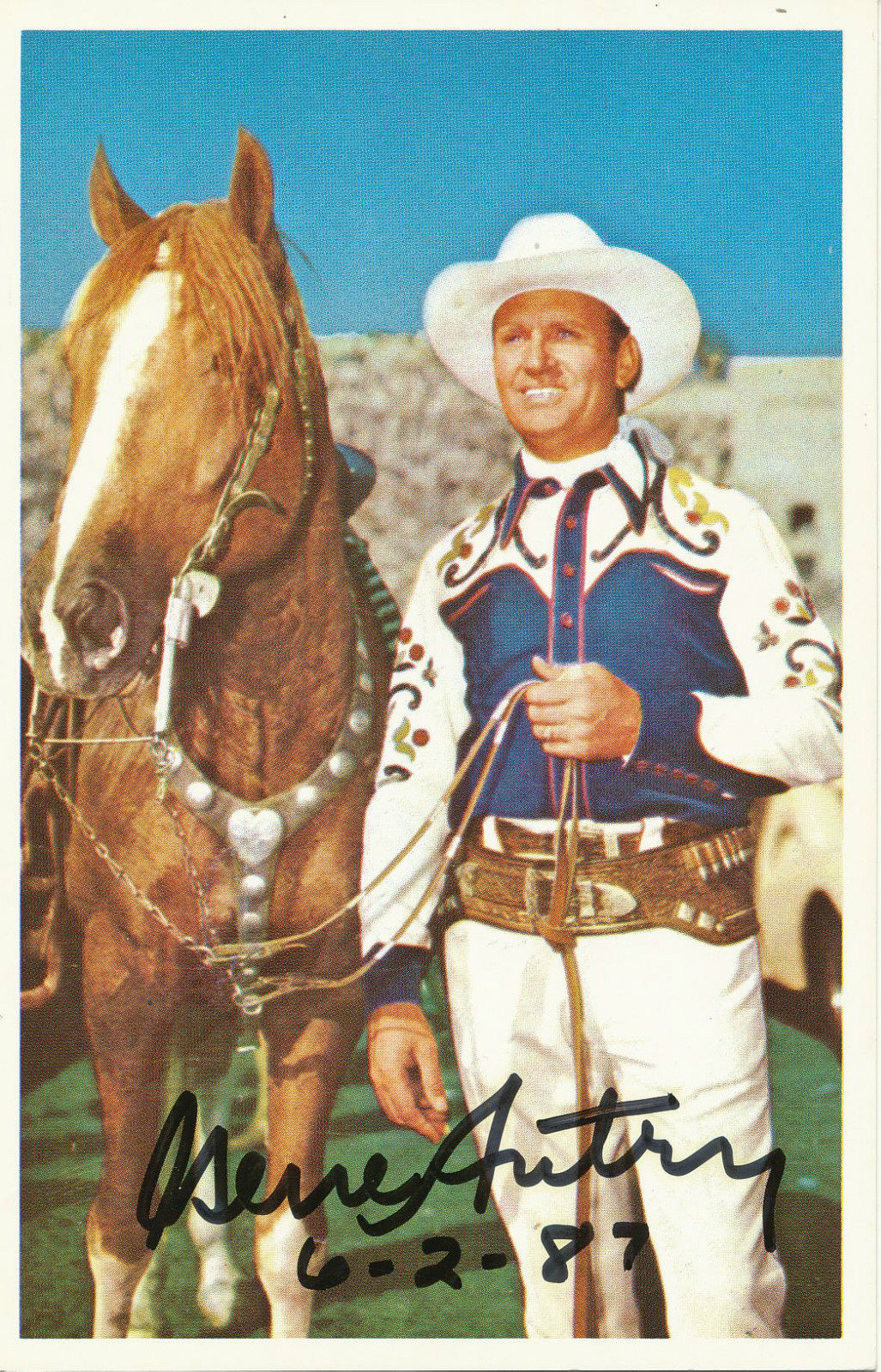
Gene Autry Signed Picture


I really don’t know much about Gene Autry and was never a fan of him or his films but I have to say that looking back over many years – well before the fifties – he was very successful.

He invested from the Thirties in  Property , Films and later in Television – and this made him a very rich man.

In 1982, he sold Los Angeles television station KTLA for $245 million. He ranked for many years on the Forbes magazine list of the 400 richest Americans, before he fell in 1995 to  an estimated net worth of $320 million.

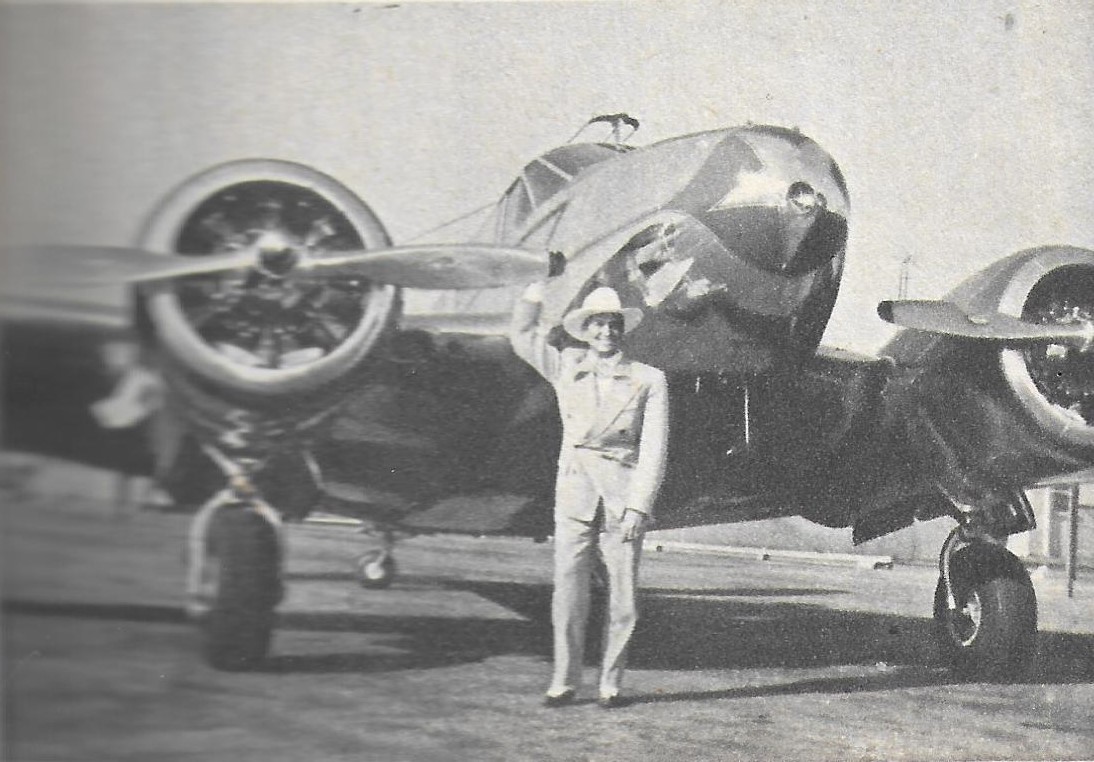
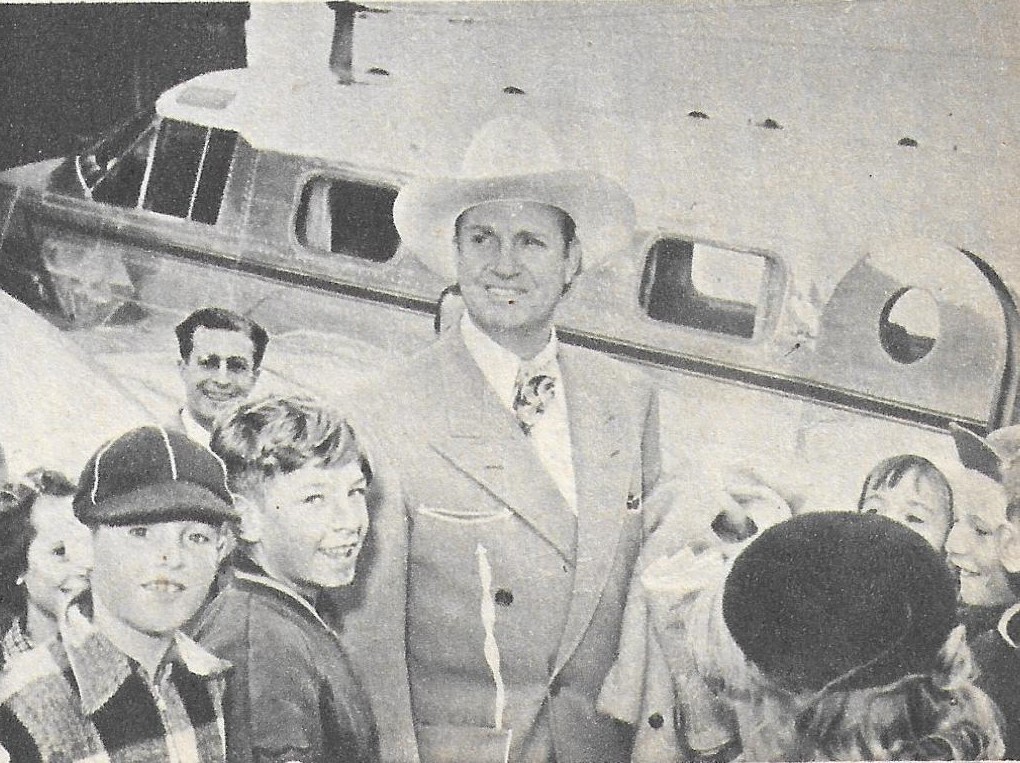
Gene Autry's Plane


Gene Autry

He even pilots his own plane around the USA – Above

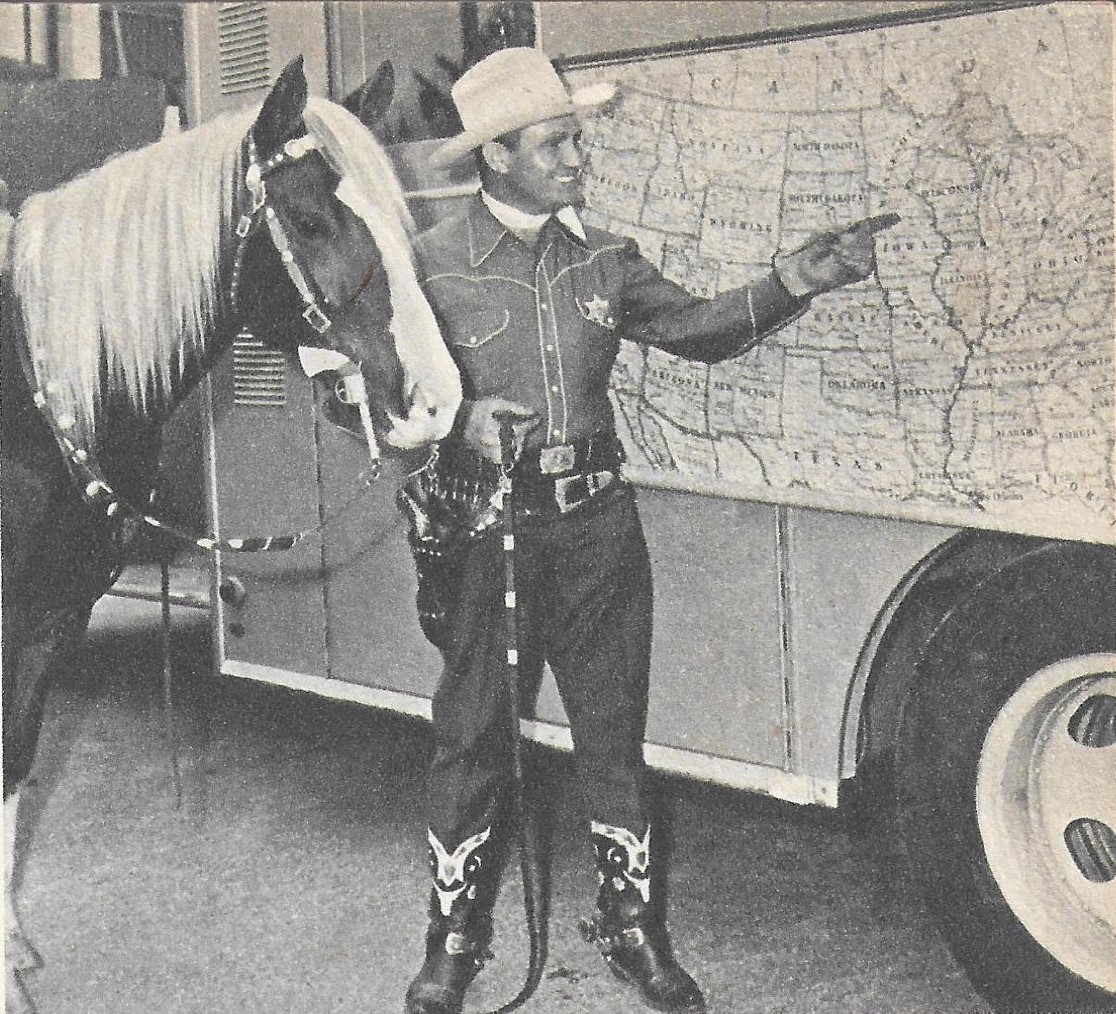
And before he sets off – he likes to brief Champion on where he is  going to – BELOW

Gene Autry and Champion

About a decade ago, a large-scale restoration project on a lot of Gene Autry’s Films  working from his own 16mm and 35mm uncut material,  made sure these  films when shown again would look and sound good – as they did apparently.

Many of the Titles are available on DVD from The Timeless Media Group featuring Gene Autry films made in the 1950s.

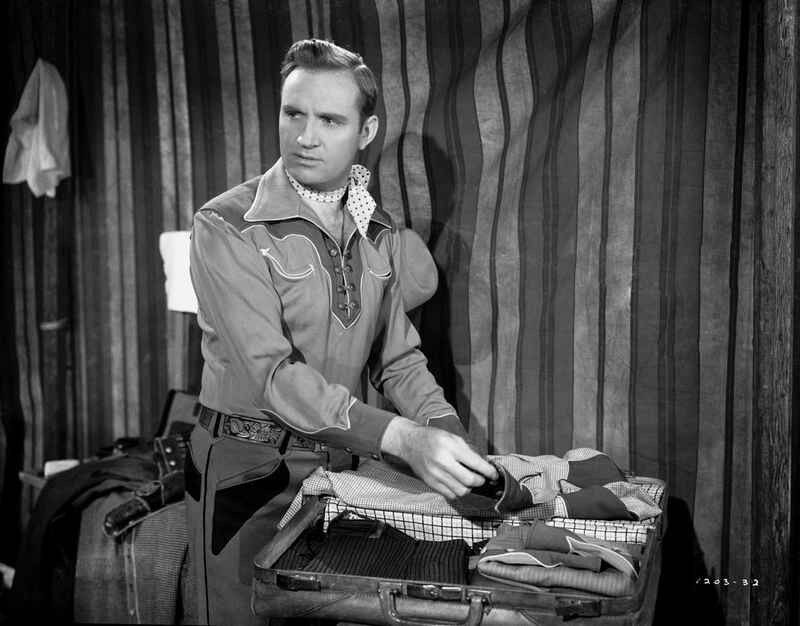
BELOW – Gene Autry in a scene from a Western Film

Gene Autry 3

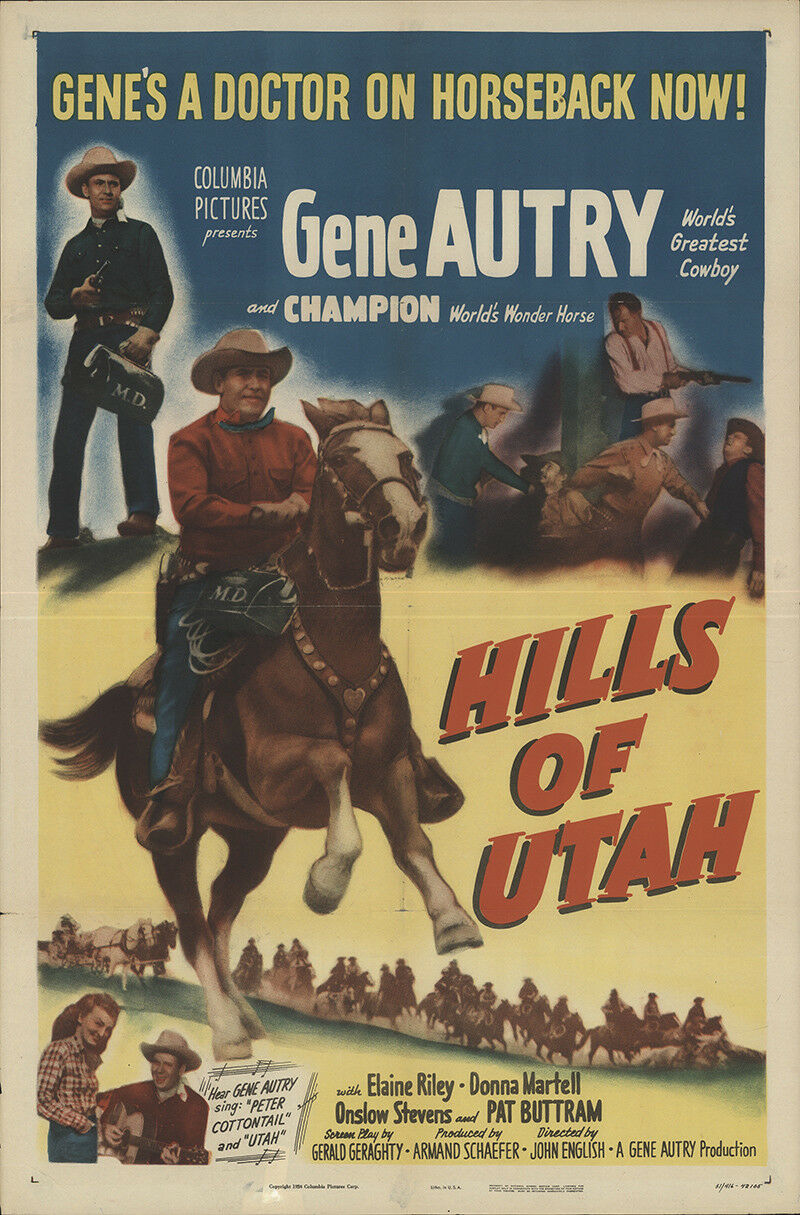
BELOW – Hills of Utah 1951

Gene Autry 4


Gene Autry is the only person to have all FIVE  stars on the Hollywood Walk of Fame


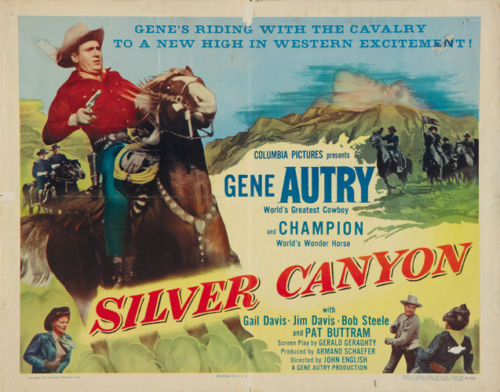
Silver Canyon 2

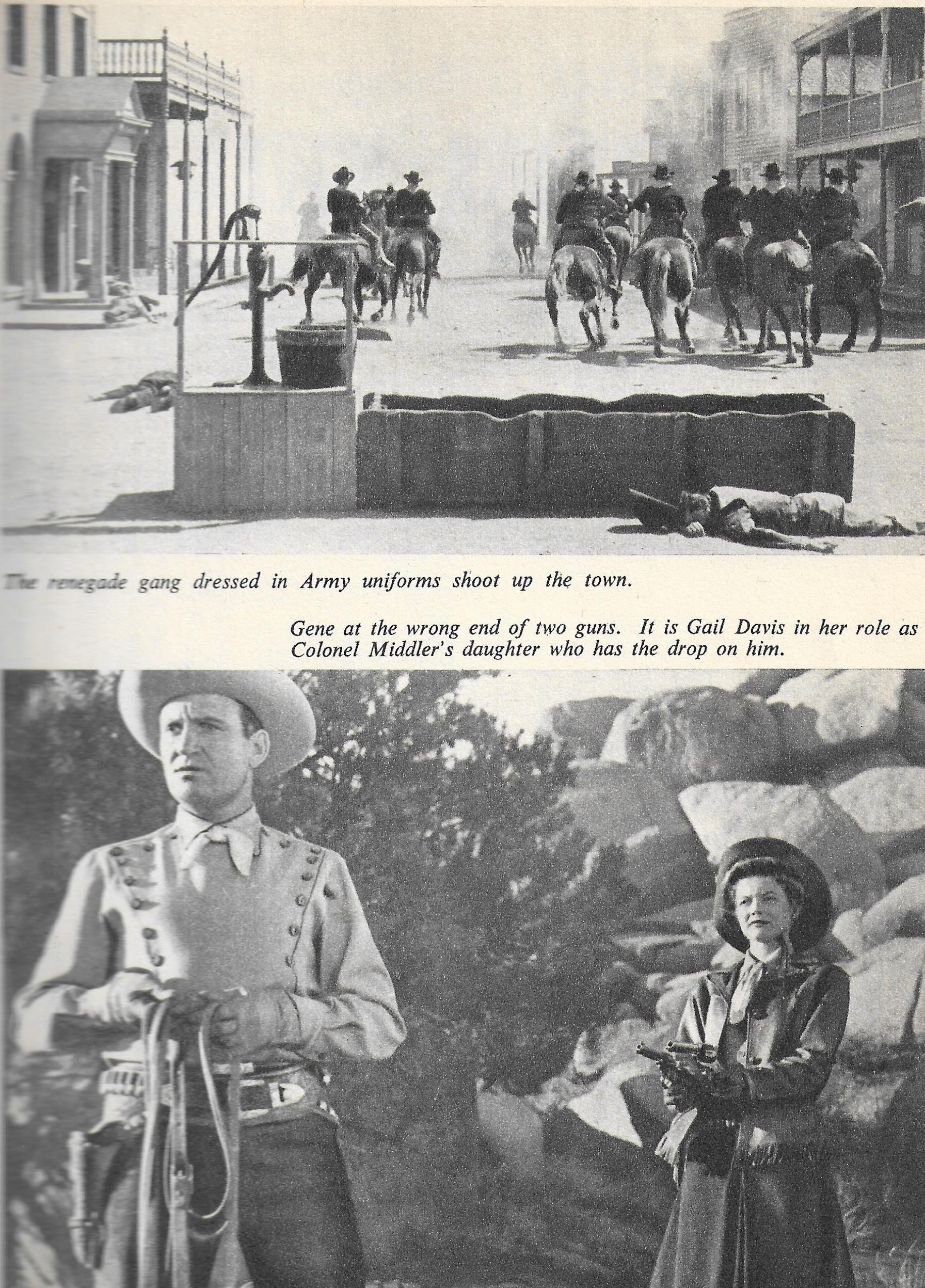
Silver Canyon

Silver Canyon – Above Gene Autry’s leady lady Gail Davis in this film seems to have him covered in the scene above. Mind you they must have got on well as they appeared in quite a few films together and later she was the star of the TV Series Annie Oakley produced by Gene Autry’s Company.

In fact this is what he had to say about Gail Davis :-

‘There are lots of girls who can ride and shoot and lots who can act, but the girl who could do both just couldn’t be found. Then this kid came along and I didn’t have any more problems. A whole generation of children grew up with Gail Davis playing Annie Oakley on television. Before that she co-starred with me in several of my movies. She also toured with me on a number of occasions. Gail was an extremely talented individual. She had a kind, generous heart and brought so much joy to so many children. She never stopped doing that right up to the day she passed away.’

Texans Never Cry 2


Texans Never Cry 4

Texans Never Cry – I love that shot above of Gene and Champion having a welcome drink of water

Following the death of his first wife, he went on to marry Jackie in July 1981 and they remained together until his death in 1997.

Jackie Autry came into Gene’s life after his first wife of 48 years, Ina, died of cancer. Jackie was Autry’s banker and helped him oversee his vast holdings that included the radio and television stations and the California Angels baseball team.

She was 34 years younger and not sure she wanted to be married. But it lasted 18 years and she would not have missed a single day.

“Somebody said to me, ‘If you had to describe your relationship with your husband?’ I would say my husband was my best friend. He was my pal. My buddy. My lover. And my child,” she said. “All in one person.”


posted by Movieman in Uncategorized and have Comment (1)

Alan Ladd in Desert Legion 1953

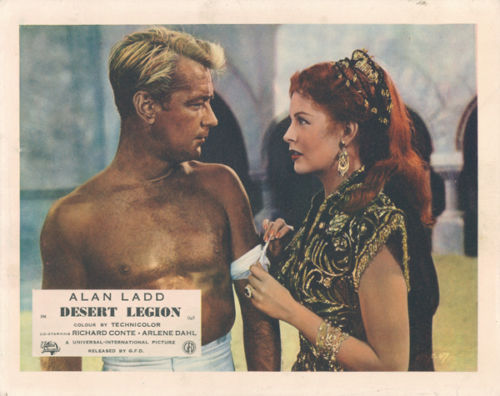
 Desert Legion 8


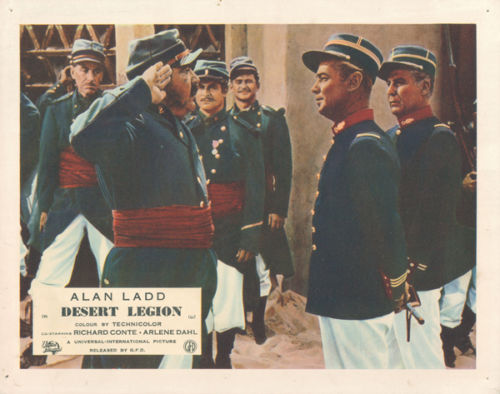
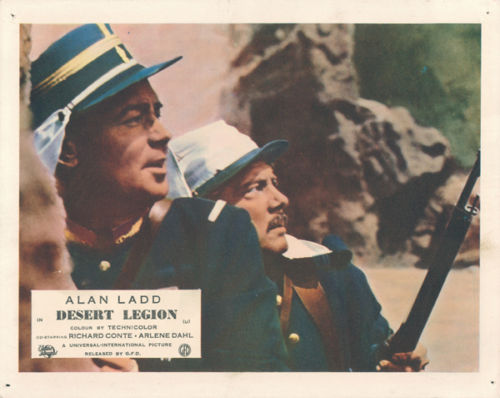
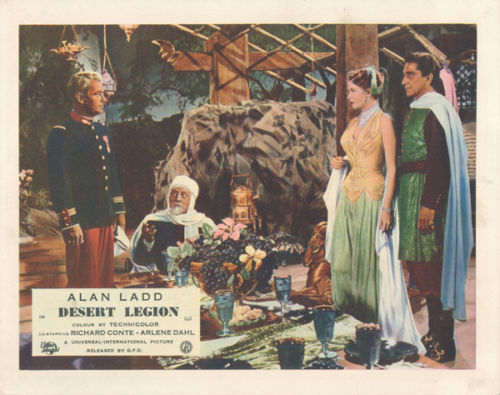
Desert Legion is an adventure film released in June 1953 – from Universal-International.

It was Alan Ladd’s first film for Universal since becoming a star. It was a one-picture deal and gave Ladd a percentage of the profits, a relatively novel thing at the time. (He split profits with the studio 50-50.)

The USA gross at the Box Office is stated to be $1,650,000 so you would think is was profitable for both studio and star.

Desert Legion


It’s a typical action film with Alan Ladd in the French Foreign Legion on patrol and attempting to track down a local bandit who no one can seem to locate.

On patrol one day after a couple of raiders, Captain Paul Lartal (Alan Ladd) realises too late that he has led his men into a trap. A bullet hits his forehead, and he is rendered unconscious. Meanwhile his soldiers being slaughtered by menacing bandits…

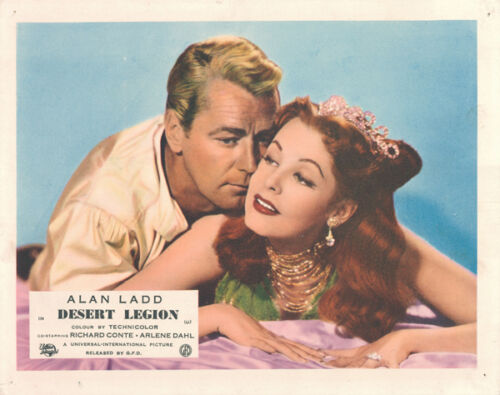
He is wounded and when he comes to he finds himself with a lovely desert princess Arlene Dahl who is nursing him back to health.   She looked even lovelier in this  lush Technicolor print

Desert Legion 2


Desert Legion 3


The next thing he knows he’s back at Legion headquarters with this story about a lost city in the desert.

Akim Tamiroff plays Alan Ladd’s friend and colleague who deserts him to find this lost city. Richard Conte is also in the cast

Universal made numerous films with Jon Hall and Maria Montez at that time, or just before, which we have mentioned on this site before, and so had plenty of middle eastern sets so Alan Ladd agreed to do Desert Legion using some of those same sets I would think. Action scenes include cliffhanging and a spear-throwing competition.

Desert Legion 4


Desert Legion 5

‘Desert Legion’ is really a romantic desert fantasy which for the most part is quite entertaining.

 The last half hour of the film was more action packed and in some way compensated for the slowness of  first hour


Director: Joseph Pevney

Writers: Irving Wallace (screenplay), Lewis Meltzer (screenplay)


Stars: Alan Ladd, Richard Conte, Arlene Dahl, Akim TamiroffDesert Legion 6


Desert Legion 7

Based on a 1927 novel by Georges Arthur Surdez who was  especially noted for his French Foreign Legion tales


Ladd had broken his hand during a fight scene towards the end of his most recent film The Iron Mistress, but recovered to begin work on Desert Legion on 7 July 1952.


posted by Movieman in Uncategorized and have Comment (1)

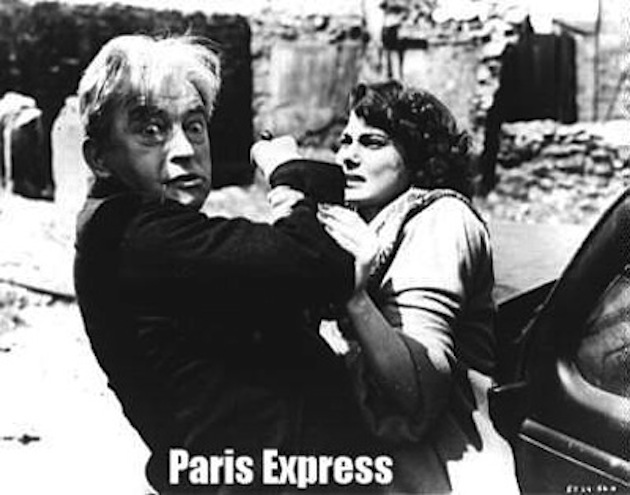
The Man Who Watched Trains Go By (1952)

The Man Who Watched Trains Go By (1952)

I remember being fascinated by the name and title of the film – and I always remember it. When I stand and watch trains passing at a level crossing I have been known to utter the words of the title to myself The Man Who Watched Trains Go By – so it shows from all those years ago it has created an impression – not for the actual film but for me, the title.

It should have been better known with such a cast, but again, it seems it just was not well promoted at the time.

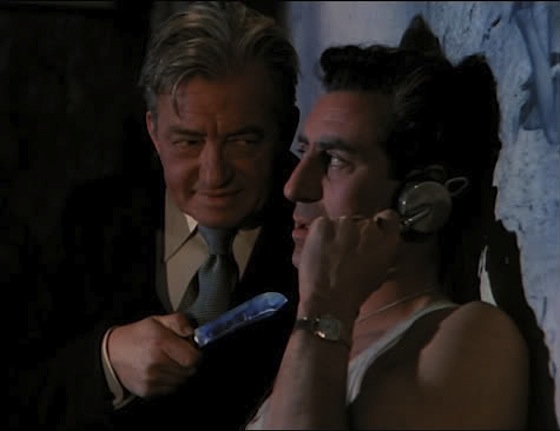
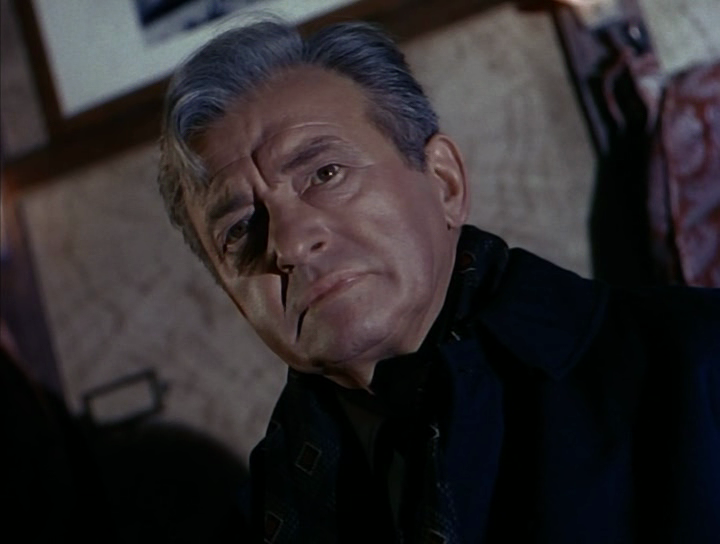
Claude Rains is a great screen actor in any film his  presence has graced. Whether it be a classic or B  picture, he brings his own inimitable style to any it – and he certainly does in this not very well known film –

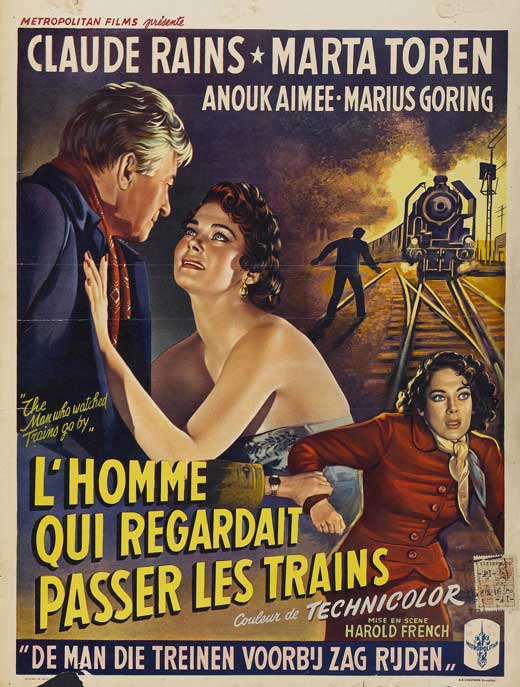
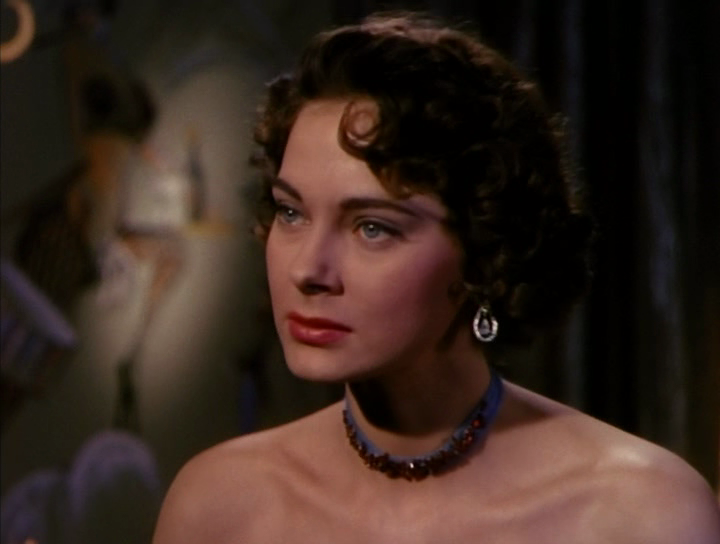
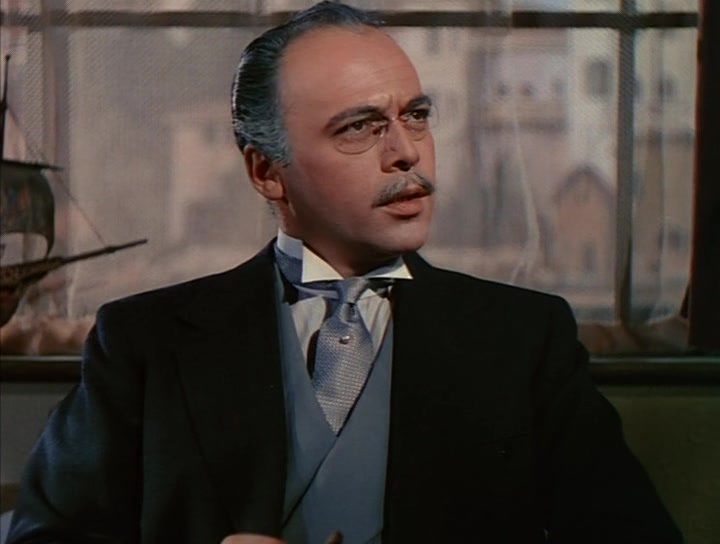
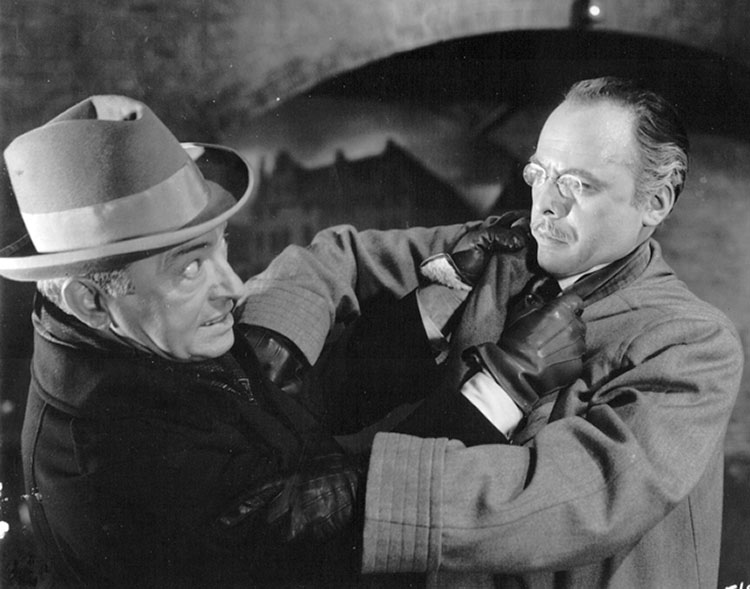
Claude Rains  plays a mild mannered clerk named Kees Popinga who discovers that his boss Julius de Koster, Jr. (Herbert Lom) has wiped out the company’s finances, while under the influence of a beautiful Parisian girl Michele Rozier played by Marta Toren.

Popinga takes the money and goes on the run after killing de Koster, while the police are in hot pursuit.

Also starring the lovely Anouk Aimee as Jeanne the prostitute.

This obscure thriller is directed and co scripted by Harold French based on the novel by George Simenon.


In glorious Technicolor and with Claude Rains. The supporting cast  features such fine actors such as Herbert Lom, Marta Toren and Felix Aylmer.
The Man Who Watched Trains Go By 1952
The Man Who Watched Trains Go By 1952 3
Marta Toren is perfect in her role and  gives a powerful performance
The Man Who Watched Trains Go By 1952 2


For whatever reason this film seems to remain forgotten and it is a great pity.

I remember it well but only for the title I suppose

posted by Movieman in Uncategorized and have No Comments

Sir Donald Wolfit – One of the Greatest Stage Actors of the 20th Century

This is the final Post for the Month of February 2019 – and we have saved this one , which I think (and hope)  is rather special as it concernes one of our greatest stage actors of the last century – namely Sir Donald Wolfit.

The last of the actor-managers taking Shakespeare on tour: Donald Wolfit

I have just listened to a half hour programme from Radio 4 in the Great Lives series on Donald Wolfit. Ned Sherrin presented it who had worked in his Theatre Touring Comany as had Ronald Harwood who also contributed and had been Sir Donald’s Dresser for 7 years – so knew him well.

Ned Sherrin described him as a Stage Actor who he regarded as one of the Greatest  Actors of the Twentieth Century – certainly the equal if not better than Olivier and Geilgud.   Donald was not liked by these two or Ralph Richardson who Ned stated was jealous of Donald’s ability to play the great Shakespearean roles which he could not do.

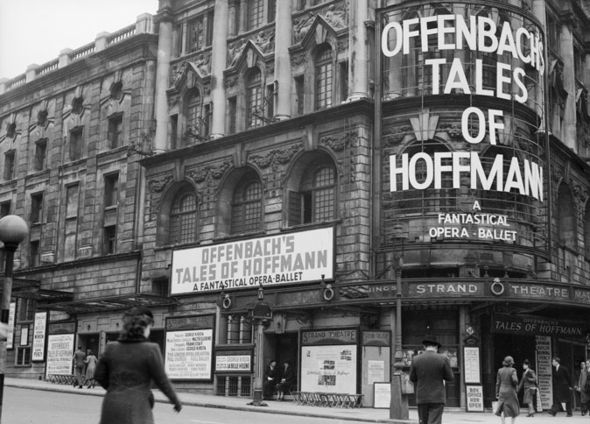
Donald Wolfit took Shakespeare to the people and toured extensively in Britain and overseas. More below about his dramatic lunchtime Shakespearean performances at the Strand Theatre during the height of the Blitz – something that has got to be greatly admired.
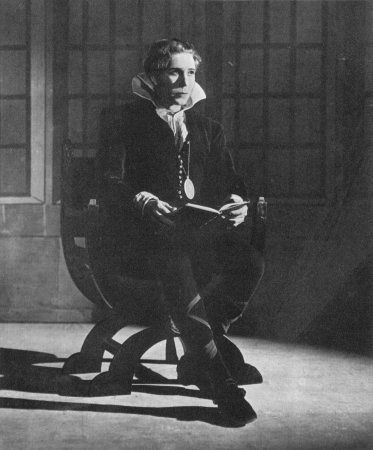
Sir Donald Wolfit Hamlet

Donald Wolfit as Hamlet, Shakespeare Memorial Theatre, 1936-7

One of the great British stage actors of his era Donald Wolfit was noted for his magnificent portrayals of King Lear and Tamburlaine.

Quite a few years ago theatrical companies in England were run by actor-managers who performed with their own companies in London, at theatres in the regions, and abroad. According to Hesketh Pearson, in his book The Last Actor-Managers, “most of them won their reputations by playing the great Shakespearean characters; and though they often adapted the plays…it was entirely due to them that Shakespeare, or mangled Shakespeare, held the stage from the reign of Charles II to the reign of George V.”
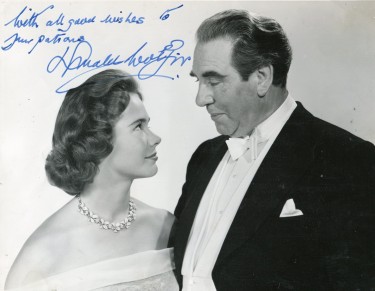
Donald Wolfit with Heather Sears in Room at the Top

Donald Wolfit, born in 1902, was too late to truly be an actor-manager.

In spite of early success working at major theatres like the Old Vic, he always felt himself to be an outsider and yearned for his own company.

In 1936-7 he spent two seasons at the Shakespeare Memorial Theatre in Stratford-upon-Avon. In his first season his varied roles included Orsino in Twelfth Night, Cassio in Julius Caesar, Gratiano in The Merchant of Venice, Ulysses in Troilus and Cressida and Kent to Randle Ayrton’s magnificent King Lear. His Hamlet gained him national recognition. In his autobiography, First Interval, he wrote about the curtain-call for his first performance: How well I remember that first Hamlet at Stratford, the opening of the great parti-coloured curtain and the step forward to find out whether the great struggle in Hamlet’s sould had really been imparted to the audience.

He became famous for his curtain-calls at which he always appeared exhausted, holding on the curtain for dramatic effect. In 1937 he repeated his Hamlet and added Iachimo in Cymbeline and the Chorus in Henry V.

All called for the vocal skill and powerful personality which Donald Wolfit had in abundance.

During his years in Stratford he met and fell in love with the actress Rosalind Iden, and soon after he created a theatre company of his own using actors who he had worked with in Stratford. From 1937 onwards touring became a way of life for him. He performed right through the war, aiming “to be the switch that could set the electric current of Shakespeare’s poetry and imagery throbbing through a crowded auditorium”.

Between 1937 and 1945 he estimated he had undertaken 2240 performances of 15 different plays in countries including Canada, the USA, Egypt, France and Belgium and continued to tour after the war.
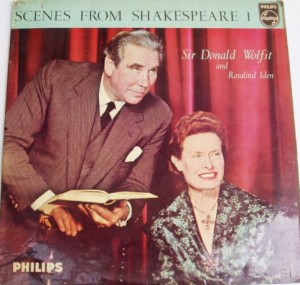
 

Sir Donald Wolfit

Donald Wolfit and Rosalind Iden’s recording of Scenes from Shakespeare

Receiving a knighthood in 1957 brought him respect, particularly abroad. According to Ronald Harwood’s article in the Dictionary of National Biography: Wolfit believed in the theatre as a cultural and educational force. His contribution was immense, for he provided people all over the British Isles, especially during the war, with the opportunity of visiting a playhouse, perhaps for the first time, and seeing Shakespeare with the leading roles played by an actor of extraordinary gifts.

He did have extraordinary gifts, even though his style  has remained somewhat out of fashion here at home.

He undertook a new tour of the provinces and travelled to Kenya and Ethiopia where he and his wife Rosalind performed “a programme of extracts from their Shakespearian repertoire”, for which they became renowned. From 1959-60 They toured to Australia, New Zealand, India, Kuwait and Beirut, a journey of 29,000 miles.  In 1963 he performed in South Africa and Zimbabwe, visiting Harare, Cape Town and Johannesburg, insisting on giving a performance for non-whites.


He also visited Kenya again, where he was seen by a young Felicity Howlett. His visit there impressed this young girl to such an extent that it virtually changed her life. This is her memory of that visit Donald Wolfit made to Kenya :-

My father was the lighting director at the National Theatre, Nairobi and in 1963 Sir Donald Wolfit and his wife, Rosalind Iden, were invited to Nairobi to give some of their pieces from Shakespeare. They gave some wonderful, nowadays I would think “over-the-top”, performances.  I particularly remember the death scene from ‘Othello’ and the mad Lear. I was about 14 at the time and had never seen anything quite so captivating and I used to stand in the wings watching in awe.  One night as Donald Wolfit came off stage he patted me on the head and said “do you like Shakespeare, little girl”.  I simply nodded, too taken aback, by this great actor actually speaking to me, to say anything!
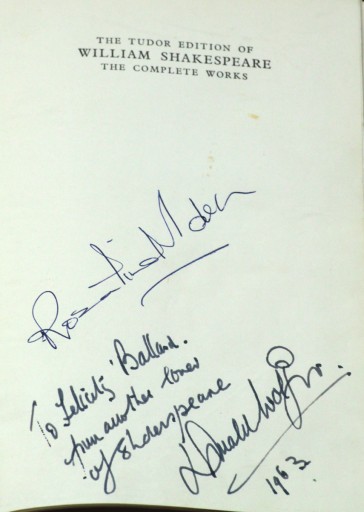
Sir Donald Wolfit 2


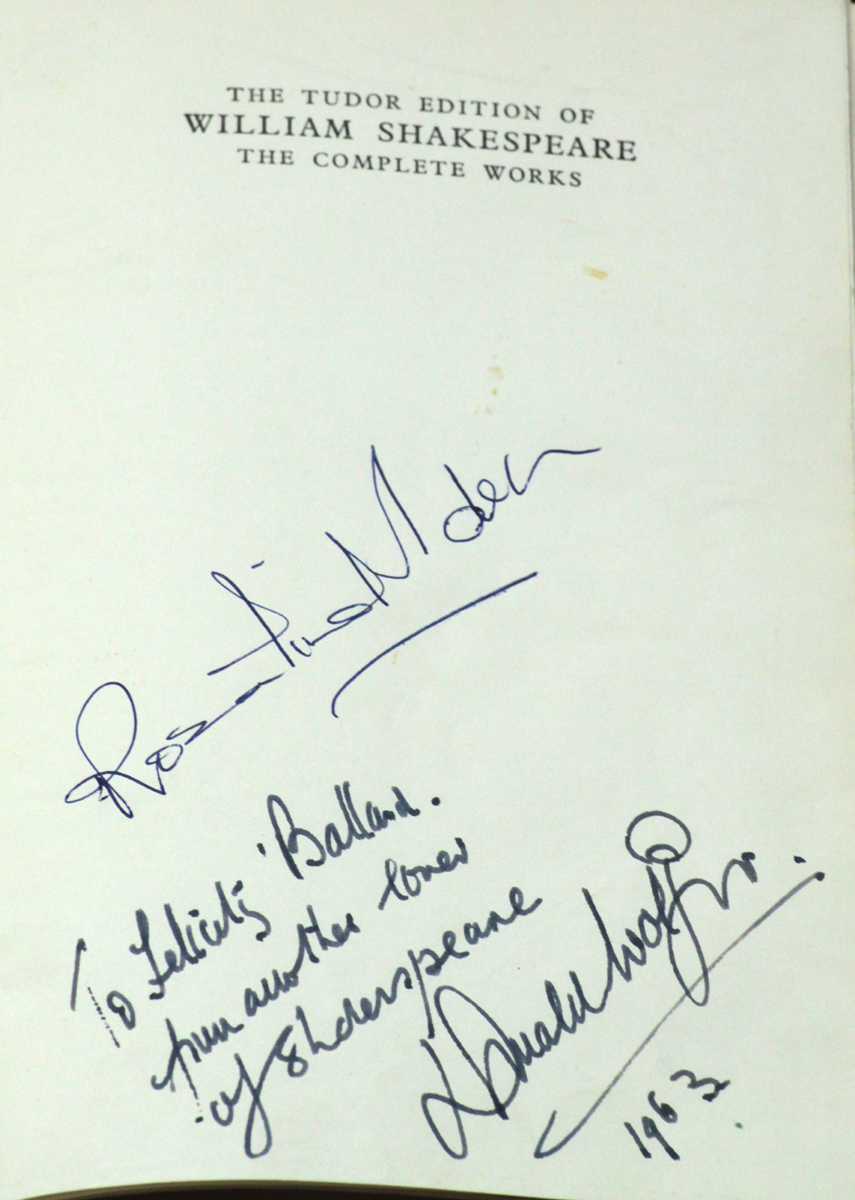
When they came to leave Nairobi they presented me with a signed copy of the Complete Works which has become my most treasured possession.  
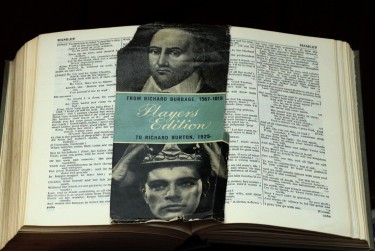
Sir Donald Wolfit 3

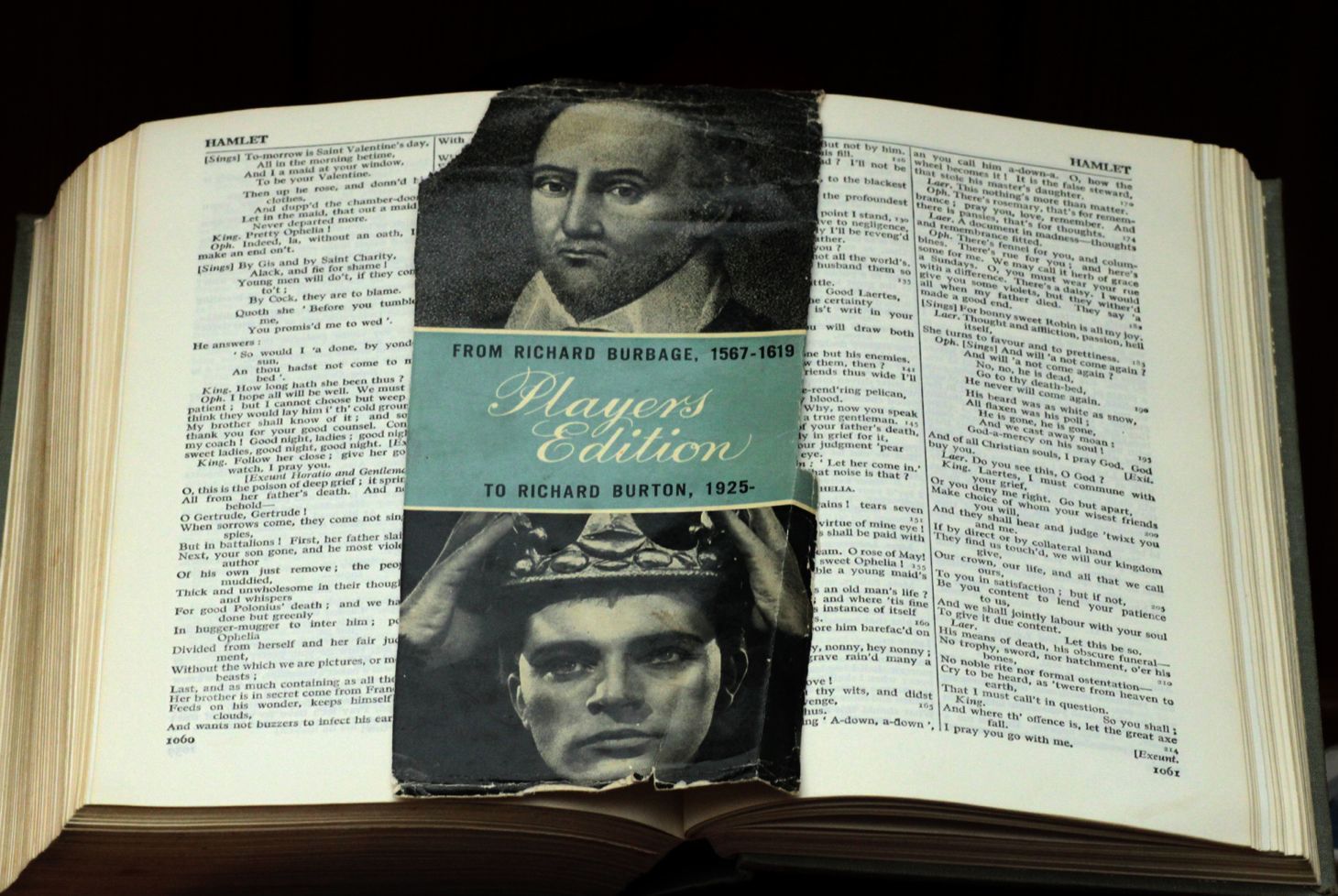
Felicity Howlett’s Complete Works open at Hamlet, with part of the original cover

The inscription reads “from another lover of Shakespeare”.

Ronald Harwood’s play and film The Dresser was based on his experiences as Wolfit’s dresser, and his observation, repeated in his biography, confirms Felicity’s impressions and that delightful inscription:

He developed a majestic persona, grandiose, passionate, often pompous. He could be frightening and brutal but also astonishingly kind and genuinely humble.

It may have belonged to a previous era, but his barnstorming style made a big impact, not least on Felicity in whom Wolfit inspired a life-long love of Shakespeare.

She has lived for many years in Stratford-upon-Avon where she continues to follow the RSC’s work, and it is very kind of her to these memories and  share photographs of her treasured copy of the Complete Works.

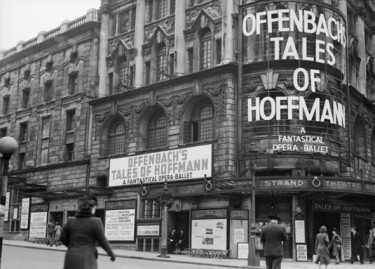
Donald Wolfit  had plenty of admirers.    The lunchtime Shakespeare shows he put on at the Strand Theatre at the height of the Blitz, heedless of air-raid warnings, were praised for raising Londoners’ spirits. The critic Kenneth Tynan rode to his defence and Edith Sitwell said Donald Wolfit’s performance as Lear left her “unable to speak”.

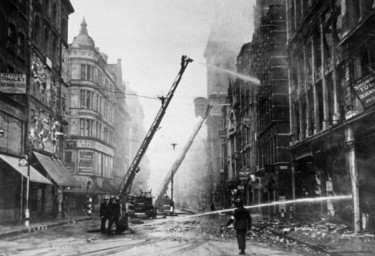
At this time during the War a German bombing raid has caused great damage to the Strand Theatre

The back of the building lies in ruins. The demolition squad try to  wave away a man who wants to enter the theatre but the man is having none of it.

It was indeed the  great actor-manager Donald Wolfit who has a mission to bring the works of Shakespeare to the masses.

For him, Nazi bombs are an inconvenience but nothing more. The show must go on.

Against the advice of the theatre secretary, he insists that if the damaged curtain can rise, a performance must be given that day.

The curtain, “with many a groan and a shudder”, does rise. And the actor and his company take to the stage.

“There was no heating and no water for washing and we improvised cubby holes around the stage,” Wolfit later recalled in his autobiography.

Despite thsee extremely difficult circumstances, his “lunchtime Shakespeare” programme only grew in popularity.

In the second week the daily shows in the ruined theatre were playing to nearly 1,000 people.
Strand Theatre London

Strand Theatre in April 1942 in the middle of the Second World War
Donald Wolfit 5

Air-raid sirens made no difference.

“If the air-raid warning went during a performance Mary Pitcher, dressed as an Elizabethan page, walked on and cheerfully announced: ‘The warning has just gone. We shall proceed. Will those who wish to leave do so as quietly as possible,’” Wolfit wrote.

On another occasion Donald Wolfit was performing the famous To be, or not to be soliloquy from Hamlet when a siren was followed by the drone of a doodle-bug bomb.

“Just as I reached the conclusion the sound of the engine stopped and the monster fell some 100 yards behind the theatre, blowing in the scenery-dock door and rocking the heavy column like a mast in a storm. That was the nearest I ever came to having a performance interrupted by Hitler’s minions,” he declared.

It is hard to think of better examples of  the British stiff-upper lip than reciting Shakespeare with enemy bombs  raining down.

It was certainly the “finest hour” not just of Britain but also of Donald Wolfit, who died 50 years ago last year.

To finish we quote just two of the impressive reviews he received :-

From James Agate the influential Critic wrote :-

“I say deliberately that his performance on Wednesday was the greatest piece of Shakespearean acting I have ever seen”

AND

C.B. Cochran wrote :

‘In Donald Wolfit a new ‘giant’ has arisen .. It is my decided opinion that there has been no actor on our stage since Irving’s great days comparable to Wolfit in the great roles’

Edith Sitwell  after seeing him in King Lear wrote that the cosmic grandeur of his performance left her and her brother Osbert unable to speak
posted by Movieman in Uncategorized and have Comments (2)

Technirama

We feature this ‘New process’ at the time in the late fifties – we had had VistaVision – and now this. 

Quite a few big sprawling epics were in Technirama.

Technirama

One of the first British ones was The Hellions with Richard Todd – filmed in South Africa – followed later by Zulu which had a much bigger impact – again filmed in South Africa.

The  clarity and depth of the SUPER TECHNIRAMA-70 image on the giant screen at the time marked s a major step forward in film presentation.

The process combined special systems of photography and projection to be shown  on a giant curved screen. The image which was claimed to be  much superior to any other process in use at that time.

The lens system for SUPER TECHNIRAMA-70 was designed by Professor Dr. A. Bouwers of N. V. Optische Industrie de “Oude Delft” of Holland.

It was developed by the Technicolor Corporation under supervision of Dr. Herbert T. Kalmus, president.


Technirama 2

SUPER TECHNIRAMA-70 is the only completely universal photographic and projection system. It was claimed to reach the peak of perfection when shown in theatres equipped with SUPER TECHNIRAMA-70 projectors
In fact films that were produced in Technirama were rarely shown in 70 mm at the time because few cinemas had the equipment – and possibly the 70 mm print was not quite of the quality claimed above – although it was, apparently, very good.

It seems to me to have been very similar to VistaVision – the process just before this one – which again was very good.

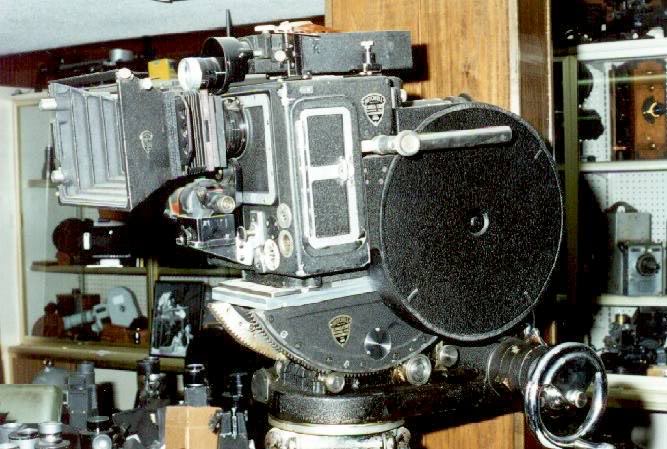
VistaVision Camers

ABOVE – A VistaVision Film Camera

In 1959, Walt Disney used Technirama in the production of his animated feature Sleeping Beauty.

Disney wanted be involved  in the 70mm  format used on a number of  films of that time. U

sing optics developed by Panavision, Inc., Technirama’s 35mm horizontal negative was printed in Todd-AO compatible 70mm with six track magnetic stereophonic sound.  It was that which meant the 70 mm print although good was not quite as sharp as the 35 mm.
Over the next few years, a great many Technirama films were released in 70mm under the trade name SUPER TECHNIRAMA 70.

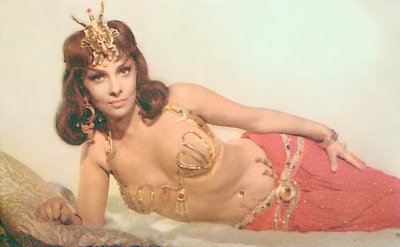
Gina Lollobrigida

1959 also saw the 70mm release of Solomon and Sheba, memorable only for the death of Tyrone Power, the scant costumes of its coproducer and star, Gina Lollobrigida, and Freddie Young’s wonderful photograpthy.


posted by Movieman in Uncategorized and have Comments (2)

Elvis – The King and Queen of Thailand and Flaming Star

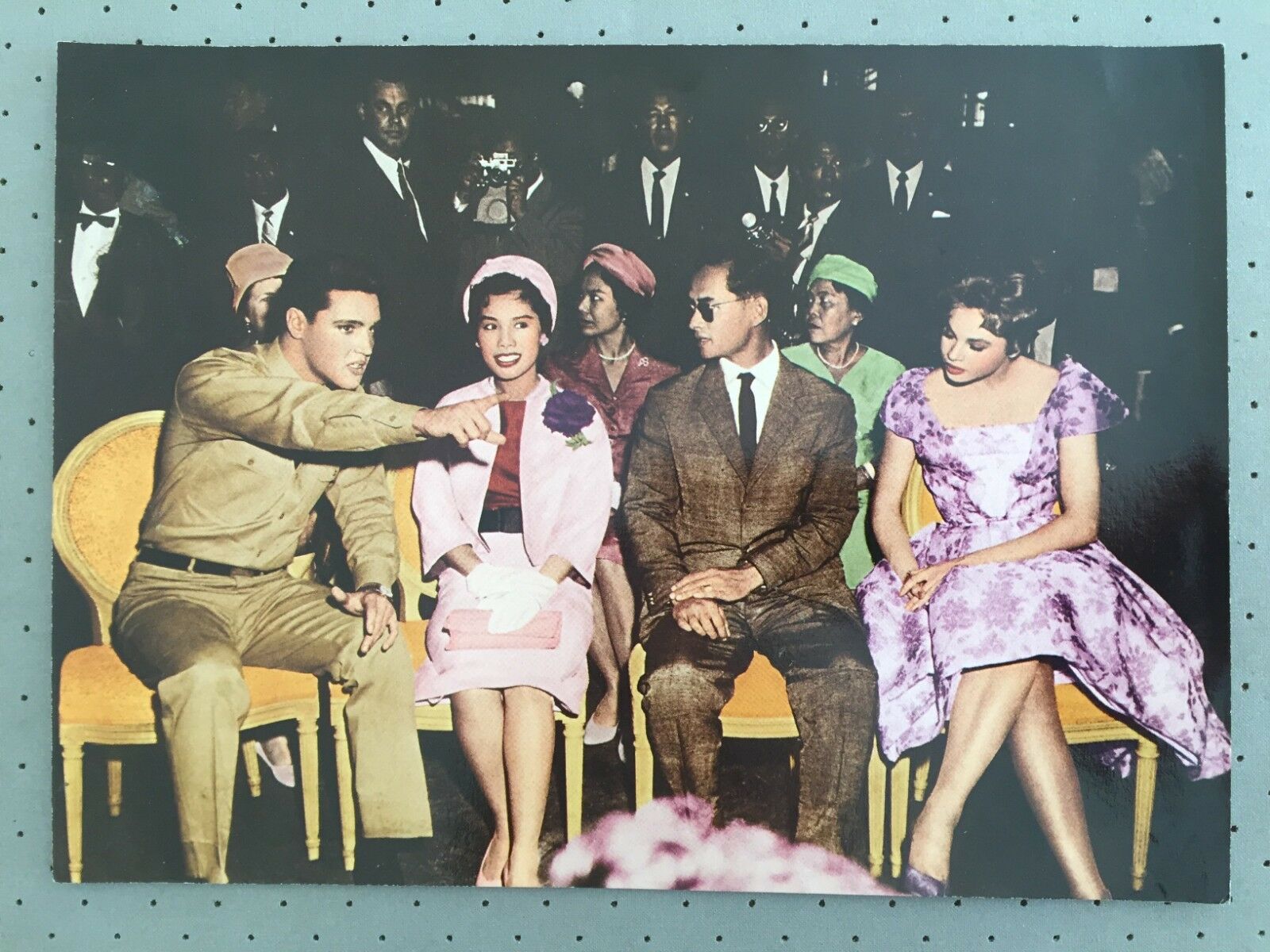
Elvis with Juliette Prowse pictured with The King and Queen of Thailand – BELOW

Elvis with King and Queen of Thailand

The King of Thailand  and the king of rock, Elvis Presley. The meeting came when lifelong music fan Bhumibol and his wife, Queen Sirikit, visited Hollywood’s Paramount Studios in 1960, while Elvis was filming the musical G.I Blues.

Elvis with The King and Queen of Thailand

Late King Of Thailand Renowned Jazz Musician – BELOW

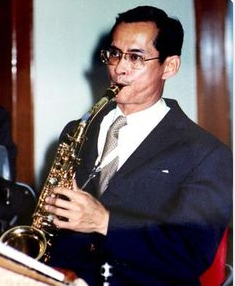
His Majesty King Bhumibol Adulyadej of Thailand (1927 – 2016) passed away on 13th October, 2016. He was 88 years old. 

He had a passion for artistic pursuit and known as a dedicated photographer but more importantly he was The Jazz King and at ten years old learnt to play the clarinet. He was a talented prince and similarly mastered the trumpet and saxophone. 

 It would have been an honour for both Elvis and Juliet Prowse to be seated with The King and Queen of Thailand

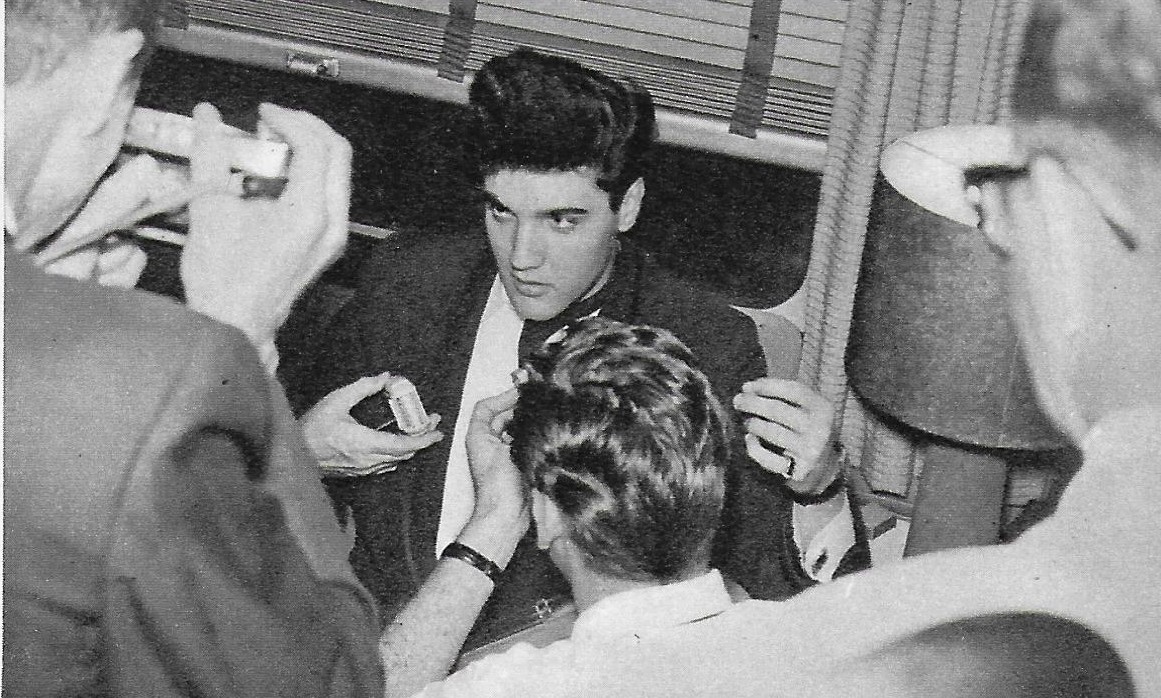
This Pictures was taken at a different time of course – Elvis looking quite furtive as he is surrounded by reporters and photographers – BELOW

Elvis and Photographers

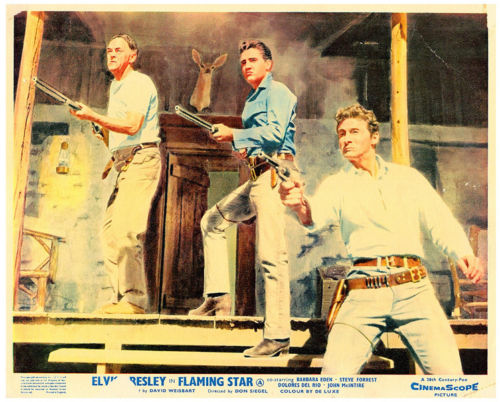
Elvis on set – BELOW Flaming Star

Elvis with Dolores Del Rio - Flaming Star


Elvis with Dolores Del Rio chatting on the set of Flaming Star – ABOVE

This film starred Barbara Eden – a very talented Stage and Screen Actress who had made quite a few film appearances before this one, and indeed went on to appear in many more. She was active in her long career in Films, Television and in the Theatre.  More about her is a later article.

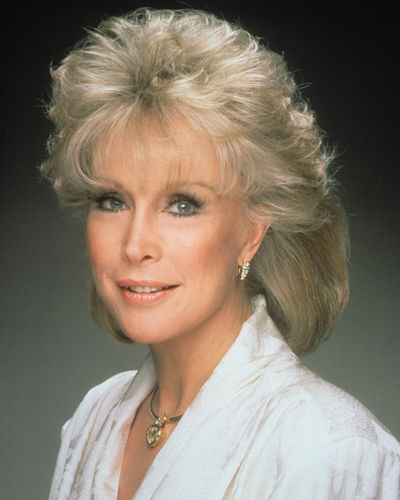
Barbara Eden

ABOVE – Barbara Eden – a beautiful film star was in Flaming Star – and many other films

More Scenes from  Flaming Star – BELOW

Elvis in Flaming Star


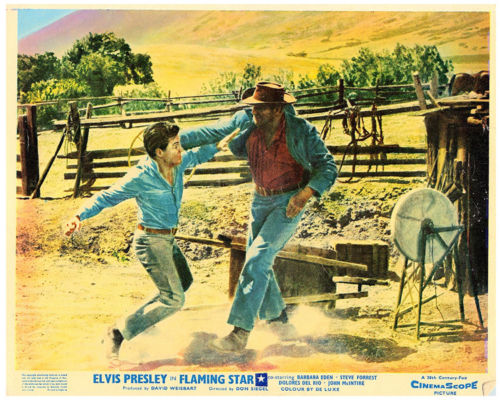
Another Action Scene from  Flaming Star – BELOW

Flaming Star

Elvis in a more familiar scene Flaming Star  Singing – BELOW

Flaming Star 2

ABOVE: Elvis enjoys a song and dance.

posted by Movieman in Uncategorized and have Comments (2)

Sable Ranch – Film Location for Bells of Coronado – Roy Rogers


s-l1600

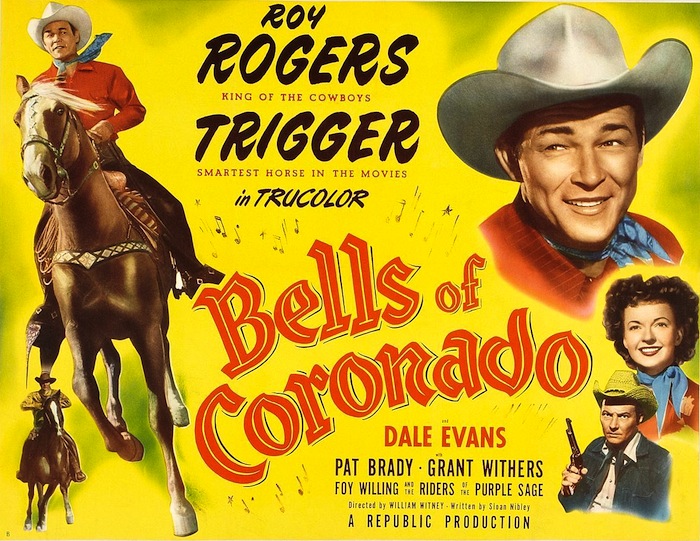
The Sable Ranch in Santa Clarita, California, has been destroyed by the latest wildfire. One of the films shot there was the Roy Rogers picture Bells Of Coronado (1950). Directed by William Witney and shot in Trucolor  — and it’s the only Trucolor Roy Rogers film to get an official release on DVD.


With the previous item being on Stunt Men in Western Films – here are a few action shots from Bells of Coronado – where they would have been at work I suspect

Bells of Coronado

Above: A fall from a horse in the film

Bells of Coroado 2

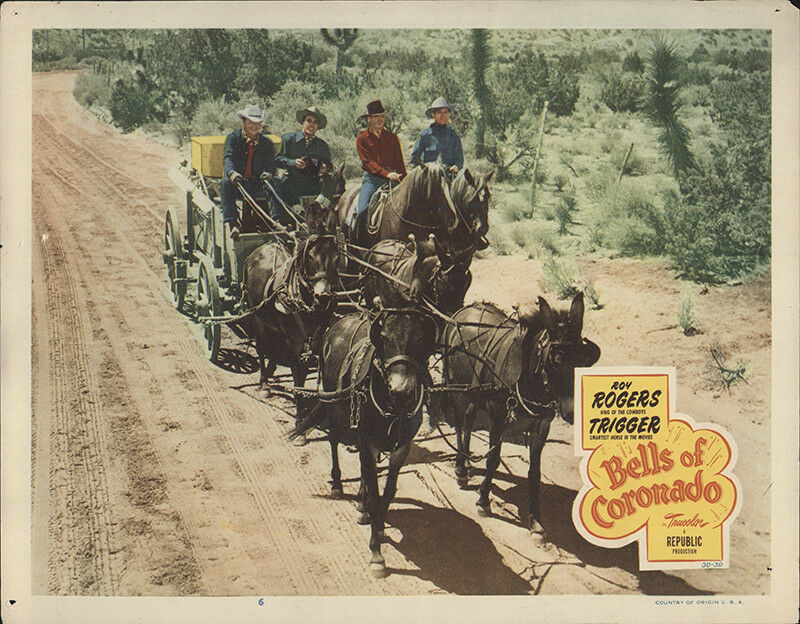
A more leisurely Stagecoach ride – looks very peaceful

Bells of Cornoado 3

Dramatic fall from a horse drawn carriage at speed in the Film

Sadly the  Sable Ranch at Santa Clarito , a popular Southern California location for film and TV shoots, burned to the ground recently in a wildfire that has consumed more than 20,000 acres.

California Wildfires


The ranch, near the Angeles National Forest and an ideal location for Westerns with its old Spanish-style hacienda, stables and various out buildings, has been used for countless films and series, from TV’s Maverick to The A-Team and many more including the Roy Rogers Film above ‘Bells of Coronado’


posted by Movieman in Uncategorized and have Comments (2)