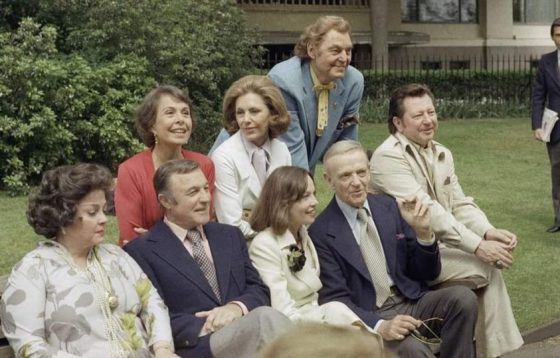
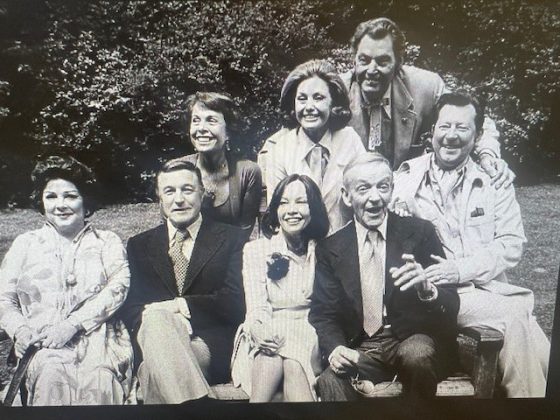
This pictures dates back to May of 1976 – Very hot summer here as we all remember
Some big stars here– Seated Kathryn Grayson, Gene Kelly, Leslie Caron, Fred Astaire and Donald O Connor.
Standing: Marge Champion, Cyd Charisse and Johnny Weissmuller
The big-name stars from the golden days of the silver screen gathered in London on Sunday 16 May 1976 for the gala premiere of the film ” Thats Entertainment, Part 2, ” in which many of their most successful films are featured. Nostalgic group from the great days of Hollywood, pictured outside London’s Savoy Hotel
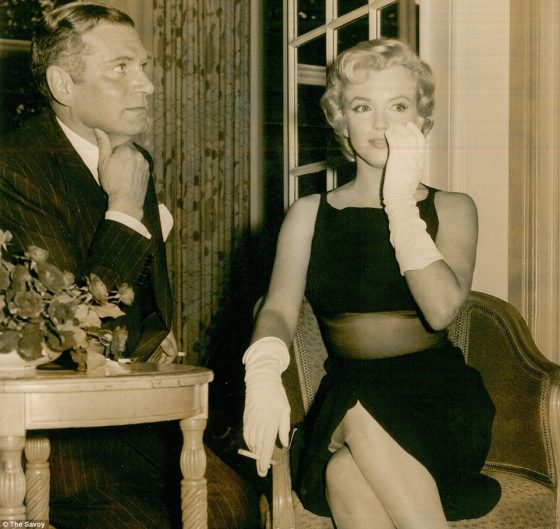
A much earlier photographtaken again at The Savoy HotelBELOW :-
Sir Laurence looking nervous at the press introduction of Marilyn Monroe who is to star with him in ‘The Prince and The Showgirl’
She looks relaxed – she must have known that she was the star of this film – and the person who would guarantee Box Office results – He wouldn’t !!
‘The History of Mr Polly’is a book I well remember us reading at school all those years ago and it was one I likedbut it was quite a lot of years before I actually saw this 1949 films adaptation which was superb.
It was made at Denham – in fact the idyllic Pub by the water was constructed in the grounds of Denham Film Studios down towards the River Colne and lakes and it looked just perfect and eventually gave Mr Polly the life that he wanted.
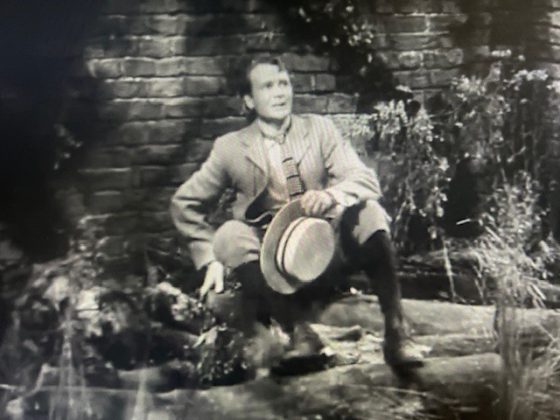
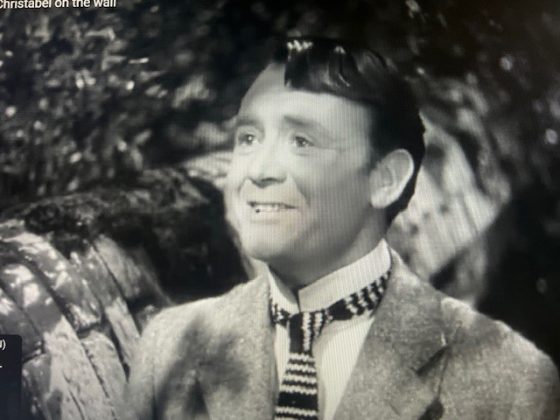
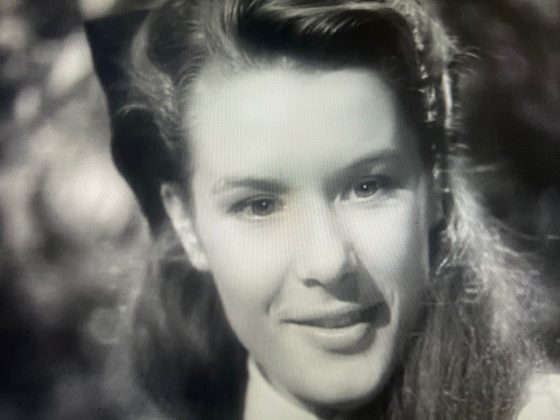
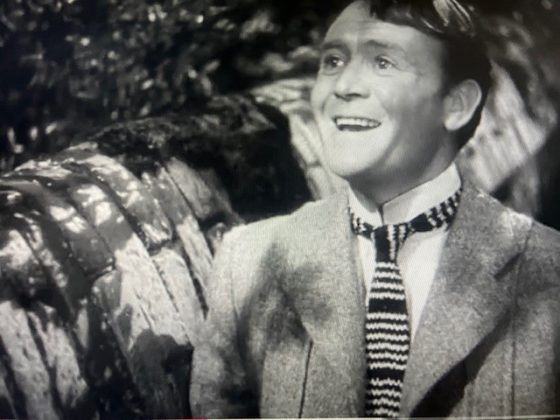
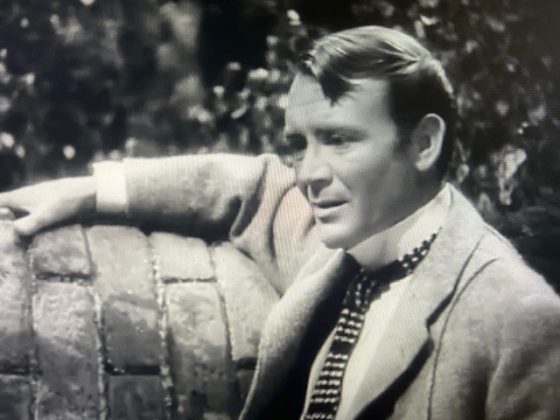
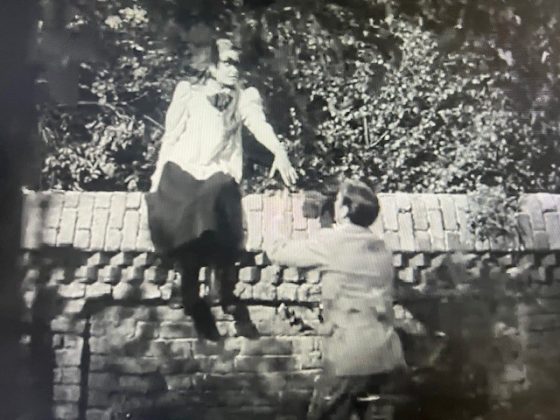
However before he gets there, there is one episode in his life that I just love and that is when on a cycle ride he meets and befriends Christabel – a teenage girl at a College that he passes. It is really rather sweet and innocent but in his mind he sees this girl as the personification of all that he has dreamed about
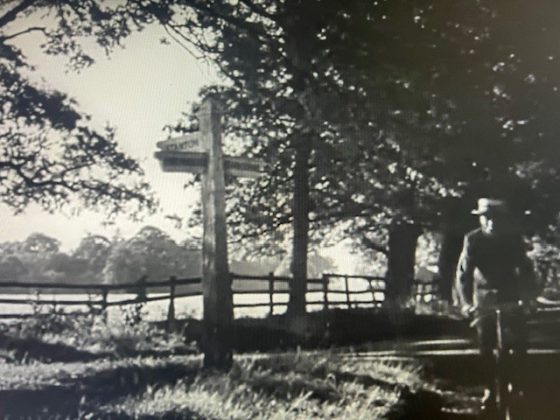
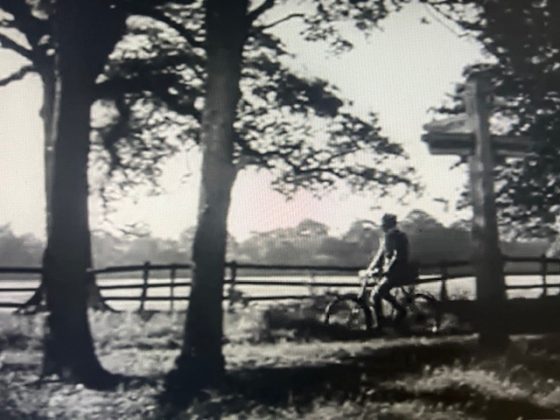
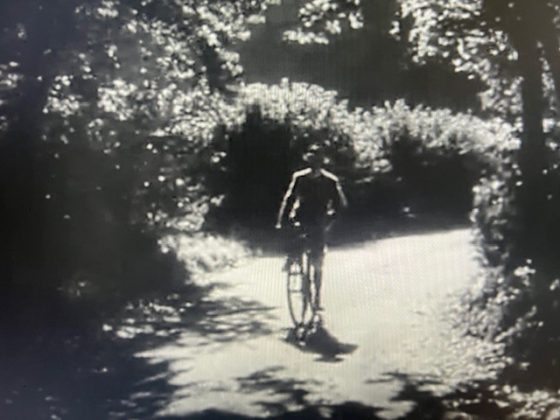
These lovely summer time shots from scenes when Mr Polly is just meandering around the countryside and loving it
He takes this country lane
BELOW he stops here – a beautiful Studio set at Denham, and meets the young girl of his dreams
This little area is wonderfully re-created in the studio
ABOVE Mr Pollyrealises that he has found somewhere magical
ABOVE – He just sits and takes in the tranquillity
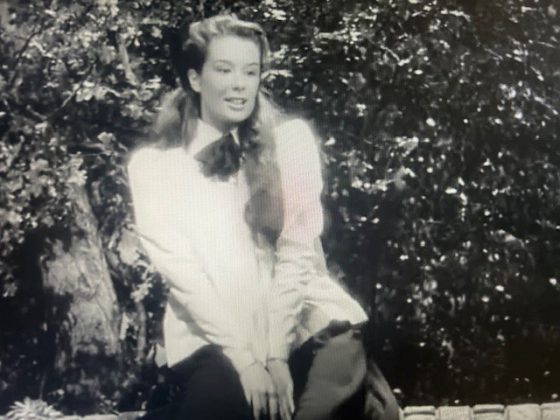
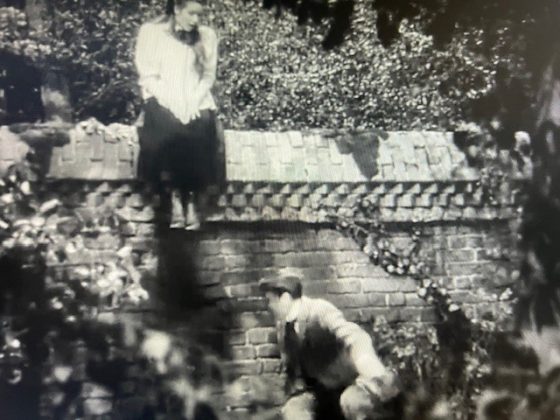
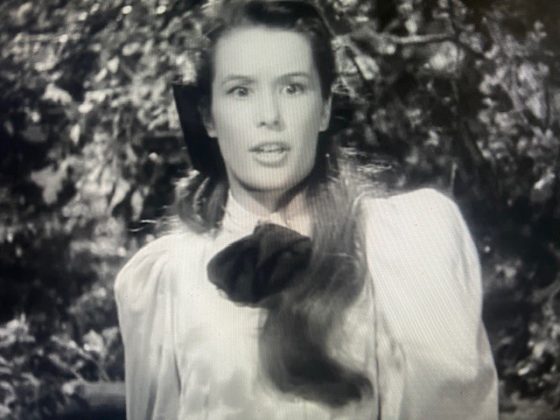
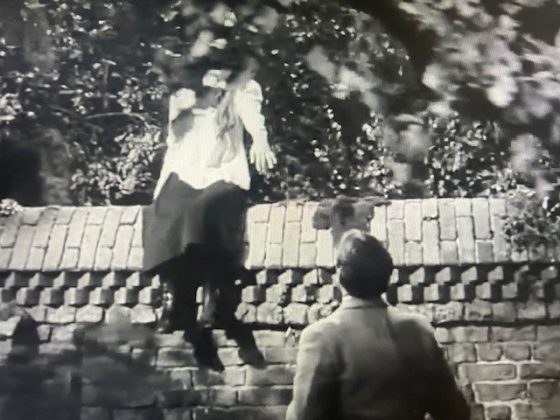
This teenage girl sees him from her vantage point sitting on the College wall. Mr Polly chats with herand quite quickly he becomes hooked on her beauty
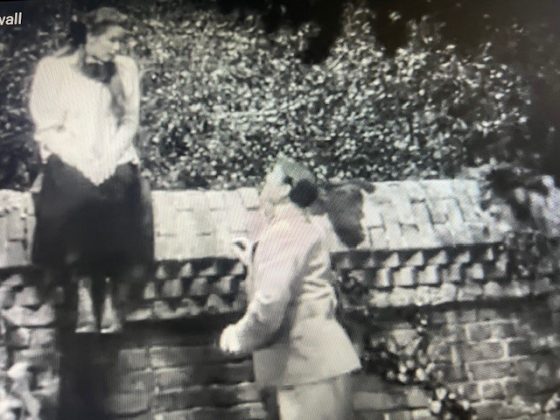
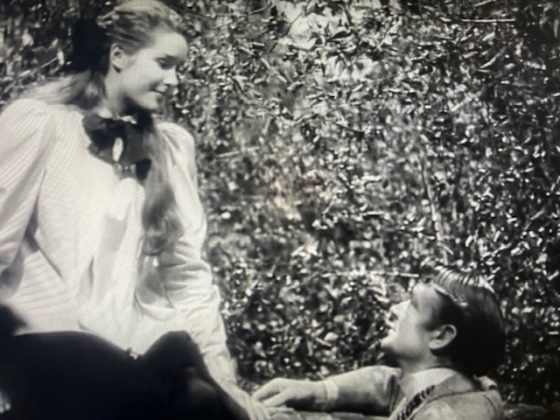
He rises to his feet to talk more
History of Mr Polly
H sees her as a damsel and he sees himself as a Knight in Shining Armour– and he describes this to her
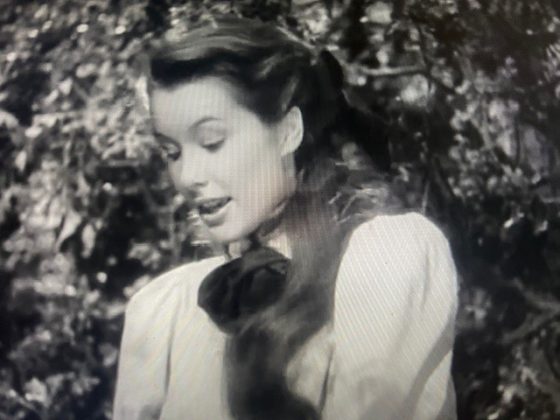
Christabel herself ( the lovely Sally Anne Howes ) seems to enjoy the chat and plays along with his dream
Their conversation just flows so easily
They finish the chat when she has to go and he pleads to see her again
Sally Anne Howes BELOW who would be 19 when she played this part – she played it beautifully
Sally Anne Howes
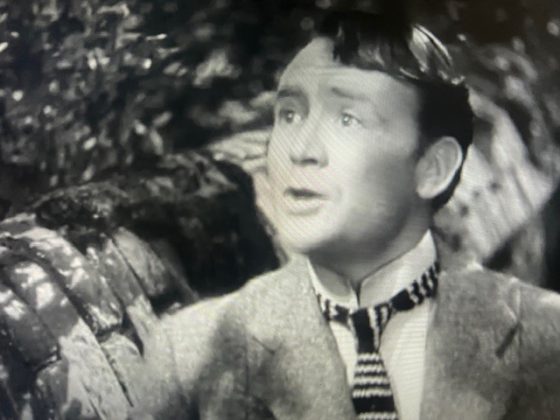
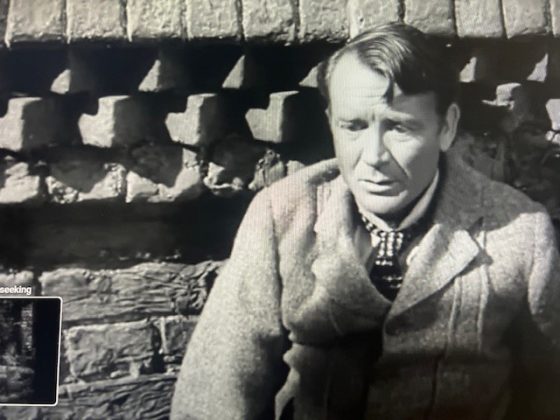
John Mills as Mr Polly
She looks so excited and his is transfixed
History of Mr Polly
Christabel has to leave and Mr Polly is loving every minute
History of Mr Polly
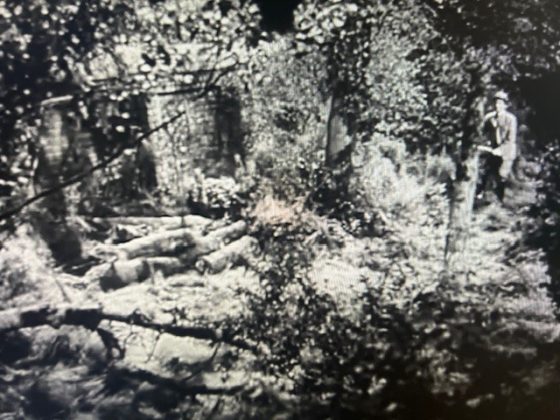
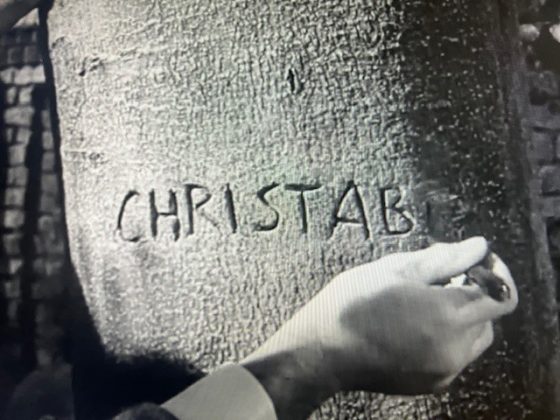
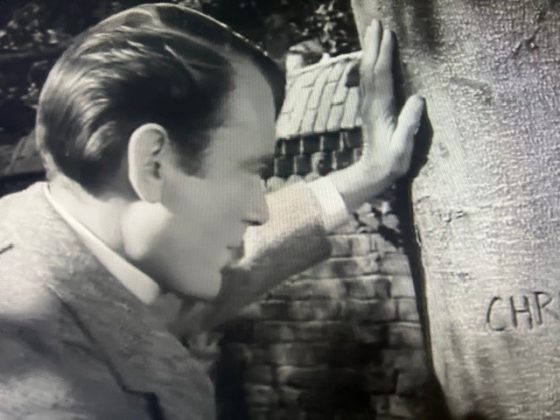
On his next visit a few days later, he carves her name on a tree
and she re-appears on the wall
History of Mr Polly
She holds out her hand so that he can kiss it which he does
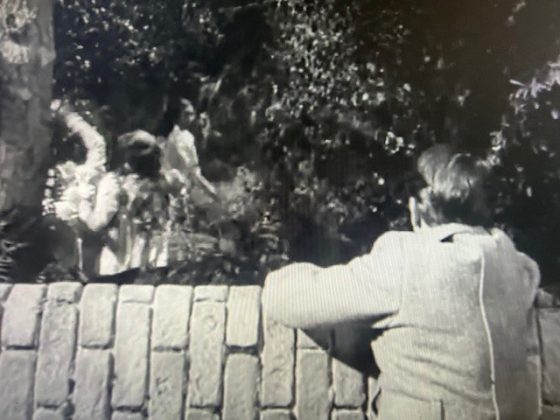
He the hears schoolgirl giggling over the wall and gets up to see two more girls who had been listening in
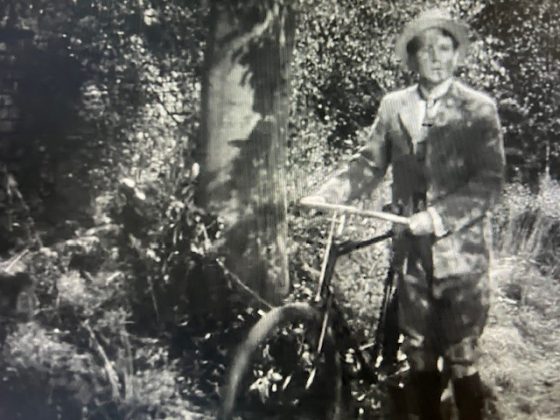
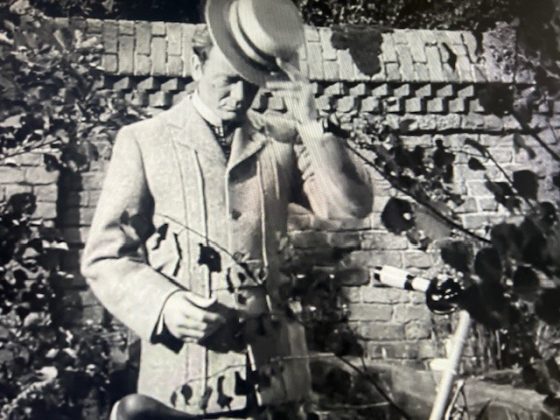
ABOVE and BELOW – The dis-heartened and shattered Mr Polly thinks that he has made a fool of himself and trudges back to his bicycle – a forlorn character
You just couldn’t help yourself feeling so sorry for him. He then on a whim sets off to see his cousins and eventually goes for a walk in the park with Miriam. They sit on a park bench together and he turns round and sees Christabel and her friends there and immediately he turns and proposes to Miriam – I can’t think why but it is another one of his wrong turns in life. We can all see in his face that marriage to Miriam is not what he wants. So begins an unhappy chapter for him
Back to later scenes and the Studio set for the Inn on the banks of the river – built in the grounds of Denham Film Studios – where Mr Polly eventually after some adventures find the happiness and tranquillity that he has searched for all his life
It looks so pretty
It leaves me wondering though – What happened to Christabel – that would make another good story
When Sally Anne Howes played this role, although only a teenager she had been in some classic filmsincluding the great ‘Dead of Night’ and also ‘Halfway House’, ‘Pink String and Ceiling Wax’ ‘Nicholas Nickleby’ and ‘Anna Karenina’ with Vivien Leigh
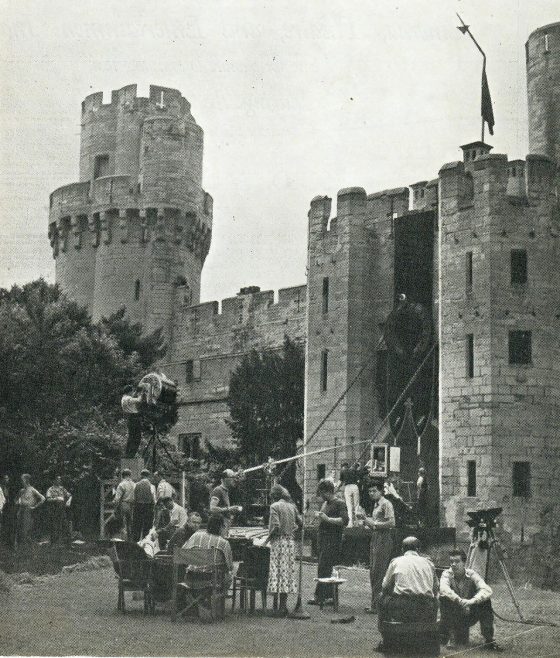
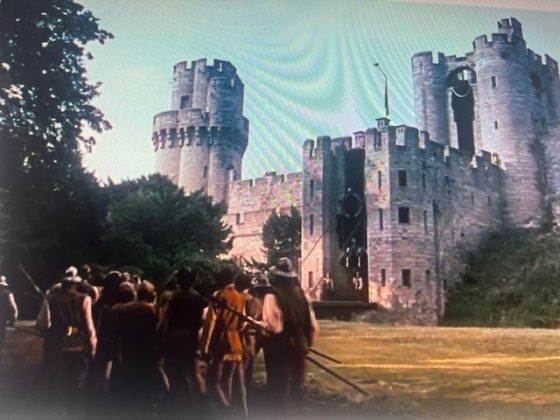
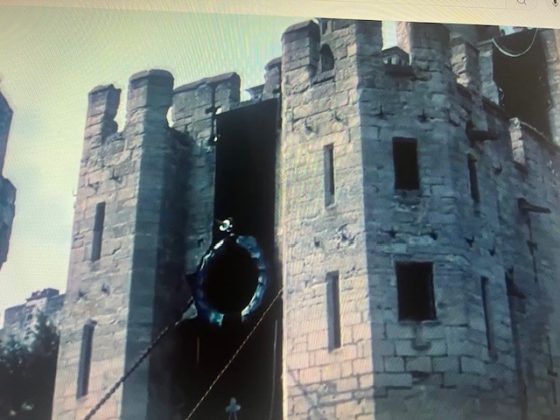
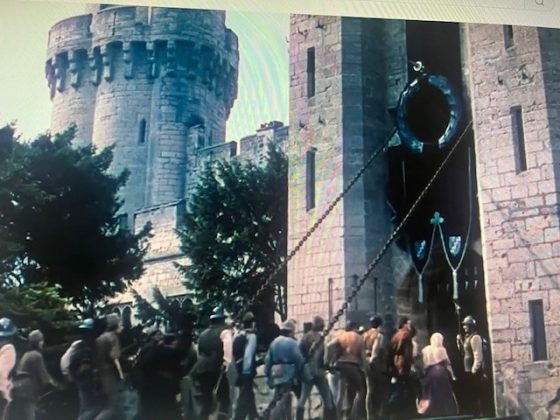
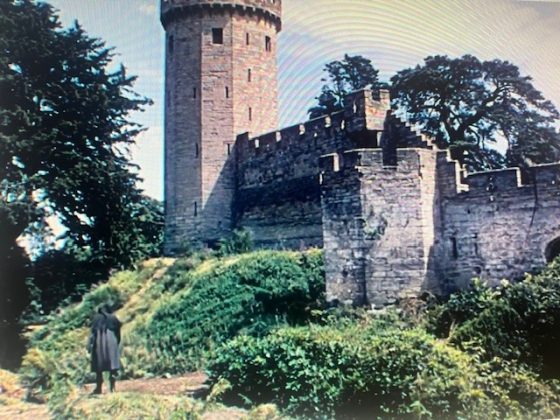
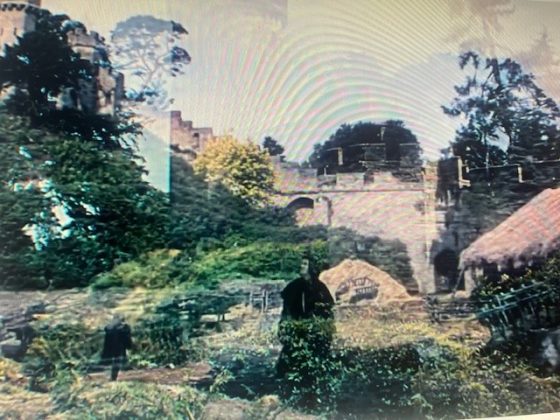
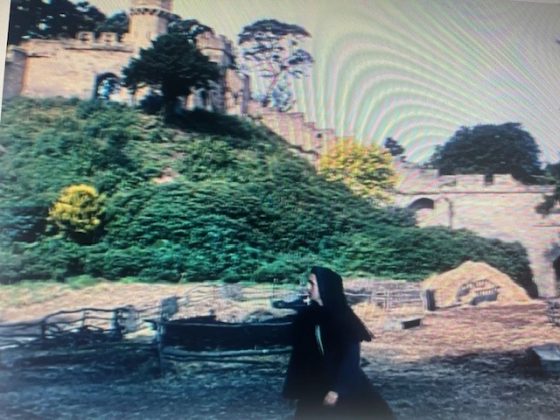
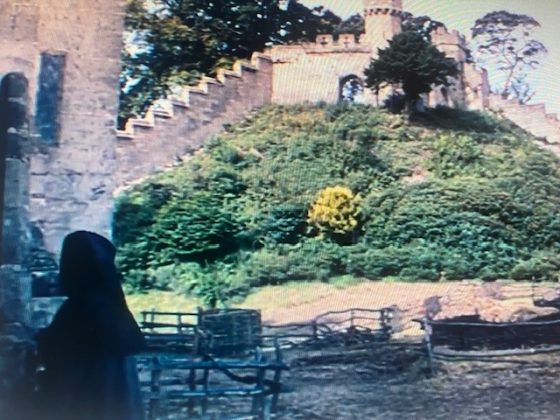
I remember this one – a big budget British film but I have come across these location pictures that show how well we use existing locations – in this instance Warwick Castle. Only a dew short months late MGM made ‘Ivanhoe’ and they built a castle in the grounds of Elstree Studios.
This film opens with quite a random selection of Castles in a short intro we see Bodiam Castle, Leeds Castle and a couple of others before we alight on Warwick Castle.
Another Castle location used in the film was Allington Castle in Kent
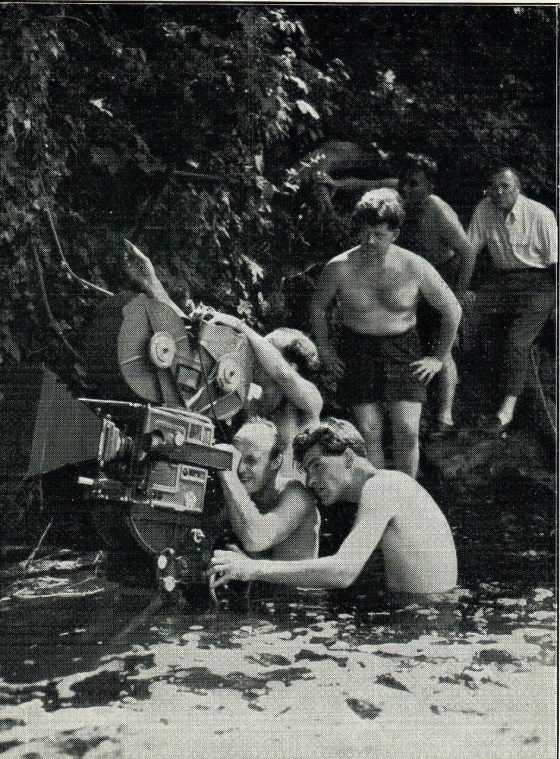
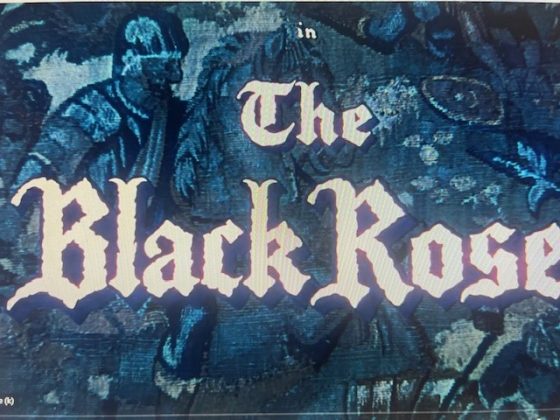
In the picture above, the 20th Century Fox Unit rests between scenes in theb 13th Century drama ‘The Black Rose’. In this photograph we can see Tyrone Power, Director Henry Hathaway, Jack Hawkins, First Assistant Bluey Hill, Continuity Pam Davies, Red Gemmell ( Camera ) and George Frost ( Make Up)
In the picture ABOVE
Almost up to their necks in it for the final scenes in ‘The Black Rose’ the camera crew took to the River Avon, close to Warwick Castle, during the three weeks location there with this Technicolor romantic adventure story
Eye to the camera is Jack Cardiff with Paul Beeson, camera operator. Behind them are Ted Scarle and Neil ( Red ) Gemmell with Director Henry Hathaway ( in white shirt )
I have scanned back over the film and when I read here that there was a THREE week location shoot, the scenes in the film seem to be very few and particularly this one in the water. There was such a scene but it seemed to be in semi darkness and in my mind those brief scenes could so easily have been shot in a Studio Tank
it must have been a very hot day in the summer of 1949 – the film was released on 7 September 1950
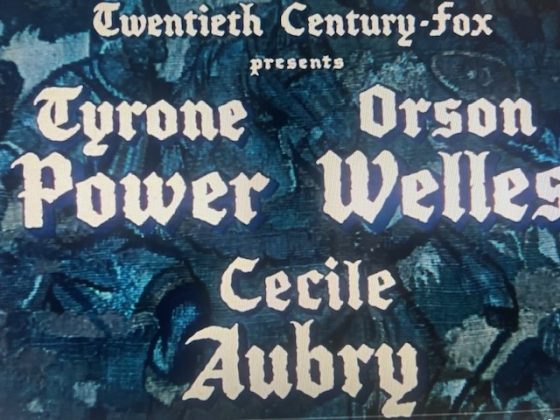
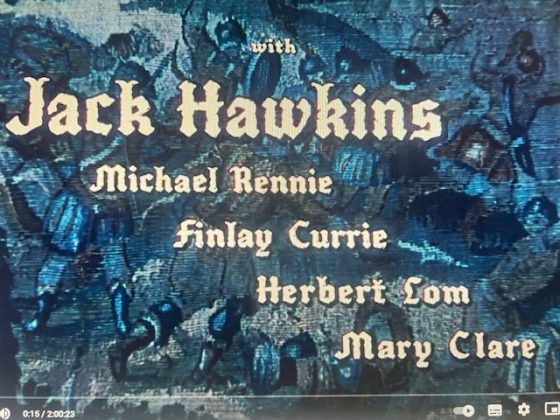
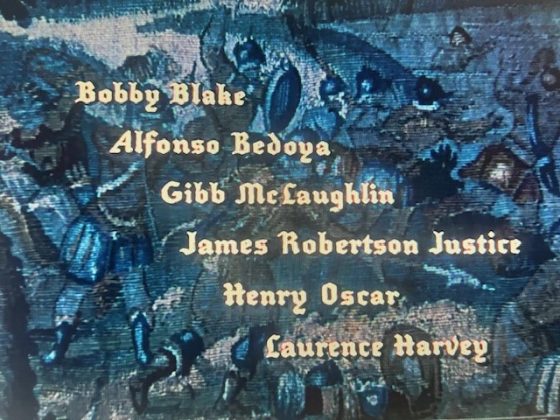
Just look at the cast list ABOVE. Henry Oscar – a very well known and reliable film actor, Laurence Harvey who went on to a quite dazzling film career but sadly died very young and James Robertson Justice – how does he get these parts I just don’t know – he must have been very well connected, He went on to the three big Walt Disney films made here in the early fifties and then on to the ‘Doctor’ series and a lot of others. How does he do it ?
I have just been browsing through various magazines / Annuals of the fifties era and came across these scenes BELOW which I have used before on this Blog.
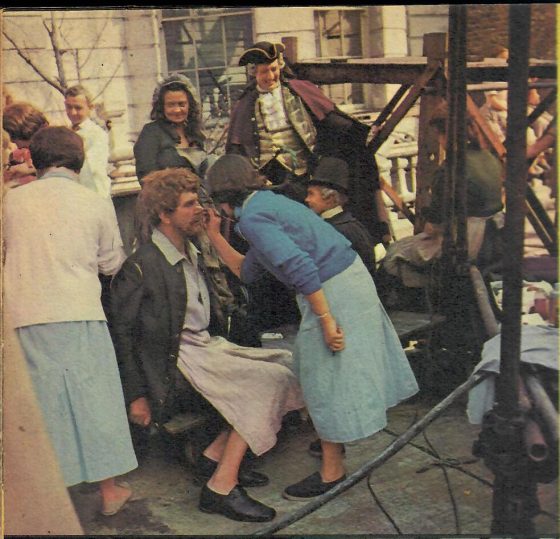
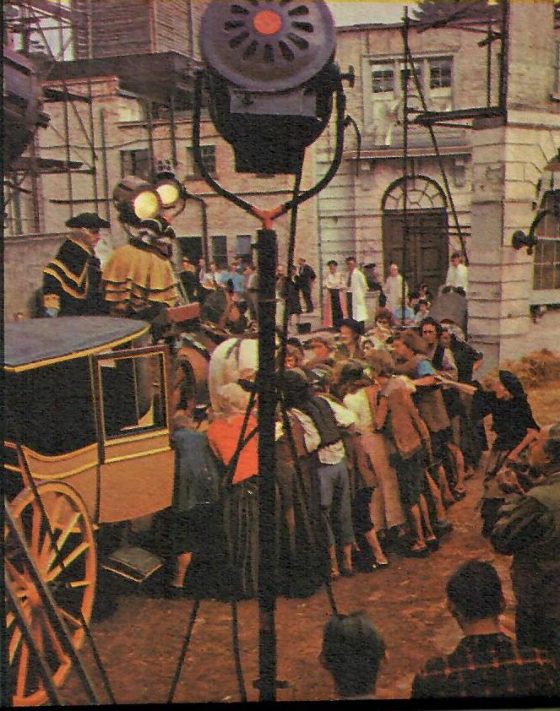
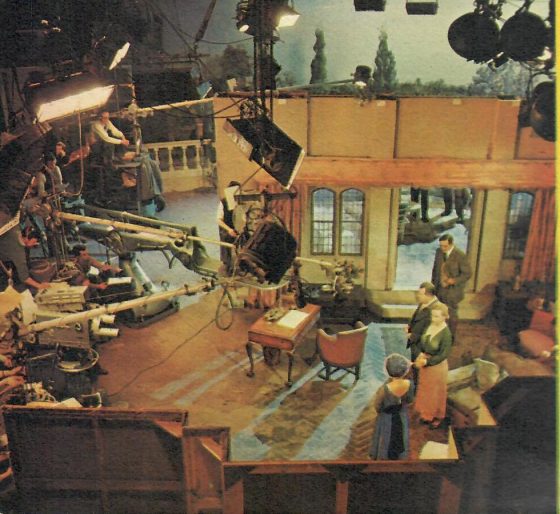
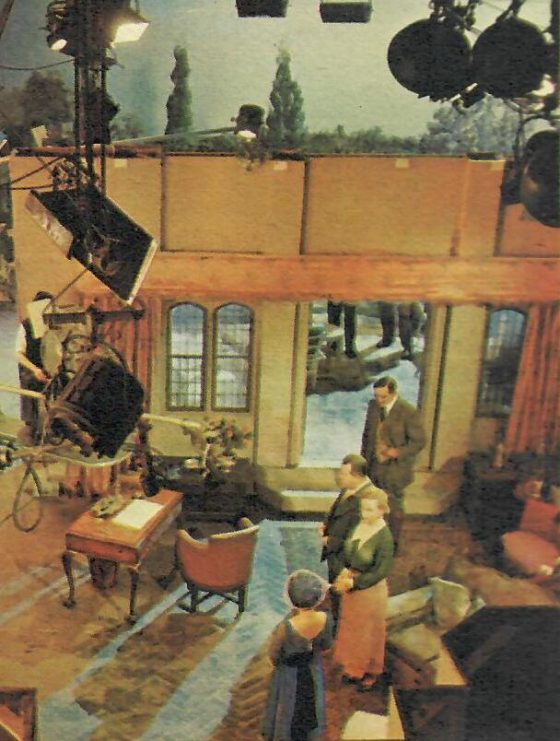
ABOVE – Scene from a BBC DRAMA I took these colour pictures from a Children’s Book from Christmas 1960 showing ‘behind the scenes’ preparation for what looks like major drama. The Bottom drawing room set is certainly for Television – TV Cameras are visible. However the Top ones I am less sure of – it looks like it could be a Dickens dramatisation – I thought of ‘A Tale of Two Cities’ BELOW – this looks more a a Drawing Room type play – lovely set though ABOVE – No real idea of the actual play in the two scenes – snow outside. I am trying to guess – could it be something like ‘The Holly and the Ivy’ or maybe ‘Waters of the Moon’ or what about ‘Dr Finlay’s Casebook’ Probably none of these – but I will re-read the book and try to ascertain just what this studio play is. Fascinating – also seeing these pictures in Colour when the drama would not be shown in Colour adds another dimension. ABOVE – Another BBC drama – great to see snow ‘outside in the garden’ – Very well done I think
ABOVE – Vera Miles watches Gordon Scott as Tarzan
ABOVE – James Stewart in a Scene with his beloved horse
ABOVE: A Panel Game – But which one ?
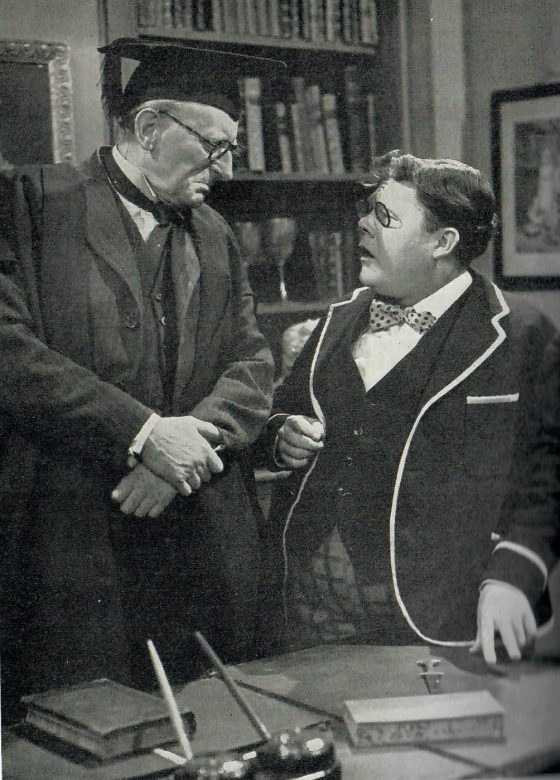
ABOVE – We all remember this Billy BunTer and Quelch ( KynasTon Reeves)
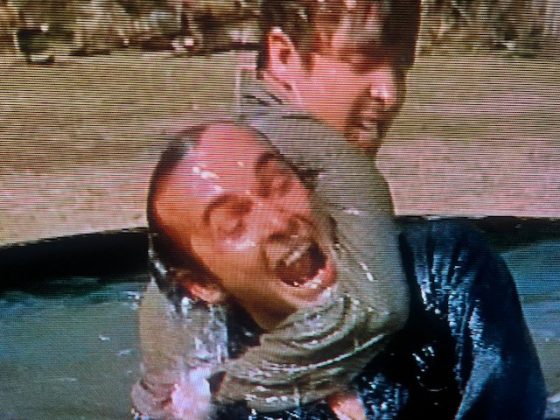
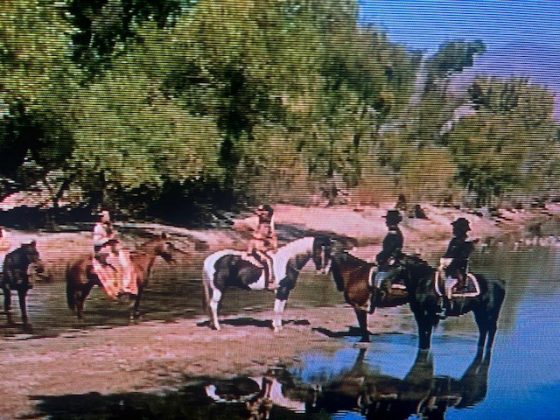
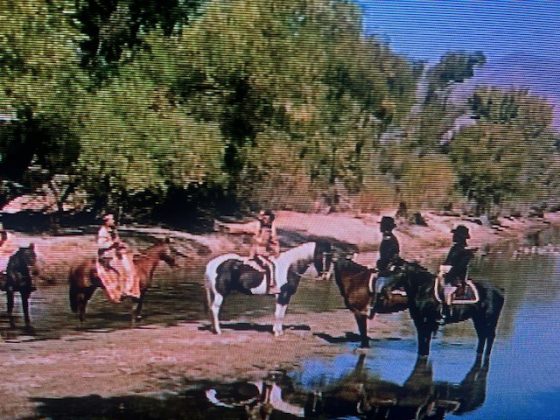
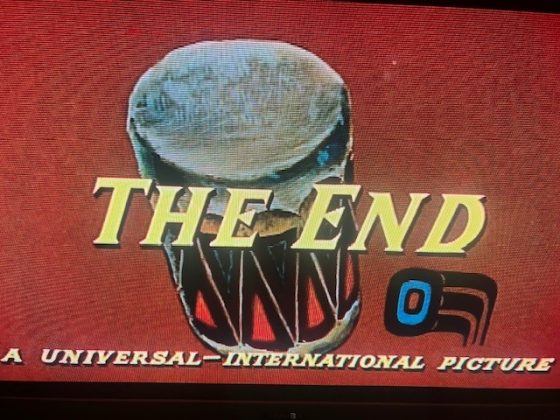
This was a pretty good , very colourful Western from Universal with plenty of action.
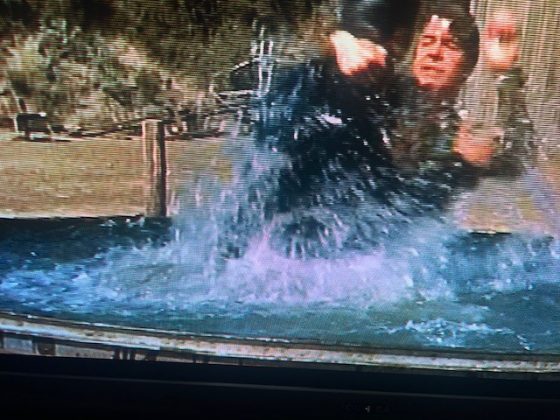
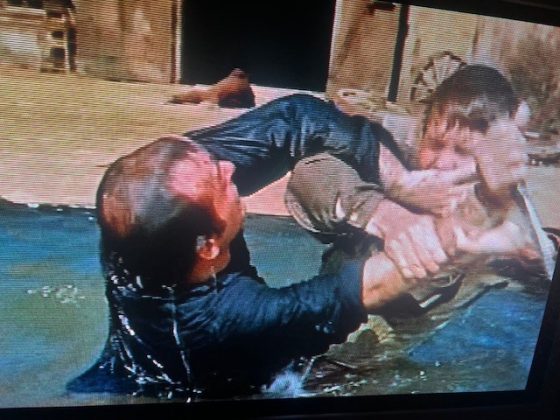
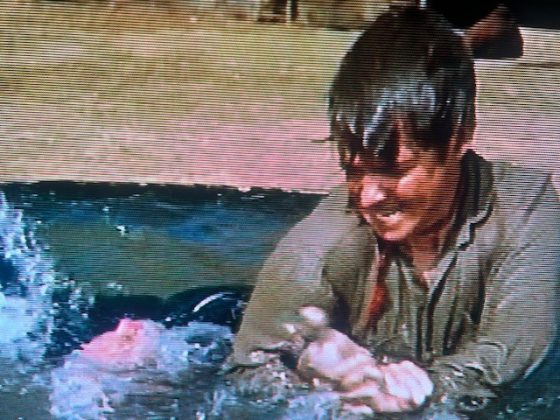
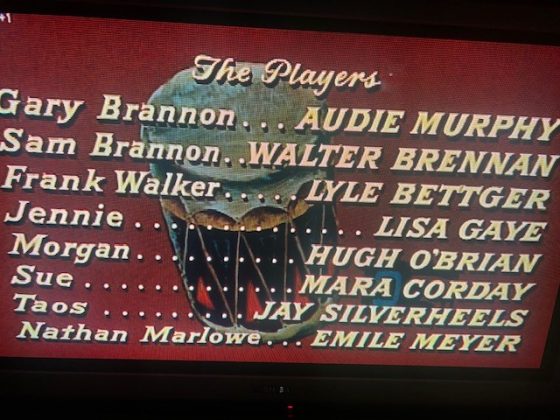
Audie Murphy stars, looking very young – he would be around 28 when this was made – and he puts everything into this role as can be seen below in the final sequence
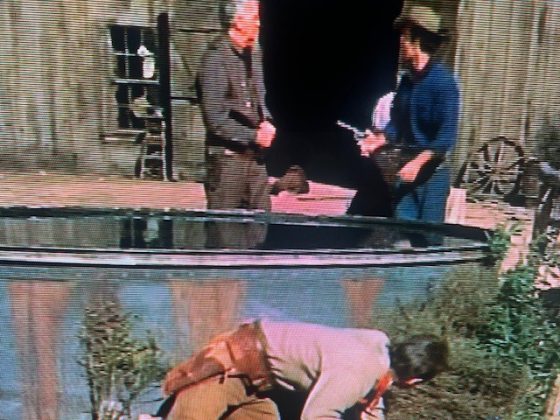
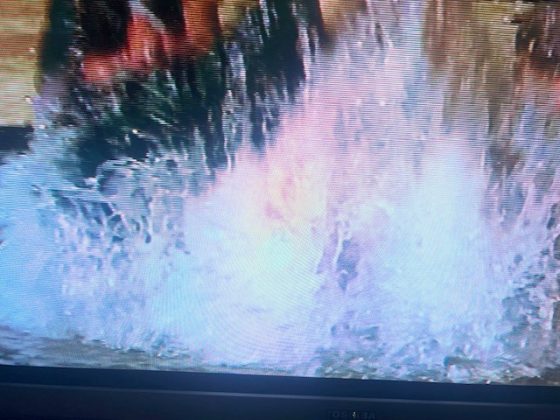
Something of a ‘spoiler’ here as we come to the final moments of the film when Audie Murphy meets the villain head-on. First hiding behind the large water trough and once the fight starts, inevitably the two finish up in the water. A furious and very well staged fight takes place
The film is in Glorious Technicolor – beautiful, and in my book a colour in film that has never been equaled – just so striking.
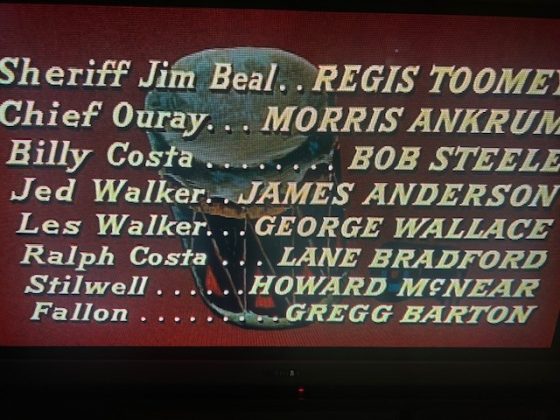
There is also some recognisable villains including Lyle Bettger, Bob Steele, and Hugh O’Brian as a Psycho Gunslingerbut he gets what is coming
Overall, this Cowboys and Indians film is the Stuff that made Saturday Matinees the favourite place to be for kids of the fifties.
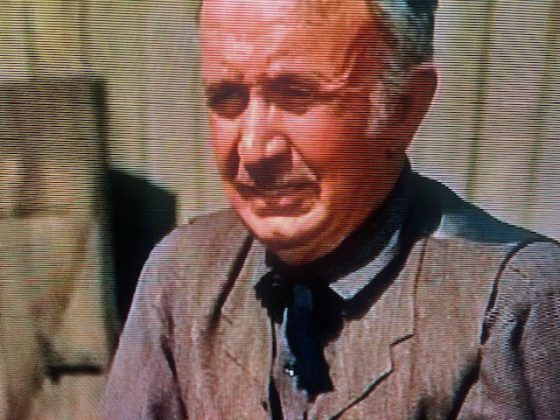
This is a Colourful Western with Audie Murphy and a strong cast along with him – including Walter Brennan ABOVE in a serious role as Audie Murphy’s Father
Jay Silverheels has a small but important role as an Indian Chief.
It is quite striking just how much action was in this 80 Minute Western – it’s great to see the story unfold at such a stirring pace.
The action just never lets up
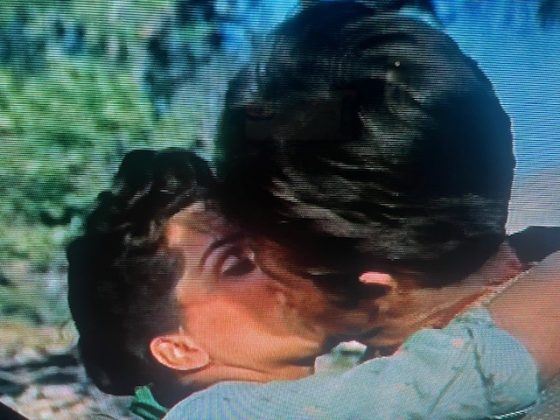
Audie of course wins the love of his leading lady and it all works out well in the end.
Very enjoyable – and What a Cast !!
Quite few years after this Audie Murphy was killed in a light plane crash in 1971
May 31— Audie Murphy, the nation’s most‐decorated hero of World War II, and five other men were found dead today in the wreckage of their light plane near the summit of a craggy, heavily wooded mountain 12 miles northwest of here.
A search party guided by a hovering State Police helicopter struggled up the rugged north west slope of 3,065‐foot Brush Mountain and reached the partly burned twin‐engine Aero Commander at 4:40 P.M., three hours after a Civil Air Patrol search plane had located the wreckage.
The bodies of the victims— three found in the plane’s crumpled fuselage and three amid strewn wreckage—were carried down the mountain on stretchers and taken to the morgue at Roanoke Communi ty Hospital.
Dr. Walter Gable, deputy chief medical examiner for the state of Virginia, said tonight that there was no doubt about the identity of the victims. But he added that positive certifica tion of the identities would have to await detailed examina tions tomorrow.
——————————————————————
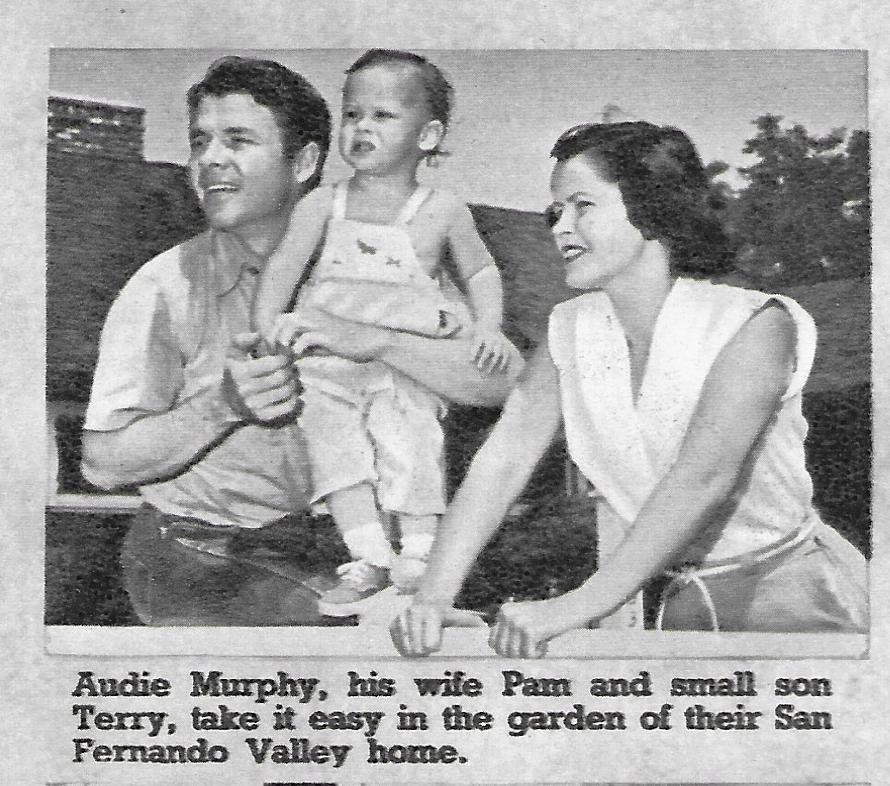
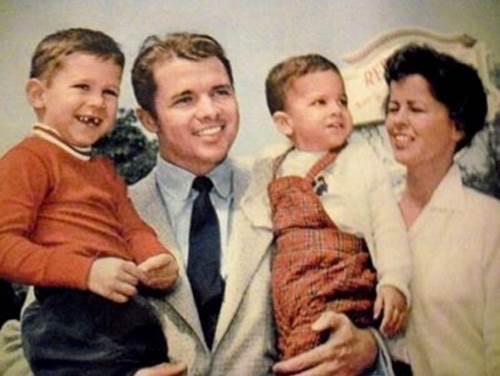
BELOWIn happier times – Audie Murphy was very much a family man
Much decorated War Hero Audie Murphy at home in the San Fernando Valley – with wife Pam and son Terry. He had been previously married to actress Wanda Hendrix although only briefly – then he married Airline Stewardess Pam in 1951 and they remained together until he died. They had two children.
Pamela Murphy, widow of WWII hero and actor, Audie Murphy, died peacefully at her home on April 8, 2010 at age of 90.
This series ran for over one hundred and fifty episodes
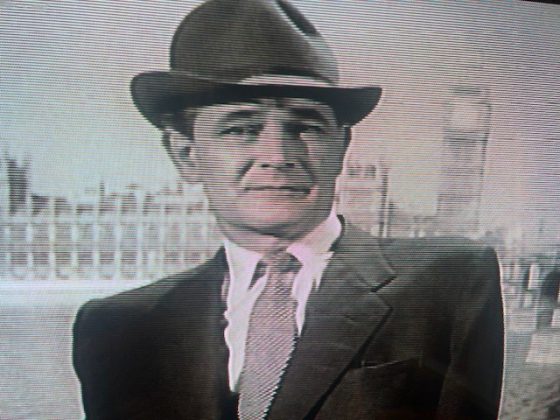
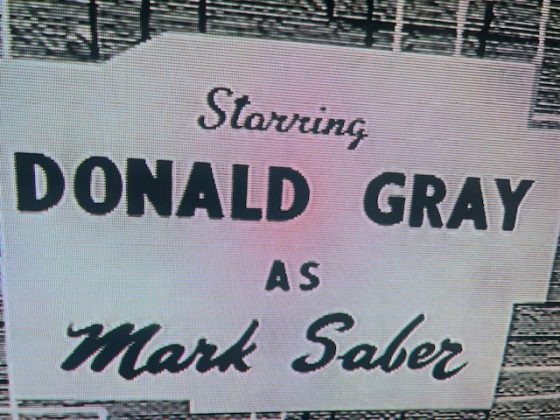
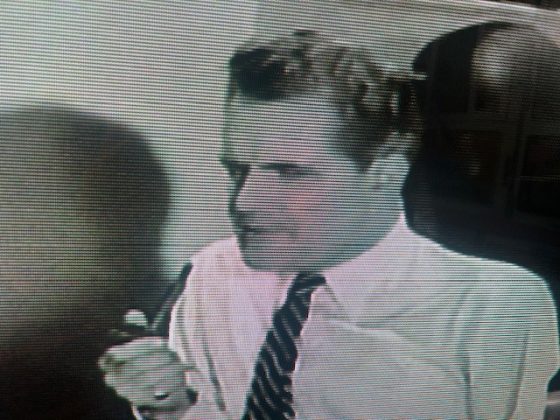
Each episode opened with view of Tower Bridge in London, then cutting to Donald Gray as Mark Saber
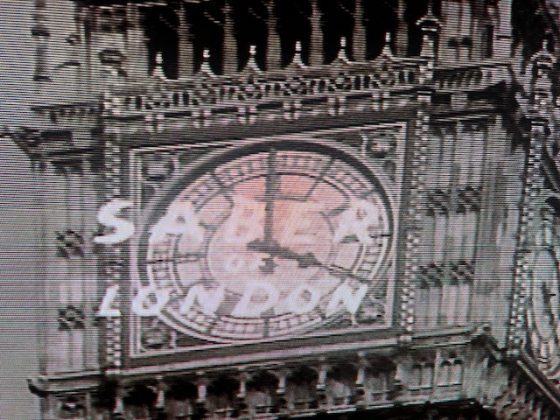
Then we see ‘Saber of London’ against Big Ben
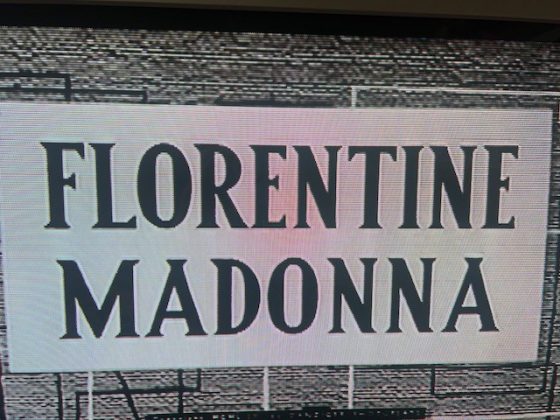
This episode ‘Florentine Madonna’ is an episode – one of the later episodes, that I watched a couple of days ago
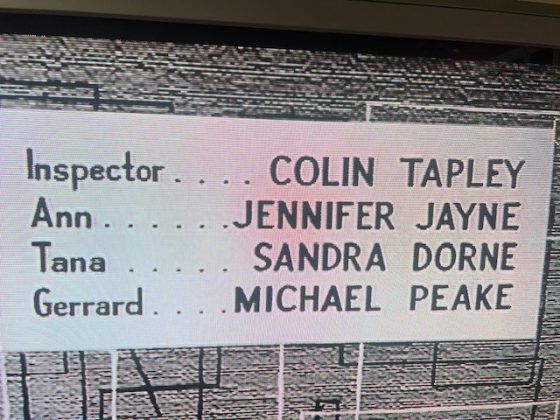
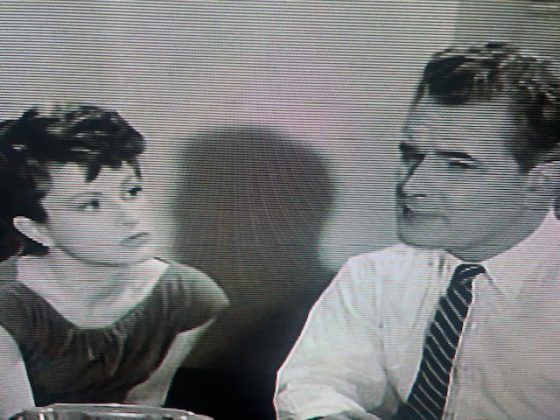
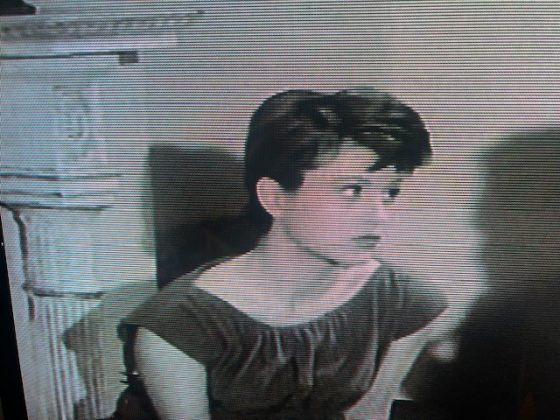
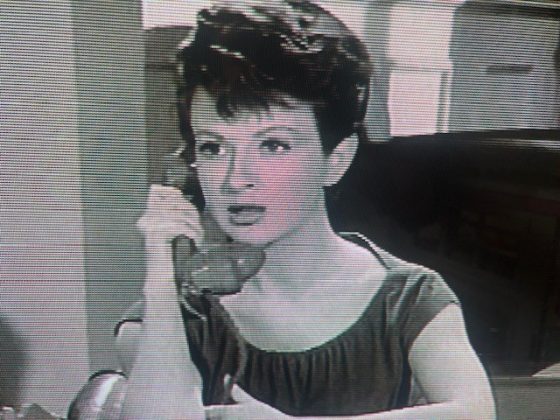
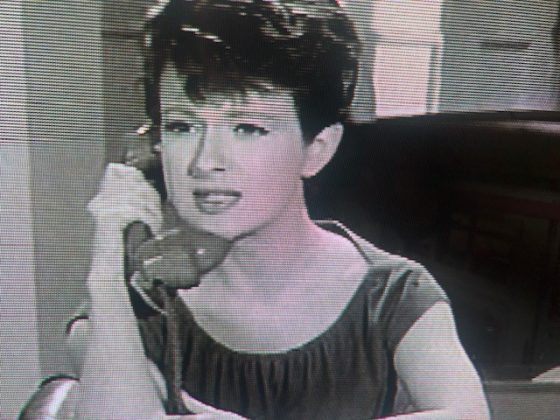
Jennifer Jayne played Mark Saber’s right hand girl and she had quite a big part in it. Colin Tapley played the Police Inspector in a lot of episodes – it must have been good and regular work for actors at the time
Jennifer Jayne – at and around this time seemed to be in such a lot of famous series – here she played Jill, but we all will remember her best for her major role in William Tell alongside Conrad Phillips. She was also in a few episode of Robin Hood withRichard Greene – and many other film and Television shows
ABOVE – Colin Tapley – what an interesting career he had.
SEE MORE BELOW
ABOVE and BELOW – Sandra Dorne
BELOW – Sandra Dorne with Donald Gray. She is one of a gang of Art Thieves but as always she and the others are caught and apprehended – as in these and other series, the plot, the introduction of the characters and the conclusion, are all contained within the half hour episode. Very clever really
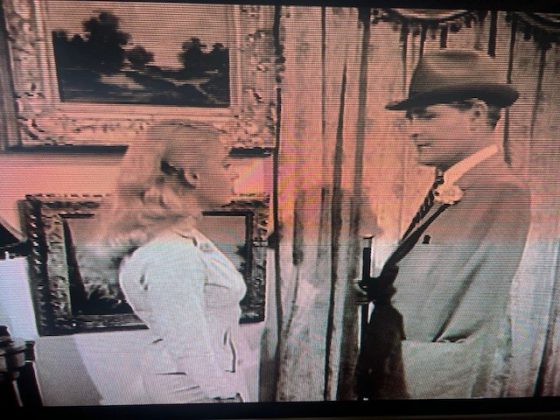
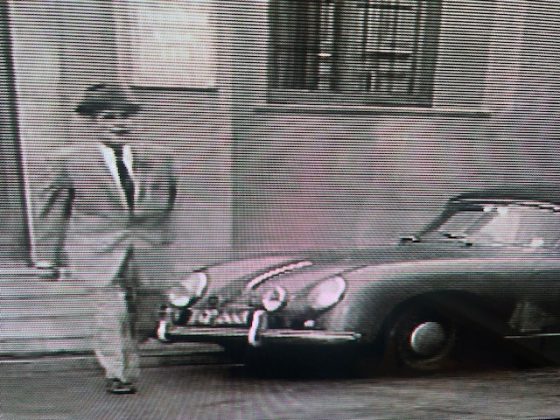
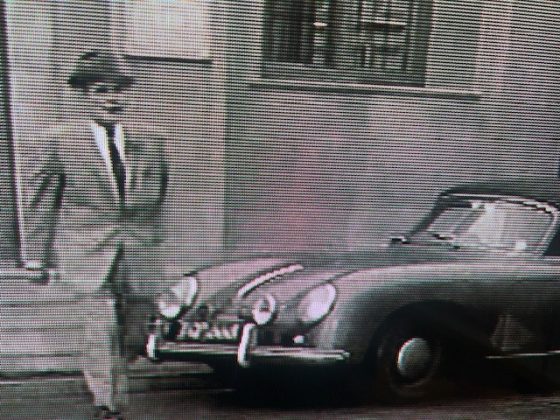
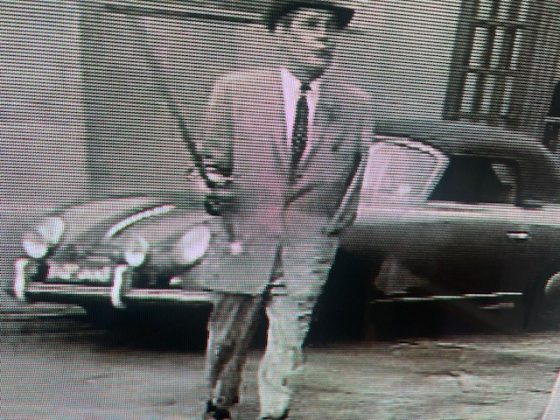
Just take a look at the FOUR pictures below. Mark arrives in his car and I did not recognise what sort it was. I am NOT a Car nut by any means but it did look unusual. It turns out to be a Porsche 356A Cabrio, and that really leave me no wiserbut there may be people who read this that would know about such things.
Donald Gray
His was the radio voice which, when transferred to TV, revealed that hje was quite a handsome young man. For some time Donald Gray had been a frequent actor in radio plays. His broadcasts were somewhat confined to villainy, because the BBC radio producers seemed to think the “deep-brown’’ voice more suited to that than to heroics.
Donald was in fact in the BBC Drama Repertory Company for three years. He then took the usual series of tests for TV announcing, followed by a trial on the screen as a guest announcer. He became a regular relief announcer
He was born in South Africa, and began work there, not in the theatre but on an ostrich farm. His acting urge brought him to Britain, where there are more stage opportunities. He worked with a number of repertory theatres, and then got into films. The war interrupted this, and in 1944, in a fierce action during the advance on Falaise, he lost his left arm.
When he afterwards starred with Linda Darnell in the film Saturday Island, the script was adapted to take account of his only having one arm.
At Lime Grove they tell a human story of his announcing test. There were other candidates there, nervy in a suspense-taut studio. The studio manager, to put them at their ease, asked each in turn to relate some happening in his life. Simply and straightforwardly, without heroics or pathos, Donald told how he lost the arm. The tension in the studio vanished, leaving instead a sense of comradeship and inspiration which was helpful to all.
I certainly remember him as a Television Announcer and have a memory of him appearing on the panel of ‘Whats My Line
Colin Tapley–
Here I am repeating much of an article I wrote a while ago.
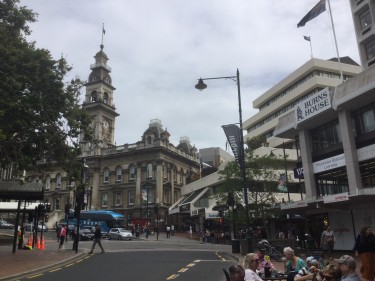
The thing that interested me about him was that he was born and raised in Dunedin in New Zealand. About five years ago with my family, I was lucky enough to be on a on a cruise liner out of Sydney that docked there for the day – the second time in a decade we had done this – and Dunedin was a place that I fell in love with – and so did my daughter.
I just love the place as I felt at home in this beautiful and welcoming city. It was summertime there and a beautiful warm to hot day – so that is always a factor.
Colin Tapley – Colin Edward Livingstone Tapley was born in Dunedin on 7 May 1909. He was employed by H L Tapley and Co Ltd, the Dunedin shipping agency, his late father had founded.
ABOVE – The Centre of Dunedin as it is today 2020 – the former home and resting place of Colin Tapley
However in 1933 he entered and won a film talent contest that took him to Hollywood
Colin Tapley found his own cinematic niche playing character roles in American and British films for more than 30 years, without any real desire for stardom.
In 1933 Tapley won the New Zealand male section of Search for Beauty, a worldwide talent quest conducted in English-speaking countries by Paramount Pictures. His prize included a trip to Hollywood to cameo alongside the other winners in the Search for Beauty movie — a comedy romance set in a physical culture school.
The contest he had entered as a dare brought the additional reward of a contract with Paramount for his agreeable performance in the film, which was his first. Tapley was the contest’s male runner-up, and South African-born Eldred Tidbury the male winner. Tidbury changed his name to Donald Gray, and would appear with him more than 20 years later in British TV series The Vise.
Tapley meanwhile acted in several Paramount movies of the mid-late 1930s. “The most wonderful experience of my life,” is how he recalled those glorious years. “I adored every bit of it.”
Colin Edward Livingstone Tapley was born in Dunedin on 7 May 1909. At the time he won the contest that changed his life, he was employed by H L Tapley and Co Ltd, the Dunedin shipping agency, his late father had founded.
The screen test that took him to Hollywood was shot at Filmcraft, later National Film Unit, studios in the Wellington suburb of Miramar. Tapley and the other nervous finalists then waited three suspenseful weeks for the judges at Paramount Pictures to name the man and the woman to represent New Zealand.
Tapley’s wish to play character parts came early in his career. He wrote home enthusiastically to one of his brothers about his small, unbilled part in The Scarlet Empress (1934); he described in detail the long black beard and wonderful uniform that transformed him into the captain of the Queen’s Bodyguard.
Colin Tapley derived great personal satisfaction from playing Captain Dobbin in Becky Sharp (1935), the first film shot in three-colour Technicolor. But his favourite role from his Hollywood movies was probably Barrett, the spy, in Oscar-nominated adventure TheLives of a Bengal Lancer (1935).
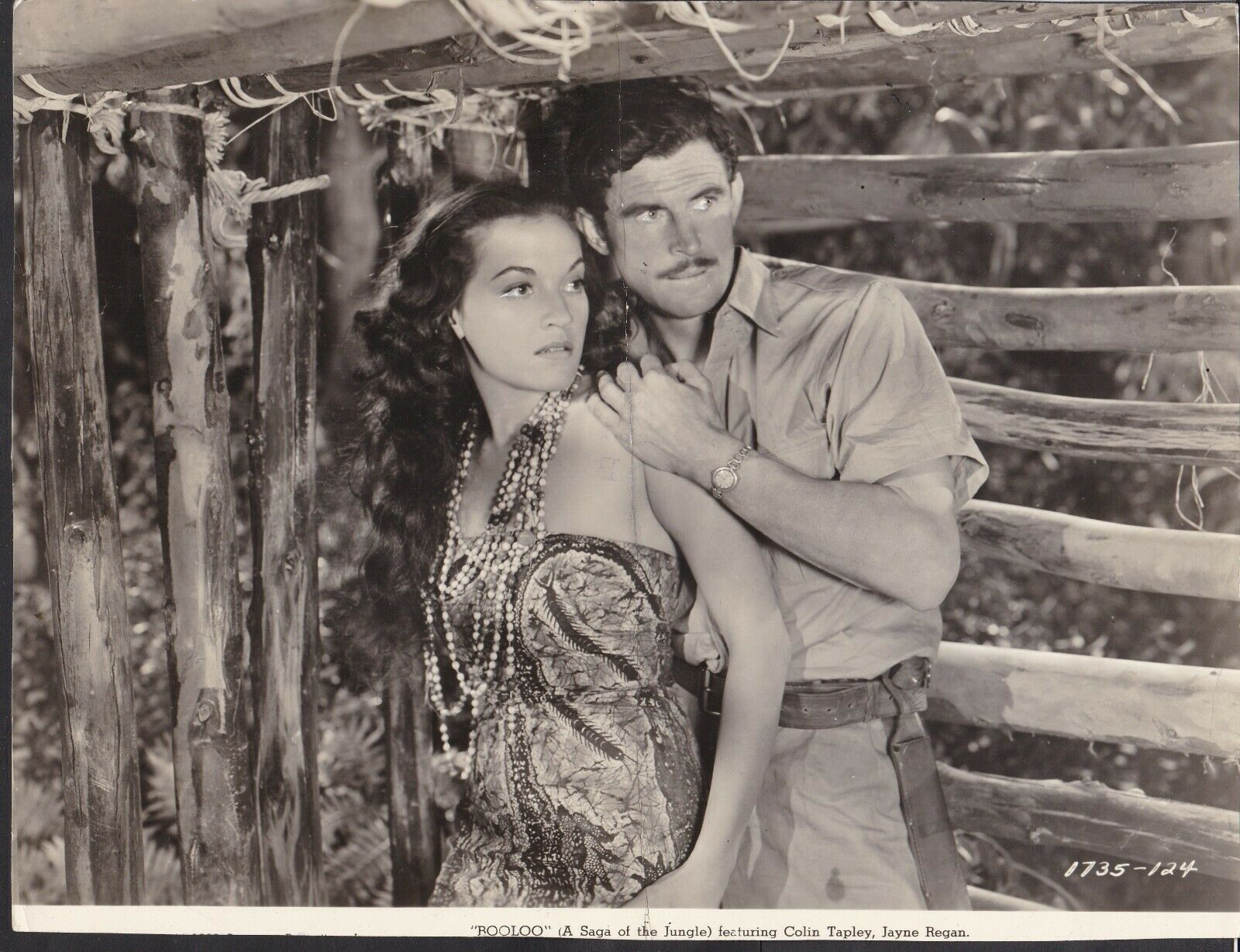
His only starring role at Paramount was in Booloo (1938) ABOVE – playing Robert Rogers in a tiger hunt adventure set in the Malaysian jungle. During the eight months the crew spent filming in the country’s jungles more than 3500 millimetres of rain fell. One subtropical storm saw them climbing into the trees with the monkeys for survival, after streams rose 11 metres above normal. Tapley regarded the noise of the monkeys as the worst part of his tree-living experience.
His last film before World War II service was a Western – Arizona (1940). The normally well dressed actor wore cowboy clothes, chewed tobacco, for this role,
He enlisted in the Royal Canadian Air Force in 1940. Posted to Britain, Flight Lieutenant Tapley met his future wife, Patricia (Patsy) Lyon, the widowed daughter of Major-General Sir Percy and Lady Hambro. They married quietly in London on 6 August 1943 and had a son, Martin, the following year. Colin cast his best friend, American actor Fred MacMurray, in the real-life role of godfather. Patsy had a daughter named Charlotte from her first marriage.
A brief retirement from acting followed Tapley’s World War II service. He and his family had settled in New Zealand, where he operated a launch charter service at Wanaka.
The death of his son Martin in November 1947 was the catalyst for the grieving family to leave New Zealand. When back in Hollywood, he resumed his film career in a very different atmosphere to the Arabian Nights world that had existed prior to World War Two.
The town was now more coldly competitive, television had now took a hold. Yet while sitting in a restaurant Cecil B DeMille offered him a role in Samson and Delilah (1949), a friendly gesture that he never ceased to appreciate. He was unrecognisable asone of the princes in the final temple scene.
British films now seemed more inviting than the bleak new Hollywood. His move to Britain saw him cast in Cloudburst, a 1951 Hammer thriller starring Robert Preston, another former Paramount contract player. Colin Tapley was third billed as Inspector Davis.
Cloudburst defined the path for much of his future career. Instead of the Ronald Young-type comedy parts he had earlier craved, he often played police officers in Britain. An exception was the slightly dishevelled, moustached and bespectacled scientist Doctor WH Glanville in The Dam Busters (1955).
Colin Tapley spoke in an article at the time about how the realistic approach to filming in British studios enabled actors to give a better performance than in the superficiality of Hollywood.
Tapley appeared regularly in the British TV series The Vise from 1955 to 1960, playing at least five different police inspectors. Donald Gray, his long time friend, starred as ex-Scotland Yard detective Mark Saber.
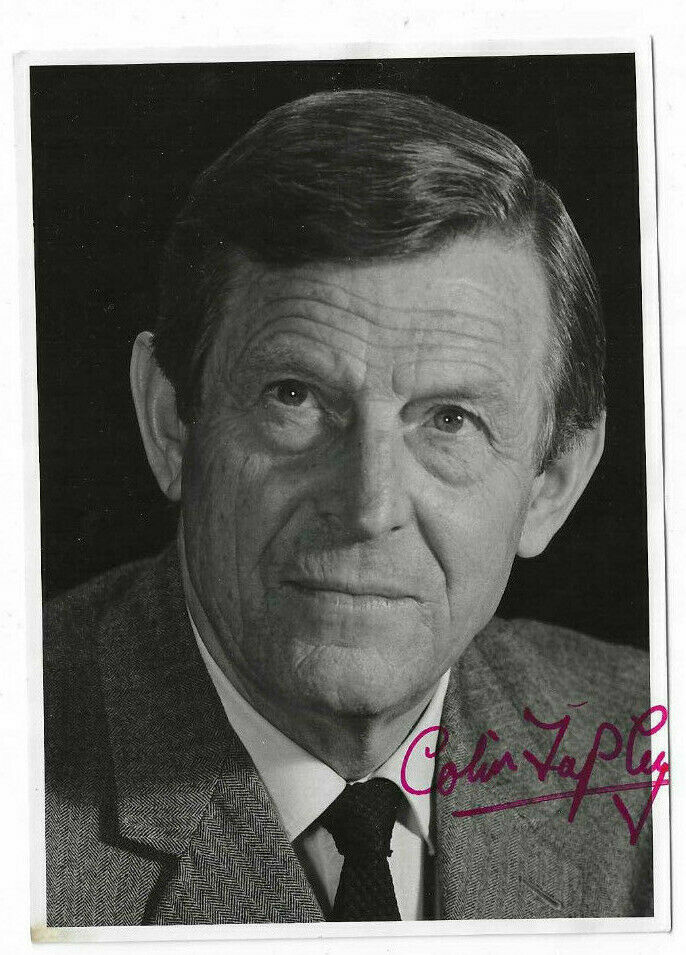
ABOVE – Colin Tapley – the Matinee idol that might have been – But he didn’t want the leading man roles – he was a character actor all his life – and apparently very good and very well liked !!
Colin Tapley and his wife Patsy lived in New Zealand and Hollywood before settling down in Coates, Gloucestershire. Colin Tapley had also lived in lived in New Romney, Kent working for the first time in a regular job not as an actor – he was employed by the CEGB in 1964 as a meter reader in the control room at Dungeness ‘A’ nuclear power station.
On night shifts he would keep his fellow workers amused with tales of Hollywood actors, their life and loves. I would have loved to have listened to him on this subject as he would know exactly what went on there during the Hollywood Golden Era in the Thirties.
His last film was a small part as a general in Dino De Larentis spy thriller Fraulein Doktor (1969).
Colin Tapley died on 23 November 1995, survived by his wife, second son Nigel, and Charlotte. His ashes were buried at Wanaka alongside his first-born son, Martin.
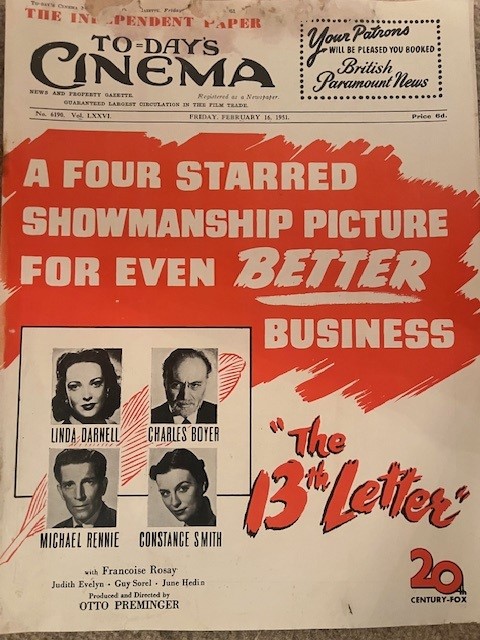
I was very happy when this came through my letterboxyesterday
To=Day’s Cinema was a weekly magazine giving us loads of information of films for release or in production.
The film was made on location in Quebec and has great scenic merit because of this.
Michael Rennie seemed to be well used by 20th Century Fox and other studios, during this period.
It seems also that he was briefly engaged to Mary Gardner who was the former wife of Otto Preminger
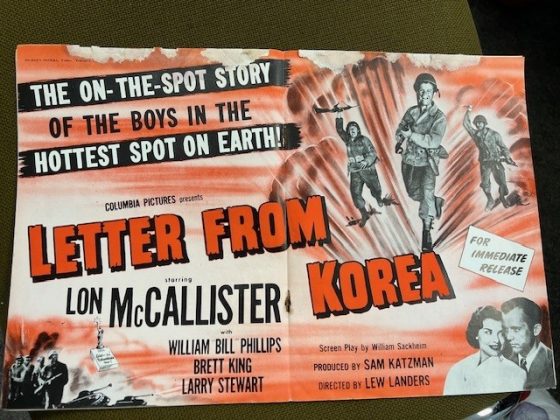
In the same Publication this film ‘Letter From Korea’ has a 2 page spread and yet it is one that I have never heard of. I can’t recall any reference to it over the years. Normally I would have some memory of any film of the fifties era I think but this one escapes me
Does anyone know anything about this film ?
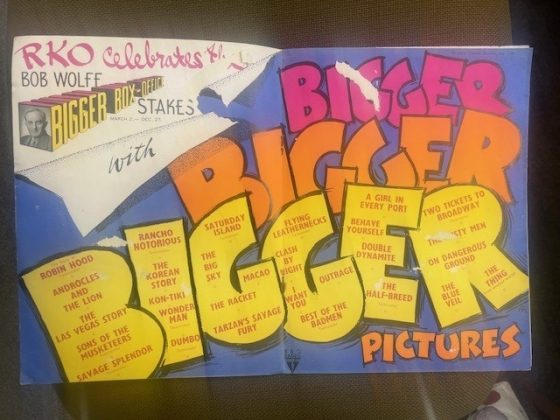
Having just written that I came across this advertisement in a later To-Days Cinema magazine with ‘The Korean Story’ advertised among a list of top films that are well remembered :-
In the same issue there was a small reference to ‘Mr Drakes Duck’ a comedy with David Niven and Betsy Drake – I do remember that being reviwed on Radio and on Television at the time
This is a film that is always well regarded and intriguing to watch but I have a feeling that it wasn’t very successful at the Box Office.
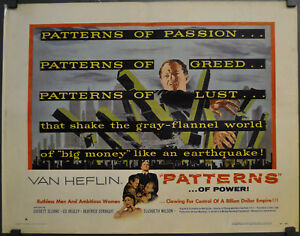
Van Heflin plays a young man named Fred Staples, a small-town manager who is brought into a large firm by the President, Ramsey (Everett Sloane). It’s apparent to us the audience (and everyone but Staples) that he’s been hired to replace one of the vice presidents, Bill Briggs (Ed Begley). Staples admires Briggs and the humanity that he brings to his job, but he’s the last of the old firm when it was run by Ramsey’s father, a compassionate man who cared about the workers.
Ramsey only seems to care about finance and efficiency. He’s determined to force Briggs out.
“Patterns of Power” is realistic with excellent acting butit is not a film where women are very much featured – not in any major parts at least.
Having said that Elizabeth Wilson is very good as secretary Marge, whose heart is breaking for Briggs — Patterns emerges as a compelling and intelligent drama that hasn’t lost any of its power.
Richard Kiley had played in the earlier TV play adaptation and he brought a naivete to the role of Staples that Van Heflin, because he’s older, doesn’t have, but he’s still very effective as an honest, smart and decent man who’s ambitious but doesn’t like Ramsey’s tactics.
Ed Begley is sympathetic as a man past his prime who can’t let go but whose job and daily battles are killing him. Everett Sloane does a great job as the ruthless Ramsey, who won’t allow emotion into his business sense. We get a hint that he’s not as unfeeling as he appears, but he’s never going to let anyone else see it.
A really strong film
Van Heflin gives another strong performance as a man who has principles and doesn’t wish to compromise them, and is perfectly willing to take on the more ruthless Sloane on a day by day basis.
I don’t recall seeing the film but I definitely saw the trailer because the Title remains a strong memory even from that small but intense clip all those years ago.
It is a film that gets very good reviews
Van Heflin, Everett Sloane, Ed Begley, Beatrice Straight, and Elizabeth Wilson star in “Patterns of Power” a 1956 film written by Rod Serling and directed by Fielder Cook.
This film is adapted from the Television play which was a great success and that had starred Richard Kiley in the Ven Heflin role.
Van Heflin has a very good part in this one.
“Patterns of Power” is realistic with tremendous acting. The women don’t have any strong parts – mainly wives and secretaries – and this certainly reflects things in the early to mid Fifties.
Universal-International film from 1959, Curse Of The Undead, is a unique blend of Western and Horror. The film stars Eric Fleming of Rawhide.
As regards the film, the only original element in this Dracula inspired production was the fact that the vampire was a typical Western Gunslinger who, after sinking his teeth into Kathleen Crowley, and committing several murders, is finally laid to rest when he is hit by a bullet with a wooden cross inserted into it.
This nonsense was written by Edward and Mildred Dein.
“Curse of the Undead” (1959):
Michael Pate’s moment of fame for Universal ‘s theatrical release of “Curse of the Undead” (1959)
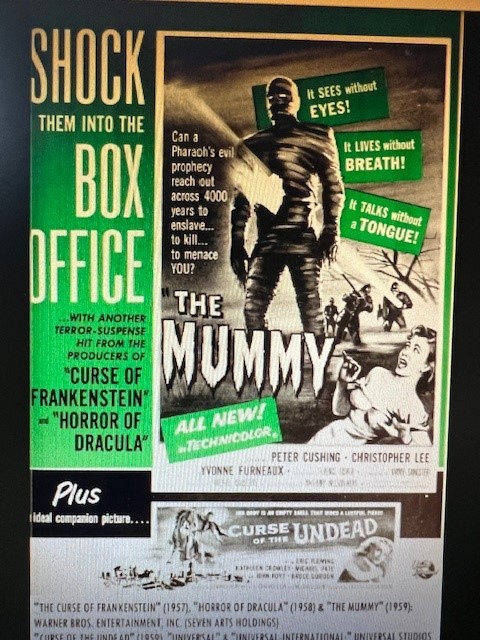
“Curse of the Undead” (1959): Released as a Universal double-feature presentation with a classic mammoth Universal-Hammer monster/horror masterpiece‘The Mummy’
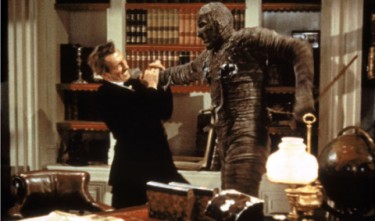
‘The Mummy’ is a film that I like very much – very well done and looking a quite expensive production with top actors.
I love these Hammer Horror Films – and particularly this one. When we get the flashback in the very early stages of the film, to the Princess Ananka being buried many years ago and Kharis High Priest with a dark secret – his love for the princess – it really sets the scene for us as we settle down for the action to come.
Whilst excavating the ancient site in Egypt, Peter Cushing’s father played by Felix Aylmer, picks up and reads the scroll of life and The Mummy stirs, this sequence is very erie – sending Felix Aylmers character- Banning – mad – to such an extent that on his return to England he is committed to a lunatic asylum where eventually he comes face to face with The Mummy.
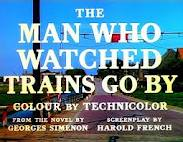
I don’t know why but I quite often think of this film title – particularly when crossing a rail line or even on a train journey. Funny because I have never seen the film – and it is NOT widely known these days.
Maybe it is just the that title intrigues me. Who knows.
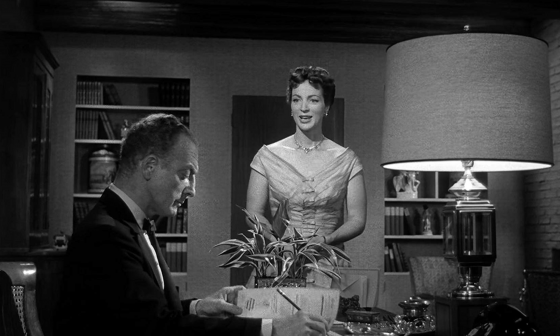
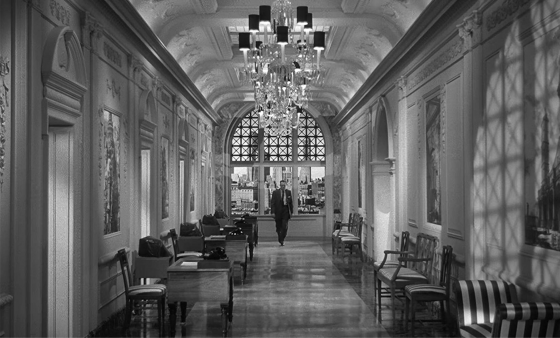
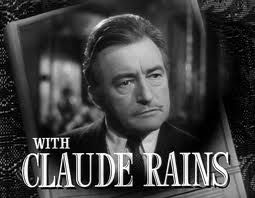
This is a rarity, an obscure colour film starring Claude Rains late in his career – he was 63 when it was made. He plays a quiet and respectable Chief Clerk of a Dutch manufacturing firm which is owned by Herbert Lom and his aged father. Unknown to everyone, Lom has been obsessed for some time by a scheming and criminal Parisian prostitute played by Marta Toren. He has looted the company of all of its cash and left it a bankrupt shell prior to running off to Paris to a new life with his beloved.
This is discovered at the last minute by Rains, who has sunk his entire family’s savings in the company, and hence lost everything. Rains snaps and turns on Lom, pushing him into a canal in a rage, where Lom drowns. Rains takes Lom’s suitcase containing all the company’s remaining cash and runs off to Paris, which he has always wanted to visit. He has been a train-spotter all his life, and for years has been noting the passage of the Paris Express. Now at last he is on it.
Marius Goring is a Dutch policeman who suspects Lom, and now trails Rains. When he arrives in Paris, Rains wants to find Marta Toren and he asks directions of a young prostitute in the street played by the 20 year-old Anouk Aimée. Eventually, Rains meets up with Toren, who at first laughs at him as a ridiculous old man and throws him out. Her attitude towards him changes however when she realizes he has Lom’s money. Things go from bad to worse as Rains sinks deeper and deeper into delusion and intrigue.
The performance of Claude Rains is masterful, and truly makes something out of nothing.
Admirers of Claude Rains will like watching this.
Rains served in World War One in the London Scottish Regiment with fellow actors Basil Rathbone, Ronald Colman and Herbert Marshall. He was involved in a gas attack that left him nearly blind in one eye for the rest of his life. However, the war did aid his social advancement and, by its end, he had risen to the rank of Captain.
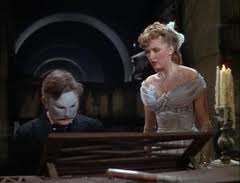
From his glitteringly successful film career I can think back to a colour version of The Phantom of The Opera 1943 – before I could remember BUT sometimes seen on TV.