Universal Studios and Republic in Hollywood

Just two of the ‘Dream Factories’ in the hey day of Cinema – they helped transport us to worlds that we could only  imagine – into a fantasy land – at least for a short time – where we could live out the dramas and romances that we saw on the huge silver screen. As young kids we would sit  there watching – wide eyed at the sights we saw.  That may sound a little ‘over the top’ but  I don’t think  it was because this era  preceded the days of far off travel – so any films on, say, the old west or a tarzan film for example in the jungle,  we would see these foreign lands that we had only seen before in photographs.  Even if you  had a TV set in those days it was so small and what we could watch, although very good – was limited.  Here in the cinema however  we could see things that were  larger than life.  When TV did get a hold the cinemas hit back with Wide Screen, Technicolor epics that were way beyond the capability of television – and still are to this day.

I have come across these two terrific photographs taken in 1947 of UNIVERSAL STUDIOS
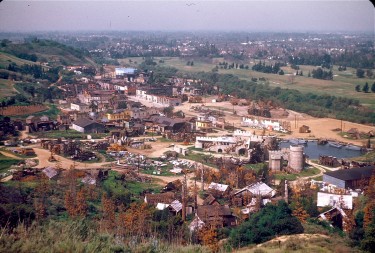
 

and REPUBLIC PICTURES Studios – below
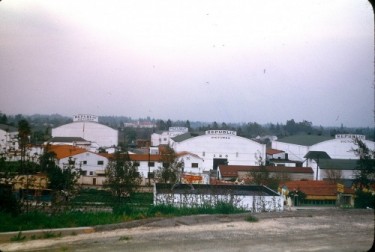
Above and Below – Pictures of Republic Studios, Hollywood.
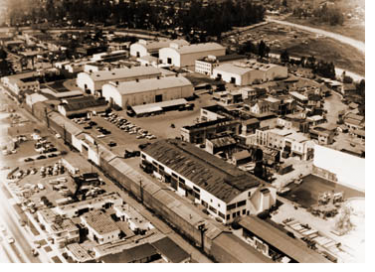
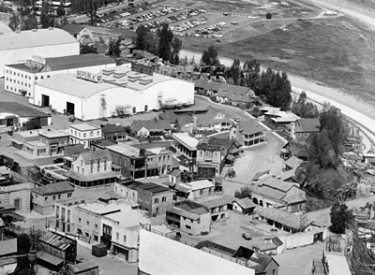
Above – Republic Studios in 1957

Republic Pictures was a film production and distribution company, but it also  had studio facilities.  It was active from 1935 until 1959  specialising in B movies, serials, westerns and jungle adventures such as the Bomba The Jungle Boy series done by Monogram Pictures which made up one of the component parts of Republic.

The studio helped with the financing and distribution  of several of the films of John Fords during the 1940s and early 1950s.

They also had a hand in the development of the early careers of  cowboy stars John Wayne, Gene Autry and Roy Rogers

http://www.youtube.com/watch?feature=player_detailpage&v=uU_59vEqnAc

Mongram Pictures

In the 40s Monogram made such great features with stars like Charlie Chan and the Bowery Boys – both of which became very popular in a series of films – mainly supporting films though.

They didn’t turn their back on westerns either because they had cowboy stars such as Tim McCoy and Tex Ritter and later on  they signed Johnny Mack Brown  when the other major studios decided to move away from westerns and this allowed  Mongram to maintain a  production level of between 30 to 40 films per year in the 40s which in present terms would  really be some going.

Prior to  the fifties era the studio signed Boris Karloff to do six films and also Bela Lugosi who by that time had probably seen the best of his interesting career.

There were also – later – camp horror classics such as “House on Haunted Hill” with Vincent Price – filmed in Emergo – something I actually saw for myself when a skeleton appeared to come out of the screen – it was actually done by the local cinema manager who was operating a sort of pulley arrangement which had the skeleton coming out into the audience on overhead wires. The emerging skeleton then with luck linked in with the screen action.

Here is a Link to see Emergo in action at a cinema in Detroit apparently – see what you think –

http://www.youtube.com/watch?feature=player_detailpage&v=nBNtbQXEtCg

Among much bigger productions John Ford shot “Hurricane” there in 1937. Other notable films included  “Kidnapped! ” (1949 with Roddy McDowell.)

Jon Hall in The Hurricane

The Hurricane was a really big film in terms of a spectacular climax – and one that was at the time very well done.

 Roddy McDowell in Kidnapped

I don’t think I have ever seen the above version of Kidnapped out of the many there have been.  Later we had the Disney version with Peter Finch which was a good one,  and well after this Michael Caine played that same role although my own view is that he was mis-cast.   One thing about it though was that the scenery in the Scottish Highlands looked superb in Technicolor on the big screen.

I realise that in the case of Republic Studios then they were probably seen as being at their best throughout the 40s but neverthles they did go through until the end of the 50s – so we can quite justifiably include this item.


posted by Movieman in Uncategorized and have Comments (3)

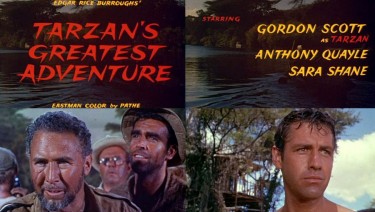
Tarzans Greatest Adventure 1959


This film was shown on BBC2 last weekend.  It turned out to be one of the best of the many Tarzan movies ever made – maybe Gordon Scott was not the best Tarzan – but the film stands up really well with a great villain in the shape of Anthony Quayle. It was filmed in Africa in colour – I don’t remember any of the previous ones being Technicolor but this was.

It is very fitting that this post is published  because Tarzan is offically 100 years old this month – first launched in comic form all those years ago


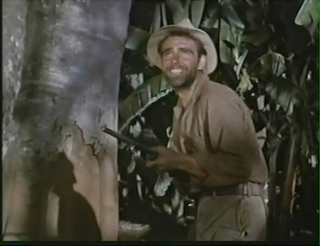
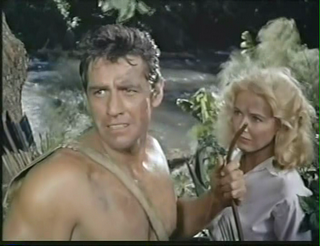
 Gordon Scott above as Tarzan


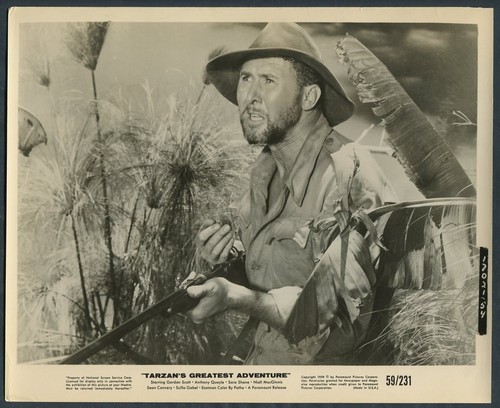
Anthony Quayle gets a great part here and gives Tarzan – and others – a very rough time !!!

Anthony Quayle.

I do remember that he was married to Dorothy Hyson who played opposite George Formby in Spare a Copper.  He was a classical actor and very good too although he tended to play straight roles more often than not – probably because he had a serious face. I certainly don’t ever remember him doing comedy. Can’t quite imagine that somehow. He was a Shakespearean actor of some note.

Sean Connery comes to a sticky end in a film made just before  he made his debut as James Bond in Dr.No

Sean Connery was apparently  paid 5600 dollars  for this role and  is surprisingly good as the wicked O’Bannion  which turns out to be quite a  sizeable role.   He was evidently impressive enough in the part for Sy Weintraub to ask him back to play a different role in the next Tarzan movie – however  Sean said that ‘Two fellows took an option on me for some spy picture and are exercising it. But I’ll be in your next,’ he promised.    The film was of course Dr.No and the rest is history.

Filmed on location in Africa, this Tarzan epic is  considered by many critics to be the best with Gordon Scott playing the character in keeping with author Edgar Rice-Burroughs creation.

We didn’t have a Jane in this story however Sara Shane played an adventurous heroine named Angie whose plane crashes into the jungle where she luckily immediately joins up with Tarzan – rather than the crocodile waiting – Tarzan of course wrestled with the croc  in the water.

Sara Shane

Elaine Hollingsworth – her real name –  became a model at age 14 and later secured a film contract with  MGM. She was featured in a few musicals using her real name  then in 1953  began using the name Sara Shane.

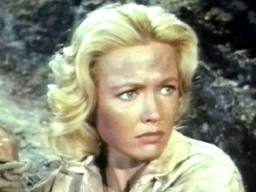
Sara Shane looking very good in this Tarzan film – in fact her very last film.

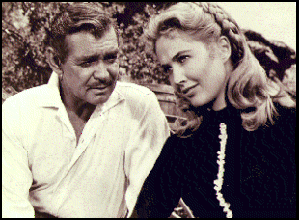
She then acquired a seven year contract with Universal International pictures but that didn’t go the distance for whatever reason. In  1955 she appeared with  in the Clark Gable Film The King and Four Queens – interestingly the one and only film produced by Clark Gable – which was a western but it can’t have done much good at the Box Office. I had never heard of this one.

Above Clark Gable with Sara Shane

Her last film in fact was this Tarzan picture and it is considered to be her most memorable performance. She continued in television to  1964.      Elaine married William Hollingsworth in 1949 but  they were divorced in 1957.

Sara left the Hollywood and retired from TV and films in her late 30s. She turned to writing and began to devote herself to the study of pharmaceuticals. She wrote two books-  the first one a work of fiction and the second a book promoting healthy living.  She eventually moved to Australia to avoid the Los Angeles pollution and  still lives happily – and healthily – on her 5 acres of land. She is now in her eighties.

Gordon Scott

 The man who played Tarzan in 1950s movies died at the age of 80 in 2007

He made 24 movies including “Tarzan and the Lost Safari” (1957), “Tarzan’s Fight for Life” (1958), “Tarzan and the Trappers” (1958), “Tarzan’s Greatest Adventure” (1959) and “Tarzan the Magnificent” (1960).

Scott was a lifeguard at the Sahara Hotel in Las Vegas when he was discovered by Hollywood producer Sol Lesser and he was signed to a seven-year-contract after he outperformed his rivals at the audition.

During the 1955 production of his first film, “Tarzan’s Hidden Jungle,” he fell in love with co-star Vera Miles. The couple married that year but divorced a few years later. Vera Miles was married three times – the second of which was to Gordon Scott – but all three marriages ended in divorce – however, sadly and coincidentally, all three of her ex husbands died with a few months of each other.

Vera did have a very long and full career in films which we will definitely return to because a year after this one she appeared in one of the greatest westerns of the decade and of all time – The Searchers.

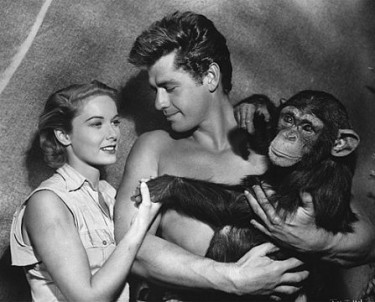
 Above – Gordon Scott with Vera Miles and Cheetah

After the Tarzan movies Gordon Scott appeared in Westerns and gladiator films.


posted by Movieman in Uncategorized and have Comments (4)

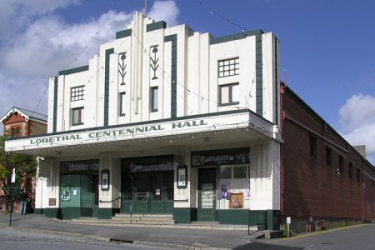
Cinema in South Australia – Lobethal – re visited

The year as we all know is 2025 and I am hoping to be back in this wonderful cinema tonight or tomorrow night to see ‘Gladiator2’ at this very fifties style cinema in the Adelaide Hills, Australia.  This article appeared way back in 2012 –  so now I am back again quite a few years later


They seem to show one film per month here – usually up to date releases but it is the cinema itself and its style that influences me to post this item.
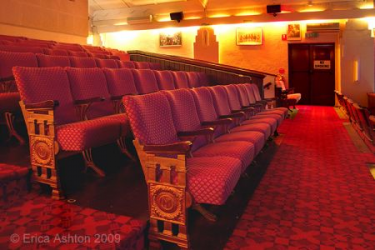
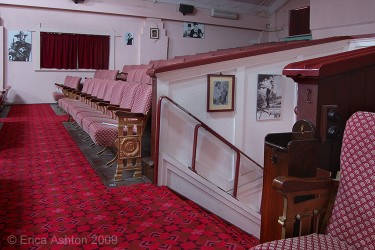
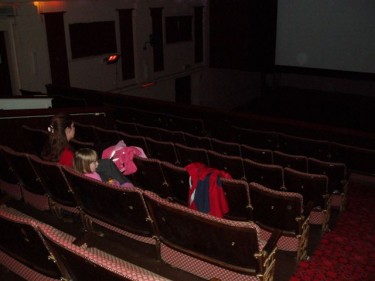
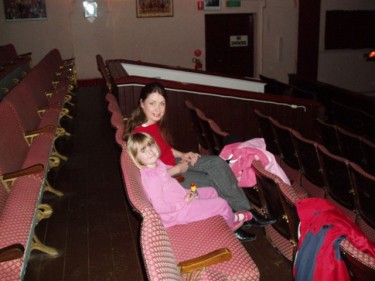
Upstairs is the seating area – as the picture below –  and it is very reminiscent of the old style cinema experience – very quaint and very good.    They also have a  wide screen if needed so the older Cinemascope films could easily be viewed here.

Patrons are seated on comfortable seats ( some double seats)  in an art décor hall with the novelty of an interval in the middle of the movie. A canteen is available. Patrons will find a quaint ticket box from where to purchase their tickets.

The art deco Lobethal Centennial Hall foundation stone was laid on 8 August in 1936 on the centenary of the proclamation of the state of South Australia. It took another 60 years before the hall was finished with store room, two large change rooms with heating, two showers and extra toilets in 2002. The terrazzo floor at the front of the hall was the first of its kind in South Australia.

Initially, local people assisted in the furnishing by buying double seats for ₤1 with a name plate on the seat acknowledging their contribution. You can still find the name plates on the seats. The Onkaparinga Woollen Mill donated the money to the Centennial Hall committee to help build the toilets inside the hall, and renovate the original seating. The seat upholstery was replaced with lush fabric by a local upholsterer and the backs of the seats were revarnished.

Black and white silent movies were first shown in the Hall from 1919 and in 1932 the Talkies came to town.     There is still evidence of shops that were once in the front of Centennial Hall until 1993.

There was a lull in movie showing in the early 1990s but now the cinema is functioning well and regularly.

Awaiting the film.

The film will start shortly – below.

posted by Movieman in Uncategorized and have Comments (2)

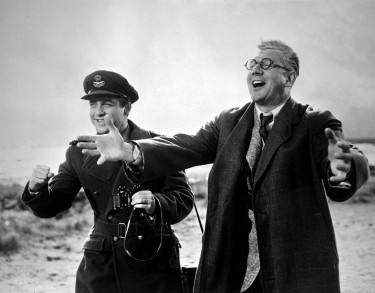
Richard Todd as Guy Gibson – The Dambusters 1954

What can I say about Richard Todd who epitomises the fifties era and who starred  in so many well remembered films throughout that decade.  More than any other British actor his career  dominated the British cinema at that time.

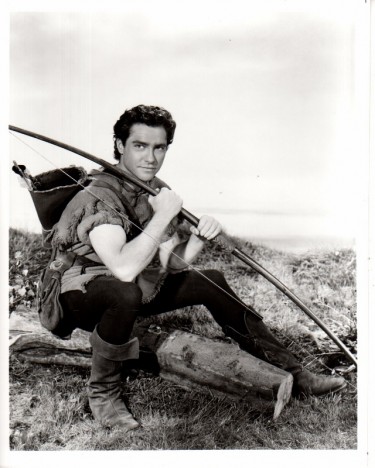
He is probably best known – in England at least – for this role as Guy Gibson in the very famous The Dambusters although I for one think of him more for The Story of Robin Hood – that brilliantly ‘Made in England’  Walt Disney film of 1952.

 Above: Richard Todd as Robin Hood in the Walt Disney 1952 Technicolor film

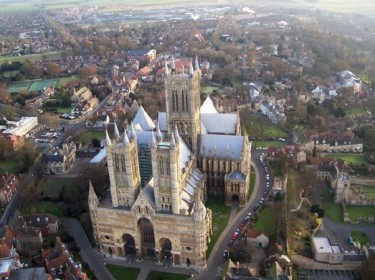
It is difficult to imagine any other actor playing Guy Gibson – in fact he has become so well known for this part that I do think that if most people were shown a picture of both Guy Gibson and Richard Todd and be asked which one they thought was Guy Gibson  – most would point to Richard Todd.    Some of this film (certainly the shot above) was filmed in Lincolnshire, and over twenty years later Richard and his family came to live in the county eventually settling for many years in Little Ponton,  Nr Grantham.  This is not far away from the magnificent Lincoln Cathedral which featured in a wonderful aerial shot in The Dambusters.

 Lincoln Cathedral – Absolutely Magnificent !!!

The Dambusters had much of the filming done around Scampton and Kirton Lindsey in Lincolnshire – which of course is where they flew the mission from.

The Dambusters is a true story in which the men of 617 Squadron are sent to bomb three key dams in the Ruhr Valley with the famous bouncing bomb.   The film shows the young bomber crews training and eventually the mission itself but prior to this we see Barnes Wallis trying to perfect the bouncing bomb and persuade the political and military personnel that it will do the job, we see the practise runs by the bombers  and eventually the final frightening raids on the dams.   As war films go this one is on a par with the very best.

The performances by Richard Todd as Guy Gibson and Michael Redgrave as Barnes Wallis are superb and this is a classic film.

Richard Todd.

I am sure we will come back to this man again and again on this site.   He had a really incredible life – he was born in Ireland in 1919 but came to school in England where he became seriously ill with a heart complaint. He recovered and much against his parents wishes he developed an interest in Theatre –  initially in writing plays which he never did.  However he must have shown a talent for acting and had  started in that career when war broke out.   He was one of the very first to parachute into Northern France when the invasion started, fighting to take control of Pegasus Bridge.   After the war he had decided on a change of career but was persuaded to go back to Dundee Rep where he had been a founding member. Here he met his wife  and then in a short time got a film test and got the part as the star of the film.   Whilst there he was spotted by someone which led to his taking the key role in The Hasty Heart playing alongide Patricia Neal and Ronald Reagan – who became a lifelong friend of his and from then on his film career just took off and he was signed up by Walt Disney for three very good period films prior to The Dam Busters.   His career on a world scale from 1949 was meteoric largely because The Hasty Heart had been so popular in the USA.   It even got him a One Film a Year contract with 20th Century Fox. So the fifties saw Richard Todd – in film terms – at the very height of his long career.

There is much much more to this astonishing life story which we will come to,  I hope,  in a later post.

posted by Movieman in Uncategorized and have Comments (7)

John and Julie 1955

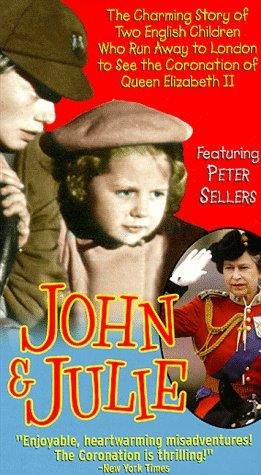
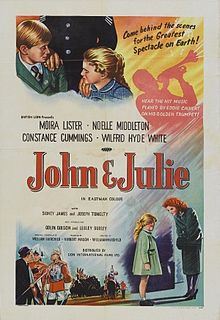
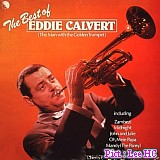
What a lovely lovely film this is.  It takes us all back to a much simpler age – now gone – and enables us to enjoy a wonderful,  colourful 90 minutes or so – punctuated throughout by a haunting theme played on the Golden Trumpet by Eddie Calvert – it is a theme that I think fits the film perfectly.

This charming and timeless film follows  the adventures of two small children who run off from home to watch the coronation in London in1953 and along the way meet up with many characters who are played by a lot of British stars of the period and later come to that.  The film is fascinating for anyone who likes recent British history and it gives a snapshot of the fun and excitement of the coronation in a county that only 8 years earlier had seen the end of the Second World War

John and Julie is that rare thing, a self-contained trip into a very different time and place.

Such actors as Megs Jenkins, Peter Sellers, Andrew Cruikshank ( later to be famous as Dr.Cameron on TV ) Moira Lister, Wilfrid Hyde White, Sid James and that wonderful character actor Colin Gordon all appear to add to the fun.

Neither Colin Gibson nor Lesley Dudley the child stars of this film, continues in the acting profession as far as I can see – and yet they were both so good and convincing in their respective title roles.

I really love this film and watched it years ago with my daughters and we still look at it from time to time – nowadays though with our grandaughters.

The Man with the Golden Trumpet” as he was called,  Eddie Calvert  came up through the Brass bands of Northern England to top the bill at Variety theatres throughout the U.K and overseas.  He had major  hits such as  “Oh mein Papa”,”Cherry Pink and Apple Blossom White” and this one “John and Julie” as well as “Zambezi” “Mandy” and another film theme from “The Man with the Golden Arm”


posted by Movieman in Uncategorized and have Comments (8)

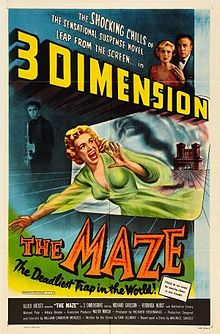
The Maze 1953 and in 3D

I don’t know why I have just plucked this one out of my memory – certainly not a favourite or even very well known BUT it is quite interesting and keeps you guessing until the final ‘ludicrous’ frames.

A Scotsman named Gerald MacTeam played by Richard Carlson  abruptly breaks off his engagement to  Kitty when he learns that his uncle has died and he has inherited a castle in the Scottish highlands.

He moves there to live with the castle servants but his girl friend Kitty refuses to accept the broken engagement and travels with her aunt see him at the castle.

Gerald seems to have aged in this short time and somehow seems changed and odd.

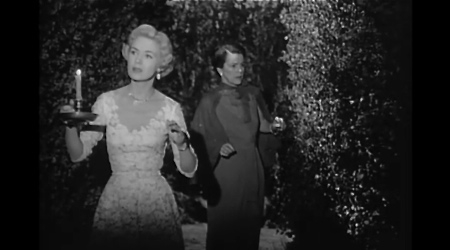
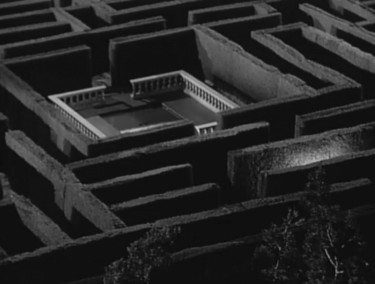
Kitty and her aunt venture into The Maze – above.

There follows a series of strange events in around the castle and the castle maze. One night, Kitty and her aunt steal a key to their bedroom door (which is always locked from the outside) and sneak out into the mysterious maze.

There they discover Gerald and the servants out in the maze with …………..

Above – The Maze

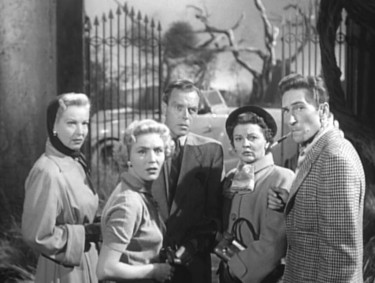
Above characters look shocked

Well.   I had better not spoil the plot as the film moves towards its terrifying – not to say ludicrous – climax !!


I do think that this one could be remade today with a bigger budget and the benefit of today’s techniques –  it would be good. It is quite an unusual story and the fact that it is set in a Scottish Castle seems to give it an added eerie feel. It is very much a film where, on first seeing it, you are asking yourself just what is this all about – and I think that few would guess !!!

I hadn’t realised this but maybe should have known – this film was made in Hollywood.

I did rather like this comment about the film from someone who had seen it and had written this below :-

For most of its running time, “The Maze” is a nicely made chiller. Its well directed by William Cameron Menzies (who also made the cult classic “Invaders From Mars” and worked on “The Thief of Baghdad”), who creates a brooding and chilling Gothic atmosphere. There’s no shortage of horror stories set in old castles and while this film doesn’t add anything new to the setting,  it manages to use the familiar location quite well.   The screenplay is often very sombre, and the performance by Richard Carlson in the lead is quite accomplished.  Veronica Hurst is captivating and genteel in the role and still in love with Richard Carlson.   I won’t ruin it for you, but simply put the climax is one of the most  ludicrous things ever put on film.   The film was quite involving and then it completely spins around and gives us this bizarre ending.  The writers obviously put some thought into it, and it had  great potential to be a tragic conclusion.

The 3D story of a man  hiding a family secret in his forbidding castle -there are even bats in the belfry! It moves leisurely until the final extraordinary conclusion in The Maze.

 “The Maze” is  a decent enough movie.

Veronica Hurst

She was in Angels One Five, Laughter in Paradies and quite a bit later in the very scary ‘Peeping Tom’

The  old Regal Cinema at Wymondham in Norfolk  shows old films from time to time and in 2010  Angels One Five was the film and the star guest who appeared was Veronica Hurst.

Richard Carlson

He had previously appeard in King Solomons Mines 1950 with Stewart Granger and Deborah Kerr and later was to star in another Hollywood horror classic The Creature from the Black Lagoon – also in 3D.   I will always remember watching this late one night on TV and my daughter Karen, who was a little girl at the time,  woke up and came through to watch it with me.      It frightened her so much that she recalls it to this day.

He also was in It came from Outer Space again 1953 – almost a hat trick of horror films at this time in the fifties. He made a lot of films in his career.

He died in 1977 at the age of 65

Above – Richard Carlson looks for The Creature from the Black Lagoon 1954 – also in 3D

We will certainly come back to this film !!!

One person who wrote abount this film had been at a Hollywwod 3D event and described the film as being  so much fun to watch  with an audience, the print was excellent and the 3-D perfect.

The performances were described as being over the top which all  added to the fun, the surprise ending (that we aren’t supposed to share with fellow movie goers at least according to the movie trailer and poster) had people ………. – Well,  I had better not say or I might give away the ending

This is a classic old type horror film with the added dimension of 3-D (complete with cobwebs and bats coming out of the screen) 

It was descibed as ‘an entertaining romp into 50’s horror.’  Maybe that sums it up perfectly !!!


posted by Movieman in Uncategorized and have Comments (3)

Peter Ellenshaw – Matte Artist Genius

The art of Matte Painting in films really fascinates me.

Imagine a location which had open fields and a hill with horse riders going up the hill. The story calls for a castle on the hill BUT there is none – so a castle is painted on to a glass in front of the camera and exactly and painstakingly matched up to the action below. The result on screen is that we see the riders heading up hill toward the castle which we see as a wonderful shot when half of the picture or more is painted.

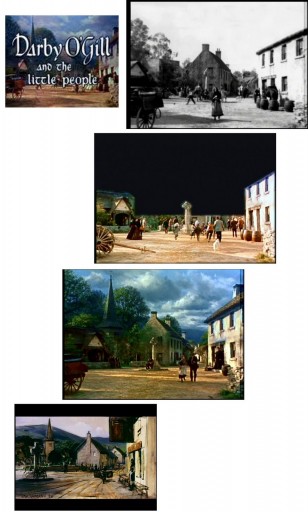
Above: Matte Shots by Peter Ellenshaw on ‘Darby O’Gill’ – a film with astonishing special effects set in Ireland – Filmed in Hollywood.

Being able to marry painted backgrounds on glass to real action foregrounds opened up a new world to film makers.  To get it right this is a very complex operatioin requiring  hours of painstaking labour with many retakes to obtain perfection.

Peter Ellenshaw was the Matte genius that Walt Disney signed up on a lifetime contract to work on his films starting with Treasure Island in 1950. He made a career out of mixing fantasy with reality to make make-believe worlds come to life

Walt Disney began to make period feature movies in England – from funds which were effectively ‘locked in’ to this country after the war.   He used English actors in his films  Treasure Island, The Story of Robin Hood and His Merrie Men, The Sword and the Rose, and Rob Roy, the Highland Rogue.  Peter Ellenshaw joined Disney at this time and  worked on all four. He began as a matte artist and special effects artist, and later in his career became a production designer. It was the start of a long association with Walt Disney.  Over the next four decades, Ellenshaw worked on the largest and most-challenging projects the Disney studios made—and won two Academy Awards for his work.

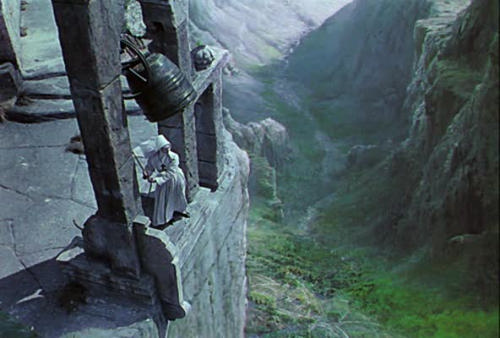
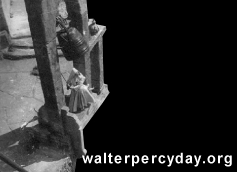
He was born in England  in 1913.   A neighbour Walter Percy Day a famous matte artist of his time, discovered Ellenshaw’s talent and took him on as an assistant. Mattes are realistic paintings done on glass and then matched to live action shots – the result can be breathtaking – see below The Black Narcissus which was done by Percy Day


Above – The incredible matte painting on Black Narcissus done by Percy Day.

During his amazing film career, Ellenshaw has been nominated for four Academy Awards.

Ellenshaw regarded Walt Disney as a source of inspiration and a wonderful friend.         “Walt had the ability to communicate with artists.” Recalls Ellenshaw. “He’d talk to you on your level – artist to artist. He used to say, ‘I can’t draw, Peter.  ‘ But he had the soul of an artist, and he had a wonderful way on transferring his enthusiasm to you.”

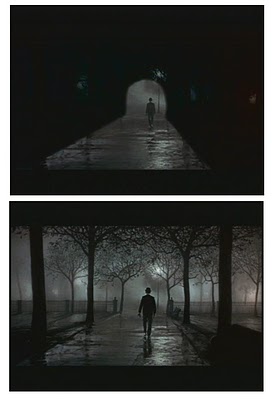
In 1964Peter  Ellenshaw won the Best Special Visual Effects Academy Award  for his astounding matte work in Walt Disney’s beloved line-action musical-fantasy Mary Poppins  and in this he created some beautiful vistas of Victorian London which gave a wonderful style to the film.

On Mary Poppins above – the top picture shows the small segment of the picture  that had  David Tomlinson walking on a wet studio floor BUT the lower one shows how we saw the film on screen – he is walking through a London Park – Thanks to a matte painting and we never knew !!!
 

In 1993, Ellenshaw was officially designated a “Disney Legend” by The Walt Disney Company.

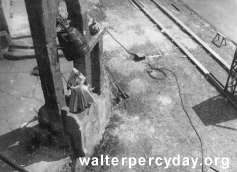
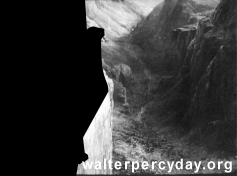
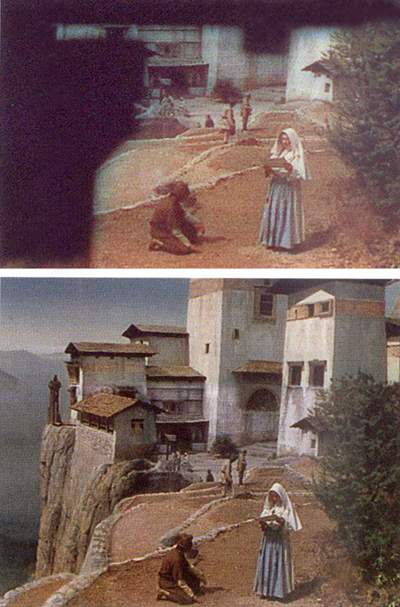
Black Narcissus    –   The above shots just shows how good this process was – The top picture shows how the film was shot in the studio and below – the matte painting around the action then takes us to a Himalayan Convent with the wind whistling around us –  Astonishing but so real.

Percy Day.

Maybe I should have the title to this post  Percy Day – Matte Artist Genius because he certainly was and taught Peter Ellenshaw  all he knew. Percy Day had worked on silent films and found some fame here.    Much later he worked for Michael Powell and Emric Pressburger on such films as  ‘I know Where I’m Going’ (1945) which contains a sequence in which the hero and heroine’s boat gets sucked into the Corryvreckan whirlapool.   In his autobiography Powell recalled that Day created the whirlpool out of plastic material resembling gelatine, mounted on an eccentric arm which could be whirled around at varying speeds in a tank of water filmed with a high-speed camera running in reverse.

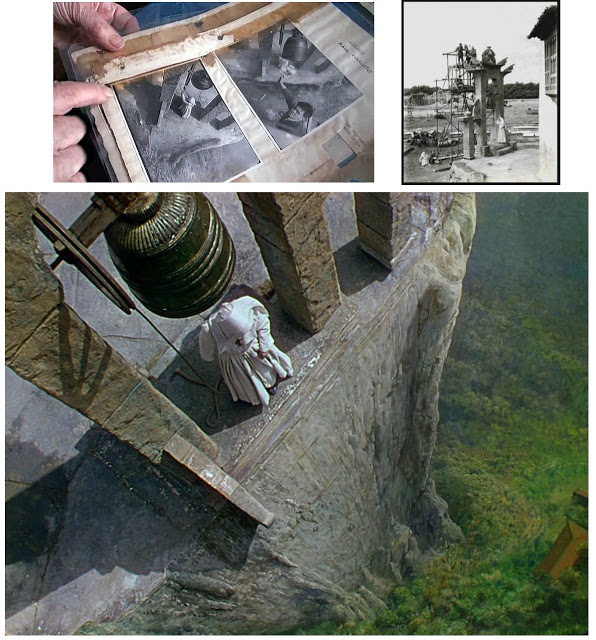
Incredibly Black Narcissus ( 1947) was shot entirely on the Pinewood Studios backlot with matte of the Himalayan mountain range painted by Percy Day and his assistants and illustarted above.

Black Narcissus was voted in a 2005 poll organised by The Times newspaper as the best British film of all time.

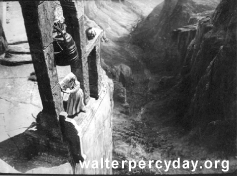
 Another matte above – Anyone like me with a fear of heights would go dizzy on viewing this on the large cinema screen.

These films were enhanced by this wonderfully thought out process.

posted by Movieman in Uncategorized and have Comments (4)

Grace Kelly in ‘High Society’

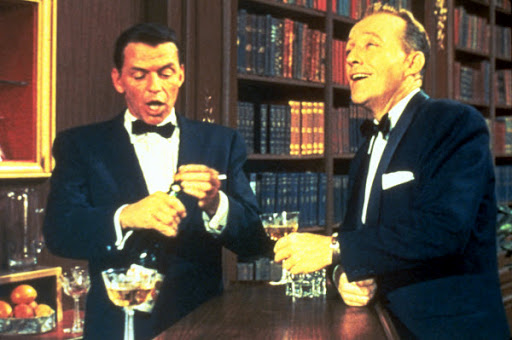
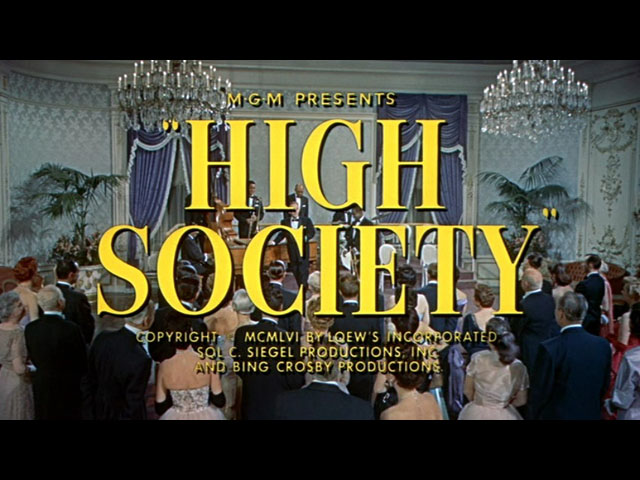
Louis Armstrong ( OR as he was billed  MR. Louis Armstrong ) opens the film singing the song ‘High Society’ on a bus travelling to the wedding destination where we will meet Bing Crosby, Frank Sinatra, Grace Kelly and Celeste Holm and many others.

Tracy Lord (Grace Kelly)  who, having been through one marriage to likable musician C.K. Dexter Haven (Bing Crosby)  is about to enter another with a rather stuffy, boring social climber.    Dexter and Mike Connor (Frank Sinatra)  a reporter covering the wedding  help Tracy  realise whom she really should marry.

 Dexter-Haven is a successful popular jazz musician who lives near his ex-wife’s Tracy Lord’s family estate. She is on the verge of marrying a man blander and safer than Dex.   Mike Connor, an undercover tabloid reporter, also falls for Tracy.     Tracy must choose between the three men as she discovers that “safe” can mean “deadly dull” when it comes to husbands and life.
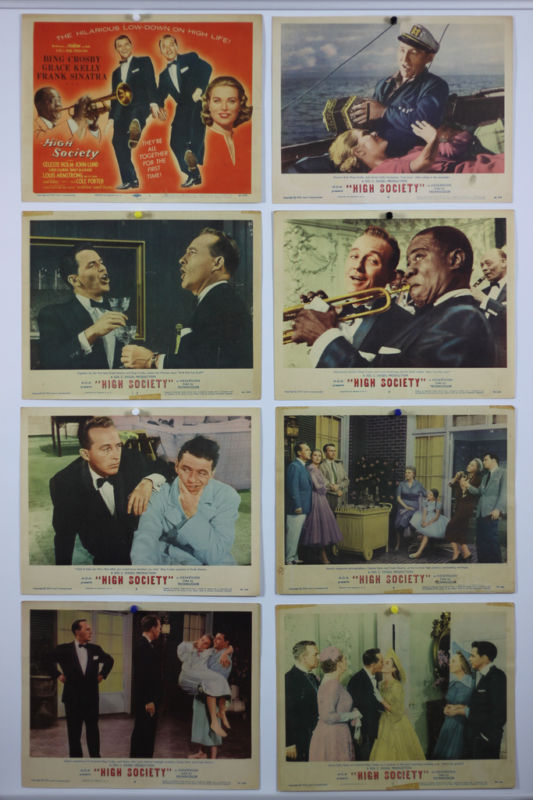
Above: Front of House Stills from the film.
Along the way there are little twists and turns of the plot – but also  delightful music and songs – Well there would be really with this cast !!!
Have You heard it’s in the Stars ……… 


Who could ever forget Frank Sinatra and Bing Crosby singing ‘What a swell Party this is’   with that memorable line –  ‘Have you heard it’s in the stars -Next July we collide with Mars’

Grace Kelly (12 November 1929–14 September 1982)

One of the most beautiful women in movies or indeed anywhere come to that although her film career was very short it was very memorable.

Even more than thirty years after Grace Kelly’s  untimely death she remains an embodiment of beauty and glamour both royally and on film.

Admirers recognise her as the embodiment of how we percieve royalty  to be – as well as a critically-acclaimed actress and the elegant consort of  Monaco,  a loyal friend  and of course  loving mother.

Grace Kelly was born in Philadelphia USA  to John and Margaret Kelly.  John Kelly her father, was a wealthy contractor.  At a young age,  Grace decided she wanted to become an actress, and studied acting – mainly in the theatre at that time – at New York City’s American Academy of Dramatic Art and worked as a stage actress and model before moving to Hollywood.   During her time in New York Grace  appeared on the covers of magazines such as Cosmopolitan and Redbook and even promoted Old Gold cigarettes.

Grace made her film debut  in a minor supporting role, but then starred in legendary western High Noon in which she played a Quaker bride alongside Gary Cooper.

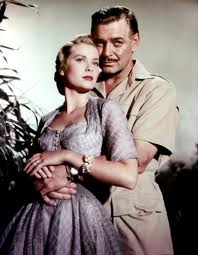
Grace next  appeared in Mogambo along with Clark Gable.  Rumours had it that she had a romantic involvement with him during the making of this film

They were out in East Africa together for a number of weeks while filming – Will probably come back to Mogambo in a later post.  For this part she got an  Oscar nomination and a Golden Globe for Best Supporting Actress.

 Above – Clark Gable and Grace Kelly in Mogambo

She then sparked  the interest of director Alfred Hitchcock, who made  Grace into his ideal of the elegant, beautiful blonde and then cast her in three of his finest films of the fifties  –  Dial M for Murder,  Rear Window  and To Catch a Thief.

She also made Green Fire in 1954 with Stewart Granger but apparently she was somewhat less than impressed by him.

The Country Girl  then won her the Golden Globe and the Oscar for Best Actress in a Leading Role of 1954.

Grace received a golden record for the hit song True Love from High Society.


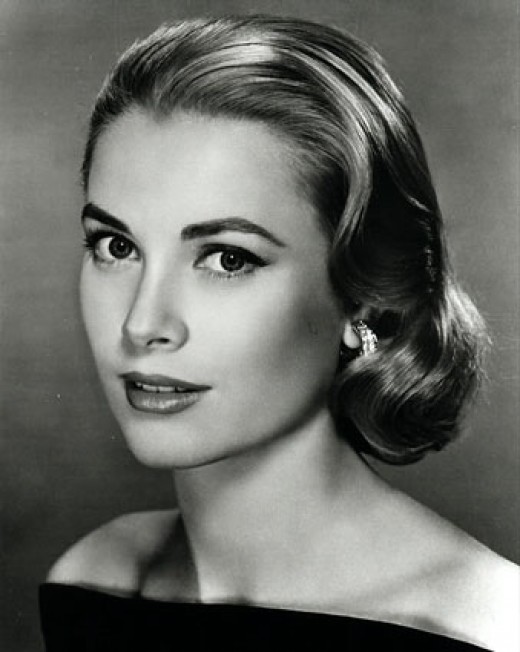
Above: Grace Kelly

Later that year, she married Prince Rainier Grimaldi III of Monaco to become Her Serene Highness Princess Grace of Monaco.  She gave up her successful acting career in which she had made only eleven films –  very few really for such a well remembered actress although I do think that she was very lucky to be chosen for the films she appeared in and the Directors and Actors she worked with.

She had three children –  Princess Caroline, Prince Albert, and Princess Stéphanie. Grace died on 14 September 1982 after her car went off a road in the cliffs of Monaco.


posted by Movieman in Uncategorized and have Comments (3)

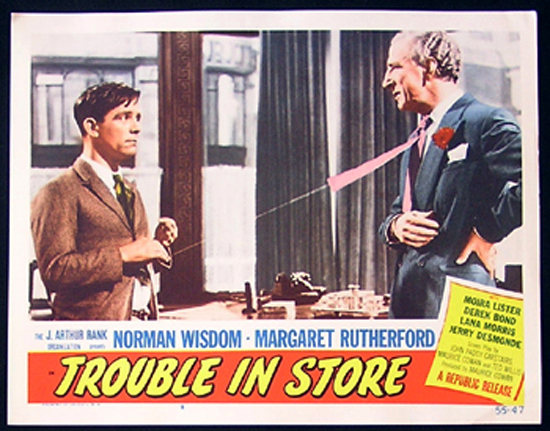
Norman Wisdom – Trouble In Store

Norman , a lowly stock clerk at Burridge’s department store,   has fallen in in love with another employee, Sally Wilson played by Lana Morris  but he hasn’t been able to pluck up the courage to let her know how he feels. When he falls out  with the new head of the store, Augustus Freeman  played by his long time film straight man Jerry Desmonde he is promptly fired. As he is leaving the store he sees an older lady (Margaret Rutherford) seemingly struggling with a very lareg suitcase and he goes to help her . Freeman sees Norman assisting a “customer” and rehires him.

Meanwhile, Peggy Drew played by Moira Lister the store’s personnel manager is plotting to rob the store along with her boyfriend Gerald (Derek Bond) . Norman is fired and rehired again and again but his escapades somehow manage to benefit the store.

He thwarts the robbery in the end and wins the girl but not before some ‘intersting’ escapades.

Lana Morris

Lana Morris was described as a  bright-eyed brunette who  brought a refreshing liveliness and sense of humour to British films in the Fifties.

She was one of a group of Rank starlets that included Barbara Murray, Rona Anderson and Honor Blackman –  she was the below-stairs maid snatching moments to read racy novels in Spring in Park Lane and Norman Wisdom’s girlfriend in Trouble in Store. Her marriage to the BBC radio and TV producer Ronnie Waldman was one of the happiest in show business.     Later she was a star of television series such as The Forsyte Saga and Howard’s Way and was about to appear in a new stage production at the time of her death in 1998 at the age of 68.     She married Ronnie Waldman at about the same time that this film came out.     I seem to remember her being on Whats My Line and I certainly remember Ronnie Waldman in Puzzle Corner which must have been on Childrens TV – BBC of course – there wasn’t anything else in 1953 !!

Jerry Desmonde

His real name was James Robert Sadler.
Bob Hope referred to Jerry as ‘the best straight man in the business’

Jerry had been on stage from a the age of eleven and rose up to playing the theatre straight man to Sid Field – who in the forties was a very big Music Hall star. He appeared in the film Cardboard Cavalier with Margaret Lockwood which should have been a great success for Sid Field but for whatever reason – maybe just timing – it didn’t turn out that way.

He also appeared in films with many famous stars including Charlie Chaplin, Alec Guiness, Sid Field, Margaret Lockwood and the list just goes on.  He was married to Peggy Duncan and they had two children, a daughter Jacqueline and son Gerald.   After the second World War Jerry Desmonde and his family settled in London.  In 1967 following bouts of depression after the death of his wife Jerry took his own life.  Acording to Halliwells Film Book he had been driving a taxi to make end meet when his long career faltered in the sixties. I find this very sad for an actor who had been in so many roles and played with so many of the top stars of the era.

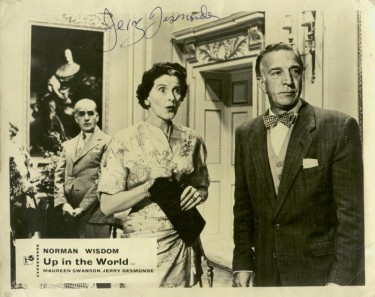
Above – Jerry Desmonde looking suitably exasperated in another Norman Wisdom film Up In The World.

Normal Wisdom used him in his films in much the same way that George Formby had with Garry Marsh.    I have to say  from a personal point of view  I much preferred the George Formby films to any that Norman Wisdom ever  did.

I do remember Jerry Desmonde being on Whats My Line as a panelist on a number of occasions.   All in all I must say that I quite liked Jerry Desmonde – he played those parts opposite Norman Wisdom brilliantly.

Norman Wisdom

Well what can be said of Norman Wisdom that people don’t already know. He virtually saved Pinewood in the fifties with his extremely successful films. I haven’t been his biggest fan BUT I must say a work colleague of mine had seen a programme on his life starting from a very poor and ill treated childhood through his army career in India where he used to entertain his mates and in doing so learned to play many musical instruments, through to his film career and on to stage work, acting and on and on.  A very long life and on hearing this story I have to say that I greatly admire him for the way he lived his life. Good man, Norman !!!


posted by Movieman in Uncategorized and have Comments (4)

Denham Film Studios

For some reason that I cannot rationalise I love Denham Film Studios – probably because as a child we would holiday down in St.Albans and would travel to Windsor on many occasions, always in my Dad’s car,   and we would  pass by these studios. Films were very much of interest to us all at the time and we sort of viewed these studios as a magic place which in a way it was.  Sadly though by the time of our journeys everything was coming to an end there – in fact the very last film was made in the summer of 1951.

The Studios were built in 1936 and the founder Alexander Korda planned to outsize anything Hollywood could offer and he nearly pulled it off.   The Second World War  came at the wrong time for this venture though.

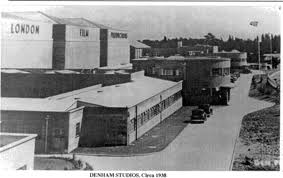
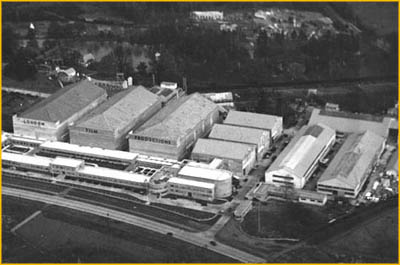
Denham Film Studios – below

Situated on a 165 acre site near to the village of  Denham in Buckinghamshire  it was at the time  the largest facility of its kind in the UK and Europe.    In the picture above you can see behind  the River Colne and to the left the Denham lake.  These areas proved ideal locations for such films as The History of Mr. Polly and Treasure Island.

Something remains of the studios though in that a short ten minute film called A Day at Denham – and a Link is below to enable you to see it:-

http://www.youtube.com/watch?v=s9y2YGbacZM.

 Ken Annakin directed the very last film made at Denham in the summer of 1951.  In his autobiography he writes ‘ I drove through the gates of Denham Studios, gazing in awe at the four large sound stages which had been built by Sir Alexander Korda, for his great series of British movies from The Private Lives of Henry VIII (Charles Laughton) through The Thief of Baghdad (Conrad Veidt and Sabu) to Things to Come (H.G.Wells).

Two of the stages were over 200 ft long and both would be filled by enormous sets for his film.

During this time Princess Elizabeth our future Queen visited Denham and watched some of the scenes being filmed and was taken round  the outside sets by Walt Disney who came over to England during that summer to oversee the filming.

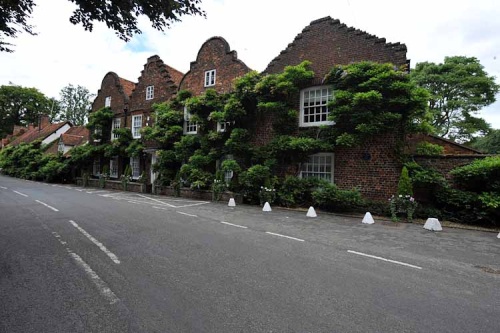
Alexander Korda’s house in Denham – below

Below is the house in Denham Village which was owned by Alexander Korda and his wife Merle Oberon and which was later purchased  by John Mills and his wife.


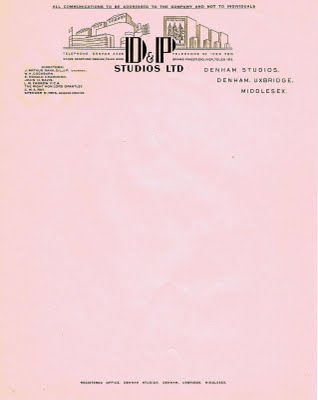
The studios were known by various names during their lifetime including London Film Studios, the home of Korda’s London Films  and later the D&P Studios after the merger with Pinewood which is just up the road.

A place that had been a dream factory is now virtually gone except for the Rank factory on  the front.   The vast majority of it was demolished around 1976. That would have been a very sad time for film fans the world over.

posted by Movieman in Uncategorized and have Comments (4)