Dale Robertson – Western Film Star

Dale Robertson –


en8158r

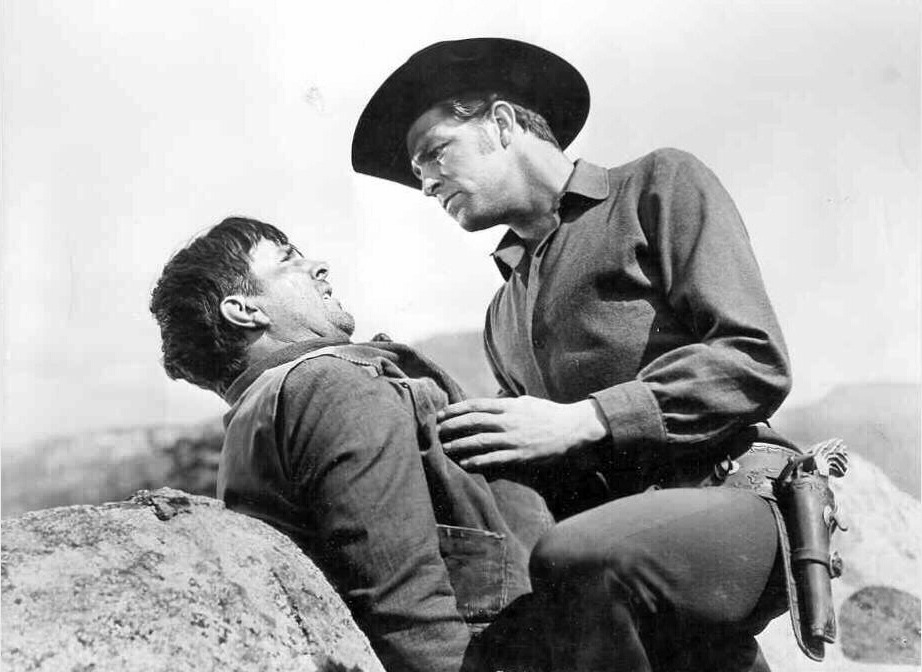
Dale Robertson in  The Silver Whip (1952). Above

Today we heard the sad news that Dale Robertson had passed away.

Despite making some excellent 50s Westerns, such as The Gambler From Natchez (1954) and A Day Of Fury (1956), it was on TV that he really made his mark — as Jim Hardie in Tales Of Wells Fargo.

Dale Robertson, the actor who made his name in television Westerns in the 1950s and ’60s, was born on July 14, 1923, in Harrah, Oklahoma. After serving in a tank crew and in the combat engineers in North Africa and Europe during World War II, the twice-wounded Robertson started his acting career while still on active duty in the U.S. Army. While stationed at San Luis Obispo, California, he had a photograph taken for his mother. A copy of the photo displayed in the photo shop window attracted movie scouts, and he was soon on his way – the short journey to Hollywood.  He became  typecast in Western movies and TV shows when the genre was still America’s favourite. He was best known here in England for “Tales of Wells Fargo” (1957), in which he played the roving trouble-shooter Jim Hardie.


The handsome, square-jawed actor, who was often said to resemble Clark Gable, was an able horse rider by age 10 and was training polo ponies in his teens. He applied those skills in Hollywood, where he appeared in more than 60 movies, including a prime role as Jesse James in 1949’s “Fighting Man of the Plains.” His leading ladies included such glamour icons as Betty Grable and Mitzi Gaynor.

He seemed to have a very likable screen presence and by all accounts was a really nice man.

He also served as one of the hosts, along with Ronald Reagan, of the syndicated series “Death Valley Days” (1952) during the 1960s. Robertson later appeared in the inaugural season of “Dynasty” (1981).
Robertson is a recipient of the Golden Boot Award in 1985, and was inducted into the Hall of Great Western Performers and the Cowboy Hall of Fame in Oklahoma City. He retired to a ranch near Oklahoma City.


posted by Movieman in Uncategorized and have Comments (7)

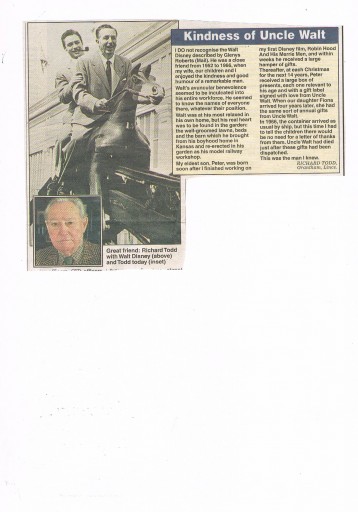
Richard Todd and Walt Disney – Two great friends !!

In 1951 Walt Disney cast Richard Todd in the title role in his British made classic ‘The Story of Robin Hood and his Merrie Men’ a film that was shot in England at Denham Film Studios  and Burnham Beeches.

This film followed Treasure Island – another British made movie of his – and in fact his very first all live action film. It was a success but Robin Hood was destined to be a bigger box office hit –  it certainly was the most expensive film made in England up to that time – and it showed.

I have a feeling that this picture was taken before the film was made and it was taken in the USA.

I think this photograph was taken at Coney Island and I seem to have read that Richard Todd thought he was in at the very first idea Walt Disney had for Disneyland which was opened in Florida in 1956. He may well have been right.

This  is the letter sent by Richard Todd to the Daily Mail – as above picture.    It shows the friendship between Walt Disney and the British actor that lasted long after he had completed his films for the him in the early fifties. I did read somewhere that Walt Disney was happy to take advantage of Richard Todd’s connections in Britain. He does seem to have been very popular and well  connected. He had by this time become a friend of Ronald Reagan and many years later he and his wife dined with the President at No 10 as the guests on Mrs. Thatcher who coincidentally came from Grantham where Richard lived – and died.


The Letter as follows:-

Daily Mail 10th December 2001.
Walt Disney  was a close friend from 1952 to 1966, when my wife, our children and I enjoyed the kindness and good humour of a remarkable man.
Walt’s avuncular benevolence seemed to be inculcated into his entire workforce. He seemed to know the names of everyone there, whatever their position.
Walt was at his most relaxed in his own home, but his real heart was to be found in the garden: the well-groomed lawns, beds and the barn which he brought from his boyhood home in Kansas and re-erected in his garden as his model railway workshop.
My eldest son, Peter, was born soon after I finished working on my first Disney film Robin Hood and his Merrie Men, and within weeks he received a large hamper of gifts. Thereafter at each Christmas for the next 14 years, Peter received a large box of presents, each one relevant to his age and with a gift label signed with love from Uncle Walt. When our daughter Fiona arrived four years later, she had the same sort of gifts from Uncle Walt.
In 1966, the container arrived usual by ship, but this time I had to tell the children there would be no need for a letter of thanks from them. Uncle Walt had died just after these gifts had been despatched.
This was the man I knew.
Richard Todd
Grantham
Lincolnshire.”
I have heard Richard Todd tell this story before on a radio interview.
posted by Movieman in Uncategorized and have Comments (3)

Alexander Korda – The Man who built Denham Film Studios


Alexander Korda was born on September 16, 1893 atTurkeve on the Great Hungarian Plain. He was the oldest of three sons. As a young boy, his sight was damaged by the improper treatment of an eye condition. Throughout his life he always wore thick glasses. Despite this detriment, he was a voracious reader, and acquired a near-photographic memory.  He also mastered about a half-dozen languages, and was known to be a brilliant (some say “hypnotic”) conversationalist.

Age age thirteen his father died and shortly afterwards he went to Budapest. There he became a short story writer for a daily newspaper.

In 1911 he out to start a career in films and spent several months in Paris, doing odd jobs in the Pathé studio — at the time, the most advanced film factory in the world. He returned to Hungary and joined a film company in Budapest.
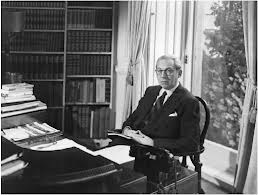
Though the Hungarian film industry was in its infancy, the country would produce a surprisingly rich heritage of film. Influential filmmakers like Alexander Korda, Michael Curtiz, and George Cukor were Hungarian. The country also boasted the world’s first film journal. And at this period, Korda became one of the most important figures in the formative years of Hungary’s film community.

Korda managed to raise  finance and built his own studio  in a suburb of Budapest where the Mafilm Studios are today. Though Korda served as director, he also served as executive producer by overseeing all production activity at his impressive company.    In 1919, he assisted the sCommunist government (though Korda was not a member of the Communist party) when it made Hungary the first nationalised film industry in the world. When the Communist government fell and was replaced by the right-wing “White Terror” regime, Korda was briefly imprisoned. In November 1919, he left Hungary with his actress wife Maria. He would never again return to his homeland.

He then made his way  to Vienna to join the Sascha Film Company. Desperately seeking his independence, he moved to Berlin to form his own company Korda-Film, directing film vehicles for his wife Maria Corda.  His films were well-received, and led to an offer from the First National studios in Hollywood for both Kordas to come to America.

In Los Angeles had directed at First National and Fox.    The films were received half-heartedly by the public, and Korda was dissatisfied with the results. He asked Fox studios to release him from his contract, in 1930 — thus ending his career as a Hollywood director.

Disillusioned, he returned to Europe, determined not to return to Hollywood, except as his own producer and studio boss. After making several important films in Paris and Germany, he moved to England in 1931.    At that  time the English film industry was in a depressed state, dominated by American films. Most English production companies made what were called “quota quickies.” These films were often cheaply made movies used solely to fill screens at a time when the British government mandated that British cinems must show a certain percentage of British-made films.

Korda felt that the only way to bring the English film industry to prominence would be by concentrating on quality films. Alexander Korda organised London Film Productions, and risked everything on a deceptively-lavish movie The Private Life of Henry VIII (1933) starring Charles Laughton and Elsa Lanchester. The film became a worldwide blockbuster.

Following the success of this film, Korda was hailed as the saviour of the British film industry. On the strength of this film, he was also able to land an American distribution deal with United Artists.

Korda constructed the stately Denham Film Studios on a 165-acre estate outside London. He also established his own stable of contract actors – and very impressive they were – including Leslie Howard, Merle Oberon (who became the second Mrs. Korda in 1939), Wendy Barrie, Robert Donat, Maurice Evans, and Vivien Leigh.
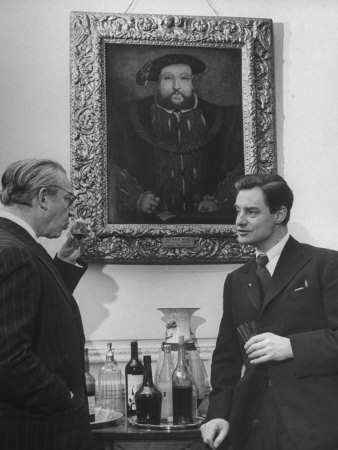
Some of his more ambitious films included Rembrandt (1936), which he also directed; Things to Come (1936) a $1.5 million adaptation of the H. G. Welles book; and The Thief of Bagdad (1940).

While Britain was war-torn in the early 1940s, Korda took up an extended residence in the United States.
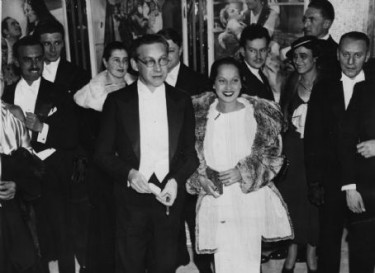
In March 1943, Korda entered into a merger between his independent company London Film Productions and MGM-British.    Korda would become the new executive producer of the English division of Metro-Goldwyn-Mayer.He returned to England. However, his dissatisfaction with the deal brought about his resignation in 1946.

Korda then with his London Films, bought a controlling interest in British Lion Films which was involved in such productions as The Third Man (1949).

In 1948 he received an advance payment of £375,000, the largest single payment received by a British film company, for three movies, An Ideal Husband (1947), Anna Karenina (1948) and Mine Own Executioner (1948). He released three other films, Bonnie Prince Charlie (1948), The Winslow Boy (1948) and The Fallen Idol (1948).  Some of these films did well but others were expensive failures, and Korda was badly hurt by the trade war between the British and American film industries in the late 1940s. In 1948 Korda signed a co-production deal with David O. Selznick.

Korda did recover in part due to a ₤3 million loan British Lion received from the National Film Finance Corporation.  In 1954 he received ₤5 million from the City Investing Corporation of New York, enabling him to keep producing movies until his death. The last film with Korda’s involvement was Laurence Olivier’s adaptation of Richard III (1955).

A draft screenplay of what became The Red Shoes was written by Emeric Pressburger in the 1930s for Korda and intended as a vehicle for his future wife Merle Oberon. The screenplay was bought by Michael Powell and Pressburger who made it for J. Arthur Rank.  During the 1950s, Korda reportedly expressed interest in producing a James Bond  film based upon Ian Fleming’s novel Live and Let Die but no agreement was ever reached.

He died at the age of 62 in London of a heart attack and was cremated. His ashes are at Golders Green Crematorium in London.

There are not many so called ‘giants’ in any industry but that work could sum up Aleaxander Korda – The Man who built Denham Film Studios and very nearly pulled it off and put  British film studios on a par with Hollywood.
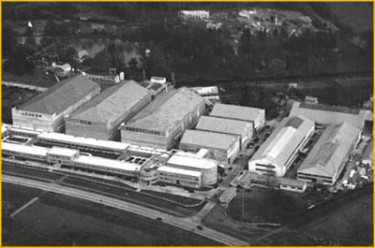
Sadly Denham with its sheer size was forced to close in 1952 and now it is not easy to know where it was. I am pleased to say that I know where it is !!! – and as a film lover it is a  place that is very special to me. I do drive past and look when I am down that way.
posted by Movieman in Uncategorized and have Comments (4)

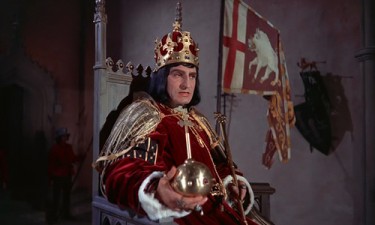
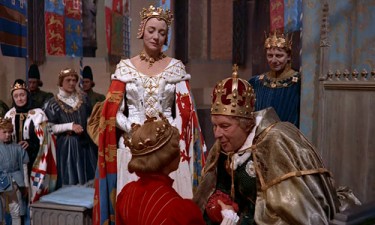
Richard 111 – Laurence Olivier 1955

Well it seems that this King is very much in the news at the moment. The story doesn’t do much for me – I expect it is because at school we had to read and learn extracts from the Shakespeare play – which was not at all a favourite of mine !  We even went with the school to see the film when it came to our local town – and even then I found it less than inspiring. It seemed to me so stagey but then again maybe that was the point.

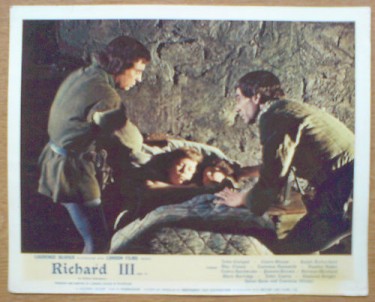
The above Film Still looks like the ‘Princes in the Tower scene. 

Richard III was released in the UK on 16 April 1955, with Queen Elizabeth II and Prince Philip attending the premiere.Alexander Korda had sold the rights to the film to NBC  in the U.S.A  for $500,000 and the film was released there on Sunday, 11 March 1956.

 This film release was unique in that it had its U.S. premier on the same day both on television and in cinemas, the first instance of this ever.

The film, although slightly cut for television, was generally well received by critics, with Olivier’s performance earning particular notice, but due to its simultaneous release through television and cinemas in the U.S., it was a box office failure, and many critics felt at the time that it was not as well-made as Olivier’s previous films. However, the airing on U.S. television received excellent ratings, estimated at between 25 and 40 million.

In addition, when the film was reissued in 1966, it broke box office records in many US cities. Its critical reputation has since grown considerably, and many critics now consider it Olivier’s best and most influential screen adaptation of Shakespeare.

The film’s failure at the U.S. box office, however, along with Korda’s death, ended Olivier’s career as a Shakespeare film director. Olivier had been planning to make Macbeth  but one of his other major backers, producer Mike Todd died in a plane crash.

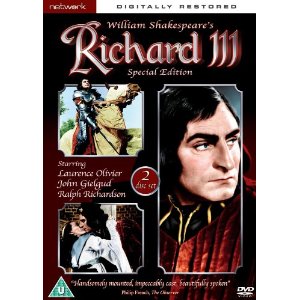
The Film was restored and remastered and released a few years ago – above.

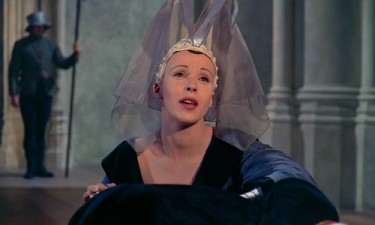
Claire Bloom was only about 24 when this film was made

Claire Bloom was born in London on February 15, 1931.     In 1948 she was cast as Ophelia in Hamlet.  She won praise for her early movie role in Limelight (1952) with Charlie Chaplin . She successfully combined a stage career with films, and continued to star in both films and on television.


Laurence Olivier invited her to costar with him in his film of Richard III – See Above.    Claire Bloom, who had just appeared on the cover of Life magazine, found that playing  opposite Olivier, 24 years her senior, was ‘like being caught in an electric  current’ but off stage much of the power and passion was gone.

She described him as having “a kind of false charm.”

‘Although deeply under Olivier’s spell, I was never remotely in love with him,” She said   “and never, for one instant, confused my feelings for him with my love for  Richard Burton.”

Olivier’s marriage to Vivien Leigh was in meltdown. ‘Perhaps he was trying to  show her he could still enjoy success with young girls. In other words, for our  own purposes, we were using each other.

She successfully combined a stage career with films, and continued to star in both films and on television.

During the filming of the battle scenes in Spain, one of the archers accidentally shot Olivier in the ankle, causing him to limp. Fortunately, the limp was required for the part, so Olivier had already been limping in the parts of the film already shot.

Another Scene from the film. 

The British Film Institute  has pointed out that, given the enormous TV audiences it received when shown in the USA in 1956 the film “may have done more to popularise Shakespeare than any other single work”.

The film’s promoters in the USA picked up on the fact that the cast included four knights (Olivier, Richardson, Gielgud and Hardwicke) and cleverly used this as a selling point.   The four members of the cast who had already achieved British knighthood were all listed as “Sir….” in the film credits.

  • Sir Laurence Olivier as Richard, Duke of Gloucester (later King Richard III), the malformed brother of the King, who is jealous of his brother’s new power, and plans to take it for himself. Olivier had created his interpretation of the Crookback King in 1944, and this film transferred that portrayal to the screen. This portrayal earned Olivier his fifth Oscar nomination, and is generally considered to be one of his greatest performances; some consider it his best performance in a Shakespeare play.
  • Sir Cedric Hardwicke as King Edward IV of England, the newly-crowned King of England, who, with the aid of his brother, Richard, has secured his position by wresting it from Henry VI of the House of Lancaster. Hardwicke was a stage actor who had moved to the U.S. to pursue a film career. He was mainly known for supporting roles in Hollywood. This marked his only appearance in a film version of a Shakespeare play.
  • Sir John Gielgud as George, Duke of Clarence, brother of the new King. Gielgud’s standing as the great stage Shakespearean of the decades immediately preceding Olivier’s career was a cause of a certain enmity on the part of Olivier, and it was known that he disapproved of Gielgud’s “singing” the verse (i.e. reciting it in an affected style that resembles singing).[5] Gielgud’s casting in this film can be seen as a combination of Olivier’s quest for an all-star cast, and the fact that Olivier had rejected Gielgud’s request to play the Chorus in Olivier’s 1944 adaptation of Henry V.
  • Sir Ralph Richardson as the Duke of Buckingham, a corrupt official, who sees potential in Richard’s plans and eventually becomes a fellow conspirator when Richard goes too far. Richardson was a lifelong friend of Olivier’s, and was one of the great four theatrical knights of the 20th century along with Alec Guinness, Gielgud and Olivier. At first, Olivier wanted Orson Welles as Buckingham, but felt an obligation towards his longtime friend. (Olivier later regretted this choice, as he felt that Welles would have added an element of conspiracy to the film.) I think personally the he got the right man here. Orson Welles to my mind may have been too overpowering – About this time he appeared in Trouble in the Glen but he was way over-the-top in that and not very good.


posted by Movieman in Uncategorized and have Comments (4)

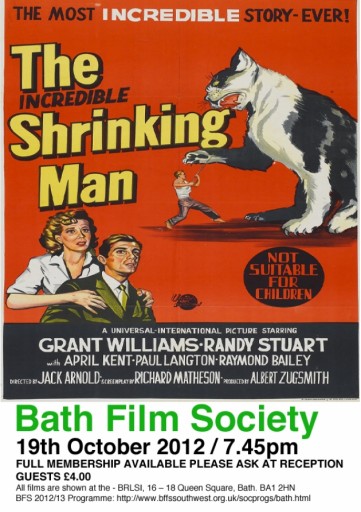
The Incredible Shrinking Man 1957

This was and is a really good film and  – for the time – the special effects are excellent. The story too was an original concept at the time.

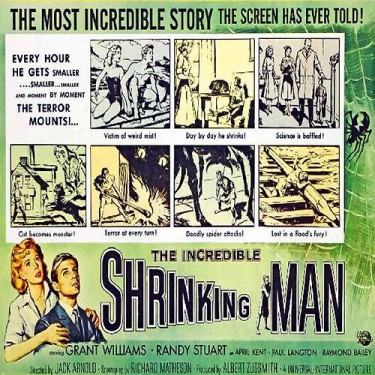
The stars of the film are Grant Williams as Scott Carey and Randy Stuart – funnily enough they appeared again together in a 1963 episode of Hawaiian Eye – Grant appeared in over 40 episodes of this famous TV series.  The Incredible Shrinking Man  is even shown today – as the above poster shows.  I wish I had known and would have gone to see this one in Bath.


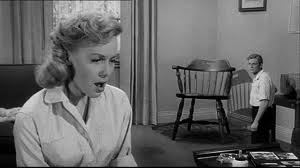
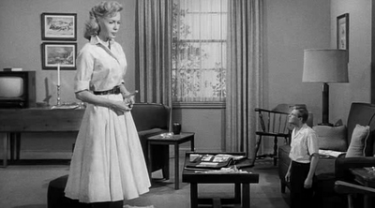
Two Scenes that show the terrific special effects that this film had when Scott Carey’s wife played by Randy Stuart sees what is happening to her husband and above much later in the film when even smaller – and getting smaller by the day – Scott (Grant William) has to fight off a house spider in a thrilling sequence.

This is simply a superb science-fiction drama. Taking a holiday  on a boat, while his wife Louise (Randy Stuart) is below deck, husband Scott Carey (Grant Williams)  becomes exposed to a radioactive mist, that changes his body’s metabolism . Then a few weeks later it dawns on Scott that he is losing weight and getting smaller.

Much later in the film we had the attacks from a cat and a spider,  one soon feels great sympathy for this character and his family. Williams, a handsome actor gives a beautiful performance, and narrates over much of the film which later has no dialogue, but he is greatly aided by a wonderful score –  the title piece is haunting with its Trumpet solo set against an advancing cloud that gets bigger while the human frame dwindles.  Randy Stuart is terrific as the suffering wife,  and yet the following year’s “Man From God’s Country” – 1958, was  her last film although she continued to appear in TV series for a number of years afterwards – in fact up until 1975.

View the Film  Trailer on the link below:-

https://www.youtube.com/watch?feature=player_detailpage&v=vTIWloXBCww

Director Jack Arnold paces beautifully, Richard Matheson script is intelligent and the closing scenes have a wondrous quality that few films have ever matched.  Jack Arnold felt that Grant Williams should have got an Oscar for this acting performance – much of it acted out to nothing with the effects added in later – something that is done a lot these days with digital effects.  Of course it was done then with the superb matte paintings that we have covered on the Blog before – and will come back to again no doubt.

It seems also that the film was released in a very short version for an 8mm home projector – but this was not unusual at all at this time. Walt Disney did it with Treasure Island and The Story of Robin Hood as I have those films. I didn’t know though that this one was available.

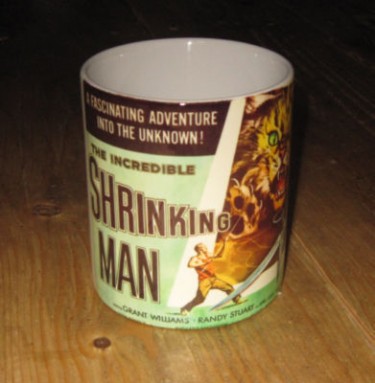
This promotional item above was interesting too – above.

posted by Movieman in Uncategorized and have Comments (4)

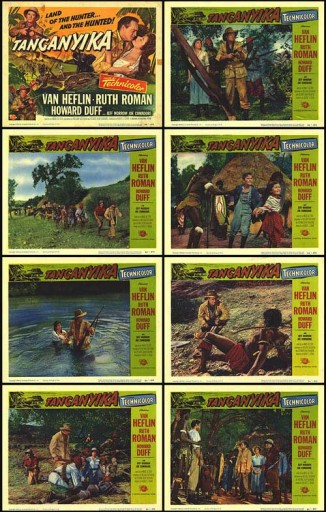
Tanganyika

I wonder how many ever saw this film or remember it. Van Heflin starred in a very good African jungle adventure.

As a very young teenager I saw this film in St. Albans where we spent our summer holidays each year – and very good it was there too !!

and still is – no doubt but sadly my holidays are not there anymore.

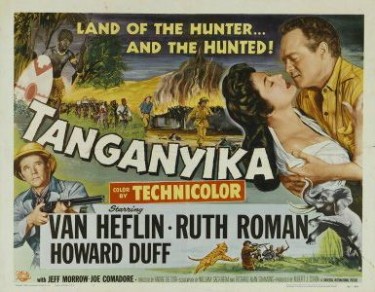
Made in Hollywood by Universal Pictures, TANGANYIKA  released in the USA in the summer of 1954  has its action taking  place in 1903 in the territory of East Africa  and  Tanganyika. The story centres on a hunt for a fugitive white man who’s stirred up the “Nukumbi” tribe of natives into making raids on white settlements and outposts.   Leading  the hunt is  John Gale (Van Heflin) who leads a group of native porters from East Africa into Tanganyika.   On the way he picks up Peggy Marion (Ruth Roman), a schoolteacher from Canada, and her young niece and nephew (Noreen Corcoran, Gregory Marshall), after rescuing them from a native attack that killed Peggy’s brother. He also picks up a wounded white man, Dan Harder (Howard Duff) who, we learn early on, is the brother of the renegade white man, although he keeps that little fact a secret.   Gale leads the party back to his camp to drop off the whites only to find it plundered and his partner Duffy (Murray Alper) dead. So they all forge on into Tanganyika to locate the village where Abel McCracken (Jeff Morrow), the wanted white man, holds court and rules the natives.

Plenty of action follows and it is exciting.

Much of the film was shot in or around Hollywood with stock footage cleverly cut in – and the result was very effective.

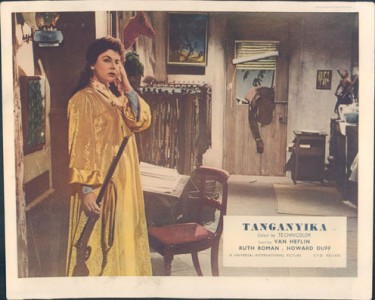
Above – Ruth Roman seems in a spot of bother !

It is not a film that is available on DVD although I do have a copy.

Jeff Morrow

Jeff Morrow started out as a radio and stage actor thenturned to film acting relatively late in his career, commencing with the The Robe in 1953.          He spent much of the 1950s appearing  in a  mix of   A-budget  epics  in supporting parts,  or B Westerns such a The Siege of Red River (1954)   Morrow carried over much of his acting persona from his radio days to his film acting roles, where his ability to rapidly alter both the tone and volume of his voice for dramatic effect frequently gave sound editors fits. He entered the science fiction genre with the 1955 film This Island Earth  probably the film he is best known and then The Creature Walks Among Us, The Giant Claw, and Kronos. I have to say that although it is a while since I saw The Giant Claw it does have the most laughable special effects and ludicrous story but is great fun !!

The Giant Claw is one of the best so-bad-it’s-good movies of the 1950’s. When you first see the giant wooden puppet bird, you won’t be able to curb your laughter , even though it isn’t supposed to be a comedy.
The cast includes 50s sci-fi regulars Jeff Morrow (This Island Earth), Morris Ankrum (Invaders From Mars)and Mara Corday (Tarantula).

posted by Movieman in Uncategorized and have Comments (4)

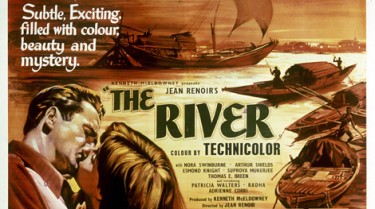
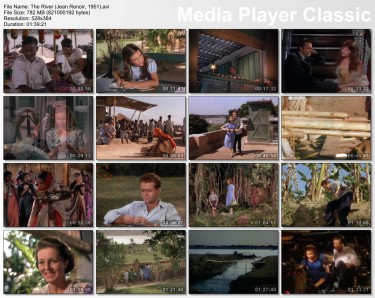
The River 1951

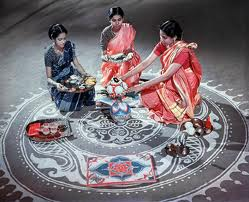
Now the number of times I have said that this was ‘one of my favourite films’ before BUT this one definitely is just that. Filmed in India and beautifully filmed at that – this must be a cine photographers dream.  The Colour is just out of this world and the setting takes us to dreamland almost – certainly for any of us who have fallen in love with India. I have never been I am sorry to say but must be in love with the dream I think.


 The story is from a novel by that wonderful author Rumer Godden who spent a lot of her life living in India, and it wasdirected by Jean Renoir.  Filmed entirely on location in India,  The River is the story of an English family living in Bengal during the last years of the Raj.   Shot in glorious Technicolor by Claude Renoir, it beautifully captures the rhythm and energy of life on the banks of the Ganges.

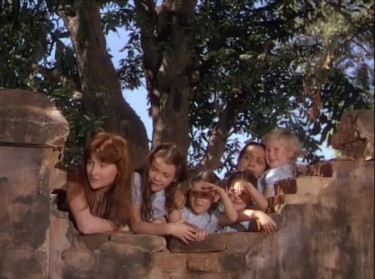
 Three teenage girls are living in Bengal  near to the river : Harriet is the oldest child of a big family of English settlers. Valerie is the unique daughter of an American industrialist. Melanie has an American father and an Indian mother. One day, a man arrives. He will be the first love of the three girls.

“It is the story of my first love; about growing up on the banks of a wide river. First love must be the same everywhere but the flavour of my story would have been different…”

An older, wiser voice introduces Jean Renoir’s 1951 adaptation of Rumer Godden’s coming-of-age tale of a teenage girl living with her English family on the banks of the Ganges. This film seems to have  all the elements of a ‘first love’ narrative- the arrival of a young man into a group of female rivals for his attention, the young people’s embarrassing efforts to appear mature, the  worlds of children and adults in real contrast to each other, and a  real tragedy to bring us back to reality.   No one writes about the power of adolescent emotion better than Rumer Godden  just think of ‘Black Narcissus’ and later  ‘The Greengage Summer’

Here India seemed to be portrayed as if in a 1950s travelogue  athough Renoir chose to follow the novel closely. The adult stories that weave through the narrative hint at the deeper problems caused by the  colonial culture, but these are not expanded on as they are really nothing to do with the story.

This was Renoir’s first colour film and was shot entirely in India. A new restoration revitalises Renoir’s achievement and his nephew Claude Renoir’s wonderful photography, making sense of the director’s stated aim.

“I shot The River so that I could either create a narration and stay with a book-like tone.’ he said

For a taste of the film – See film trailer BELOW :-

https://www.youtube.com/watch?v=j-DxgFYOVM0&feature=player_detailpage


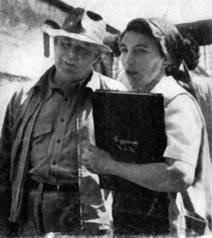
Rumer Godden and Jean Renoir on the set of The River.

Rumer Godden – Writer of The River – Below.

Rumer Godden at 88, 1998Rumer Godden in her study at Dove House, Kashmir, 1942Rumer Godden, portrait for Vogue magazine, 1947Rumer Godden with her daughters at Speen, Buckinghamshire, 1949Rumer Godden with her daughter, Jane, 1950'sRumer Godden at London House, Highgate, 1958Publicity photo for Jackets, 1980'sRumer Godden Filming BBC's Bookmark, Calcutta, 1998Rumer Godden was born in Sussex in 1907 but, at six months old, was taken out to India where her father ran a Steam Navigation company so that she and her three sisters spent most of their childhood on the banks of the great rivers of Assam and Bengal (now Bangladesh) where they lived in Narayangunj, a jute trading town.They had a halcyon childhood. “I always thank God” wrote Rumer “that we did not have sensible parents”. This childhood time gave her real love of India that is so obvious in her writing.She could never remember a time when she did not write. There were no libraries or schools or bookshops in this remote place so the sisters wrote their own. It was a good thing their father said that there were plenty of wastepaper baskets in the house.The dreaded day came and the girls were sent back to England which felt anything like home and were sent to boarding school – too late. They were twelve and fourteen and could not settle. They went to five schools in two years!Rumer Godden trained as a dancer in London and then went back to India where she ran a mixed race dancing school. She married and lived in Calcutta.She returned to Britain for the birth of her two daughters and the publication of Black Narcissus which was met with great acclaim.Back in India she continued with her dancing school and parted from her husband.This was now wartime and it was not possible to go back to England so she took her two small daughters to Kashmir where, as she had no money, she rented a little Kashmiri house far in the country by the Dal Lake. and they lived cheaply and like the local indians.The house had no electricity , no running water and no road up to it. It was a full life. She had not only to look after the children but to teach them and to try earning a living by writing and running a herb farm but, as she wrote, “these were years of beauty and contentment”.

Rumer returned to England in 1947 and lived in various houses both in London, Buckinghamshire and Sussex and she remarried. It was at this time that she entered the London and American literary scene.

She sat on book judging panels, gave talks on writing and toured America giving lecture tours. She went to the famous Foyles Lunches and made broadcasts. She appeared on Desert Island Discs and maybe this one is still available to hear from the BBC archives.

In 1994 she went back to India with her daughter and the BBC to make the Bookmark programme of her life in the subcontinent.

Rumer was a strict disciplinarian over her writing. She worked every morning and most evenings and always in longhand with a fountain pen.  She said that as an artist has to dip his brush into the paint so a writer should dip his pen into the ink and this gives time for thought.

She thought many modern books were too wordy as authors just ran away with words on their computers.

She was awarded the OBE in 1994 and won the Whitbread prize for children’s literature, many other awards and her her books have been published in over forty countries.

Rumer Godden had many interests but her greatest were for dancing and for Pekinese dogs, which she kept for most of her life, and for children – she ran junior poetry workshops which kept her in touch with the young and entertained her young great grandchildren to doll’s tea parties where she made miniature food and everyone dressed up.

She also loved opera and good whisky! Rumer studied the great religions of the world and became a Roman  Catholic in 1957.

One of her favourite axioms came from an Indian proverb that says – “everyone is a house with four rooms, a physical, a mental, an emotional and a spiritual. Most of us tend to live in one room most of the time but unless we go into every room every day, even if only to keep it aired, we are not a complete person”. She quotes this in her autobiography A House with Four Rooms.

Rumer Godden lived her later years in Rye Sussex in Lamb House, once the home of Henry James. In her old age she moved to Moniaive in Southern Scotland to be with her daughter where she spent the last twenty years of her life, writing and enjoying the river which ran under her study window.

Her last novel Cromartie vs. the God Shiva was published just before she died in 1998

posted by Movieman in Uncategorized and have No Comments

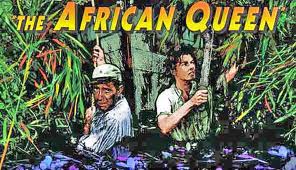
The African Queen


For a long time I had not known that this was a COLOUR film because it used to be shown on TV in the pre-colour days but when I did I realised just how good it looked in glorious Technicolor.  Even so it is a cracking good adventure film.
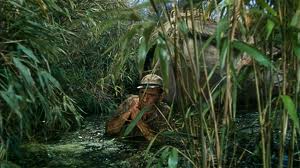
The African Queen was the first Technicolor  film in which Bogart appeared.   He was actually in relatively few colour films during his long career  which continued for another five years.  The role of Charlie Allnutt won Bogart an Academy Award in 1951 and he himself thought that this was his best ever film performance

See the film trailer here:-

                                                                                             http://www.youtube.com/watch?v=l7cWpLd1-dc&feature=player_embedded

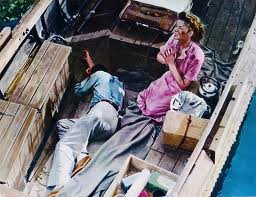
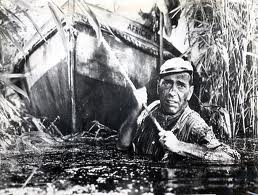
One of the lasting images from this film is this one below. If ever I think of cinema at its best I think of this scene. It is iconic. It has been used in advertisements too.

Humphrey Bogart pulls the African Queen through the marshes – above – I love this shot !!

Although filming was generally done in Africa, this scene was a studio set at the Isleworth Studios and in fact there were some shots done on the river at the studios.  In 1951, shortly before the studios closed for good, much of The African Queen was filmed there.

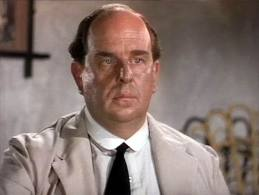
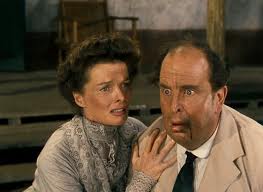
Even so for a film made in 1951, there’s a surprising amount of location filming out in Africa even though much of the African jungle  was recreated at Worton Hall Studios, Worton Road in Isleworth, southwest London. The site is now an Industrial Estate. The interior of Robert Morley’s ‘First Methodist Church at Kungdu’ was built here in the studio grounds, to match an exterior constructed in Africa and when called for in Africa a double stands in for Robert Morley, who never left England.  He was probably too busy in the theatre for this to happen.


Above and Right- Robert Morley in The African Queen


This is a clip from the film :-

https://www.youtube.com/watch?v=kno7sZsqWzE&feature=player_detailpage

 The above scenes in the film clip are just after the African Queen had come through the waterfalls, and with great relief at their survival the two embrace one another. Although they didn’t realise it by this time, they had already fallen in love.

There were certainly more adventures for the two of them though before the film reaches its conclusion.

One particularly moving moment in the film is , when they appear to have lost the fight to pull the African Queen through the reeds and are utterly exhausted, Rosie kneels down in the boat while Charlie Allnutt sleeps, and she prays for forgiveness and asks that despite her sins the gates of heaven would be open for her and Charlie.  As we know though they survive and the rains come and eventually float the boat and then they can reach the lake – and indeed they do.

As they both are utterly exhausted Rosie prays – Above.

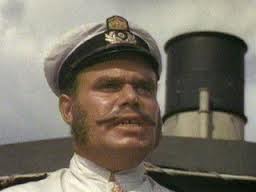
When the two of them are captured by the Germans and are on the boat on the lake,  the captain of the Louisa is played by British character actor Peter Bull. He was the son of a famous MP of the time and his acting career took in varied  films – one of which is this one. Apparently he was a good friend of Alec Guiness because they had served together in the war.

I thought I remembered him in an Alice In Wonderland film and in fact he played The Duchess in the 1972 version with Fiona Fullerton among a distinguished cast.

In charge of the colour photography on The African Queen was none other than the legendary Jack Cardiff who was almost universally considered one of the greatest cinematographers of all time.  Jack Cardiff was also a notable Film Director. In fact it was Errol Flynn who turned to him to direct The Story of William Tell in 1953.   This is a well known story of the Cinemascope production getting under way in Italy and about 30 minutes of the film being completed when Errol who was financing the film himself ran out of money and was unable to raise more – so the film was never completed. I understand that the 30 minutes or so are safe and a friend of mine who is a big Errol Flynn fan has actually got a copy of it.


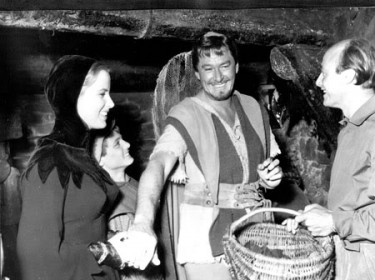
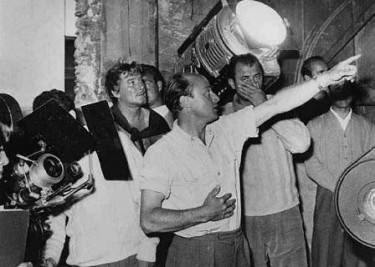
Above TOP – Errol Flynn on the set of William Tell and Right Jack Cardiff points out the way forward as Director

When making the ill-fated William Tell with an excited Jack Cardiff as director and cinematographer on the CinemaScope movie in Europe in the early ’50s. Flynn put up half the money for the movie amounting to around 450,000 US Dollars and he had also persuaded  the Italian govt. into giving him a further 145,000 dollars on top of that as well as an incentive to boost the postwar Italian economy. When the financing fell through on William Tell due to some questionable bookkeeping  from some of the Italian money men,  a heartbroken Flynn had to abandon the project–even after he had advanced more of his own cash to keep the project afloat.   It does make you think that a film man like Errol Flynn was probably out of his depth in the financing department and you would have thought that with the backing maybe of a big studio he could have pulled it off and given us a cracking good Adventure film in Cinemascope and Techicolor – and in those days that was  big plus.


posted by Movieman in Uncategorized and have Comments (6)

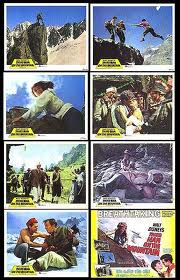
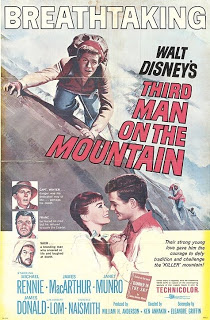
Third Man on the Mountain – Disney – revisited

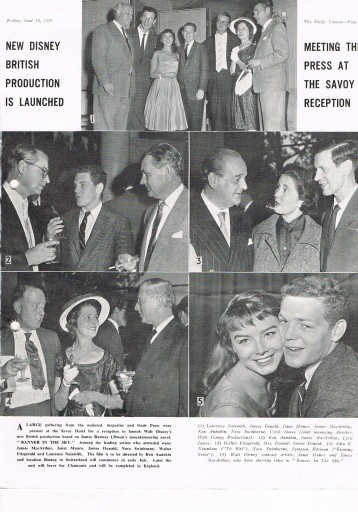
In one of the many magazines of the time I have come across this page with details of the Reception at the Savoy in London for the Walt Disney 1959 film Third Man on The Mountain – although at that time it seems to be promoted under the US title Banner In The Sky.It shows the leading actors and also Director Ken Annakin in relaxed mode.

This film isn’t that well known which is a great pity for what is often described as the ‘best film ever about mountaineering.

My previous post was about the Film Director Ken Annakin – and he directed this one.     Peter Ellenshaw was responsible for the matte painting and was able to give the film that extra edge as he painted in most of the ‘down’ shots during the climbing sequences so effectively that – as I have said in a previous post – members of the audience at a pre-release showing  were affected by vertigo and dizziness such was the quality of some of the sheer face shots.

Third Man on the Mountain was released on November 10, 1959. It was a critical success and was highly acclaimed for it’s magnificent location shooting, great writing and excellent performances.   Unfortunately, it was a box office dud.     It failed to find an audience, which was a shame because it was an expensive film to make.

The film was later edited and shown in parts on the Disneyland TV show although this tended to happen with all Walt Disney’s Live Action films. So in a way long before Video and DVD, Walts Disney was able to have two bites at the cherry so to speak even in those days – he had the cinema release and then his own TV channel release.

It is a great pity that Third Man on the Mountain never enjoyed success in later years because it really is a great film.  Today it is known by most Disney fans as the inspiration for the Matterhorn attraction at Disneyland, but as a film it is well made and very enjoyable. It’s a fairly simple story that is told so well that it’s hard not to find yourself cheering for Rudi. That, mixed with the amazing cinematography and wonderful characters, make this one of the most underrated Disney films of all time. Film buffs should look for a cameo by Helen Hays, James MacArthur’s mother.

Third Man on the Mountain was released on DVD in 2004. Sadly, it contains no bonus features. Also it seems that no restoration work has been  done

posted by Movieman in Uncategorized and have Comments (2)

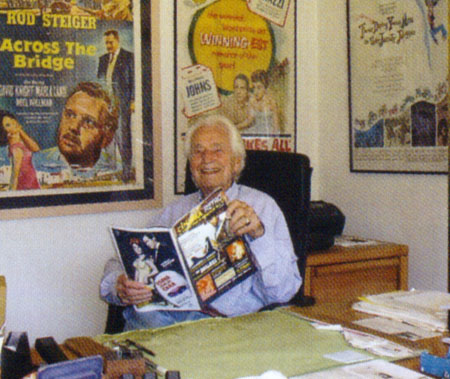
Ken Annakin – Film Director

My previous post concerned Denham Film Studios  and in a way there is a connection with this British Film Director  because in his autobiography ‘So You Wanna Be a Director’ he describes how in 1951 he drove through those large gates into the studios to begin work directing Walt Disneys The Story of Robin Hood which was released in 1952 and starred Richard Todd and Joan Rice.

Ken Annakin’s previous films had been good small budget British films such as The Huggetts and Quartet but this represented a big jump forward to a very large scale colour production – in fact the most expensive film to have been made in England up to that time.


20003 bytes

Ken Annakin was educated at Beverley grammar school in East Yorkshire and on leaving he took a job locally in Hull as a tax inspector. Then, happily, he won £100 on the Derby and travelled to Asia, Australia and the US.   He did various jobe to make ends meet  and then  during the second world war he joined the RAF. He was transferred to the Ministry of Information following an injury he received fromshrapnell.


Here  he worked alongside such professionals as Carol Reed on many documentaries, thus gaining experience in the movie industry.

Then in 1947 he made his feature debut with Holiday Camp. This was at a time when resorts such as Butlins offered families a great holiday and lots of fun. The film was a comedy drama set at a Butlins resort on the Yorkshire coast at Filey.


There is one brilliantly old fashioned piece of dialogue in Holiday Camp which occurred in the above scene. Jack Warner and Kathleen Harrison play an older married couple with a grown up family all at the Holiday Camp. In this scene Kathleen Harrison (Mrs. Hugggett) asks her husband if he fancies any of the bathing beauties around the swimming pool. And his response is that he does like the look of them but he ‘prefers something plain in the home’ – for which she thanks him and feels happy and assured.   Different times I think.

It spawned the Hugget series, based on the central characters memorably portrayed by Jack Warner and Kathleen Harrison. Here Come the Huggetts was released in 1948, followed by Vote for Huggett and The Huggets Abroad.

                                                   Ken Annakin

Ken Annakin with Walt Disney – Above.

His career spanned half a century, beginning in the early 1940s  and ending in 2002 with a feature film about Genghis Khan which was never completed.   His career peaked in the 1960s with large-scale adventure films. He directed nearly 50 pictures.

In one of his best-known, The Longest Day Ken  Annakin — with Andrew Marton and Bernhard Wicki — was one of three credited directors. Adapted from Cornelius Ryan’s best-selling book about D-Day, it featured an all-star cast led by Henry Fonda, John Wayne, Robert Mitchum, Rod Steiger, Sean Connery Richard Todd and Peter Lawford.  Ken concentrated on directing the British exterior sequences – and in one of these we have a quite astonishing story.

In the film Richard Todd played Major John Howard who led the paratroopers attack on Pegasus Bridge – but in real life a number of years before the film was made, Richard Todd had himself been a paratrooper on this very mission. In fact he had been scheduled to be in aircraft number 33 but at the very last minute he was switched to aircraft number one and so he was the first man out – so effectively  he was the first paratrooper on the ground in that operation. Then when Pegasus Bridge had been captured and secured in the film there is a sequence wher Major John Howard played by Todd is talking to a young paratrooper who in real life would have been Richard Todd.

 Peter Lawford,Richard Todd, and Leo Genn in The Longest Day

Three years later his work on The Longest Day put Annakin in line to direct another war film, Battle of the Bulge, when the studio’s original choice for director, Richard Fleischer, turned down the job. Meanwhile, Ken Annakin had shot The Fast Lady (1963) and Those Magnificent Men in Their Flying Machines (1965), the screenplay for which (co-written with Jack Davies) earned him an Academy Award nomination, and the similarly-titled action comedy Those Daring Young Men in Their Jaunty Jalopies (1969).

His other comedies included The Biggest Bundle of Them All (1968),  starring Robert Wagner, and Monte Carlo Or Bust (1969). He also directed Call of the Wild, a 1972 adaptation of Jack London’s adventure, starring Charlton Heston, and in 1957 his own personal favourite  – Across the Bridge with Rod Steiger.


His best-loved film was probably Swiss Family Robinson, one of a series of “family adventures” Annakin made for Walt Disney starting in the 1950s. Shot on the island of Tobago, with a cast including  tigers, snakes and elephants, the film starred John Mills and Dorothy McGuire as parents of a family battling pirates and struggling to survive after they are shipwrecked. Disney’s nephew, Roy Disney, considered it one of the greatest family adventure films that the Disney studio had ever done.

Above – Ken Annakin chats to Patricia Plunkett on the set of the film ‘Landfall’

He died at his Beverley Hills home and was survived by his wife, Pauline, daughter Deborah, two grandchildren and two great-grandchildren.

posted by Movieman in Uncategorized and have Comments (2)